How Long Should I Wait Before Doing Another Pigmentation Laser?
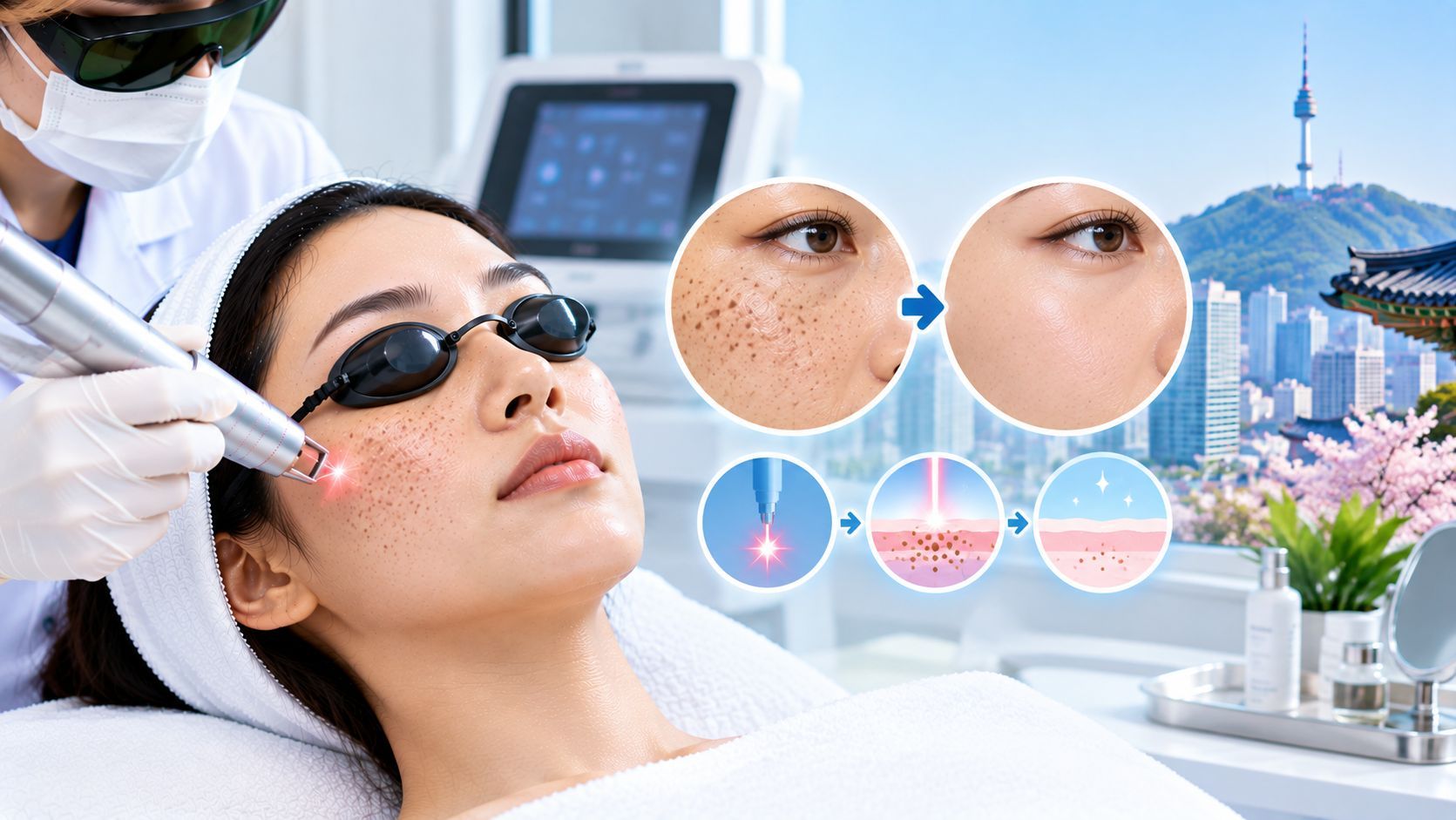
If you are treating pigmentation with a laser, repeating the treatment too soon can sometimes cause more irritation without giving your skin enough time to recover. The right interval depends on the type of laser, treatment intensity, pigmentation diagnosis, skin tone, previous reaction, and how completely your skin has healed.
There is no universal rule that everyone should wait the same number of days or weeks. A conservative Pico treatment, targeted treatment for a sun spot, and a more aggressive resurfacing procedure can have very different recovery requirements.
For people having pigmentation treatment in Seoul, this is particularly important if you are planning several procedures during one short Korea trip. More frequent treatments do not automatically produce faster or better pigmentation improvement.
Why Does the Waiting Time Matter?
Pigmentation treatments intentionally affect pigment-containing cells or the surrounding skin. Even when there is little visible downtime, the skin may still be experiencing inflammation or barrier disruption.
If another treatment is performed before the skin has recovered, additional inflammation can increase the risk of:
- Post-inflammatory hyperpigmentation (PIH)
- Prolonged redness or sensitivity
- Excessive dryness or irritation
- Uneven pigmentation
- Temporary darkening
- Melasma flares in susceptible patients
- Delayed recovery
This does not mean that every repeat treatment will cause a problem. It means that the condition of the skin should be considered before automatically repeating a laser treatment.
Does Every Pigmentation Laser Need the Same Interval?
No. The appropriate interval can differ substantially depending on what was treated and how aggressively.
Conservative Pico Laser or Pico Toning
Pico technology can be used in several ways. A conservative pigment-focused treatment may produce relatively limited visible downtime, while a more targeted or intensive procedure can create a different recovery profile.
Pico toning and similar low-intensity approaches may be performed as a series in selected patients, but the exact interval depends on the clinic's protocol, treatment settings, diagnosis, and skin response.
The important point is that “Pico” does not automatically mean that treatment can be repeated at any fixed interval.
Targeted Treatment for Freckles or Sun Spots
A discrete brown spot may be treated differently from diffuse facial pigmentation.
After targeted treatment, the area may temporarily become darker, crust, flake, or form another visible response before healing. If that occurs, the skin may need more time before another treatment is considered.
Repeating treatment while the area is still irritated or healing can increase unnecessary inflammation.
Fractional or More Aggressive Resurfacing
Some fractional or resurfacing procedures create substantially more inflammation than conservative pigment treatments.
If the treatment produces significant peeling, crusting, swelling, redness, or barrier disruption, the next session generally should not be scheduled simply because a certain number of days has passed.
Recovery should be assessed first.
Melasma Requires Extra Caution
Melasma is particularly important because it can be influenced by inflammation, heat, ultraviolet exposure, and hormonal factors.
A person may see remaining brown pigmentation and assume that another laser session is needed immediately. However, treating visible pigment repeatedly without considering whether the melasma is active can sometimes worsen the situation.
For melasma, the goal is not simply to remove as much pigment as possible. The treatment plan may need to balance improvement with the risk of triggering additional pigmentation.
What Are the Signs That My Skin Is Not Ready?
Do not assume that your skin is ready for another pigmentation laser simply because the visible treatment marks have faded.
Signs that may suggest you need more recovery or reassessment include:
- Persistent redness
- Burning or warmth
- Tenderness
- Swelling
- Significant peeling
- Crusting
- Persistent dryness
- Increased sensitivity to skincare products
- New or worsening dark patches
- Uneven post-treatment pigmentation
- Skin that feels irritated or unusually tight
If these symptoms are significant or worsening, another laser session should not simply be added to the schedule without professional assessment.
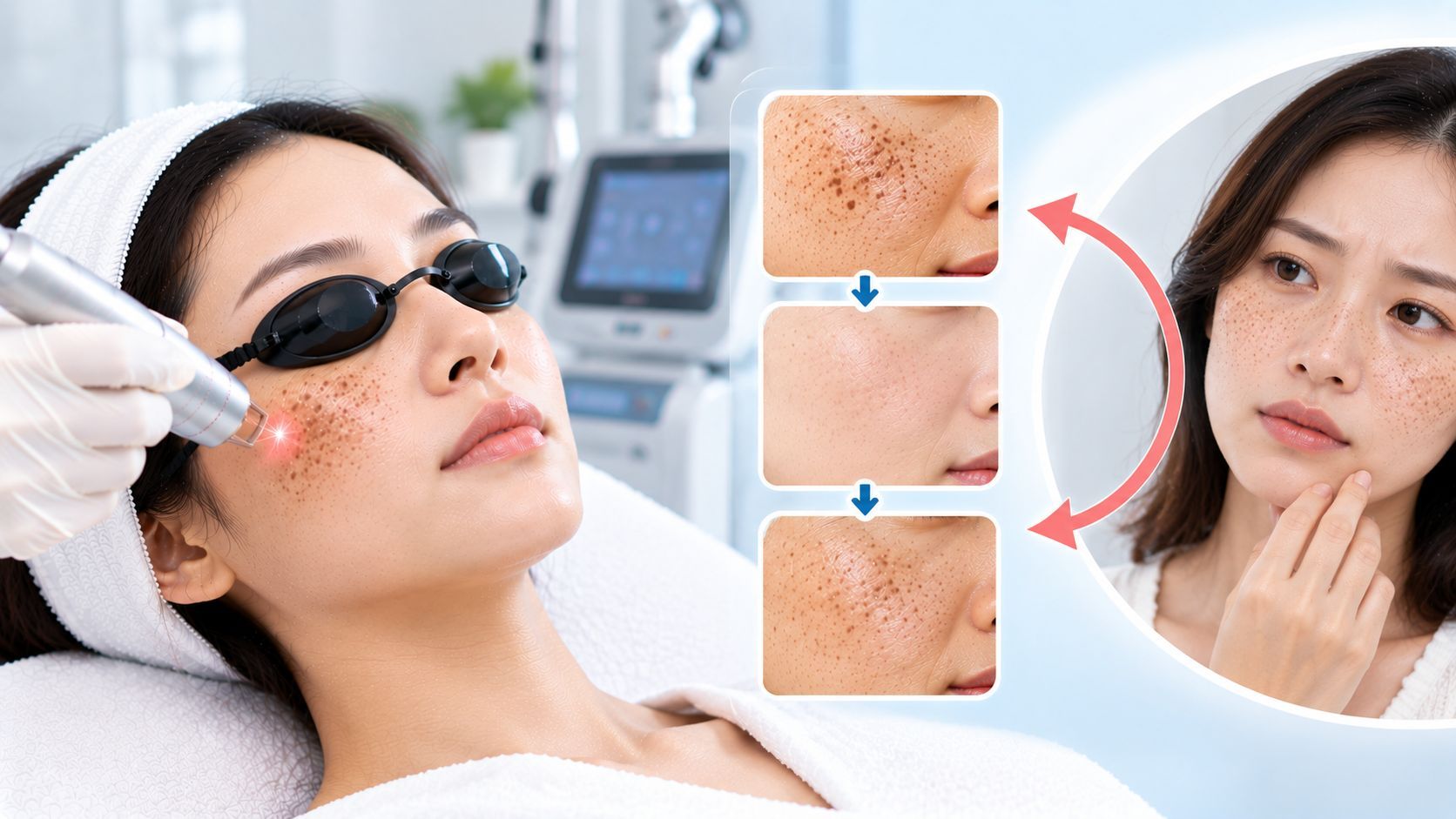
What If My Pigmentation Looks Darker After the First Treatment?
Temporary darkening can occur after some pigment treatments, particularly when pigment-containing areas have been intentionally treated.
However, darkening can have different explanations. It may represent an expected temporary treatment response, residual pigment, post-inflammatory hyperpigmentation, or worsening of an underlying pigmentation condition.
This is why darkening should not automatically be treated with another laser.
If pigmentation becomes substantially darker, spreads, develops in new areas, or remains abnormal longer than expected, contact the treating clinic or seek assessment from a qualified dermatologist.
Understanding why the pigmentation changed is more important than simply increasing treatment frequency.
How Does Your Pigmentation Diagnosis Affect the Interval?
The condition being treated matters as much as the laser itself.
Pigmentation problemTreatment considerationFrecklesOften treated as discrete pigment, with interval based on skin responseSun spotsTargeted treatment may require healing before another sessionPost-acne pigmentationUnderlying acne and inflammation should also be addressedMelasmaRequires particular caution because recurrence and flares are commonPIHAdditional inflammation can potentially worsen pigmentationMixed pigmentationDifferent areas may require different treatment strategies
It is also possible to have more than one type of pigmentation at the same time. For example, someone may have freckles plus melasma or acne-related PIH plus sun-related pigmentation.
That can make a simple “repeat the same laser” approach less appropriate.
Does Skin Tone Change How Long I Should Wait?
It can.
People with more melanin in their skin or a history of PIH may have a greater concern about treatment-related pigmentation changes. This does not automatically mean that laser treatment is unsuitable.
Instead, treatment settings, diagnosis, previous reactions, recovery, and the amount of inflammation produced become particularly important.
If you have previously developed dark marks after acne, burns, procedures, or lasers, tell the doctor before your next treatment.
Should I Schedule Pigmentation Laser Every Week?
A fixed weekly schedule should not be treated as appropriate for everyone.
Some treatment protocols may involve relatively frequent sessions, while others require longer recovery. The interval should be based on the specific procedure and your response rather than a package schedule alone.
Be cautious if you are told that you must have another treatment on a predetermined date regardless of:
- Whether your skin has recovered
- Whether pigmentation has improved
- Whether new PIH has appeared
- Whether you have persistent irritation
- Whether your diagnosis has changed
A treatment plan should leave room for reassessment.
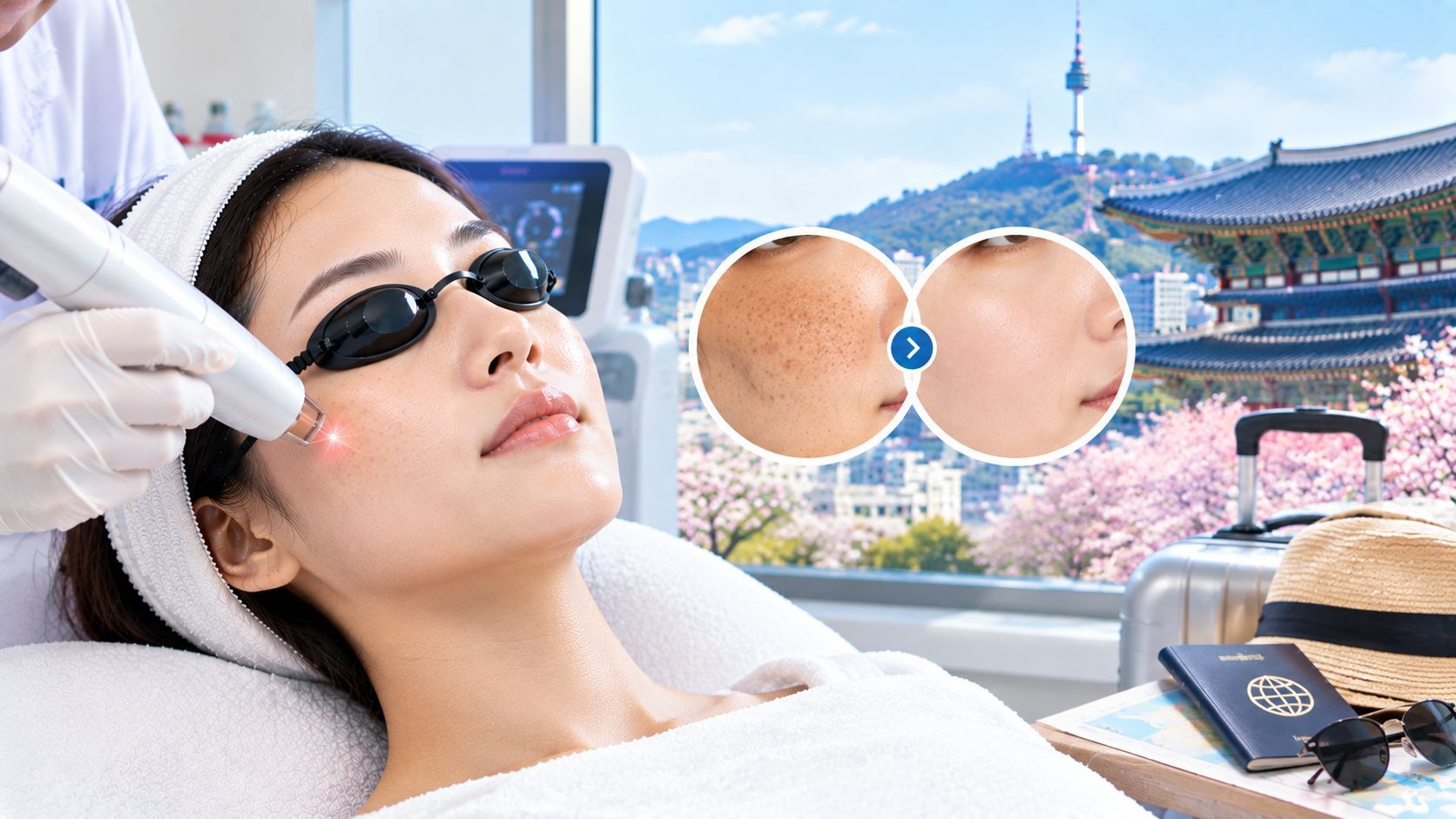
What About Doing Several Laser Sessions During a Seoul Trip?
International patients sometimes want to maximize a short trip to Korea by scheduling multiple pigmentation treatments close together.
This can be difficult because your skin response cannot always be predicted in advance.
Instead of planning several sessions before arriving, consider allowing time for:
- Initial consultation and skin assessment
- First treatment
- Recovery and observation
- Follow-up assessment
- A decision about whether another treatment is appropriate
This is especially relevant if you have melasma, PIH, sensitive skin, or a history of unexpected reactions.
If you are changing clinics, bring information about previous treatments, including the device, wavelength if known, treatment date, settings if available, and any reaction you experienced.
What Should I Ask Before Booking the Next Session?
Before repeating a pigmentation laser in Seoul, ask:
- What type of pigmentation are you treating?
- What laser or light-based treatment was used?
- What wavelength or treatment mode was used, if applicable?
- How intense was the previous treatment?
- Has my skin completely recovered?
- What signs would mean I should postpone treatment?
- How does my PIH history affect the plan?
- Could this be melasma rather than simple sun pigmentation?
- What should I do if the pigmentation becomes darker?
- Can you explain why this interval is appropriate for my skin?
These questions can help you understand the treatment plan rather than simply following a predetermined package.
When Should You Get Reassessed Instead of Another Laser?
A reassessment is particularly important when the result is not behaving as expected.
For example, if pigmentation becomes darker after treatment, new patches appear, redness persists, or the treated area becomes increasingly irritated, another laser session may not be the appropriate next step.
The underlying diagnosis may need to be reconsidered.
Likewise, if several treatments have produced little improvement, increasing the frequency is not necessarily the solution. The problem may involve the wrong diagnosis, unsuitable settings, insufficient photoprotection, an active inflammatory condition, or a pigmentation type that responds poorly to that particular approach.
How Can You Reduce Problems Between Pigmentation Treatments?
Follow the aftercare instructions provided by your treating clinician. Depending on the procedure, this may include careful sun protection and temporarily avoiding irritating skincare products.
UV exposure is particularly relevant for pigmentation-prone skin. Heat and irritation may also be concerns after certain procedures, so follow the specific restrictions given by your provider regarding exercise, sauna use, hot environments, and active skincare.
Do not restart strong exfoliating or active products simply because the skin looks normal on the surface. Your clinician can tell you when your usual routine can be resumed.
Conclusion
There is no single correct waiting period between pigmentation laser treatments. The next session should generally be considered after the skin has recovered and the response to the previous treatment has been assessed.
Conservative Pico or laser-toning approaches, targeted pigment treatments, and more aggressive resurfacing can have different recovery requirements. Melasma and PIH also require additional caution because inflammation can contribute to further pigmentation.
If you are having pigmentation treatment in Seoul, avoid treating the calendar—or a treatment package—as more important than your skin's actual recovery. A qualified dermatologist can determine whether another session is appropriate, whether the settings should change, or whether a different approach makes more sense.
FAQs
How long should I wait between pigmentation laser treatments?
There is no universal interval. The appropriate timing depends on the laser, treatment intensity, pigmentation type, skin tone, and recovery from the previous session.
Can I have Pico laser again after one week?
Sometimes treatment protocols use relatively short intervals, but one week is not automatically appropriate. Your skin should be assessed for inflammation, irritation, pigment changes, and recovery before repeating treatment.
Should I wait longer if my pigmentation became darker after laser?
Yes, additional treatment should not automatically be performed while unexplained darkening is occurring. The cause of the change should be assessed first.
Does melasma require longer between laser treatments?
Melasma often requires a more cautious and individualized approach. The interval should take into account whether the condition is stable and how your skin responded to the previous treatment.
Can I do multiple pigmentation laser treatments during one Korea trip?
It may be possible in selected situations, but scheduling several treatments in advance can be risky if your skin develops unexpected inflammation or pigmentation. Allowing time for recovery and reassessment is generally more practical.
What if my skin is still red before my next laser session?
Persistent redness, heat, tenderness, peeling, crusting, or irritation can indicate that your skin has not fully recovered. Contact the treating clinic before proceeding with another treatment.