Can I Remove Years of Sun Damage During One Korea Trip?
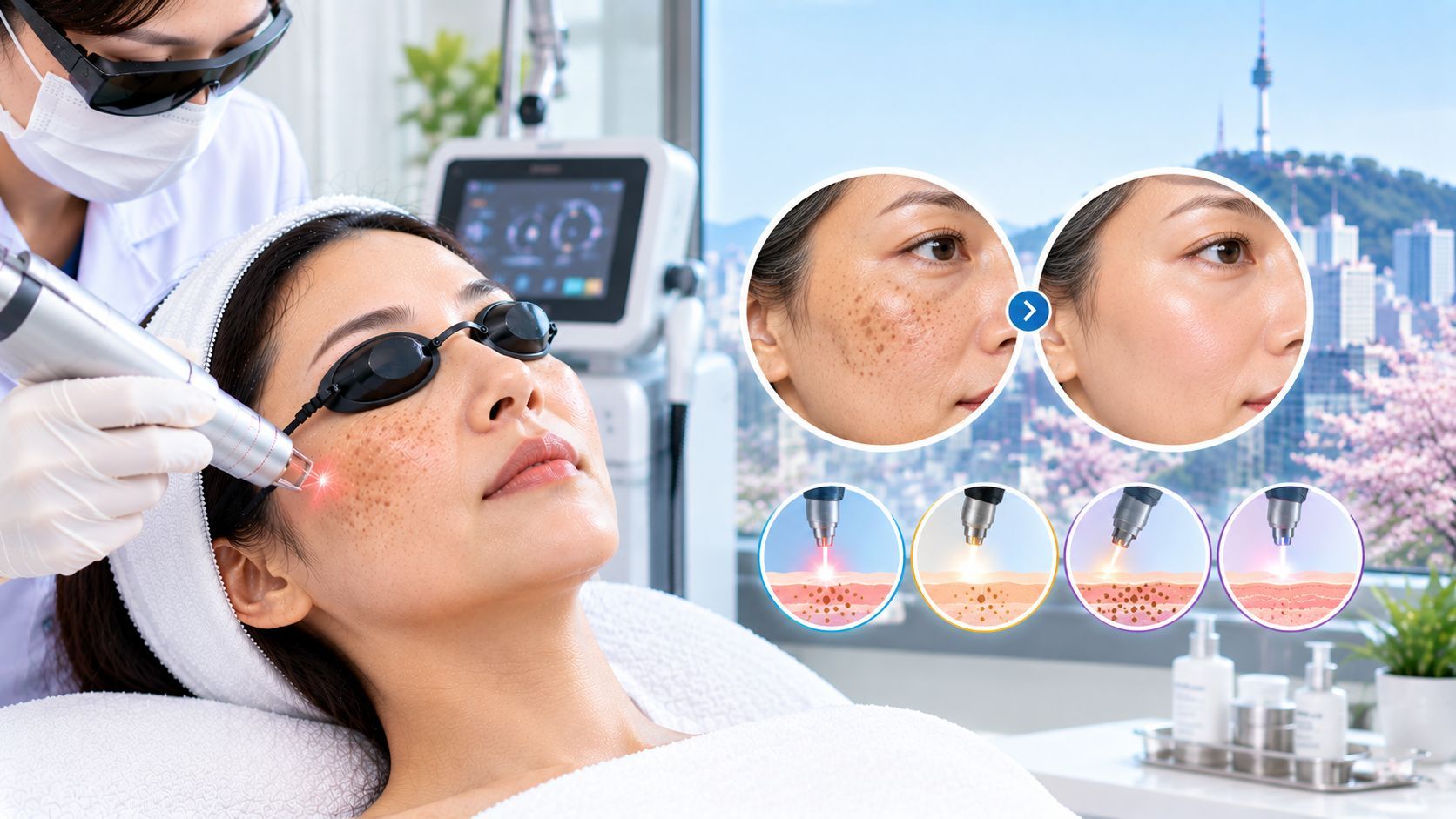
If you are traveling to Korea specifically to improve years of sun damage, you may be able to make noticeable improvements during one trip. However, it is usually unrealistic to expect every sign of accumulated sun damage to disappear during a single visit.
Sun damage can include brown spots, freckles, uneven pigmentation, redness, rough texture, fine lines, and changes in overall skin quality. Different problems may respond to different treatments, and some treatments require multiple sessions or recovery time.
The most useful approach is to identify your main concerns first and create a treatment plan that fits your skin and the length of your Korea trip.
What Does “Years of Sun Damage” Actually Mean?
Sun damage is not one single skin problem.
Long-term ultraviolet (UV) exposure can contribute to several visible changes, including:
- Freckles
- Solar lentigines or sun spots
- Uneven skin tone
- Persistent pigmentation
- Rough or uneven texture
- Fine lines
- Loss of skin elasticity
- Visible blood vessels or redness
- General photoaging
These changes do not necessarily respond to the same treatment.
For example, a sharply defined brown sun spot may be approached with a pigment-targeting laser, while widespread texture changes may require an entirely different treatment strategy.
Can One Korea Trip Make a Noticeable Difference?
Yes, depending on your goals and starting point.
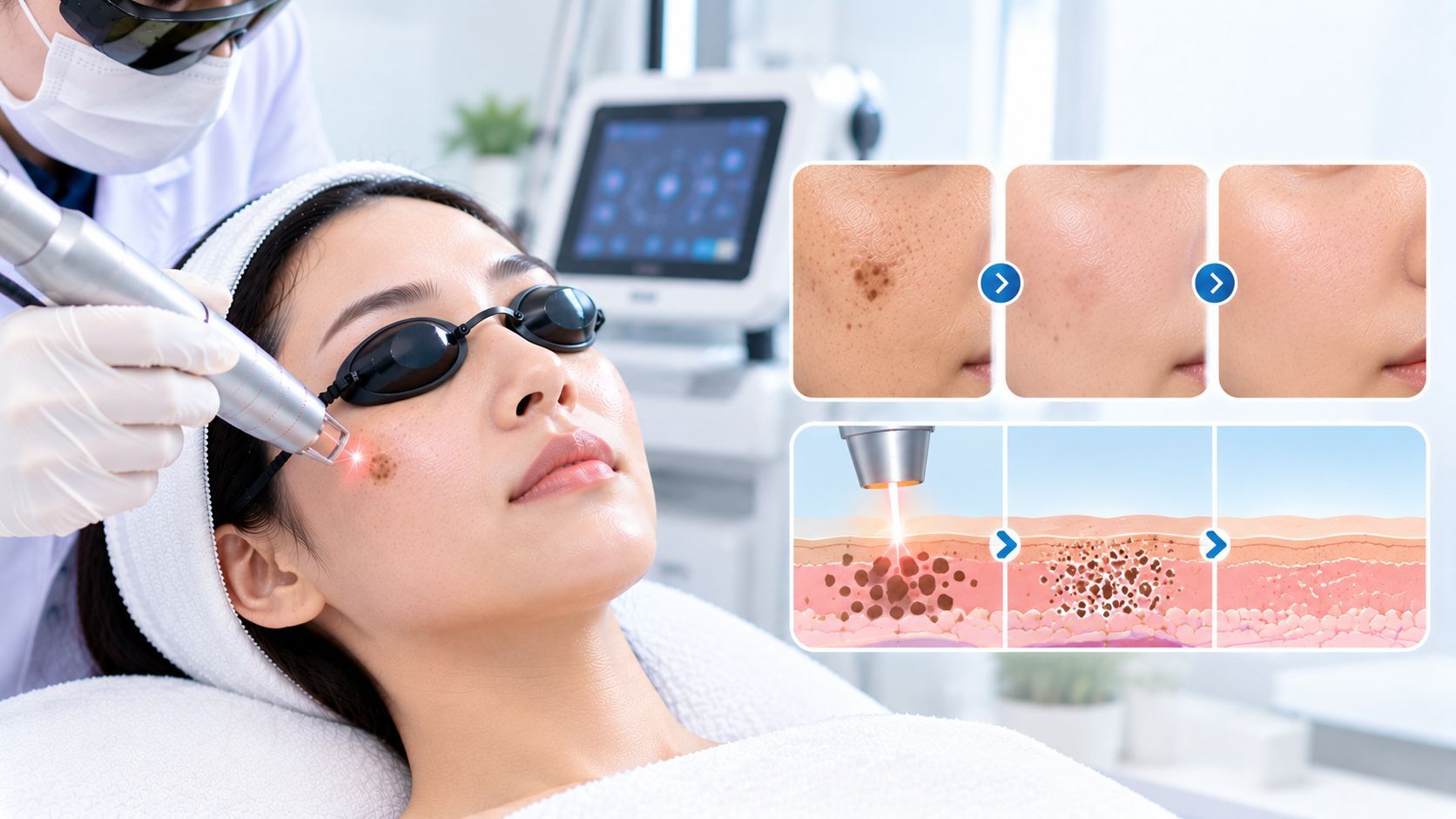
A single trip can potentially include a consultation and one or more appropriately spaced treatments. Some pigmentation concerns can show visible improvement after one session, although results vary.
However, a Korea trip should not be planned around the assumption that every sign of sun damage can be corrected immediately.
Some treatments need:
- Multiple sessions
- Several weeks between sessions
- Recovery time
- Gradual collagen remodeling
- Long-term maintenance
- Continued sun protection
The length of your trip therefore matters.
Which Sun Damage Can Respond Relatively Quickly?
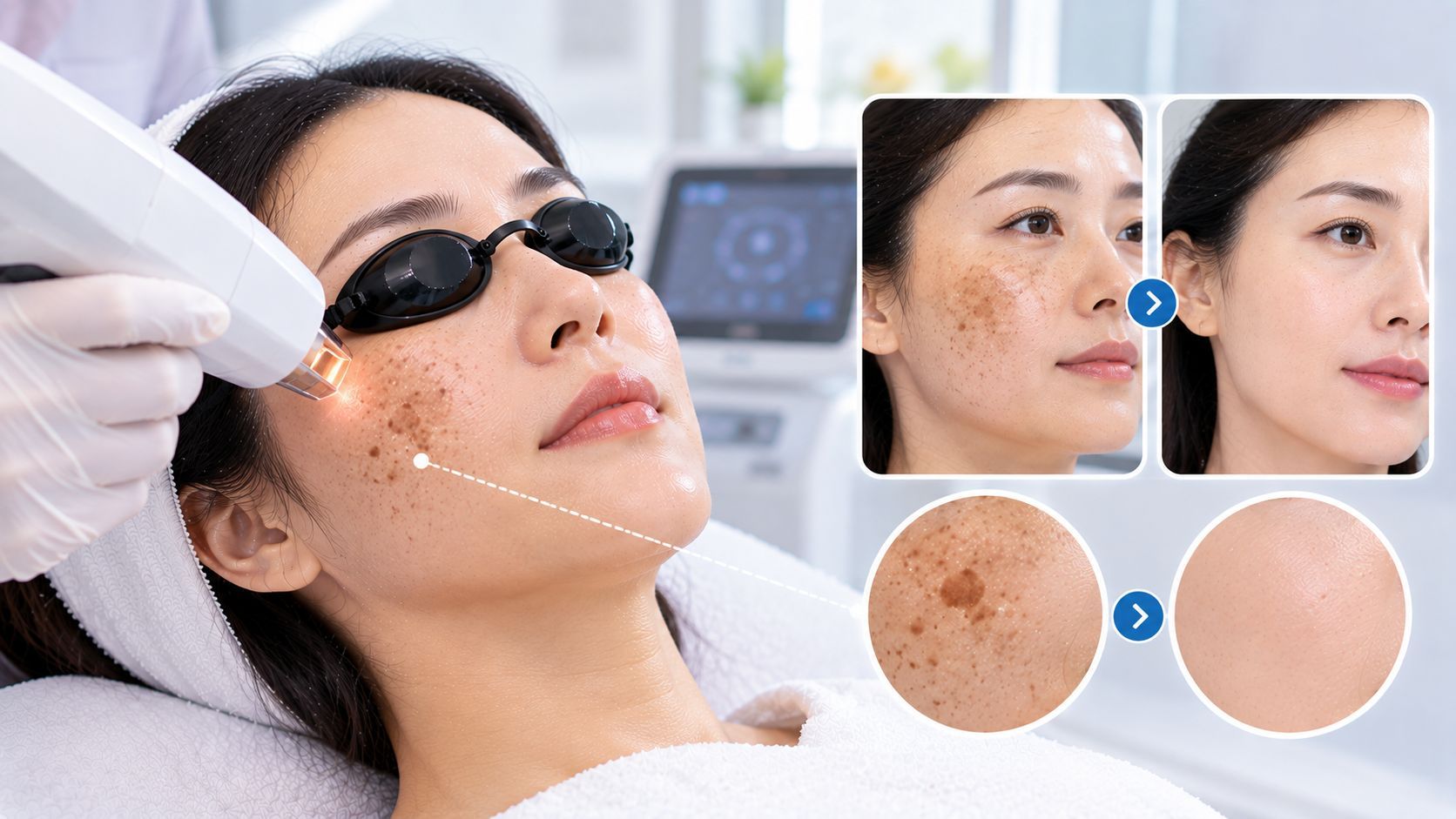
Certain localized pigmentation concerns may respond relatively quickly to treatment.
For example, selected:
- Sun spots
- Solar lentigines
- Freckles
- Superficial pigmentation
may be treated with pigment-targeting technologies such as Pico laser or other appropriate pigment lasers.
Some patients see substantial lightening after one treatment, while others need additional sessions.
Temporary darkening, redness, crusting, or peeling can occur depending on the treatment.
What About Pico Laser?
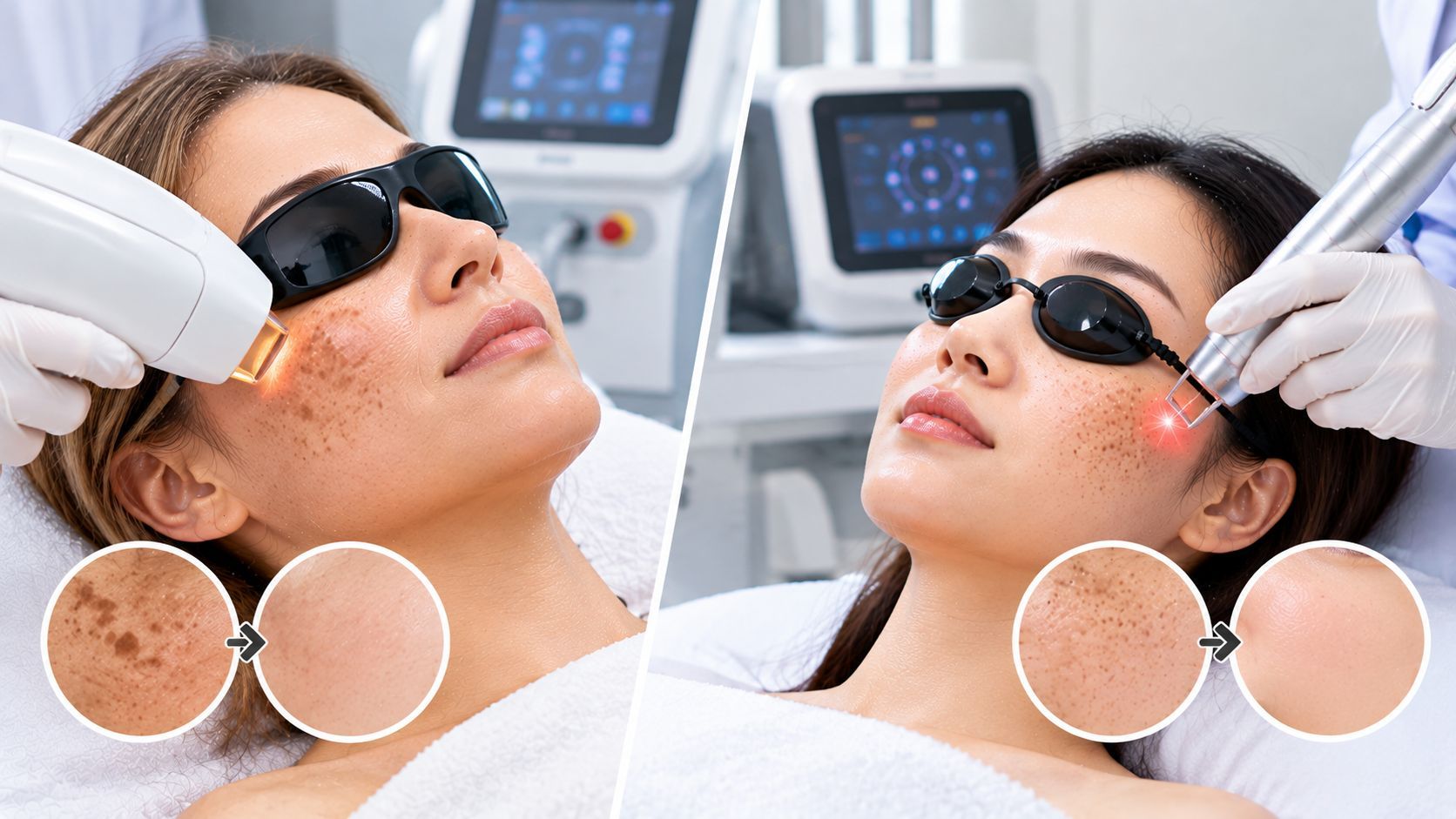
Pico laser may be considered for selected pigmentation concerns.
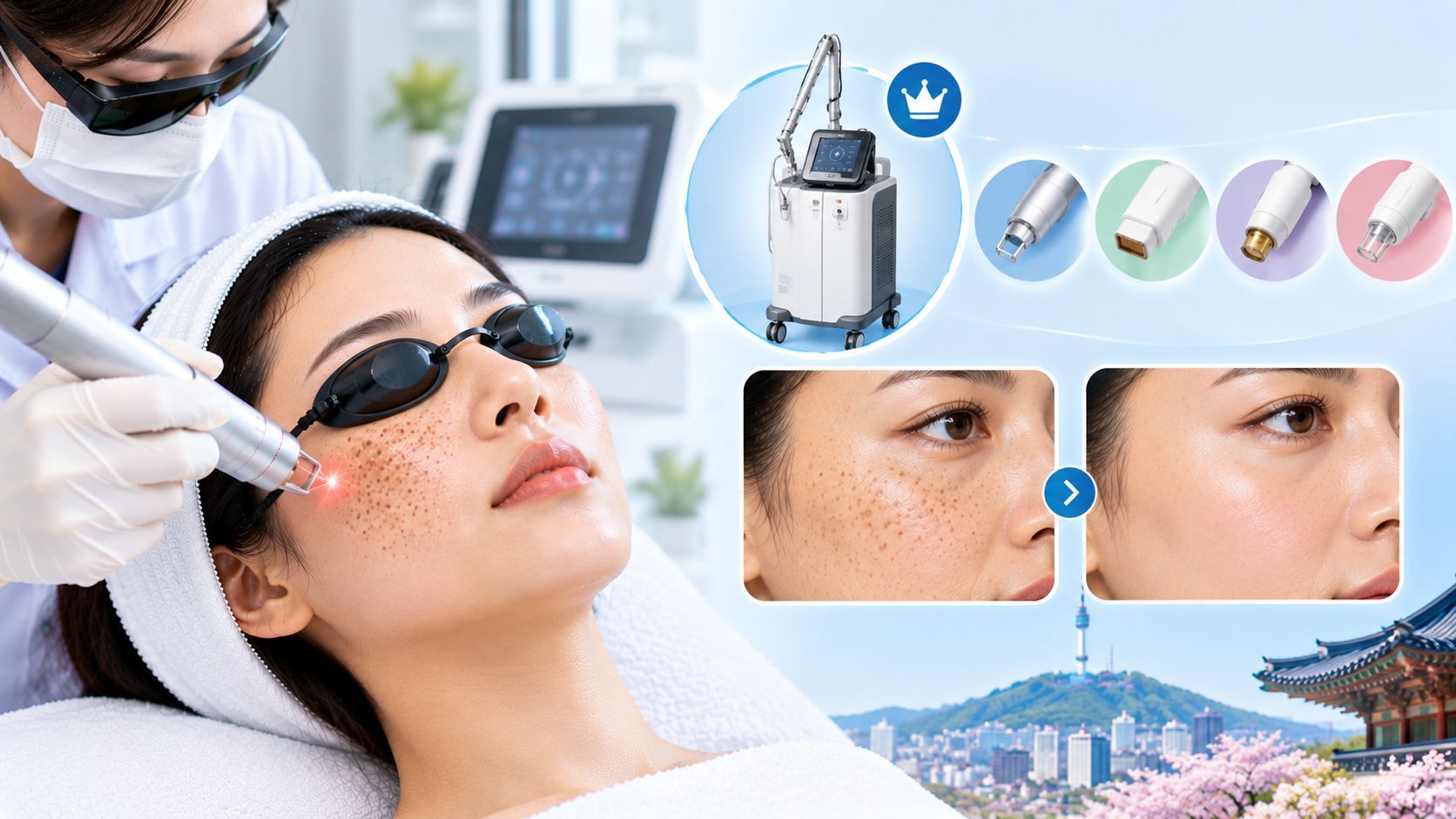
It uses very short laser pulses, and different Pico devices can use different wavelengths and treatment approaches.
Pico laser may be used for certain:
- Sun spots
- Freckles
- Pigmentary concerns
- Uneven skin tone
But “Pico laser” is not one standardized treatment. The device, wavelength, energy, and technique all matter.
It should also not be assumed that Pico laser can safely or effectively treat every type of pigmentation.
What About IPL?
IPL, or intense pulsed light, is technically not a laser.
It may be considered for selected patients with sun-related pigmentation and certain other signs of photodamage.
Because IPL uses broad-spectrum light, skin tone and tanning history are particularly important when determining whether it is appropriate.
Patients with darker skin, recent tanning, or a history of post-inflammatory hyperpigmentation (PIH) may require additional caution.
Can Texture and Fine Lines Be Improved During the Same Trip?
Potentially, but texture and pigmentation should not automatically be treated with the same procedure.
Sun-related texture changes may be addressed with treatments such as:
- Fractional laser resurfacing
- RF microneedling
- Other resurfacing technologies
- Selected energy-based skin treatments
These treatments can require more recovery than some pigment-focused procedures.
If your primary goal is to reduce brown spots before returning home, a dermatologist may prioritize pigmentation rather than combining several aggressive treatments during a short trip.
Why Is Trying to Treat Everything at Once a Problem?
More treatment does not automatically mean better results.
Combining too many procedures can increase:
- Skin inflammation
- Irritation
- Downtime
- PIH risk
- Difficulty identifying which treatment caused a reaction
- Recovery demands
This is particularly relevant for people with sensitive or pigmentation-prone skin.
A treatment plan should consider the condition of your skin rather than the number of procedures you can fit into your itinerary.
What If I Have Melasma?
Melasma needs particular care.
Melasma can look like sun damage but is a different pigmentation problem. It commonly appears as broader patches and can be influenced by UV exposure, visible light, hormones, and heat.
Aggressive treatment is not automatically appropriate for melasma.
If you have both melasma and sun spots, your dermatologist may need to address the two problems differently rather than treating every brown area with the same laser.
What If I Have Darker Skin?
Skin tone is an important consideration when treating pigmentation.
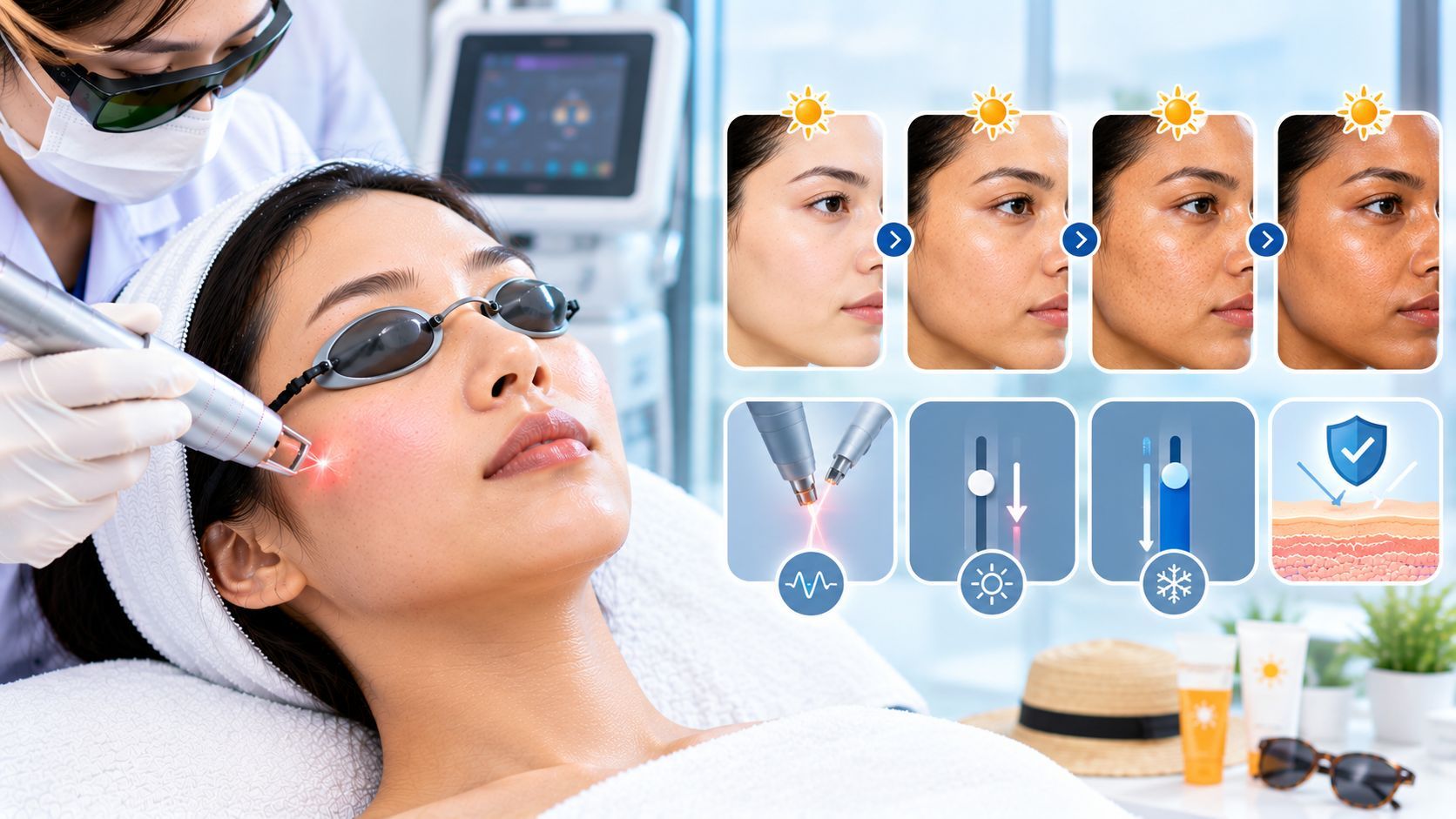
Darker or more melanin-rich skin can be more susceptible to PIH following inflammatory procedures. This does not mean laser treatment is impossible, but it does mean that treatment selection and settings should be individualized.
Your dermatologist may consider:
- Conservative energy settings
- Appropriate wavelengths
- Treating a smaller area initially
- A test spot in selected cases
- More recovery time
- Careful UV protection
Recent tanning should also be disclosed before treatment.
Can One Session Permanently Remove Sun Damage?
No.
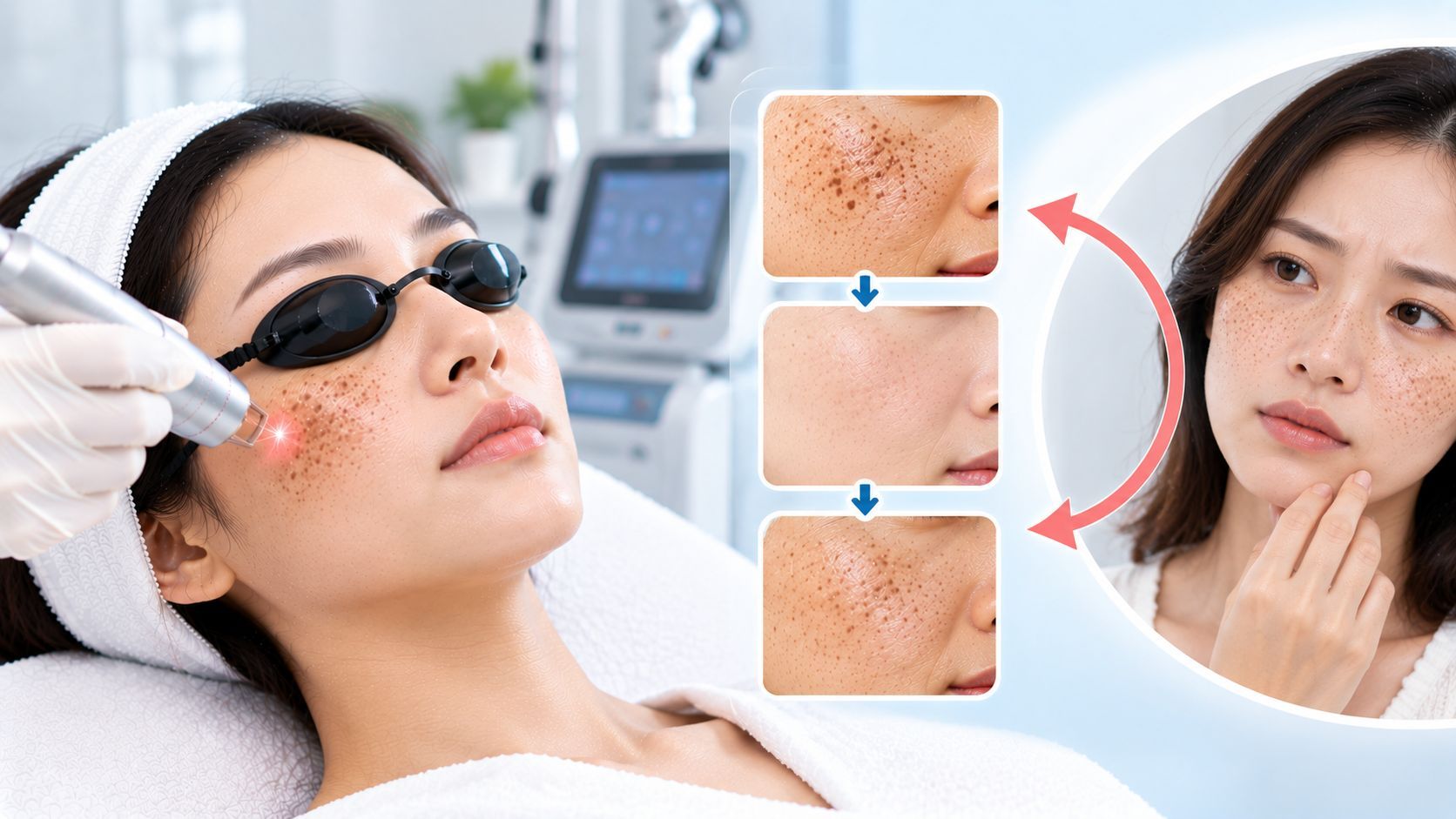
A treatment may significantly improve particular spots, but it cannot permanently erase the effects of future UV exposure.
Even after successful treatment:
- New sun spots can develop.
- Freckles can become visible again.
- Pigmentation can recur.
- Skin aging continues.
- Existing texture changes may require maintenance.
Sun protection is therefore part of the long-term treatment strategy.
How Should You Plan a Short Korea Treatment Trip?
If you have limited time, avoid filling your itinerary with procedures before understanding the recovery requirements.
A practical approach is:
1. Start With a Consultation
Have the dermatologist identify the different types of pigmentation and other signs of photodamage.
2. Prioritize Your Main Concern
Decide whether your priority is:
- Brown spots
- Freckles
- Uneven tone
- Texture
- Fine lines
- Overall skin quality
3. Understand the Treatment Timeline
Ask how quickly you should expect visible changes and whether additional sessions would normally be recommended.
4. Leave Recovery Time
Do not schedule an intensive outdoor itinerary immediately after a procedure without asking whether it is appropriate.
5. Plan Around Your Flight
Ask how your specific treatment affects exercise, heat, sun exposure, swimming, sauna use, and travel.
6. Arrange Follow-Up When Necessary
If you are having a procedure that requires monitoring, ask whether an in-person follow-up before returning home is recommended.
What Should International Patients Ask a Korean Dermatologist?
Before treatment, consider asking:
- What type of sun damage do I have?
- Which areas can realistically improve during this trip?
- Which treatment are you recommending and why?
- How many sessions would normally be required?
- What results can I realistically expect from one session?
- What is my PIH risk?
- How much downtime should I expect?
- Can I go sightseeing afterward?
- How should I protect my skin during the rest of my trip?
- Will I need additional treatment after returning home?
These questions can help prevent unrealistic expectations.
What If You Only Have 3–5 Days in Korea?
A short trip does not necessarily mean you cannot have treatment, but your options may be more limited.
You should consider recovery time rather than scheduling treatment on the final day before a flight.
For example, if a treatment is expected to cause temporary darkening or crusting, you may prefer to have enough time to receive aftercare instructions and address unexpected reactions before leaving.
Your dermatologist can advise you based on the exact procedure.
What If You Have Two Weeks in Korea?
A longer trip provides more flexibility, but it does not necessarily mean you should receive more aggressive treatment.
Some procedures need several weeks before another session, so a two-week trip may still only allow one treatment session for certain concerns.
The advantage is that you may have more time for:
- Initial consultation
- Treatment
- Early recovery
- Follow-up
- Adjustments if needed
How Can You Maintain Results After Returning Home?
Long-term maintenance is essential.
Use appropriate sun protection and follow your dermatologist's post-treatment recommendations.
Depending on your skin and treatment, your long-term plan may involve:
- Daily UV protection
- Gentle skincare
- Pigmentation maintenance
- Periodic professional treatments
- Monitoring for new or changing lesions
If you continue substantial UV exposure without protection, new pigmentation may develop regardless of how successful the initial treatment was.
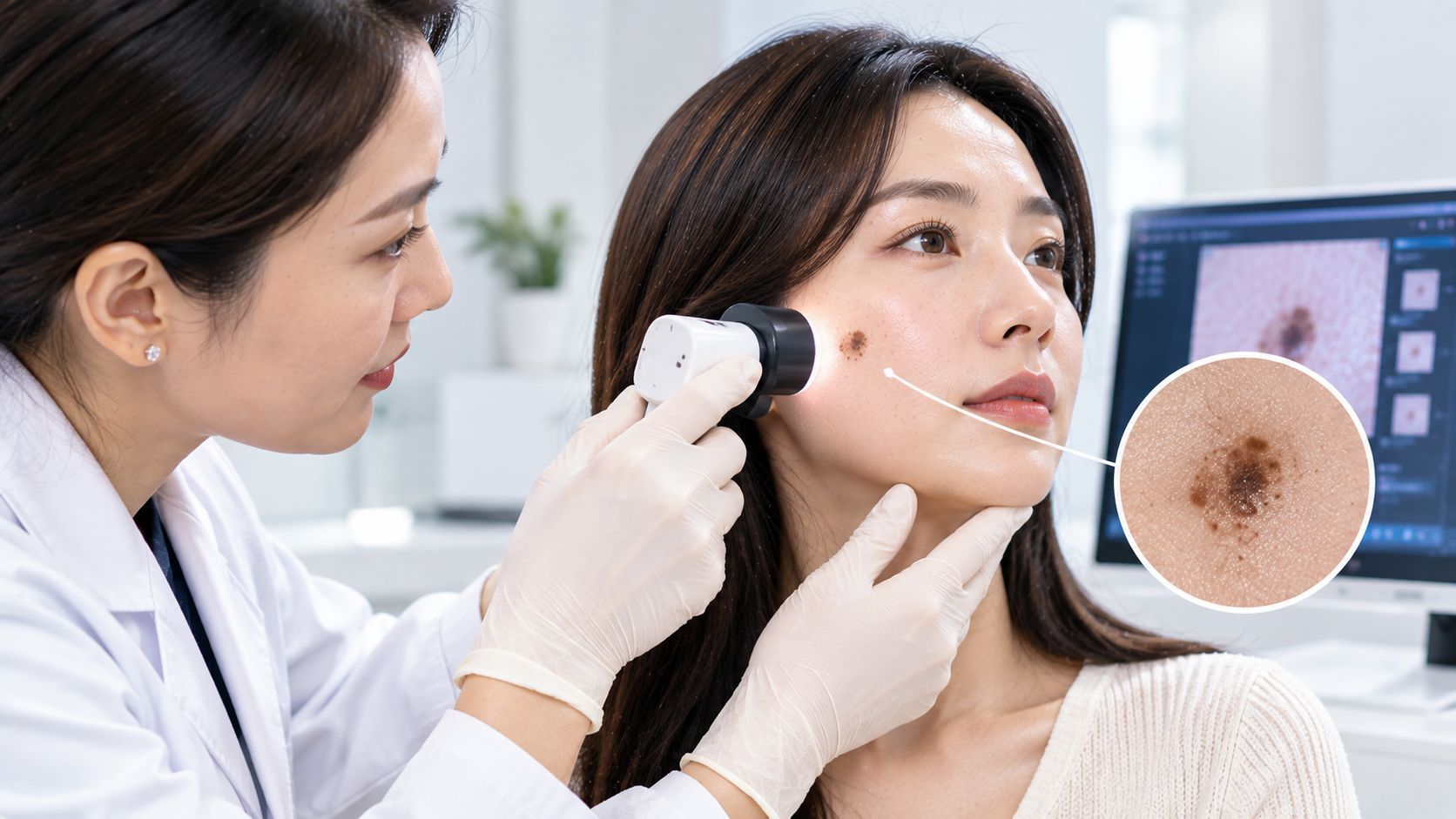
When Should a Dark Spot Be Checked Before Treatment?
Not every dark spot should be treated cosmetically.
A new, changing, irregular, bleeding, crusting, itching, or growing pigmented lesion should be medically assessed before laser or light treatment.
Do not assume that every brown spot is simply sun damage.
Diagnosis should come before cosmetic treatment when a lesion looks unusual.
Conclusion
You can potentially make meaningful improvements to sun-related pigmentation during one Korea trip, particularly when your main concern is a limited number of superficial sun spots or freckles. However, years of sun damage usually cannot be completely reversed in a single visit.
Different signs of photodamage may require different treatments, multiple sessions, or ongoing maintenance. Pico laser, other pigment-targeting lasers, IPL, and resurfacing treatments can have different roles depending on the problem.
For international patients, the best strategy is to begin with a professional assessment, prioritize the concerns that matter most, allow adequate recovery time, and plan realistic expectations around your travel schedule.
Frequently Asked Questions
Can I treat sun spots during one trip to Korea?
Yes, selected sun spots may be treated during one trip. Some can become substantially lighter after one treatment, but complete clearance and long-term prevention cannot be guaranteed.
Can I remove all my sun damage in one session?
Usually not. Sun damage can involve pigmentation, texture, redness, and other changes that may require different treatments or multiple sessions.
Is Pico laser good for years of sun damage?
Pico laser may be useful for selected pigmentation concerns, but it does not treat every component of photoaging. Treatment should be based on the specific type of sun damage.
Can I have several laser treatments during one Korea trip?
Possibly, but the treatments should not simply be stacked together for convenience. Recovery time, skin condition, PIH risk, and treatment compatibility need to be considered.
How long should I stay in Seoul after a pigmentation laser?
There is no universal number of days. It depends on the treatment, expected reaction, and your travel plans. Ask the treating dermatologist how much recovery time is appropriate before your flight.
Will sun spots come back after treatment?
They can. New or recurrent pigmentation may develop with continued UV exposure, so sun protection remains important after treatment.