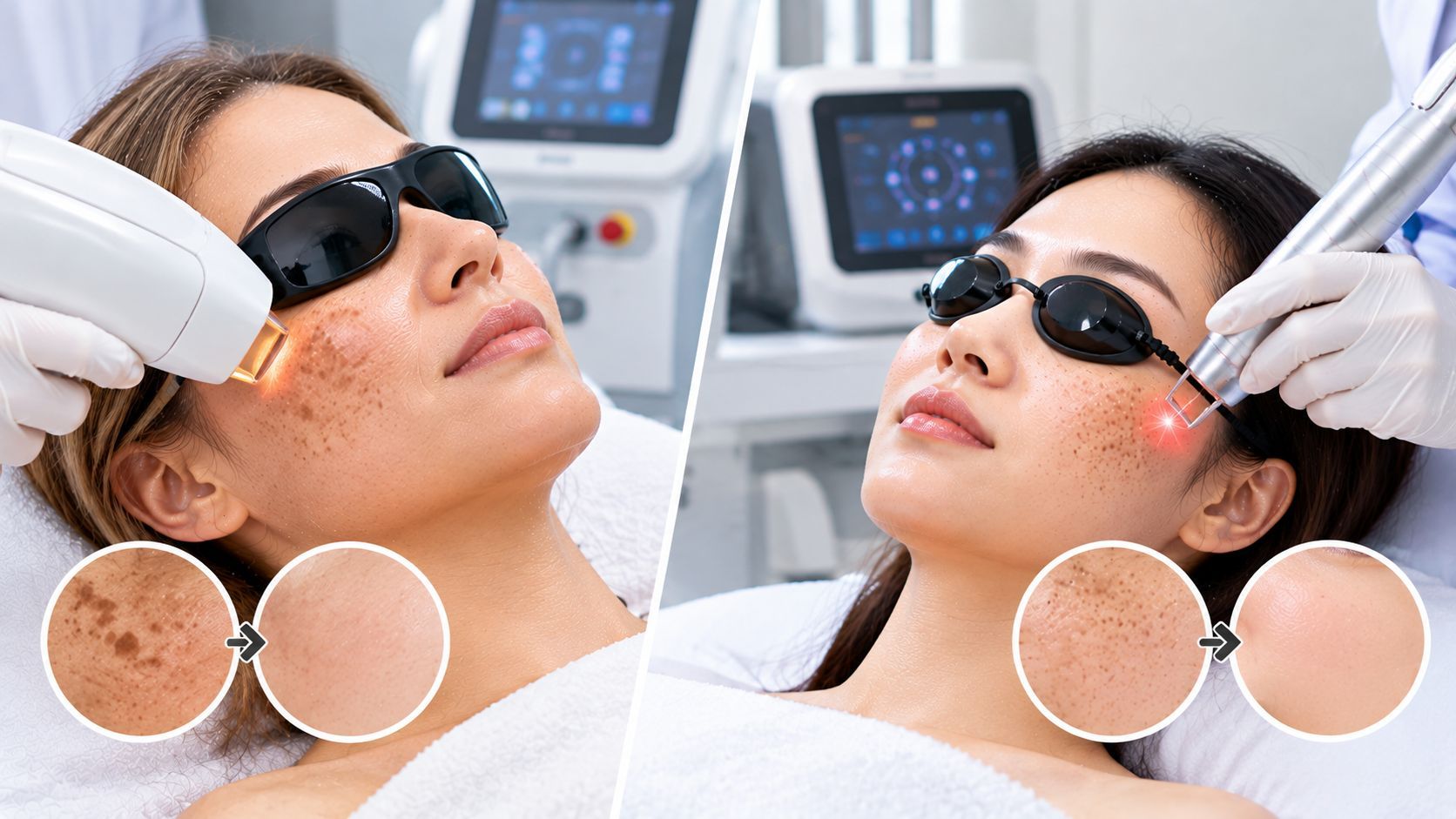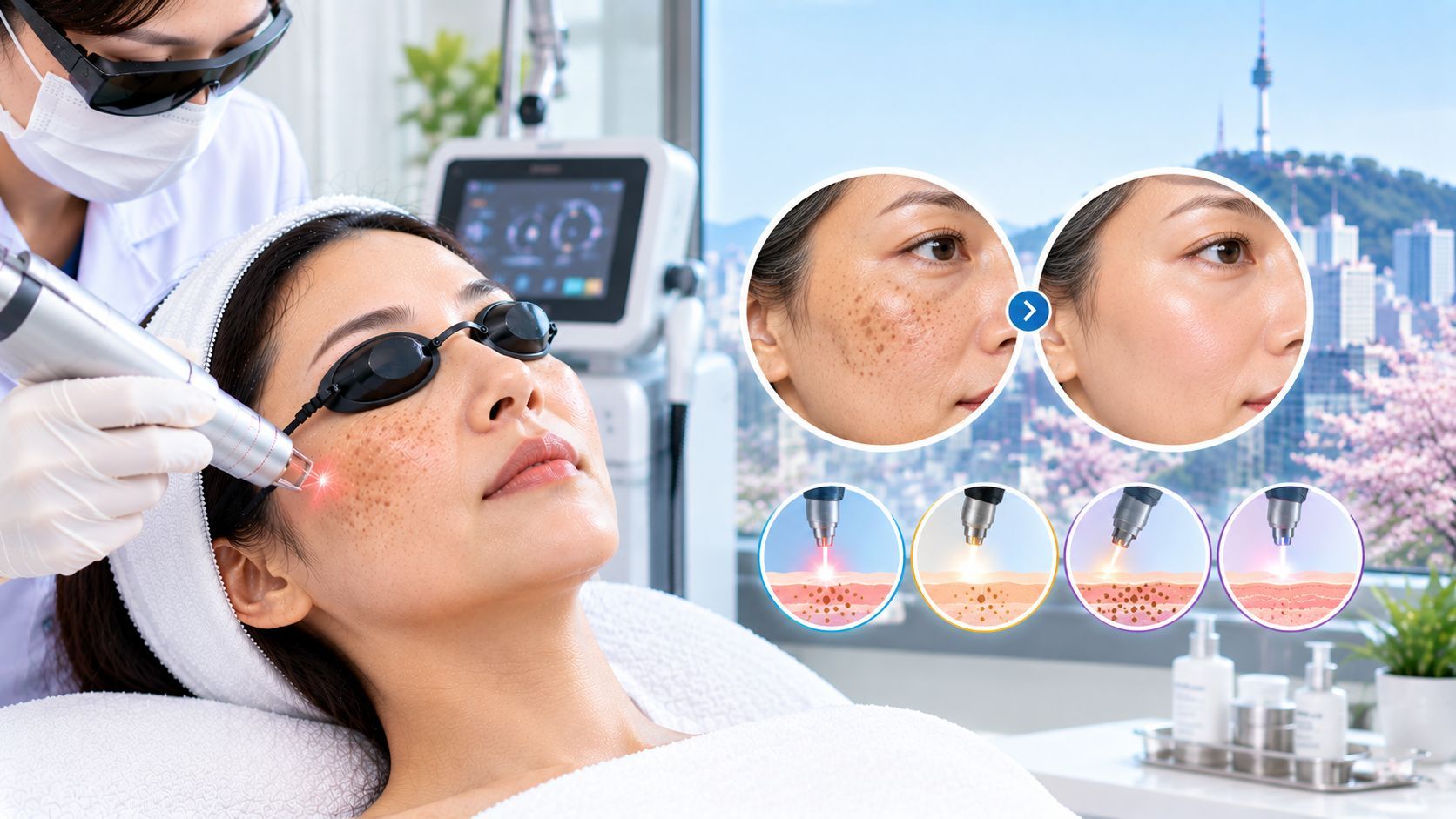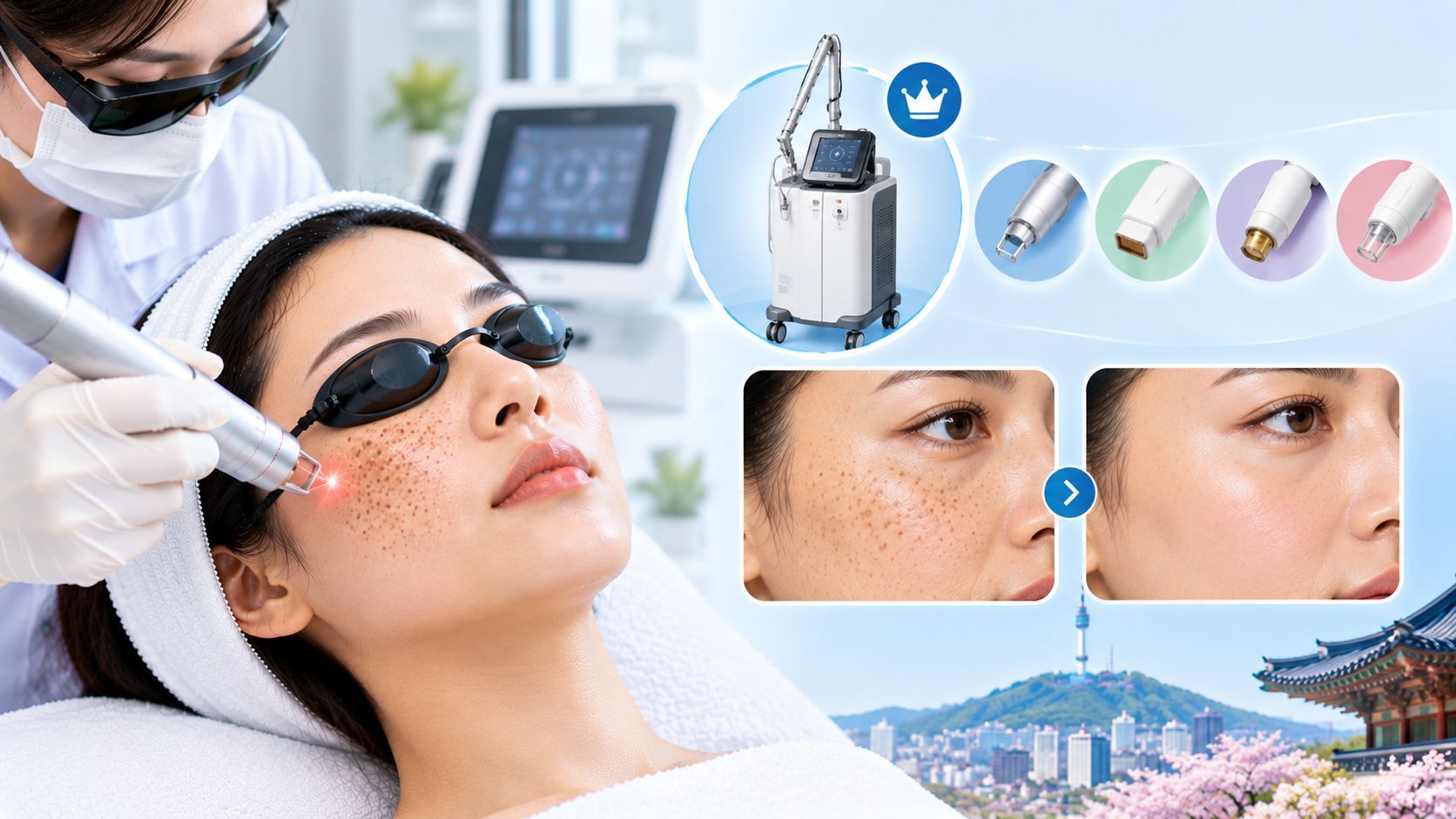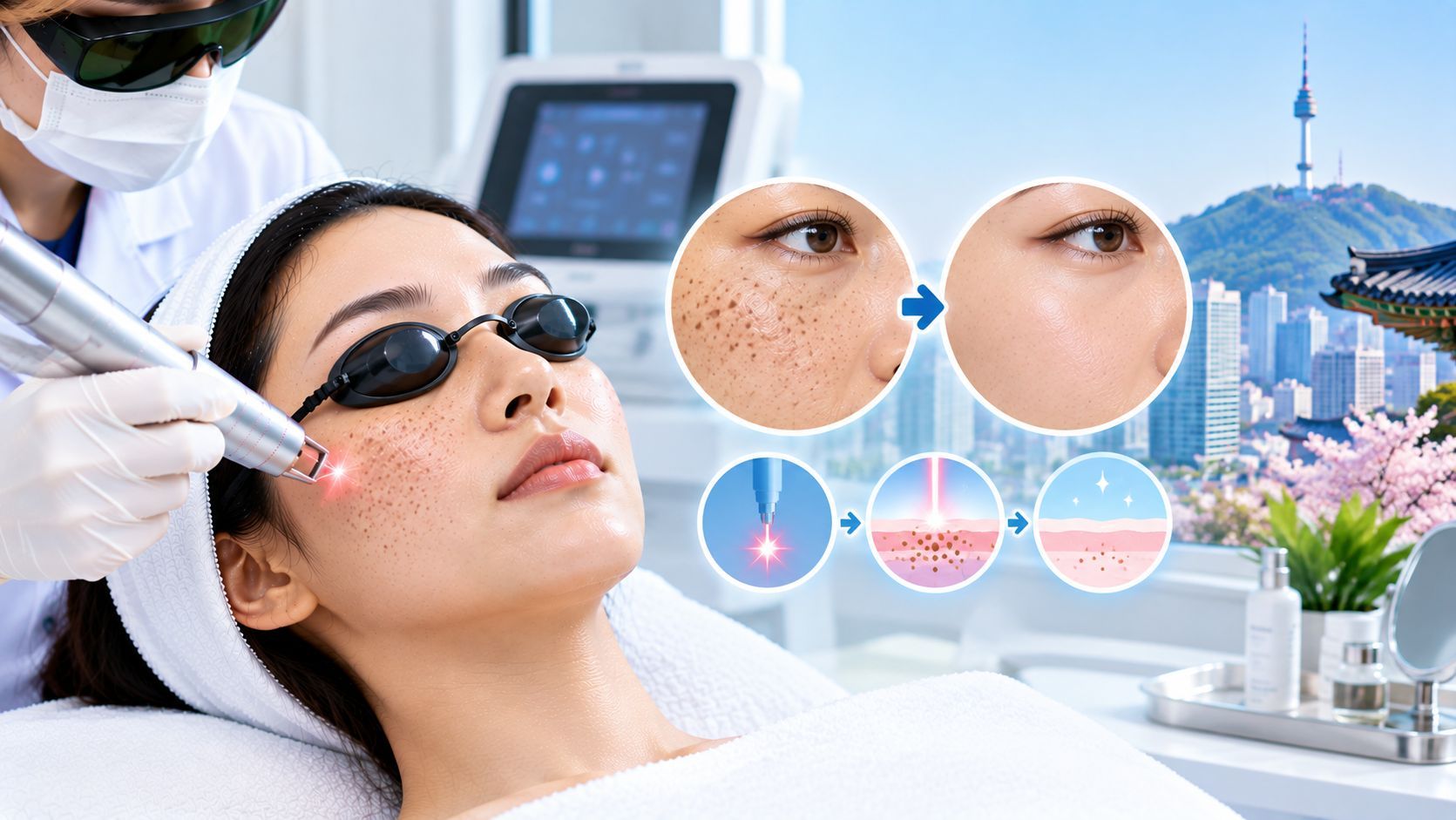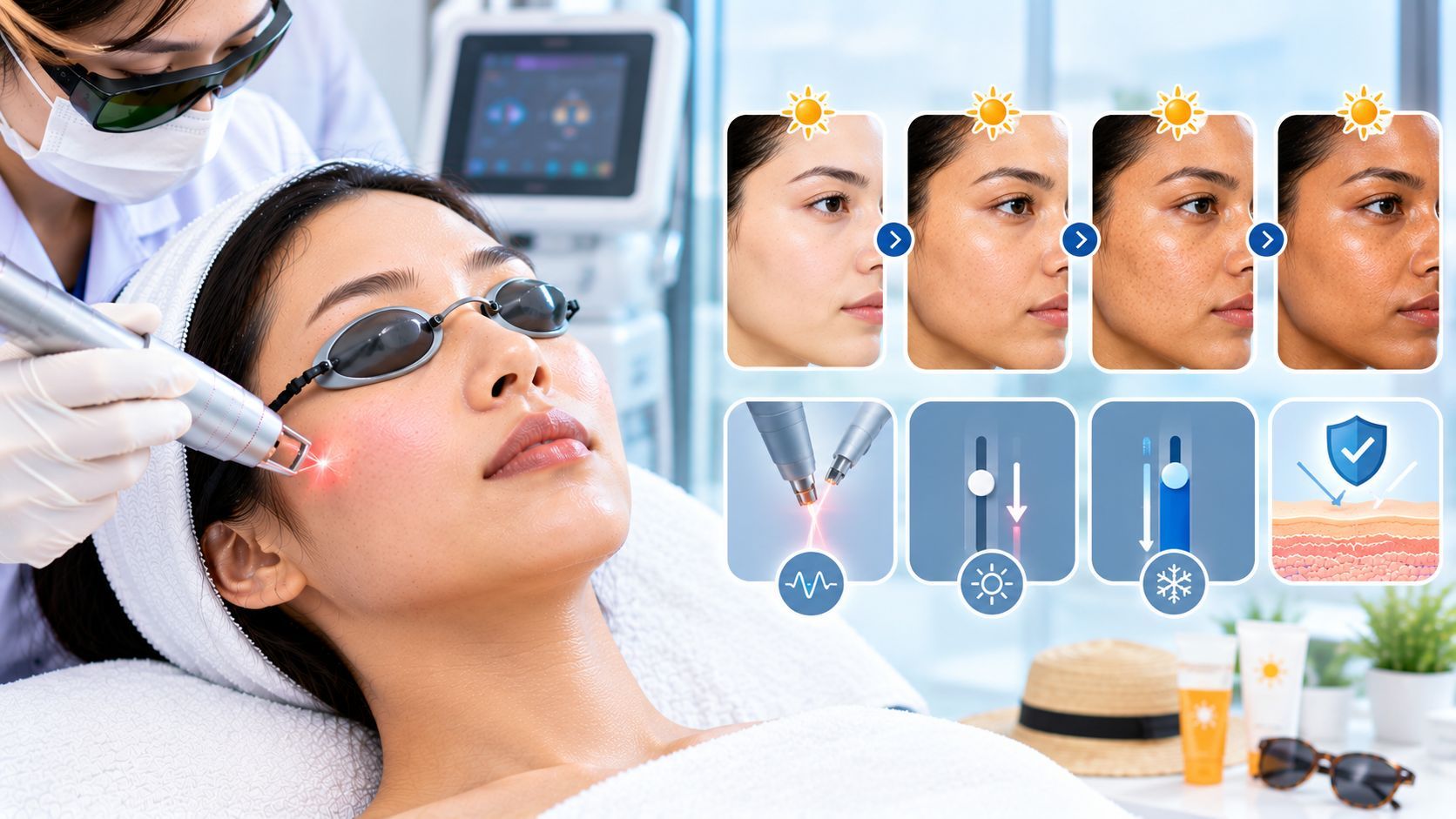
Can Pico Laser Remove Individual Dark Spots?
If you have one or a few individual dark spots on your face, Pico laser may be an option in selected cases. However, whether it can remove a particular spot depends first on what the spot actually is. Pico laser is not a universal treatment for every type of brown, gray, or dark mark.
Pico technology can be used to target pigment with very short laser pulses, but treatment results vary according to the pigmentation, skin tone, depth of pigment, previous tanning, and risk of post-inflammatory hyperpigmentation (PIH). A dermatologist should assess the spot before treatment, especially if it is new or changing.
What Types of Dark Spots Can Pico Laser Treat?
“Dark spot” can describe several different conditions.
Pico laser may be considered for selected cases of:
- Solar lentigines or sun spots
- Some freckles
- Certain superficial pigmented marks
- Some post-inflammatory pigmentation
- Selected pigmentary conditions depending on diagnosis
However, these conditions do not necessarily respond in the same way.
For example, a sharply defined sun spot may be approached differently from diffuse melasma. A dark mark left after acne may also require a different strategy.
The first step is therefore identifying the type of pigmentation rather than choosing Pico laser first.
How Does Pico Laser Target a Dark Spot?
Pico lasers deliver laser energy in extremely short pulses. Depending on the device and wavelength, the energy can target pigment within the skin.
Pico is best understood as a technology platform rather than one single standardized treatment. Different devices may use different wavelengths and treatment parameters.
For an individual dark spot, the dermatologist may select a specific wavelength, spot size, energy level, and treatment technique based on the lesion and your skin.
This is why simply asking whether “Pico laser removes dark spots” does not provide the complete answer.
Can One Individual Spot Be Treated Instead of the Whole Face?
Yes, targeted treatment may be possible in selected cases.
If you have one clearly defined sun spot, for example, a dermatologist may treat the individual lesion rather than performing a full-face pigmentation treatment.
This can be useful when:
- Only a few spots are present
- The pigmentation is clearly defined
- The surrounding skin does not require treatment
- The diagnosis is appropriate for targeted laser treatment
However, targeted treatment does not mean there will be no reaction afterward.
The treated area may temporarily become darker, red, swollen, crusted, or sensitive depending on the treatment approach.
Will Pico Laser Completely Remove an Individual Dark Spot?
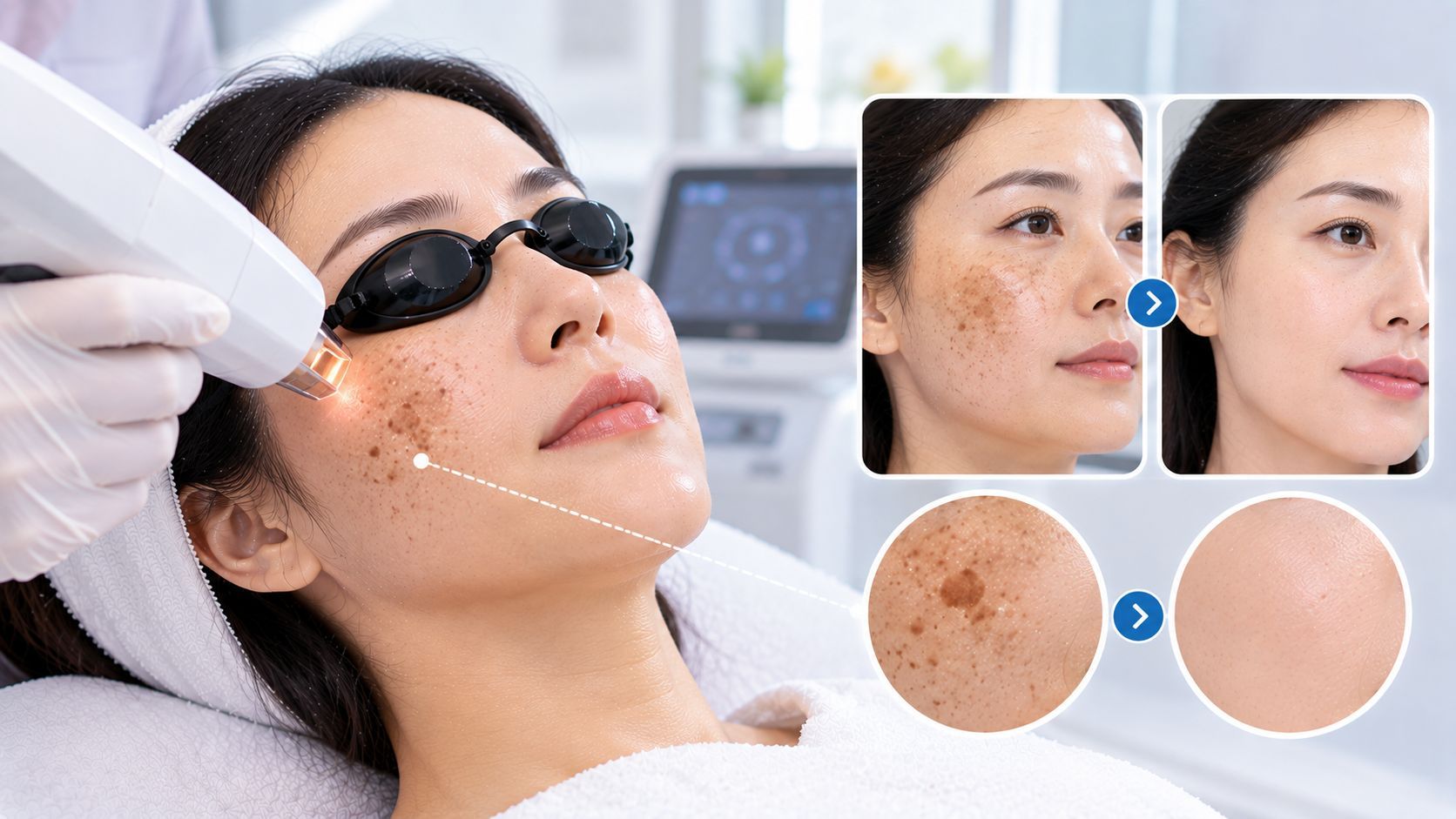
It can significantly lighten some individual pigmented spots, but complete removal cannot be guaranteed.
The response depends on several factors, including:
- Type of pigmentation
- Depth of pigment
- Skin tone
- Laser wavelength
- Energy and treatment settings
- Previous treatments
- Tendency toward PIH
- Ongoing UV exposure
Some superficial lesions respond noticeably after one treatment, while others may require multiple sessions.
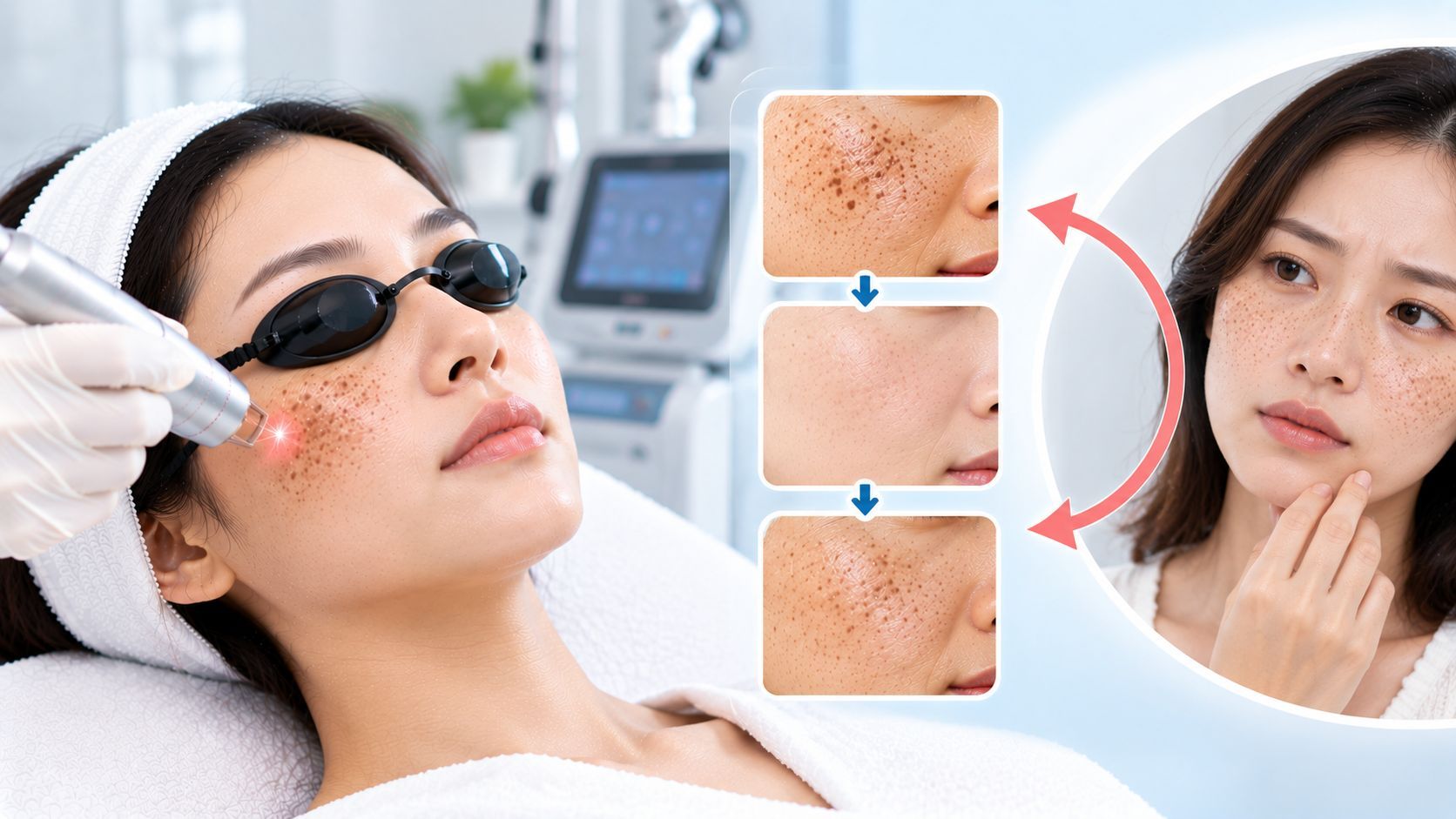
It is also possible for pigmentation to return or for a new spot to develop later.
What Happens to the Spot After Pico Laser?
The treated area does not necessarily look lighter immediately.
Depending on the technique, you may notice temporary changes such as:
- Darkening of the pigment
- Redness
- Mild swelling
- Sensitivity
- Peeling
- Tiny crusts
The pigment may gradually become lighter as the skin recovers.
Do not pick or scratch a treated area. Follow the clinic's specific aftercare instructions and protect the area from unnecessary UV exposure.
Can Pico Laser Make a Dark Spot Darker?
Yes, temporary darkening can occur after pigment-targeting laser treatment.
There is also a risk of post-inflammatory hyperpigmentation, particularly in people who naturally develop pigmentation easily.
PIH risk can be affected by:
- Naturally darker skin
- Recent tanning
- Previous PIH
- Excessive treatment intensity
- Skin irritation
- Insufficient sun protection
This does not mean people with darker skin cannot have Pico treatment. It means treatment parameters and patient selection require greater care.
If you have previously developed dark marks after acne, burns, waxing, or laser treatment, tell the dermatologist before treatment.
Is Pico Laser Suitable for One Dark Spot on Darker Skin?
It may be, but skin tone is an important part of treatment planning.
For patients with more melanin-rich skin, the dermatologist may consider a more conservative approach depending on the diagnosis and device.
Possible strategies can include:
- Selecting an appropriate wavelength
- Using conservative settings
- Treating a small area initially
- Considering a test spot in selected cases
- Allowing adequate recovery
- Paying close attention to sun protection
A stronger setting is not automatically a better setting.
The objective is to target the unwanted pigment while limiting unnecessary inflammation.
What If the Dark Spot Is Actually Melasma?
This is one of the most important distinctions.
Melasma usually involves broader areas of pigmentation rather than one isolated spot. It can also be influenced by UV exposure, visible light, hormones, heat, and other factors.
If a patient assumes a dark patch is simply a sun spot and receives aggressive targeted treatment, the result may not be what they expect.
Melasma can be difficult to manage and may recur. A dermatologist should determine whether the pigmentation pattern is consistent with melasma before selecting a laser strategy.
Should Every New Dark Spot Be Treated With Pico Laser?
No.
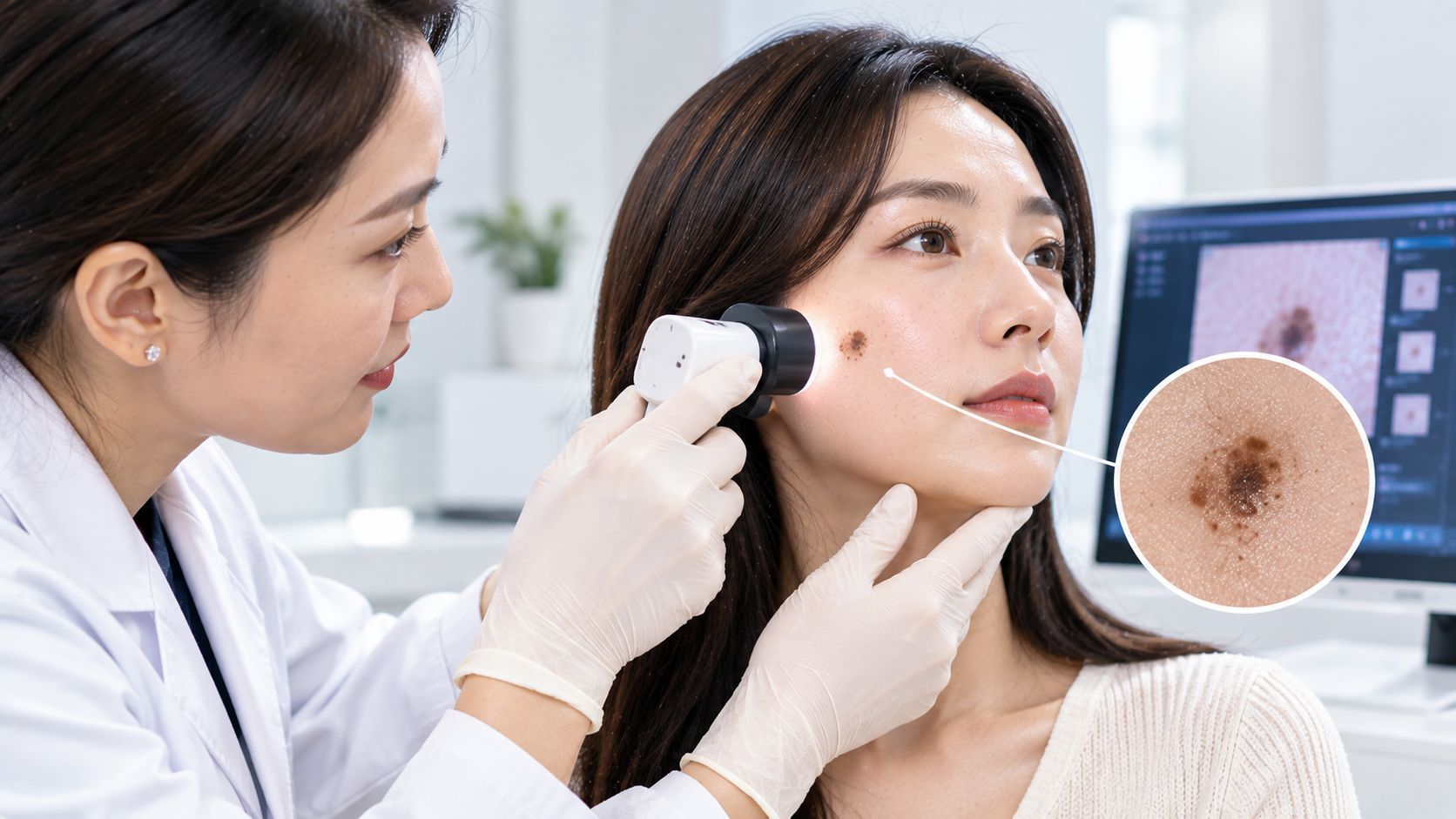
A new or changing pigmented lesion should be evaluated medically before cosmetic laser treatment.
Seek professional assessment if a spot is:
- New and unusual
- Changing in size or shape
- Becoming significantly darker
- Asymmetrical
- Bleeding
- Crusting
- Itching
- Growing
- Different from your other spots
Cosmetic laser should not be used simply to make an undiagnosed lesion disappear.
If there is uncertainty about what a spot represents, diagnosis should come before cosmetic treatment.
Pico Laser for Individual Spots vs Full-Face Pigmentation Treatment
These are not necessarily the same treatment.
ApproachTypical purposeImportant considerationTargeted Pico treatmentSelected individual spotsUseful when pigmentation is clearly localizedFull-face pigment treatmentMore widespread uneven pigmentationRequires assessment of the overall pigmentation patternLaser toningSelected diffuse pigmentation concernsUsually involves a different treatment strategyIPLSelected pigmentation and photodamageSkin tone and tanning history are important
Your dermatologist may also decide that laser is not the most appropriate first treatment.
How Should You Prepare for Pico Treatment?
Before treatment, tell your provider about:
- Recent sun exposure or tanning
- Previous laser treatments
- Previous PIH
- Sensitive or reactive skin
- Current skincare products
- Any medications or treatments that may affect your skin
- Any recent cosmetic procedures
Avoid deliberately tanning before treatment.
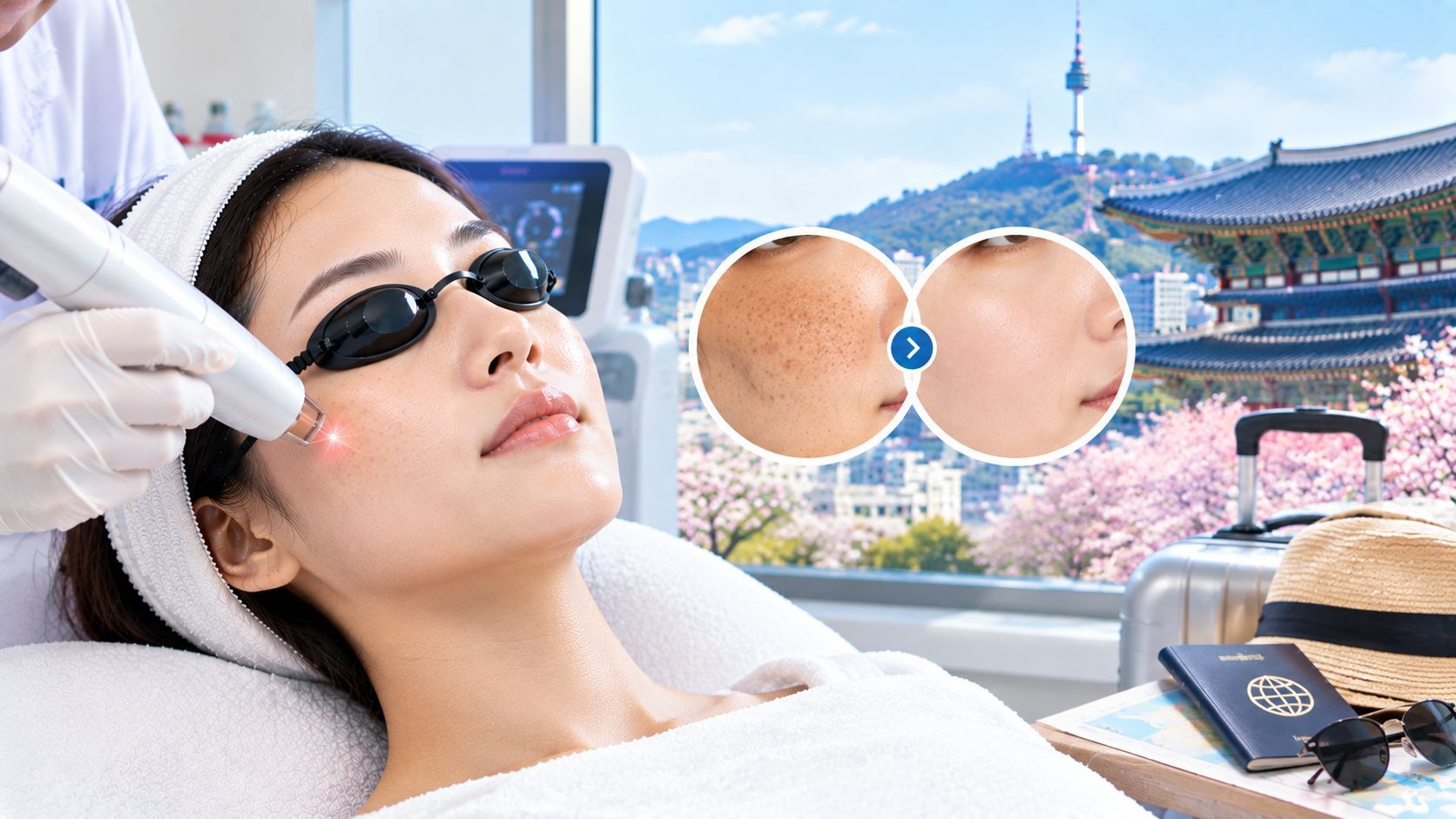
If you are visiting Seoul specifically for Pico treatment, also explain how much outdoor activity you have planned during your trip.
Can I Have Pico Laser During a Seoul Trip?
Potentially, but timing matters.
If you are treating one or two dark spots during a short Seoul visit, ask about the expected recovery before scheduling the procedure.
Consider whether your itinerary includes:
- Long outdoor walks
- Hiking
- Beach or pool activities
- Sauna visits
- Intense exercise
- Extended sightseeing
- A flight shortly after treatment
Your clinic can explain the appropriate recovery precautions for the specific treatment used.
International patients should also ask whether a follow-up appointment is recommended before returning home.
Questions to Ask Before Treating an Individual Dark Spot
Before agreeing to Pico laser, consider asking:
- What do you think this dark spot is?
- Is it appropriate for cosmetic laser treatment?
- Which Pico wavelength will you use?
- Why is that wavelength appropriate for my pigmentation?
- What is my PIH risk?
- Could the spot become temporarily darker?
- How many sessions might be needed?
- What downtime should I expect?
- When can I return to outdoor activities?
- What should I do if the spot becomes significantly darker afterward?
These questions can help you understand the treatment rather than choosing a device based solely on its name.
Conclusion
Pico laser can be used to treat selected individual dark spots, particularly certain forms of localized pigmentation. However, it is not appropriate for every dark mark, and complete removal cannot be guaranteed.
The most important step is determining whether the spot is a sun spot, freckle, post-inflammatory pigmentation, melasma, or another type of lesion. Skin tone, tanning history, PIH tendency, and treatment settings also influence the decision.
If you are considering Pico laser in Seoul, focus first on diagnosis and individualized treatment planning, then on the specific Pico device and technique. Proper aftercare and UV protection remain important even when a single spot is successfully lightened.
Frequently Asked Questions
Can Pico laser remove one dark spot?
Yes, selected individual pigmented spots can be treated with Pico laser. Whether it is appropriate depends on the diagnosis and your individual skin characteristics.
How many Pico sessions are needed for one dark spot?
Some spots may respond substantially after one treatment, while others may require additional sessions. There is no guaranteed number of sessions for every lesion.
Can Pico laser make pigmentation worse?
Temporary darkening can occur, and PIH is a possible complication. The risk can be higher in people who are prone to pigmentation or have recently tanned.
Is Pico laser safe for darker skin?
Pico laser can be used in selected patients with darker skin, but treatment should be individualized. Wavelength, energy, technique, and PIH history are important considerations.
Will a treated dark spot come back?
It can. Some pigmentation may recur, and new pigmentation can develop with continued UV exposure or other triggering factors.
Should I have a new dark spot checked before Pico laser?
Yes. Any new, changing, irregular, bleeding, itching, or growing pigmented lesion should be medically assessed before cosmetic laser treatment.