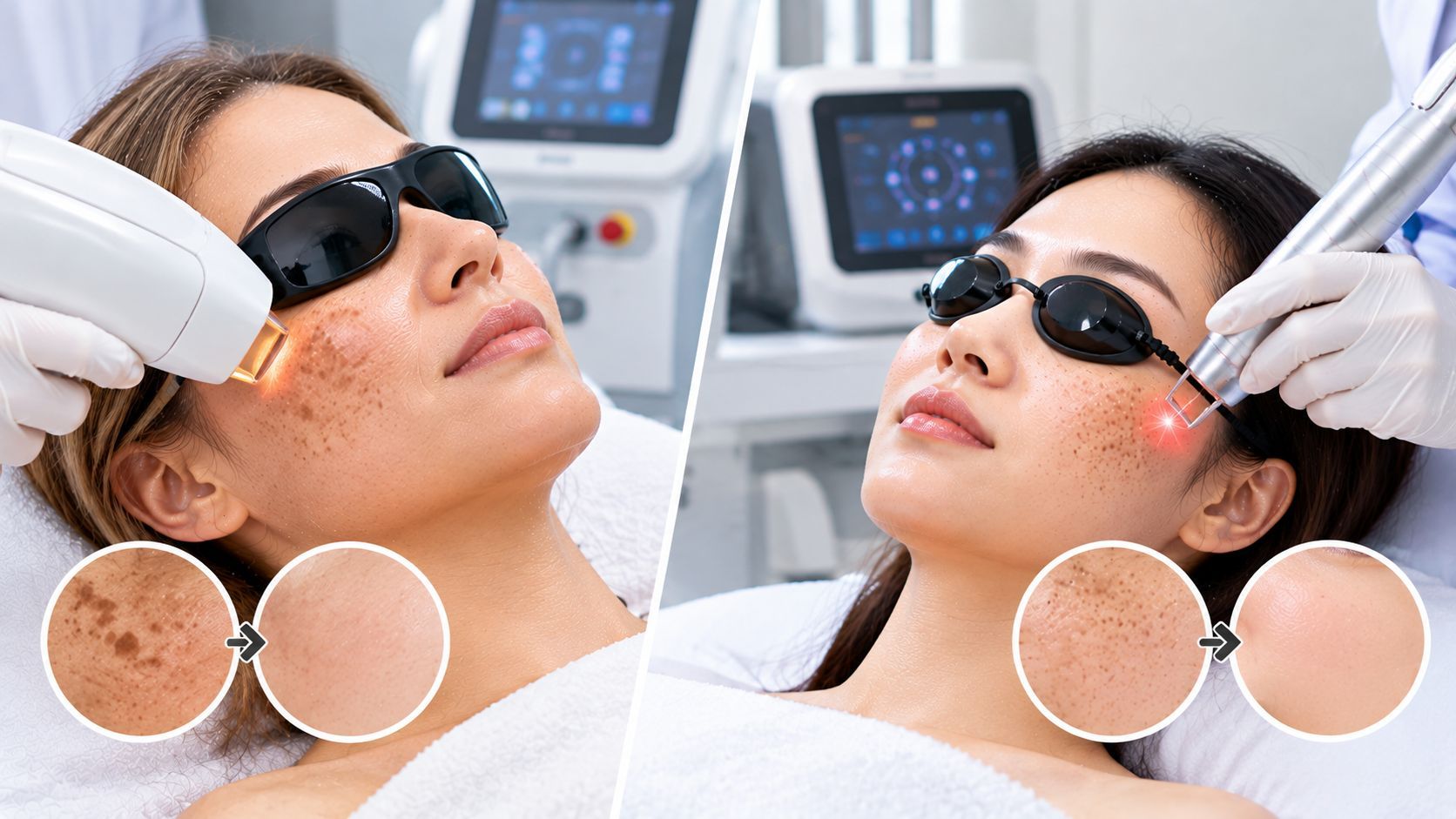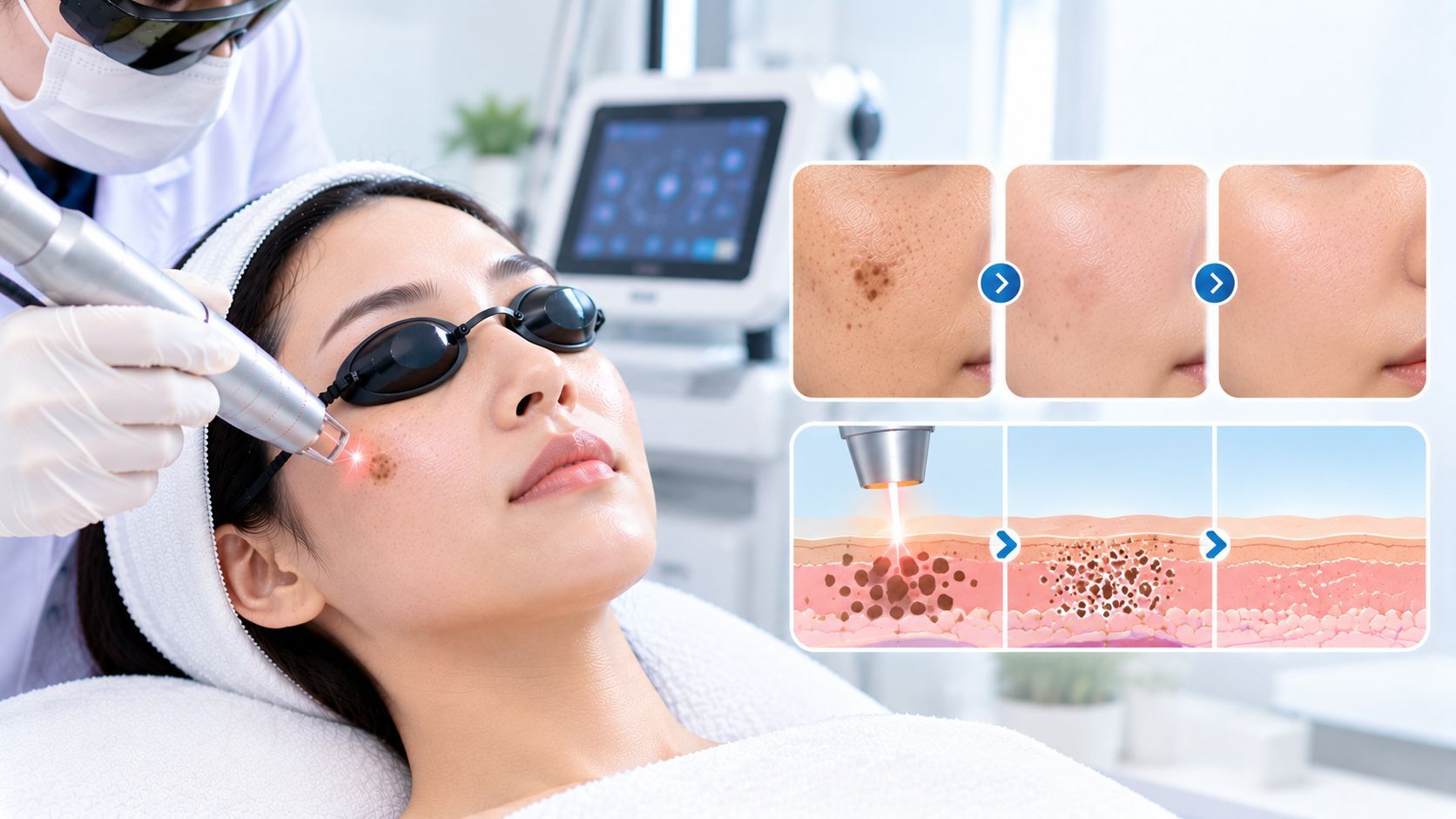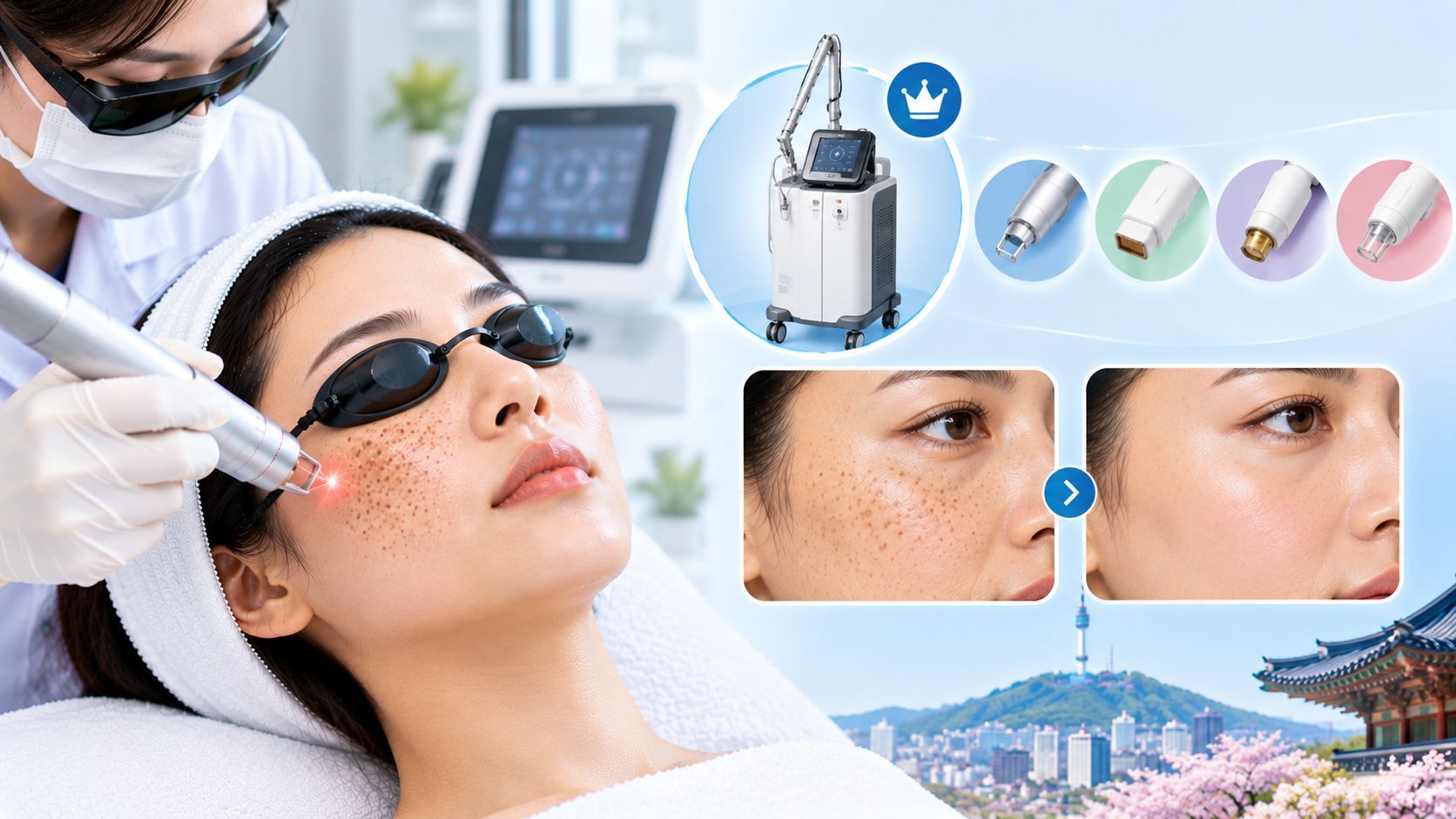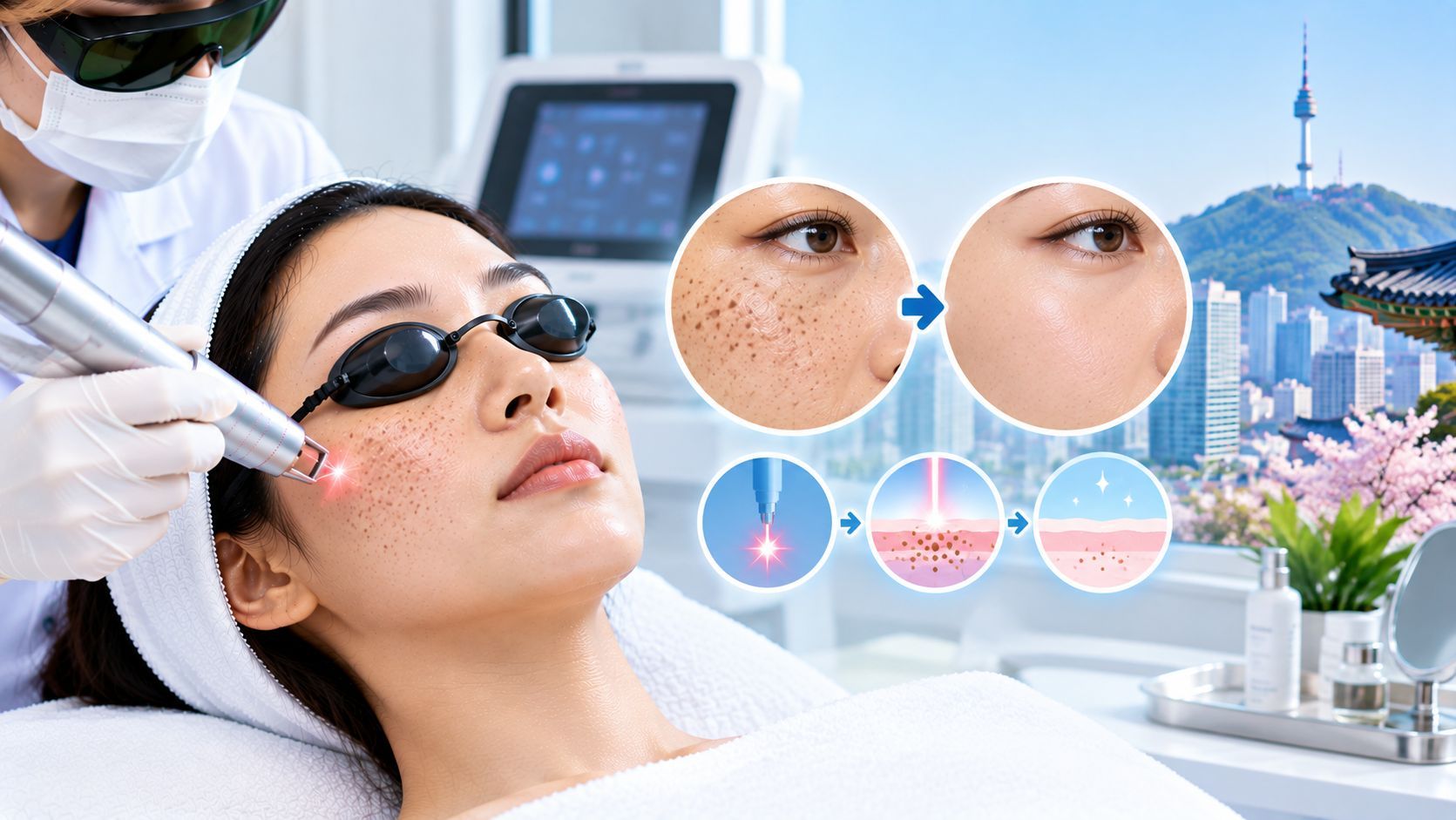
What's the Best Laser in Seoul for Sun Spots After 40?
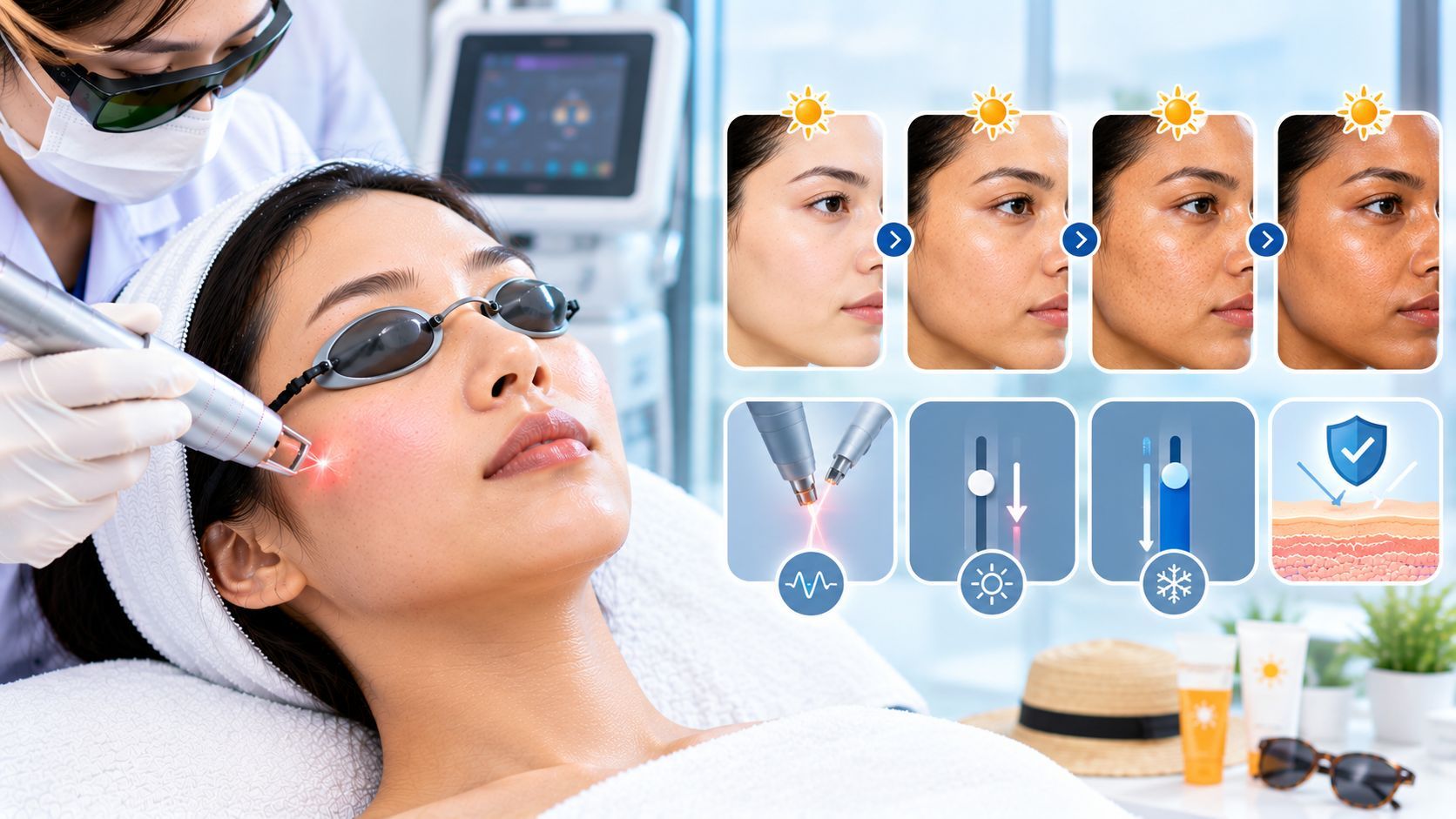
Sun spots can become more noticeable after 40 because years of cumulative ultraviolet (UV) exposure may lead to more visible pigmentation. If you are considering treatment in Seoul, you may come across options such as Pico laser, Q-switched pigment lasers, and IPL. However, there is no single laser that is universally the best for sun spots after 40.
The most appropriate treatment depends on what the dark spots actually are, your skin tone, history of tanning or post-inflammatory hyperpigmentation (PIH), the number and depth of the spots, and how your skin responds to previous treatments. A dermatologist should identify the pigmentation before selecting a device and treatment settings.
What Are Sun Spots After 40?
The term “sun spots” commonly refers to solar lentigines, flat brown or tan areas associated with cumulative UV exposure. They are often found on areas such as:
- Face
- Cheeks
- Forehead
- Nose
- Temples
- Hands
- Upper chest
They can become more apparent with age, but not every brown spot appearing after 40 is a sun spot.
Freckles, melasma, post-inflammatory hyperpigmentation, seborrheic keratoses, and other pigmented lesions can look similar. Treatment can be quite different depending on the diagnosis.
This is why choosing a laser based only on the appearance of a brown spot or on your age can lead to the wrong treatment.
Which Lasers May Be Used for Sun Spots in Seoul?
Several technologies may be considered depending on the pigmentation and your skin characteristics.
Pico Laser
Pico laser systems deliver extremely short pulses of energy and are commonly used for various pigment concerns.
For selected discrete sun spots, a dermatologist may use a pigment-targeting Pico treatment. The exact wavelength, handpiece, energy, spot size, and treatment technique matter.
It is important to understand that “Pico laser” is a treatment platform rather than one standardized procedure. Different Pico systems and settings can produce different treatment approaches.
Some patients may experience noticeable lightening after one session, while others need additional treatment.
Q-Switched Pigment Lasers
Q-switched lasers have long been used for pigment-targeting treatments. Depending on the device and wavelength, they may be used for selected solar lentigines and other superficial pigmentation.
The appropriate wavelength depends on the type and depth of pigment and the patient's skin characteristics.
IPL
IPL stands for intense pulsed light. It is not technically a laser, but it is sometimes used for sun-related pigmentation and broader photodamage.
IPL may be appropriate for selected patients, particularly when pigmentation is accompanied by other signs of photodamage. However, it is not automatically suitable for everyone.
People with darker skin, recent tanning, or a history of PIH may require particular caution because excessive heat or energy can trigger unwanted pigmentation.
Pico vs Q-Switched Laser vs IPL for Sun Spots
TreatmentPotential useImportant considerationsPico laserSelected discrete pigmentation and sun spotsDevice, wavelength, and settings matterQ-switched laserPigment-targeting treatmentAppropriate wavelength and diagnosis are importantIPLSelected sun-related pigmentation and photodamageSkin tone and tanning history affect suitabilityFractional laserResurfacing and some broader texture concernsUsually not the first choice for an isolated sun spot
There is no treatment that should automatically be considered the best simply because it uses newer technology or higher energy.
Does Being Over 40 Change Which Laser You Need?
Not necessarily.
Age can correlate with cumulative sun exposure, but the number “40” does not determine which laser should be used.
A 42-year-old with several sharply defined brown spots may need a very different treatment plan from another 42-year-old who has diffuse melasma, redness, uneven texture, and sensitive skin.
The dermatologist may consider:
- Type of pigmentation
- Depth and distribution of pigment
- Skin tone
- Previous tanning
- History of PIH
- Previous laser treatments
- Current skin sensitivity
- Degree of sun damage
- Whether the pigmentation is localized or widespread
- How much downtime you can accept
This assessment is often more important than simply asking which laser is strongest.
Can One Laser Session Remove Sun Spots?
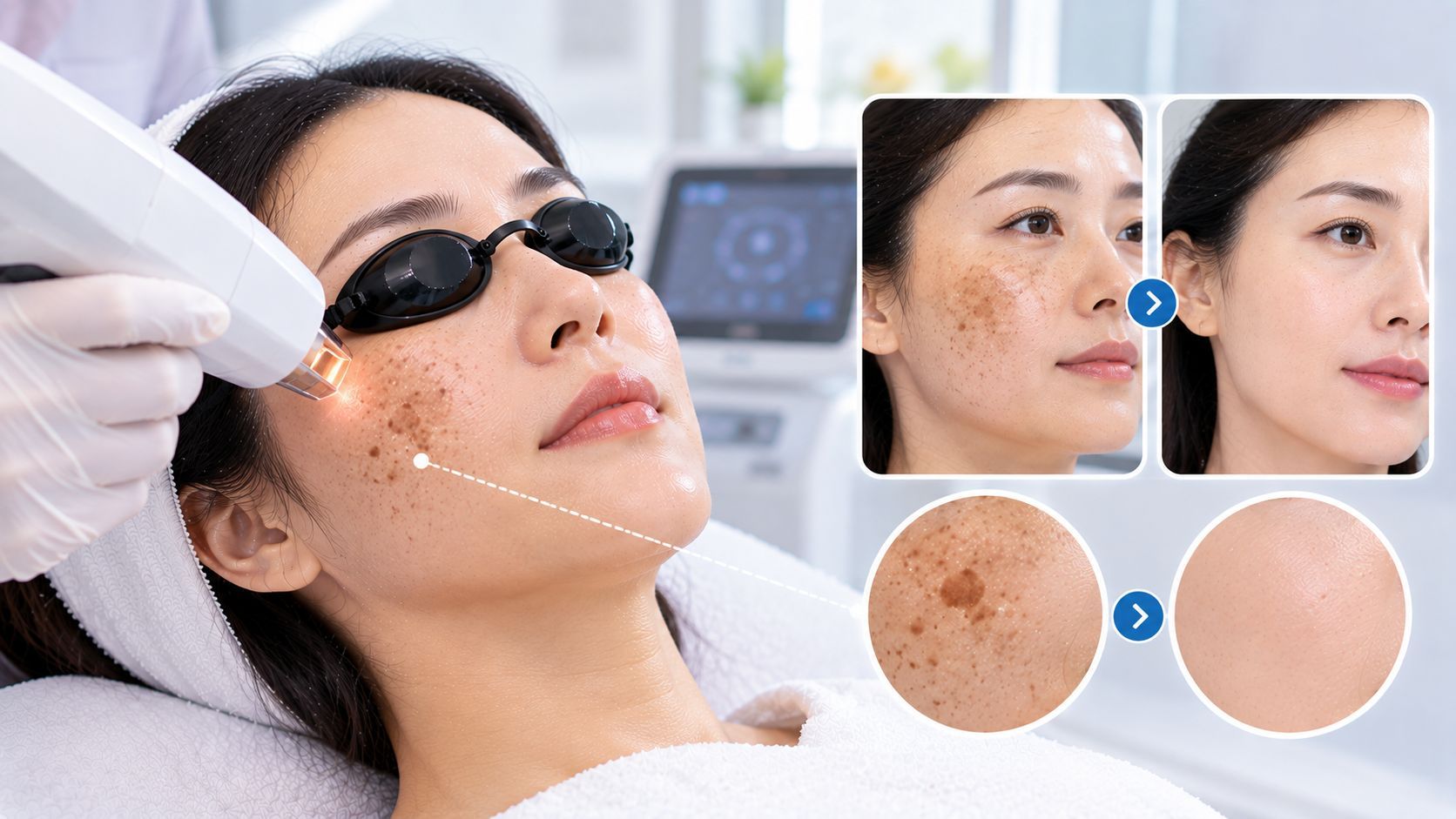
Some individual sun spots can become substantially lighter after a single targeted treatment.
However, complete clearance is not guaranteed.
After treatment, the area may temporarily become darker before gradually lightening. Depending on the treatment, temporary redness, swelling, crusting, or sensitivity can also occur.
Some patients require multiple sessions, particularly when pigmentation is extensive or when a conservative approach is appropriate for their skin.
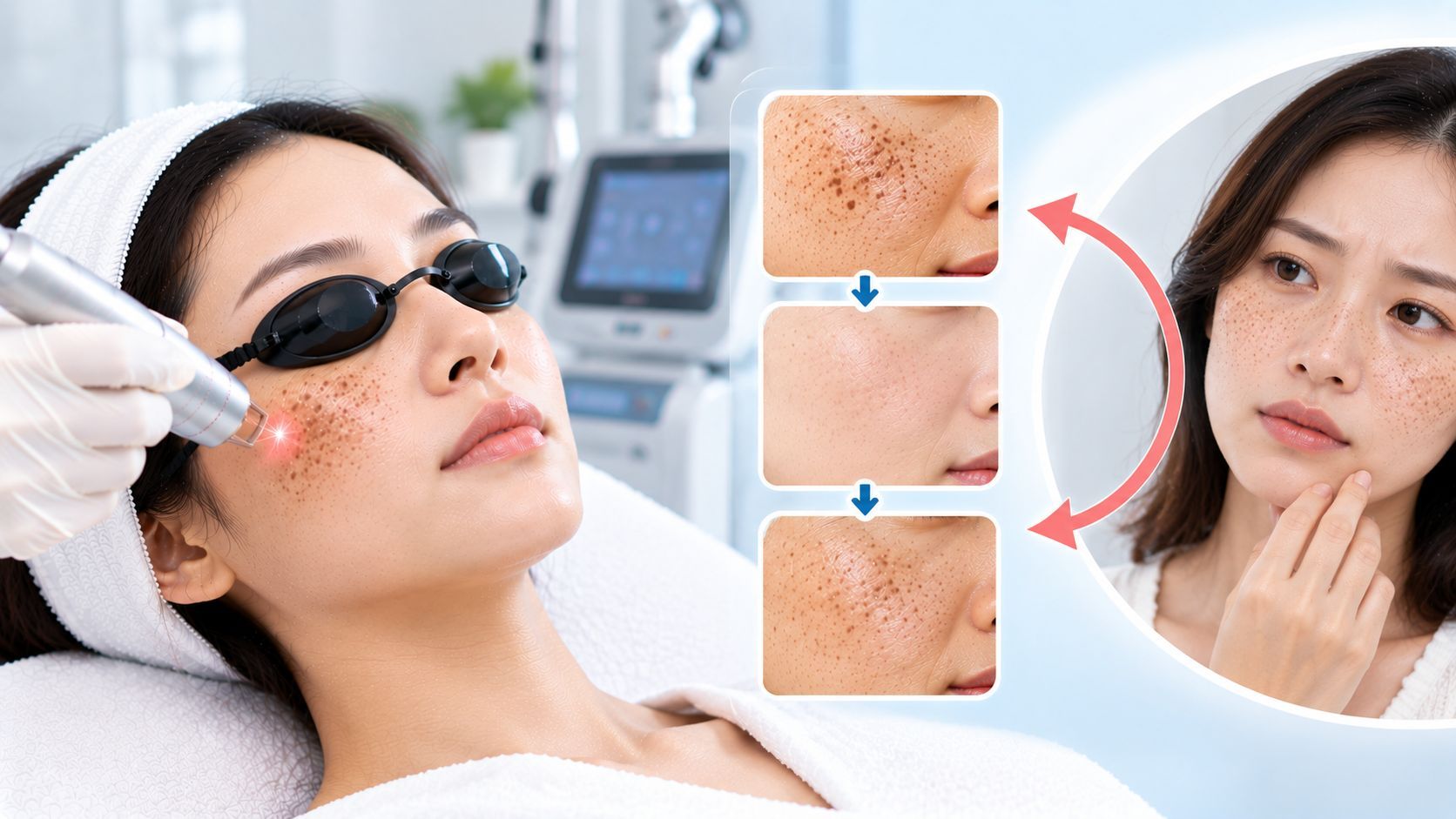
There is also an important distinction between removing an existing spot and preventing new spots.
Laser treatment does not stop future UV exposure from producing additional pigmentation. New sun spots can therefore appear even after successful treatment.
What If I Have Darker Skin or Get Hyperpigmentation Easily?
This is an important consideration.
Melanin-rich skin can sometimes develop PIH after inflammation or injury. Laser treatment does not automatically have to be avoided, but treatment may need to be more carefully planned.
A dermatologist may consider:
- Lower or more conservative energy settings
- Different wavelengths
- A different treatment method
- Treating fewer areas initially
- A test spot in selected situations
- Longer intervals between treatments
- Strict post-treatment sun protection
Recent tanning should also be disclosed before treatment. Recently tanned skin may respond differently to laser or light-based energy than your usual skin tone.
If you are particularly prone to pigmentation, “stronger” treatment is not necessarily the appropriate approach.
How Is Sun Damage Different From Melasma?
This distinction is especially important after 40.
Solar lentigines are often discrete, relatively well-defined spots associated with cumulative UV exposure. Melasma, in contrast, commonly produces broader areas of pigmentation and can be influenced by hormonal and environmental factors.
Treating melasma as though it were simply a collection of sun spots can be problematic.
Melasma can also become more noticeable after irritation or excessive treatment in some patients. A dermatologist should therefore determine the likely type of pigmentation before choosing a laser.
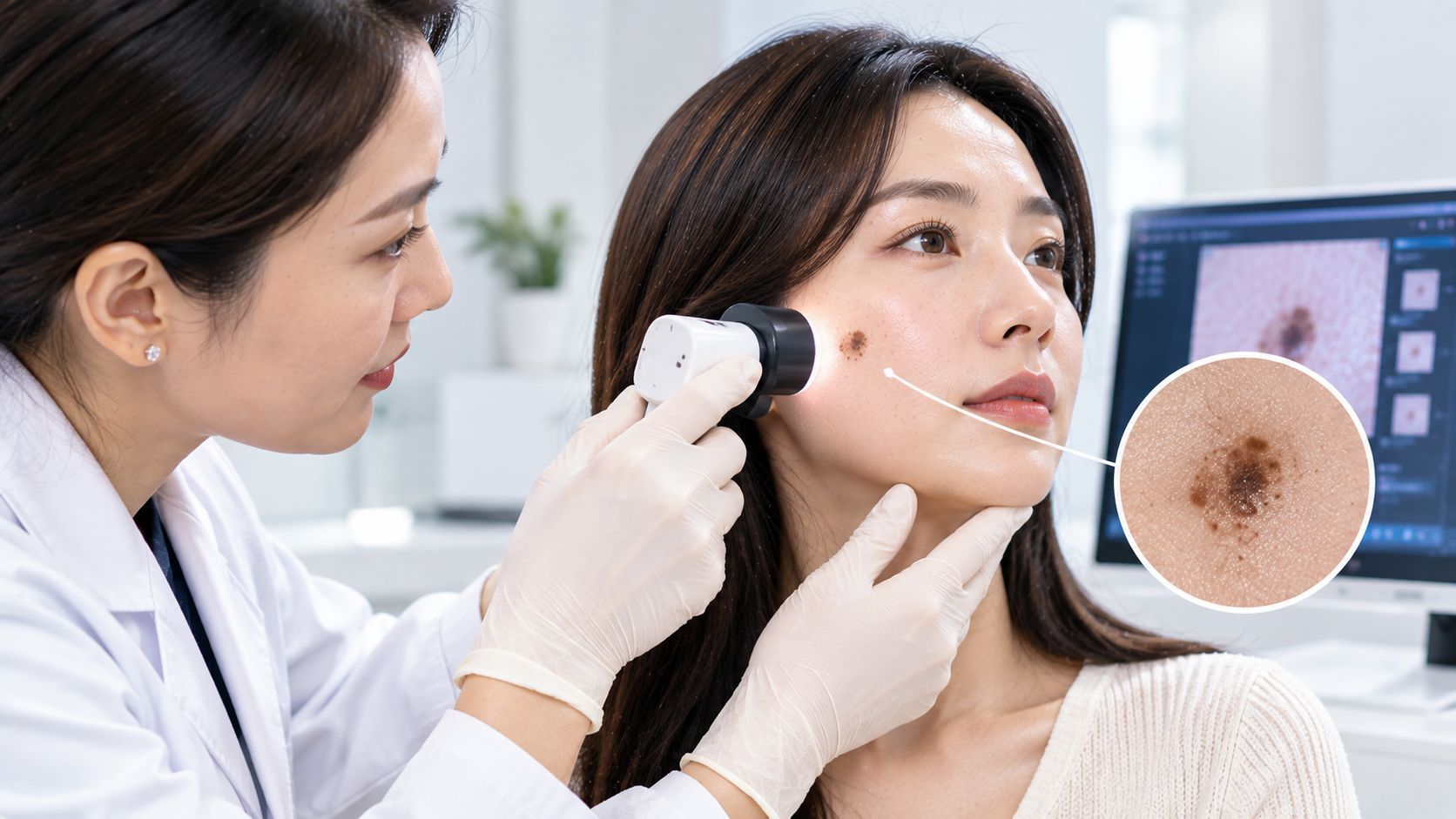
When Should a Dark Spot Be Checked Before Laser?
Not every pigmented lesion should immediately be treated cosmetically.
A new, changing, irregular, unusually dark, bleeding, crusting, itching, or growing spot should be medically assessed before cosmetic laser treatment.
The reason is simple: laser treatment can alter the appearance of a lesion and potentially make subsequent evaluation more difficult.
If you are unsure whether a particular spot is an ordinary sun spot, ask for an examination before proceeding with cosmetic treatment.
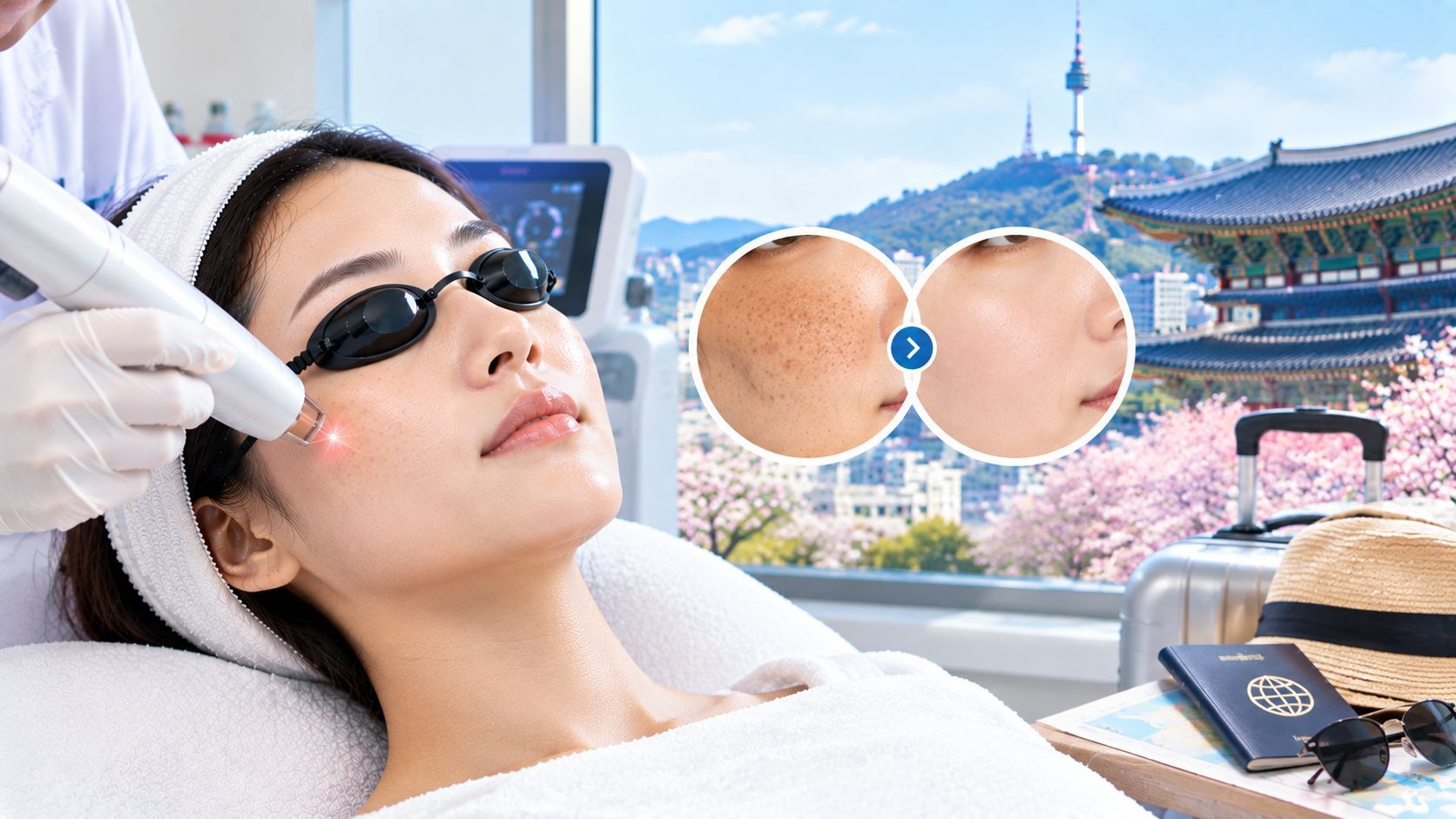
What Should International Patients Ask in a Seoul Clinic?
If you are traveling to Seoul specifically for pigmentation treatment, ask the dermatologist:
- What type of pigmentation do I have?
- Is this definitely appropriate for cosmetic laser treatment?
- Which wavelength or device are you recommending, and why?
- What settings are appropriate for my skin tone?
- What is my risk of PIH?
- How much darkening or downtime should I expect?
- Could one session be enough, or should I expect several?
- How long should I protect the treated areas from significant sun exposure?
- Can I safely continue sightseeing after treatment?
- Will I need follow-up after returning home?
These questions can be more useful than simply asking a clinic for its “strongest” or “best” pigmentation laser.
How Should You Plan Sun Spot Treatment During a Seoul Trip?
Treatment timing matters if your visit combines medical care with tourism.
If you plan to spend several days walking outdoors, visiting attractions, shopping, or taking day trips, discuss this with the clinic before scheduling treatment.
You may need to plan around:
- Outdoor sightseeing
- Strong sunlight
- Swimming
- Saunas
- Exercise
- Heat exposure
- Your flight home
- Follow-up appointments
Your dermatologist can tell you what restrictions apply to the specific treatment you receive.
Is the Newest Laser Always the Best Choice?
No.
A newer device may have useful characteristics, but technology alone does not determine whether a treatment is appropriate.
For sun spots after 40, the more important questions are usually:
What is the pigmentation? What is your skin type? How much UV exposure have you had? How easily do you develop PIH? What treatment intensity is appropriate?
The goal should be a treatment plan matched to the pigmentation and your skin rather than choosing a device simply because it is popular.
Conclusion
There is no single “best” laser in Seoul for every person over 40 with sun spots. Pico lasers, Q-switched pigment lasers, and IPL may all have roles in appropriately selected patients, but the correct choice depends on diagnosis, skin tone, tanning history, PIH risk, and the characteristics of the individual spots.
If you are traveling to Seoul for treatment, start with a proper pigmentation assessment rather than booking a particular laser solely because it is marketed as the latest or strongest option. Appropriate diagnosis, conservative treatment when necessary, and careful sun protection are important parts of the overall plan.
Frequently Asked Questions
Is Pico laser good for sun spots after 40?
Pico laser may be suitable for selected sun spots, but its appropriateness depends on the type of pigmentation, skin tone, and treatment settings. It is not automatically the right choice for every patient.
Can sun spots disappear after one laser session?
Some individual sun spots can become significantly lighter after one session, but complete clearance is not guaranteed. Some patients need additional treatment.
Is IPL better than Pico laser for sun spots?
Neither is universally better. IPL and Pico laser work differently and may be appropriate for different patients and pigmentation patterns.
Can laser treatment cause more pigmentation after 40?
Yes. Any inflammatory laser or light treatment can potentially trigger PIH, particularly in people who are predisposed to pigmentation or have recently tanned skin.
Can sun spots come back after laser treatment?
Treated spots may recur in some cases, and new sun spots can develop because laser treatment does not prevent future UV-related pigmentation.
Should I see a dermatologist before treating a new dark spot?
Yes. A new or changing pigmented lesion should be medically assessed before cosmetic laser treatment, particularly if it is irregular, growing, bleeding, itching, or otherwise unusual.