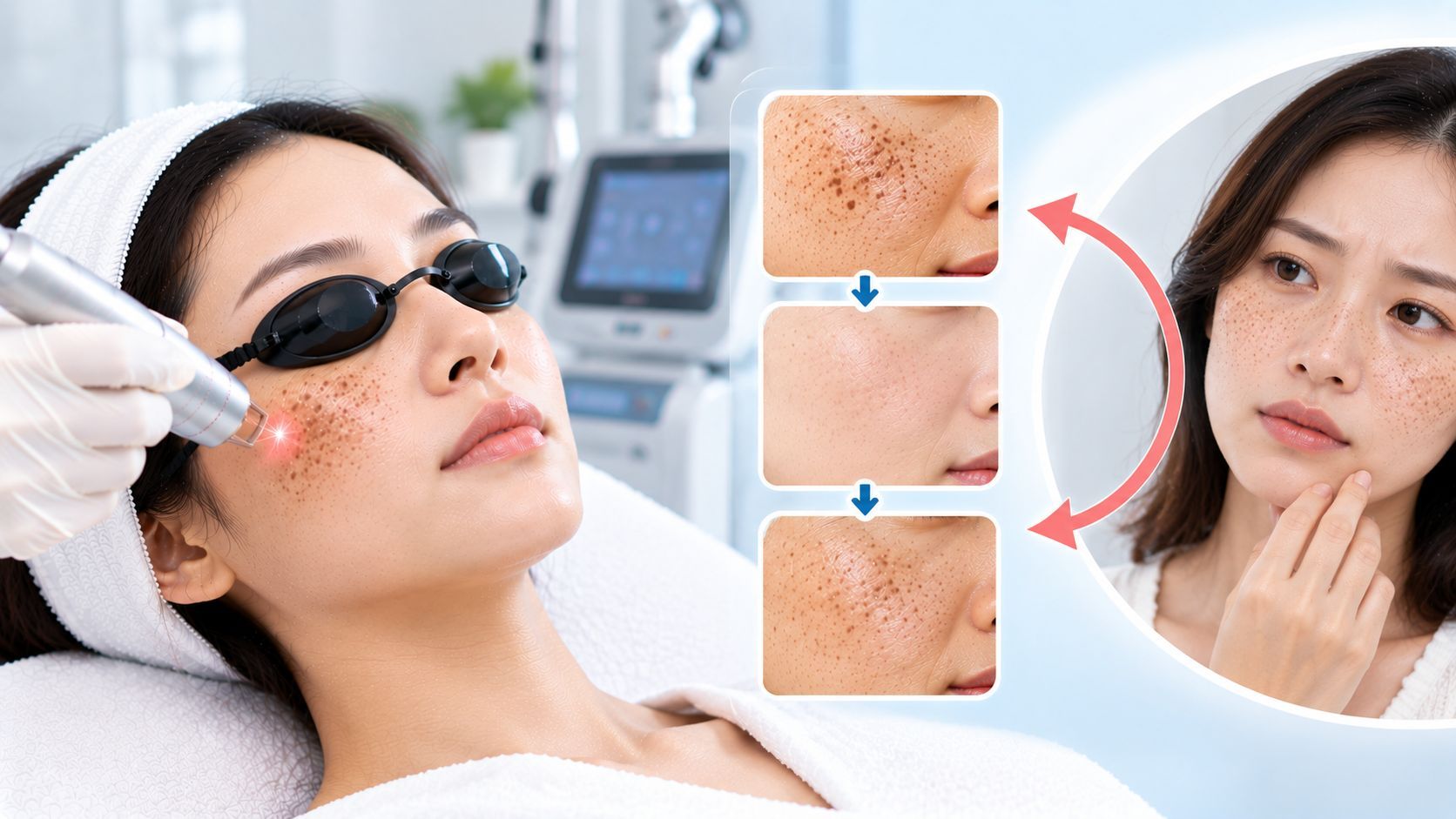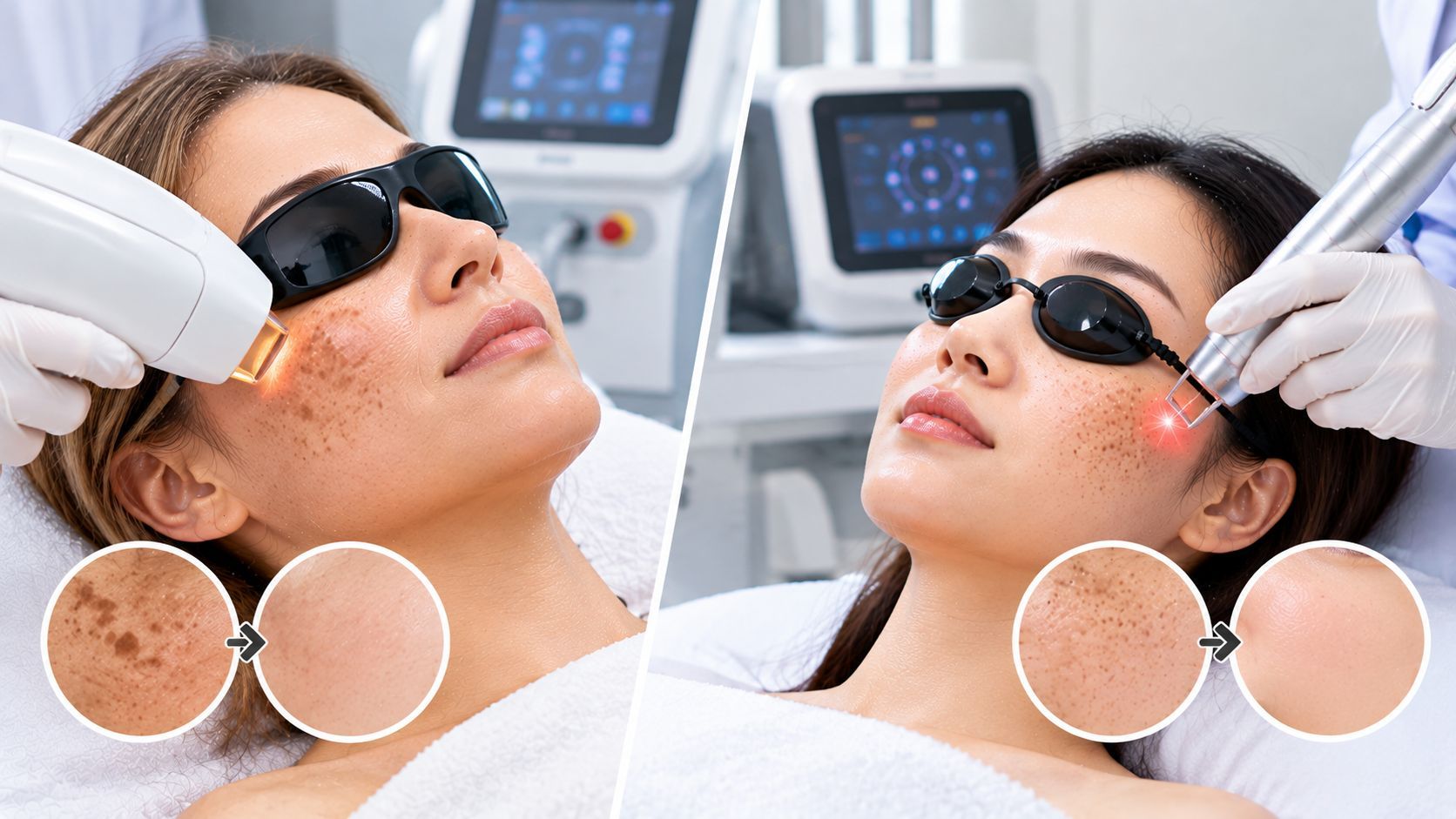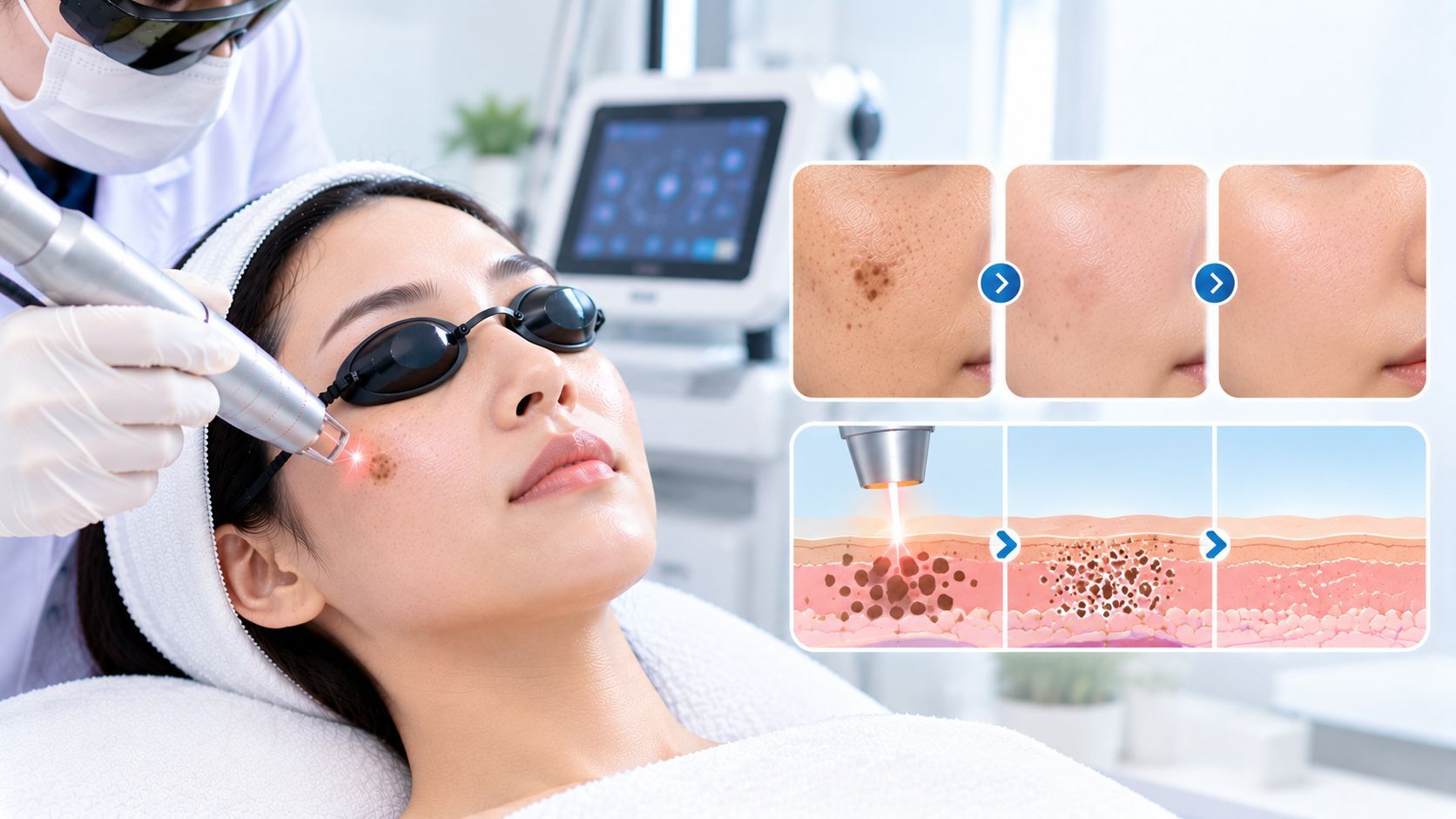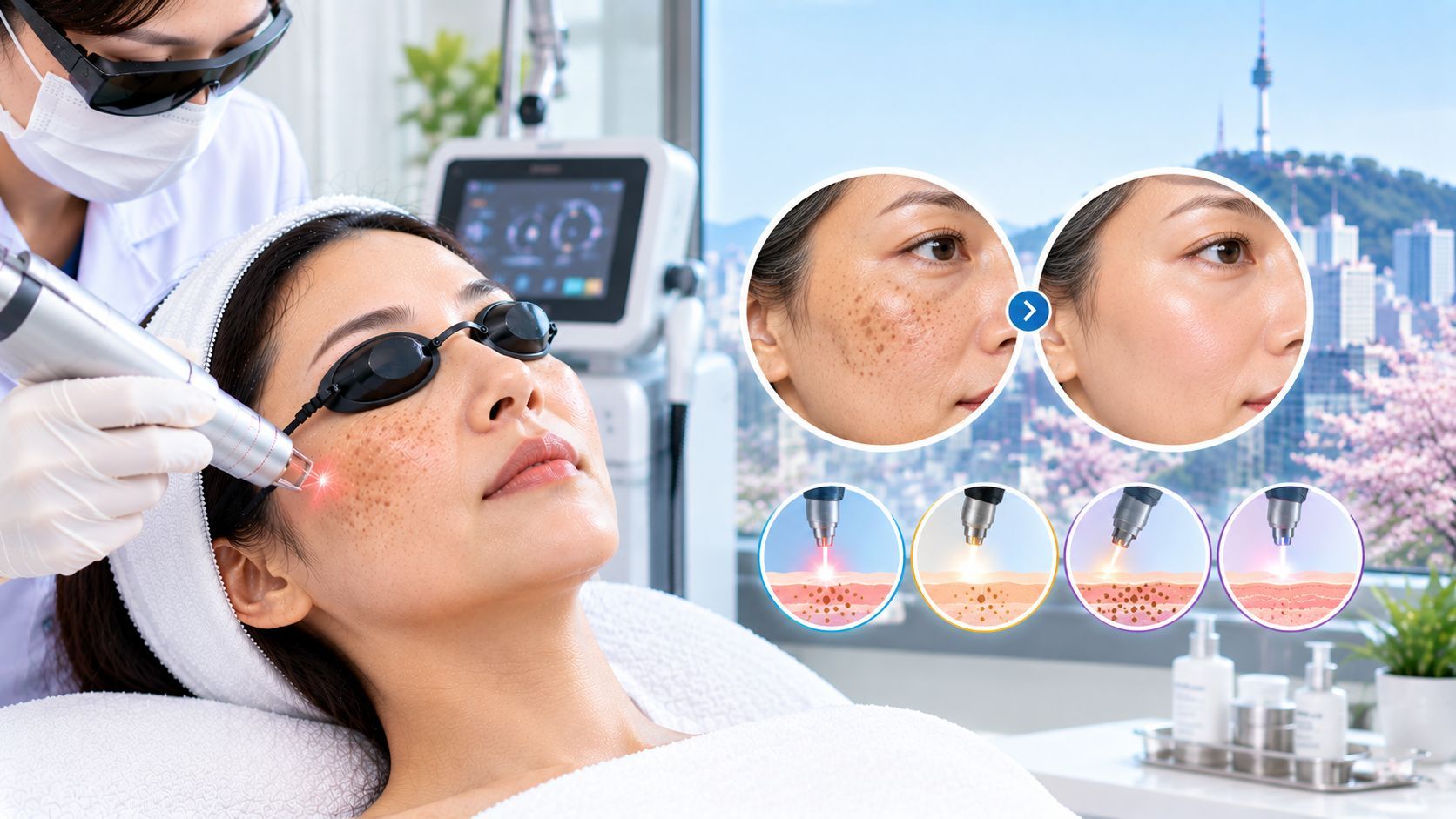
What Is the Best Korean Laser for Freckles?
There is no single Korean laser that is universally best for freckles. The most appropriate treatment depends on whether the spots are actually freckles, your skin tone, recent tanning, history of post-inflammatory hyperpigmentation (PIH), and the type of laser and settings being used.
In Korea, you may encounter Pico lasers and other pigment-targeting laser systems for freckles. These can be effective for selected patients, sometimes producing substantial lightening after one treatment. However, the machine name alone does not determine the result.
The more important question is whether the dermatologist has correctly identified the pigmentation and selected an appropriate treatment protocol for your skin.
Why Is There No Single Best Laser for Freckles?
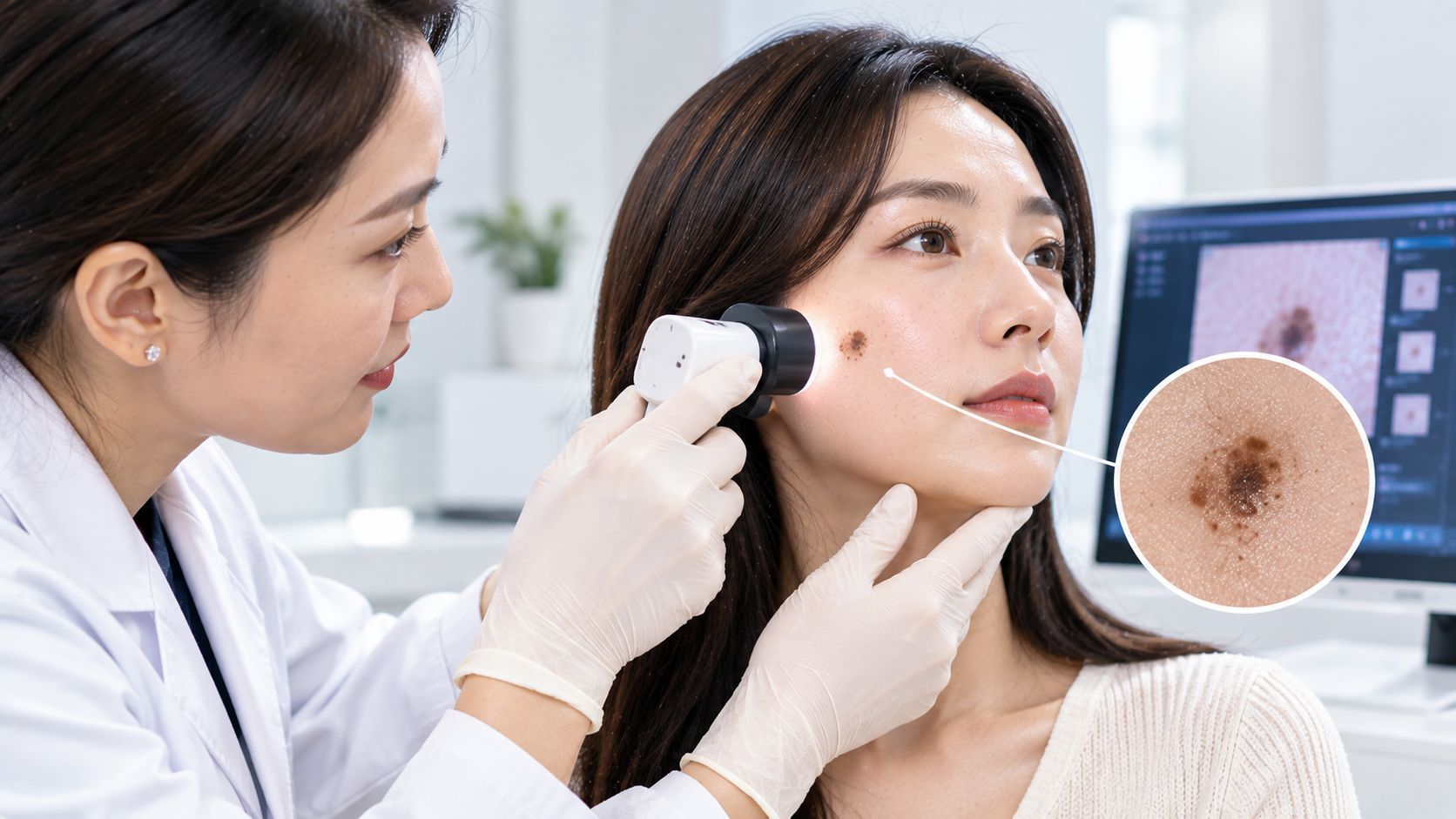
“Freckles” is a common description for small brown spots, but not every brown spot on the face is necessarily a freckle.
Similar-looking pigmentation can include:
- Ephelides, or true freckles
- Solar lentigines, often called sun spots
- Melasma
- Post-inflammatory hyperpigmentation
- Other pigmented lesions
These conditions can behave differently and may require different treatment strategies.
For example, a laser approach suitable for individual freckles may not be appropriate for diffuse melasma.
This is why diagnosis should come before choosing the laser.
Are Pico Lasers Good for Freckles?
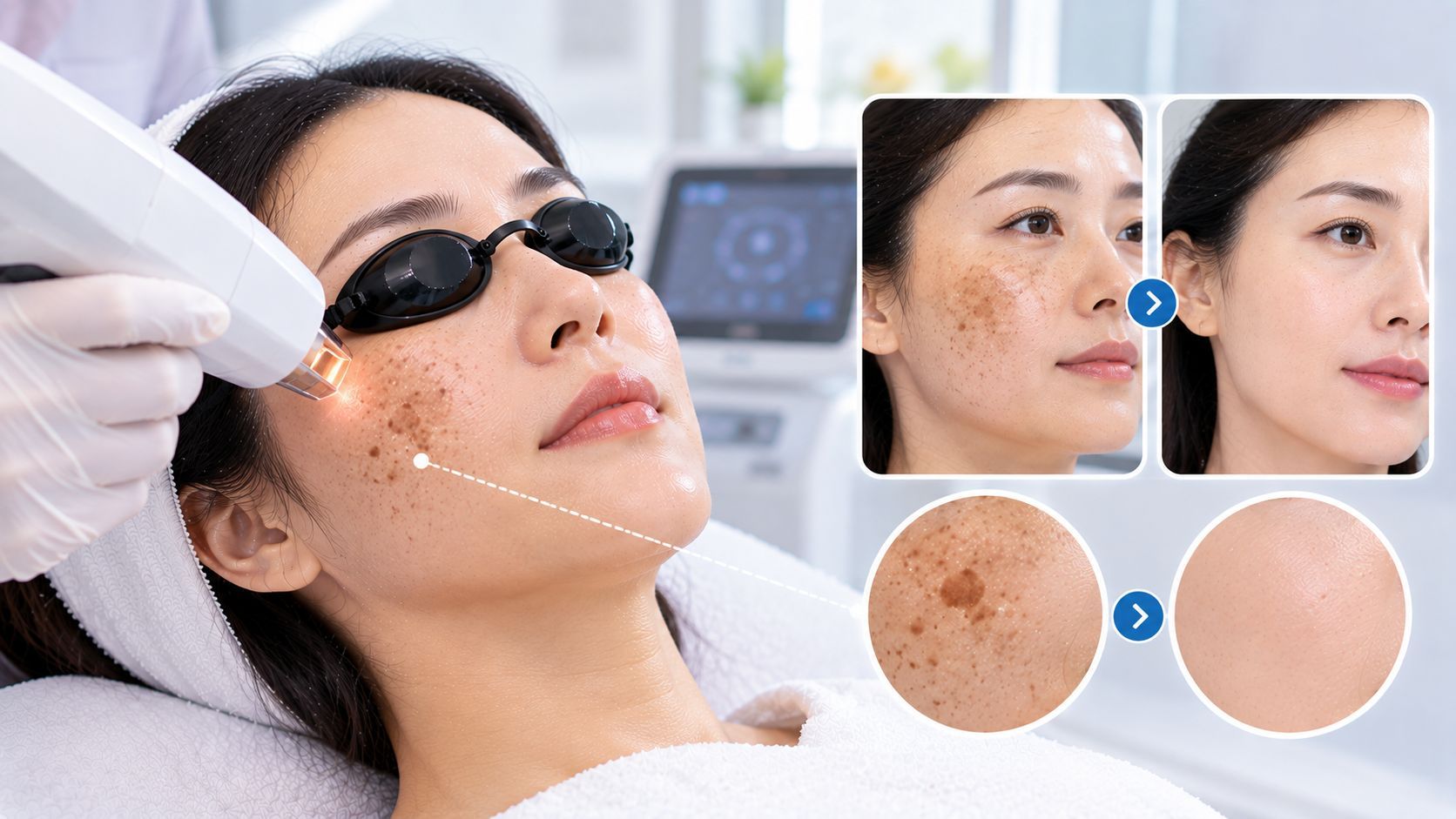
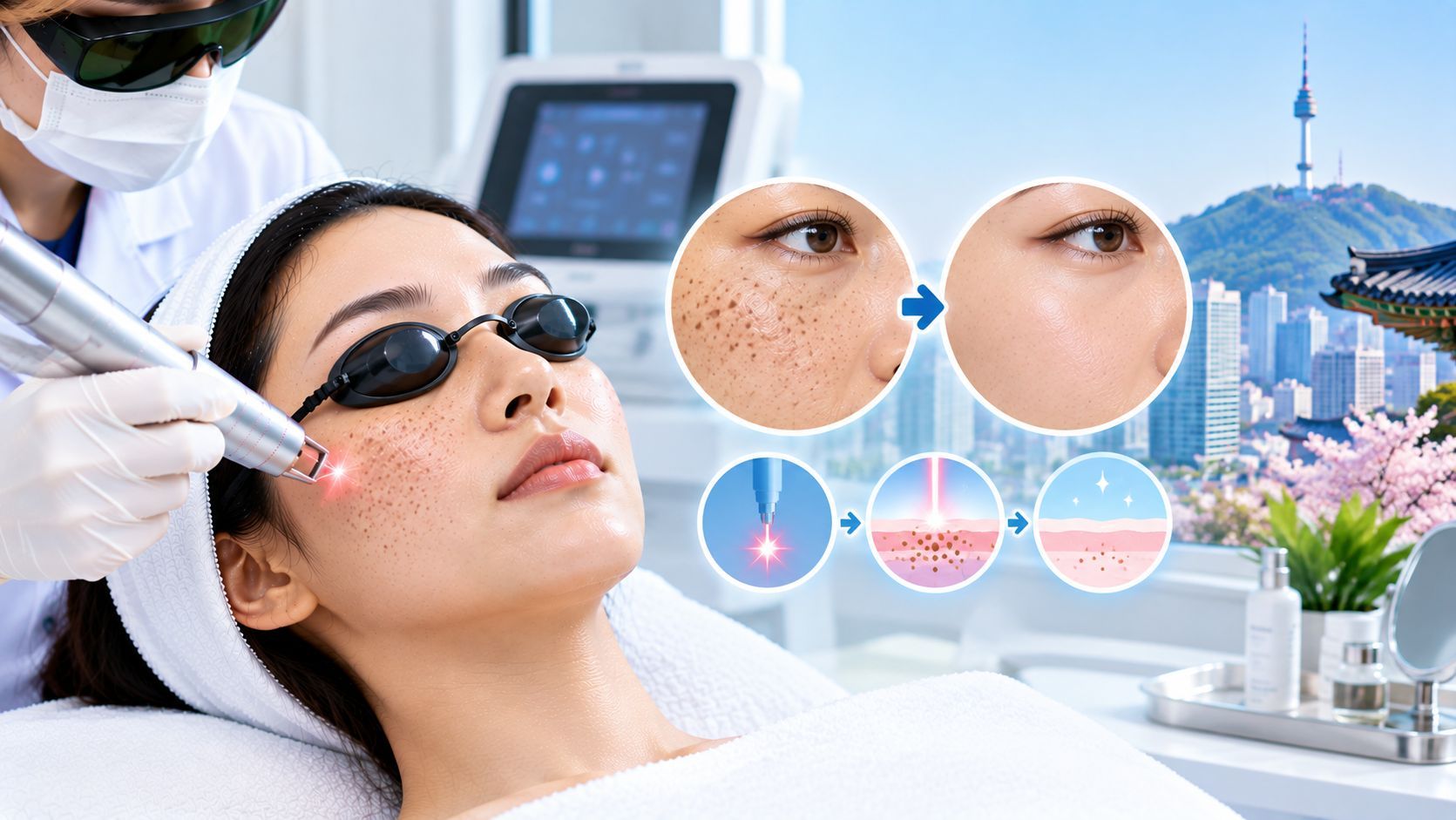
Pico laser can be used to treat selected freckles and other pigmented lesions.
Pico refers to an extremely short pulse duration, but it does not describe one specific device or treatment protocol. Different Pico systems can use different wavelengths and treatment parameters.
A dermatologist may select a Pico treatment based on:
- The color and distribution of the pigment
- Your skin tone
- The depth or characteristics of the pigmentation
- PIH history
- Treatment area
- Previous treatment response
Some patients may see significant lightening after one session, while others may need additional treatment.
Therefore, “Pico laser” should not be interpreted as a guarantee of complete freckle removal.
What About Q-Switched Pigment Lasers?
Q-switched lasers have historically been used for certain pigmented lesions and may still be used in appropriate situations.
Like Pico systems, the suitability of a Q-switched laser depends on the wavelength, settings, diagnosis, and patient.
The fact that a device has been used for pigmentation for many years does not mean that it is automatically appropriate for every skin tone or every brown spot.
Can Different Wavelengths Treat Different Pigments?
Yes.
Laser systems can operate at different wavelengths, and the wavelength affects which targets absorb the laser energy.
This is one reason that simply asking for “the strongest pigmentation laser” is not a useful way to choose treatment.
A dermatologist may select a particular wavelength based on the type of pigment and the surrounding skin.
Treatment settings also matter. Two clinics using similar technology can potentially use different protocols.
What About IPL for Freckles?
IPL is not technically a laser. It uses a broad spectrum of light and can be used for certain pigment and vascular concerns.
IPL may be appropriate for selected patients with sun-related pigmentation and freckles, but it is not automatically the best option.
Skin tone and recent tanning are especially important considerations because IPL can also affect melanin in the surrounding skin.
If you have darker skin or develop PIH easily, discuss the risks carefully before treatment.
What Is the Difference Between Treating Freckles and Sun Spots?
Freckles and solar lentigines can look similar, but they are not exactly the same condition.
Freckles are often associated with genetic susceptibility and become more noticeable with sun exposure.
Solar lentigines are generally acquired areas of persistent pigmentation associated with cumulative sun exposure and tend to remain more stable than typical freckles.
A dermatologist may use similar technologies for some of these lesions, but the diagnosis can influence the treatment plan and expected response.
What If I Have Freckles Plus Melasma?
This is where choosing a laser becomes more complicated.
Melasma often appears as broader, more diffuse pigmentation, while freckles are usually discrete spots.
An aggressive treatment designed to target every visible brown area may not be appropriate if some of the pigmentation is melasma.
Melasma can be sensitive to inflammation and may worsen after an overly aggressive procedure.
A dermatologist may therefore distinguish between the discrete freckles and the background pigmentation rather than treating the entire face in exactly the same way.
Does Skin Tone Affect Which Laser Is Appropriate?
Yes.
Skin with more melanin can have a greater concern for unwanted pigmentation after inflammatory procedures.
This does not mean darker skin cannot receive freckle treatment.
Instead, the dermatologist may need to consider:
- Natural skin tone
- Recent tanning
- Previous PIH
- Treatment energy
- Wavelength
- Number of passes
- Treatment density
- Recovery
- Sun exposure
If you have previously developed dark marks after acne, burns, waxing, peels, or laser treatment, tell your dermatologist.
Is the Strongest Laser the Best Choice?
Not necessarily.
A stronger treatment can produce more inflammation, and more inflammation does not automatically mean better pigmentation results.
This is especially relevant for patients who are prone to PIH.
The goal is to use an appropriate treatment intensity for the specific pigment and skin rather than simply choosing the most aggressive available option.
Can One Laser Session Be Enough?
Sometimes.
Individual freckles can respond significantly to one targeted treatment. However, some pigment may remain, and new or previously treated freckles can become visible again with continued UV exposure.
You should therefore ask the clinic what they realistically expect after one session.
A useful consultation should distinguish between:
- Substantial lightening
- Partial improvement
- Complete visual clearance
- Possible recurrence
- Need for additional treatment
These are not the same outcome.
How Should I Choose a Freckle Laser in Seoul?
If you are traveling to Seoul for freckle treatment, focus less on the advertised machine and more on the treatment plan.
Ask:
- Are these definitely freckles?
- Could some spots be sun spots or another type of pigmentation?
- Which laser or light treatment are you recommending?
- What wavelength will be used?
- Why is it appropriate for my skin tone?
- What is my PIH risk?
- Can one session realistically produce significant improvement?
- What temporary changes should I expect?
- How much sun should I avoid afterward?
- When should I return if some pigmentation remains?
These questions can help you compare treatment plans without assuming that one brand or machine is automatically superior.
What If I Have Recently Tanned?
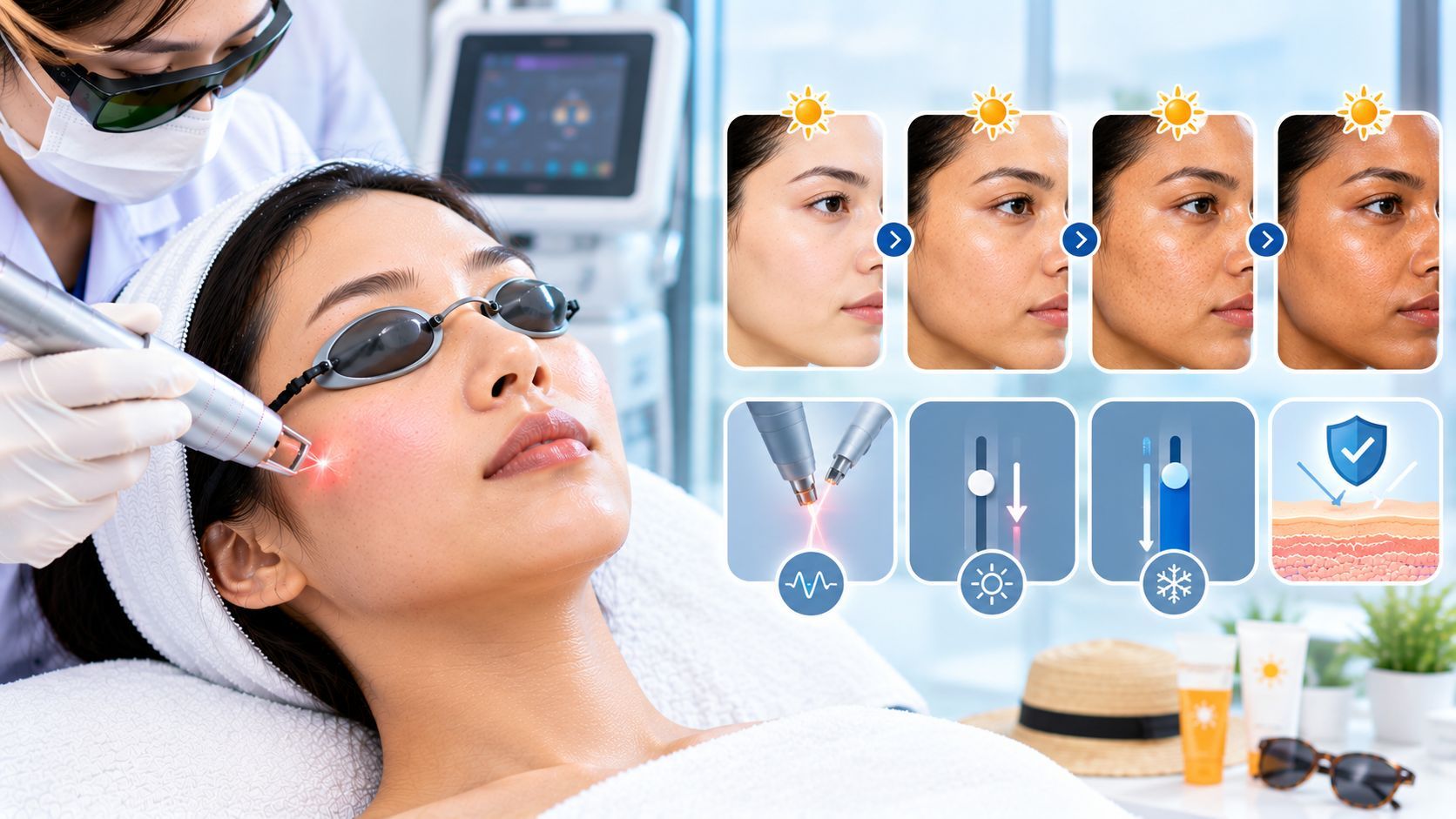
Recent tanning can affect treatment planning.
If you have just returned from a beach holiday or have spent substantial time outdoors, tell the clinic before treatment.
The dermatologist may determine that your current skin condition requires modified settings or that treatment should be postponed.
This is particularly relevant for people who tan easily or have a history of PIH.
What Happens After Freckle Laser?
Depending on the procedure, treated freckles may temporarily:
- Become darker
- Develop superficial crusting
- Flake
- Appear more noticeable
- Gradually lighten
Follow the clinic's aftercare instructions and protect the treated skin from UV exposure.
Do not assume that visible darkening immediately after treatment means the procedure failed.
However, persistent or worsening pigmentation should be assessed rather than automatically treated again.
Can Freckles Be Permanently Removed?
Laser can substantially reduce the appearance of freckles, but it does not necessarily eliminate the skin's tendency to develop them.
UV exposure can cause freckles to become visible again, and new freckles may develop.
Therefore, even after successful treatment, long-term sun protection remains important.
A realistic goal is usually long-term reduction in visible pigmentation rather than a guarantee that freckles will never return.
Conclusion
There is no single “best Korean laser” for every person with freckles. Pico lasers and other pigment-targeting technologies can be useful for selected freckles, while IPL may be considered in some situations, but the diagnosis, skin tone, treatment settings, and PIH history are critical.
If you are considering freckle treatment in Seoul, start with the diagnosis rather than the device name. Ask why a particular wavelength and protocol are being recommended and what result is realistic after one session.
The most appropriate treatment is the one that matches the specific pigmentation and your skin—not simply the laser with the most impressive name or marketing claim.
FAQs
Which laser is commonly used for freckles in Korea?
Pico and other pigment-targeting laser systems may be used for selected freckles. The appropriate choice depends on the pigmentation and individual skin characteristics.
Is Pico laser better than other lasers for freckles?
There is no universal answer. Pico technology can be effective for selected pigment lesions, but wavelength, settings, diagnosis, and skin type all affect the outcome.
Can IPL treat freckles?
IPL can treat selected pigment concerns, including some sun-related pigmentation. However, it is not a laser and may not be appropriate for every skin tone or pigmentation condition.
Can one laser session remove freckles?
Some freckles can become substantially lighter after one treatment, but complete clearance is not guaranteed and additional sessions may sometimes be needed.
Can freckles return after laser treatment?
Yes. New freckles can develop and treated areas can become pigmented again, particularly with continued UV exposure.
Should I get a freckle laser if I have melasma too?
You should first have the different pigmentation types assessed. A treatment suitable for discrete freckles may not be appropriate for diffuse melasma.