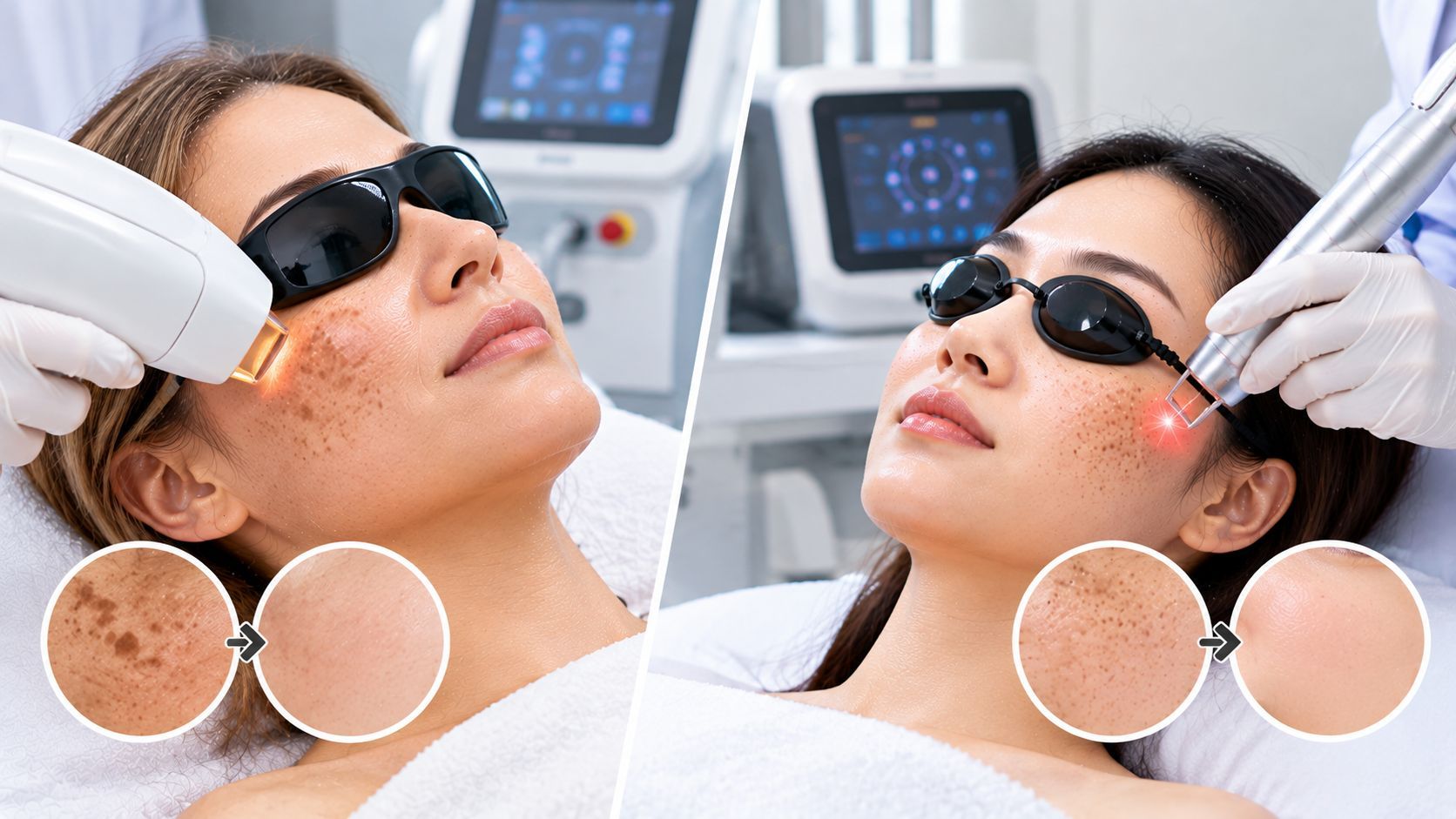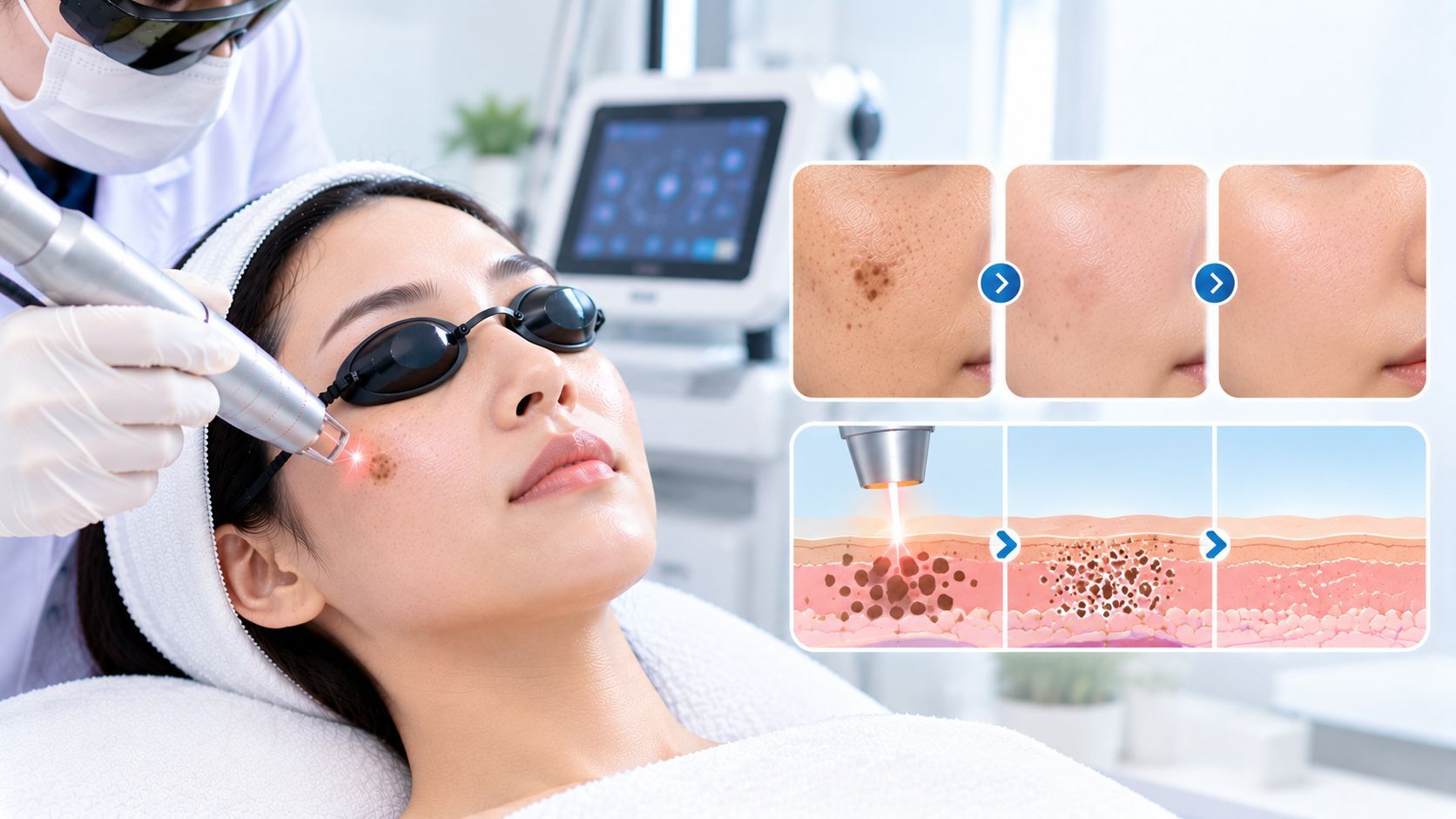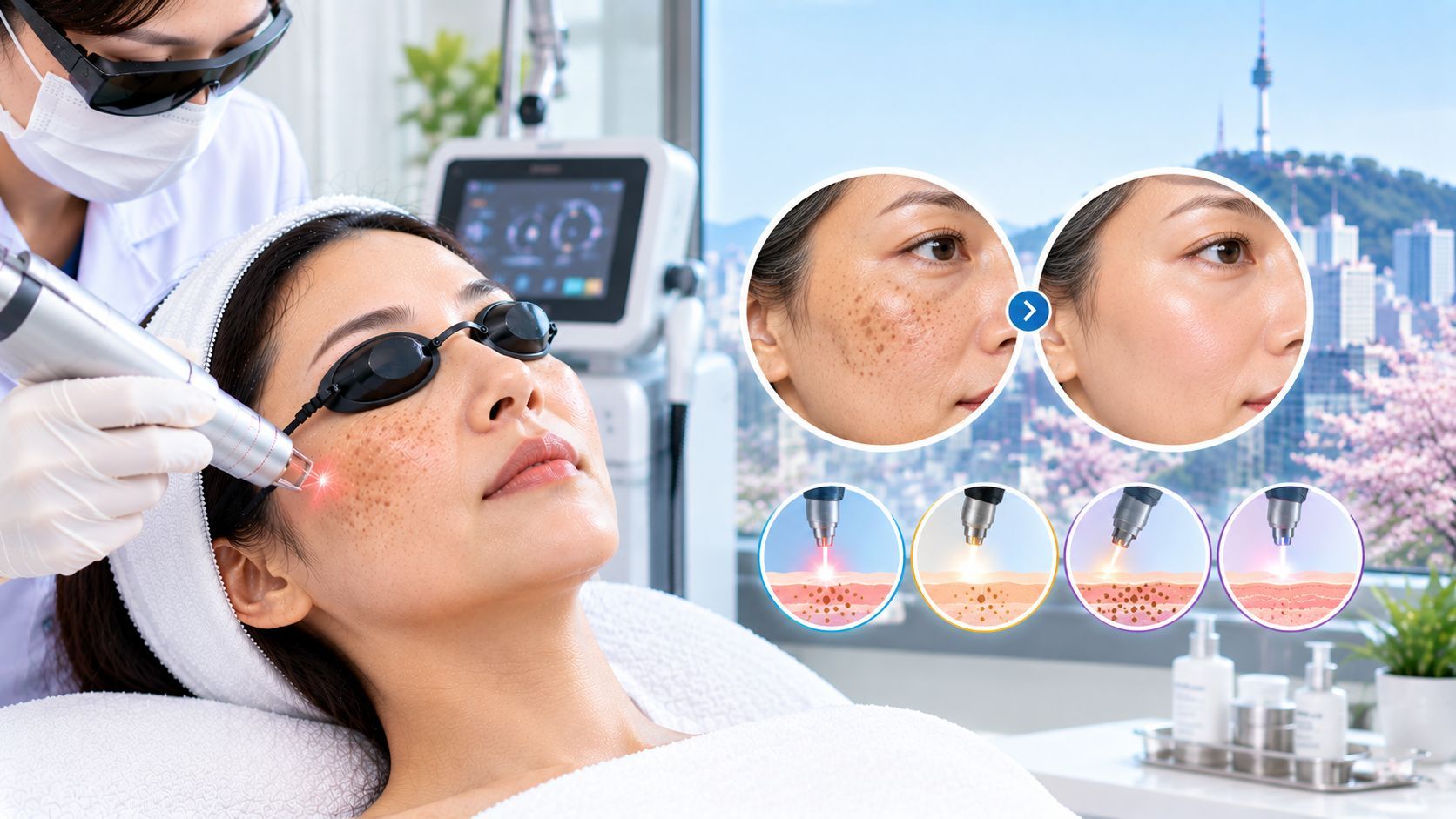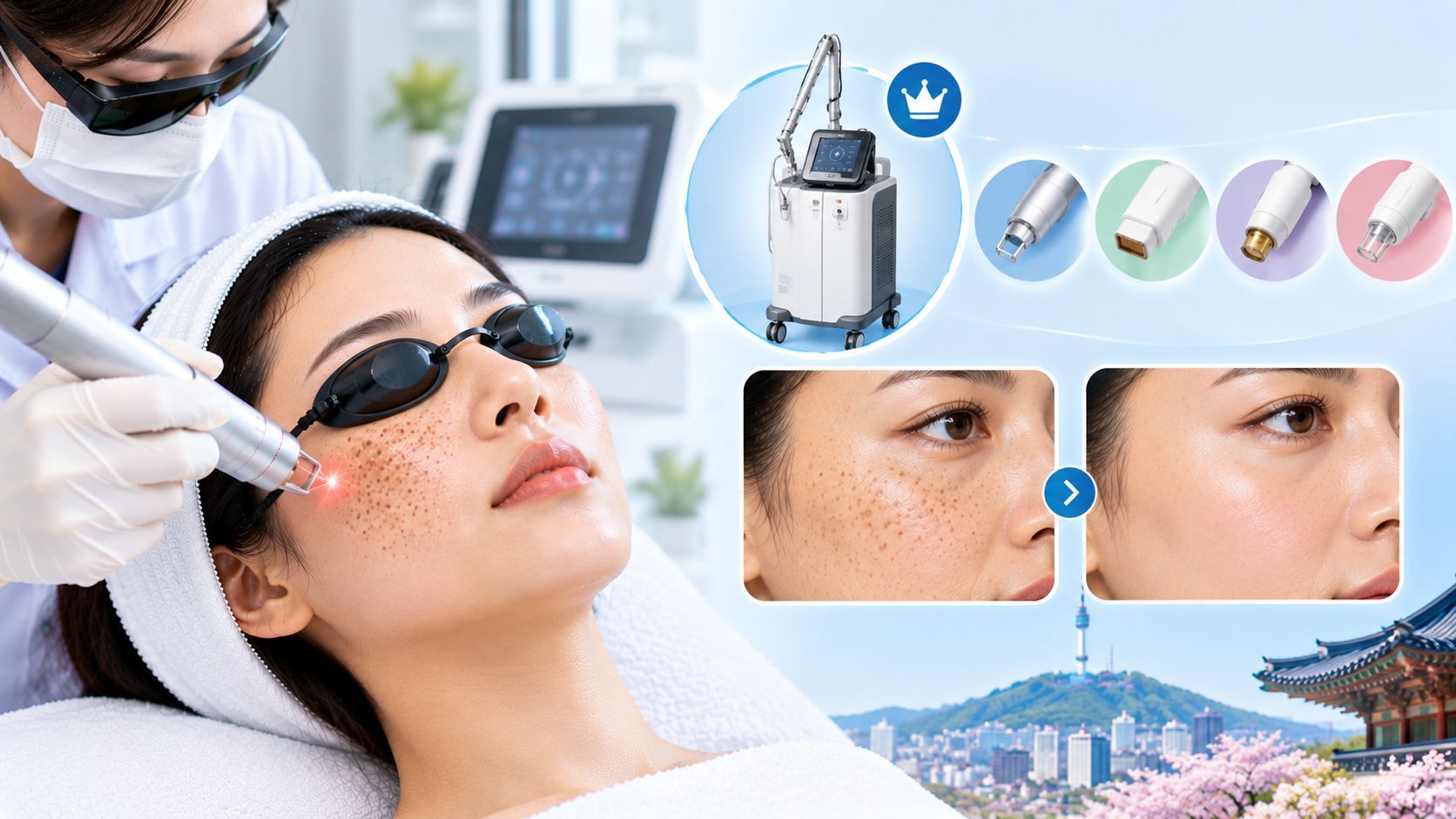
Which Seoul Laser Treatments Have Almost No Downtime?
Introduction
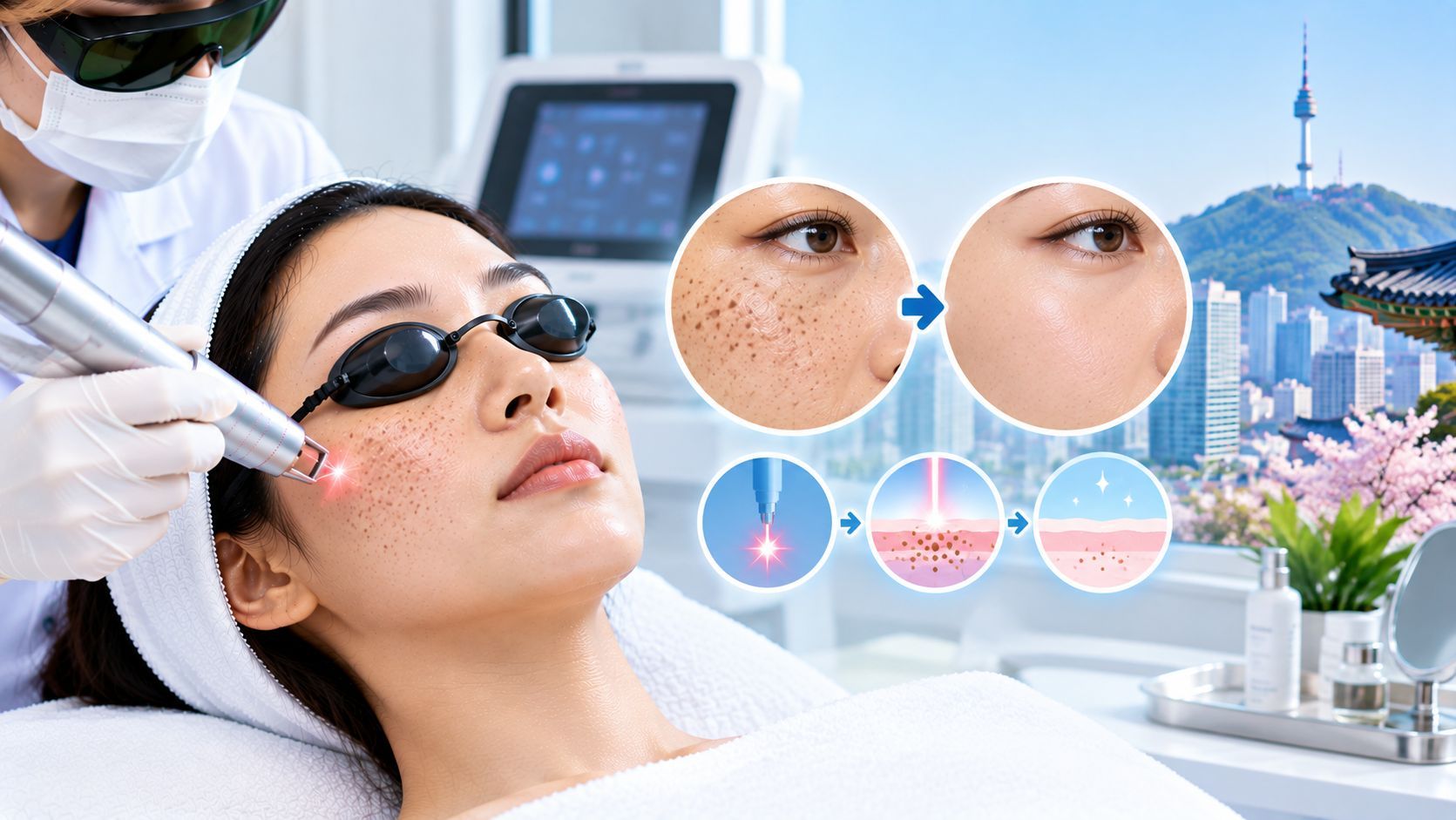
If you are visiting Seoul for a short trip, you may want a laser treatment that improves your skin without requiring several days of redness, peeling, or staying inside your hotel. This makes low-downtime laser treatments particularly appealing to international patients who want to continue sightseeing, shopping, dining, or attending meetings during their trip.
However, “almost no downtime” does not mean that the skin will necessarily look completely normal immediately after treatment. Even relatively gentle laser procedures can cause temporary redness, warmth, sensitivity, swelling, or dryness. The amount of recovery also depends on the technology, treatment settings, skin type, and individual response.
Which Seoul Laser Treatments Have Almost No Downtime?
Some lower-intensity laser and light-based treatments can involve relatively little visible recovery compared with stronger resurfacing procedures. The options may include certain non-ablative, low-fluence, or superficial laser approaches, depending on the patient's concern.
Treatments sometimes selected when limited downtime is important may target:
- Mild uneven skin tone
- Certain pigmentation concerns
- Overall skin appearance
- Mild texture irregularities
- Selected redness or vascular concerns
The exact treatment should be determined after assessing the skin rather than choosing a device solely because it is advertised as having “zero downtime.”
What Does “No Downtime” Actually Mean?
There is no universal medical definition of “no downtime.”
A clinic may use the phrase to mean that you can return to normal daily activities immediately. That does not necessarily mean there will be no visible skin reaction.
You may still experience:
- Mild redness
- Warmth
- Temporary sensitivity
- Slight swelling
- Dryness
- Mild tightness
- Temporary darkening of treated pigment
For some patients, these effects are barely noticeable. For others, they can be more visible.
Why Treatment Settings Matter
The same device can sometimes be used at different intensities.
A lower-intensity treatment may produce less recovery but may also provide a more subtle effect.
Increasing energy or treatment density can potentially increase the expected treatment effect, but it can also increase:
- Redness
- Swelling
- Peeling
- Irritation
- Pigmentation changes
- Recovery time
Therefore, the name of the laser does not tell you exactly how much downtime you will experience.
The Device Is Only One Part of the Treatment
Downtime can depend on:
- Device type
- Wavelength
- Energy level
- Pulse duration
- Treatment density
- Number of passes
- Treatment area
- Your skin type
- Your previous treatment history
Two people receiving the same branded treatment may therefore have different recovery experiences.
Which Types of Laser Treatments May Have Limited Downtime?
Low-Intensity Pigmentation Treatments
Certain superficial or low-intensity laser approaches may be used for selected pigment concerns with relatively limited recovery.
The appropriate technology depends on the type of pigmentation.
For example, a localized brown spot and melasma are not necessarily treated in the same way. A low-downtime procedure is not automatically appropriate simply because the patient wants minimal recovery.
Non-Ablative Laser Treatments
Non-ablative technologies generally do not remove the skin surface in the same way as ablative resurfacing.
Depending on the treatment, they may be considered for:
- Mild texture changes
- Fine lines
- Some pigmentation concerns
- Photoaging
- General skin rejuvenation
Recovery may be relatively limited, but temporary redness or sensitivity can still occur.
Gentle Skin-Rejuvenation Treatments
Some laser protocols are designed around gradual improvement rather than aggressive resurfacing.
These treatments may be appealing for international visitors who want to maintain a normal itinerary.
The trade-off is that subtle treatments may produce subtler results and may require multiple sessions.
Selected Vascular Treatments
Certain laser technologies target visible blood vessels and can sometimes be performed with relatively limited recovery.
However, redness has many possible causes, so persistent facial redness should be evaluated before choosing a vascular laser.
What Treatments Usually Have More Downtime?
If minimal recovery is your priority, stronger resurfacing treatments may be less suitable for a tightly scheduled trip.
Depending on the technology and intensity, more aggressive procedures can produce:
- Significant redness
- Swelling
- Peeling
- Crusting
- Sensitivity
- Temporary pigment changes
Ablative and stronger fractional resurfacing treatments can require more recovery than gentler protocols.
This does not make them inappropriate. It simply means that treatment intensity should match your goals and available recovery time.
Is Pico Laser a No-Downtime Treatment?
Pico-second laser technology is often associated with treatments for pigmentation and other cosmetic concerns and may be used with protocols designed to minimize visible recovery.
However, “Pico” describes pulse duration rather than one universal treatment protocol.
The actual downtime depends on:
- The device
- Wavelength
- Energy settings
- Treatment target
- Number of passes
- Individual skin response
Some patients may experience little visible recovery, while others may develop temporary redness or pigment changes.
Can Laser Treatment Be Done Before Sightseeing in Seoul?
Sometimes, but the answer depends on the specific procedure.
If you are planning to spend the afternoon walking around Seoul after treatment, ask the clinic what your skin is likely to look and feel like afterward.
This is particularly important if you plan to:
- Take photographs
- Visit outdoor attractions
- Spend time in direct sunlight
- Attend business meetings
- Wear makeup
- Visit saunas or hot environments
Following the clinic's aftercare instructions is important even when the procedure has relatively little downtime.
What About Laser Treatment Before an Important Event?
Low-downtime treatment can be attractive before weddings, meetings, or travel photographs, but there is still a risk that your skin will temporarily look worse before it looks better.
Even mild procedures can produce temporary:
- Redness
- Swelling
- Dryness
- Sensitivity
- Pigmentation changes
If the event is important, do not assume that “minimal downtime” means zero visible reaction.
Discuss the timing with your provider.
How Should International Patients Plan Low-Downtime Laser Treatments?
Consider Your Arrival Day
If possible, allow time for consultation before immediately scheduling treatment.
Consider Your Departure Day
Ask whether your skin is expected to have redness or sensitivity when you fly home.
Protect Your Skin During the Trip
After certain laser treatments, the skin may be more sensitive to sunlight. Your provider should give you specific aftercare instructions.
Do Not Overload Your Itinerary
Even when downtime is limited, your skin may benefit from avoiding excessive heat, sun exposure, friction, or other activities depending on the procedure.
Can Darker Skin Have Low-Downtime Laser Treatment?
Potentially, but skin pigmentation should be considered carefully.
People with darker or more melanin-rich skin may have a greater tendency toward post-inflammatory hyperpigmentation after some laser procedures.
A lower-intensity treatment does not eliminate this risk completely.
Tell your dermatologist if you have previously developed dark marks after acne, burns, scratches, peels, or laser treatments.
Does Less Downtime Mean Less Effective Treatment?
Not necessarily, but there can be a trade-off.
A gentler treatment may be appropriate when the goal is gradual improvement with limited recovery. A more intensive treatment may be considered when a patient has a stronger indication for resurfacing.
The correct balance depends on:
Treatment goal + skin characteristics + expected improvement + recovery tolerance.
Choosing a treatment solely because it has the least downtime may mean that it does not adequately address your main concern.
What Questions Should You Ask the Clinic?
Before booking a laser treatment in Seoul, ask:
- How much visible downtime should I realistically expect?
- Will I have redness immediately after treatment?
- Can I continue sightseeing afterward?
- Will I be able to wear makeup?
- How should I protect my skin from sunlight?
- When can I exercise?
- Should I avoid saunas or hot environments?
- How long could peeling or sensitivity last?
- When will I see the treatment result?
- Could my skin develop temporary pigmentation?
These questions are particularly useful when your Korea trip has a fixed schedule.
Should You Choose the Lowest-Downtime Laser?
Not automatically.
If your primary concern is mild uneven tone and you have very little recovery time, a gentler approach may be worth discussing.
If you have significant acne scars or pronounced textural irregularities, a treatment with more recovery may potentially be more appropriate.
The objective is not to find the treatment with the least downtime at any cost. It is to find a treatment that appropriately balances expected benefit and recovery.
The Bottom Line
Some laser treatments in Seoul can be performed with relatively little visible downtime, particularly when lower-intensity or non-ablative approaches are used. However, no laser treatment should automatically be assumed to produce zero recovery.
The amount of downtime depends on the device, treatment settings, skin concern, skin type, and individual response. A gentler treatment may also provide more gradual or subtle improvement.
If you are visiting Seoul for a short trip, tell the dermatologist exactly how much time you have, when you are flying home, and what activities you plan to do. This allows the treatment plan to account for both skin goals and recovery requirements.
FAQs About Low-Downtime Laser Treatments in Seoul
Which laser treatment has the least downtime in Seoul?
There is no single laser with the least downtime for every patient. Certain low-intensity or non-ablative treatments may involve relatively limited recovery, but the actual downtime depends on treatment settings and individual skin response.
Can I go sightseeing after laser treatment?
It depends on the procedure. Some treatments may allow normal activities, while others require greater protection from sunlight, heat, friction, or exercise. Ask the provider about your specific treatment.
Is Pico laser completely downtime-free?
Not necessarily. Some Pico laser protocols can have limited visible recovery, but redness, sensitivity, swelling, or temporary pigmentation changes can still occur.
Can I wear makeup after a low-downtime laser?
It depends on the procedure and the condition of your skin afterward. Follow the clinic's specific instructions rather than assuming that makeup is immediately appropriate.
Is low downtime better for a short Seoul trip?
Low downtime can be convenient for a short trip, but the treatment still needs to address your actual skin concern. The least disruptive procedure is not automatically the most appropriate treatment.
How soon can I fly after a low-downtime laser?
There is no universal timeframe. Ask the treating provider how your specific procedure may affect your skin during travel and whether your departure date allows sufficient recovery.
Conclusion
Low-downtime laser treatments can be useful for international patients who want to fit dermatology treatment into a busy Seoul itinerary. But “almost no downtime” should be understood as relatively limited recovery, not a guarantee that the skin will look completely unchanged.
The right choice depends on your concern, skin type, treatment intensity, expected benefit, and schedule. Discuss these factors with a qualified dermatologist before choosing a laser simply because it is advertised as having minimal downtime.