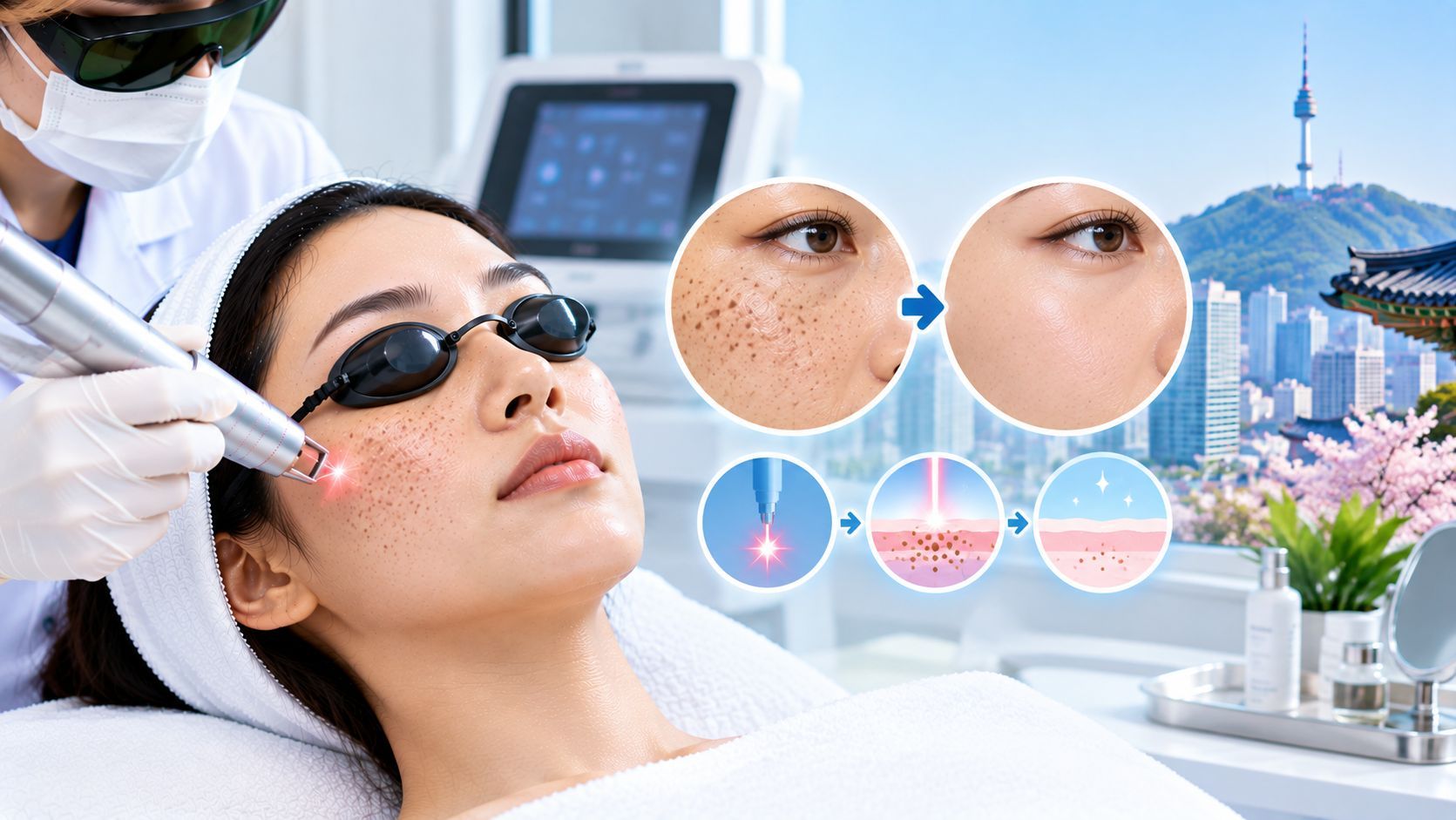
Can Pigmentation Come Back After Korean Laser Treatment?
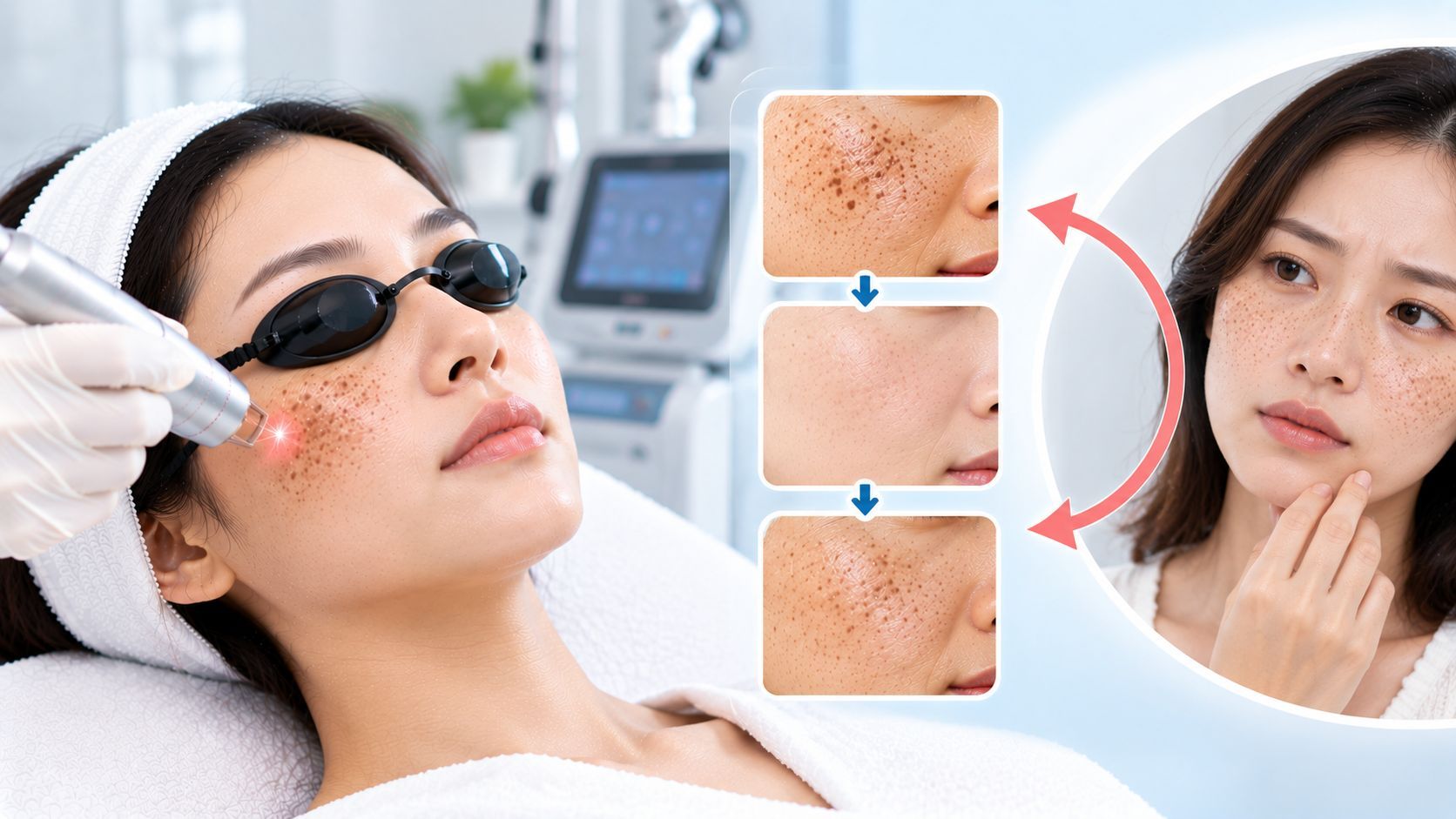
Yes. Pigmentation can come back after laser treatment, even when the original treatment worked well. This does not necessarily mean the laser failed. Pigmentation can return because the underlying tendency to produce excess pigment may remain, while conditions such as sun exposure, hormones, heat, inflammation, acne, or skin irritation can trigger new or renewed discoloration.
This is particularly important for people treating melasma, which can be a recurrent condition. Freckles, sun-related pigmentation, and post-acne pigmentation can also become noticeable again depending on the cause and ongoing exposure.
If you are considering laser treatment in Seoul, it is useful to think of pigmentation treatment as management rather than guaranteed permanent removal.
Why Can Pigmentation Return After Laser?
Laser treatment can reduce visible pigmentation, but it does not necessarily eliminate the factors that caused the pigment to appear in the first place.
For example, a laser may target existing pigment, but it cannot permanently prevent future UV exposure or stop every biological process involved in pigmentation.
Pigmentation may therefore return because of:
- Sun exposure
- Heat
- Hormonal influences
- New skin inflammation
- Acne
- Post-inflammatory hyperpigmentation
- Melasma recurrence
- Natural tendency toward freckles or sun spots
- Irritating skincare or procedures
The reason for recurrence depends on the type of pigmentation.
Melasma Is Particularly Prone to Recurrence
Melasma is one of the most important examples.
Even when melasma becomes much lighter after treatment, it can become visible again.
Sun and visible-light exposure can contribute to worsening pigmentation, while heat and other individual triggers may also be relevant.
This means that treating melasma with a laser does not necessarily mean that the condition has permanently disappeared.
A long-term management strategy may be more realistic than expecting one procedure to provide permanent clearance.
What About Freckles?
Freckles may respond noticeably to pigment-targeting treatments, but treatment does not necessarily remove the tendency to develop freckles.
UV exposure can make freckles darker or cause additional freckles to become visible.
Therefore, someone may see significant improvement after treatment and later notice pigmentation returning, particularly after periods of substantial sun exposure.
This does not necessarily mean the original treatment was unsuccessful.
Can Sun Spots Come Back?
Sun-related pigmentation can also recur or become noticeable again.
A treated solar lentigo may improve substantially, but new sun-related spots can develop elsewhere over time.
Long-term UV exposure remains relevant.
If you repeatedly undergo laser treatment while continuing significant sun exposure, you may find yourself treating new pigmentation rather than addressing the ongoing trigger.
Can Post-Acne Pigmentation Return?
Yes, but the mechanism can be slightly different.
If the original dark marks were caused by acne inflammation, treating existing pigmentation does not necessarily prevent new acne from developing.
Every new inflammatory lesion can potentially leave another dark mark.
This is why controlling active acne can be an important part of reducing future pigmentation.
Otherwise, the cycle can look like this:
Acne → inflammation → dark mark → laser treatment → new acne → new dark mark.
Treating both the existing marks and the underlying acne tendency may be more useful than repeatedly treating pigmentation alone.
Does Laser Permanently Remove Pigment?
The answer depends on what “remove” means.
A laser may significantly reduce visible pigmentation, sometimes producing a substantial cosmetic improvement.
But permanent prevention of future pigmentation is different.
The treatment may remove or reduce existing pigment without changing your underlying susceptibility to:
- Melasma
- Freckles
- Sun-related pigmentation
- PIH
- Acne-related discoloration
For this reason, claims of permanent removal of all facial pigmentation should be viewed cautiously.
Can Pigmentation Return Because the Laser Was Too Weak?
Not necessarily.
If pigmentation returns, it does not automatically mean that the original laser settings were too conservative.
Increasing treatment intensity may not solve the underlying cause.
For conditions such as melasma, aggressive treatment can potentially create additional inflammation and pigmentary complications.
The goal should therefore not simply be to use the strongest possible laser.
Instead, the dermatologist should consider the type of pigmentation, skin characteristics, treatment response, and long-term management.
Can Aggressive Treatment Cause New Pigmentation?
Yes.
A laser treatment can cause inflammation, and inflammation can sometimes trigger post-inflammatory hyperpigmentation (PIH).
This is particularly relevant for people who already develop dark marks easily.
A person might therefore experience the following sequence:
Existing pigmentation → aggressive treatment → inflammation → PIH → darker appearance.
This can be mistaken for the original pigmentation “coming back.”
In reality, the post-treatment pigment may have a different mechanism.
If your skin becomes significantly darker after treatment, contact the treating clinic rather than automatically scheduling another laser session.
Does Pico Laser Prevent Recurrence?
No laser technology can be assumed to prevent future pigmentation simply because it uses picosecond technology.
Pico laser can be used for selected pigmentation concerns, but it is still important to distinguish the technology from the overall treatment strategy.
The wavelength, settings, treatment pattern, skin type, and diagnosis all matter.
A Pico treatment may improve existing pigment while the underlying tendency remains.
The same principle applies to other laser platforms.
What About Laser Toning?
Laser toning may be used as part of a gradual pigmentation-management strategy, particularly for selected cases of diffuse pigmentation.
However, repeated treatment does not guarantee permanent prevention of recurrence.
Overly frequent or aggressive treatments can also cause irritation or unwanted pigment changes.
The appropriate treatment interval should be based on how your skin responds rather than a fixed assumption that more frequent treatment will always produce better results.
What Can You Do to Reduce Recurrence?
After pigmentation treatment, ongoing skin protection is important.
Depending on your dermatologist's recommendations, this can include:
Sun Protection
Use appropriate broad-spectrum sunscreen and reduce unnecessary direct sun exposure.
If you are traveling, remember that sightseeing can involve much more UV exposure than your normal routine.
Avoid Excessive Irritation
Follow the clinic's post-treatment skincare instructions.
Introducing multiple strong active ingredients immediately after a procedure may irritate the skin.
Control Active Acne
If acne is causing new inflammation, treating the acne can help reduce the development of additional post-acne pigmentation.
Follow Your Long-Term Plan
Melasma and other recurring pigmentation conditions may require maintenance rather than a single treatment.
The maintenance strategy can vary considerably between patients.
Does Heat Matter for Melasma?
For some people with melasma, heat may be an important trigger.
This can be relevant when visiting Seoul because a medical trip may include:
- Outdoor sightseeing
- Hot weather
- Saunas
- Steam rooms
- Heated environments
- Exercise
If you have recently received a pigmentation treatment, ask the clinic which activities should be avoided and for how long.
Do not assume that your skin is fully recovered simply because the surface looks normal.
Can Skincare Help Prevent Pigmentation From Returning?
Skincare may form part of a pigmentation-management plan, but the appropriate products depend on the individual condition and skin tolerance.
A dermatologist may recommend a combination of photoprotection and topical management.
The important point is to avoid assuming that stronger skincare automatically produces better results.
Excessive irritation can itself contribute to inflammation and PIH.
How Long Can Results Last?
There is no universal duration.
Results depend on:
- Type of pigmentation
- Depth and distribution of pigment
- Skin type
- Sun exposure
- Hormonal factors
- Treatment method
- Aftercare
- Maintenance
- Individual tendency to develop pigmentation
Some patients may maintain improvement for a long period, while others may notice recurrence sooner.
For melasma in particular, recurrence can occur even after substantial improvement.
What If Pigmentation Returns After Treatment in Seoul?
If you return home after treatment and notice pigmentation becoming darker again, contact the clinic if follow-up is available.
Ask whether the change could represent:
- Normal post-treatment recovery
- Temporary darkening
- PIH
- Melasma recurrence
- New sun-related pigmentation
- Another skin condition
Avoid automatically booking another aggressive treatment without understanding what happened.
If you cannot contact the original clinic, consider seeing a qualified dermatologist locally, particularly if the pigmentation is changing unexpectedly.
What Should International Patients Ask Before Treatment?
If you are traveling to Seoul, ask:
- What type of pigmentation do I have?
- Is this likely to recur?
- What factors could trigger recurrence?
- What treatment are you recommending and why?
- Could this procedure cause PIH?
- How should I protect my skin afterward?
- When can I resume outdoor activities?
- When can I use my normal skincare products?
- Will I need maintenance treatment?
- What should I do if pigmentation returns after I go home?
These questions can help you understand the long-term plan before paying for treatment.
Red Flags When Choosing Pigmentation Treatment in Korea
Be cautious if a clinic:
- Promises permanent removal
- Guarantees that pigmentation will never return
- Says one session will permanently solve the problem
- Recommends increasingly aggressive treatments whenever pigment returns
- Does not ask about your sun exposure
- Ignores your history of PIH
- Cannot explain what type of pigmentation you have
- Provides no aftercare instructions
- Pushes a large package without explaining maintenance needs
A realistic treatment plan should acknowledge that pigmentation can recur.
Conclusion
Pigmentation can come back after Korean laser treatment, and recurrence does not automatically mean that the treatment failed. A laser may reduce existing pigment without eliminating the underlying tendency that caused it.
Melasma is particularly prone to recurrence, while freckles and sun-related pigmentation can become visible again with continued UV exposure. Post-acne pigmentation can also return when new acne creates new inflammation.
The most sustainable approach is usually not to keep increasing laser intensity whenever pigmentation reappears. Instead, the treatment should be combined with appropriate skin protection, trigger management, acne control when relevant, and follow-up.
If you are considering pigmentation treatment in Seoul, ask not only “How will you remove my pigmentation?” but also “What is the plan to reduce the chance of it returning?”
FAQs
Can pigmentation return after Pico laser?
Yes. Pico laser may reduce existing pigmentation, but it cannot necessarily prevent new pigment from developing. Recurrence depends on the underlying condition and factors such as UV exposure and inflammation.
Does melasma come back after laser treatment?
It can. Melasma is often a recurrent condition, so visible improvement after laser treatment does not necessarily mean permanent clearance.
Why did my pigmentation return after laser?
Possible explanations include renewed sun exposure, melasma recurrence, new acne-related inflammation, new sun spots, or post-inflammatory hyperpigmentation. The specific cause should be assessed rather than assumed.
Can more laser sessions prevent pigmentation from returning?
Not necessarily. More frequent or aggressive treatment does not automatically prevent recurrence and may increase irritation or pigmentary complications in some patients.
How can I maintain pigmentation treatment results?
Consistent photoprotection, following appropriate aftercare, controlling active acne when relevant, avoiding unnecessary irritation, and following a dermatologist's long-term management plan may help maintain improvement.
Should I get another laser treatment if my pigmentation comes back?
Not automatically. First determine why the pigmentation returned. The appropriate response could involve observation, skincare, trigger management, another treatment, or a different approach depending on the diagnosis.