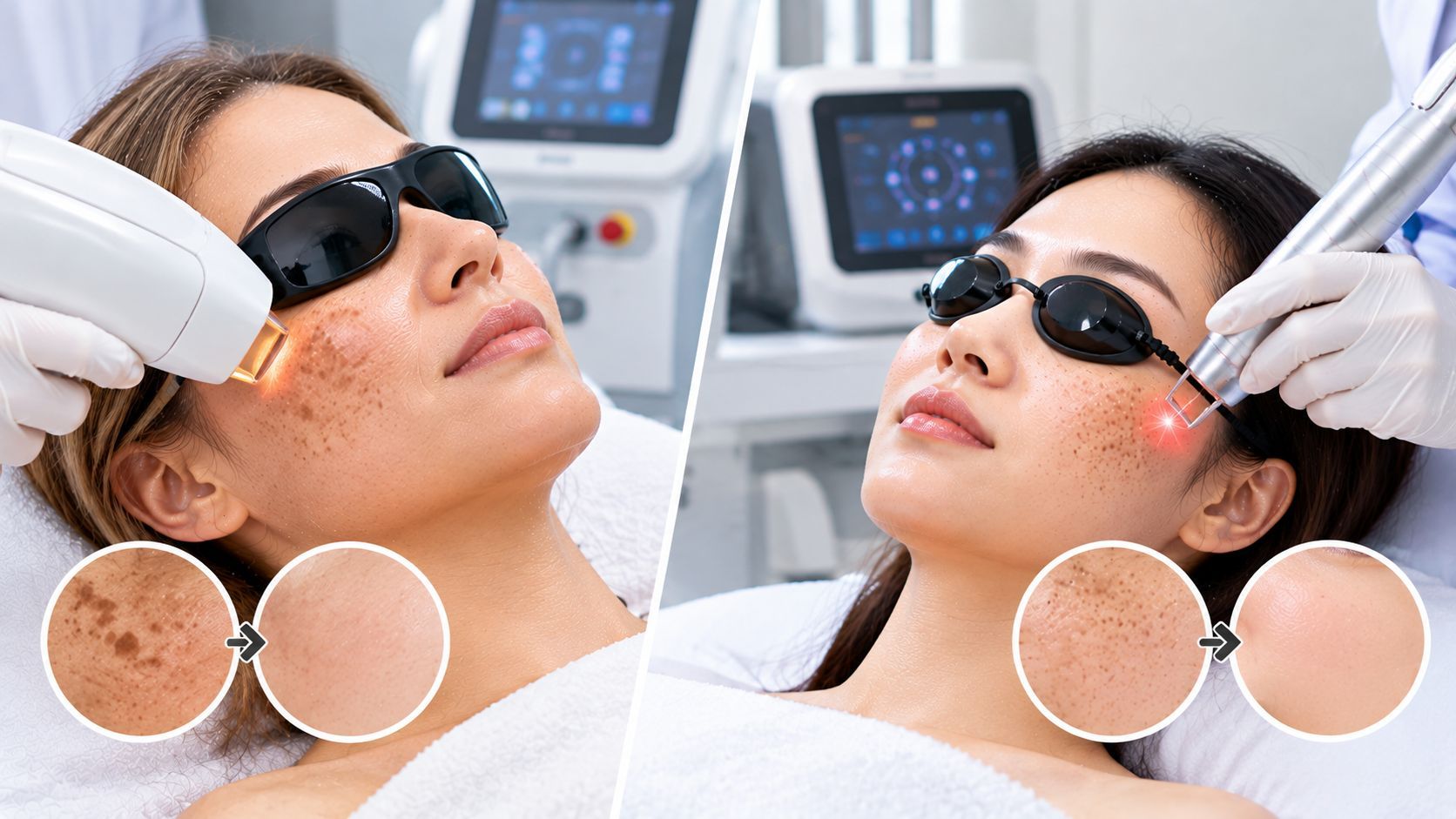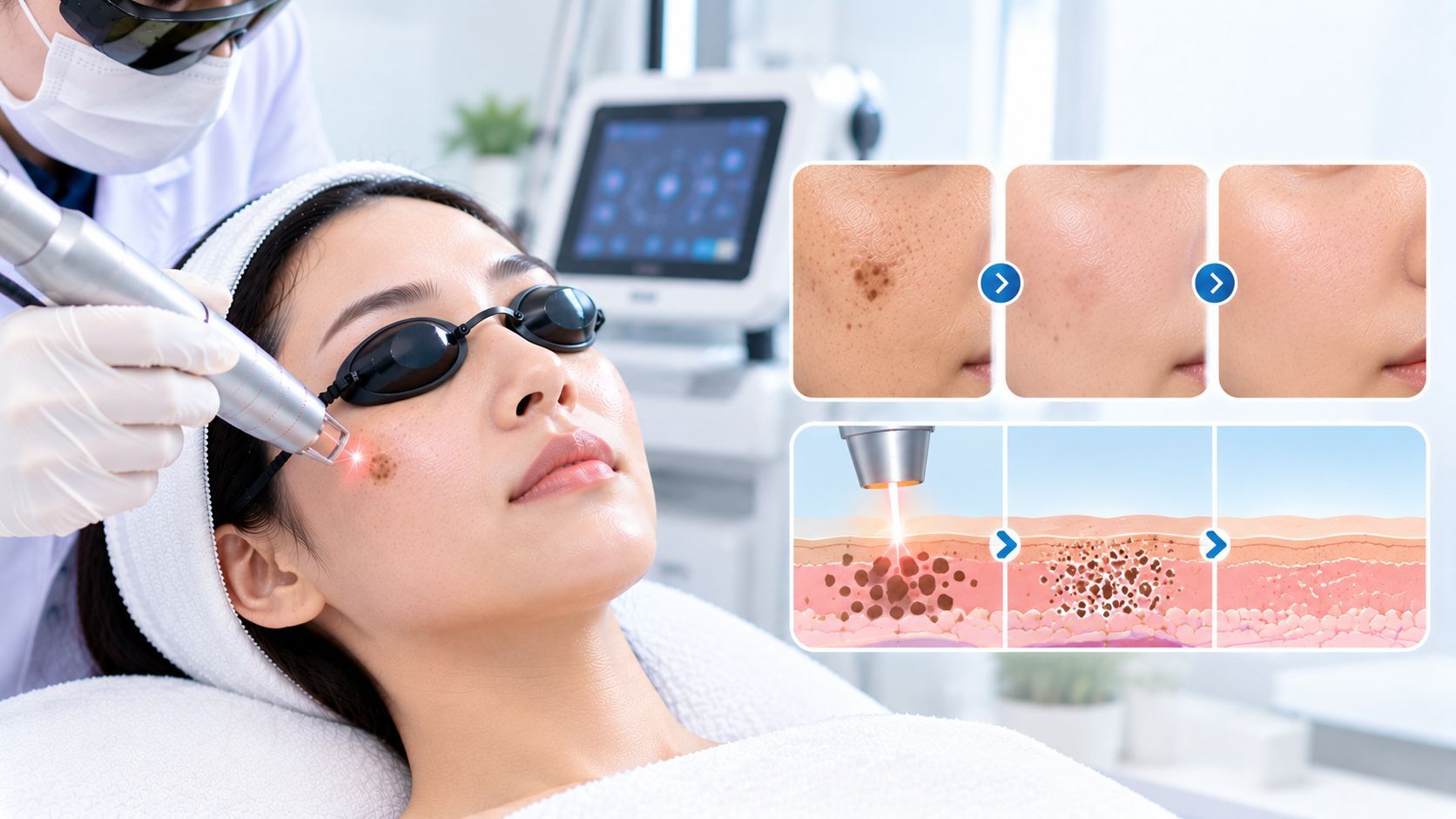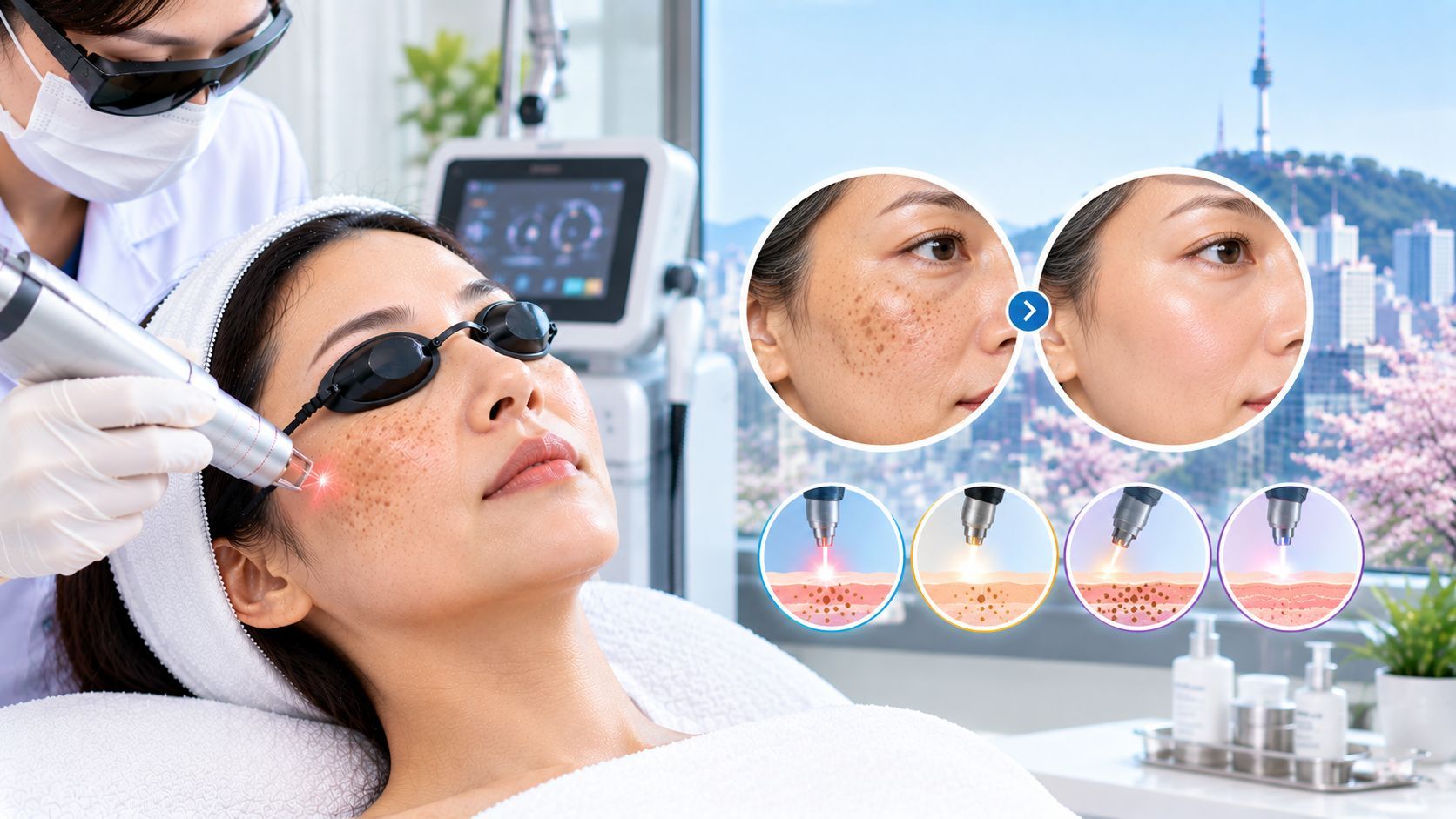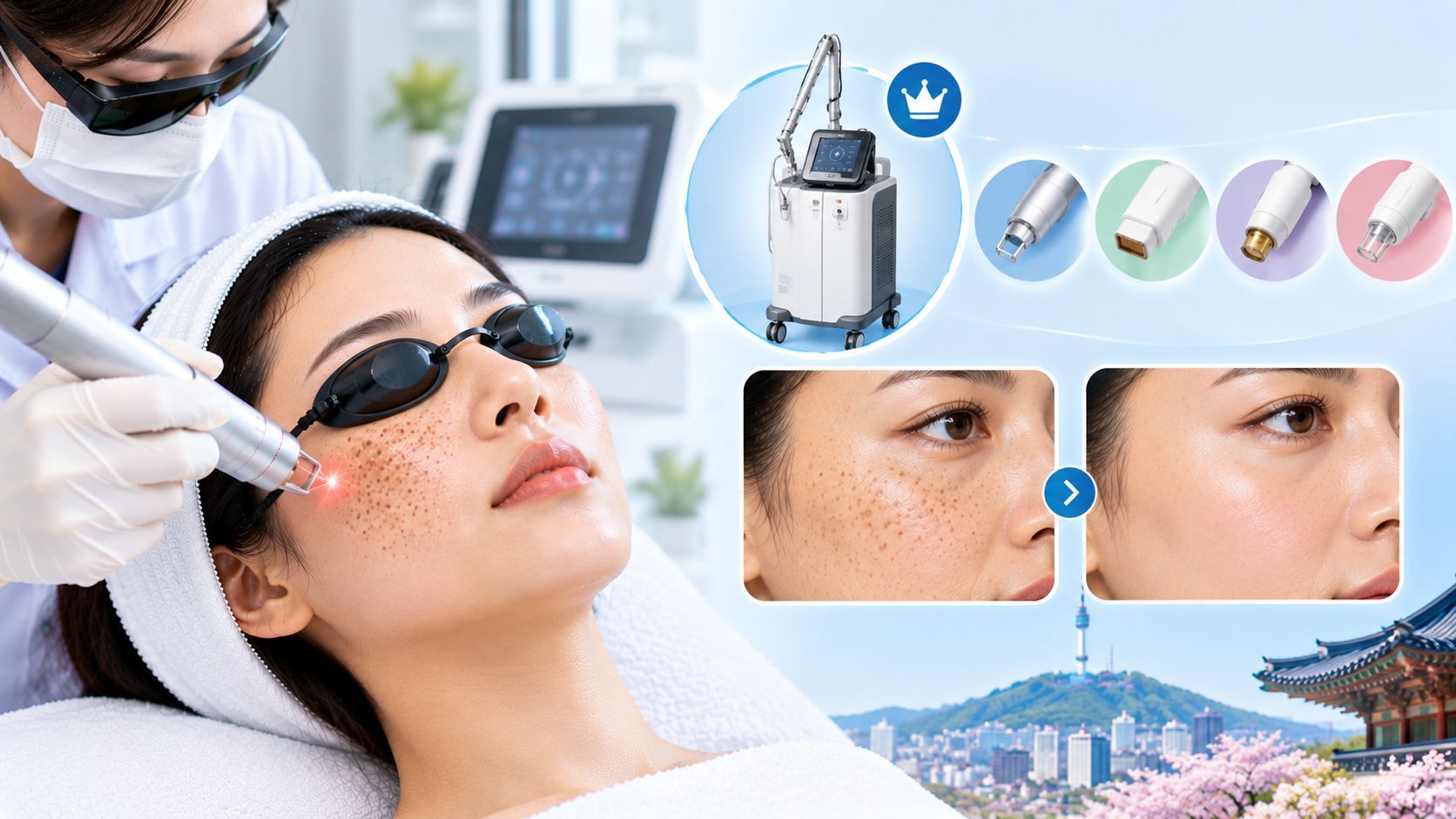
Can Pico Laser Actually Remove Sun Spots?
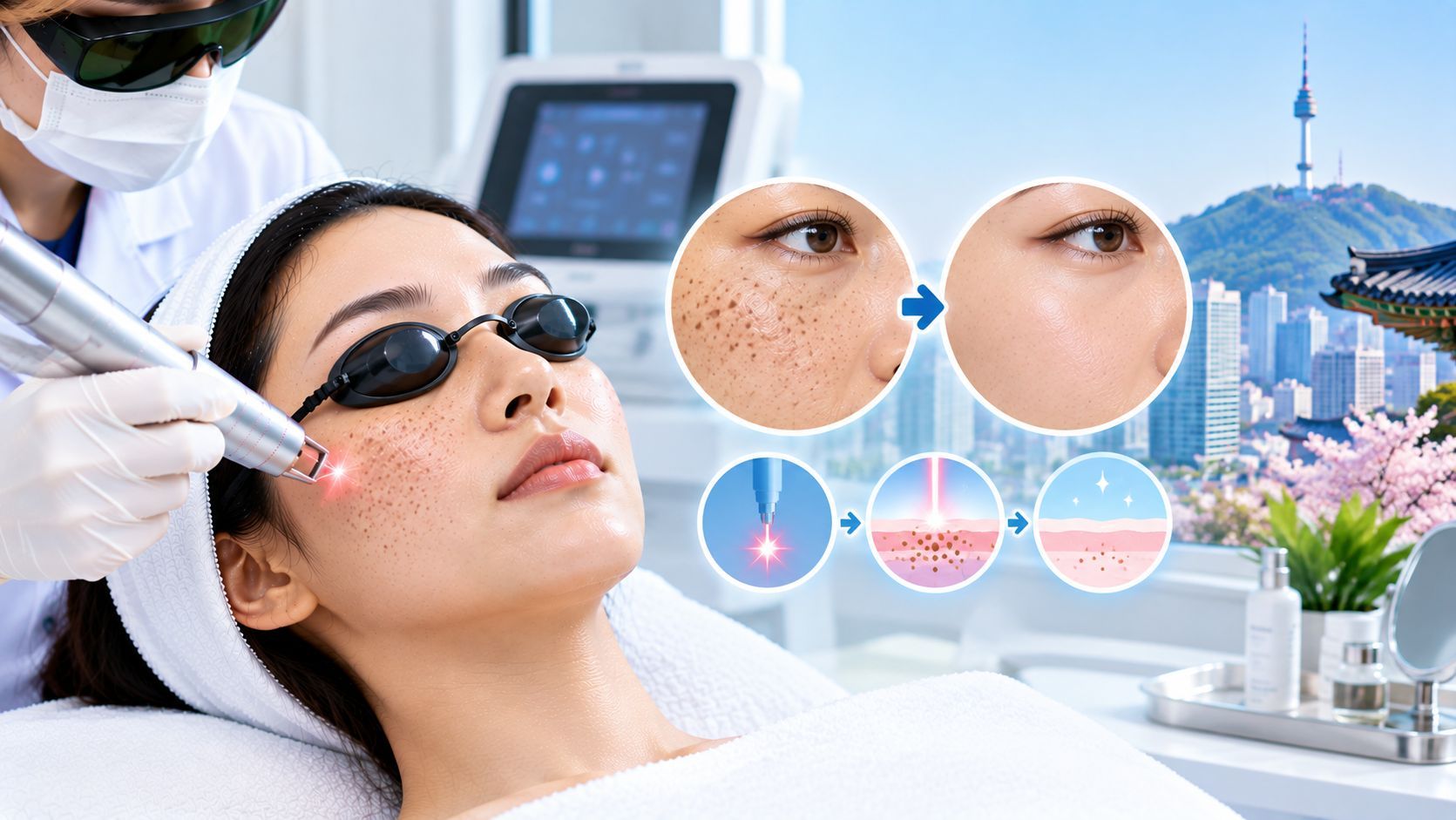
Pico laser is commonly used in Korea for pigmentation concerns, including certain sun-related brown spots. But whether it can actually “remove” a sun spot depends on what the spot is, how deeply the pigment is located, the laser used, and how your skin responds.
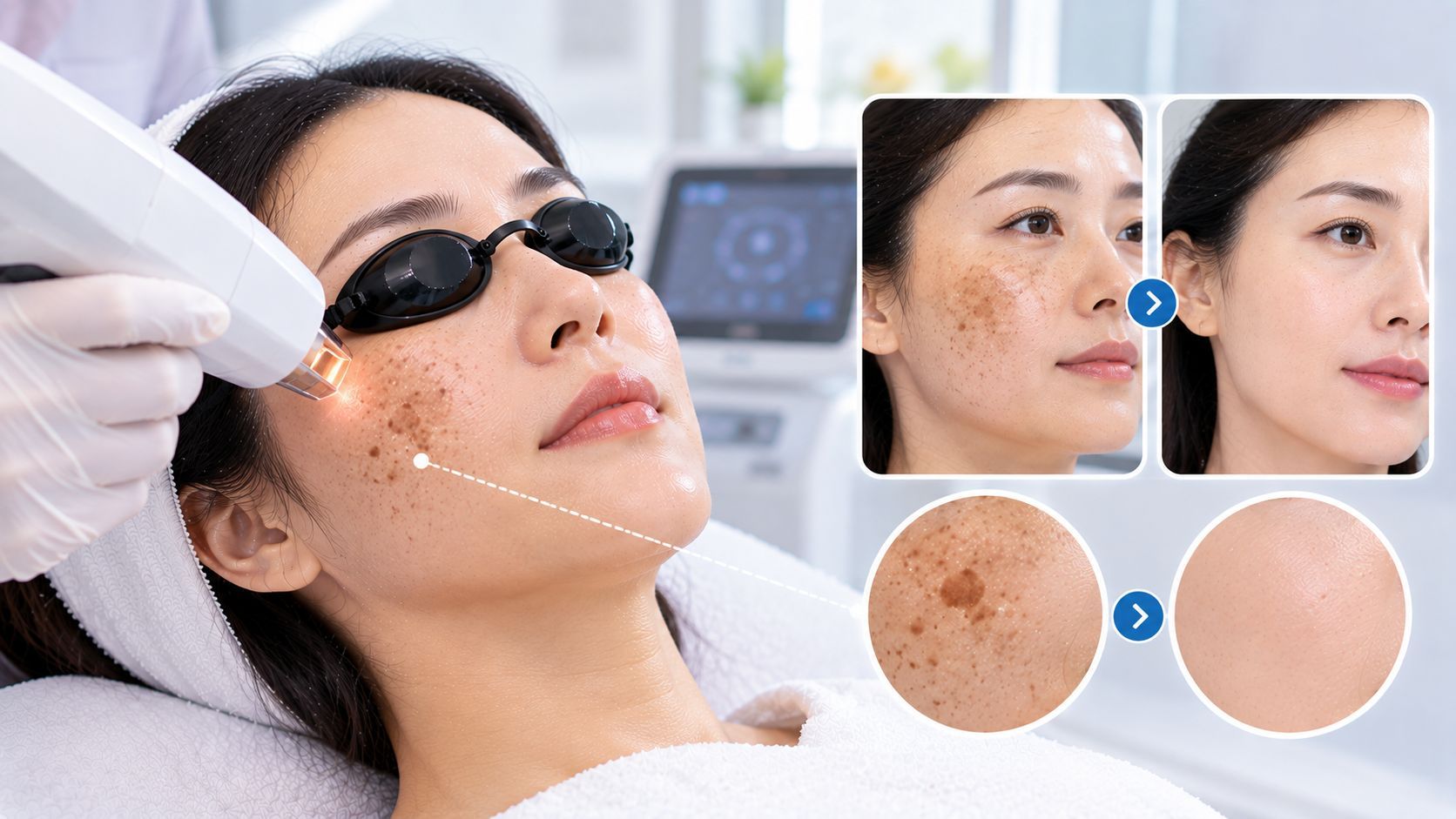
Pico laser can significantly reduce or clear the appearance of some sun spots, particularly certain superficial pigmented lesions, but it cannot guarantee permanent removal. New pigmentation can develop later, and some spots may require more than one treatment or a different approach.
For international patients considering Pico laser in Seoul, the first step is making sure the spot is actually appropriate for laser treatment.
What Are Sun Spots?
“Sun spots” is a common term for areas of increased pigmentation associated with cumulative ultraviolet exposure.
People may use the term to describe several different types of pigmentation, including:
- Solar lentigines
- Freckles
- Other sun-related brown spots
- General uneven pigmentation
These conditions are not identical.
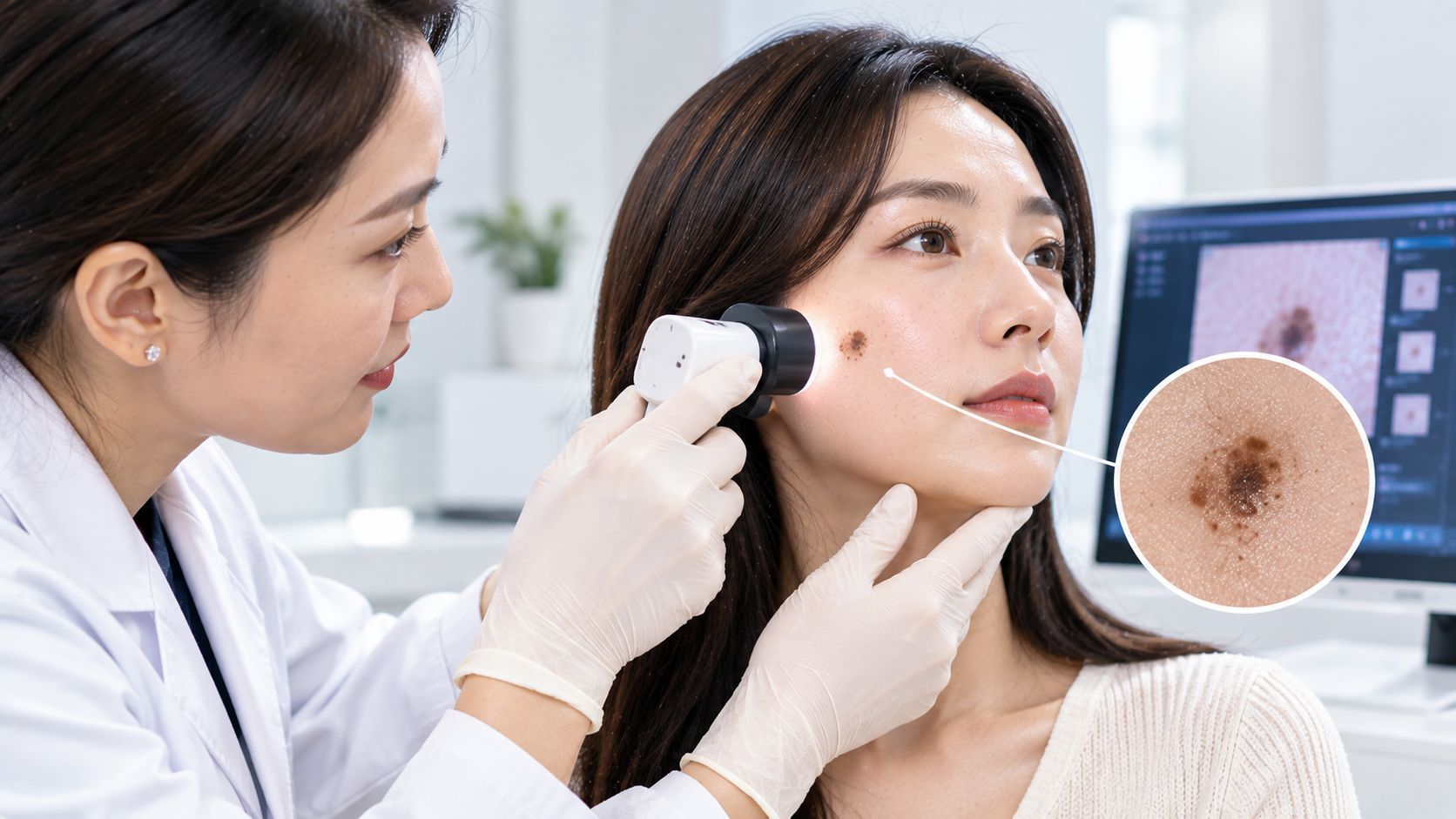
A dermatologist should evaluate a pigmented lesion before treating it, particularly if it is new, changing, irregular, bleeding, or otherwise unusual.
Laser treatment should not be used simply because a spot looks brown.
How Does Pico Laser Target Sun Spots?
Pico laser delivers extremely short pulses of laser energy.
Depending on the device and wavelength, the energy can be absorbed by pigment and produce an effect intended to break up or disrupt the unwanted pigment.
The body's natural processes then help clear the treated pigment over time.
This is different from simply “burning off” every brown spot.
The treatment response depends on:
- The type of pigment
- Pigment depth
- Laser wavelength
- Energy level
- Spot size
- Number of passes
- Skin type
- Individual healing response
This is why two people with apparently similar sun spots can have different results.
Can Pico Laser Completely Remove a Sun Spot in One Session?
Sometimes a clearly defined pigmented spot may show substantial improvement after one targeted treatment.
However, one session should not be treated as a guarantee of complete clearance.
Some pigmentation may require:
- Additional treatment
- A different laser wavelength
- A different treatment technique
- Longer observation
- A broader pigmentation-management strategy
The response can also be affected by how your skin reacts after treatment.
If a clinic promises that every sun spot will disappear permanently after one session, ask what specific diagnosis and treatment they are referring to.
Targeted Pico Laser vs Pico Toning
This distinction is important.
A targeted Pico treatment may be directed toward individual pigmented spots.
Pico toning generally refers to a broader treatment approach that may use lower-intensity laser passes to address diffuse pigmentation and uneven tone.
If you have several distinct sun spots, the dermatologist may consider a targeted approach.
If your concern is more generalized uneven pigmentation, a different treatment strategy may be discussed.
The terms can vary between clinics, so ask exactly what treatment you are being offered.
What Happens After Treating a Sun Spot?
The immediate response depends on the treatment settings.
After a targeted pigment treatment, the treated area may temporarily become:
- Darker
- Red
- Slightly swollen
- Sensitive
- Crusted or dry
The pigmentation may then gradually become less visible as the skin recovers.
Do not judge the final result immediately after treatment.
Temporary darkening can be part of the healing process, but persistent or worsening pigmentation should be discussed with your provider.
Can Pico Laser Make a Sun Spot Darker?
Yes.
A treated pigmented area can temporarily appear darker after the procedure.
There is also a possibility of post-inflammatory hyperpigmentation, particularly in people who are prone to developing dark marks after skin injury or inflammation.
This is particularly relevant for patients with darker or melanin-rich skin.
Before treatment, tell the dermatologist if you have previously developed pigmentation after:
- Acne
- Cuts
- Burns
- Waxing
- Chemical peels
- Laser treatments
- Other cosmetic procedures
Your previous skin reactions can help inform treatment planning.
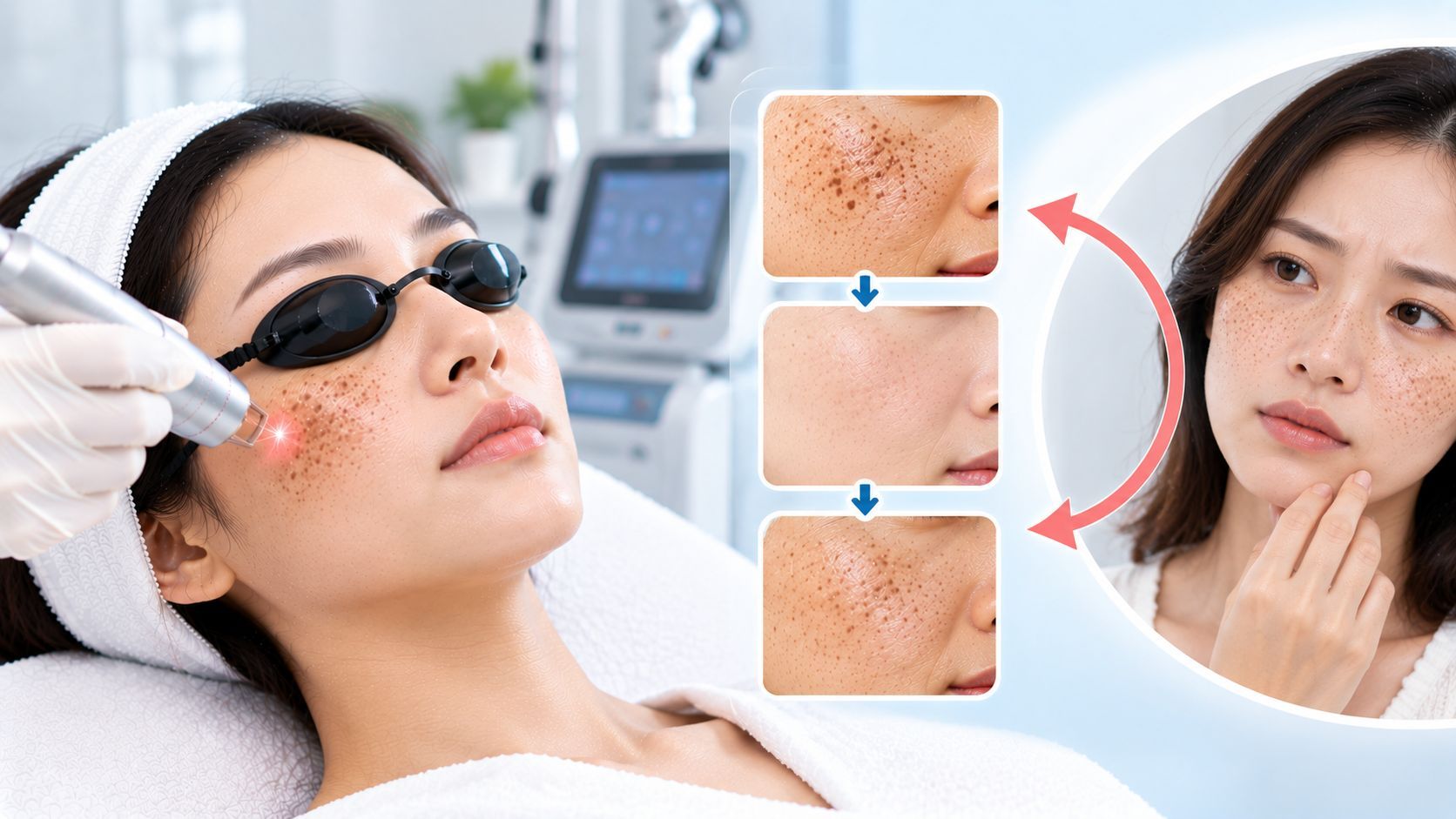
Can Sun Spots Come Back After Pico Laser?
Yes.
Laser treatment can reduce existing pigmentation, but it does not prevent your skin from developing new sun-related pigmentation in the future.
UV exposure remains an important factor.
Even if a particular spot responds well to treatment, continued sun exposure can contribute to new pigmentation or recurrence of visible pigment.
This is why sun protection is an important part of maintaining results.
Your dermatologist can advise you about appropriate sunscreen use and other measures based on your skin and treatment.
Is Pico Laser Suitable for All Brown Spots?
No.
This is one of the most important limitations to understand.
A brown spot could represent many different things, and some lesions should be evaluated medically rather than treated cosmetically.
Seek professional assessment if a lesion is:
- New and unexplained
- Rapidly changing
- Asymmetrical
- Irregularly bordered
- Unusually colored
- Bleeding
- Crusting without explanation
- Persistently changing
A cosmetic laser procedure should not replace appropriate medical evaluation of a suspicious lesion.
What About Freckles?
Pico laser can be used for certain freckles and may make them less visible.
However, freckles are influenced strongly by sun exposure and individual pigmentation characteristics.
Even after successful treatment, freckles can become visible again.
This means that the realistic goal is often reduction rather than permanent prevention of recurrence.
What About Melasma?
Melasma is different from a simple sun spot.
It often appears as broader areas of brown or gray-brown pigmentation and can be influenced by hormonal factors, sunlight, heat, and individual susceptibility.
Laser treatment requires greater caution because inappropriate treatment can sometimes worsen pigmentation.
If your “sun spots” are actually melasma, a targeted spot-removal approach may not be appropriate.
A dermatologist should determine the likely cause before treatment.
How Many Sessions Might You Need?
There is no universal number.
Some individual lesions may respond strongly after one treatment, while others may require additional sessions.
The number depends on:
- Diagnosis
- Pigment depth
- Device
- Wavelength
- Treatment settings
- Skin type
- Response to previous treatment
If several treatments are recommended, ask why they are necessary and what improvement is expected from each stage.
What Is the Downtime?
Downtime varies by treatment intensity.
A targeted pigment treatment may cause visible changes to the treated spot even if the surrounding skin looks relatively normal.
Possible temporary effects include:
- Redness
- Swelling
- Darkening
- Crusting
- Dryness
- Sensitivity
This can be particularly relevant if you are visiting Korea as a tourist.
You may want to avoid scheduling a major event, professional photo session, or long day in the sun immediately after treatment.
Can You Get Pico Laser for Sun Spots During a Korea Trip?
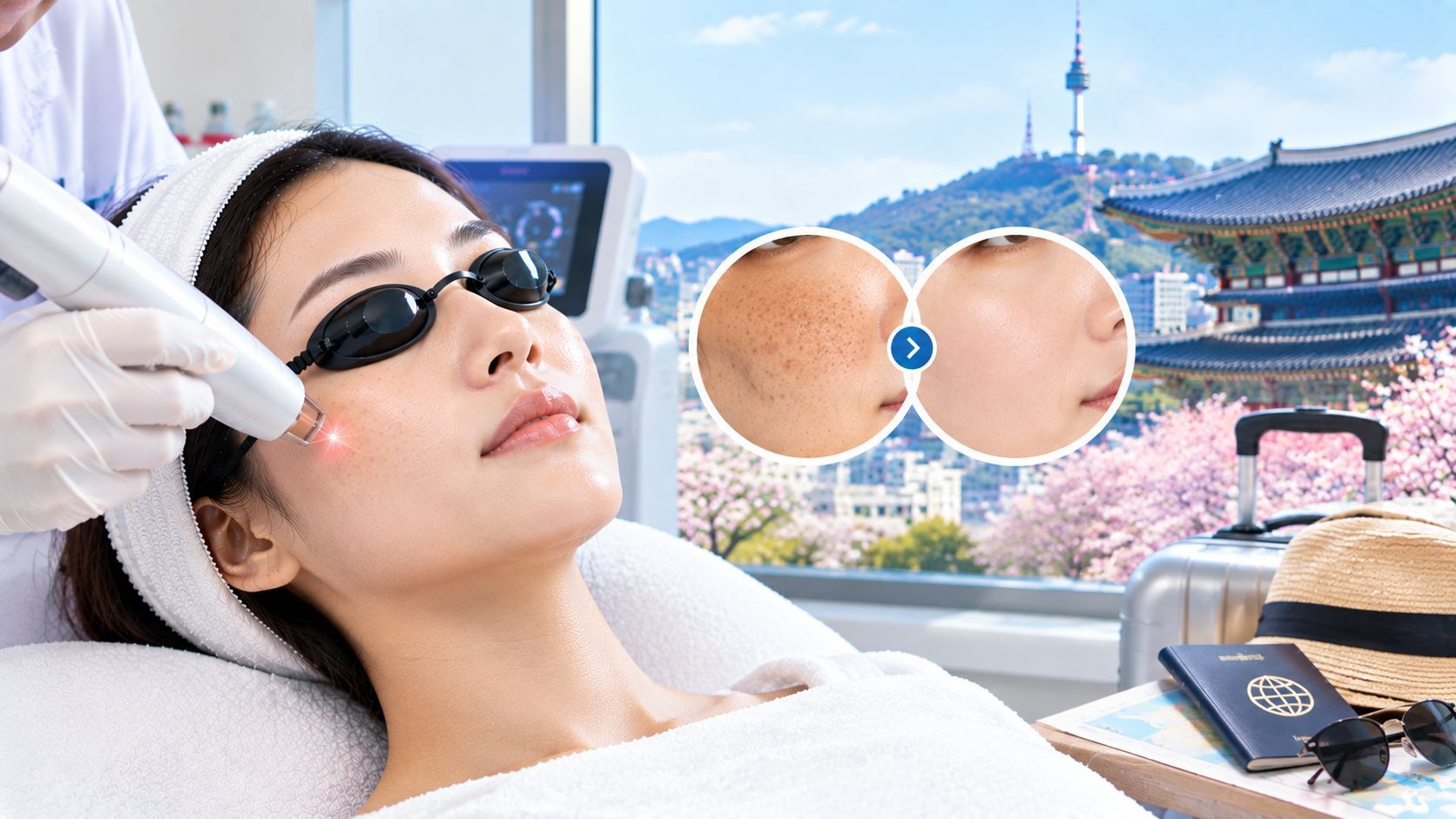
Yes, a short Korea trip may provide enough time for consultation and treatment in selected cases.
However, your itinerary should account for recovery.
For example:
Day 1: Consultation and assessment
Day 2: Treatment if appropriate
Days 3–5: Recovery and lighter activities
Days 6–7: Follow-up or normal travel depending on skin response
This is only an example. The appropriate schedule depends on the actual procedure and your provider's instructions.
What Should You Ask a Seoul Clinic?
Before paying for treatment, ask:
- What type of pigmentation do I have?
- Is this definitely appropriate for Pico laser?
- Will you target individual spots or perform Pico toning?
- Which Pico device and wavelength will you use?
- What result is realistic after one session?
- Could the treated area temporarily become darker?
- What is my risk of post-inflammatory hyperpigmentation?
- How much downtime should I expect?
- How should I protect the area after treatment?
- How many sessions might be needed?
For international patients, also ask whether your treatment schedule is compatible with your return flight.
Bottom Line
Pico laser can substantially reduce or clear the appearance of some types of sun-related pigmentation, particularly when the lesion is suitable for targeted laser treatment.
But “remove” does not necessarily mean permanent removal.
Some spots may need additional treatment, new pigmentation can develop, and certain conditions—including melasma or suspicious pigmented lesions—require a different approach.
Before getting Pico laser in Korea, make sure the pigmentation has been appropriately identified and ask what result is realistic after one session. Understanding the diagnosis and treatment plan is more important than simply choosing a Pico laser because it is popular.
Frequently Asked Questions
Can Pico laser remove sun spots permanently?
It can significantly reduce or clear some sun spots, but permanent prevention of pigmentation is not guaranteed. New or recurrent pigmentation can develop with continued sun exposure and individual pigmentation tendencies.
How many Pico treatments are needed for sun spots?
Some spots may respond substantially after one treatment, while others require additional sessions. The appropriate number depends on the lesion, pigment depth, device, settings, and response.
Do sun spots get darker after Pico laser?
Treated spots can temporarily become darker after treatment. Post-inflammatory hyperpigmentation is also possible, particularly in people who are prone to pigment changes.
Is Pico laser safe for darker skin?
It may be used in darker skin types, but treatment parameters and pigmentary risks require careful consideration. Tell your provider about any history of post-inflammatory hyperpigmentation.
Is Pico laser better than Pico toning for sun spots?
A dermatologist may use targeted Pico treatment for individual spots, while Pico toning is generally a broader approach for uneven tone. The appropriate technique depends on the pigmentation diagnosis.
Can I go outside after Pico laser for sun spots?
Your skin may be more sensitive after treatment, and sun protection is important. Follow your provider's specific instructions regarding outdoor exposure and skincare during recovery.