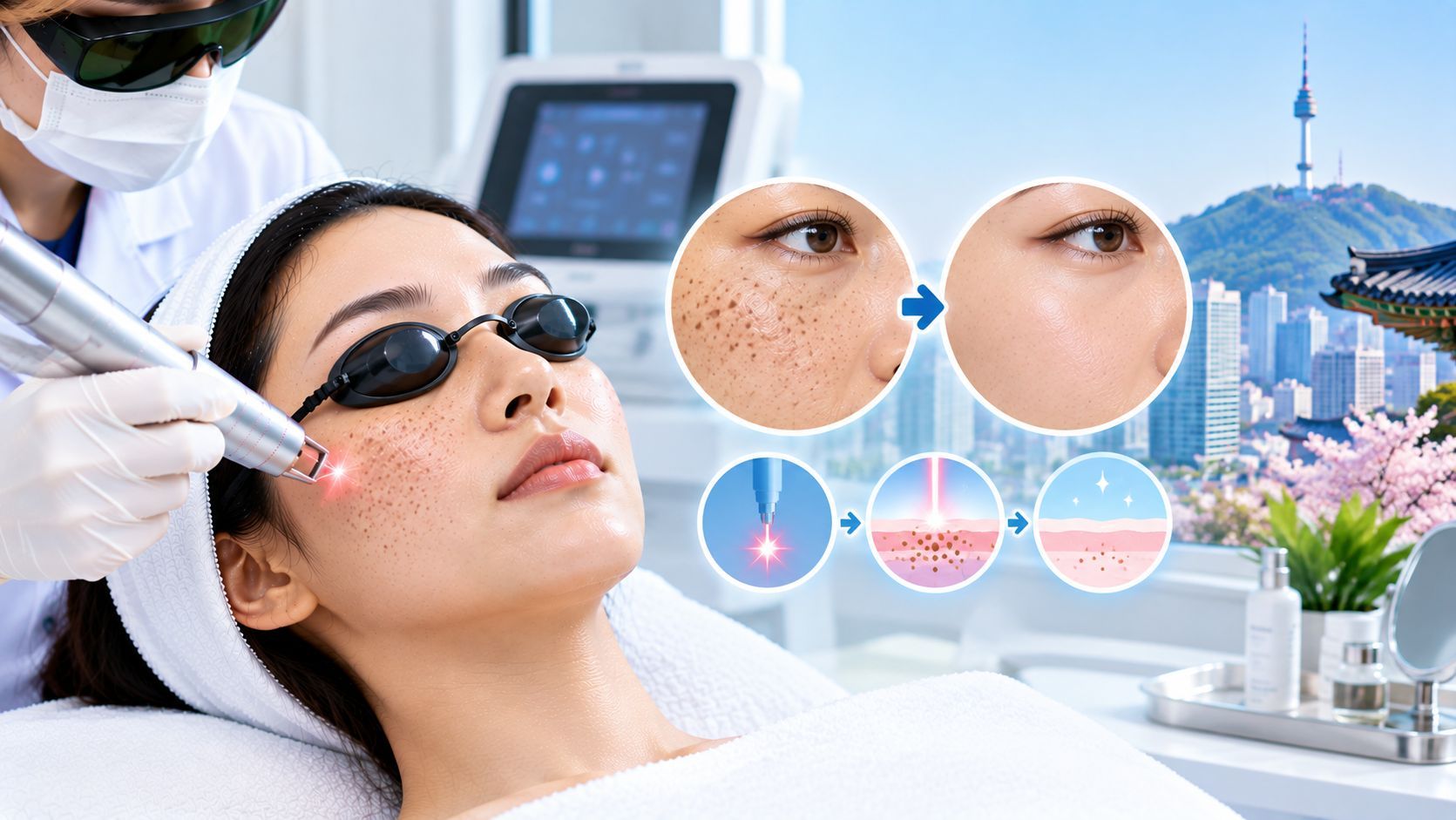
Does Pico Laser Work for Old Acne Marks?
Pico laser can be used to treat certain dark marks left behind after acne, but it is important to distinguish post-acne pigmentation from actual acne scars. A flat brown or gray mark may respond to a pigment-focused laser, while an indented or raised scar involves a structural change that usually requires a different treatment approach.
Pico laser may improve some old acne marks when the main problem is residual pigmentation, but it does not automatically remove all types of acne scars. The result depends on the cause of the mark, your skin type, the Pico device and settings, and whether the pigmentation is still active or recurrent.
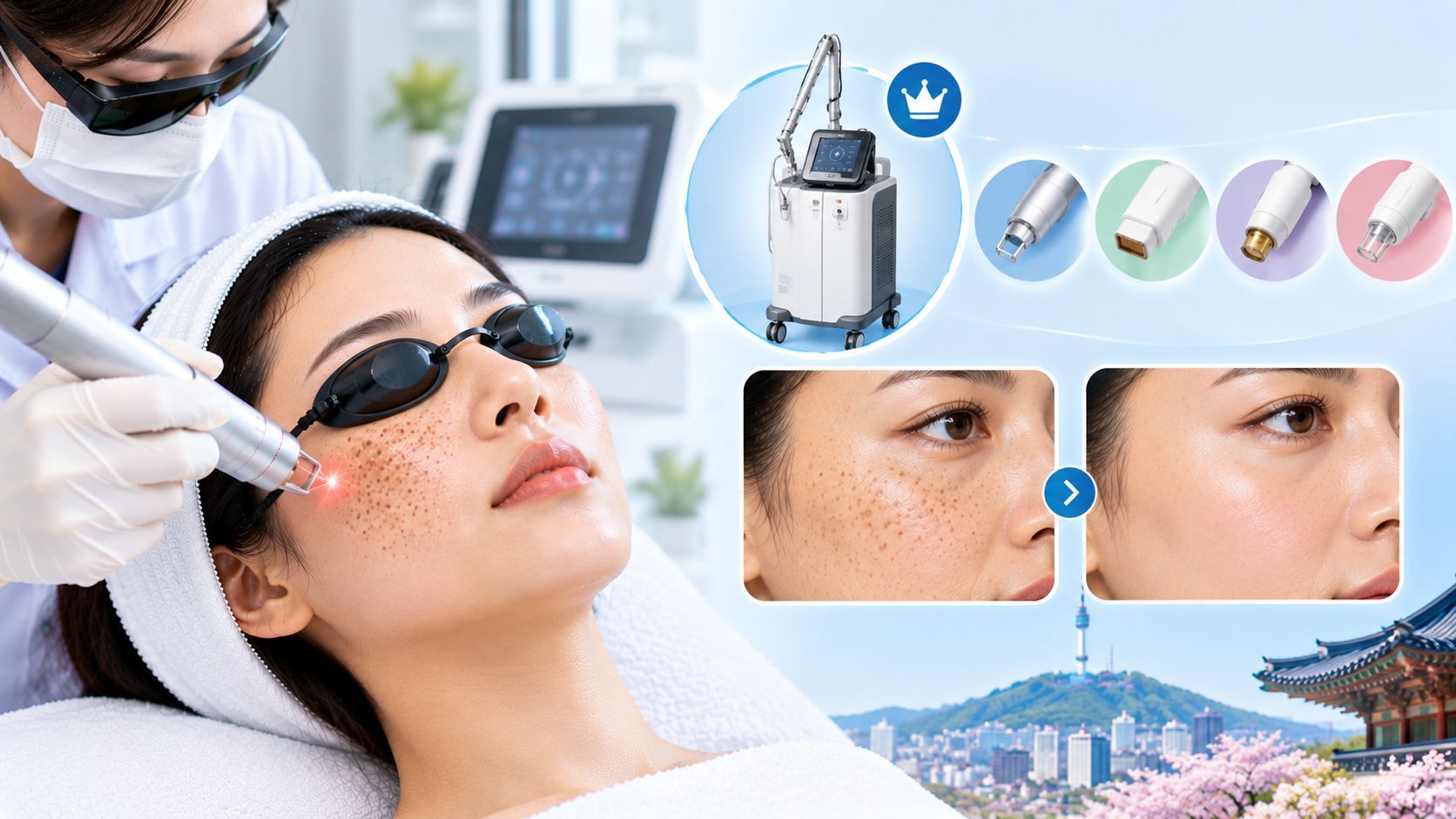
For patients considering Pico laser in Korea, identifying exactly what remains after acne is the first step.
What Are “Old Acne Marks”?
Patients often use “acne marks” to describe several different things.
The most common distinction is between:
- Post-inflammatory hyperpigmentation (PIH): flat brown, gray, or darker marks left after acne inflammation
- Post-inflammatory erythema (PIE): flat red or pink marks after acne
- Atrophic acne scars: depressed or indented scars
- Hypertrophic or keloid scars: raised scars
These problems can look similar from a distance but respond to different treatments.
Pico laser is most relevant when the remaining concern is pigmentation rather than scar structure.
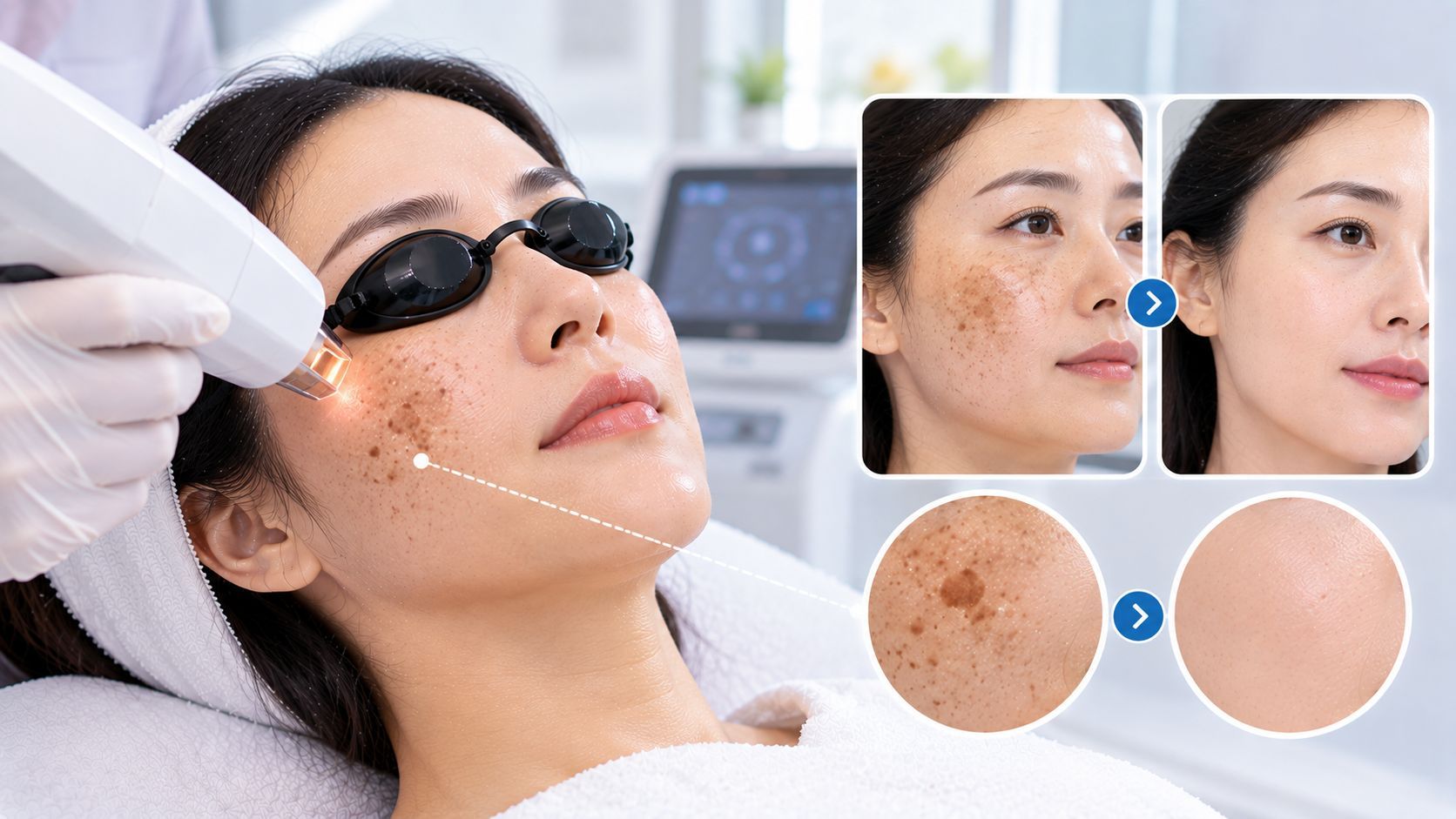
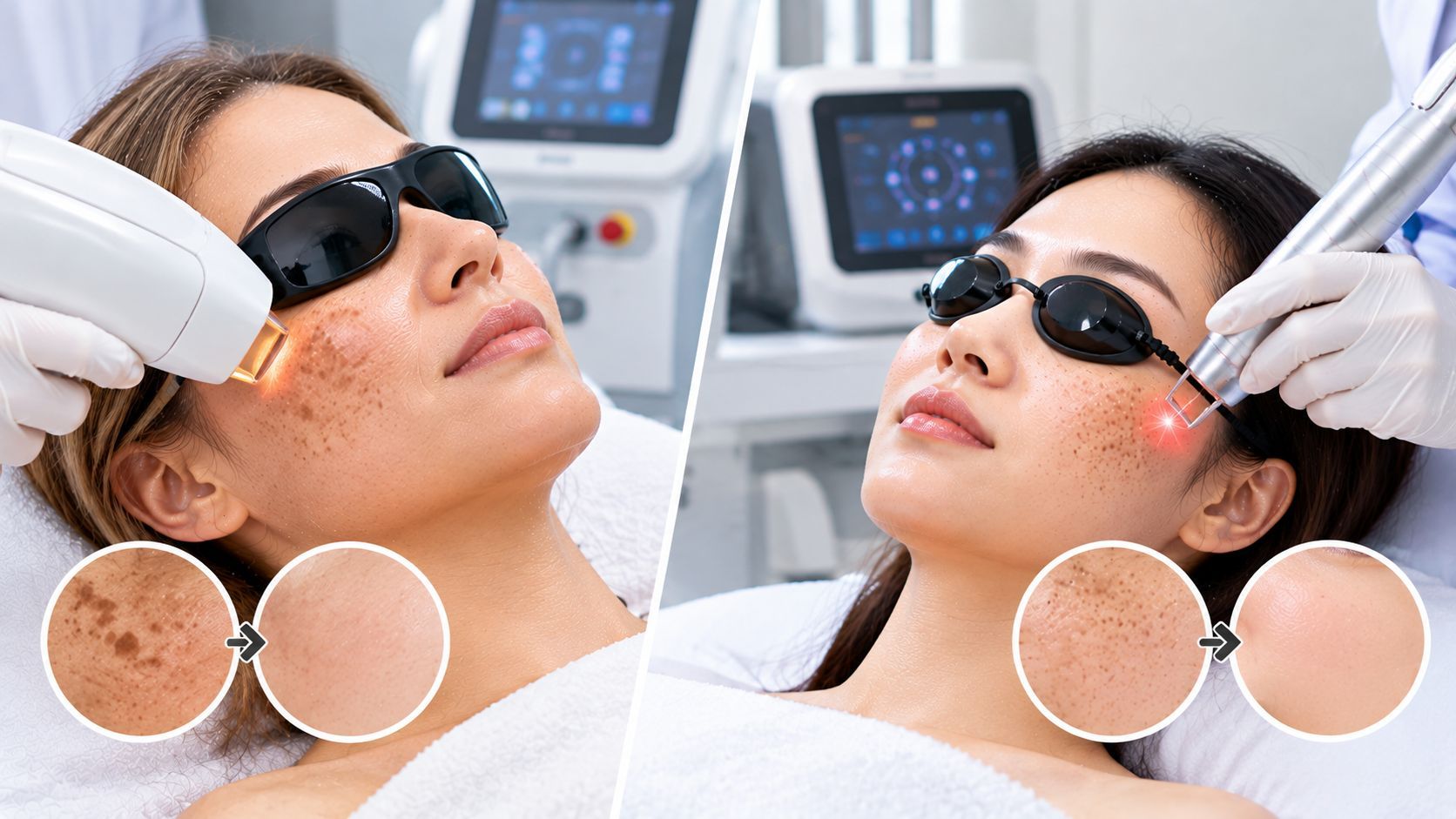
How Can Pico Laser Help Acne Marks?
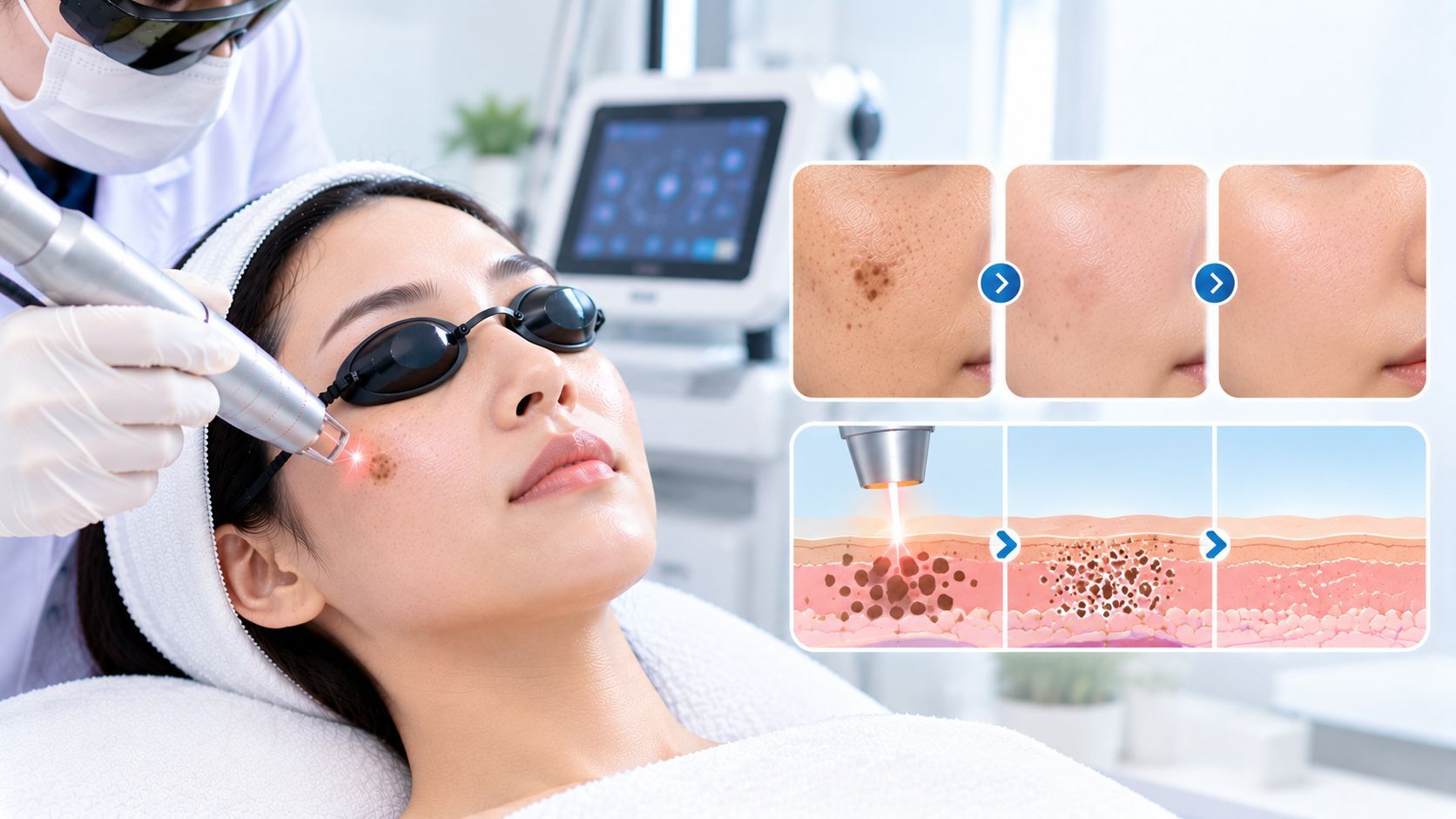
Pico laser uses extremely short pulses of laser energy.
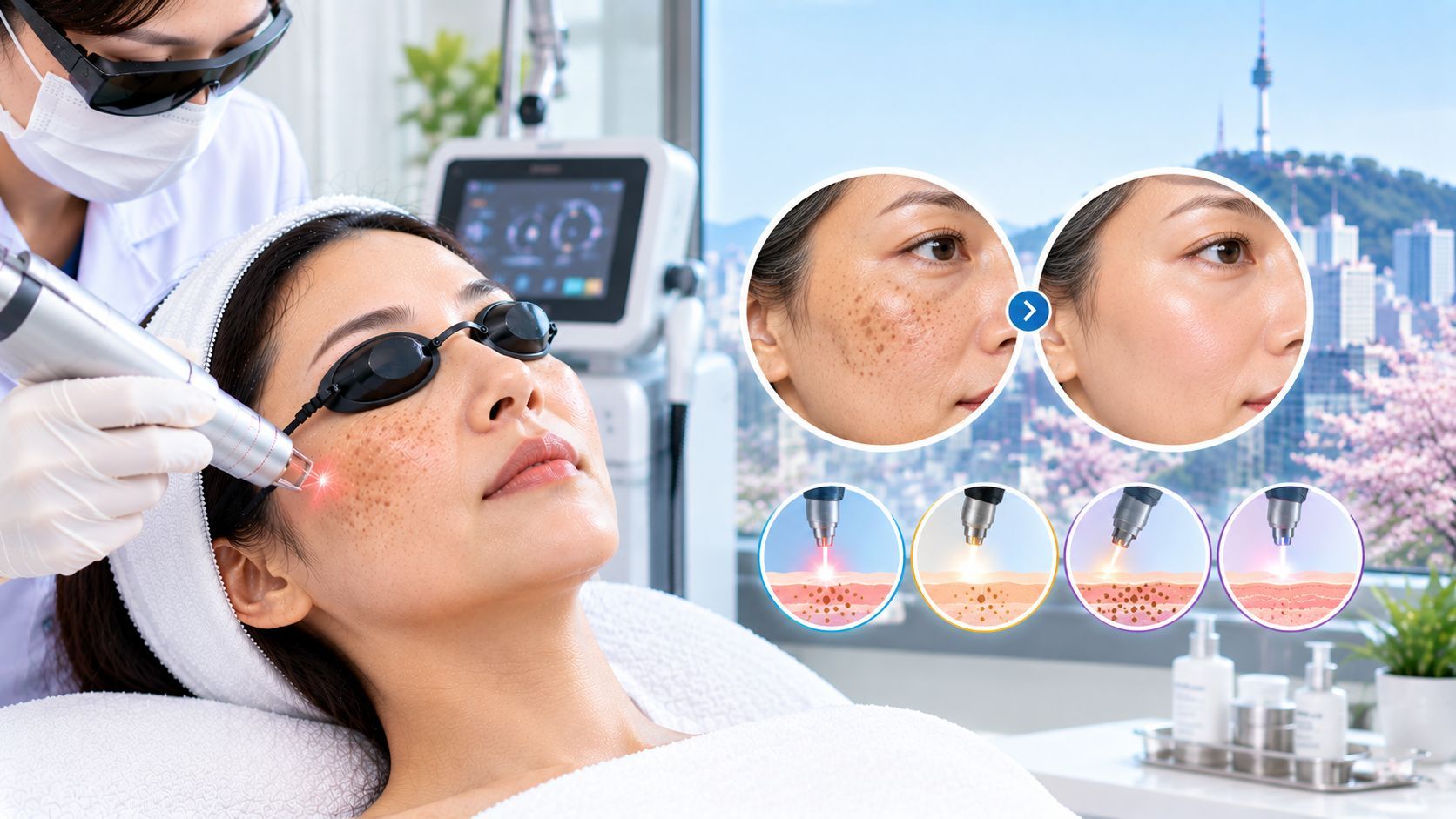
Depending on the device, wavelength, and settings, it can target pigment in the skin. When the dark mark is caused by excess melanin remaining after acne, a pigment-focused treatment may help reduce its appearance.
The goal is not to remove the entire skin layer containing the mark. Instead, the treatment is designed to interact with unwanted pigment while the skin gradually clears or remodels the treated area.
Results vary from person to person.
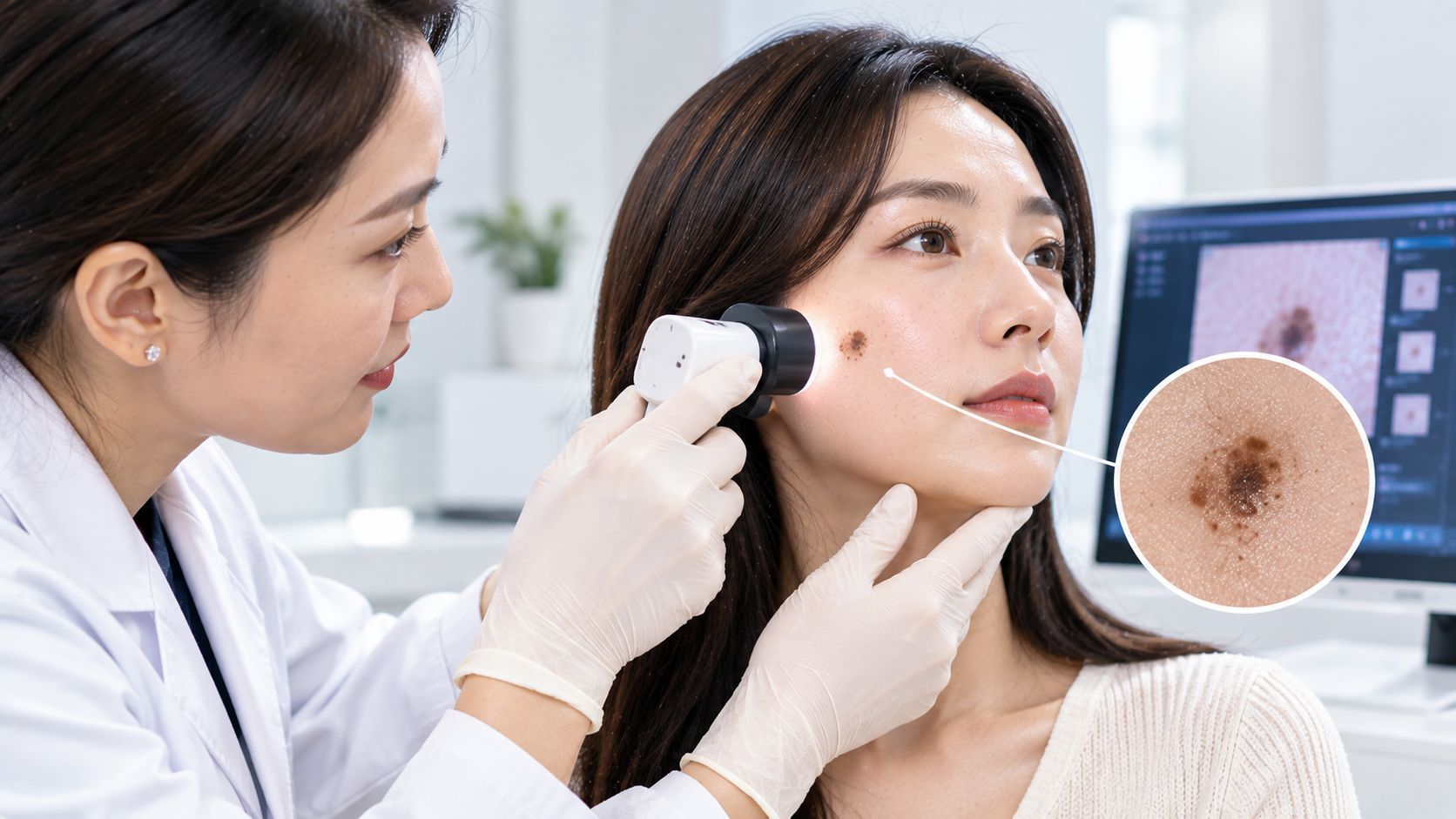
What Does a Dark Acne Mark Look Like?
Post-acne pigmentation is usually:
- Flat rather than raised
- Brown, gray-brown, or darker than surrounding skin
- Located where previous acne occurred
- More noticeable after inflammation
- Not associated with a depression in the skin
If you run your finger over the area and the surface is relatively smooth, the problem may be primarily pigment.
However, visual appearance alone is not enough to make a diagnosis.
Pico Laser vs Acne Scar Treatment
This distinction is critical.
If you have a flat brown mark, Pico laser may potentially target the pigmentation.
If you have an indented scar, the problem is different.
Depressed acne scars can involve changes in collagen and the structure beneath the surface. Depending on the scar type, a dermatologist may consider treatments such as:
- Fractional laser
- RF microneedling
- Subcision
- TCA CROSS
- Other scar-specific procedures
Pico laser may sometimes be part of a broader treatment plan, but it should not be presented as a universal treatment for structural acne scars.
Can Pico Laser Treat Very Old Acne Marks?
Age alone does not necessarily determine whether a mark can respond.
An old mark may still represent residual pigmentation that can potentially be treated.
However, long-standing pigmentation can have different causes, and not every dark area remaining years after acne is still simply post-inflammatory hyperpigmentation.
The dermatologist may need to determine whether the discoloration is related to:
- Previous acne
- Sun exposure
- Melasma
- Ongoing inflammation
- Another pigmentary condition
Treating the wrong cause can produce disappointing results.
What If I Still Get Acne?
This is another important consideration.
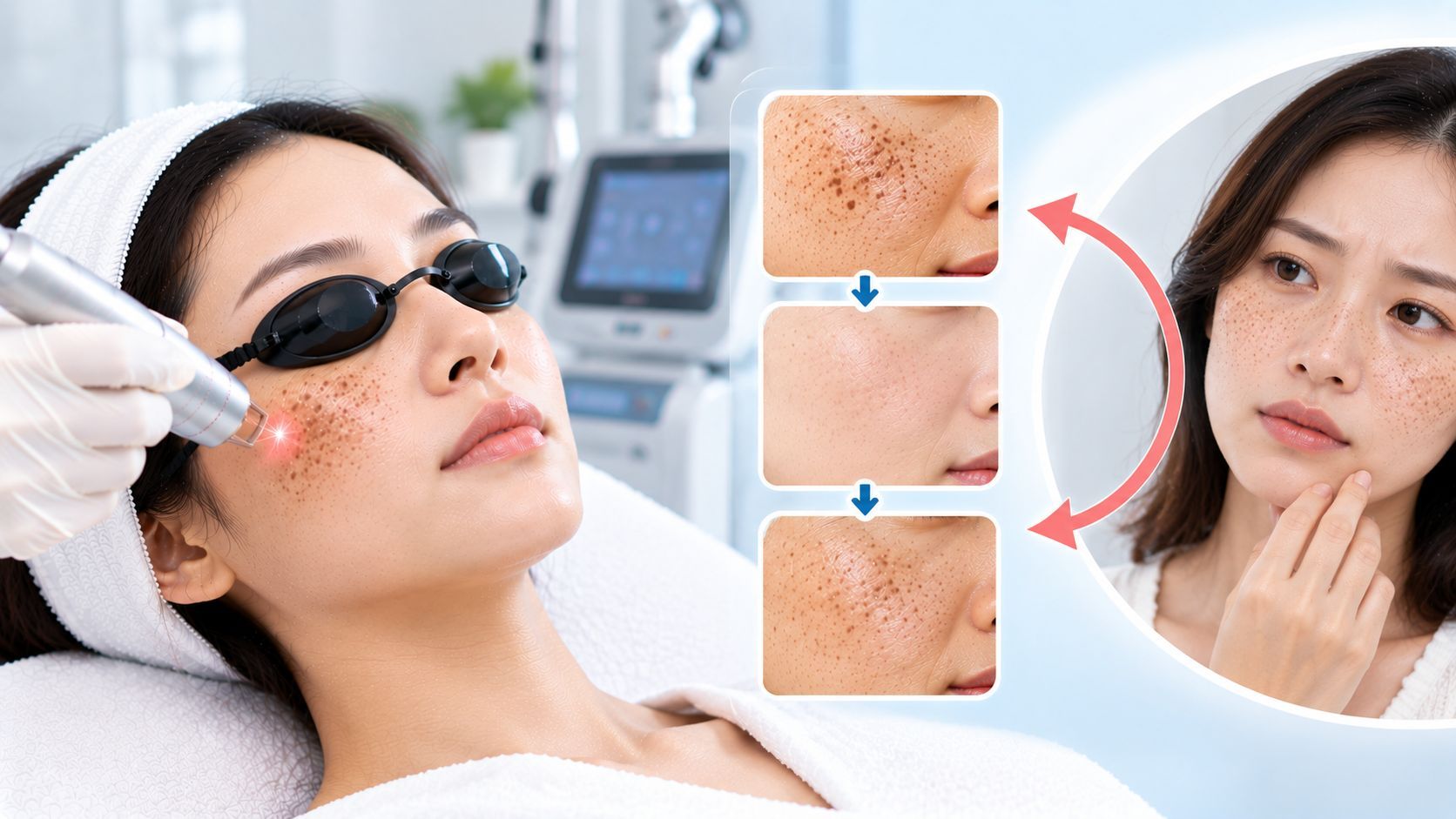
If new acne continues to develop, treating old marks without controlling ongoing inflammation may lead to new pigmentation.
For patients who frequently develop dark marks after breakouts, acne management and pigmentation management may need to be considered together.
Otherwise, you may reduce older marks while new ones continue appearing.
Can One Pico Session Remove Old Acne Marks?
A single session may produce some improvement, but it should not be viewed as a guaranteed complete solution.
The response depends on:
- Depth and type of pigmentation
- Number of marks
- Skin tone
- Device and wavelength
- Treatment settings
- Previous treatments
- Individual healing response
Some isolated pigmentation may respond noticeably after one treatment, while widespread or persistent PIH may require a series.
If a clinic recommends multiple sessions, ask what improvement they expect after each session rather than focusing only on the final projected result.
Can Pico Laser Make Acne Marks Darker?
Yes, temporary darkening can occur after treatment.
This can happen as treated pigment changes during the healing process.
There is also a risk of post-inflammatory hyperpigmentation, especially in patients who are naturally prone to developing dark marks after inflammation or injury.
This is particularly important for patients with darker or melanin-rich skin.
Before treatment, tell your dermatologist if you have previously experienced darkening after:
- Acne
- Cuts
- Burns
- Waxing
- Chemical peels
- Laser treatments
- Other cosmetic procedures
Is Pico Laser Safe for Skin That Pigments Easily?
Pico laser may be appropriate for some pigmentation-prone patients, but “safe” depends on the specific treatment plan.
The dermatologist may need to consider:
- Your baseline skin tone
- Previous PIH
- Current inflammation
- Pigment type
- Laser wavelength
- Energy level
- Treatment density
- Sun exposure
- Previous procedures
A lower-intensity or more conservative approach may sometimes be considered instead of aggressive treatment.
Do not assume that a shorter pulse duration makes the procedure risk-free.
What About Red Acne Marks?
Pico laser is primarily associated with pigment-related concerns.
If your old acne marks are red or pink rather than brown, the underlying issue may involve blood vessels or post-inflammatory redness rather than excess melanin.
In that situation, a dermatologist may consider a different laser or treatment technology.
This is one reason it is useful to show the provider exactly what the marks look like rather than booking a treatment based only on the phrase “acne marks.”
Can Pico Laser Improve Acne Scars and Pigmentation Together?
Possibly, but the treatment plan may need to address different components separately.
For example, someone might have:
- Brown pigmentation
- Red marks
- Enlarged pores
- Depressed scars
- Uneven texture
A single laser may not be appropriate for all of these problems.
A dermatologist may recommend treating the pigment first, addressing scar structure separately, or using a staged combination plan.
The order and combination depend on the individual patient.
How Much Downtime Should You Expect?
Recovery depends on the type and intensity of Pico treatment.
Some treatments may produce relatively mild redness and sensitivity, while targeted pigment treatments can cause temporary darkening or small crusted areas.
Possible short-term effects include:
- Redness
- Warmth
- Sensitivity
- Mild swelling
- Dryness
- Temporary darkening
- Temporary lightening
- Crusting in selected treatments
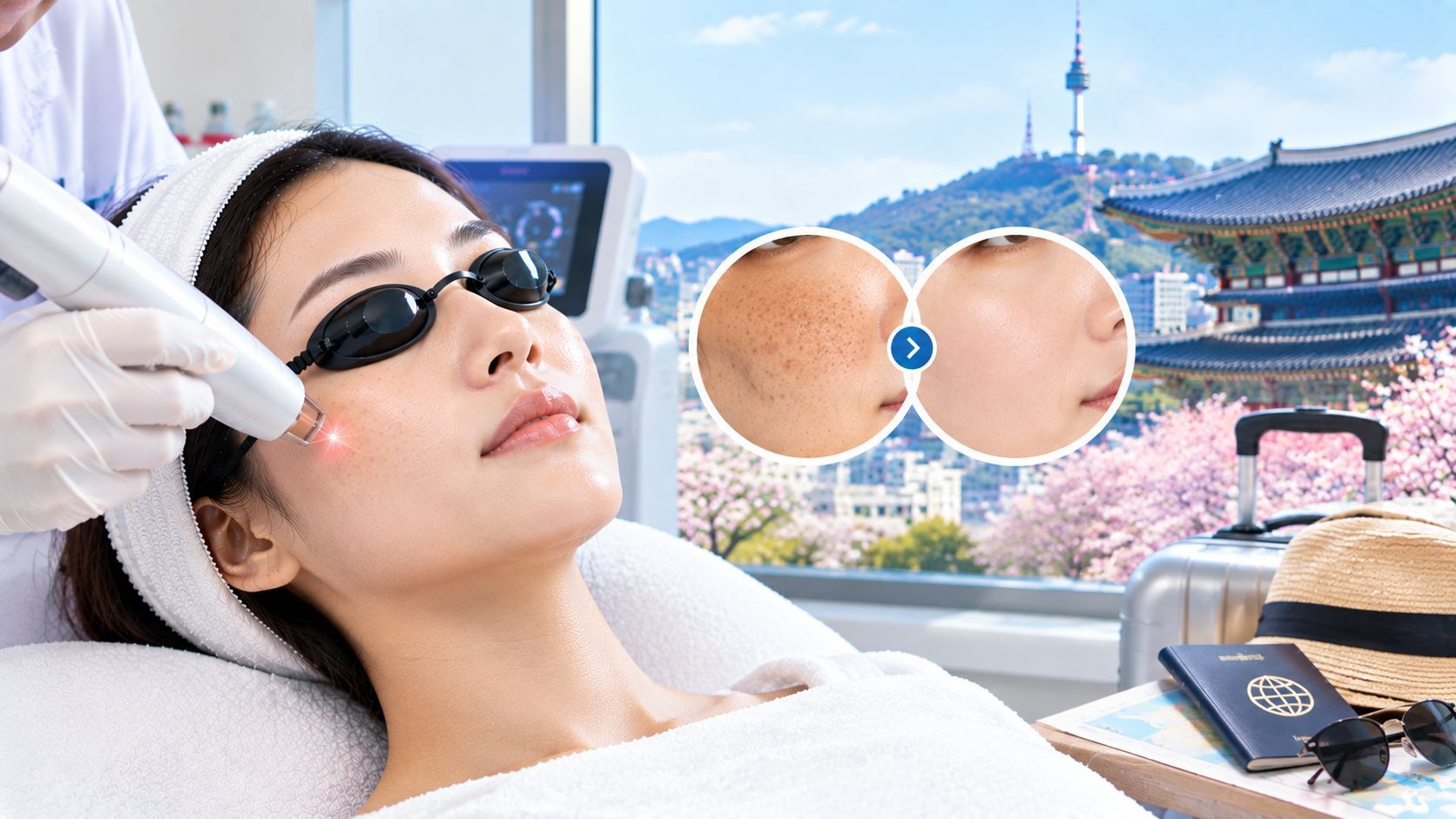
If you are visiting Korea, leave enough time for your skin to settle before important events or your return flight.
How Should You Prepare for Pico Laser in Korea?
Before treatment, tell your dermatologist:
- How long you have had the marks
- Whether you still have acne
- Whether the marks are brown, red, or indented
- Whether you have had previous laser treatments
- Whether you develop PIH easily
- What skincare products you currently use
- How soon you need to return home
Ask specifically whether the treatment is designed for pigmentation or scar remodeling.
What Should You Ask a Seoul Clinic?
Before booking Pico laser for old acne marks, ask:
- Are my marks pigmentation, redness, or actual acne scars?
- Is Pico laser appropriate for my specific problem?
- Which device and wavelength will be used?
- What treatment settings are planned?
- What result is realistic after one session?
- How many sessions might I need?
- Could my pigmentation temporarily become darker?
- What is my individual PIH risk?
- What downtime should I expect?
- Would another treatment be more appropriate for any structural scars?
These questions can help prevent a mismatch between the treatment and the actual skin problem.
Bottom Line
Pico laser can work for some old acne marks when the remaining problem is post-inflammatory pigmentation.
It is much less straightforward when the “mark” is actually redness, an indented scar, a raised scar, or another type of skin change.
For international patients considering Pico laser in Korea, the most important step is to determine exactly what remains after the acne has healed. A flat brown mark may be approached differently from an indented scar or persistent red mark.
One session may provide improvement, but multiple treatments may be necessary depending on the pigmentation and your response. Because pigmentation can also worsen after inflammation, careful treatment selection and aftercare are particularly important for patients who develop dark marks easily.
Frequently Asked Questions
Can Pico laser remove old acne marks?
It may reduce certain flat dark marks caused by post-inflammatory hyperpigmentation. It does not automatically remove structural acne scars.
How many Pico laser sessions are needed for acne marks?
There is no fixed number. Some marks may improve after one treatment, while persistent or widespread pigmentation may require multiple sessions.
Can Pico laser treat indented acne scars?
Pico laser is not automatically the appropriate treatment for depressed scars. Treatments such as fractional laser, RF microneedling, or subcision may be considered depending on scar type.
Can Pico laser worsen acne pigmentation?
Temporary darkening and post-inflammatory hyperpigmentation are possible. Risk varies with skin type, treatment settings, and individual susceptibility.
Does Pico laser work on red acne marks?
Red marks may involve post-inflammatory redness rather than pigmentation. A dermatologist may consider a different treatment depending on the cause.
Can I get Pico laser if I still have active acne?
The provider should assess your skin first. If inflammation is ongoing, controlling active acne may be an important part of preventing additional marks.