How Can I Tell Whether My Brown Spots Are Melasma or Sun Damage?
Brown spots on the face can look very similar, but they are not always caused by the same condition. Melasma and sun-related pigmentation can overlap in appearance, and distinguishing between them is important because treatment strategies can differ.
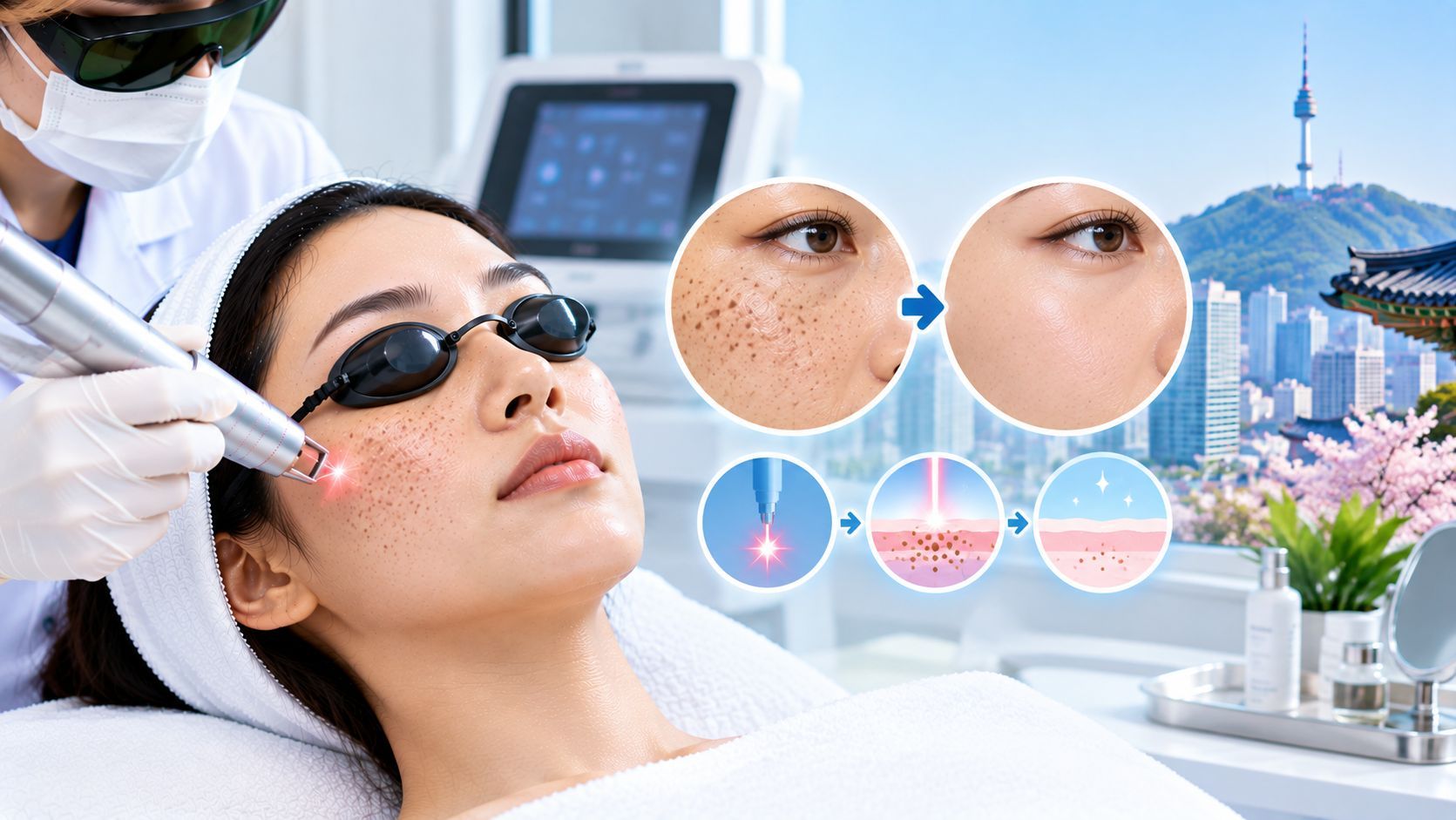
Melasma is commonly associated with broader, symmetrical areas of brown or gray-brown pigmentation, particularly on the cheeks, forehead, upper lip, and other central facial areas. Sun damage can refer to several types of pigmentation, including solar lentigines, which are often more discrete and clearly defined.
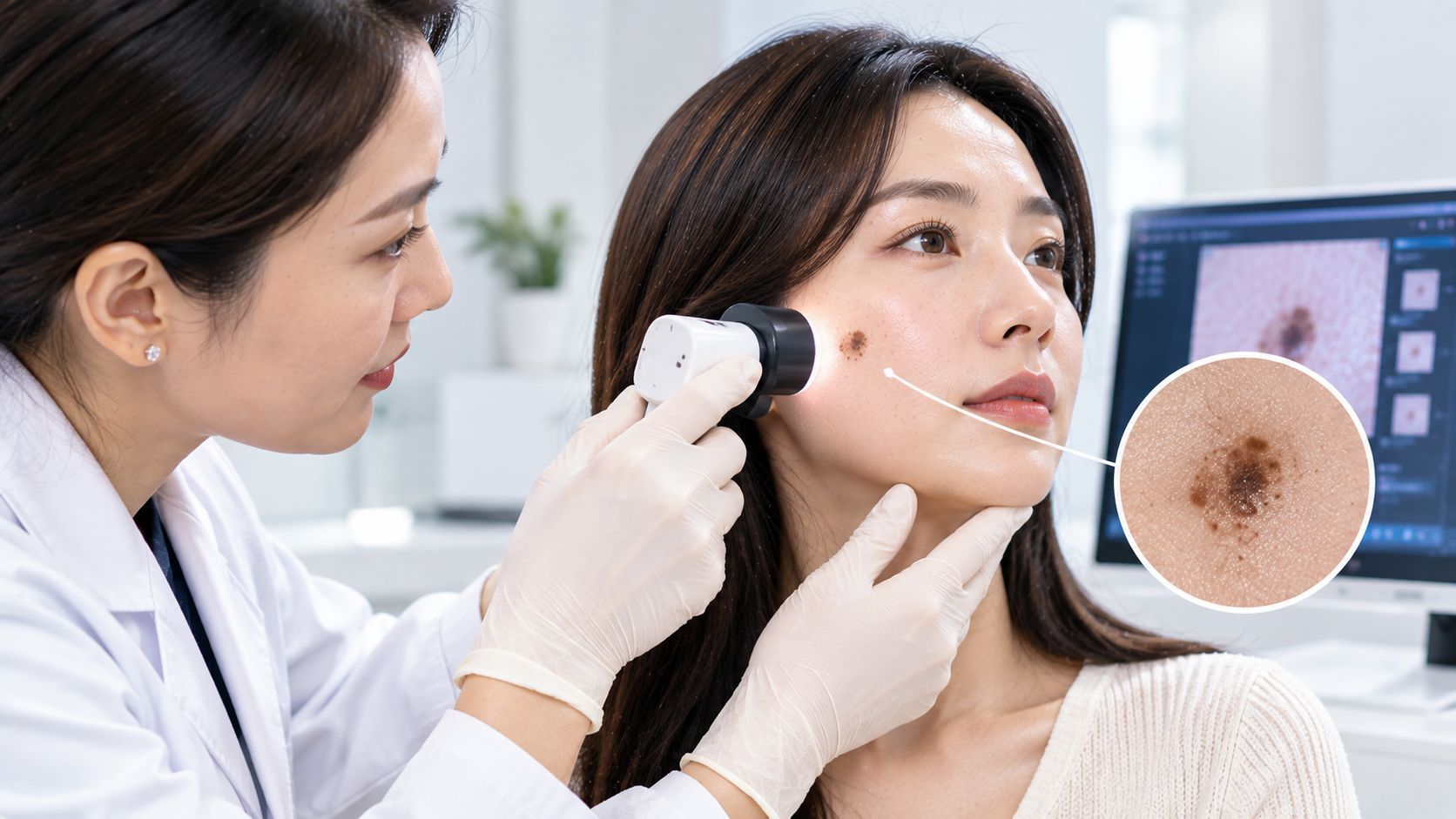
The appearance alone cannot always provide a definite diagnosis. A dermatologist should assess the pattern, history, distribution, and other characteristics before recommending a laser or other pigmentation treatment.
Melasma vs Sun Damage: The Basic Difference
The simplest distinction is pattern and behavior.
Melasma often appears as relatively broad patches and can fluctuate with environmental and hormonal influences. Sun-related spots are more often individual, clearly defined areas that develop after cumulative UV exposure.
However, a person can have both.
For example, someone may have melasma across the cheeks together with several individual sun spots. Treating every brown area as if it were the same condition could lead to an inappropriate treatment plan.
What Does Melasma Usually Look Like?
Melasma commonly presents as:
- Brown, tan, or gray-brown patches
- Relatively broad areas rather than tiny individual dots
- Symmetrical pigmentation on both sides of the face
- Pigmentation on the cheeks, forehead, nose, or upper lip
- Areas that become more noticeable after sun or heat exposure
Melasma can also change over time. It may become darker during periods of increased UV exposure or other triggers.
This tendency to fluctuate is one reason melasma can require ongoing management rather than a single procedure.
What Does Sun Damage Look Like?
“Sun damage” is a broad term, but one common form of sun-related pigmentation is the solar lentigo.
These spots are often:
- Flat
- Brown or tan
- Clearly defined
- Individual or scattered
- More stable in appearance
- Located on chronically sun-exposed areas
They can occur on the face, hands, chest, shoulders, and other areas exposed to UV radiation.
Unlike melasma, an individual solar lentigo often looks more like a distinct spot than a large symmetrical patch.
However, visual appearance is not always enough to distinguish them.
Why Location Matters
Where the pigmentation appears can provide useful clues.
Melasma frequently affects the cheeks, forehead, upper lip, and other central facial areas. It may appear in a relatively symmetrical pattern.
Sun-related pigmentation can also occur in these locations, especially after years of UV exposure.
Therefore, location alone cannot establish whether pigmentation is melasma or sun damage.
The pattern across the face can be more informative than simply identifying where one spot is located.
Why Symmetry Can Be a Clue
Symmetry is often associated with melasma.
If similar areas of pigmentation appear on both cheeks, a dermatologist may consider melasma among the possibilities.
By contrast, a single isolated brown spot may be more suggestive of a localized pigmentation problem.
But symmetry is not a diagnostic test. Other conditions can also produce pigmentation on both sides of the face.
Does Melasma Get Darker in Summer?
It can.
UV exposure can make melasma more noticeable, and heat may also be relevant for some patients.
This does not mean that every pigmentation problem that becomes darker in summer is melasma. Sun-related spots can also become more noticeable with increased sun exposure.
The important question is how the pigmentation behaves over time and whether the pattern is consistent with melasma or another condition.
Can Sun Damage and Melasma Occur Together?
Yes.
This is especially important for people who have spent significant time outdoors.
You could have:
- Melasma across the cheeks
- Individual sun spots around the temples
- Freckles across the nose
- Post-acne pigmentation elsewhere
These conditions can coexist.
As a result, a treatment that works for one type of pigmentation may not produce the same effect on another.
Why Diagnosis Matters Before Laser Treatment
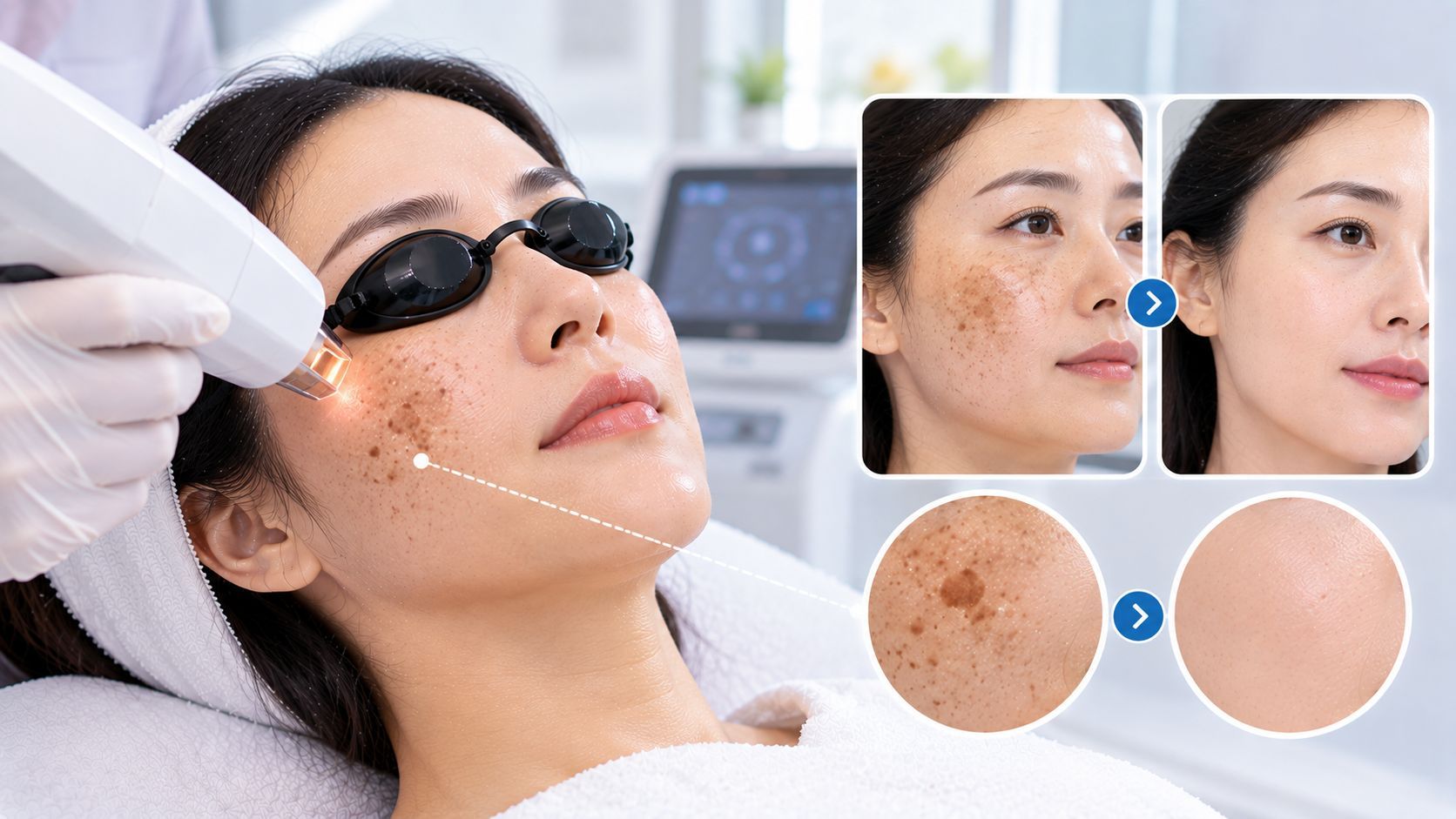
Different pigmentation problems can respond differently to laser and light-based procedures.
A dermatologist may consider targeted treatment for clearly defined sun-related spots while taking a more conservative approach to melasma.
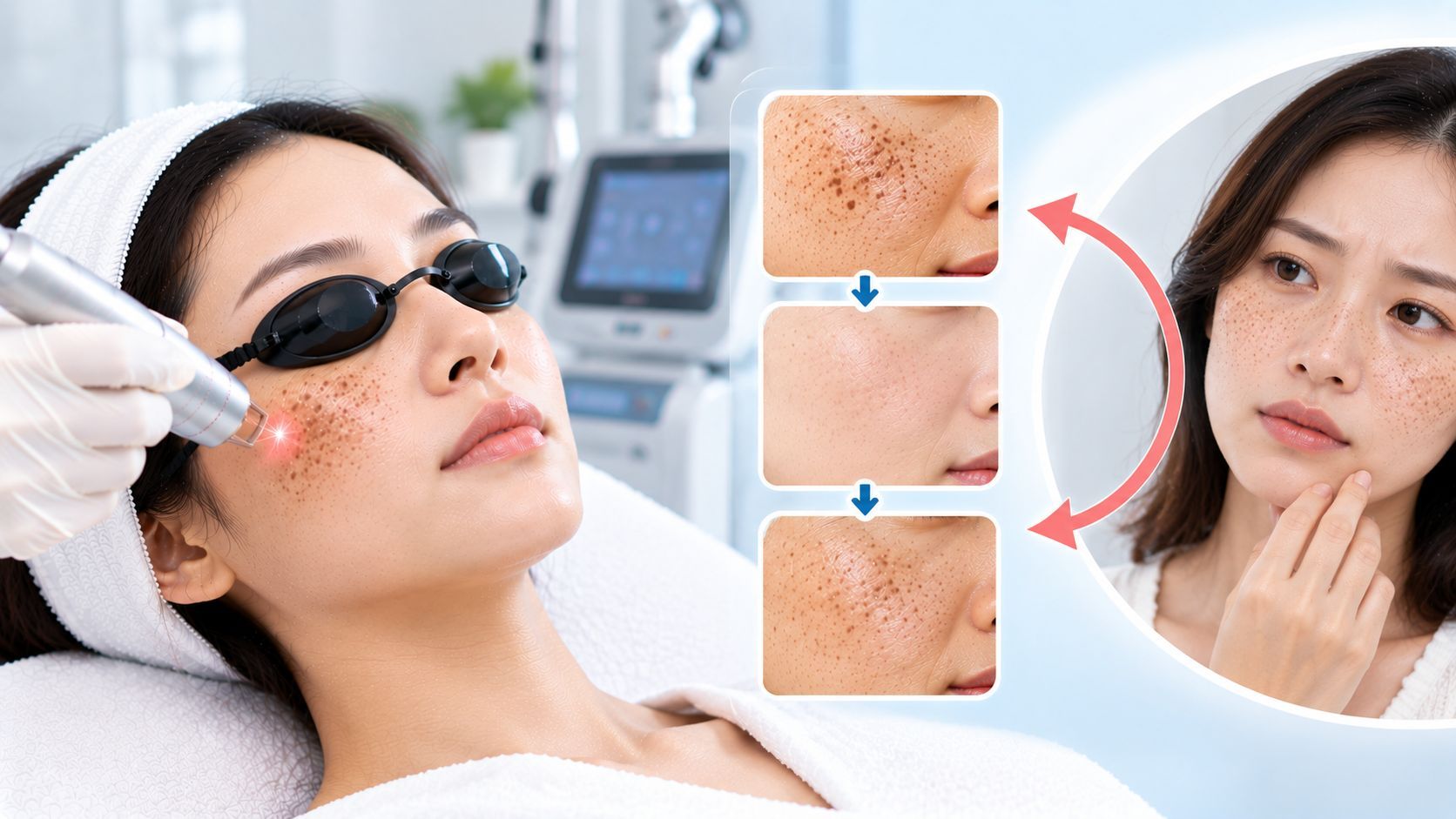
This distinction matters because melasma can sometimes worsen after excessive inflammation or inappropriate laser treatment.
If you assume every brown mark is sun damage and request aggressive spot removal, you may inadvertently treat melasma too aggressively.
Similarly, treating every pigment concern as melasma may mean that clearly defined sun spots are not addressed with the most appropriate targeted strategy.
Can Pico Laser Treat Both?
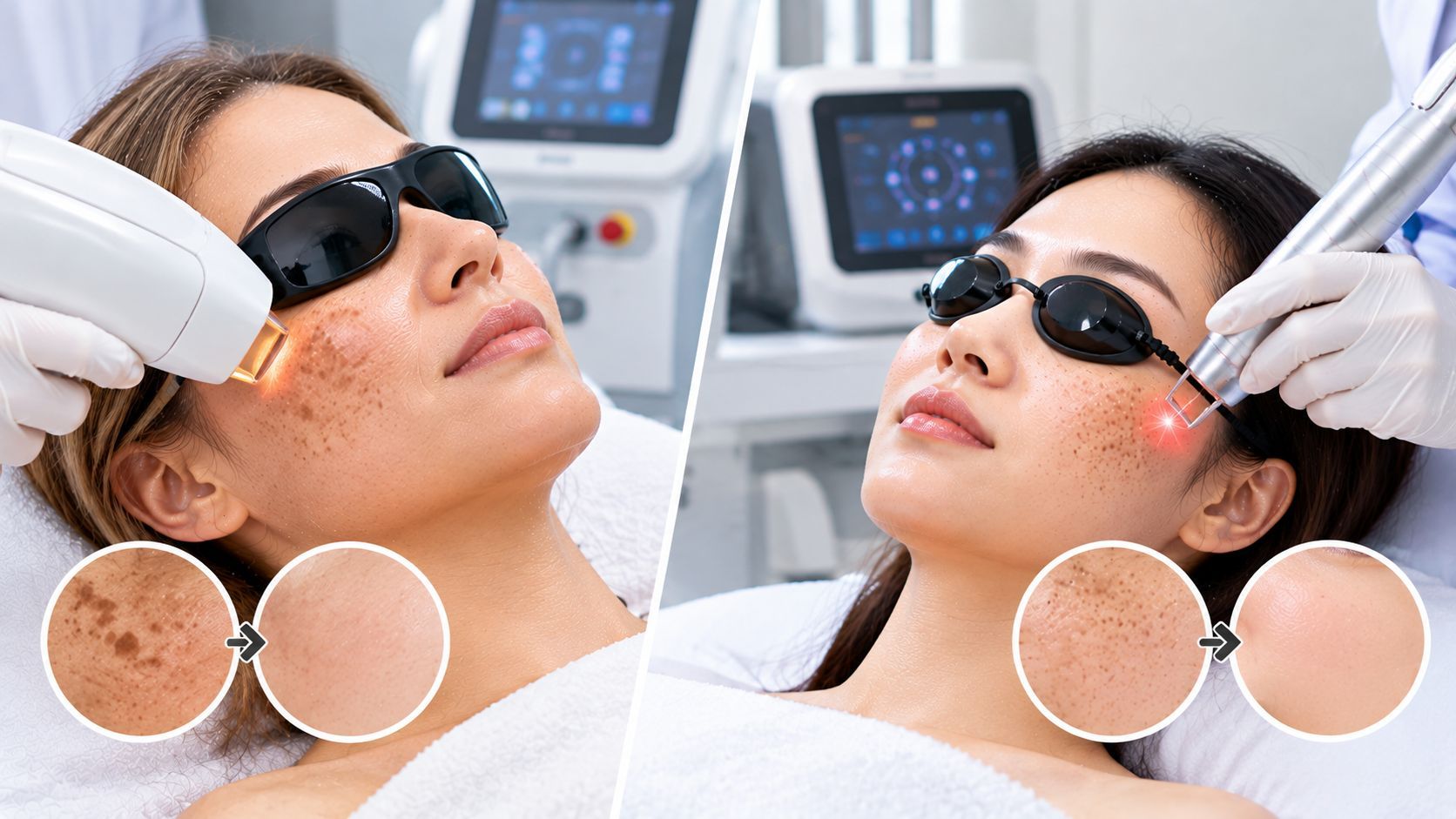
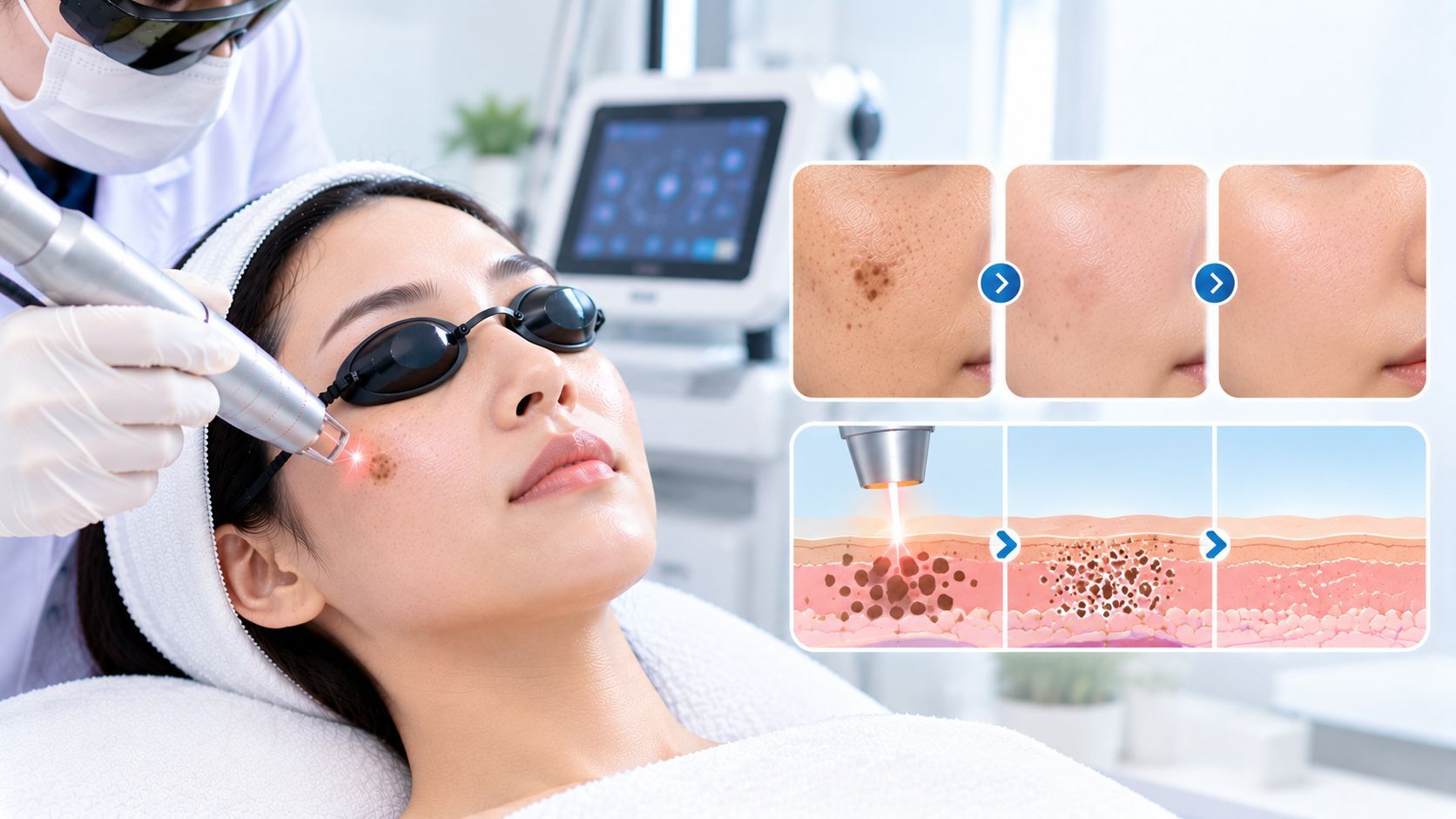
A Pico laser may potentially be used for different types of pigmentation, but Pico is a technology rather than one standardized treatment.
The wavelength, handpiece, energy, spot size, treatment pattern, and technique can all affect how the device is used.
For clearly defined pigment spots, a dermatologist may consider targeted treatment.
For melasma, a more conservative approach may be considered in selected patients.
This is why the statement “Pico laser removes pigmentation” is too broad to guide an individual treatment decision.
What About Laser Toning?
Laser toning generally describes a broader, gradual treatment approach rather than one specific laser machine.
It may be considered for selected patients with diffuse pigmentation or melasma.
However, repeated laser toning is not automatically risk-free. Excessive energy, frequent treatment, or inappropriate treatment of sensitive skin can contribute to unwanted pigmentary changes.
The diagnosis should therefore come before deciding how frequently or aggressively to treat.
Could a Brown Spot Be Something Other Than Melasma or Sun Damage?
Yes.
Brown facial pigmentation can have several causes, including:
- Freckles
- Post-inflammatory hyperpigmentation
- Melasma
- Solar lentigines
- Certain medication-related pigmentation
- Other dermatological conditions
Some pigmented lesions also require medical evaluation rather than cosmetic laser treatment.
A spot that is new, rapidly changing, irregular, bleeding, crusting, or otherwise unusual should be assessed by an appropriate medical professional rather than automatically treated as cosmetic pigmentation.
What About Darker Skin and PIH?
If your skin tends to develop dark marks after inflammation or injury, tell the dermatologist before treatment.
Post-inflammatory hyperpigmentation, or PIH, can occur after acne, burns, irritation, and procedures.
People with darker or more melanin-rich skin may require particular attention to pigmentary risk, although skin tone alone does not determine whether laser treatment is appropriate.
Your previous reaction to lasers may be just as important as your current pigmentation.
If you have previously become darker after a procedure, provide those details during the consultation.
Can a Dermatologist Tell From a Photo?
A photograph can provide useful information, but it may not always be enough to establish a diagnosis.
Lighting, camera settings, makeup, filters, and skin tone can all change how pigmentation appears in an image.
An in-person examination allows the dermatologist to assess the distribution and characteristics of the pigmentation more directly.
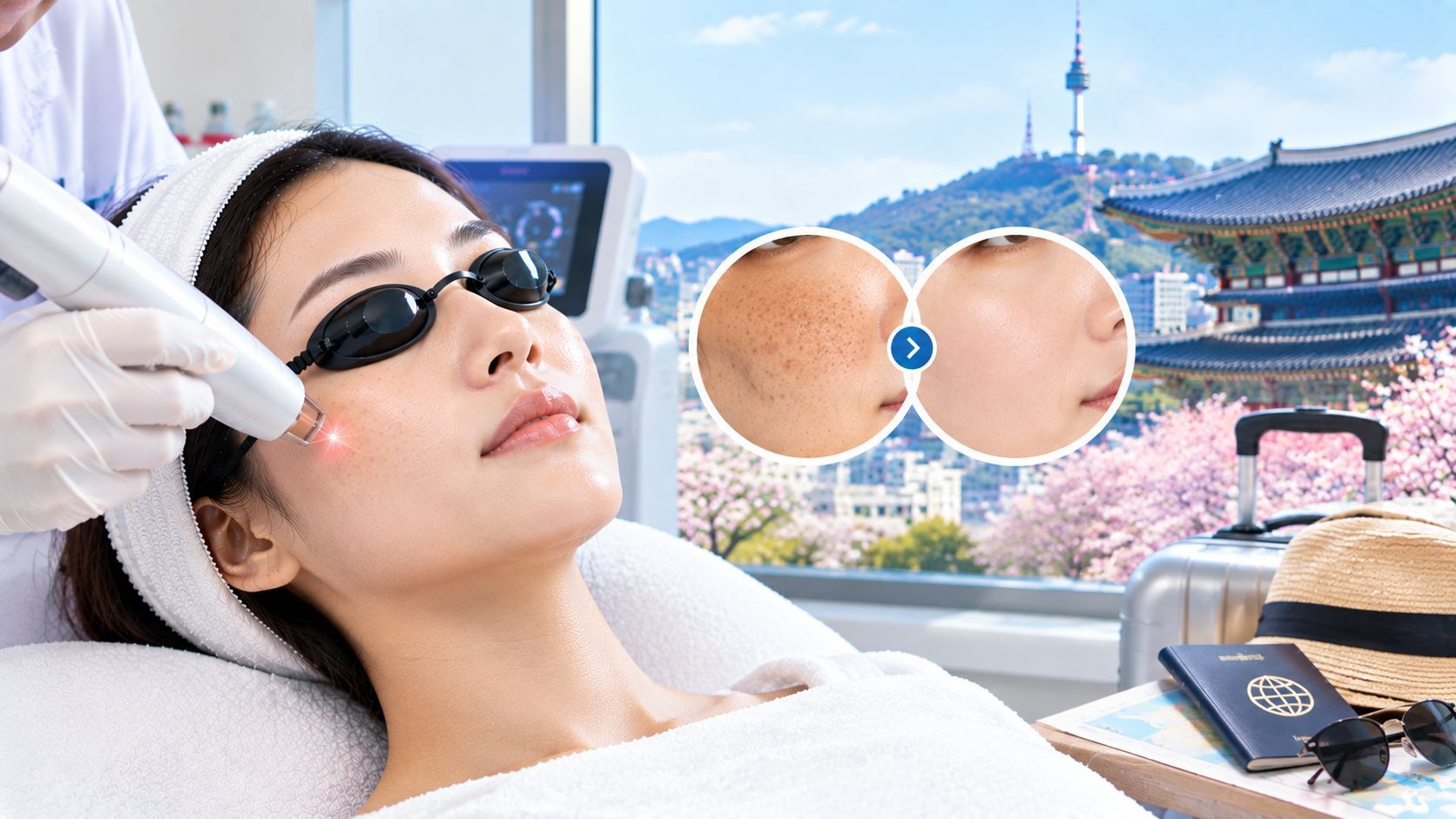
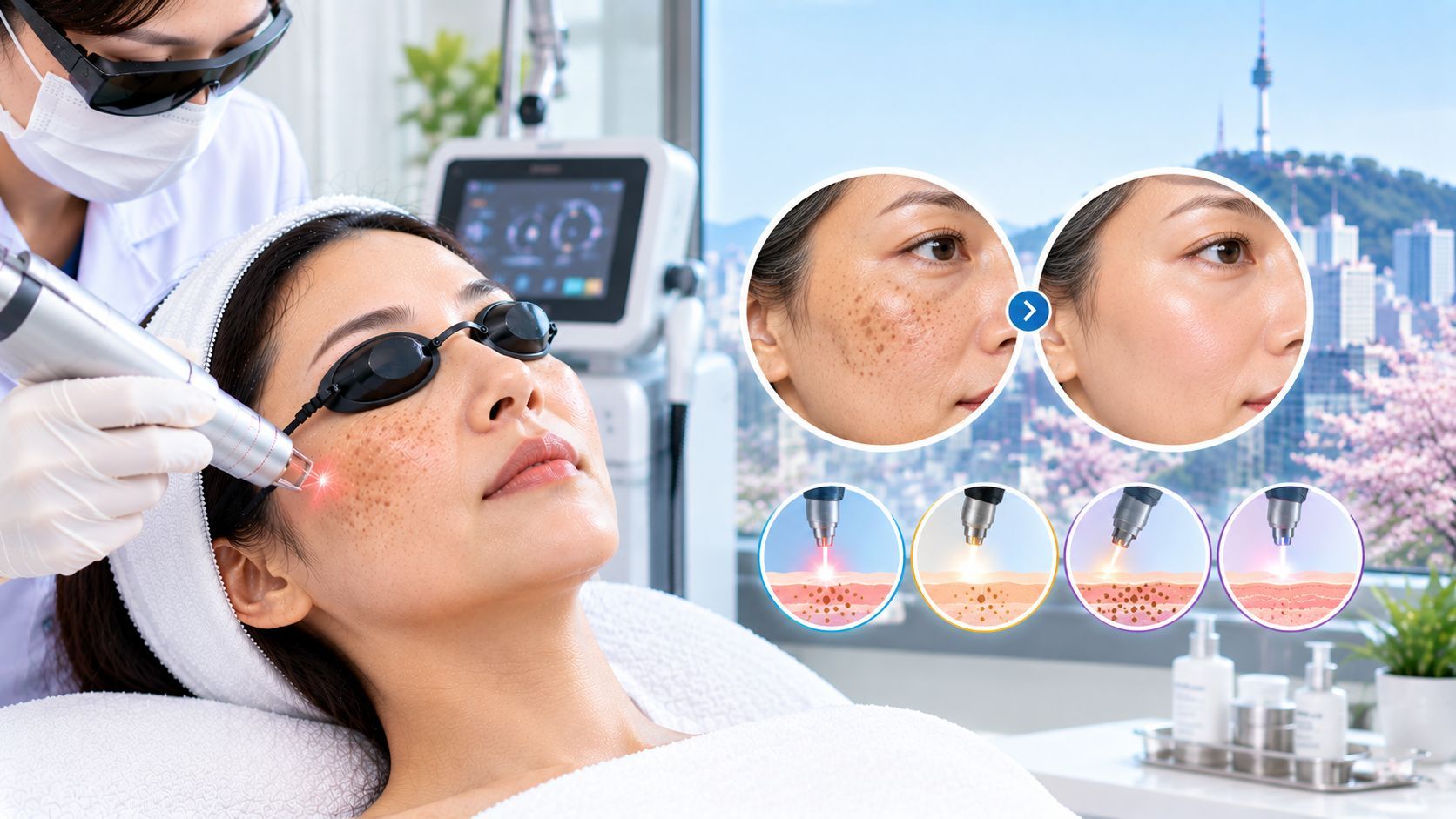
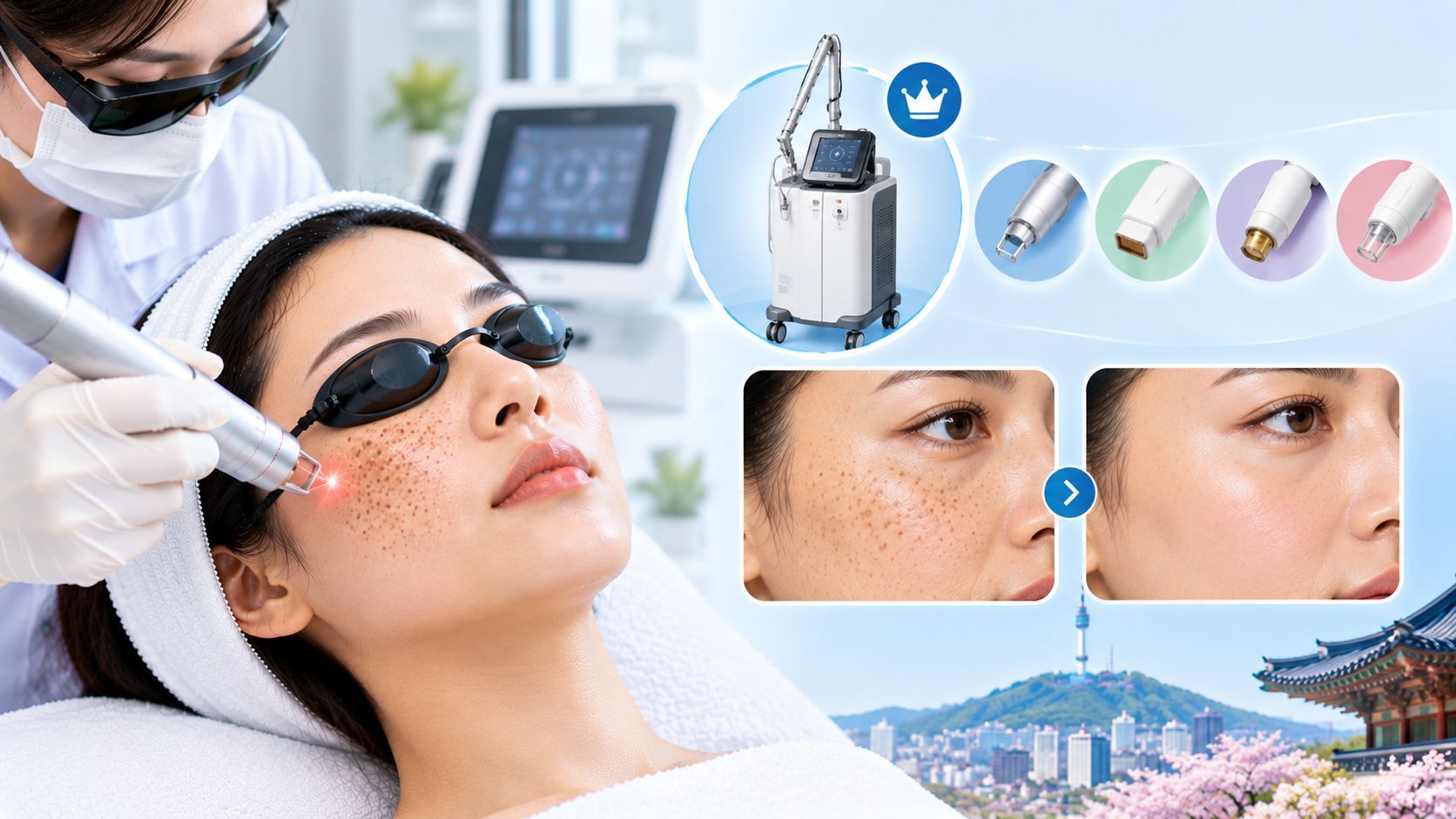
For international patients planning treatment in Seoul, sending photos before the appointment can help with preliminary discussion, but it should not necessarily replace an appropriate medical assessment.
Questions to Ask a Seoul Clinic
If you are considering pigmentation treatment in Korea, ask:
- Do you think this is melasma, sun damage, freckles, or PIH?
- Do I have more than one type of pigmentation?
- Which areas would you treat differently?
- Why are you recommending this particular laser?
- Will the treatment be targeted or broader?
- What is my risk of PIH?
- Could treatment make my melasma darker?
- Would a test spot be appropriate?
- How many sessions might I need?
- What aftercare will I need after treatment?
These questions can help you understand the reasoning behind the treatment rather than simply choosing a procedure based on its name.
If You Are Visiting Seoul for Pigmentation Treatment
International patients often have limited time in Seoul, which can create pressure to treat every visible pigmentation problem during one appointment.
That is not necessarily the right approach.
If you have melasma together with sun spots, freckles, or PIH, ask whether all areas should be treated during the same visit.
You may need time for:
- Consultation
- Skin assessment
- Treatment
- Initial recovery
- Sun avoidance
- Follow-up if necessary
Avoid planning extensive outdoor sightseeing or significant heat exposure immediately after a procedure without discussing it with the clinic.
What If You Still Cannot Tell the Difference?
You do not need to identify the condition yourself with complete certainty.
The purpose of a dermatology consultation is to determine what type of pigmentation is present and whether treatment is appropriate.
If the diagnosis is unclear, asking for an explanation—or seeking a second opinion before an aggressive procedure—can be reasonable.
This is particularly important when a clinic recommends a strong laser treatment for pigmentation that could potentially be melasma.
Conclusion
Melasma and sun-related pigmentation can look similar, but their patterns and behavior are often different. Melasma commonly appears as broader, symmetrical facial pigmentation that can fluctuate, while individual sun-related spots are often more clearly defined and localized.
However, you can have both conditions at the same time, along with freckles or post-inflammatory hyperpigmentation.
Before choosing Pico laser, laser toning, or another pigmentation treatment in Seoul, the most useful step is to determine what type of pigmentation you actually have. Once the diagnosis and pigment pattern are understood, a dermatologist can decide whether targeted treatment, conservative treatment, non-laser management, or a combination makes sense.
FAQs
How can I tell if my brown spots are melasma or sun damage?
Broad, symmetrical patches on areas such as the cheeks may be consistent with melasma, while isolated, clearly defined brown spots may be more consistent with sun-related pigmentation. However, appearance alone cannot always establish the diagnosis.
Can I have melasma and sun spots at the same time?
Yes. Different types of pigmentation can occur together. A dermatologist may therefore recommend different treatment strategies for different areas of the face.
Is Pico laser suitable for both melasma and sun spots?
Pico technology may be used for different pigmentation concerns, but the treatment settings and approach can differ. Melasma generally requires particular attention to inflammation and PIH risk.
Is laser toning suitable for melasma?
Laser toning may be considered for selected patients with melasma, but it is not risk-free. Treatment intensity, frequency, skin characteristics, and previous reactions should be considered.
Can sun exposure make both melasma and sun spots darker?
UV exposure can contribute to or increase the visibility of both types of pigmentation. Consistent photoprotection is therefore an important part of pigmentation management.
Should I get laser treatment immediately during my Seoul trip?
Not necessarily. If the diagnosis is uncertain or you have a history of PIH or treatment-related darkening, using the consultation to establish the pigmentation type and treatment plan may be more useful than immediately choosing a laser.