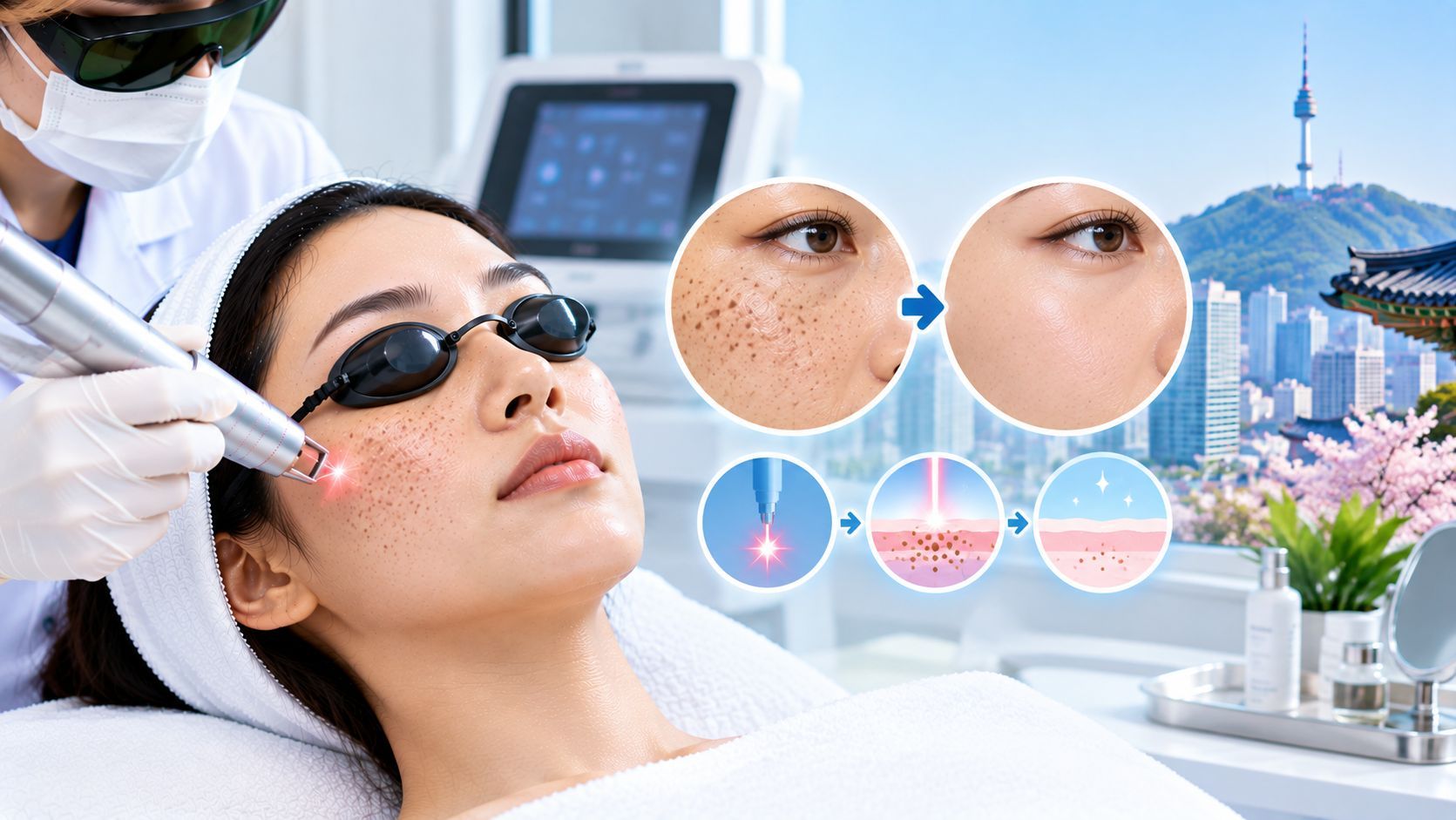
How Do Korean Clinics Treat Stubborn Melasma?
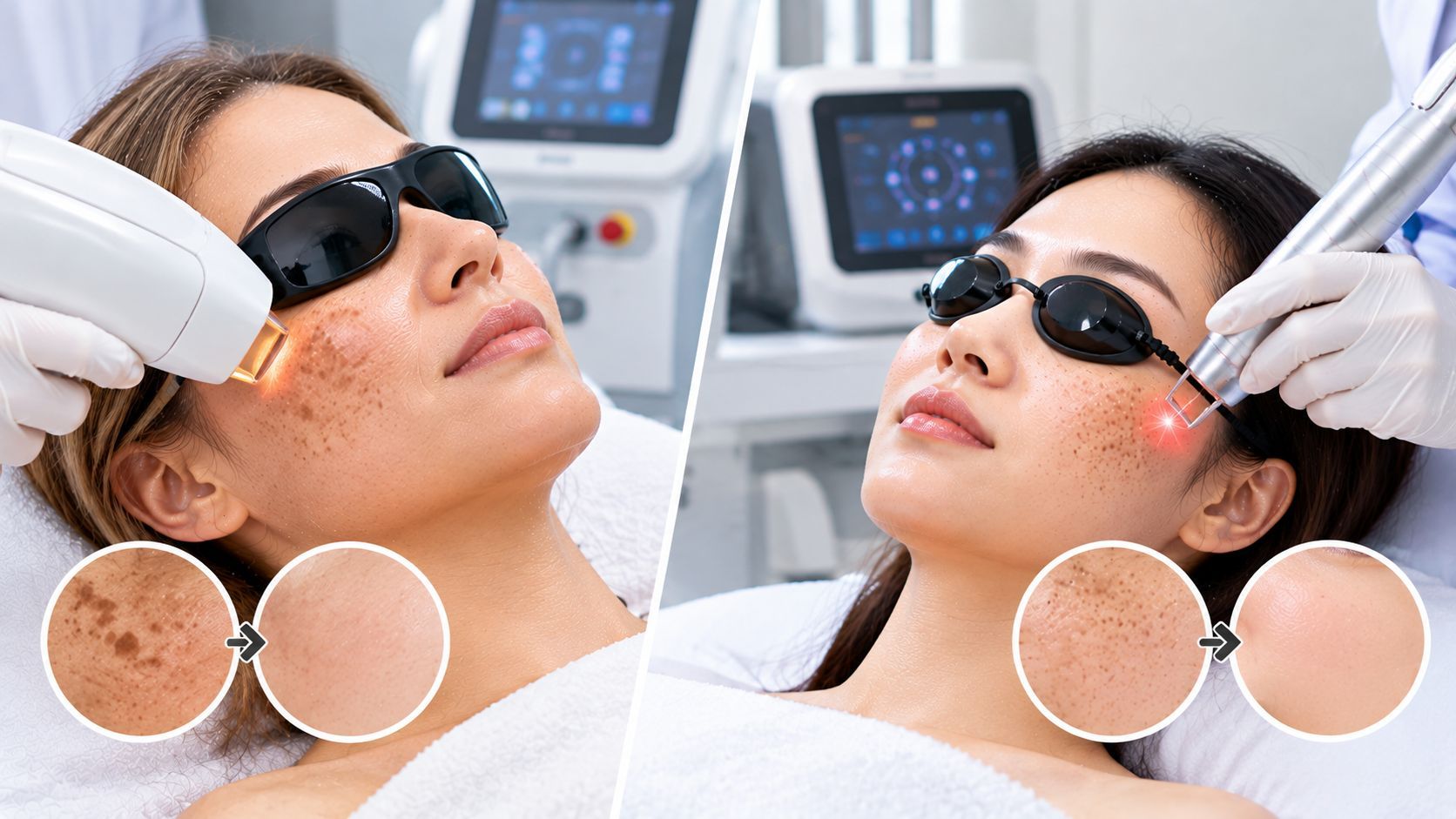
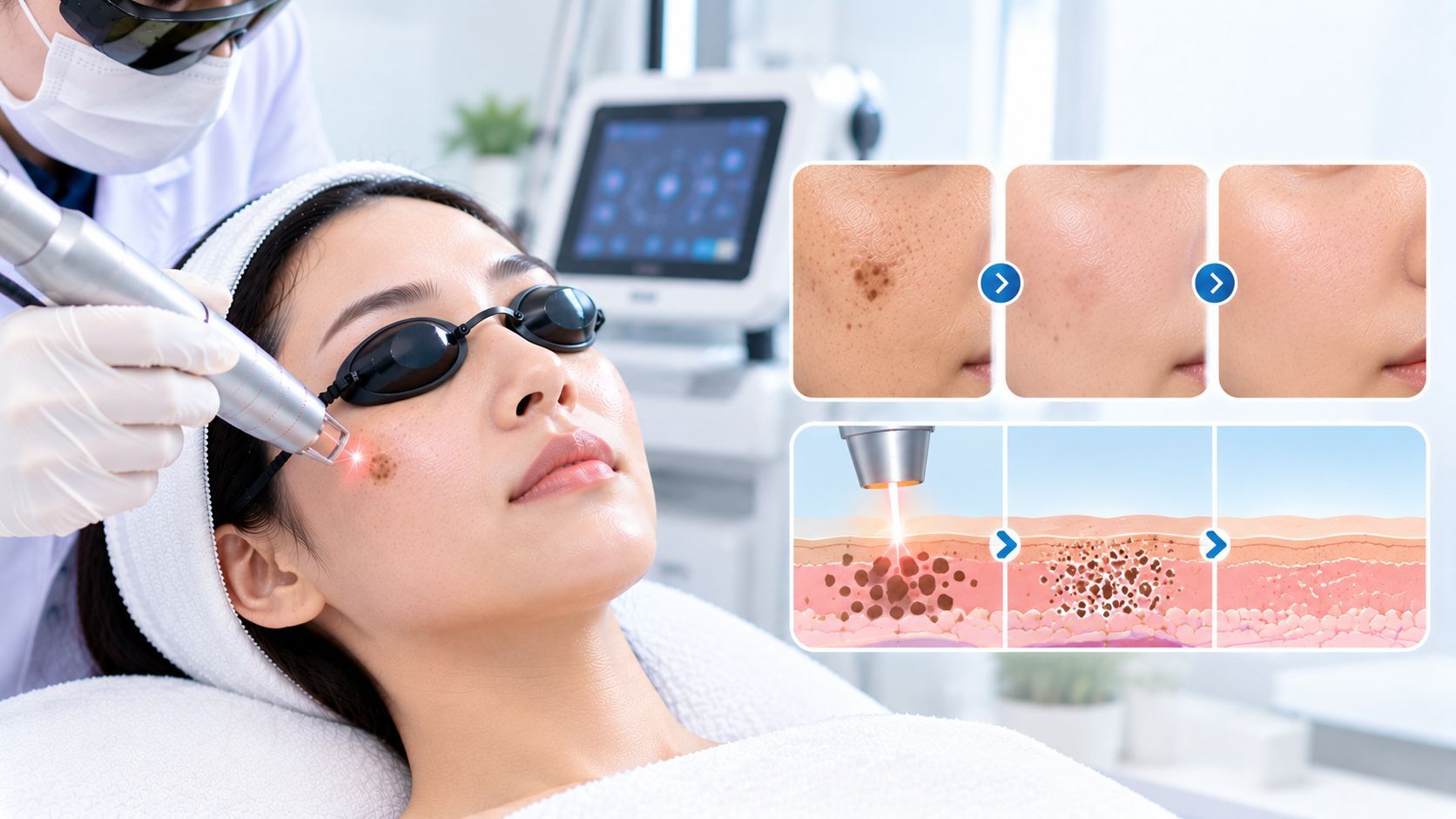
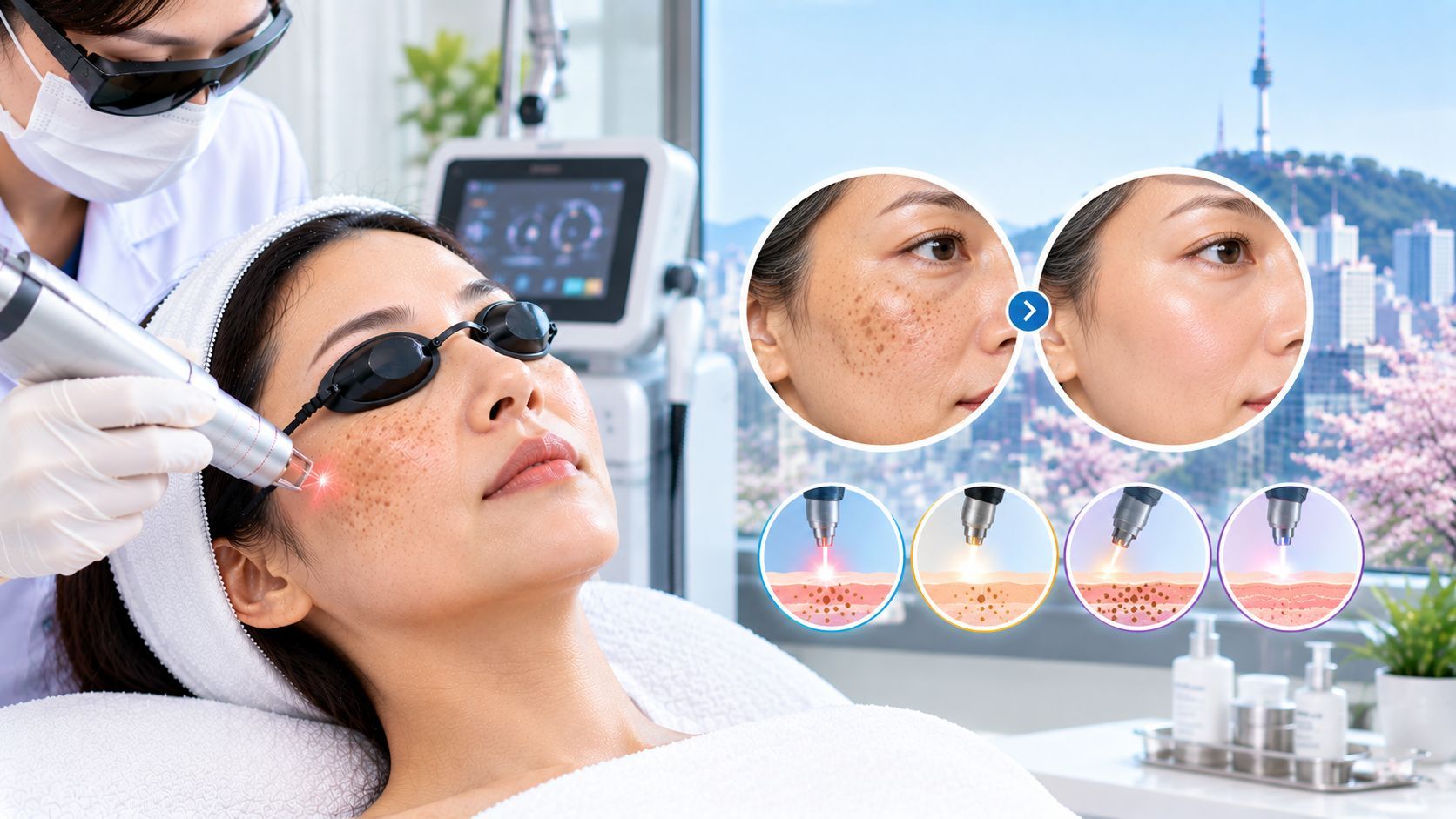
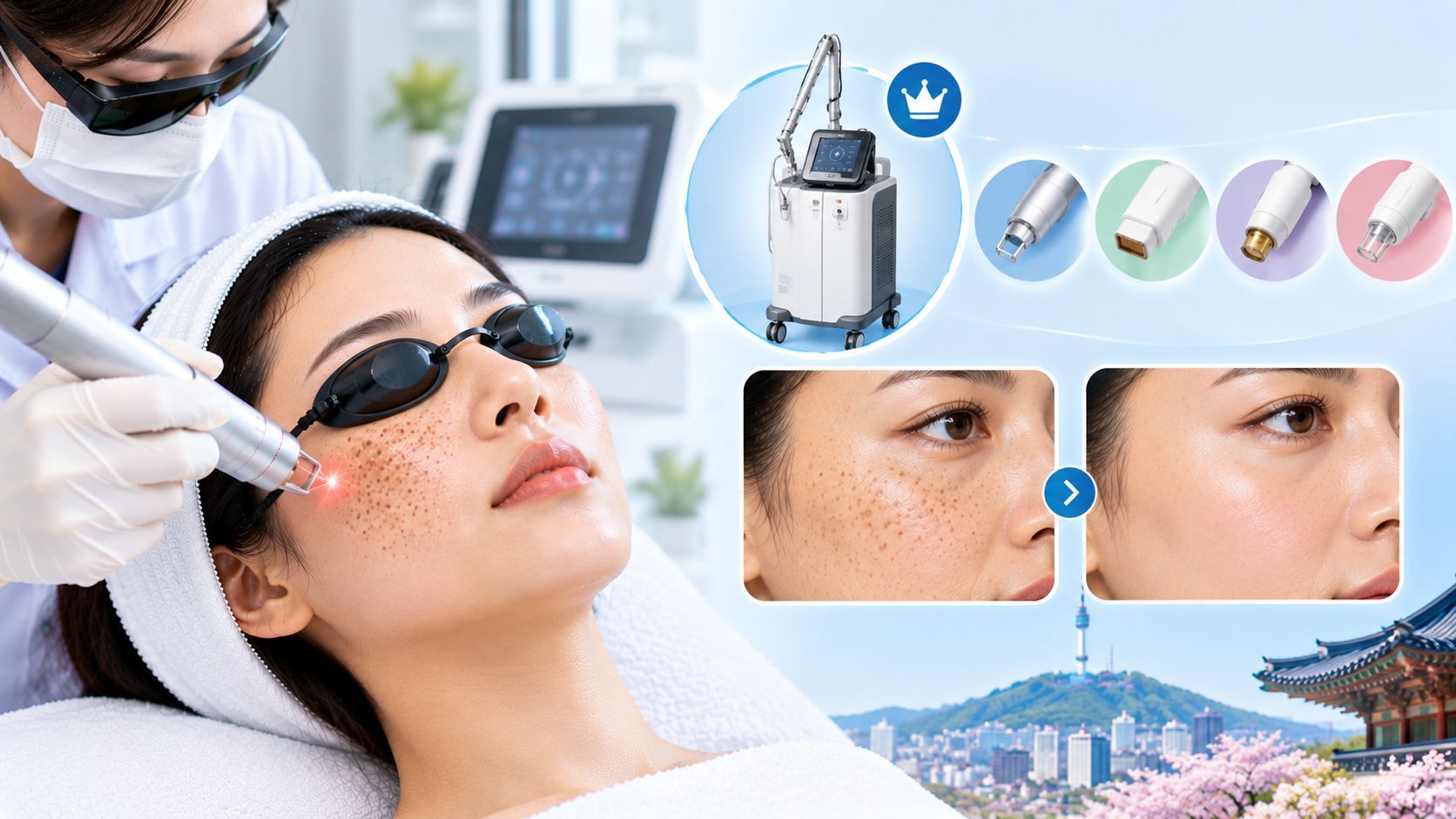
Korean clinics may approach stubborn melasma with a long-term, combination-based strategy rather than relying on one aggressive laser treatment. Depending on the patient's skin, pigmentation pattern, previous treatments, and risk of post-inflammatory hyperpigmentation (PIH), a dermatologist may consider photoprotection, topical management, conservative laser or light-based treatments, and other medical options.
The important point is that stubborn melasma is not simply a problem of having too much surface pigment. It can fluctuate and recur, so treatment often focuses on reducing visible pigmentation while minimizing the triggers that can make it darker.
For international patients visiting Seoul, the most useful consultation is one that explains why a particular treatment is being recommended, how often it should be performed, what happens if the melasma worsens, and what maintenance may be needed after returning home.
Why Is Stubborn Melasma Difficult to Treat?
Melasma can persist despite skincare and previous procedures because multiple factors may contribute to its development and recurrence.
Potential influences include:
- Ultraviolet exposure
- Visible light
- Heat
- Hormonal factors
- Inflammation
- Individual genetic susceptibility
- Previous irritation or procedures
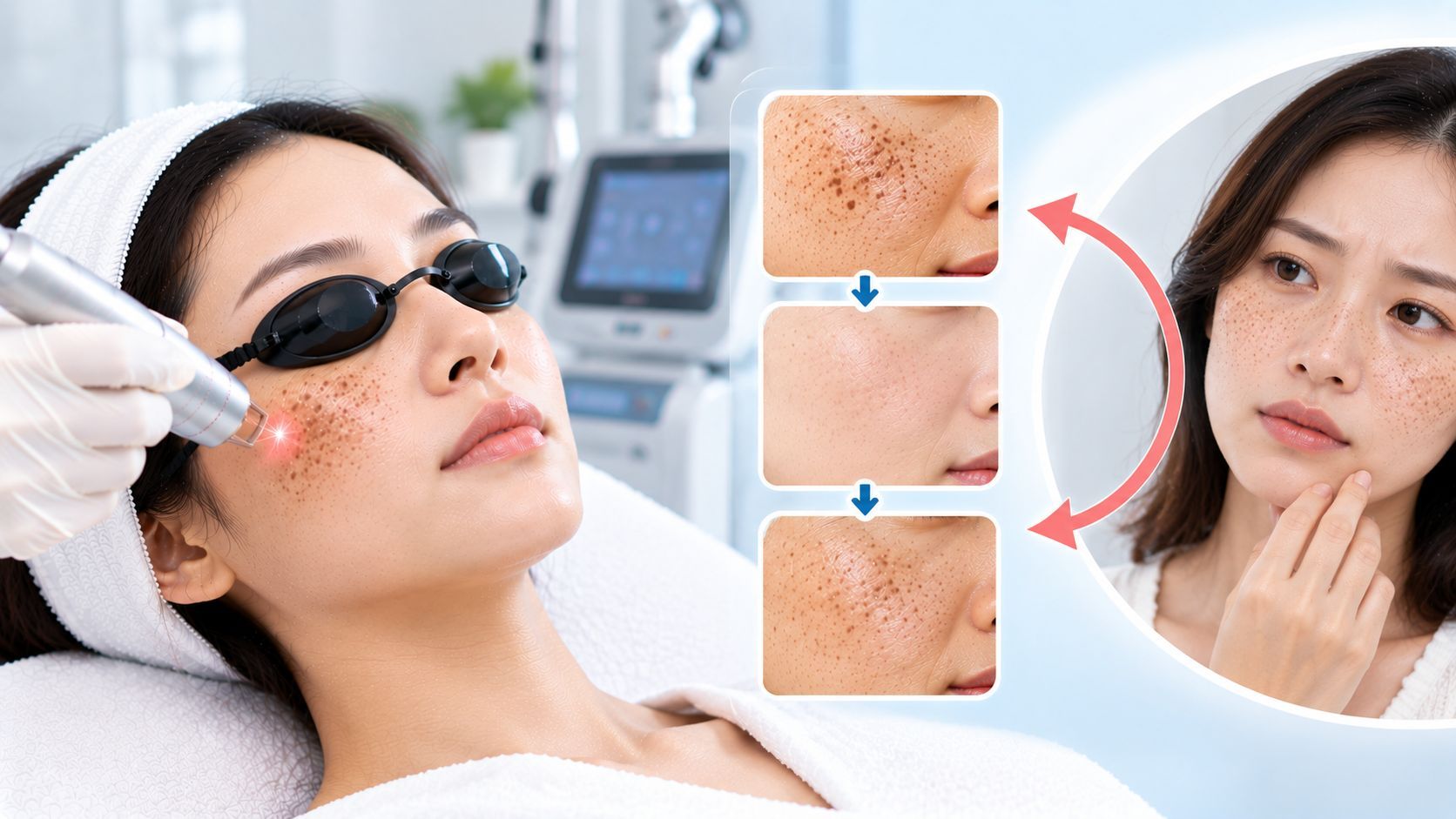
This means that removing visible pigment during one session does not necessarily eliminate the tendency for pigmentation to return.
Someone may see significant improvement after treatment and then notice darker patches again months later.
For this reason, stubborn melasma often requires ongoing management rather than a one-time procedure.
How Do Korean Clinics Usually Start the Process?
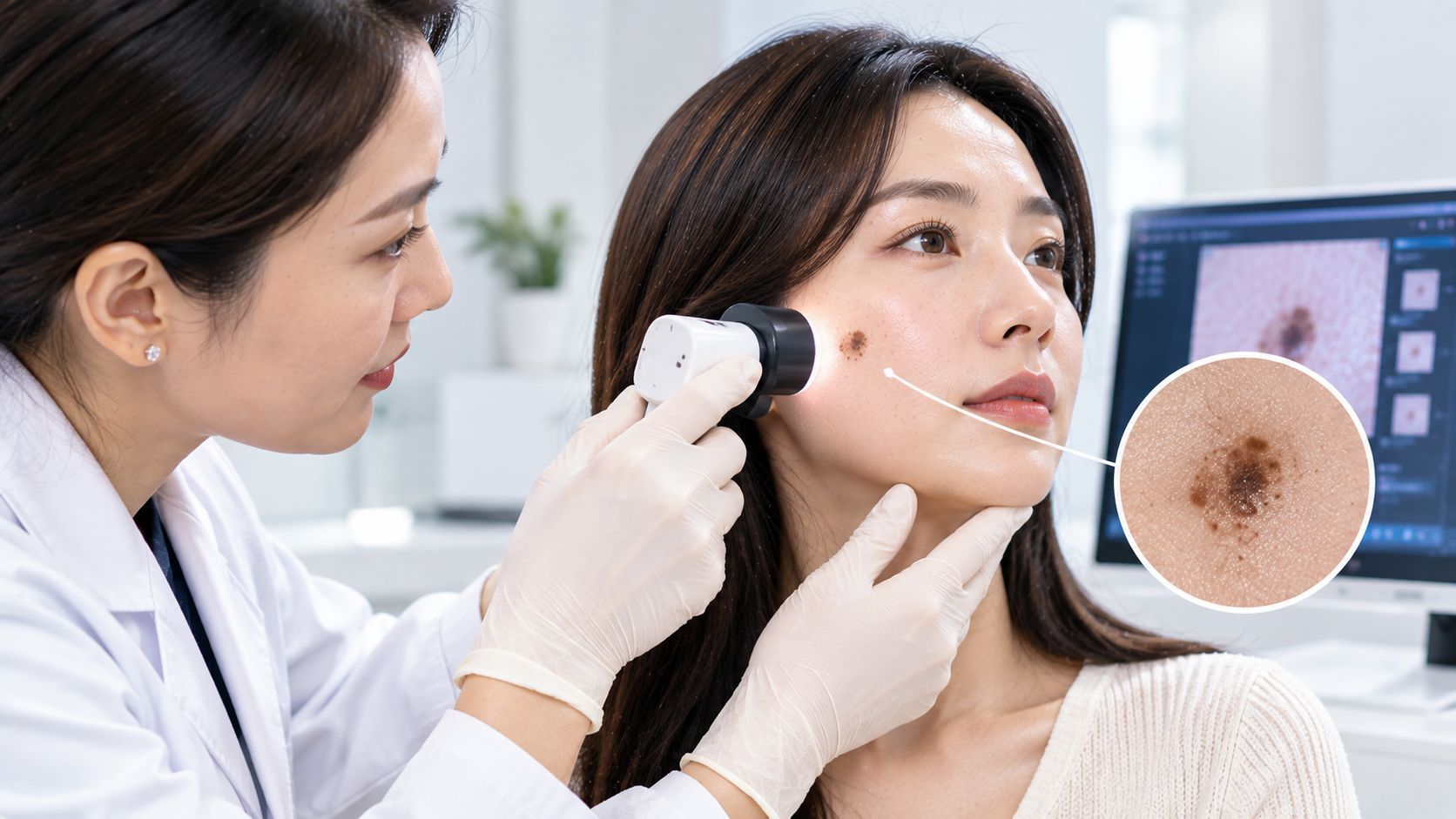
A meaningful treatment plan should begin with assessment rather than immediately selecting a laser.
The provider may evaluate:
- Where the pigmentation appears
- Whether it is symmetrical
- How deep or persistent it appears
- Your skin characteristics
- Previous laser treatments
- History of PIH
- Recent sun exposure
- Current skincare or medical treatments
- How your pigmentation has responded in the past
The first question should be:
“Is this definitely melasma?”
Brown pigmentation can have several causes, and the appropriate treatment may differ.
Why Is Diagnosis So Important?
Freckles, sun spots, post-inflammatory hyperpigmentation, and melasma can look similar to an untrained observer.
However, they may respond differently to treatment.
For example, a treatment designed to target a discrete sun spot may not be appropriate for widespread melasma.
If a clinic simply labels every brown area as “pigmentation” and immediately recommends the same laser, ask for a more detailed explanation.
If a lesion looks unusual or there is uncertainty about its nature, medical assessment may be needed before cosmetic laser treatment.
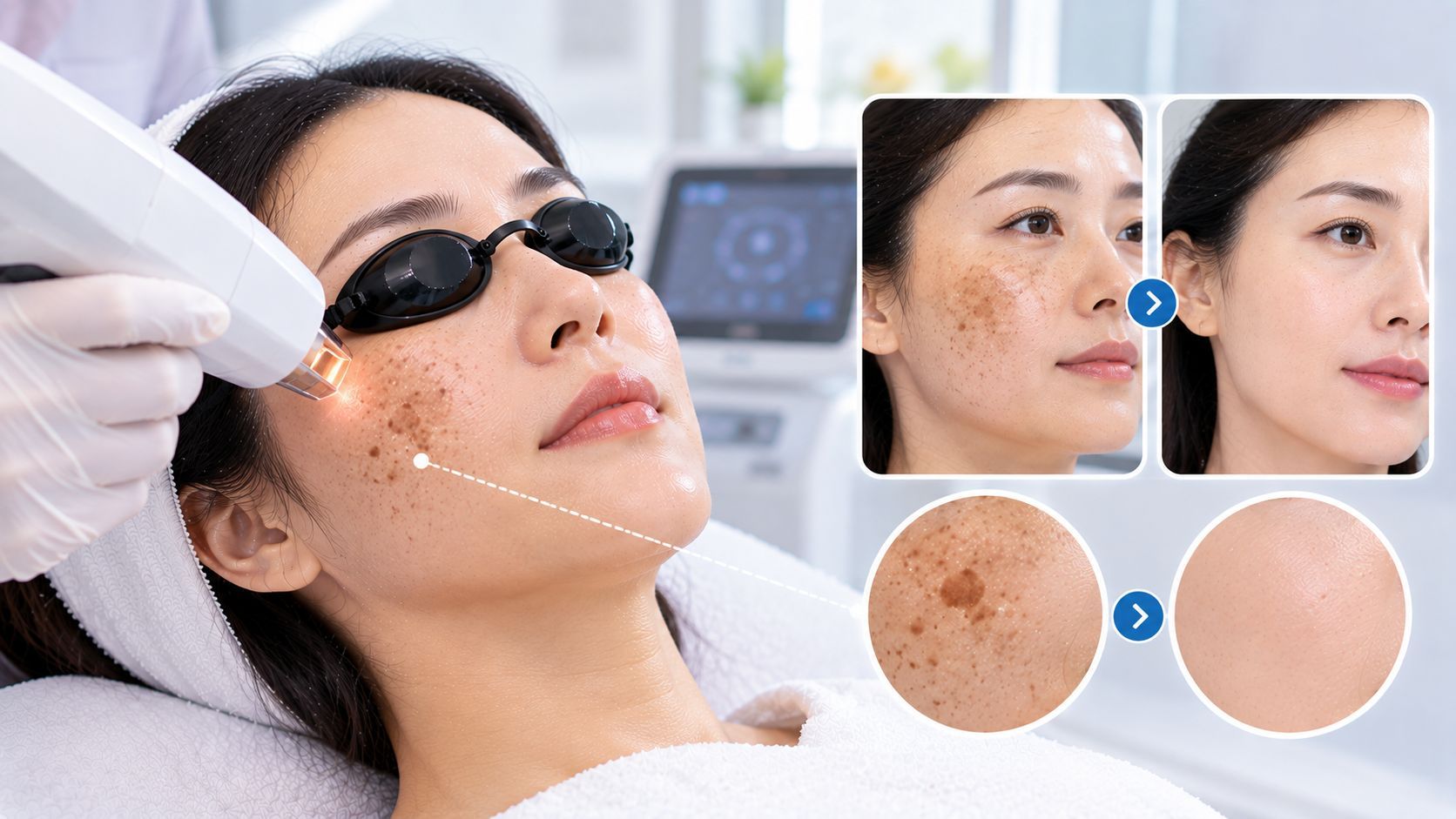
Do Korean Clinics Use Laser Toning for Melasma?
Laser toning is commonly associated with pigmentation treatment in Korea.
It generally describes a relatively conservative laser approach rather than aggressively removing individual pigment spots.
The objective may be gradual improvement in uneven pigmentation while limiting visible downtime and inflammation.
However, laser toning is not automatically suitable for every patient.
The outcome can depend on:
- Laser wavelength
- Energy settings
- Treatment frequency
- Skin characteristics
- Melasma activity
- Previous treatment history
Repeated treatment should be adjusted according to how the skin responds rather than following an aggressive schedule simply to produce faster results.
What About Pico Laser for Stubborn Melasma?
Pico laser may be included in some treatment plans for pigmentation, but it should not be treated as a universal melasma solution.
Pico is a technology platform, and different devices can have different wavelengths and configurations.
Before treatment, ask:
- Which Pico device is being used?
- Which wavelength is being selected?
- Why is this wavelength appropriate?
- Is this targeted treatment or a broader toning approach?
- What level of inflammation should I expect?
- What is my risk of PIH?
Pico treatment can sometimes be used conservatively, but the technology does not eliminate the possibility of pigmentary complications.
Why Don't Korean Clinics Simply Use a Stronger Laser?
Because stronger treatment is not necessarily better for melasma.
A higher-energy or more aggressive procedure may produce greater inflammation.
For a patient prone to pigmentation, that inflammation can potentially contribute to PIH or make existing melasma more noticeable.
The goal is therefore often controlled improvement rather than maximum pigment destruction.
This is particularly important for patients who have previously experienced darker pigmentation after lasers, peels, acne, or other inflammatory procedures.
What Other Treatments May Be Used Alongside Laser?
Depending on the patient, a dermatologist may consider combining procedural treatment with non-procedural management.
Possible components can include:
- Consistent photoprotection
- Topical pigmentation management
- Conservative laser or light-based procedures
- Skin-care adjustments
- Other medical treatments when appropriate
The specific combination depends on the patient's circumstances.
A combination does not automatically mean that more procedures should be performed during the same appointment.
Sometimes the best approach is to separate treatments so that the skin has adequate time to recover.
Why Is Photoprotection So Important?
Even an effective melasma treatment can be undermined by ongoing light exposure.
Ultraviolet radiation is an important trigger, and visible light can also be relevant for some patients.
For someone traveling around Seoul after treatment, this means that treatment planning should account for outdoor activity.
Photoprotection may include:
- Broad-spectrum sunscreen
- Reapplication as appropriate
- Hats or physical barriers
- Seeking shade
- Reducing unnecessary intense sun exposure
Your dermatologist can recommend the appropriate approach for your skin and treatment.
What If You Have Darker or Pigmentation-Prone Skin?
Melasma treatment requires particular attention to PIH risk if you already develop dark marks easily.
Tell the provider if you have previously experienced pigmentation after:
- Acne
- Cuts
- Burns
- Laser treatment
- Chemical peels
- Other cosmetic procedures
The clinic may consider more conservative treatment settings or a different treatment approach depending on your individual risk.
Having darker skin does not automatically mean that you cannot receive laser treatment. It means treatment should be planned around your skin's response.
What Happens If Melasma Gets Worse After Treatment?
This possibility should be discussed before treatment.
Temporary darkening can sometimes occur after pigment-focused procedures. However, persistent worsening may represent post-inflammatory pigmentation or a flare of the underlying melasma.
Ask the clinic:
“If my pigmentation becomes darker after treatment, when should I contact you?”
Also ask what follow-up is available.
For international patients, this is particularly important because you may return home soon after treatment.
How Many Treatments Might Stubborn Melasma Need?
There is no universal number.
Some patients may notice improvement after several treatments, while others may require longer-term management.
The appropriate schedule depends on:
- The treatment selected
- Treatment intensity
- Skin response
- Melasma severity
- PIH risk
- Whether additional treatments are being used
More frequent treatment does not automatically mean better results.
If your skin remains irritated or pigmentation is becoming darker, the plan may need to be reassessed rather than simply adding another session.
Can Stubborn Melasma Ever Be Completely Removed?
Complete permanent removal should not be promised.
Melasma commonly has a recurrent course.
Even after substantial improvement, pigmentation may return because the factors contributing to melasma have not necessarily disappeared.
This means a successful treatment plan may focus on:
Improvement → maintenance → trigger control → reassessment when pigmentation changes.
That is very different from treating melasma as a one-time cosmetic spot-removal procedure.
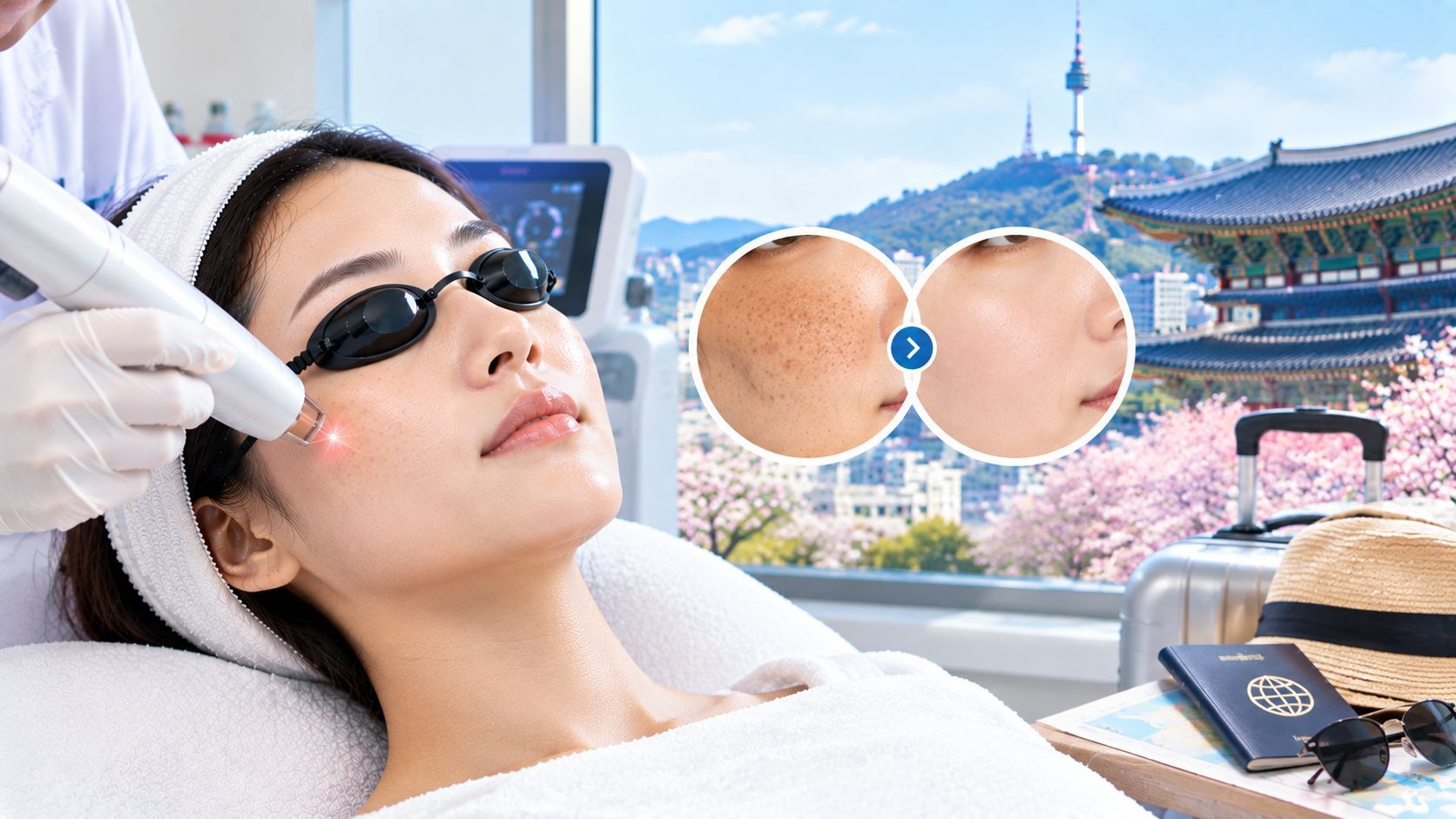
What Should International Patients Ask a Seoul Clinic?
If you are traveling to Korea specifically for stubborn melasma, ask:
- What type of pigmentation do I have?
- Why do you think this is melasma?
- What treatments have the lowest expected inflammatory response for my skin?
- Why are you recommending this laser or treatment?
- Which wavelength and settings will be used?
- What is my PIH risk?
- Would you recommend a test spot?
- How many sessions might I need?
- How long should I wait between sessions?
- What should I do if the pigmentation becomes darker?
- What aftercare is required?
- Can you provide my treatment records before I return home?
These questions are often more useful than simply asking which clinic has the newest laser.
What Are Red Flags When Seeking Melasma Treatment in Korea?
Be cautious if a clinic:
- Guarantees permanent melasma removal
- Promises that one session will eliminate stubborn pigmentation
- Recommends aggressive treatment without discussing PIH
- Does not ask about previous laser reactions
- Cannot explain the treatment approach
- Pushes a large package before properly assessing your skin
- Treats all pigmentation as though it were identical
- Does not explain aftercare
- Has no clear follow-up process
A thorough consultation should explain both the potential improvement and the limitations.
How Should You Plan a Seoul Trip Around Melasma Treatment?
If you are visiting Seoul for treatment, avoid treating your laser appointment as an isolated event.
Consider:
- How much outdoor sightseeing you have planned
- Whether your visit is during a hot or sunny period
- How many days remain before your flight
- Whether you have enough recovery time
- Whether you are planning sauna or spa activities
- Whether you have another cosmetic procedure scheduled
If you are considering multiple procedures during the same trip, tell each provider about your other treatments.
Combining several inflammatory procedures without adequate recovery can make it harder to determine which treatment caused a reaction.
What Does a Long-Term Melasma Plan Look Like?
A long-term plan may involve several stages.
Assessment
First, confirm the diagnosis and identify factors that may be contributing to your pigmentation.
Initial Treatment
The dermatologist may select a conservative treatment approach based on your skin and melasma.
Response Monitoring
Your skin is monitored for improvement, irritation, darkening, or other changes.
Adjustment
If the response is inadequate or the pigmentation worsens, the treatment plan may be modified.
Maintenance
Once improvement is achieved, ongoing photoprotection and other recommended management may help reduce recurrence.
This staged approach is generally more realistic than expecting one procedure to permanently eliminate melasma.
Final Takeaway
Korean clinics may use several strategies for stubborn melasma, including conservative laser or Pico-based approaches, laser toning, topical management, photoprotection, and other medical treatments.
However, there is no single Korean laser protocol that works for every case of melasma.
The most important part of treatment is understanding the diagnosis, controlling inflammation, choosing appropriate settings, monitoring the skin's response, and accepting that melasma can recur.
If you are considering treatment in Seoul, look beyond the advertised machine name. Ask why the treatment is appropriate for your melasma, how the clinic plans to reduce PIH risk, how often treatment should be performed, and what happens if your pigmentation becomes darker.
Frequently Asked Questions
How do Korean clinics treat stubborn melasma?
Treatment may involve photoprotection, topical management, conservative laser or light-based procedures, and other medical options. The exact plan depends on the patient's skin, pigmentation pattern, and treatment history.
Is laser toning commonly used for melasma in Korea?
Laser toning is associated with pigmentation treatment in Korea and may be considered for some patients. However, it is not risk-free and should be individualized.
Can Pico laser treat stubborn melasma?
Pico laser may be considered in selected cases, but the device, wavelength, settings, and treatment strategy matter. Pico should not be viewed as a guaranteed solution for melasma.
How many laser treatments are needed for stubborn melasma?
There is no universal number. Some patients require several treatments or longer-term management, while others may respond differently depending on their skin and treatment approach.
Can melasma return after successful treatment?
Yes. Melasma can recur even after significant improvement, which is why ongoing photoprotection and long-term management are important.
Should international patients get melasma treatment immediately before leaving Korea?
This depends on the procedure and expected recovery. If possible, allow enough time to monitor your skin and contact the clinic if an unexpected reaction develops.