Why Can Aggressive Laser Treatment Make Melasma Worse?
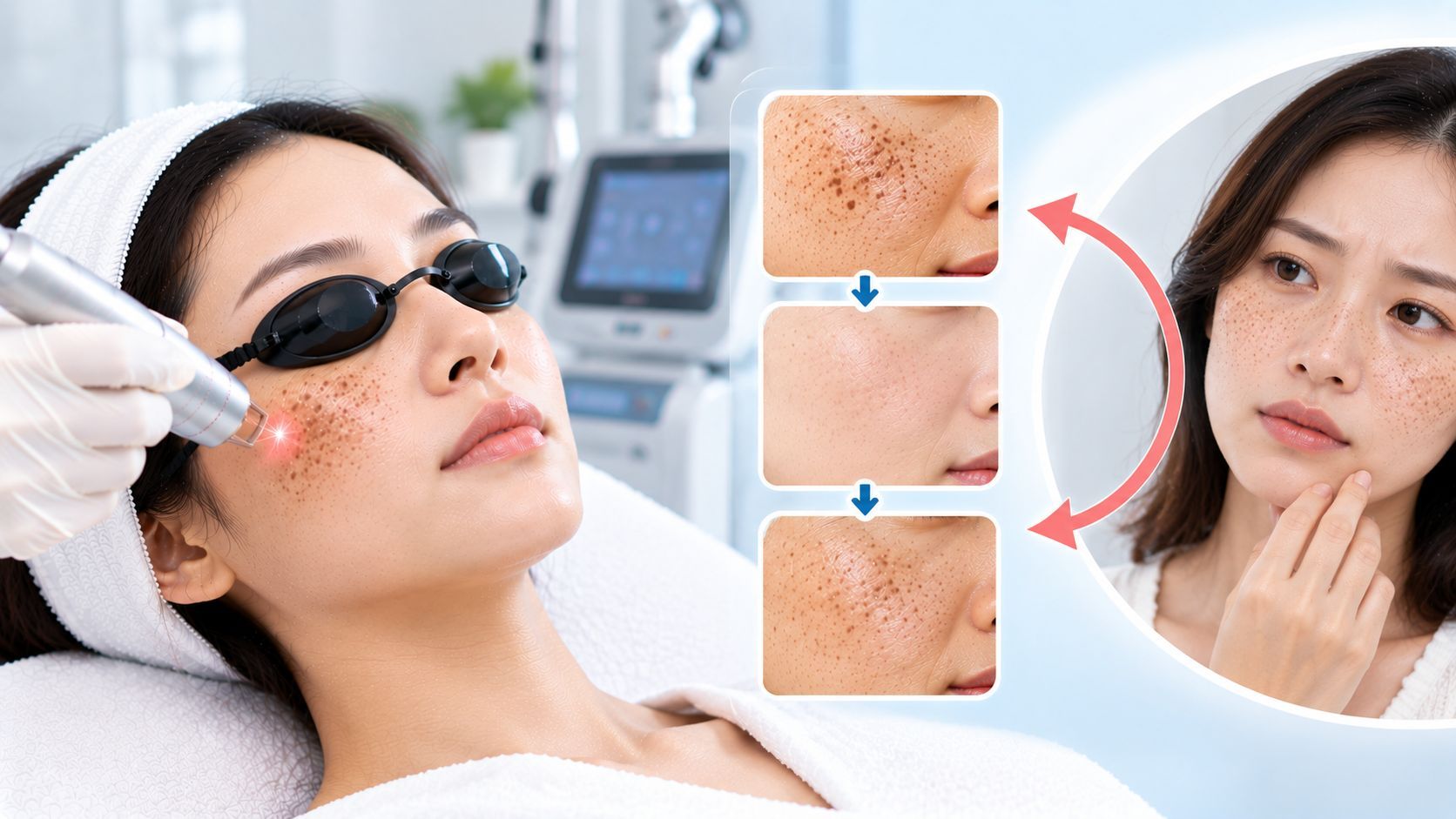
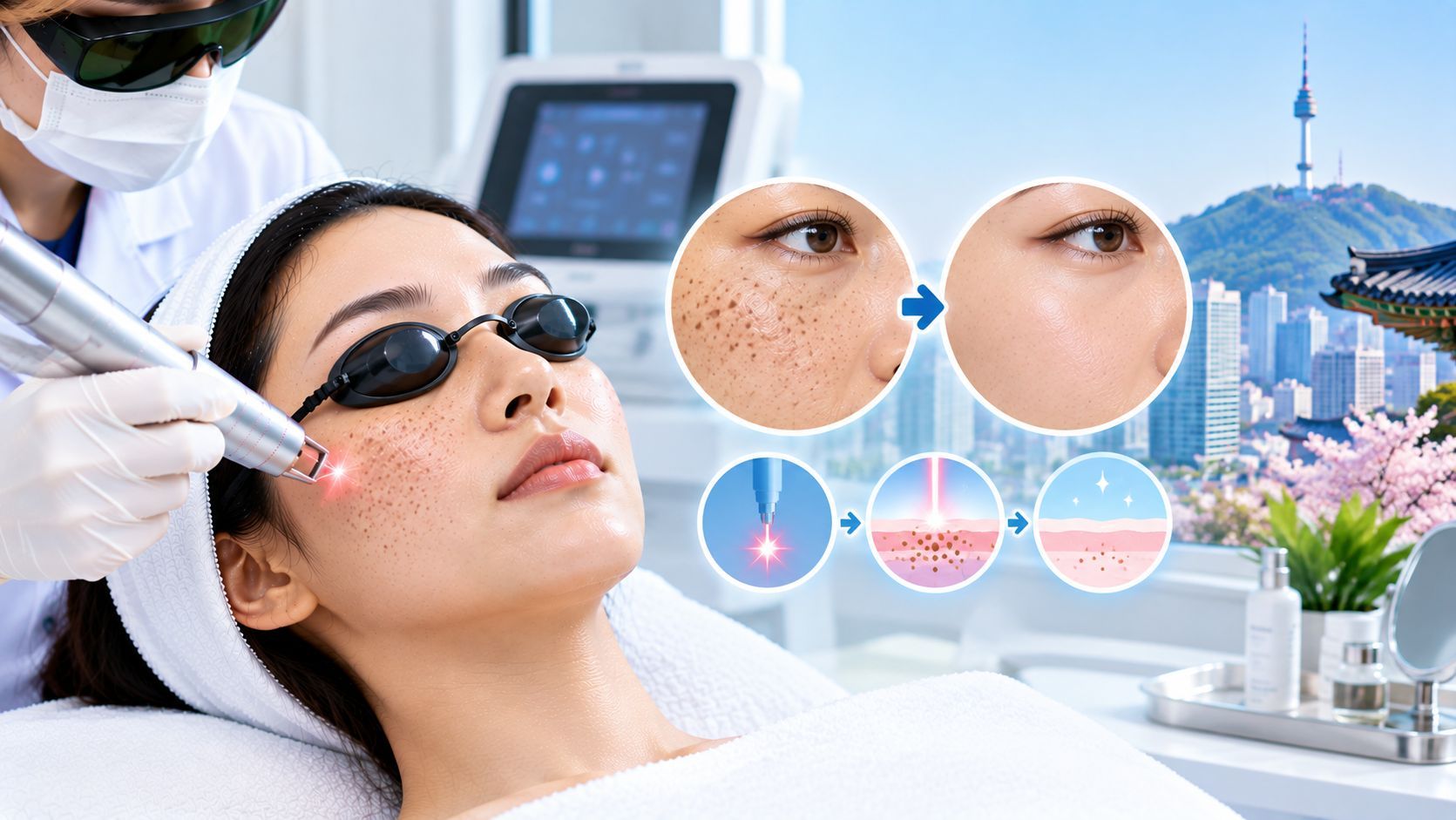
Aggressive laser treatment can sometimes make melasma worse because the heat and inflammation created by treatment may stimulate additional pigmentation in susceptible skin. This does not mean that every laser treatment is inappropriate for melasma. Rather, more energy, more passes, or more aggressive resurfacing does not automatically mean better results.
Melasma is particularly challenging because the skin can respond to irritation by becoming more pigmented. A treatment that successfully removes pigment from an isolated sun spot may therefore behave differently when used on melasma.
For patients considering laser treatment in Korea, the goal is usually to find an approach that provides meaningful improvement while minimizing unnecessary inflammation and the risk of post-inflammatory hyperpigmentation (PIH).
Why Is Melasma More Sensitive to Laser Treatment?
Melasma is a chronic pigmentation condition influenced by multiple factors, including ultraviolet exposure, visible light, heat, hormonal influences, inflammation, and individual susceptibility.
This means that the pigment is not simply a superficial stain that can always be removed permanently.
When the skin becomes inflamed, pigment-producing cells and surrounding skin processes can respond in ways that make discoloration more noticeable.
This creates a difficult balance:
The laser needs to affect the pigmentation without causing more inflammation than the skin can tolerate.
If treatment crosses that threshold, the resulting pigmentation may be darker or more extensive than before.
What Does “Aggressive” Laser Treatment Mean?
Aggressive treatment does not necessarily mean that a particular laser machine is inherently aggressive.
It can refer to factors such as:
- Higher treatment energy
- More passes over the same area
- Excessive heat
- More frequent treatments
- Extensive resurfacing
- Treating already irritated skin
- Using settings that are inappropriate for the patient's skin characteristics
A laser that is appropriate at one setting may produce a very different skin response at another.
This is why asking only “Which laser do you use?” is not enough.
How Can Heat Affect Melasma?
Heat is one factor that can contribute to melasma activity.
Laser and light-based procedures work by delivering energy into the skin. Depending on the technology and settings, that energy can create varying amounts of thermal and inflammatory response.
For someone prone to melasma, unnecessary heat may contribute to worsening pigmentation.
This is one reason treatment planning should consider:
- Skin type
- Melasma activity
- Previous treatment reactions
- Treatment area
- Energy level
- Wavelength
- Number of passes
- Recovery time
The objective is not to eliminate every trace of pigment in one session at any cost.
What Is the Difference Between Temporary Darkening and Melasma Worsening?
Pigmentation may look darker after a laser procedure without necessarily meaning that the melasma has permanently worsened.
There are several possibilities.
Temporary Treatment-Related Darkening
Pigment that has been treated can sometimes become more visible temporarily.
This may occur after targeted pigment treatments and may improve during the normal healing process.
Post-Inflammatory Hyperpigmentation
Inflammation from a procedure can trigger additional pigmentation.
This can appear after the initial treatment reaction and may take longer to fade.
Melasma Flare
The underlying melasma may become more noticeable or active after a triggering event such as heat, inflammation, or light exposure.
These situations can overlap, which is why persistent or worsening pigmentation should be assessed rather than diagnosed solely from photographs.
Why Can Stronger Treatment Be Counterproductive?
It is understandable to think:
“If my pigmentation is dark, shouldn't I use a stronger laser?”
With melasma, this logic does not always work.
A stronger treatment may produce greater pigment disruption, but it can also create greater inflammation.
If the inflammatory response stimulates additional pigmentation, the final result may be less favorable than expected.
This is why conservative treatment can sometimes be preferred for melasma.
The aim is controlled improvement rather than maximum immediate pigment destruction.
Can Repeated Laser Treatments Also Cause Problems?
Yes.
Even when individual treatments are relatively mild, repeated procedures performed too frequently may prevent the skin from fully recovering.
If your skin remains irritated between treatments, additional treatment can add more inflammation.
This is particularly important with treatment plans involving many sessions.
Ask the clinic:
- Why do I need this number of sessions?
- How long should I wait between treatments?
- What signs indicate that my skin needs more recovery time?
- What happens if my pigmentation becomes darker?
The appropriate interval depends on the treatment and individual response rather than a universal schedule.
Does This Mean Pico Laser Is Dangerous for Melasma?
Not necessarily.
Pico laser uses very short pulses and can be used in different ways for different pigmentation concerns.
However, Pico is a technology platform, not a guarantee of safety.
Different Pico devices, wavelengths, handpieces, and settings can produce different treatment effects.
A clinic may use a conservative Pico approach for selected pigmentation concerns, but the treatment still needs to be appropriate for the patient's melasma and skin characteristics.
The same principle applies to laser toning.
Can Laser Toning Still Make Melasma Worse?
Yes.
Laser toning is often considered a relatively conservative approach, but it is not completely risk-free.
Problems may occur if:
- Energy is too high
- Treatments are too frequent
- The skin is repeatedly irritated
- The diagnosis is incorrect
- The patient is exposed to substantial sunlight or heat
- The treatment plan does not account for PIH risk
This is why “laser toning” should not be interpreted as “a laser that cannot worsen pigmentation.”
Why Does Skin Tone Matter?
People with more melanin in their skin may be more susceptible to pigmentary changes after inflammatory procedures.
However, skin tone alone does not determine whether laser treatment is appropriate.
A provider should consider your individual history, including whether you develop dark marks after:
- Acne
- Cuts
- Burns
- Insect bites
- Previous laser treatments
- Chemical peels
- Other cosmetic procedures
A history of PIH is especially important to mention during your consultation.
Can Sun Exposure Make Laser-Related Melasma Worse?
Yes, light exposure remains an important factor in melasma management.
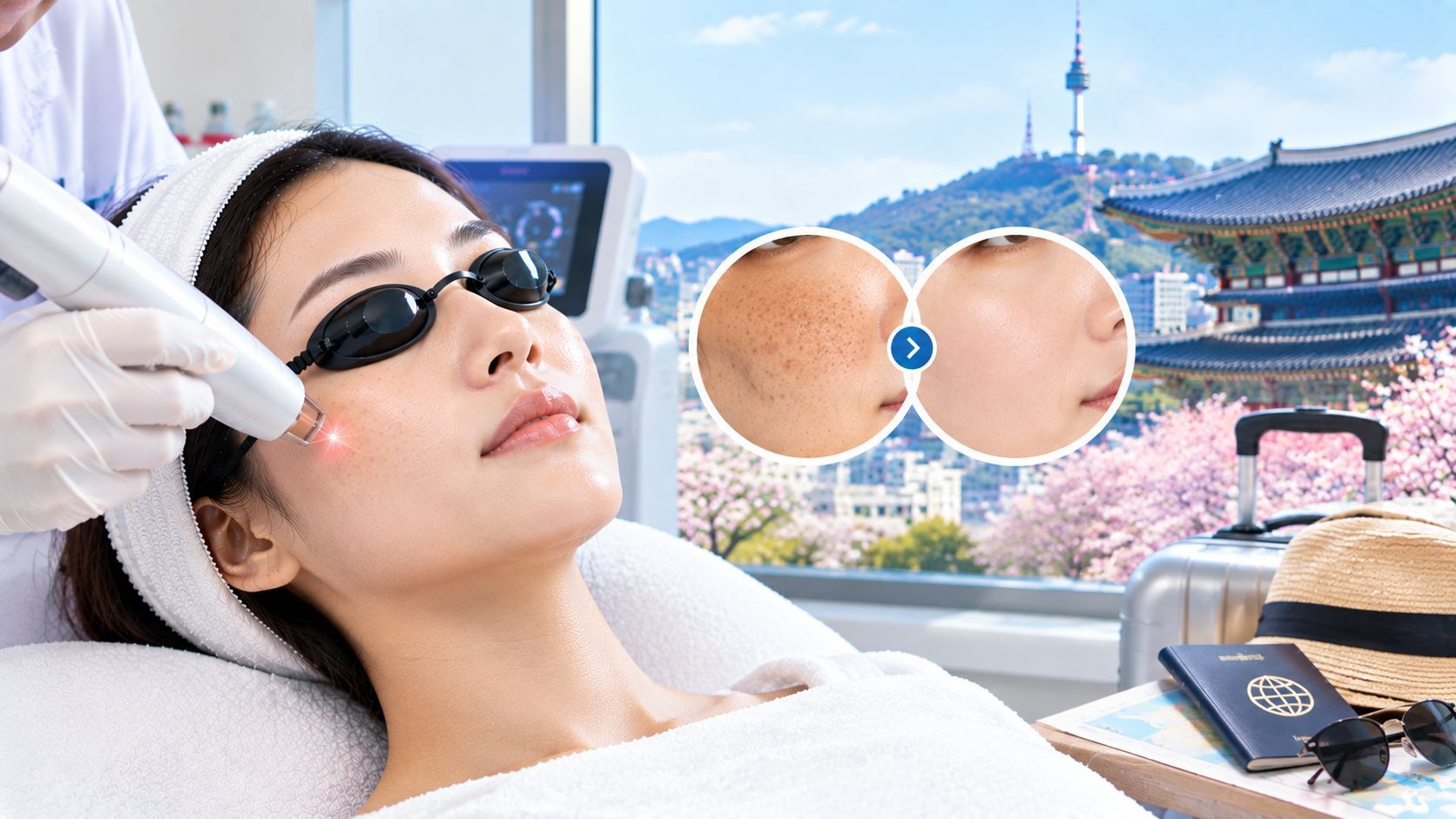
Imagine receiving a laser treatment in Seoul and then spending several days walking outdoors without adequate photoprotection.
Even if the laser treatment itself was appropriately performed, significant UV and visible-light exposure may work against your treatment goals.
For international patients, this means the timing of treatment within your itinerary matters.
A treatment followed by extensive sightseeing may require more careful planning than a treatment followed by several quieter recovery days.
What About Heat and Saunas?
Heat can be relevant to melasma and post-treatment inflammation.
After a laser procedure, clinics may advise temporarily avoiding activities such as:
- Saunas
- Very hot baths
- Intense exercise
- Excessive heat exposure
The exact restrictions depend on the procedure.
If you are visiting Korea specifically for laser treatment, ask about jjimjilbangs and sauna use before booking your treatment around your travel itinerary.
How Can a Clinic Reduce the Risk of Worsening Melasma?
There is no way to guarantee that melasma will not worsen, but treatment planning can take the risk into account.
A clinician may consider:
- Confirming the diagnosis
- Reviewing your previous treatment history
- Assessing your PIH tendency
- Choosing an appropriate wavelength
- Using conservative settings
- Limiting unnecessary passes
- Allowing adequate recovery
- Adjusting treatment according to your response
- Emphasizing photoprotection
- Considering non-laser options when appropriate
The exact approach should be individualized.
Should You Ask for a Test Spot?
A test spot may sometimes be considered when there is concern about pigmentary reactions.
It can provide information about how your skin responds to a particular treatment approach, although it cannot guarantee that a larger treatment area will react identically.
Ask your provider:
“Would a test spot be appropriate given my history of melasma or PIH?”
The answer will depend on the specific treatment being proposed.
What Are the Red Flags of an Overly Aggressive Treatment Plan?
Be cautious if a clinic:
- Promises complete or permanent melasma removal
- Says stronger treatment is always better
- Does not ask about your previous pigmentation reactions
- Recommends frequent treatments without explaining the interval
- Dismisses the possibility of PIH
- Cannot explain why a particular wavelength is being used
- Treats all brown pigmentation as though it were identical
- Pushes multiple procedures without explaining their purpose
A good consultation should discuss both expected improvement and potential worsening.
What Should You Do If Your Melasma Gets Darker After Laser?
Do not automatically assume that the treatment has permanently failed.
Some temporary darkening can occur after pigment-focused treatment.
However, if pigmentation continues to worsen, lasts longer than expected, or is accompanied by significant inflammation, contact the treating clinic for assessment.
Avoid immediately adding multiple new exfoliating or pigment-fading products unless advised by a qualified healthcare professional. Additional irritation can make it harder to determine what is happening.
For international patients, keep photographs of your skin before and after treatment and retain your treatment records.
Can You Prevent Melasma From Worsening After Laser?
Risk cannot be eliminated completely, but careful aftercare can help avoid unnecessary triggers.
Follow the clinic's instructions regarding:
- Sun protection
- Heat exposure
- Exercise
- Sauna use
- Skincare products
- Cleansing
- Makeup
- Moisturization
Most importantly, do not assume that your skin is fully recovered simply because the surface looks normal.
What Should International Patients Ask Before Laser Treatment in Korea?
Before booking, ask:
- What type of pigmentation do I have?
- Why is this laser appropriate for melasma?
- What wavelength and settings will be used?
- How much inflammation should I expect?
- What is my PIH risk?
- Could this treatment temporarily or permanently worsen pigmentation?
- How long should I wait between treatments?
- What should I avoid after treatment?
- When can I safely return to outdoor activities?
- Who should I contact if my pigmentation becomes darker?
These questions can help you understand the treatment rather than choosing based solely on the advertised device or price.
Final Takeaway
Aggressive laser treatment can make melasma worse because excessive heat and inflammation may trigger additional pigmentation in susceptible skin.
That does not mean laser treatment must be avoided altogether. It means melasma generally requires a more controlled approach than simply increasing energy to remove pigment more aggressively.
Pico laser and laser toning may be considered in selected patients, but neither is automatically risk-free. The wavelength, settings, treatment frequency, skin characteristics, PIH history, and aftercare all matter.
If you are considering melasma laser treatment in Korea, focus less on finding the strongest laser and more on understanding why a particular treatment and setting are being recommended for your skin.
Frequently Asked Questions
Can aggressive laser permanently worsen melasma?
It can potentially contribute to prolonged or additional pigmentation in susceptible patients. However, the outcome varies, and temporary post-treatment darkening does not necessarily represent permanent worsening.
Why does laser sometimes make pigmentation darker?
Laser treatment can cause temporary pigment darkening, and inflammation can also contribute to post-inflammatory hyperpigmentation. These are not necessarily the same process.
Is stronger laser treatment better for melasma?
Not necessarily. Higher energy can create more inflammation, which may increase the risk of unwanted pigmentation.
Can Pico laser worsen melasma?
It can potentially contribute to pigmentary changes depending on the treatment settings, skin characteristics, and individual response. Pico technology does not eliminate the risk.
How long should I wait between melasma laser treatments?
There is no universal interval. The appropriate timing depends on the specific procedure and how your skin responds. Treatment should generally not be repeated simply because a preset schedule says it is time.
Can I go sightseeing after melasma laser treatment in Seoul?
This depends on the procedure and your recovery. Ask the clinic about sun exposure, heat, exercise, and outdoor activity before planning your itinerary.