What Is the Best Laser Treatment in Seoul for Overall Skin Quality?
Introduction
If your skin does not have one single major problem but instead looks dull, uneven, rough, enlarged-pored, or less smooth than before, you may wonder which laser treatment in Seoul can improve your overall skin quality.
There is no single laser that is universally best for every person. The most appropriate treatment depends on what is reducing your skin quality in the first place—such as pigmentation, texture, acne scarring, redness, fine lines, or changes related to sun exposure and aging.
For overall improvement, the goal is usually to identify the main factors affecting your skin and choose a treatment that addresses those factors without creating unnecessary downtime or irritation.
What Does “Overall Skin Quality” Actually Mean?
“Skin quality” is a broad term rather than a specific medical diagnosis.
When people say their skin quality has declined, they may be referring to:
- Uneven skin tone
- Dull appearance
- Rough texture
- Visible pores
- Fine lines
- Mild pigmentation
- Acne-related texture
- Reduced smoothness
- Sun-related skin changes
- General loss of radiance
Two people can therefore describe their skin as having “poor quality” while needing completely different treatments.
Why Identifying the Main Problem Matters
If pigmentation is the main issue, a treatment targeting pigment may make more sense than a resurfacing procedure.
If rough texture and acne scars dominate, a fractional resurfacing approach may be considered.
If redness is the primary concern, a vascular-focused treatment may be more relevant.
If the main problem is facial laxity or volume loss, a laser may not be the most appropriate treatment at all.
Which Laser Treatments May Improve Overall Skin Quality?
Several categories of laser treatment can contribute to better-looking skin, but they do so in different ways.
Non-Ablative Laser Treatments
Non-ablative lasers treat tissue without removing the entire surface layer of skin.
Depending on the technology, they may be used for concerns such as:
- Uneven tone
- Mild texture irregularities
- Fine lines
- Certain pigmentation concerns
- Photoaging
They may involve less visible recovery than aggressive resurfacing, although the actual downtime depends on the device and treatment settings.
Fractional Laser Treatments
Fractional lasers treat microscopic areas of skin while leaving surrounding tissue untreated.
They may be considered when overall skin quality is being affected by:
- Acne scars
- Uneven texture
- Fine lines
- Surface irregularities
- Certain signs of photoaging
Because fractional treatment can be performed at different intensities, recovery can vary substantially.
A stronger resurfacing treatment may produce more noticeable short-term redness, peeling, or sensitivity than a lower-intensity treatment.
Pigmentation-Focused Laser Treatments
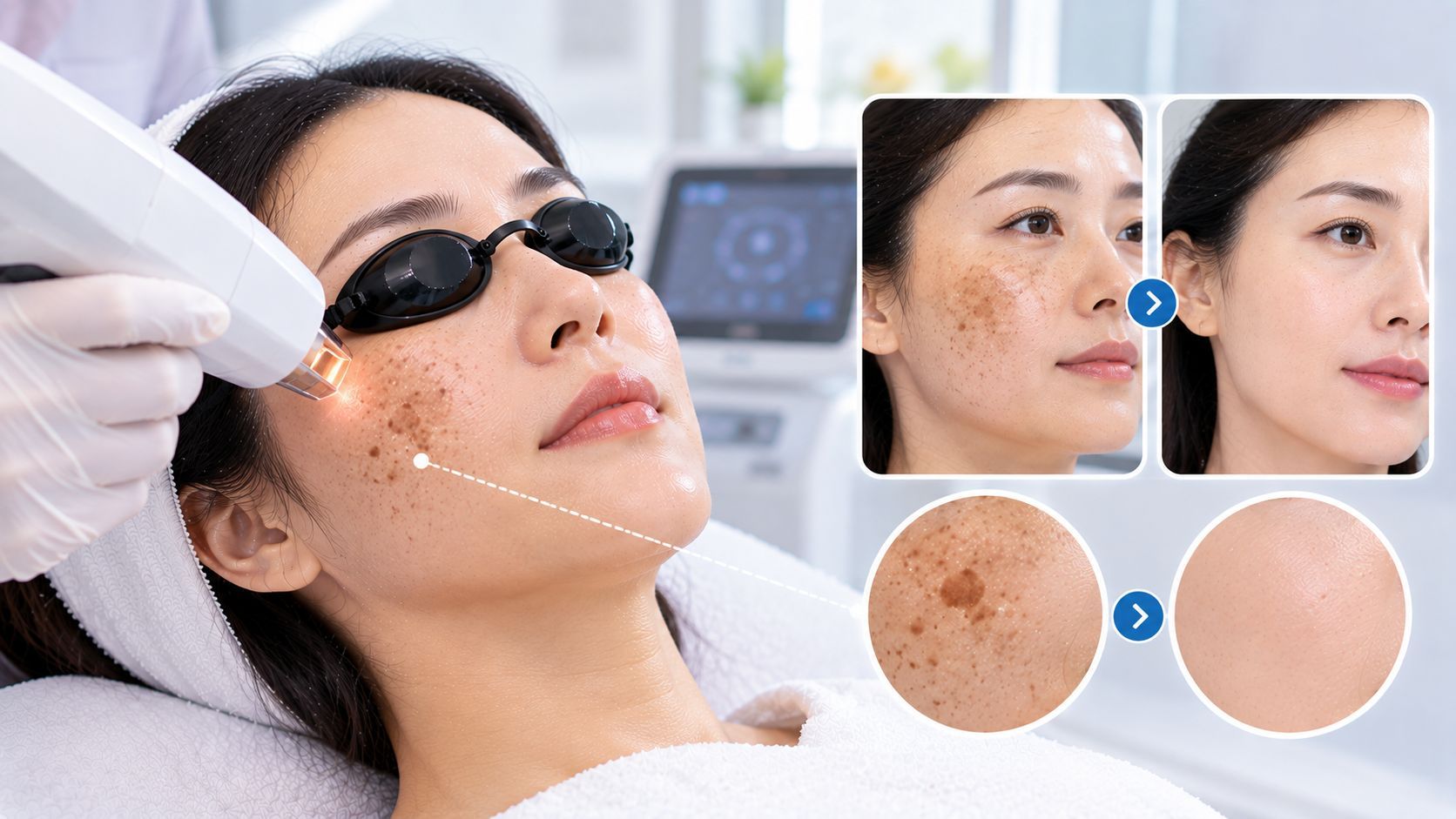
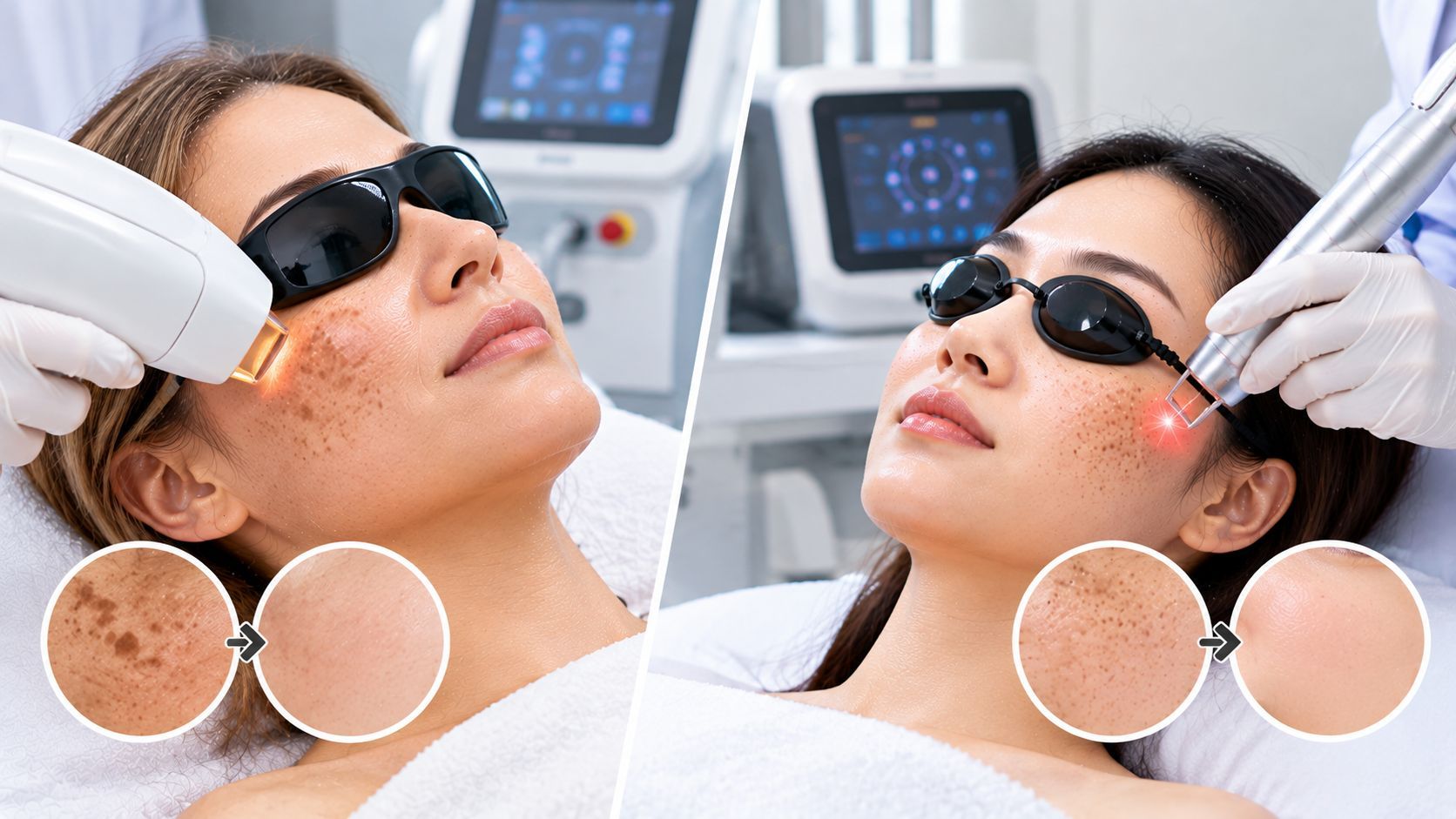
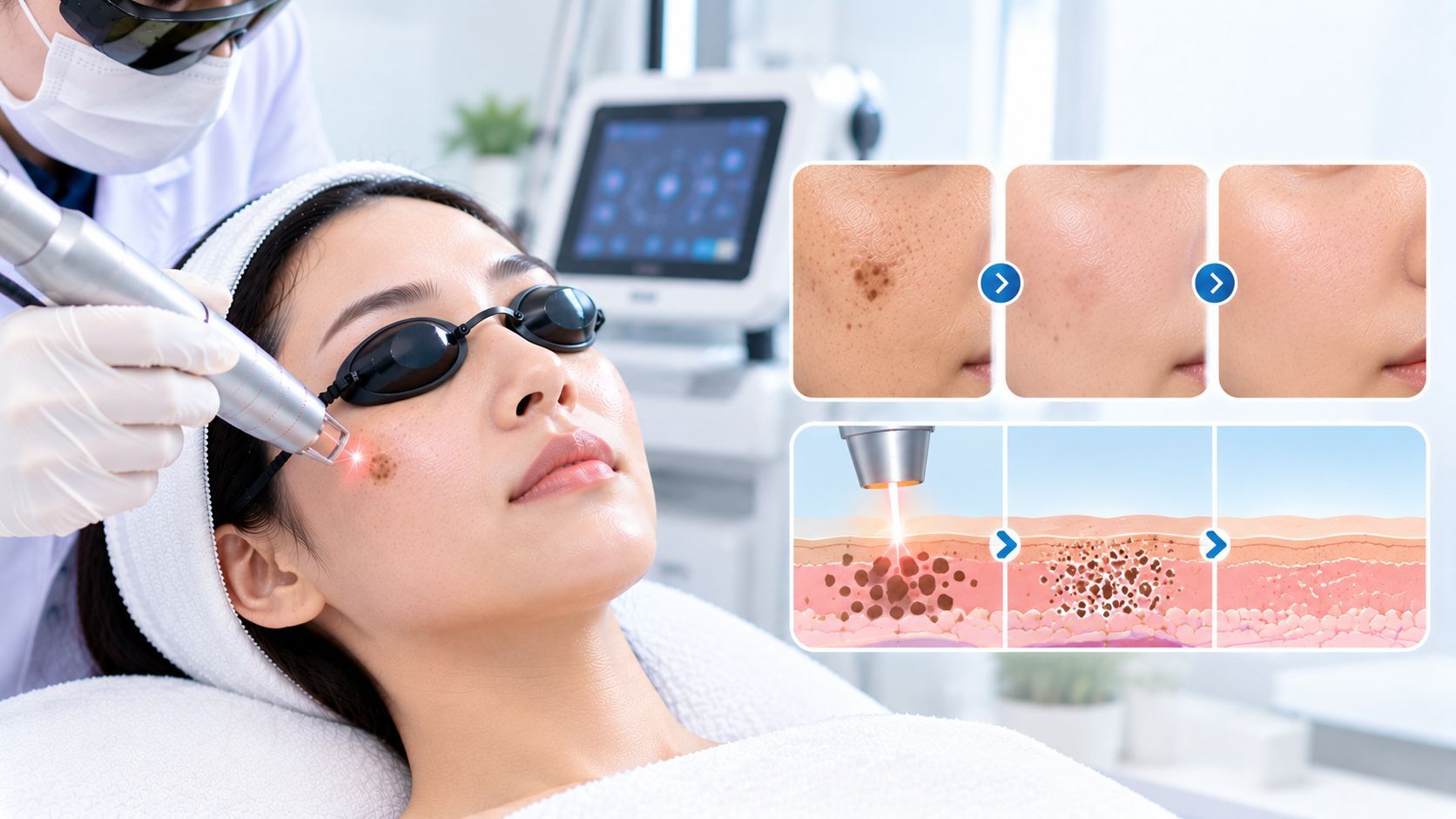
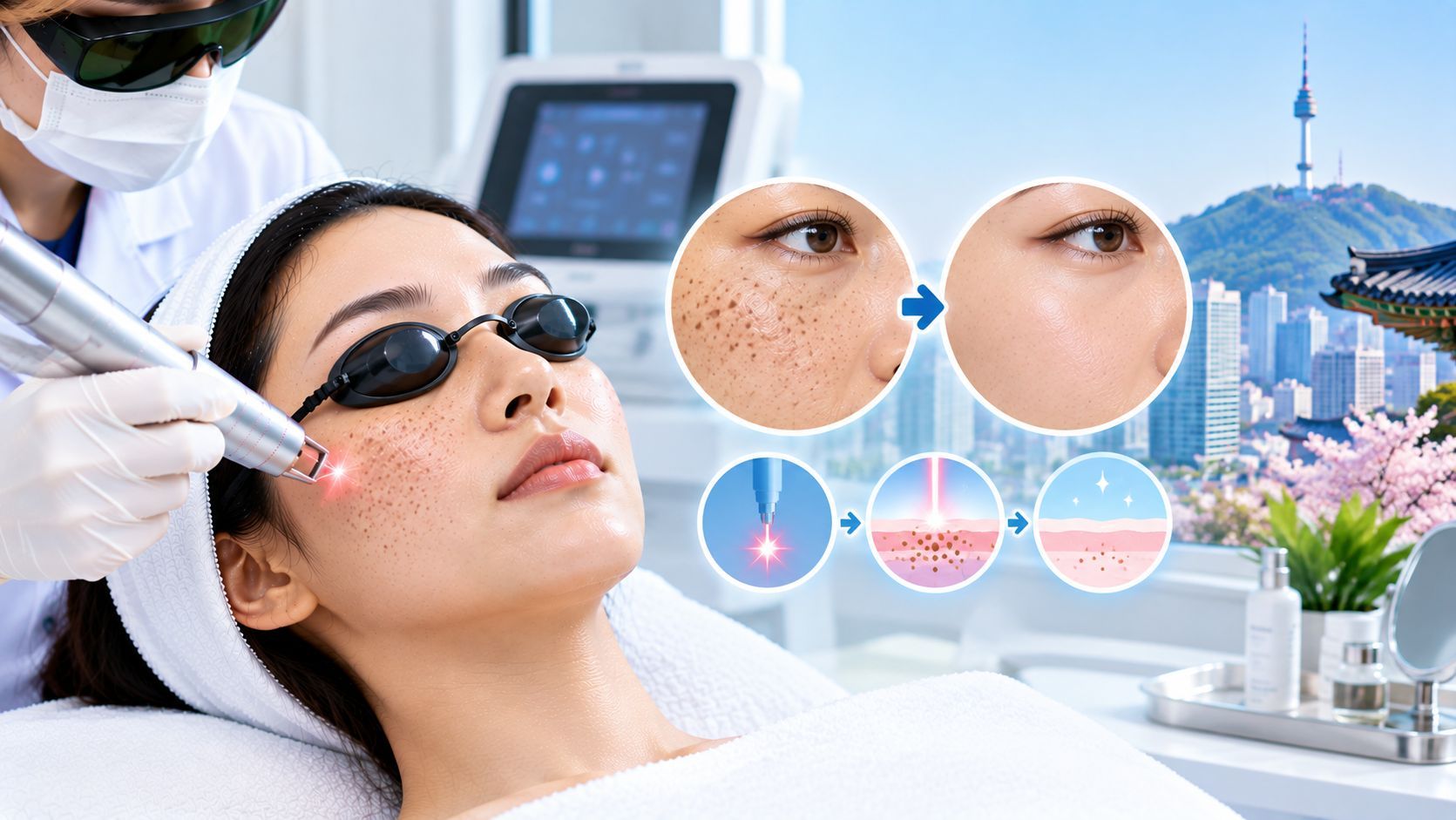
If uneven tone or localized pigmentation is making the skin look less clear, a pigmentation-focused laser approach may be considered.
However, treatment needs to match the type of pigmentation.
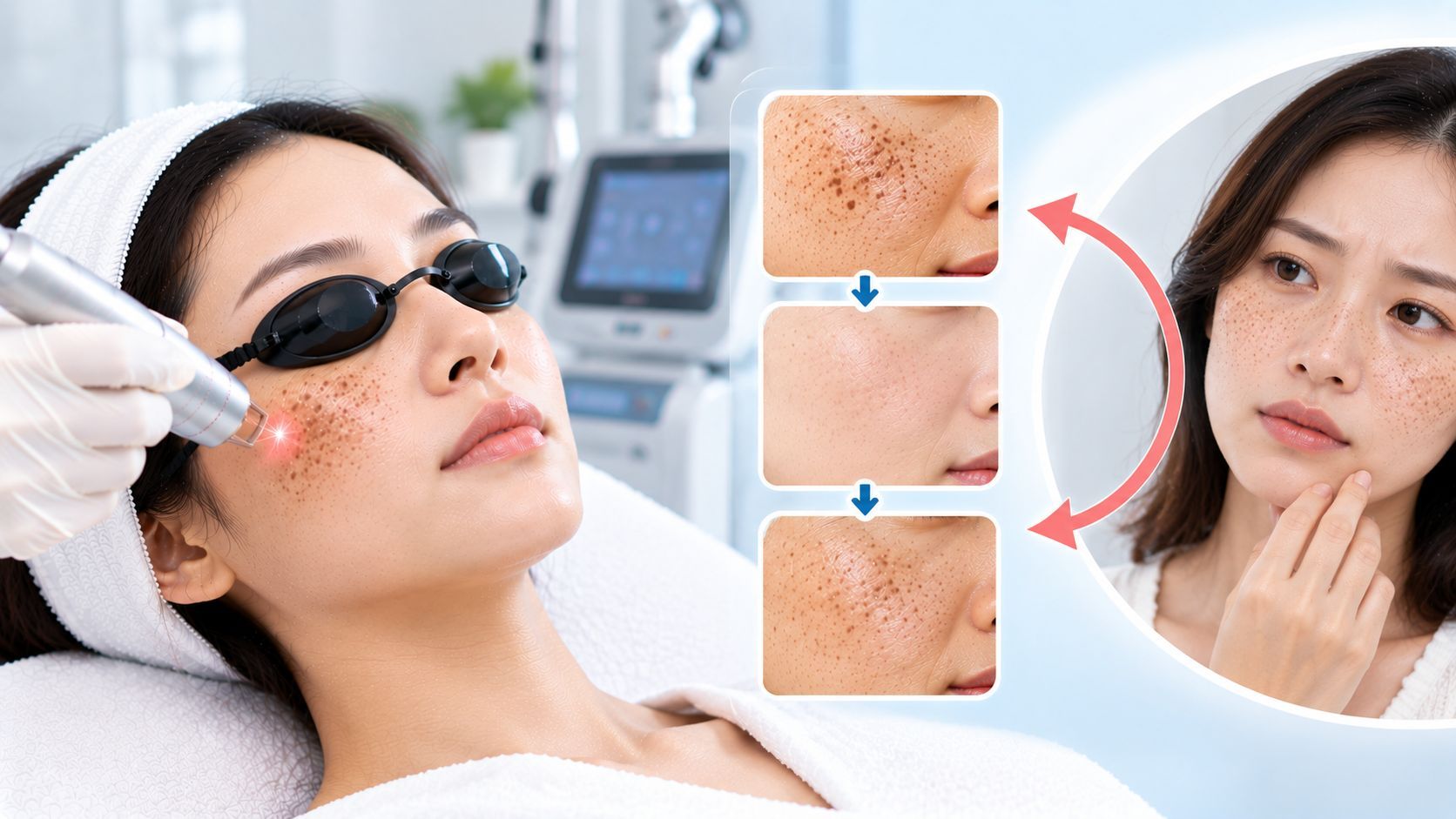
Freckles, sun spots, post-inflammatory pigmentation, and melasma can behave differently. Treating them as though they are the same condition can produce disappointing results or, in some cases, additional pigmentation problems.
Vascular Laser Treatments
If visible redness or small blood vessels are the primary reason your skin looks uneven, a vascular-focused laser may sometimes be appropriate.
This approach is different from treating brown pigmentation or rough texture.
Persistent redness should first be evaluated to determine its likely cause.
Is There One “Best” Laser for Overall Skin Quality?
Not in a universal sense.
A laser that produces excellent improvement for acne-related texture may do little for a patient whose main concern is pigmentation.
Similarly, a treatment that targets superficial discoloration may not substantially change deeper textural irregularities.
The most useful approach is therefore to match the technology to the dominant factor affecting your skin's appearance.
How a Dermatologist May Assess Your Skin
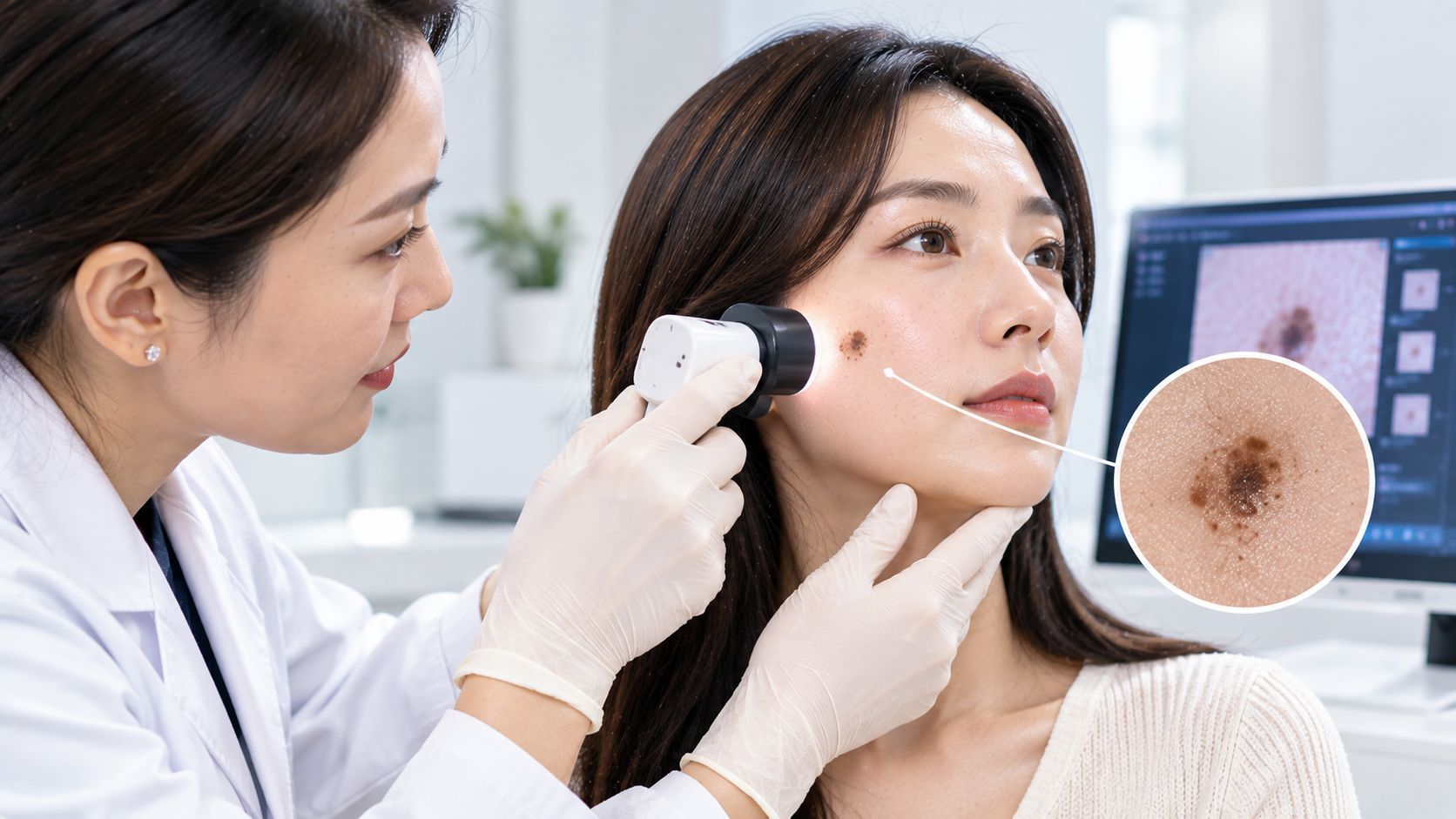
A consultation can help separate different components of “poor skin quality.”
The provider may assess:
Skin Tone
Are brown or red areas creating an uneven appearance?
Texture
Does the skin feel rough or show visible irregularities?
Scarring
Are acne scars contributing to the uneven surface?
Pores
Are pores appearing larger because of oil production, texture, or reduced skin elasticity?
Fine Lines
Are fine lines contributing to the appearance of aged or less smooth skin?
Skin Sensitivity
Is the skin currently irritated, inflamed, or unusually reactive?
The answers can influence whether laser treatment is appropriate and which type should be considered.
What If I Want a “Glow” Rather Than a Specific Correction?
Many patients visiting Seoul use terms such as “glowing skin,” “glass skin,” or “better skin quality.”
These descriptions are understandable but not specific enough to select a treatment.
A better consultation approach is to describe what you actually see:
- “My skin looks dull.”
- “My pores are more visible.”
- “I have uneven pigmentation.”
- “My cheeks have acne scars.”
- “My skin feels rough.”
- “My face looks uneven in photographs.”
- “I want smoother-looking skin without significant peeling.”
This gives the dermatologist more useful information.
Should You Choose an Aggressive Resurfacing Laser for Better Skin?
Not necessarily.
More aggressive treatment can produce greater resurfacing, but it can also involve more recovery and a higher risk of irritation and other complications.
For someone with only mild texture irregularities, a highly aggressive procedure may not be necessary.
For another patient with significant acne scarring, a stronger resurfacing strategy may be discussed.
The appropriate intensity depends on the problem and the patient's circumstances.
What About Laser Treatments With Little Downtime?
Shorter recovery can be attractive, particularly for international visitors.
Some lower-intensity treatments may produce relatively limited visible downtime, but “no downtime” should not be interpreted literally.
Even relatively mild procedures can cause temporary:
- Redness
- Warmth
- Sensitivity
- Dryness
- Swelling
The exact recovery depends on the technology, settings, treatment area, and individual response.
Can One Laser Treat Every Skin Quality Problem?
Usually, no.
A patient may have pigmentation, acne scars, enlarged-looking pores, and fine lines simultaneously.
One treatment may improve several of these concerns to some degree, but it may not address every underlying factor equally well.
Sometimes a dermatologist may recommend a staged treatment plan rather than trying to correct everything during one appointment.
Should I Combine Lasers With Other Treatments?
Combination treatment can sometimes be useful when several distinct concerns are present.
For example, a treatment plan may address pigmentation separately from textural scarring or may combine device-based treatment with skincare.
However, more treatments do not automatically mean better skin.
Combining multiple procedures can increase irritation, downtime, cost, and difficulty determining which treatment caused an unwanted reaction.
For international patients, this is especially relevant because follow-up opportunities may be limited after returning home.
How Does Skin Tone Affect Treatment Selection?
Laser selection should take skin pigmentation into account.
People with darker or more melanin-rich skin may have a higher risk of post-inflammatory pigmentation after some procedures. This does not mean that laser treatment cannot be performed, but the technology, settings, treatment intensity, and aftercare may need careful consideration.
Tell your dermatologist if you have previously developed dark marks after:
- Acne
- Scratches
- Burns
- Chemical peels
- Laser treatments
- Other skin irritation
This history can be useful when planning treatment.
What Should International Patients Consider in Seoul?
If you are traveling to Seoul for laser treatment, consider your entire itinerary.
Before Treatment
Allow enough time for consultation and skin assessment rather than scheduling a procedure immediately after landing without considering your skin condition.
After Treatment
Plan around possible redness, swelling, peeling, or sensitivity.
Before Flying Home
Ask how long the expected recovery lasts and whether your departure date leaves enough time for the skin to settle.
During Your Trip
Follow the clinic's aftercare instructions regarding sun exposure, skincare, exercise, heat, and other activities.
How Many Sessions Are Usually Needed?
There is no universal number of sessions for “overall skin quality.”
The number depends on:
- The treatment selected
- The severity of the concern
- Treatment intensity
- Skin response
- Whether multiple concerns are being addressed
- Whether maintenance is required
Some changes may be visible after one session, while other improvements develop gradually or require several treatments.
A provider should explain the expected treatment course rather than promising a specific result.
Questions to Ask Before Choosing a Laser
Before treatment, ask:
- What specifically is making my skin look uneven or low quality?
- Which part of that problem will this laser address?
- Why is this treatment appropriate for my skin?
- What alternatives are available?
- What level of improvement is realistic?
- How much downtime should I expect?
- What is my risk of pigmentation or irritation?
- How many sessions might I need?
- Would combining treatments actually be useful?
- Is the treatment compatible with my travel and flight schedule?
The Bottom Line
There is no universally best laser treatment in Seoul for overall skin quality. The right choice depends on what is actually affecting the appearance of your skin.
Pigmentation-focused treatments may make more sense when uneven tone dominates. Fractional or resurfacing approaches may be considered for certain textural problems and acne scars. Vascular treatments may be relevant when visible redness is the main concern, while some non-ablative treatments may be used for broader skin rejuvenation.
Rather than choosing a laser because it is popular or marketed for “glowing skin,” identify your main concerns and discuss the treatment's expected benefits, risks, alternatives, and recovery period with a qualified dermatologist.
FAQs About Laser Treatments for Overall Skin Quality
What is the best laser for overall skin quality?
There is no single laser that is best for everyone. The appropriate treatment depends on whether pigmentation, texture, acne scars, redness, fine lines, or another concern is primarily affecting your skin.
Can one laser improve my whole face?
Some treatments can address multiple concerns, but one procedure may not correct every factor affecting skin appearance. A dermatologist may recommend a single treatment or a staged approach depending on your needs.
Which laser is best for glowing skin?
“Glowing skin” is not a specific medical indication. The appropriate treatment depends on what is causing dullness or uneven appearance, such as pigmentation, texture, dryness, or photoaging.
Are laser treatments with less downtime effective?
Some lower-intensity treatments can produce useful improvements with less visible recovery, but results vary. Less downtime does not necessarily mean that the treatment is appropriate for every concern.
Can laser treatment improve pores and texture together?
Certain resurfacing or other energy-based treatments may improve the appearance of both pores and texture. The extent of improvement depends on why the pores are prominent and what is causing the textural irregularity.
How long should I stay in Seoul after laser treatment?
There is no universal timeframe. Recovery depends on the specific technology and treatment intensity. International patients should discuss their itinerary and flight date with the provider before treatment.
Conclusion
“Overall skin quality” can mean many different things, so selecting a laser requires more than choosing a popular treatment in Seoul. The most useful starting point is to identify whether pigmentation, texture, scarring, redness, pores, fine lines, or another issue is primarily responsible for your concerns.
Once the target is clear, a dermatologist can determine whether a laser is appropriate, which type may be suitable, how aggressive treatment should be, and whether another approach would better match your goals.