
CONCERN · MID-FACE SAGGING
Sagging Cheeks Treatment in Cheongdam & Apgujeong, Seoul
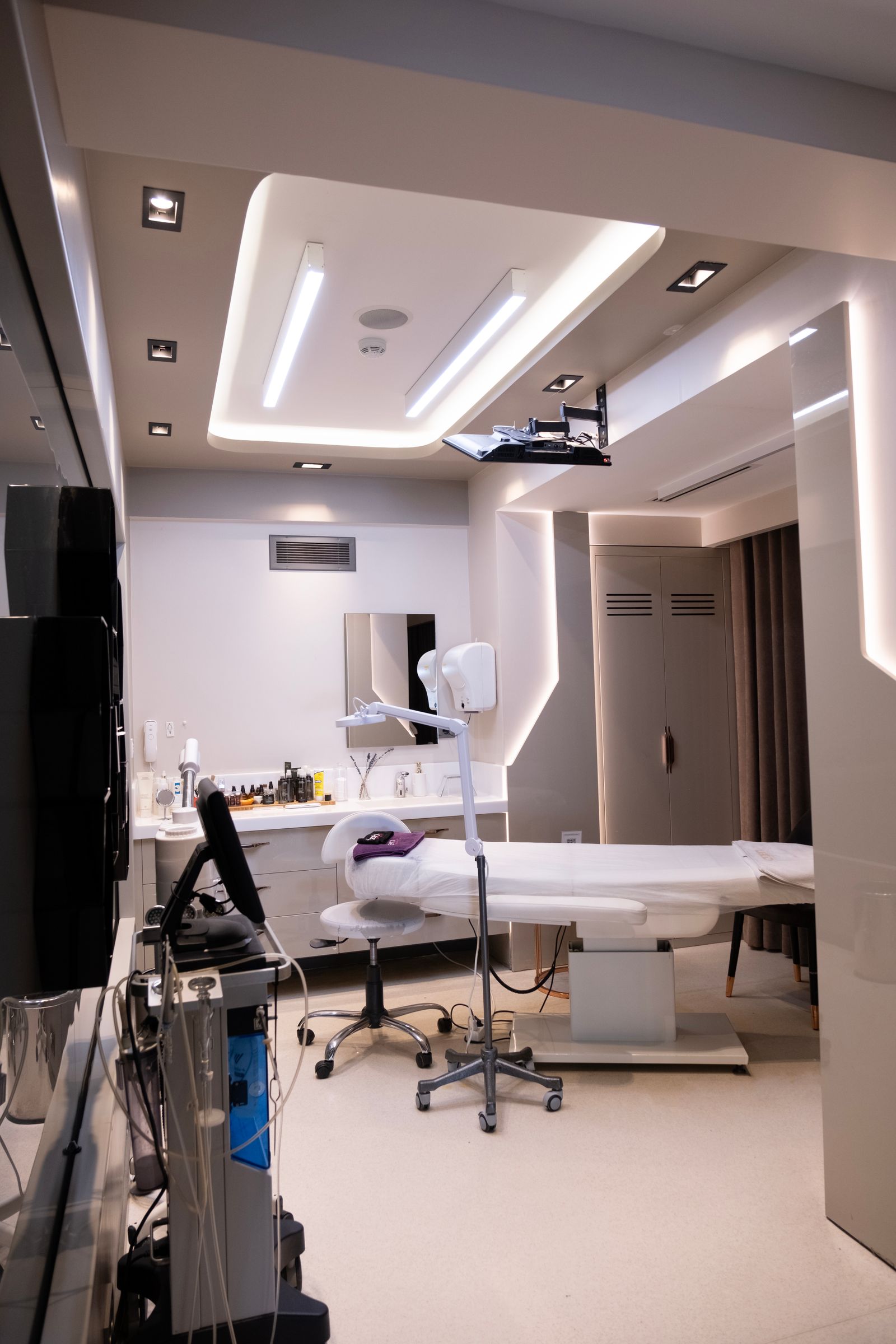
✦ DESIGNED 1:1 BY DR. BYUN JEIK
Seoul National University College of Medicine · Surgery specialist & fellow, SNU Hospital · Merz Golden Record Award 2024 · One of Korea's 22 filler experts (Medical Times)
Key facts
| What it is | Downward and inward descent of the cheek soft tissue, flattening the upper cheek and deepening the folds below it |
|---|---|
| Main causes | Fat-pad descent, retaining-ligament laxity, deep volume and bone change, thinning skin |
| Non-surgical options | Collagen boosters, energy lifting, ligament-support filler, mid-face thread lift |
| Doje program | Mid-Face Program |
| Surgical opinion | Advanced descent with marked excess skin |
| Where | Doje Clinic, 2F Dolce Vita Building · Apgujeong Rodeo Station Exit 5 |
Why cheeks sag: the layers involved
The cheek is built in layers: skin, subcutaneous fat arranged in separate compartments, the SMAS (the fibromuscular layer that moves with expression), deep fat pads resting on bone, and the bony framework of the cheekbone and upper jaw. Retaining ligaments — notably the zygomatic and maxillary ligaments — tether these layers to bone like guy-ropes. Sagging is rarely one change; it is the sum of small changes in every layer.
- Deep volume loss. The deep medial cheek fat thins and the bony support of the mid-face gradually recedes, so the tissue above loses its platform and begins to slide.
- Ligament laxity. As the retaining ligaments stretch, the malar fat pad drifts towards the nasolabial fold. That is why a flatter upper cheek and a heavier smile line so often appear together.
- Skin changes. Declining collagen and elastin make the skin less able to recoil, so it drapes rather than holds its shape.
- Accelerators. Sun exposure, rapid weight change, smoking and genetics all influence how early and how quickly this happens.
In Korean clinics this is often called 볼처짐 (cheek sagging). Because the same visible sign — a flatter cheek with heavier folds beneath — can start in different layers, the treatment that helps one person may do little for another.
How Doje Clinic assesses sagging cheeks
Every plan starts with a 1:1 consultation with Dr. Byun Jeik, Representative Director and a surgery specialist trained at Seoul National University Hospital. The question is not which device to use but which layer has changed. He studies the face at rest and in expression, from the front and at an angle, and looks at where the tissue has moved from rather than only where a fold has deepened.
- Is the main problem descent (tissue that needs repositioning) or deflation (support that needs restoring)?
- How much subcutaneous fat is present — enough that heat-based devices should be used cautiously, or so little that volume matters more?
- How thick and elastic is the skin? Mark-View 3D skin analysis adds objective skin data to the visual assessment.
- What do you want to change, and how much visible change feels right for you?
The clinic's philosophy — care needs change as time passes — means a plan for early softening in the thirties looks very different from one for established descent in the fifties.
✦ PRIVATE 1:1 CONSULTATION
Find out what your face actually needs
✔ Your plan is designed by Dr. Byun Jeik himself, trained at Seoul National University
✔ Only what your face needs, never a device package
✔ Written plan and quote at consultation
✔ 6 min from Apgujeong Rodeo Station, Exit 5
Mon, Tue, Thu, Fri 10:00–19:00 · Sat 10:00–17:00
Closed Wed, Sun & holidays ·
+82 2-6380-2110
Two faces, same treatment, different results.
The difference is the design. Tell us your goals and dates; in your 1:1 consultation Dr. Byun Jeik shows you what your face needs, and what it doesn't.
Options from mild to advanced
Early softening: skin quality and collagen
When the cheek is only beginning to lose crispness, the priority is the skin and its collagen. Collagen boosters such as GOURI or Re2O, and energy devices such as Softwave, can improve firmness gradually without altering contour. Change builds over weeks and is typically subtle.
Mild to moderate descent: energy lifting plus support
Where early descent sits on reasonably good skin, micro-focused ultrasound such as Ultherapy Prime targets the deeper support layer, while small amounts of retaining-ligament filler reinforce the anchor points the tissue hangs from. Doje selects devices by depth, degree of sagging, fat and elasticity, and deliberately avoids applying every device as a package.
Moderate descent: repositioning with threads
Once tissue has clearly moved, it usually needs lifting rather than tightening. The Doje signature mid-face thread lift(실리프팅) repositions the descended cheek along vectors planned for each face, aiming for an immediate yet natural lift without lumpiness. The clinic states 17 years of accumulated thread-lift experience and that results can last up to two years or more, although individual results vary.
Descent and deflation together
Many faces show both. Doje then pairs lifting with conservative support — for example nasolabial filler or a biostimulatory option such as Radiesse — so the cheek is supported rather than simply filled. Adding volume to a descended cheek tends to make it heavier, which is why sequence and restraint matter more than quantity.
Which Doje program fits
Sagging cheeks are the core indication for the Mid-Face Program: signature mid-face thread lift, retaining-ligament filler and nasolabial-line filler, with options including Radiesse, Ultherapy Prime, Softwave and GOURI/Re2O. Each element is included only if your assessment calls for it. Visitors with limited time in Seoul may suit the One-Day Program, which combines a signature thread lift with Doje autologous exosome and oxygen therapy.
When a surgical opinion is more appropriate
Non-surgical lifting has limits. If there is substantial excess skin, deep descent across the whole mid- and lower face, or you want a large and long-lasting change in one step, a surgical facelift assessed by a qualified surgeon may serve you better. Dr. Byun will say so at consultation rather than push threads or devices beyond what they can reasonably achieve. The comparison thread lift vs surgical facelift explains the trade-offs.
Cost
Fees are quoted after the 1:1 consultation, because the plan depends on which layers need treatment and how many steps are genuinely necessary. Ask for a written quote; Korean non-covered (비급여) aesthetic fees are set per plan.
WHY PATIENTS CHOOSE DOJE
Seoul National University
College of Medicine graduate; surgery specialist and fellow at SNU Hospital.
Award-winning injector
Merz Golden Record Award 2024 (Ultherapy) and 2023 (Belotero); one of Korea's 22 filler experts.
17 years of thread lifting
Accumulated experience behind the Doje signature lift, designed to each face.
Calm, private, personalised
A private clinic in Apgujeong Rodeo. One doctor, one patient, one plan.
Frequently asked questions
Can sagging cheeks be lifted without surgery?
Often, yes, when descent is mild to moderate. Thread lifting, ligament-support filler and energy devices can reposition and support the mid-face, but marked excess skin usually calls for a surgical opinion.
Will filler alone fix sagging cheeks?
Usually not. Filler restores support and lost volume, but tissue that has descended generally needs lifting; adding volume to a sagging cheek can make the face look heavier.
How do I know whether I need Ultherapy or a thread lift?
Ultherapy Prime tightens the deeper support layer gradually and suits early descent; a thread lift physically repositions tissue and suits clearer descent. Many plans use both, decided after assessment.
How long do results last?
It varies with the method, your skin and lifestyle. Energy-device results develop over a few months; the clinic states its thread-lift results can last up to two years or more, though individual results vary.
Is there downtime?
Energy devices typically involve little visible downtime. After a thread lift, mild swelling, tenderness or slight bruising for several days is common, and Doje gives specific aftercare.
Can I be treated during a short trip to Seoul?
Often, yes. The One-Day Program combines a signature thread lift with autologous exosome and oxygen therapy in a single day; suitability is confirmed in consultation.
Related at Doje Clinic
- Mid-Face Program
- Mid-Face Thread Lift
- Retaining-Ligament Filler
- Ligament Filler vs Mid-Face Thread Lift
- Facial Retaining Ligaments Explained
- What Is the SMAS Layer?
- Nasolabial Folds
Visit Doje Clinic in Apgujeong & Cheongdam
Address
2F Dolce Vita Building, 18-6 Dosan-daero 45-gil, Sinsa-dong, Gangnam-gu, Seoul
서울 강남구 도산대로45길 18-6 돌체비타빌딩 2층
Subway
Apgujeong Rodeo Station (Suin-Bundang Line), Exit 5
About a 6-minute walk
Hours
Mon, Tue, Thu, Fri 10:00–19:00
Lunch 13:00–14:00
Sat 10:00–17:00
Closed Wed, Sun & public holidays
Phone
Medical information on this page is general education, not a diagnosis. Suitability, risks and the final plan are confirmed in a 1:1 consultation with Dr. Byun Jeik. Last updated 17 October 2026.
Plan your visit with Dr. Byun Jeik
Private 1:1 consultation in Apgujeong & Cheongdam, Seoul · 6 min from Apgujeong Rodeo Station Exit 5 · Mon, Tue, Thu, Fri 10:00–19:00 · Sat 10:00–17:00