PicoSure vs PicoWay: Does the Machine Actually Matter?
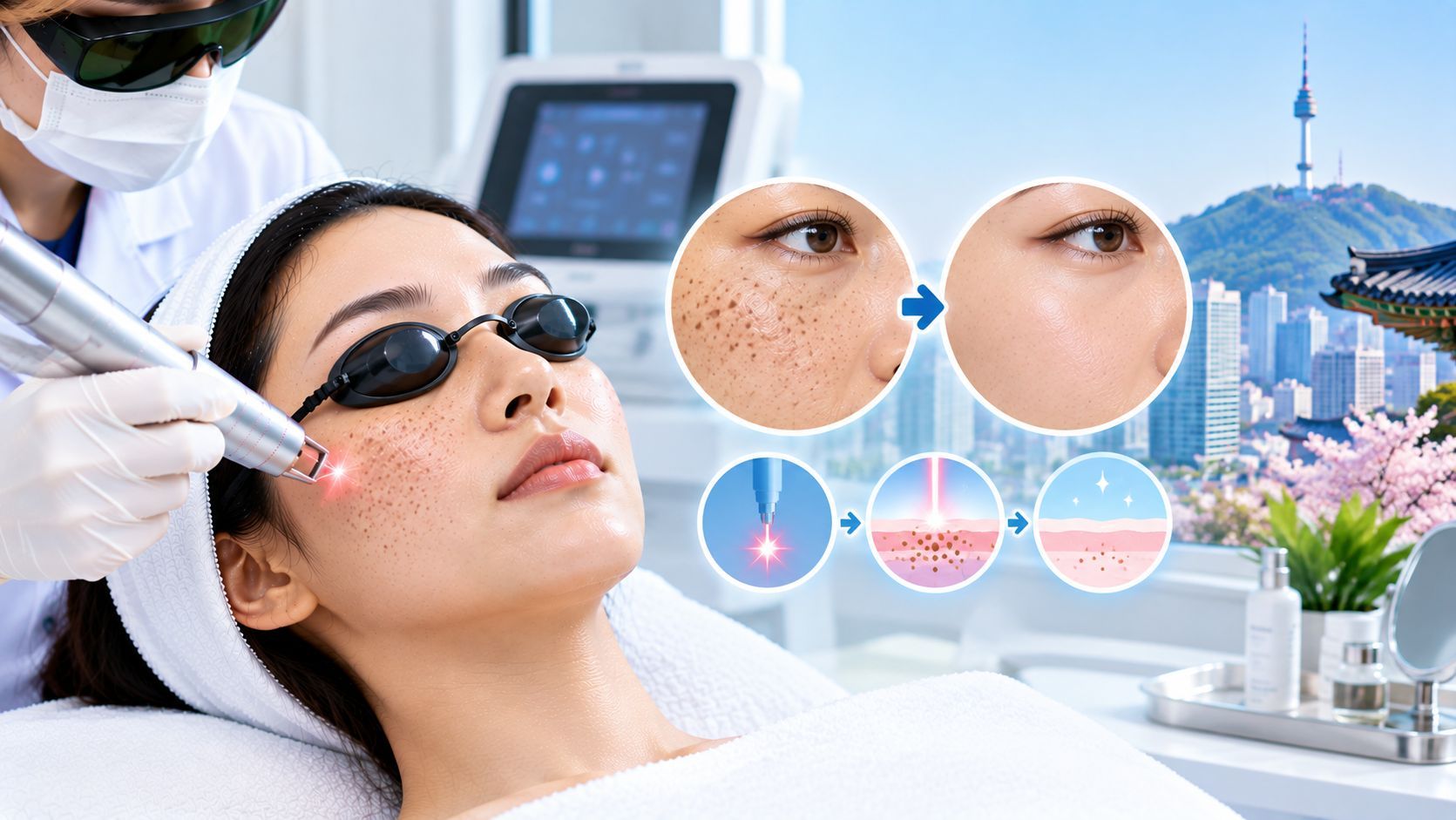
If you are researching PicoSure vs PicoWay before getting Pico laser in Seoul, it is natural to wonder whether the device name makes a major difference. Both are established picosecond laser platforms, but they are not identical machines.
The important point is that the machine can matter, but the device name alone does not determine which treatment will be appropriate for you. Wavelengths, handpieces, treatment settings, the target problem, your skin characteristics, and the clinician's treatment plan can all affect the result.
For someone considering Pico laser in Korea, comparing the machine names can be useful, but it should be only one part of the decision.
What Are PicoSure and PicoWay?
PicoSure and PicoWay are different picosecond laser platforms.
Both use extremely short laser pulses, but their technical configurations and available wavelengths can differ.
Depending on the specific system and configuration, picosecond lasers may be used for concerns such as:
- Selected pigmentation
- Freckles
- Sun-related pigmented spots
- Some post-acne pigmentation
- Certain tattoo pigments
- Some skin-texture concerns
The exact applications depend on the device, wavelength, handpiece, settings, and the condition being treated.
Therefore, saying that one machine is simply "better" than another oversimplifies how laser treatment works.
Why Do Wavelengths Matter?
One of the most important differences between laser platforms is the wavelength available.
Different wavelengths interact with different targets in the skin. The appropriate wavelength depends partly on what the clinician is trying to treat.
For example, a treatment intended for a particular pigment target may require a different wavelength from one intended for another target.
This means that a clinic having a particular Pico machine does not automatically make every treatment performed with that machine identical.
The specific wavelength and treatment parameters may be more relevant to your individual concern than the brand name printed on the device.
PicoSure vs PicoWay: Are They the Same?
No.
Although both are picosecond laser systems, their technical characteristics and available configurations differ.
Depending on the model and configuration, PicoSure systems may offer different wavelength options from PicoWay systems, and each platform has its own handpieces and treatment capabilities.
However, this does not create a simple hierarchy where one platform is universally superior.
A device that is well suited to one pigmentation problem may not necessarily be the ideal choice for another.
Does the Machine Matter for Pigmentation?
It can.
If you are treating pigmentation, the wavelength and treatment parameters need to match the pigment target and your skin characteristics.
For example, the treatment of a discrete pigmented spot can involve a different approach from treating diffuse uneven pigmentation.
The clinician may also choose a more conservative protocol if you have a history of post-inflammatory hyperpigmentation.
Therefore, if a Seoul clinic tells you that it uses PicoSure or PicoWay, ask:
"Which wavelength and treatment approach are you recommending for my specific pigmentation?"
That question is usually more informative than simply asking which machine is newer.
What About Pico Toning?
Pico toning is a treatment approach rather than a specific machine.
A clinic may use a PicoSure, PicoWay, or another suitable picosecond platform for a broader, gradual approach to uneven pigmentation.
The machine name does not tell you everything about the treatment.
Two clinics could use the same device but apply different:
- Wavelengths
- Energy levels
- Spot sizes
- Number of passes
- Treatment areas
- Session intervals
Consequently, two treatments with the same machine name can produce different treatment experiences and results.
Does PicoSure or PicoWay Work Better for Pores?
Pore improvement is more complicated than pigmentation treatment.
Some picosecond laser approaches may improve the visual appearance of pores or skin texture in selected patients. However, the expected benefit depends on the specific technology and settings.
If enlarged pores are your primary concern, the important question is not simply whether a clinic owns a particular Pico platform.
Instead, ask what is causing your pores to look enlarged.
Possible causes include:
- Sebum production
- Genetics
- Acne history
- Skin texture
- Loss of elasticity
- Pigmentation around the pores
- Acne scarring
A pigment-focused treatment may not adequately address a structural texture problem.
Does the Machine Matter for Acne Marks?
It can, but diagnosis still comes first.
A flat brown mark left after acne is often related to post-inflammatory hyperpigmentation. This is different from an indented acne scar or persistent red mark.
A Pico laser may be considered for certain flat pigment changes, while structural acne scars may require another treatment strategy.
The most useful question is therefore not simply:
"Should I choose PicoSure or PicoWay for acne scars?"
Instead, ask:
"What type of acne mark do I have, and which treatment characteristic is intended to address it?"
What About Darker or Pigmentation-Prone Skin?
This is particularly important when choosing a laser treatment.
People with more melanin-rich skin or a history of PIH may need careful treatment planning.
The device name alone cannot eliminate the risk of unwanted pigmentation.
The clinician may need to consider:
- Your natural skin tone
- Previous PIH
- Recent sun exposure
- Existing inflammation
- Pigmentation diagnosis
- Wavelength
- Energy level
- Treatment density
- Recovery plan
A conservative treatment with an appropriate protocol may be more relevant than choosing a machine based solely on its reputation.
Is a Newer Pico Machine Automatically Better?
Not necessarily.
Laser technology develops over time, but newer does not automatically mean more appropriate for every patient.
The relevant question is whether the available technology can be used effectively and safely for your particular concern.
A clinic with an older-generation platform may still use it appropriately, while a clinic with a newer platform may not necessarily provide the right treatment for your skin.
Device age should therefore not be used as a substitute for clinical assessment.
Should You Choose a Clinic Based on PicoSure or PicoWay Alone?
Probably not.
If you are comparing clinics in Seoul, consider the complete treatment plan.
FactorWhy it mattersDeviceDetermines available technical optionsWavelengthHelps determine which targets can be treatedTreatment goalDifferent concerns require different approachesSettingsInfluence treatment intensity and skin responseSkin typeAffects treatment planning and PIH riskDiagnosisDetermines whether Pico is appropriateProvider assessmentHelps identify the actual skin concernAftercareImportant for recoveryFollow-upUseful if an unexpected reaction occursCostShould be compared with the actual treatment provided
This approach provides more useful information than comparing two brand names.
What Should You Ask a Seoul Clinic?
Before booking Pico laser, consider asking:
- Which exact Pico device will you use?
- Which wavelength will be used?
- Why is that wavelength appropriate for my concern?
- Is the treatment targeted Pico or Pico toning?
- What settings are planned for my skin?
- What is my risk of post-inflammatory hyperpigmentation?
- Would another Pico platform make a meaningful difference for my concern?
- What improvement should I realistically expect?
- How many sessions are likely to be considered?
- What aftercare and follow-up are provided?
These questions can reveal whether the clinic is choosing the technology based on your skin or simply selling a named device.
What If One Seoul Clinic Has PicoSure and Another Has PicoWay?
You do not necessarily need to choose based on the brand name alone.
Ask both clinics to explain:
- Your diagnosis
- The proposed wavelength
- The treatment objective
- Expected improvement
- Number of sessions
- Recovery
- PIH risk
- Total cost
If both clinics recommend different approaches, you can compare the reasoning behind the plans.
For international patients, it can also be useful to ask whether the clinic can provide treatment records or settings information if you need follow-up after returning home.
Does a More Expensive Device Mean a Better Treatment?
Not automatically.
Treatment price can reflect many factors, including:
- Device cost
- Clinic overhead
- Location
- Provider involvement
- Treatment area
- Session duration
- Package structure
- Consultation and aftercare
Price should therefore not be treated as proof that one machine will produce a better result.
Likewise, a lower-priced treatment is not automatically inferior.
Frequently Asked Questions
Is PicoSure better than PicoWay?
Neither should be considered universally better. They are different picosecond laser platforms with different technical configurations. The appropriate choice depends on the condition being treated, available wavelengths, settings, skin characteristics, and treatment goals.
What is the main difference between PicoSure and PicoWay?
They are different laser platforms with different technical configurations and wavelength options. The specific model, handpiece, wavelength, and treatment settings matter when determining how the system is used.
Does the Pico laser machine matter for pigmentation?
Yes, the available wavelengths and treatment capabilities can matter. However, the machine name alone does not determine the outcome. Diagnosis and treatment settings are also important.
Can both PicoSure and PicoWay be used for pigmentation?
Both platforms can have applications in pigment treatment, depending on the specific system, wavelength, and clinical indication. The appropriate treatment should be selected according to the type of pigmentation.
Which Pico machine is best for dark skin?
There is no universal machine choice for every darker skin type. Treatment should be selected according to the patient's skin characteristics, pigmentation diagnosis, available wavelengths, and risk of PIH.
Should I choose a Seoul clinic because it has PicoSure or PicoWay?
The device can be one factor, but it should not be the only factor. Ask about the diagnosis, wavelength, settings, provider assessment, expected results, aftercare, and follow-up before deciding.
Conclusion
PicoSure and PicoWay are different picosecond laser platforms, and the machine can matter—but the brand name alone does not determine the quality or suitability of your treatment.
For pigmentation, the wavelength and treatment parameters can be particularly important. For pores, acne marks, or texture concerns, the underlying cause of the problem may matter even more.
If you are comparing Pico laser clinics in Seoul, ask what device and wavelength will be used, why that approach fits your skin, what results are realistic, and how your PIH risk will be managed.
Rather than choosing based only on PicoSure vs PicoWay, compare the complete treatment plan.