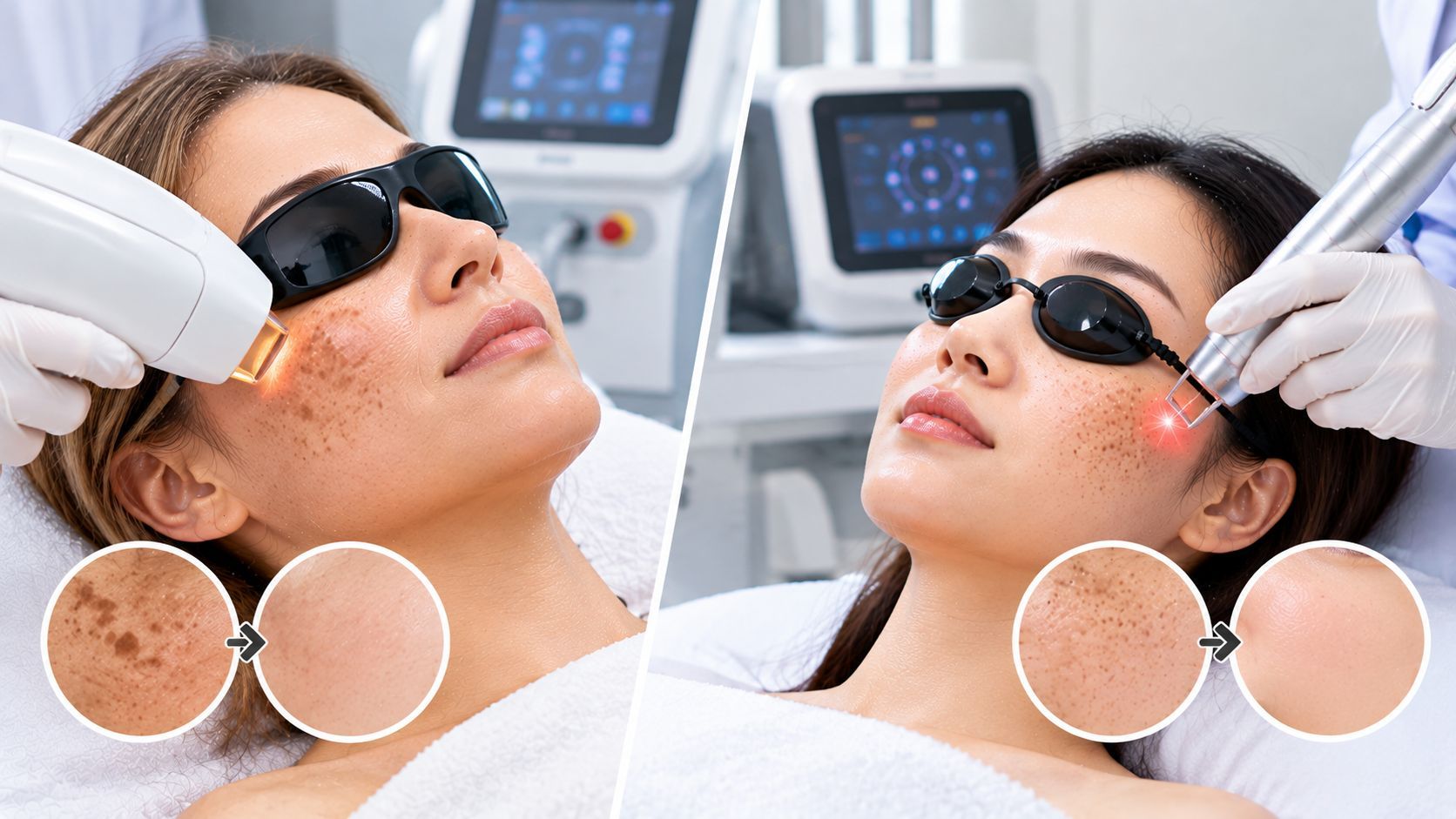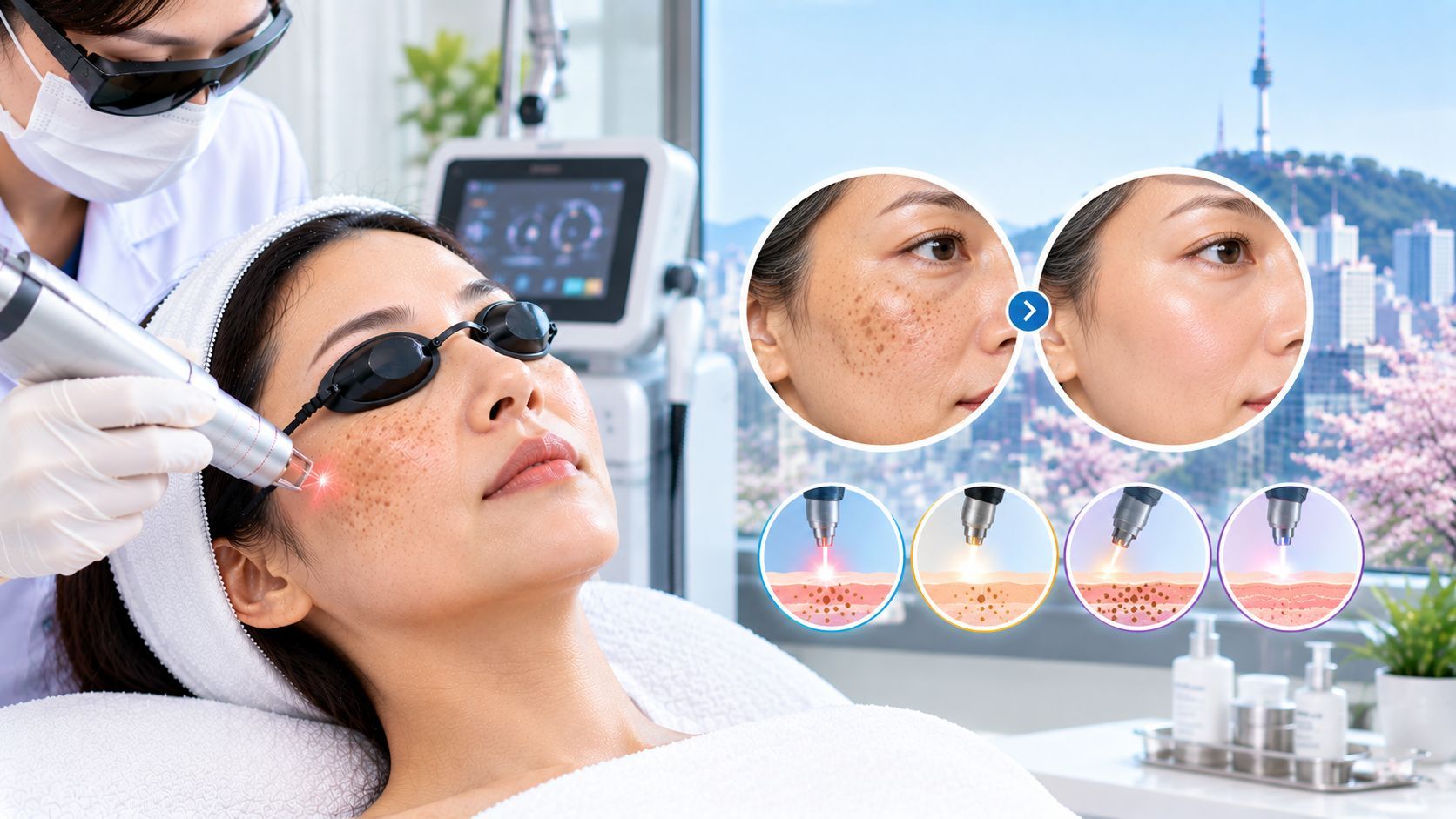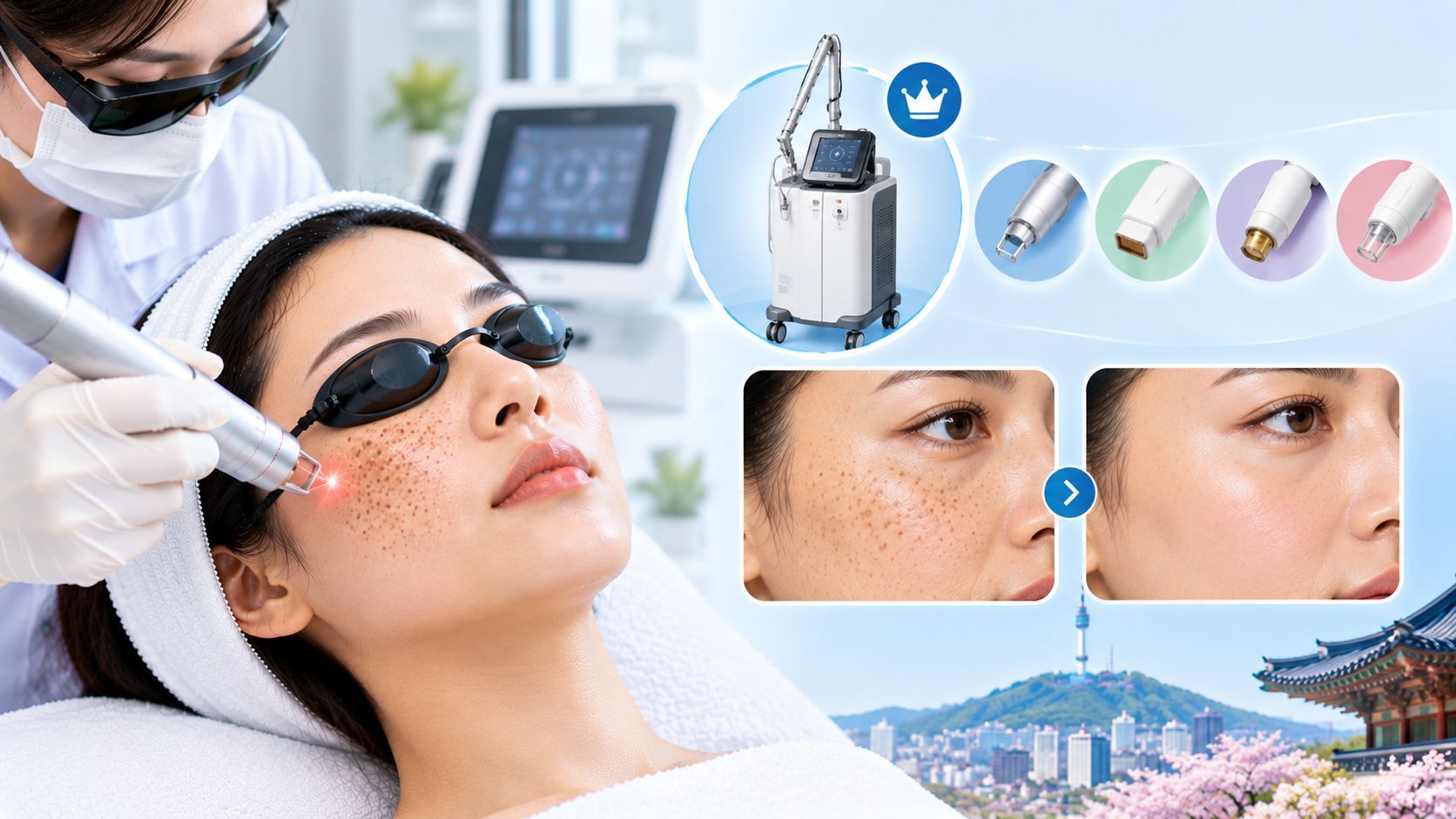
Why Are There So Many Different Skin Lasers in Seoul?
Introduction
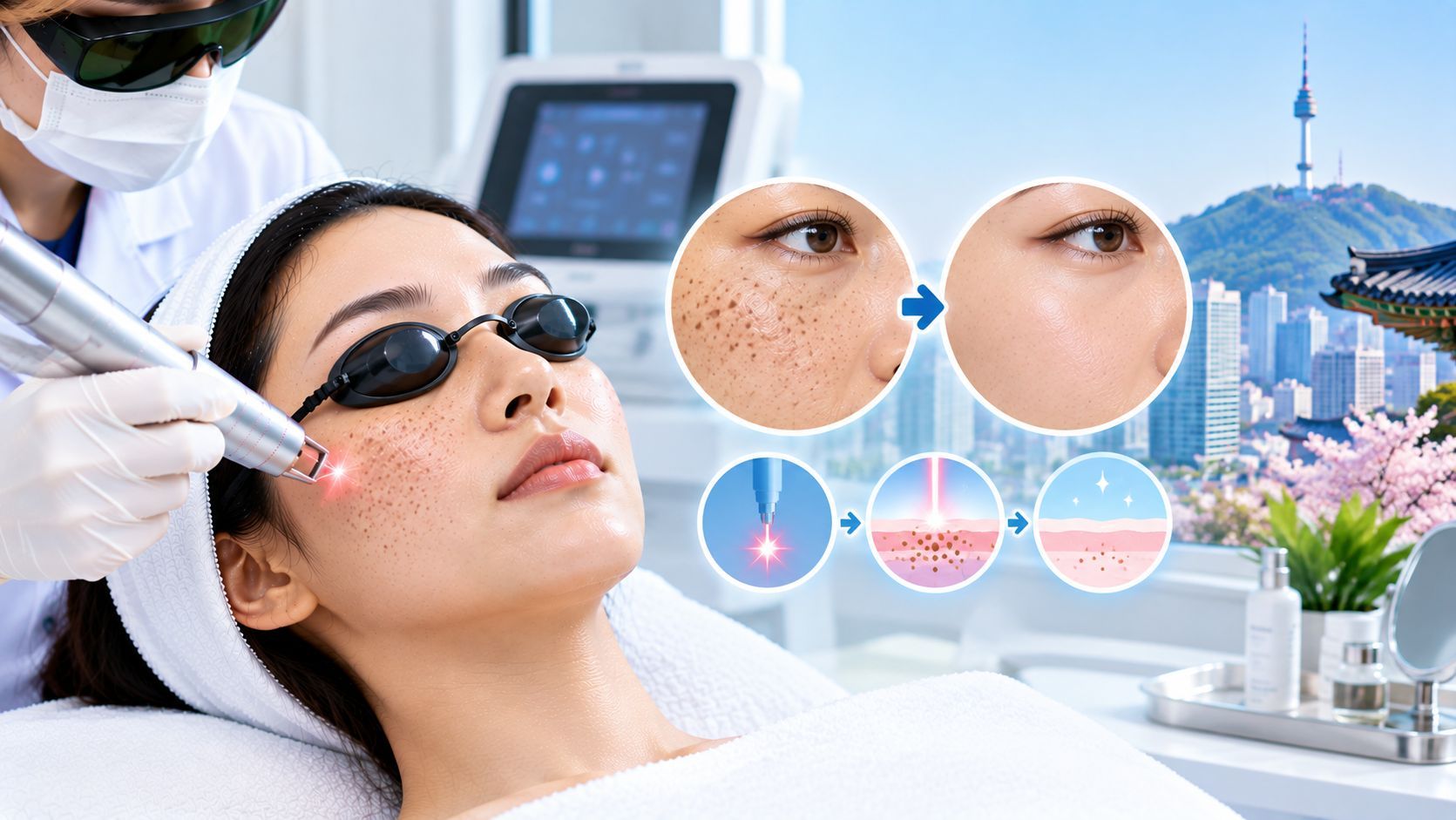
If you are researching skin treatments in Seoul, you may notice an unusually large number of lasers and energy-based devices. Different clinics may offer several treatments for pigmentation, acne scars, pores, redness, wrinkles, skin texture, or overall rejuvenation. Some devices may appear to perform similar functions, which can make choosing a treatment confusing.
The main reason is that “laser treatment” is not one single treatment. Different devices use different wavelengths, energy delivery methods, pulse patterns, and treatment depths. Even treatments designed for the same concern may be used differently depending on skin type, severity, downtime tolerance, and the provider's treatment strategy.
Why Are There So Many Different Skin Lasers in Seoul?
Seoul has a large aesthetic dermatology market, so clinics commonly offer a broad range of technologies for different skin concerns. However, the number of devices available does not necessarily mean that every patient needs a different laser.
A more useful way to think about the choices is to ask:
What problem is the device designed to address, how deeply does it treat the skin, and what level of recovery does it require?
A pigmentation-focused device, for example, may work differently from a fractional resurfacing laser intended to improve acne scars or texture.
Different Lasers Target Different Skin Problems
Some technologies are commonly used for concerns such as:
- Brown spots and certain forms of pigmentation
- Uneven skin tone
- Acne scars
- Rough or uneven texture
- Enlarged-looking pores
- Fine lines
- Redness or visible blood vessels
- Sun-related skin changes
- General skin rejuvenation
The appropriate technology depends on the actual cause of the concern rather than simply its appearance.
Different Lasers Reach Different Depths
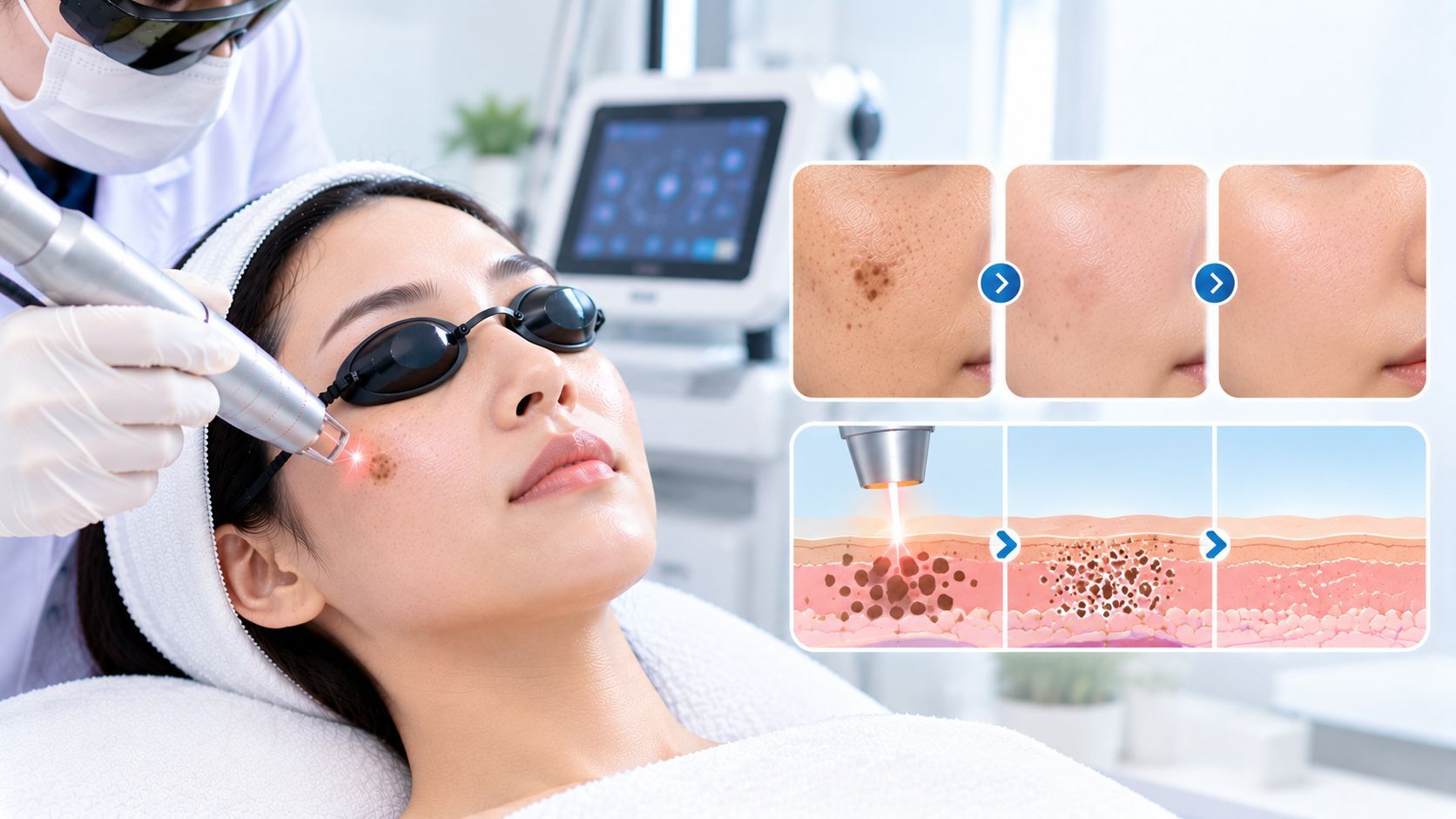
Some treatments primarily affect superficial layers of the skin, while others deliver energy deeper into the dermis.
This matters because the target tissue may be different.
For example, a treatment intended to improve surface pigmentation may require a different approach from one designed to stimulate remodeling deeper within the skin.
More aggressive treatment is not automatically better. Increasing treatment intensity can also increase redness, swelling, irritation, or other unwanted effects.
Are All Korean Skin Lasers Actually Different?
No. Some devices have overlapping indications.
Two different laser platforms may both be marketed for pigmentation or rejuvenation, while using different wavelengths or treatment methods. Likewise, several fractional devices may be used for acne scars or texture.
This is one reason online research can become confusing. Marketing names often make treatments sound completely different even when their clinical purposes overlap.
Instead of comparing brand names alone, consider:
- Wavelength or energy type
- Treatment depth
- Ablative versus non-ablative approach
- Fractional versus non-fractional delivery
- Intended skin concern
- Expected downtime
- Risk of pigmentation changes
- Provider experience with the technology
What Are the Main Types of Laser Treatments You May See in Seoul?
Pigmentation and Tone Treatments
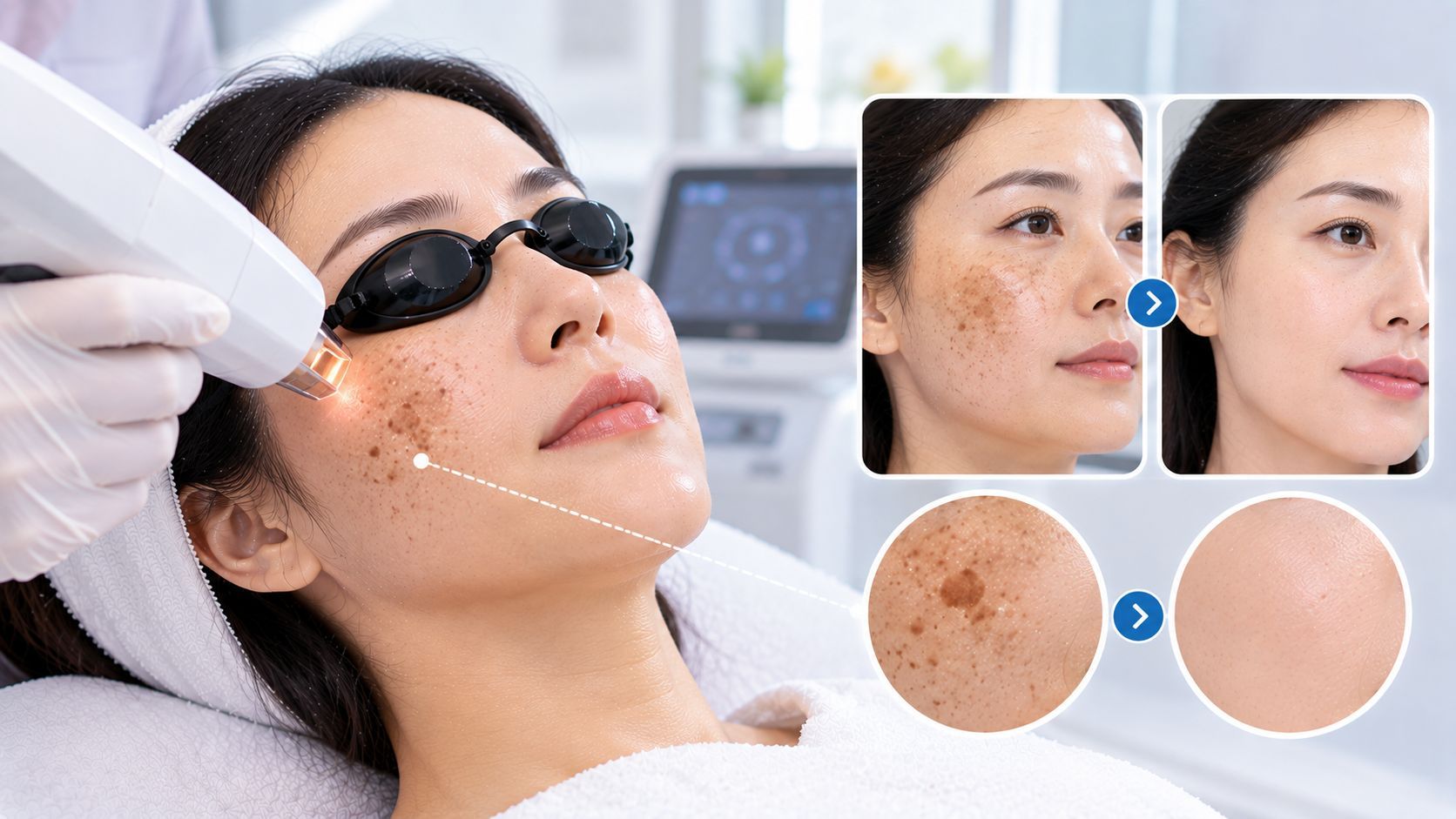
Various laser and light-based technologies may be used for certain pigmentation concerns.
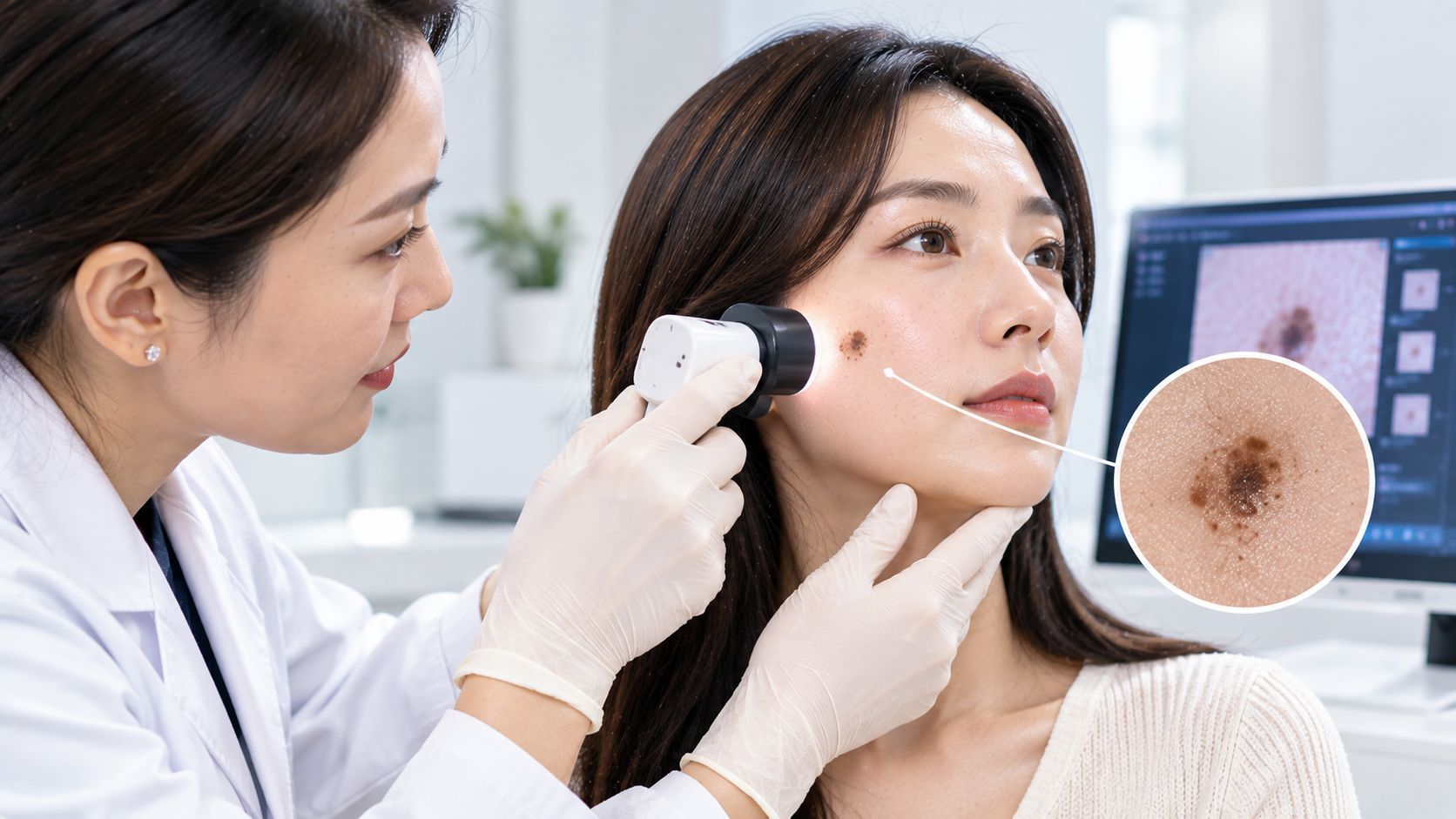
The important issue is identifying what type of pigmentation you have. Freckles, sun-related spots, post-inflammatory hyperpigmentation, melasma, and other pigmentary conditions do not necessarily respond in the same way.
For some patients, aggressive pigment treatment can cause additional inflammation and potentially worsen pigmentation.
This is particularly relevant for people with darker or more melanin-rich skin, who may need careful treatment selection and conservative settings.
Fractional Resurfacing Treatments
Fractional treatments create microscopic treatment zones rather than treating the entire surface uniformly.
They may be considered for:
- Acne scars
- Uneven texture
- Fine lines
- Certain types of enlarged pores
- Skin remodeling
Fractional treatments can involve more recovery than very superficial laser procedures, depending on the technology and settings.
Vascular and Redness Treatments
Some laser technologies target blood vessels and may be considered for visible redness or certain vascular lesions.
However, facial redness can have many causes. Persistent flushing, irritation, or suspected rosacea should not automatically be treated as a simple cosmetic problem.
Non-Ablative Rejuvenation Lasers
Some lasers are designed to heat targeted tissue without removing the skin surface.
These approaches may be used for gradual improvements in texture, pigmentation, or signs of photoaging, depending on the specific device.
The trade-off can be that visible changes are more gradual than with aggressive resurfacing.
Why Do Korean Clinics Offer So Many Device Options?
Patient Concerns Are Highly Variable
A clinic treating international patients may see people with very different goals.
One person may want help with acne scars. Another may be concerned about pigmentation, while another wants subtle improvement in skin texture before an event.
Having multiple technologies allows providers to select from different treatment approaches rather than using the same device for everyone.
Treatment Intensity Can Be Adjusted
Even when two patients receive the same device, the treatment may not be identical.
Settings can vary according to factors such as:
- Skin type
- Skin sensitivity
- Treatment area
- Severity of the concern
- Previous procedures
- Desired recovery time
- History of pigmentation problems
Therefore, the name of the laser alone does not tell you exactly what your treatment will be like.
Does More Technology Mean Better Results?
Not necessarily.
A clinic may have many different devices, but the important question is whether the selected treatment matches your specific concern.
For example, if your main problem is a depressed acne scar, repeatedly treating the skin with a general “glow” laser may not address the structural component of that scar.
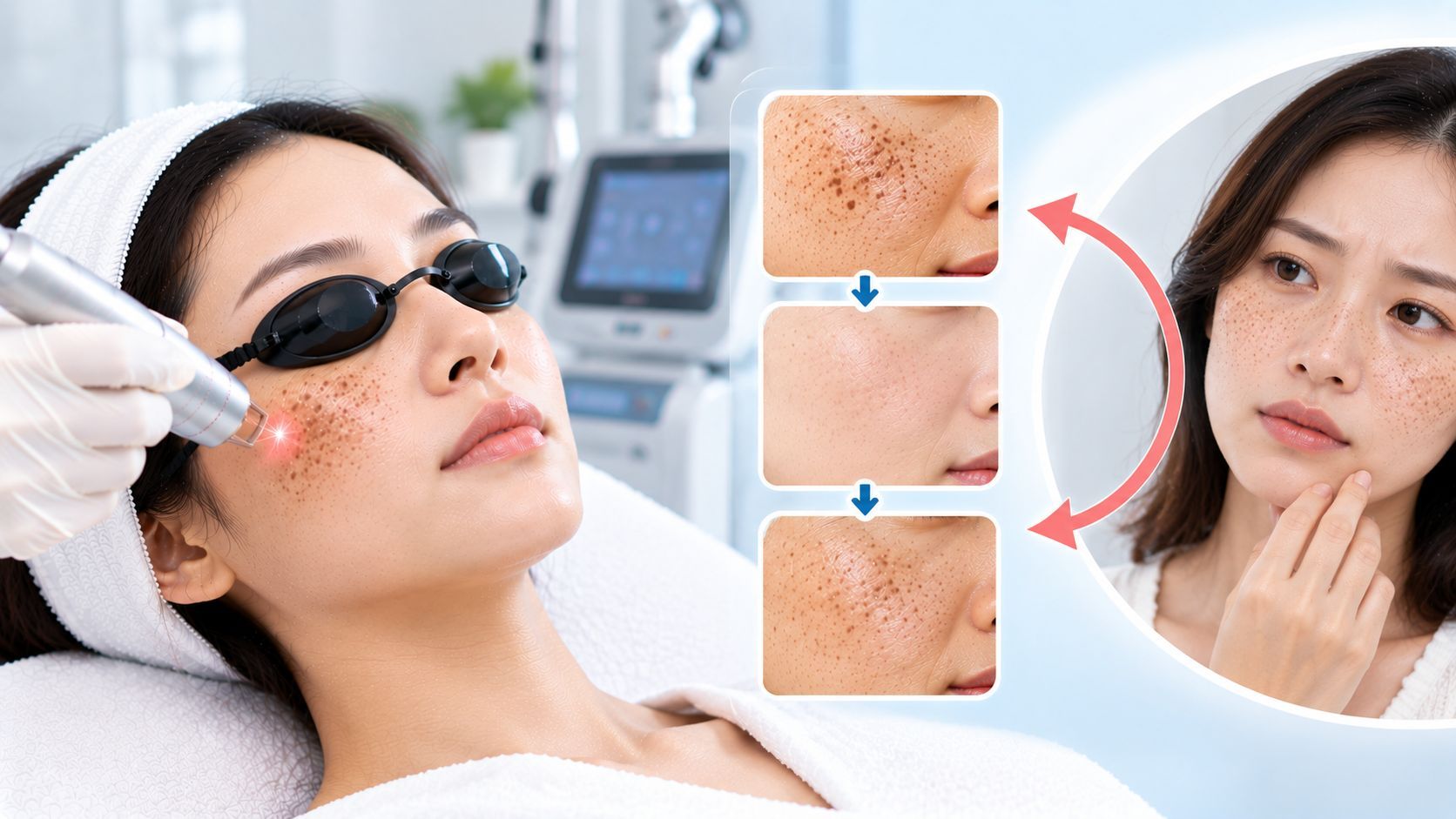
Similarly, if your concern is melasma, repeatedly targeting pigment without considering triggers and recurrence may not provide the outcome you expect.
The treatment plan matters more than the number of machines available.
Why Do Some Lasers Have Several Brand Names?
Another source of confusion is that similar technologies can be produced by different manufacturers.
You may encounter multiple branded devices with related purposes. Their technical specifications, treatment protocols, handpieces, energy delivery, and clinical use can differ.
This does not mean one brand is automatically superior.
When comparing devices, focus on the technology and treatment objective rather than assuming that a newer or more expensive brand will necessarily produce a better result.
How Should International Patients Choose Among So Many Lasers in Seoul?
Start With the Skin Concern
Do not begin by choosing a machine.
Start with the problem you want addressed.
For example:
- “I want to reduce acne scars.”
- “I have recurring pigmentation.”
- “My skin texture looks rough.”
- “I have persistent facial redness.”
- “I want gradual improvement without significant downtime.”
This gives the dermatologist a clinical objective rather than forcing you to request a particular device.
Explain Your Treatment History
Tell the provider about recent or previous:
- Lasers
- Chemical peels
- Botox
- Fillers
- Microneedling
- RF treatments
- Skin boosters
- Acne medications
- Pigmentation treatments
Previous treatments can affect how the skin responds to another procedure.
Tell the Clinic About Your Travel Schedule
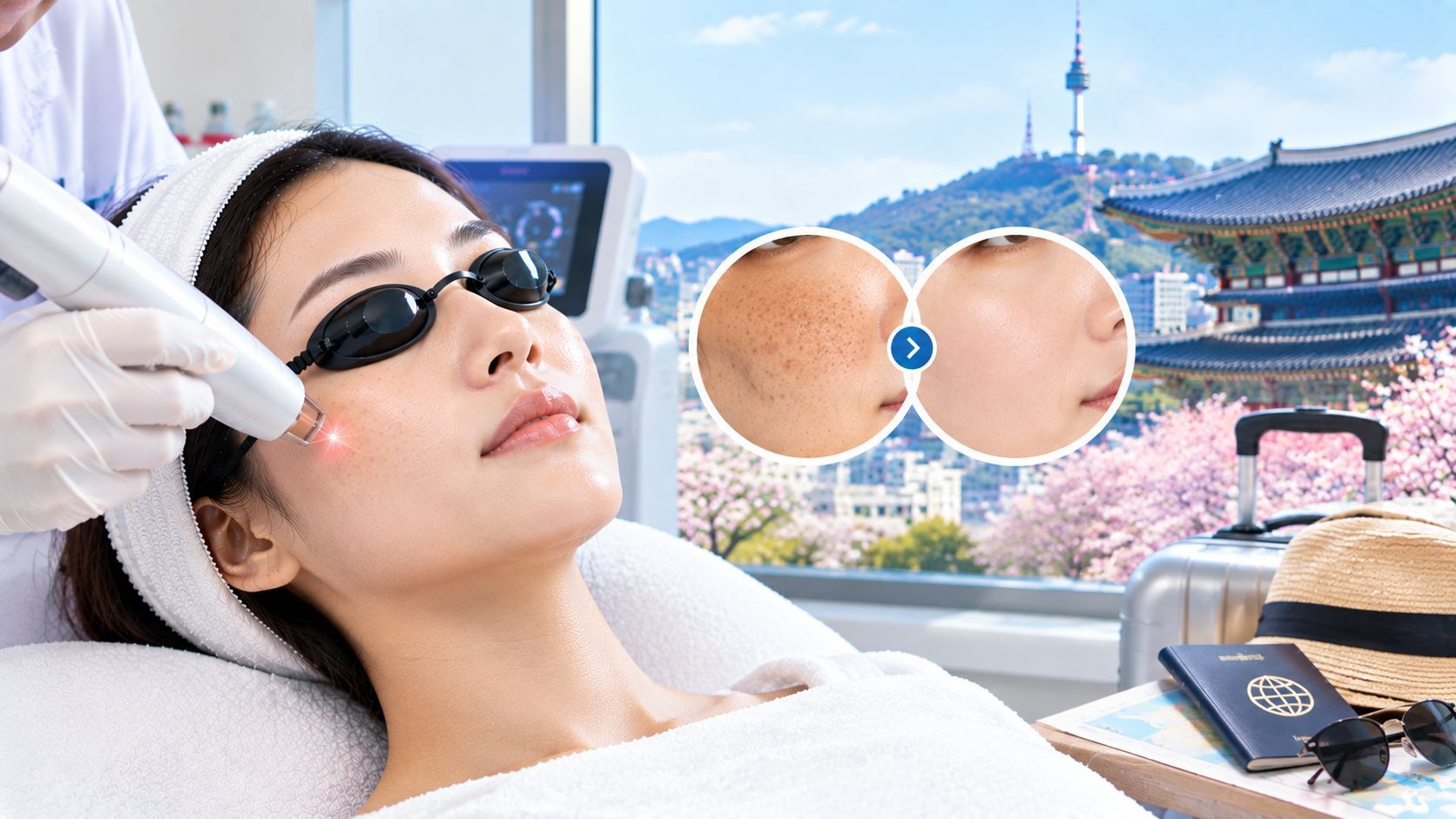
If you are visiting Seoul for only a few days, recovery becomes an important consideration.
A treatment that produces several days of redness or peeling may be difficult to combine with sightseeing, photography, business meetings, or an international flight.
Your departure date should therefore be part of the treatment discussion.
Should You Try Several Different Lasers During One Trip?
Not automatically.
Combining treatments may sometimes be appropriate, but stacking multiple procedures simply because you have access to them can increase irritation and make it difficult to determine which treatment caused a reaction.
A dermatologist may recommend spacing procedures apart or limiting treatment to one primary concern during a short trip.
This is particularly important when you are trying a treatment for the first time.
What Should You Ask Before Choosing a Laser in Seoul?
Before treatment, consider asking:
- What specific skin problem is this treatment targeting?
- Why is this technology appropriate for my skin?
- Are there alternative treatments?
- How much downtime should I expect?
- What side effects are possible?
- Could this treatment worsen pigmentation or irritation in my skin type?
- When should I expect to see changes?
- Will I need more than one session?
- Can I safely have this treatment shortly before flying home?
These questions can help you understand why a particular device has been selected instead of simply choosing the treatment with the most attractive marketing description.
The Bottom Line
There are many different skin lasers in Seoul because different technologies are designed to address different skin concerns, depths, treatment goals, and recovery requirements. Some devices also have overlapping uses, while different brands may offer related technologies.
You do not need to understand every laser available in Korea before visiting a dermatologist. Instead, identify your main concern, explain your skin history and travel schedule, and ask why a particular technology has been recommended.
The most useful comparison is usually not “Which laser is the most popular?” but “Which treatment approach matches my skin concern, skin type, and recovery needs?”
FAQs About Skin Lasers in Seoul
Why are there so many laser treatments in Seoul?
Different lasers use different wavelengths, energy-delivery systems, depths, and treatment methods. They may therefore be used for different concerns such as pigmentation, acne scars, redness, texture, or rejuvenation.
Are all Korean skin lasers different?
No. Some technologies have overlapping indications. Different devices or brands may be used for similar concerns while differing in technical characteristics and treatment protocols.
Is the newest laser necessarily better?
Not necessarily. A newer device may have different features, but suitability depends on the skin concern, skin type, treatment goal, settings, and provider's assessment.
Can darker skin safely receive laser treatments?
Some laser treatments can be performed on darker skin, but the risk of post-inflammatory pigmentation and other reactions can vary by technology, settings, and individual skin characteristics. Careful treatment selection is important.
Should I choose my laser before visiting a Seoul clinic?
Usually, it is more useful to identify your main skin concern first. A dermatologist can then determine whether a particular laser, another energy-based treatment, or a non-device approach is appropriate.
Can I combine several lasers during one Korea trip?
Sometimes, but not every combination is appropriate. Multiple procedures can increase irritation and recovery requirements, so treatments should be planned according to your skin condition and overall schedule.
Conclusion
The large number of skin lasers in Seoul can look overwhelming, especially for international patients researching treatments online. However, the variety exists because skin concerns and treatment approaches vary.
Rather than trying to memorize every Korean laser name, concentrate on the problem you want to improve, the treatment depth, expected downtime, possible risks, and the reason a dermatologist recommends a particular technology. This approach makes the many options much easier to understand.