What Does Pico Laser Actually Treat?
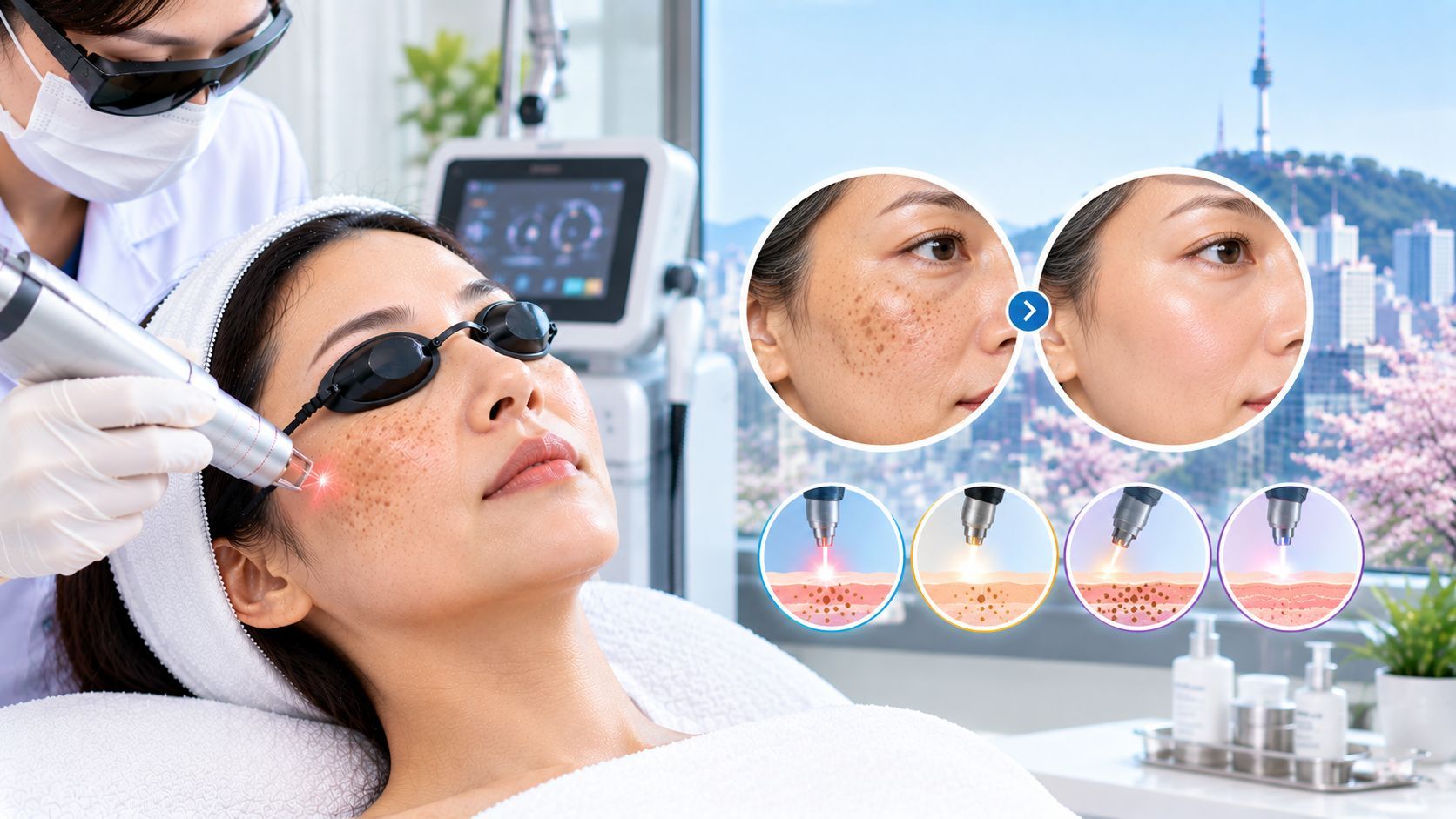
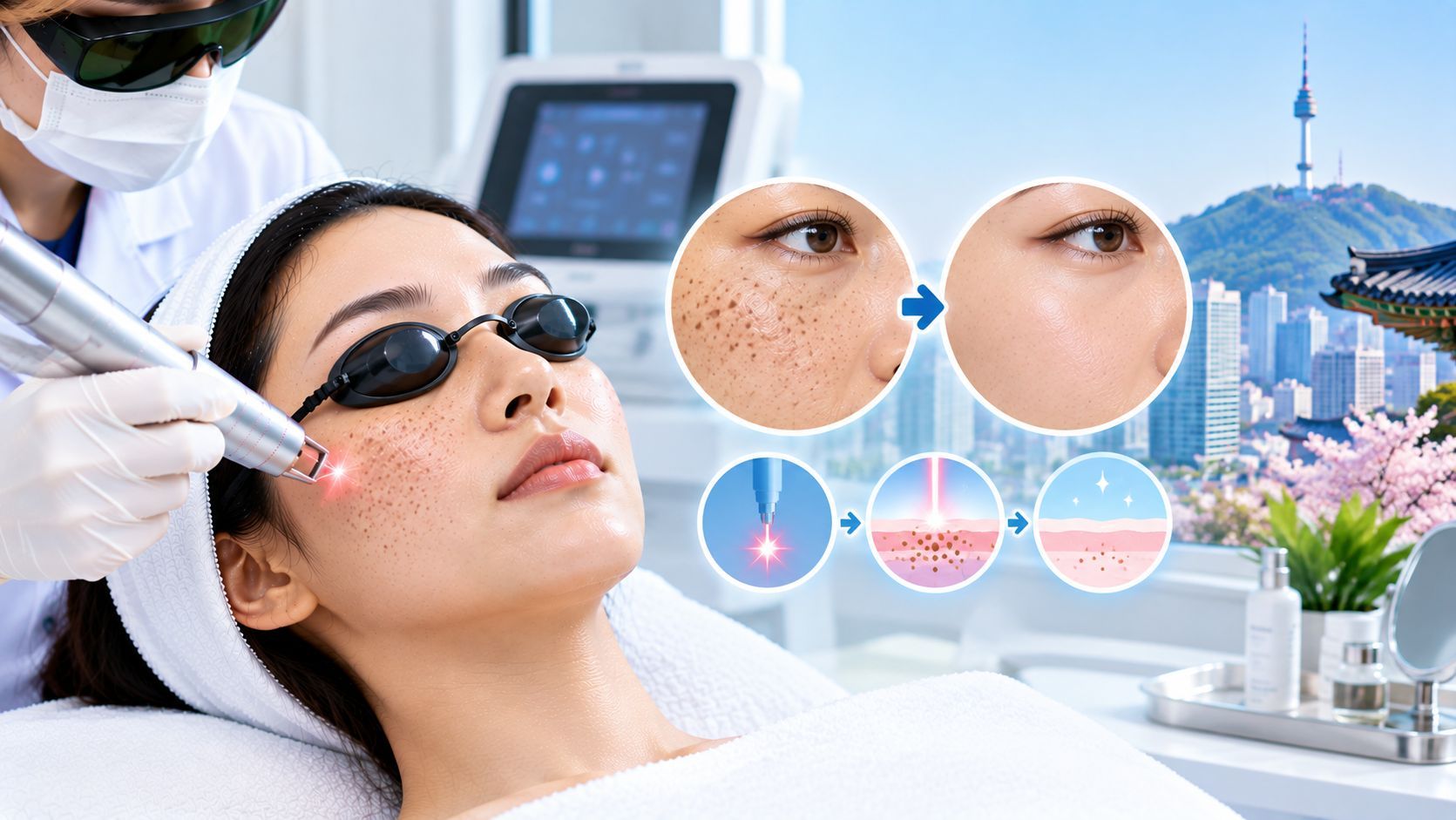
Pico laser is widely used in dermatology and aesthetic clinics in Korea, particularly for pigmentation, uneven skin tone, and certain types of skin texture concerns. But “Pico laser” is not a single treatment with one fixed purpose. Different Pico devices, wavelengths, settings, and treatment techniques can target different concerns.
Pico laser is primarily used to target certain types of pigmentation and unwanted pigment, while some treatment settings may also be used for selected acne marks, uneven tone, pores, and skin texture. Whether it is appropriate depends on the specific skin problem, your skin type, and the device and settings being used.
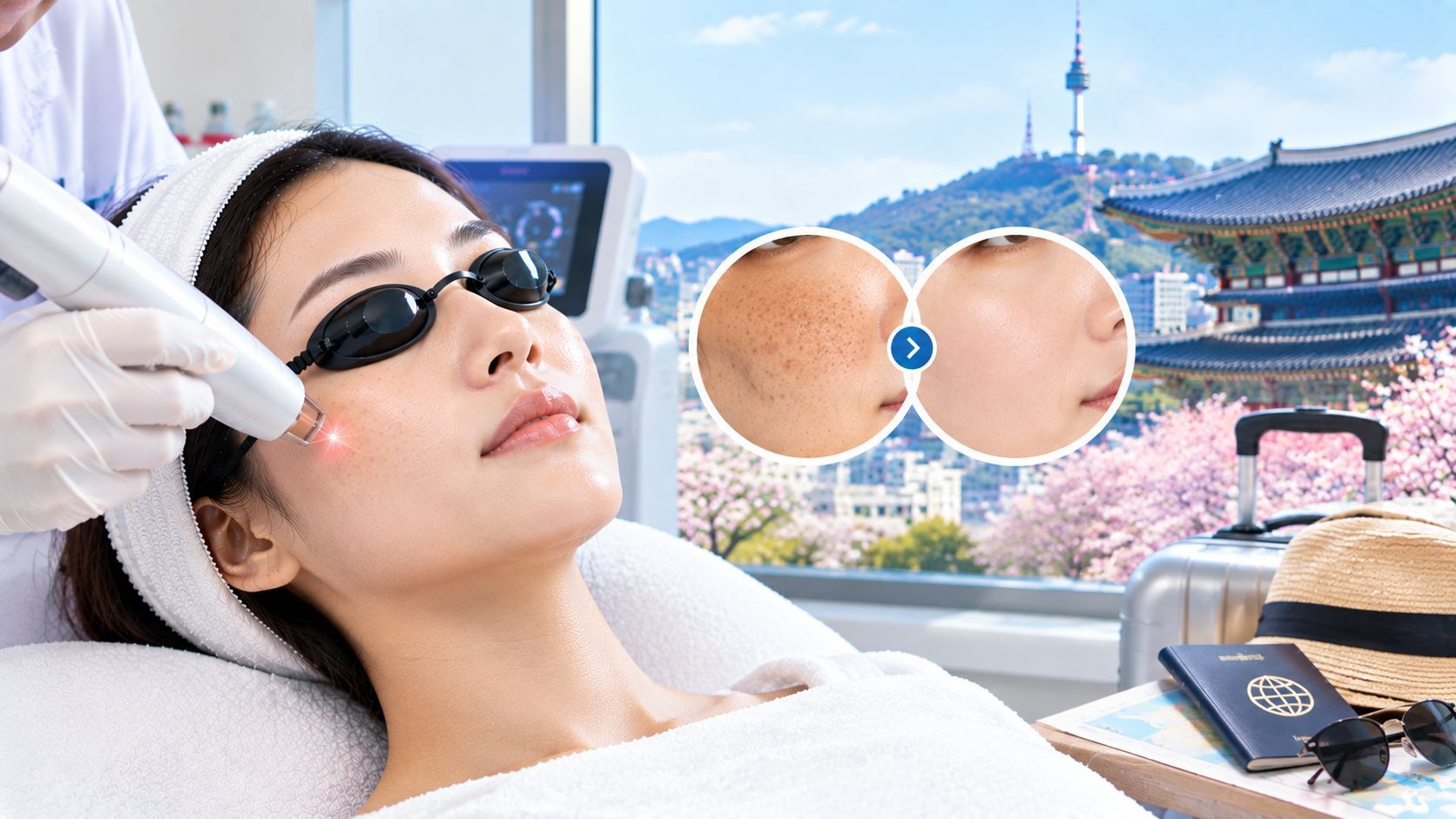
For international patients visiting Seoul, understanding what Pico laser can and cannot realistically treat is important. A treatment marketed as “Pico toning,” for example, is not necessarily the same as a stronger pigment-targeting Pico treatment.
What Is Pico Laser?
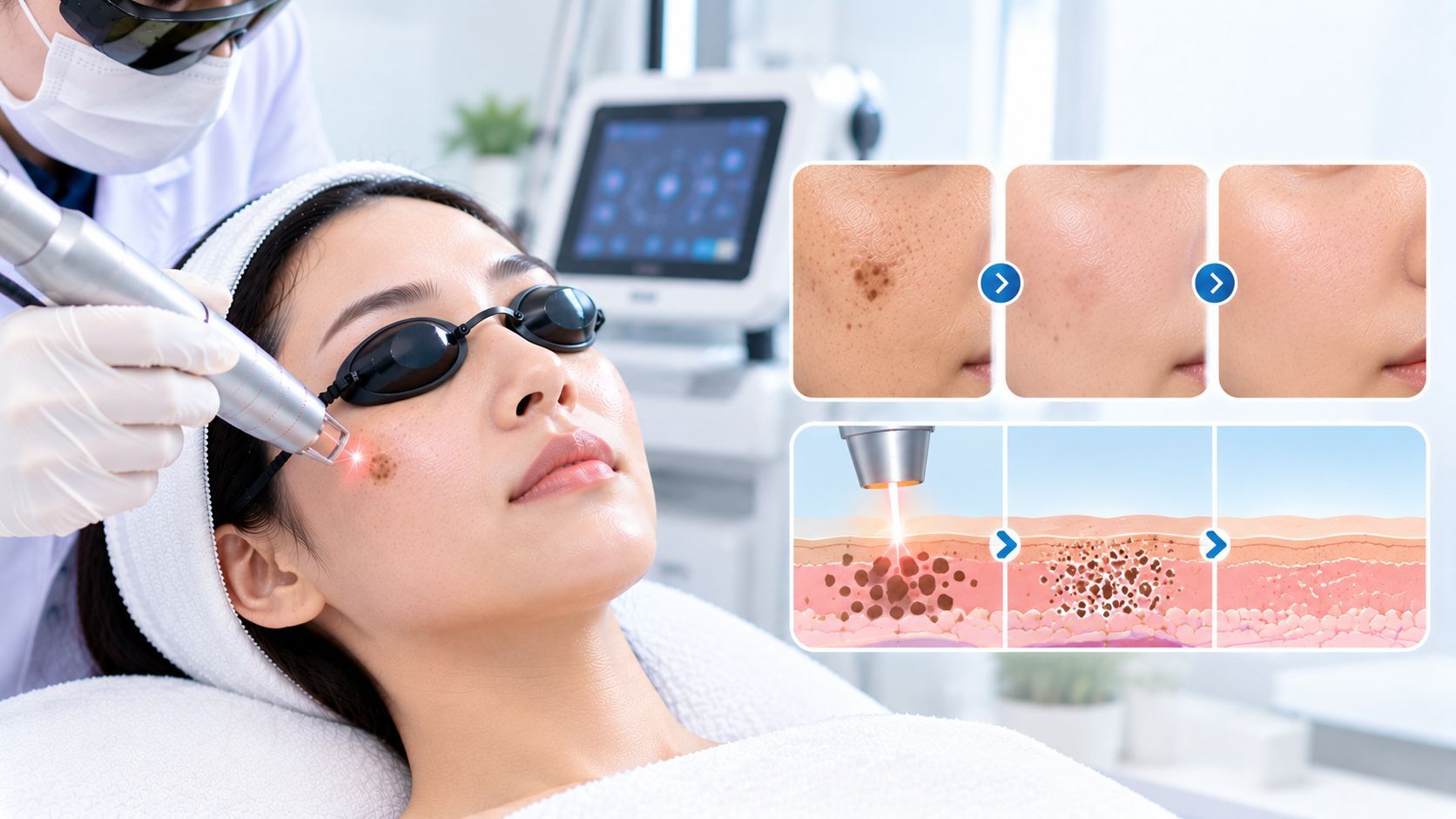
Pico laser refers to laser technology that delivers energy in extremely short pulses, measured in picoseconds.
The short pulse duration allows the laser to interact with pigment and tissue in a different way from some traditional nanosecond laser systems. Depending on the wavelength and settings, the treatment may be designed to target pigment or produce controlled effects within the skin.
The term “Pico laser” therefore describes a technology platform rather than one specific treatment.
A clinic may use Pico technology for several different indications, but the treatment settings and goals can be very different.
What Does Pico Laser Treat?
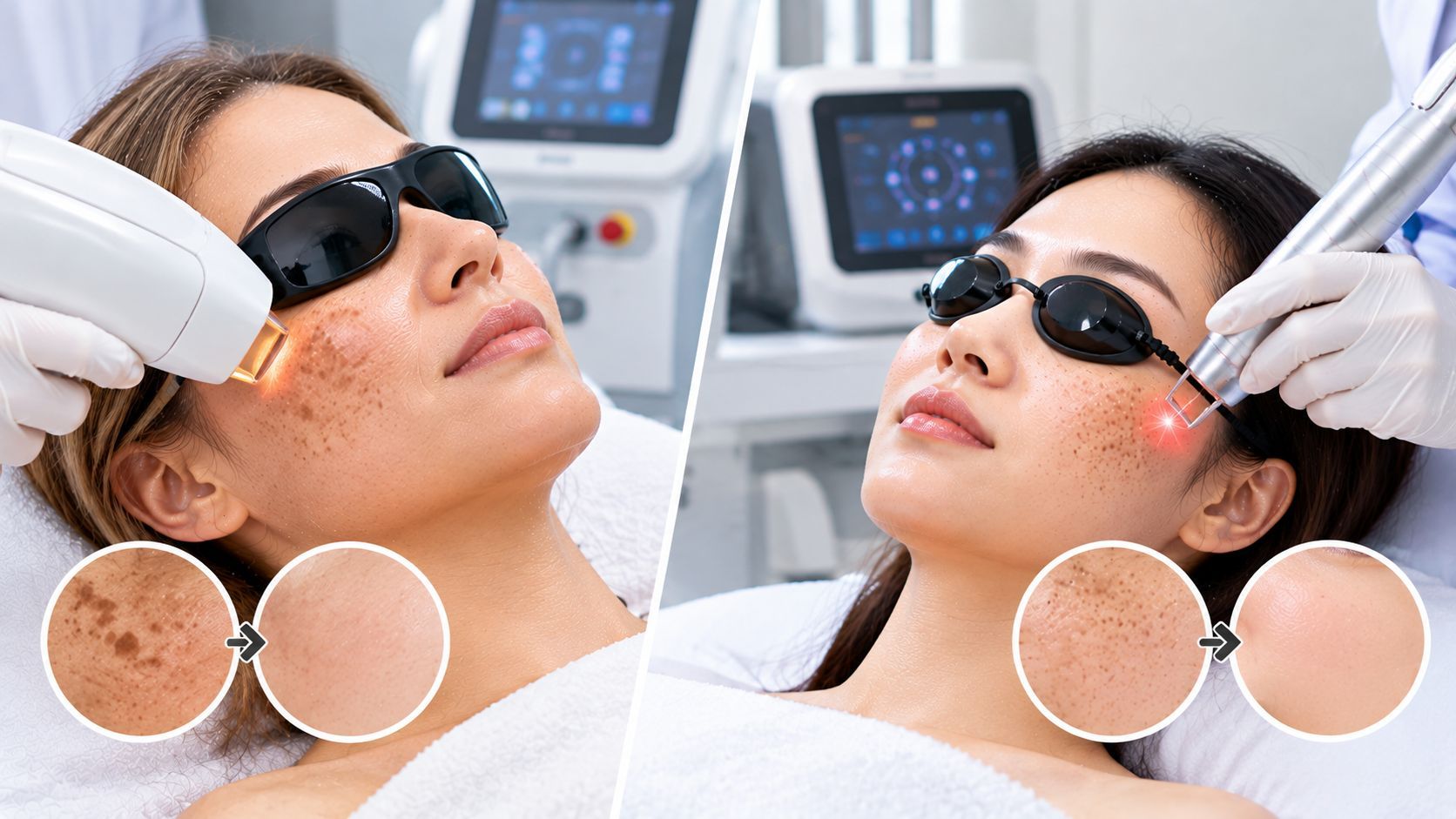
1. Certain Sun Spots and Solar Lentigines
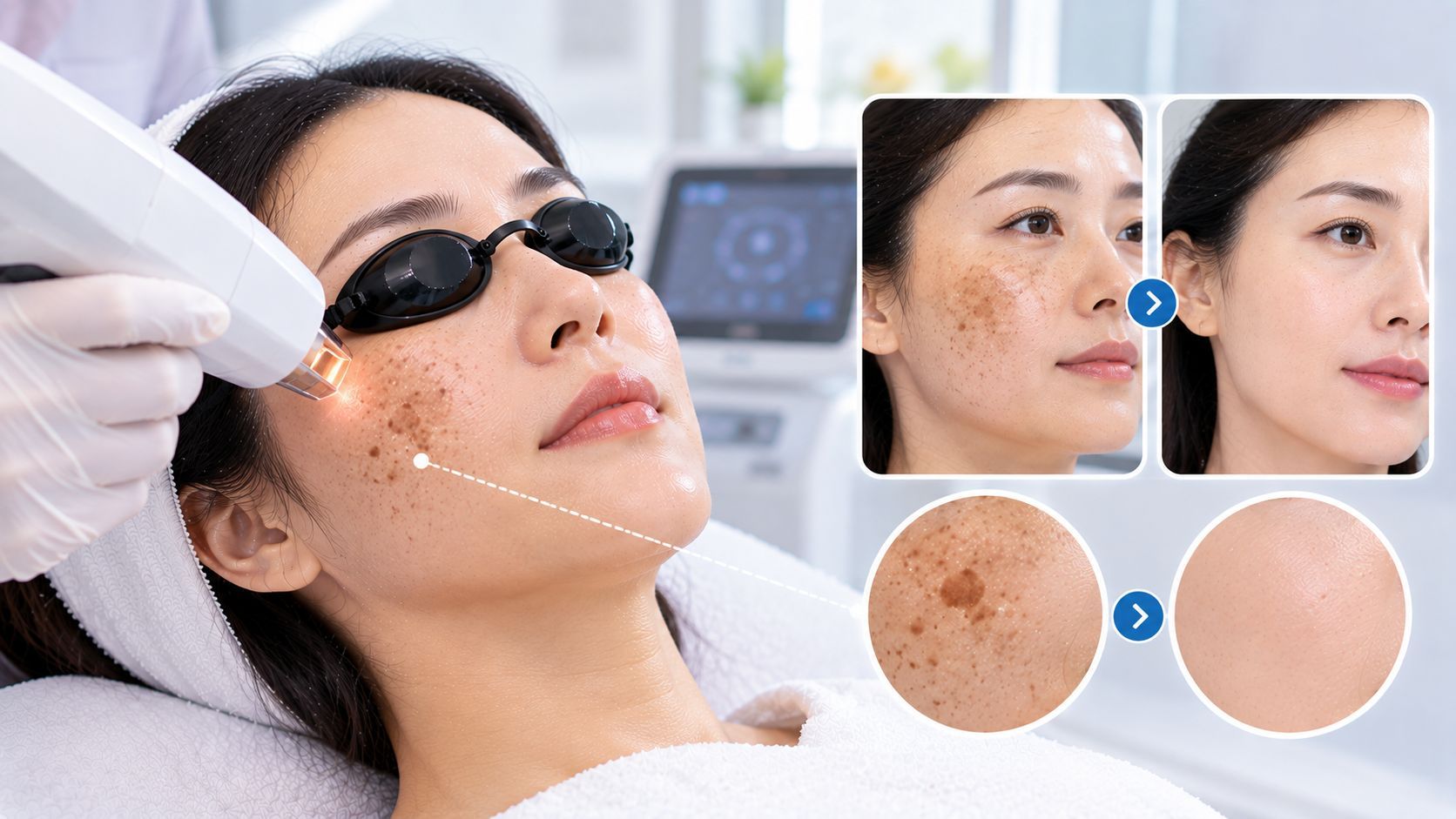
Pico laser may be used to treat certain discrete brown spots associated with sun exposure and accumulated pigmentation.
These spots can sometimes respond visibly to pigment-targeting laser treatment. However, not every brown spot on the skin is the same.
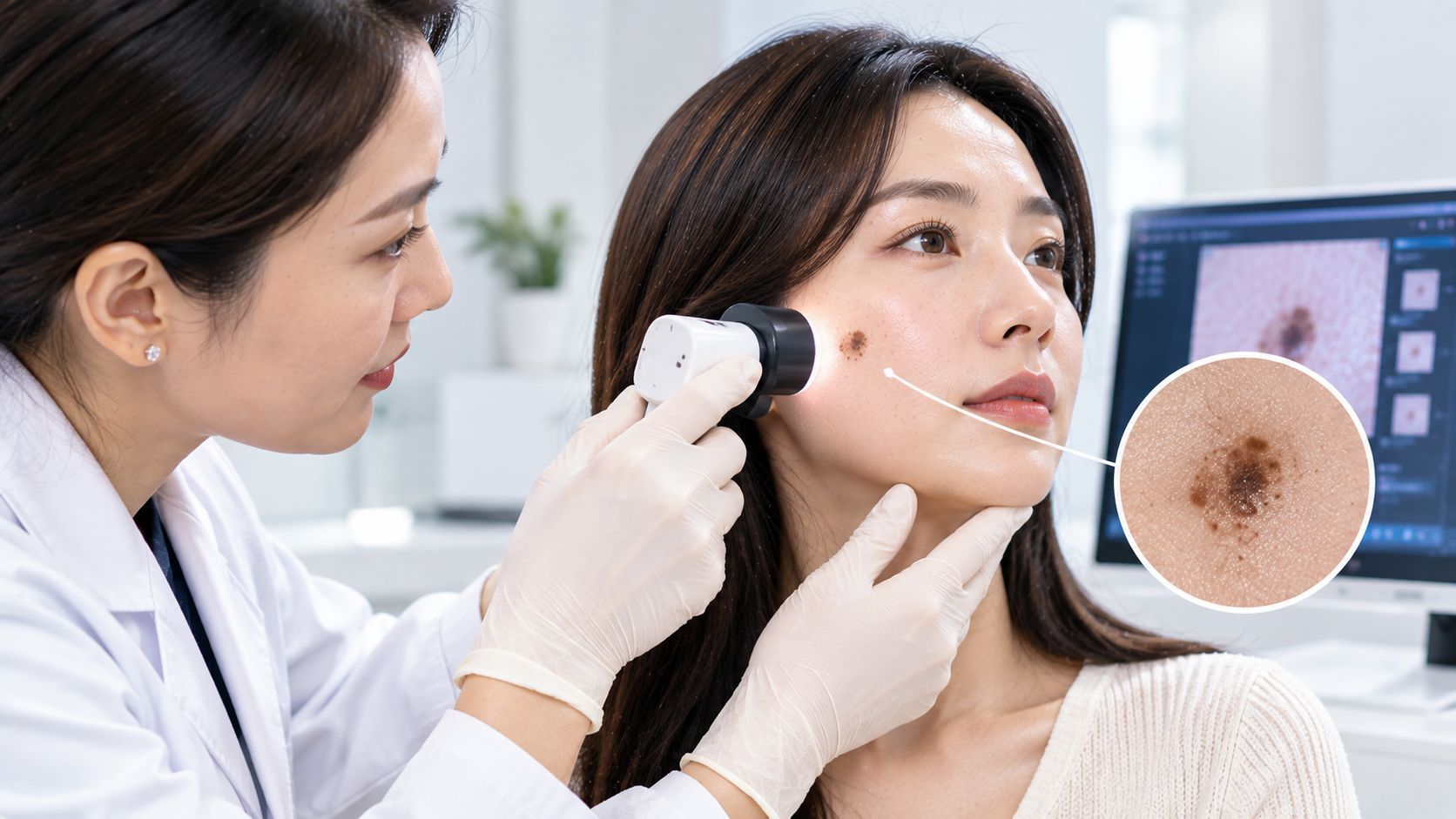
A dermatologist should assess the lesion before treatment rather than assuming that every dark spot is suitable for laser treatment.
2. Freckles
Freckles can sometimes be treated with pigment-targeting laser or light-based procedures.
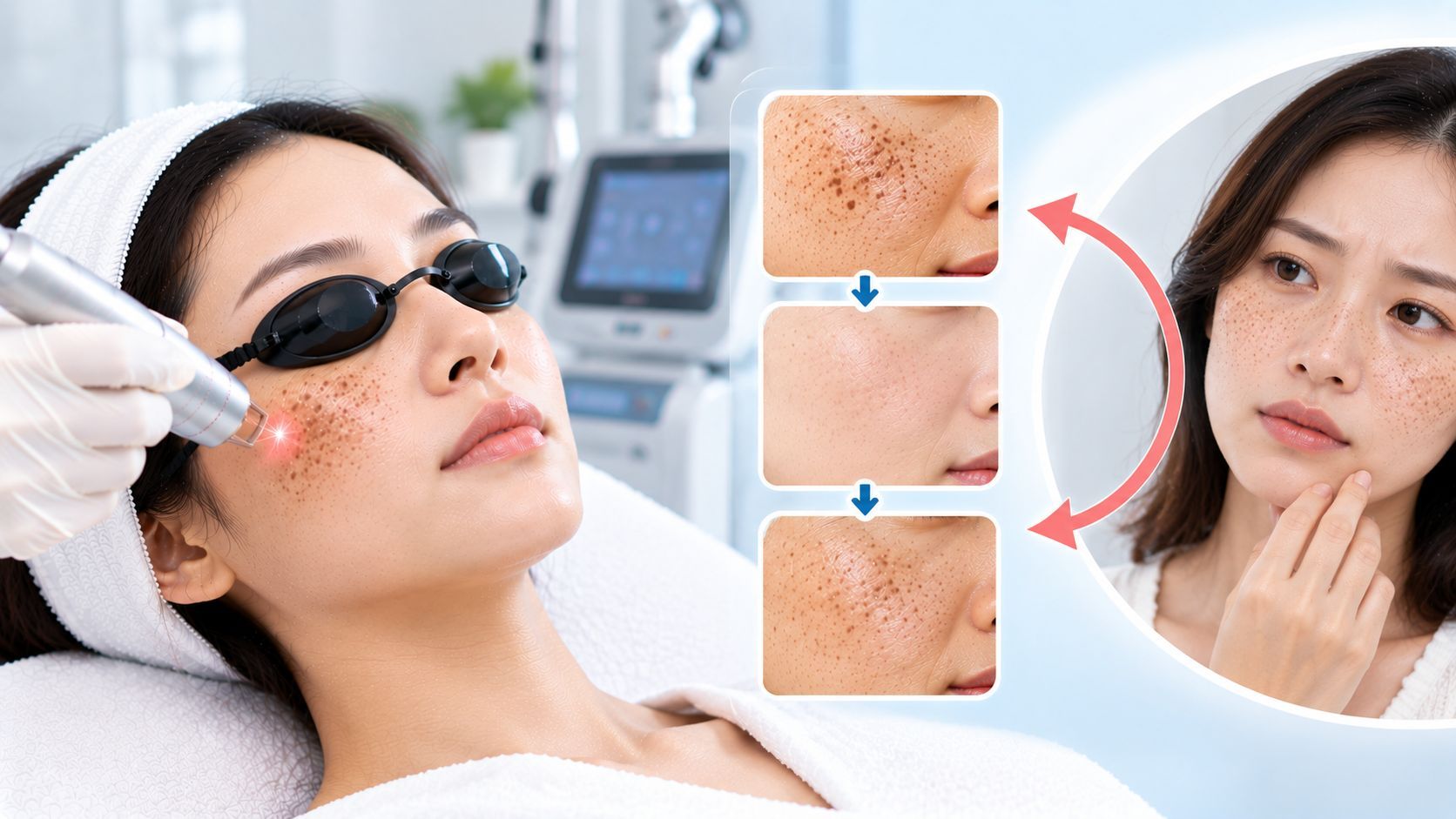
However, freckles may become visible again over time because they are influenced by sun exposure and individual pigmentation tendencies.
Therefore, laser treatment does not necessarily mean that freckles can never return.
3. Certain Forms of Hyperpigmentation
Pico laser may be considered for selected forms of unwanted pigmentation.
The important word is selected.
Hyperpigmentation can result from different causes, including:
- Previous acne or inflammation
- Sun exposure
- Hormonal influences
- Skin injury
- Certain medications or conditions
- Melasma
These conditions do not all respond to laser in the same way.
4. Some Acne Marks
Pico laser may be used for certain residual dark marks after acne, particularly when the primary issue is pigmentation rather than a depressed or raised scar.
This distinction matters.
A flat brown mark left after acne is different from an indented acne scar. A pigment-targeting treatment may address the color component but will not necessarily correct the underlying depression or scar structure.
5. Uneven Skin Tone
Certain Pico treatments are used to create a more even-looking complexion.
This is one reason Pico toning is popular in Korean aesthetic dermatology. Lower-intensity, repeated treatments may be used with the goal of gradually improving uneven pigmentation rather than aggressively targeting individual spots.
The appropriate approach depends on the cause of the uneven tone.
6. Some Pore and Texture Concerns
Certain Pico technologies and treatment settings may also be used for skin texture.
However, the phrase “Pico laser for pores” can be misleading if it suggests that the treatment permanently removes enlarged pores.
Pore appearance is influenced by factors such as:
- Sebum production
- Skin texture
- Collagen support
- Acne history
- Genetics
- Age-related changes
A Pico treatment may improve the overall appearance of skin in selected patients, but it should not be presented as a permanent pore-erasing procedure.
What About Melasma?
Melasma requires particular caution.
It is a chronic pigmentation disorder that can be influenced by sunlight, hormones, heat, and other factors. Some laser approaches may be used as part of a carefully selected treatment strategy, but laser is not automatically the first or only solution.
In some patients, aggressive treatment can contribute to worsening pigmentation or post-inflammatory changes.
If your main concern is melasma, it is important to tell the dermatologist exactly what treatments you have previously tried and whether your pigmentation tends to return after procedures.
Can Pico Laser Treat Acne Scars?
It depends on what you mean by “acne scars.”
If you have post-acne pigmentation, Pico laser may potentially help with the color.
If you have depressed acne scars, such as rolling, boxcar, or ice-pick scars, the treatment strategy can be different.
Depending on scar characteristics, dermatologists may consider procedures such as:
- Fractional laser
- RF microneedling
- Subcision
- TCA CROSS
- Other resurfacing or scar-specific techniques
Pico laser should therefore not be considered a universal acne-scar treatment.
Can Pico Laser Improve Skin Brightness?
It can sometimes make the complexion appear more even or brighter, particularly when uneven pigmentation contributes to a dull or patchy appearance.
But “brightening” should not be interpreted as permanently changing your natural skin color.
The realistic goal is generally to improve uneven pigmentation and the overall appearance of the complexion.
This is also why results from different Pico treatments can look very different. A treatment designed primarily for subtle tone improvement may not produce the same result as a procedure targeting individual pigmented lesions.
Does Pico Laser Treat Redness?
Pico laser is primarily associated with pigment-related applications, but some clinics may offer different laser technologies for redness and vascular concerns.
If your main problem is facial redness, flushing, visible capillaries, or rosacea-like symptoms, do not assume that a Pico laser is automatically the appropriate device.
A dermatologist should first determine whether the color you see is caused by pigment, blood vessels, inflammation, or another factor.
Does Pico Laser Tighten the Skin?
Pico laser should not be considered a primary replacement for dedicated skin-tightening treatments.
If your main concern is:
- Sagging
- Jowls
- Loss of firmness
- Lower-face laxity
- Neck laxity
your dermatologist may discuss other technologies, such as radiofrequency or ultrasound-based treatments, depending on your anatomy and goals.
Pico laser and skin-tightening treatments address different problems, although treatment plans can sometimes include more than one modality.
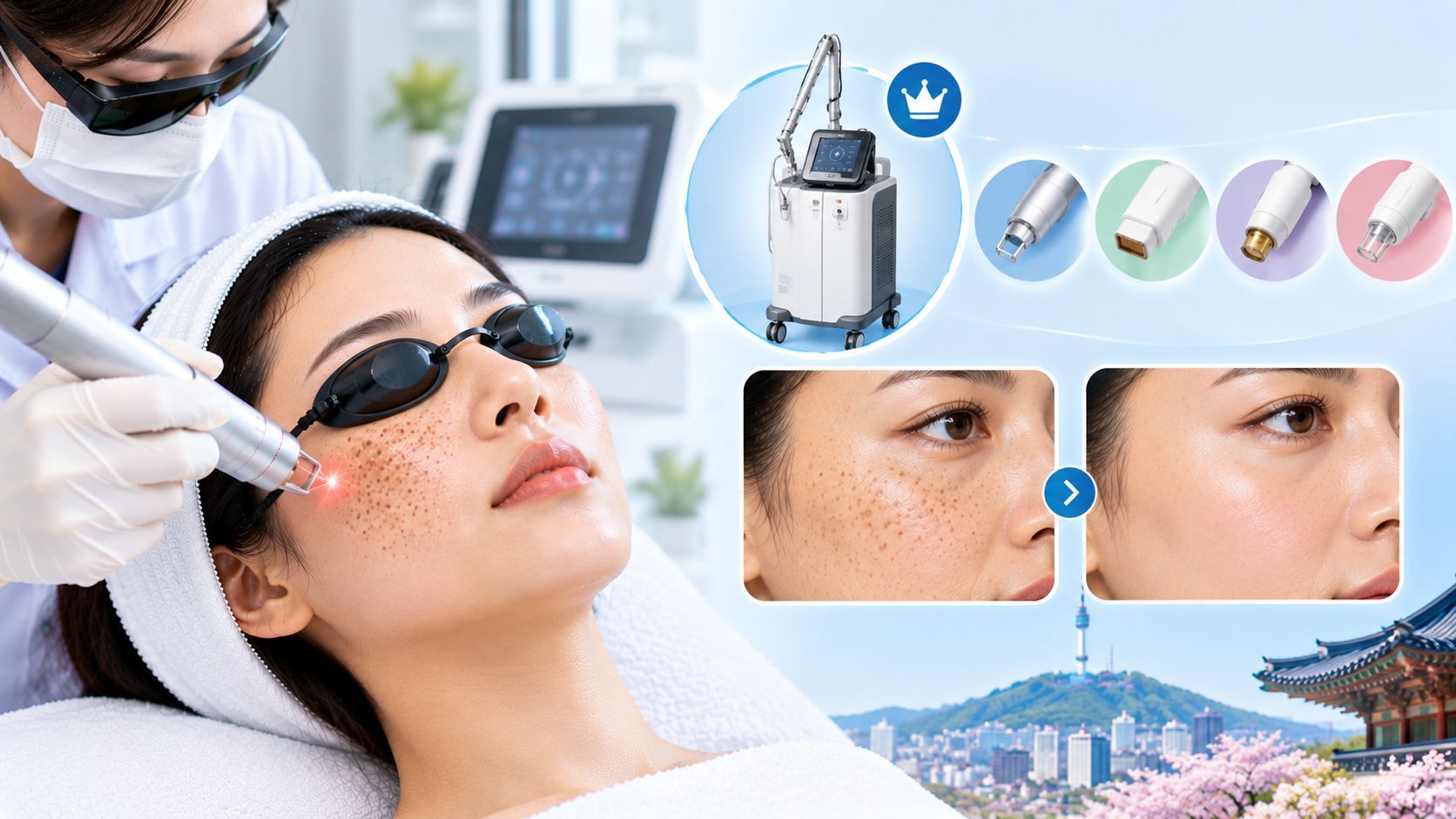
Why Does the Same Pico Laser Look Different at Different Clinics?
One reason is that the machine name alone does not tell you the complete treatment.
Important variables include:
- Device model
- Wavelength
- Fluence or energy level
- Pulse settings
- Spot size
- Number of passes
- Treatment technique
- Treatment area
- Your skin type
- The specific condition being treated
Two clinics can use Pico technology but provide very different treatments.
This is particularly important when comparing Korean clinics. Rather than asking only, “Do you have Pico laser?” ask which device, which wavelength, what concern it is being used for, and what recovery is expected.
What Results Should You Expect?
Results vary according to the condition being treated.
Some discrete pigmented lesions may show noticeable changes after treatment, while overall tone concerns may require a series of treatments.
Texture and pore-related changes can also be gradual.
You should not expect every Pico treatment to produce dramatic visible improvement after one session.
The number of treatments depends on the condition, treatment intensity, skin response, and goals. Some patients may be advised to have multiple sessions rather than one aggressive treatment.
What Are the Possible Side Effects?
Pico laser is often associated with relatively limited downtime compared with some more aggressive resurfacing procedures, but it is still a medical procedure.
Possible temporary effects can include:
- Redness
- Swelling
- Warmth
- Sensitivity
- Temporary darkening of pigment
- Temporary lightening of pigment
- Crusting or small spots after certain pigment treatments
- Post-inflammatory hyperpigmentation
The risk profile depends on the device, settings, indication, and individual skin characteristics.
People who develop pigmentation easily should discuss this specifically before treatment.
Is Pico Laser Suitable for Everyone?
No.
A consultation is particularly important if you have:
- Melasma
- Easily triggered hyperpigmentation
- Active skin inflammation
- A history of poor wound healing
- Recent aggressive skin treatments
- An unclear pigmented lesion
- Very sensitive or irritated skin
The dermatologist should determine whether the pigmentation or texture problem is actually appropriate for Pico treatment.
Bottom Line
Pico laser is a versatile laser technology, but it is not a universal “skin improvement” treatment.
It is commonly used for certain types of pigmentation, freckles, sun-related spots, uneven tone, and selected acne-related pigmentation, while some settings may also be used for texture and pore-related concerns.
The most important step is identifying what is actually causing your skin concern. A brown acne mark, melasma, sun spot, enlarged pore, redness, and depressed acne scar may look similar to a patient but require very different treatment strategies.
If you are considering Pico laser in Korea, ask about the specific device, wavelength, treatment settings, expected recovery, number of sessions, and why the treatment is appropriate for your particular skin concern.
Frequently Asked Questions
Is Pico laser only for pigmentation?
No. Pico technology has multiple applications, although pigmentation is one of its most common uses. Certain treatments may also target selected texture and acne-related concerns.
Can Pico laser remove acne scars?
It may help with pigmentation left after acne, but it does not automatically correct all types of structural acne scars. Depressed scars may require different or additional procedures.
Can Pico laser remove freckles permanently?
Pico laser may reduce the appearance of freckles, but pigmentation can return or become visible again, particularly with continued sun exposure.
How many Pico laser sessions do I need?
There is no universal number. Some concerns may respond after one treatment, while others are treated through a series of sessions. Your dermatologist should recommend a schedule based on your condition and treatment response.
Does Pico laser have downtime?
Some Pico treatments have relatively limited downtime, but redness, sensitivity, swelling, temporary pigment changes, or small crusts can occur depending on the treatment.
Is Pico laser safe for pigmentation-prone skin?
It can be appropriate for some patients, but pigmentation-prone skin requires careful treatment selection and settings. Discuss your history of post-inflammatory hyperpigmentation with the treating dermatologist before treatment.