I'm Going to Seoul for Laser Skin Treatments. What Should I Get?
Introduction
Seoul offers a wide range of laser and light-based skin treatments, which can make choosing the right one difficult for international patients. Different technologies are designed to address different concerns, including pigmentation, acne scars, redness, enlarged pores, uneven texture, and signs of sun damage.
If you are traveling to Seoul specifically for laser skin treatment, the best approach is to identify your main skin concern first and then choose the treatment based on your skin type, previous treatments, desired results, and available recovery time. A laser that may be appropriate for pigmentation may not be the right option for acne scars or facial redness.
The Short Answer: Choose the Laser Based on Your Skin Concern
There is no single laser treatment that is best for everyone.
Your options may broadly include:
- Pigmentation: pigment-targeting laser or light-based treatments
- Redness: vascular laser or other vascular-targeting treatments
- Acne scars: fractional laser resurfacing or other scar treatments
- Uneven texture: fractional or resurfacing treatments
- Enlarged pores: selected fractional or resurfacing treatments
- Sun damage and fine lines: resurfacing or other rejuvenation treatments
- General skin quality: lighter laser or non-laser rejuvenation approaches, depending on your goals
The important principle is simple: the skin concern should determine the treatment, rather than choosing a device simply because it is popular in Seoul.
Why Are There So Many Different Lasers in Seoul?
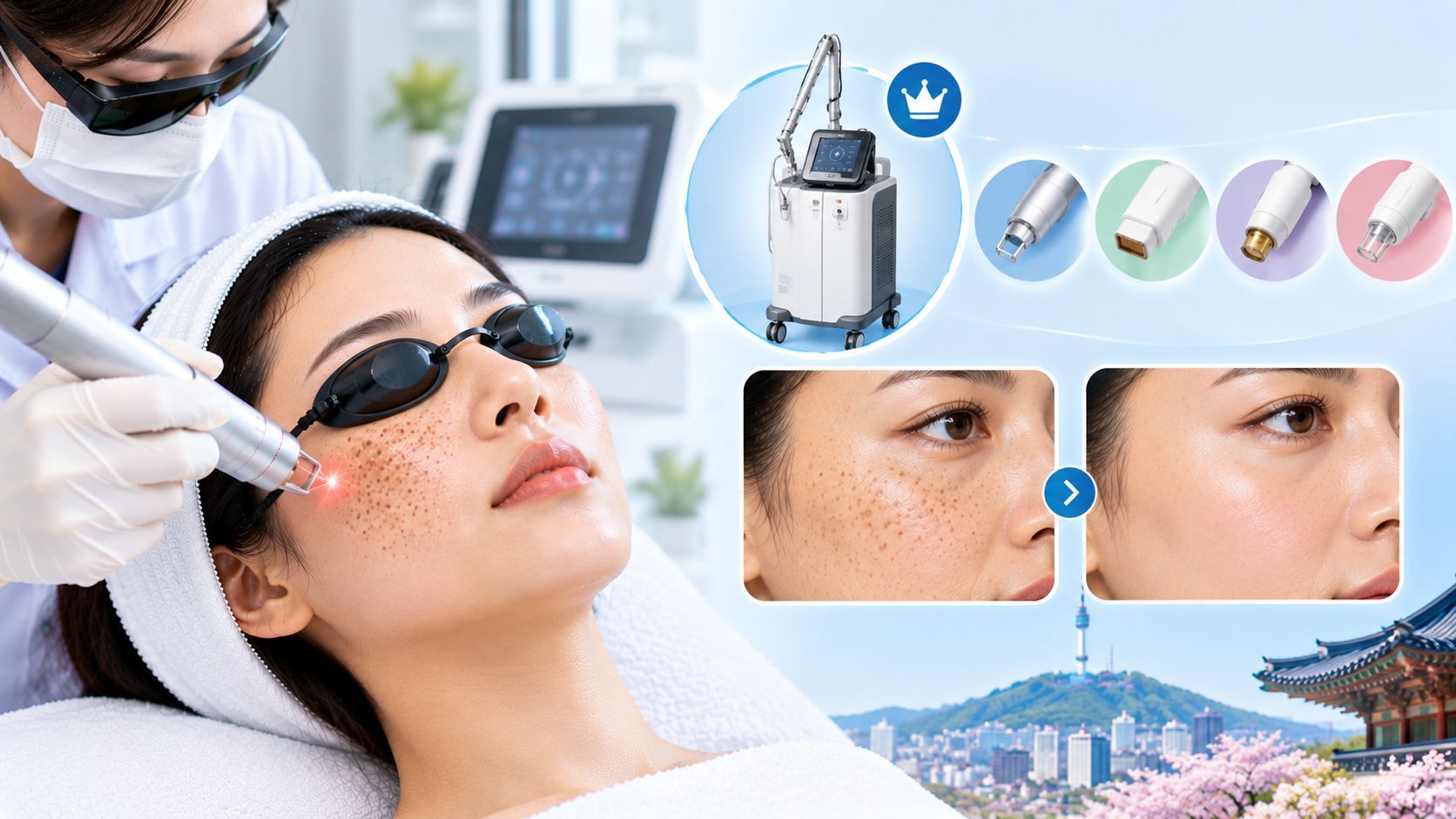
The word "laser" describes a broad group of technologies rather than one treatment.
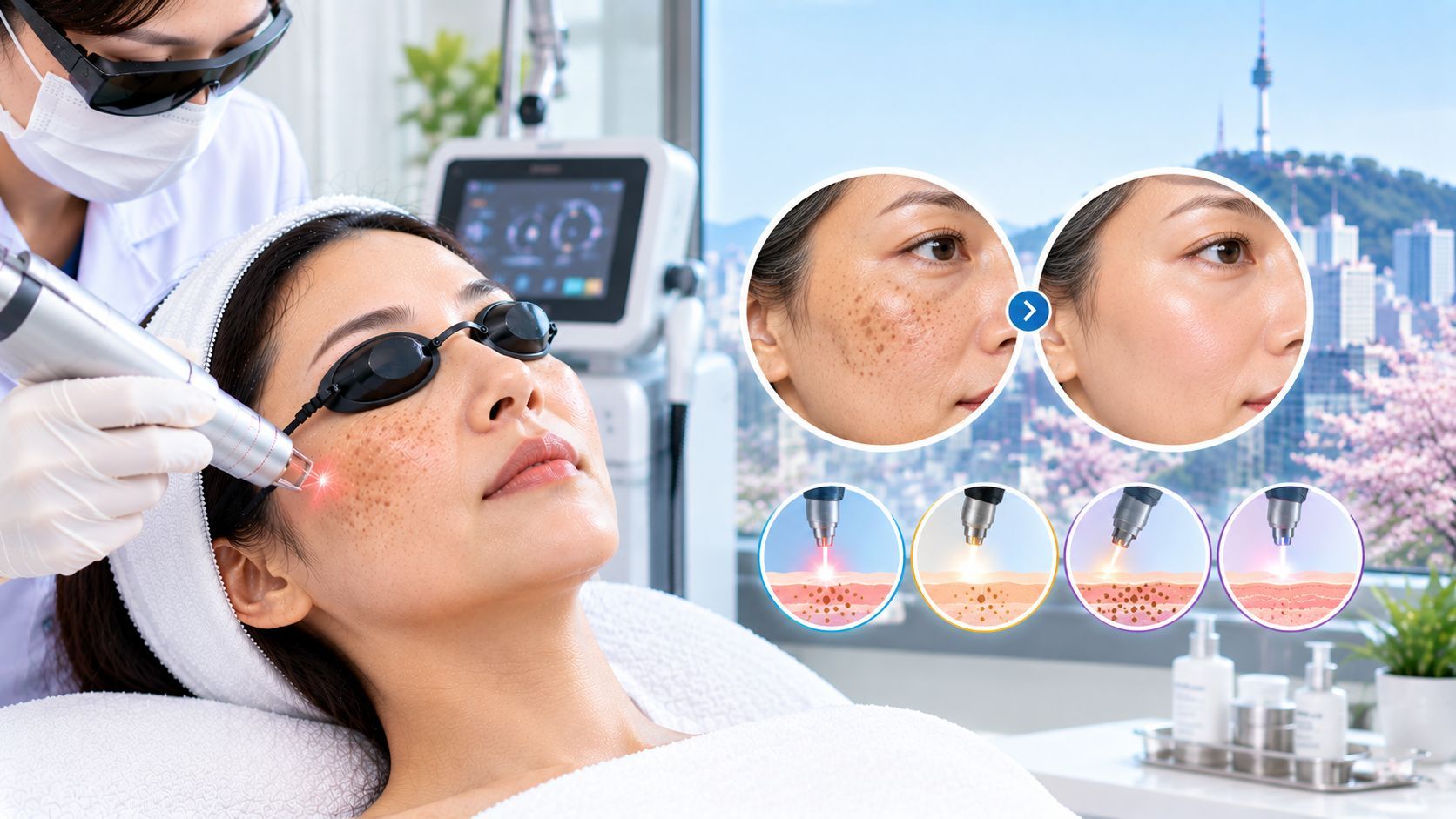
Different devices use different wavelengths and methods of delivering energy into the skin. Some primarily target pigment, some target blood vessels, and others create controlled areas of thermal injury to stimulate skin remodeling.
Different Lasers Have Different Targets
A pigment-targeting laser is not designed to perform exactly the same function as a vascular laser.
Similarly, a fractional resurfacing treatment is fundamentally different from a laser primarily used for pigmentation.
This is why comparing lasers only by brand name can be misleading. Two devices may both be marketed for "skin rejuvenation" while working in very different ways.
The Same Laser Can Also Be Used Differently
Treatment settings can vary according to the patient's skin, treatment area, concern, and desired intensity.
Therefore, knowing the name of the device does not necessarily tell you exactly what treatment you will receive.
What Skin Problems Can Laser Treatments Improve?
Before choosing a laser in Seoul, identify the specific problem you want to address.
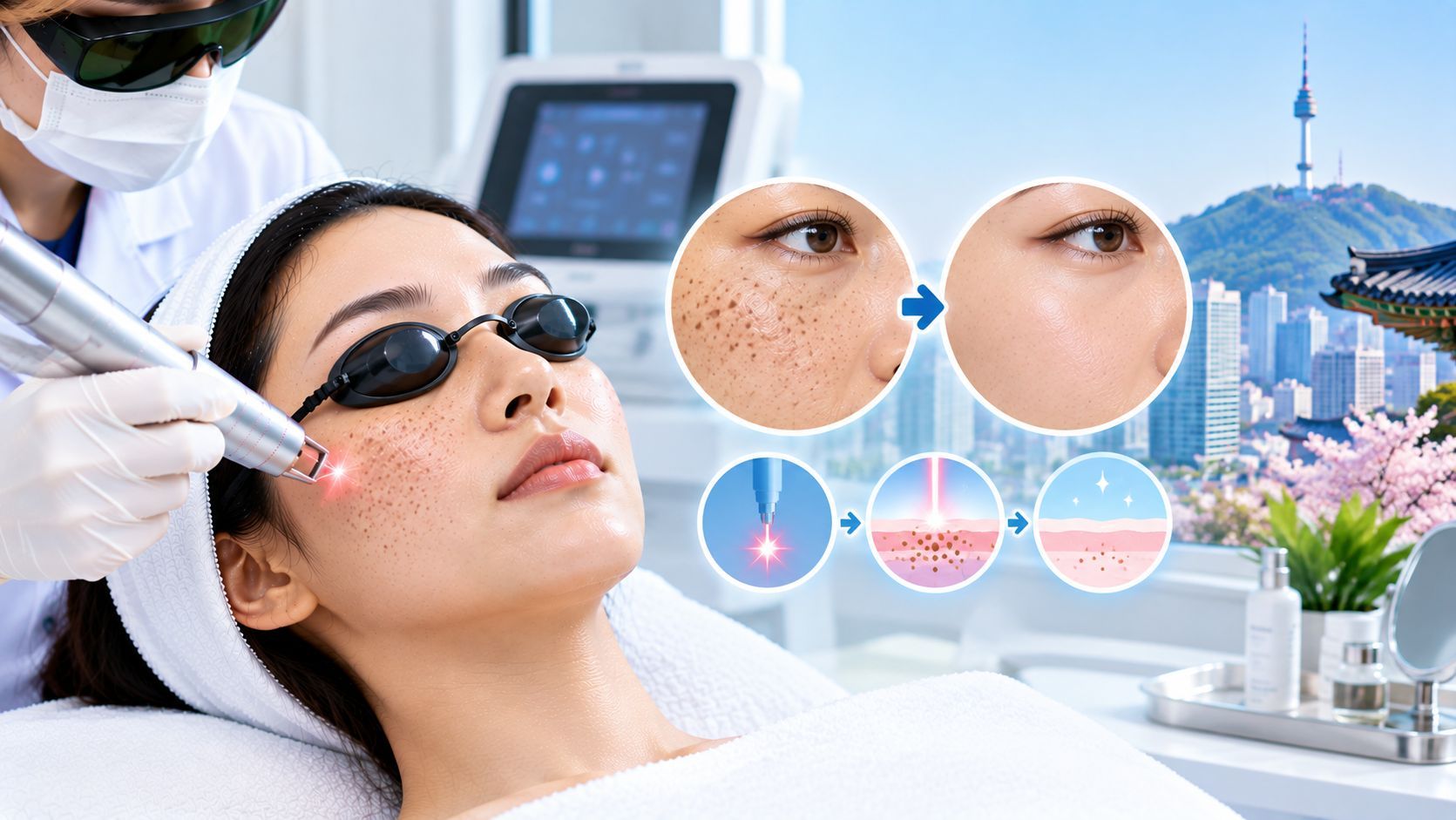
Pigmentation and Dark Spots
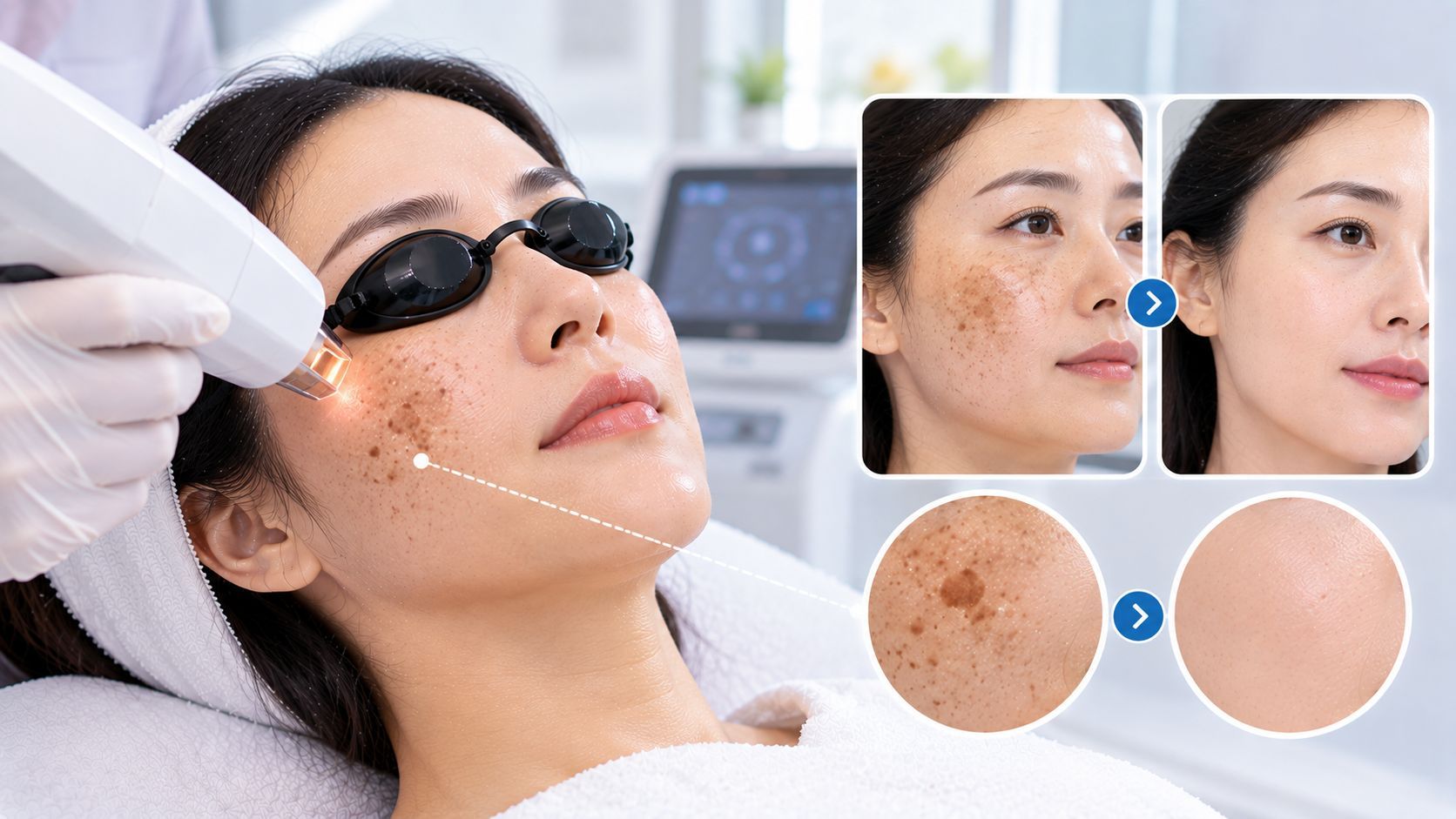
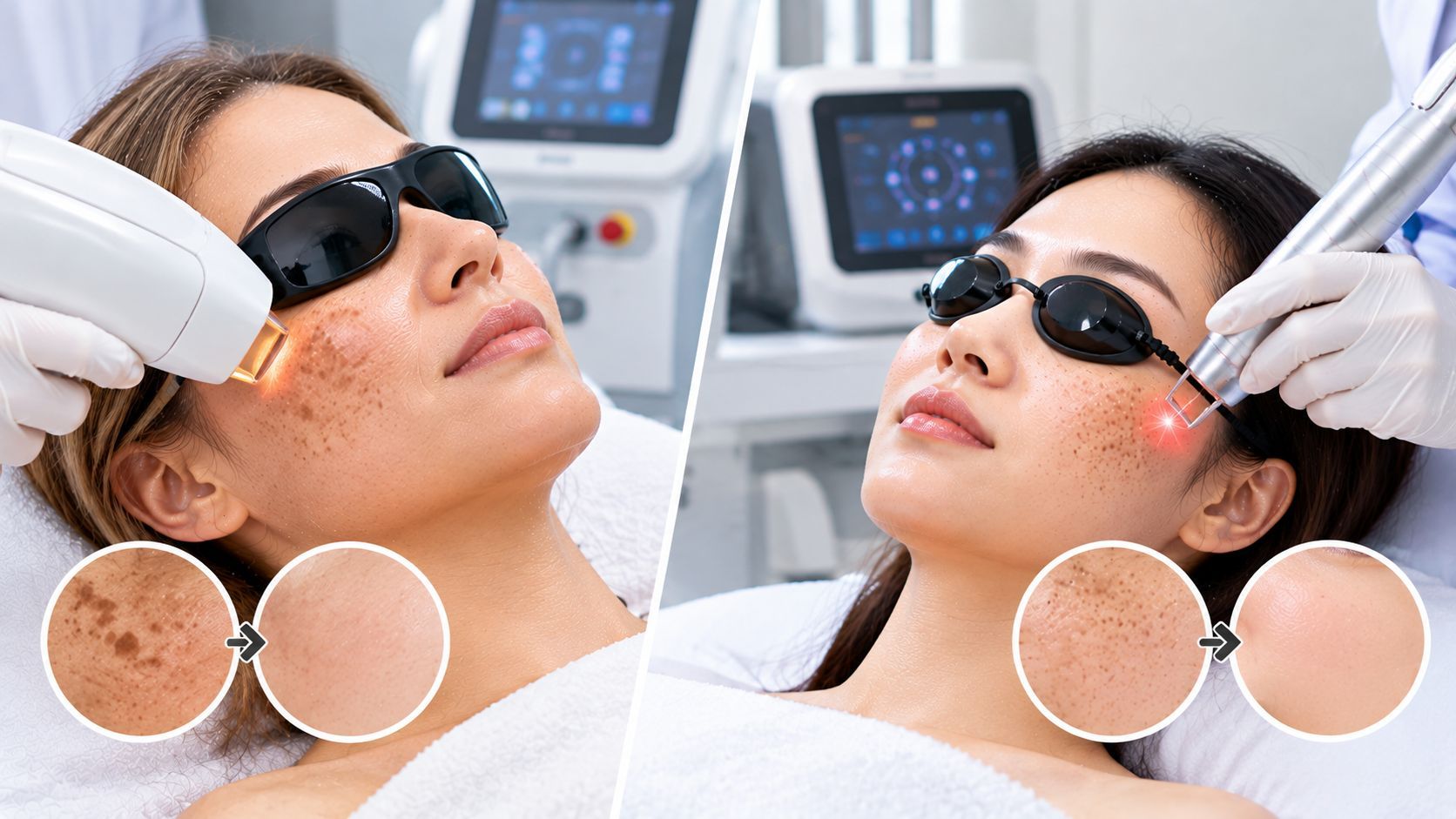
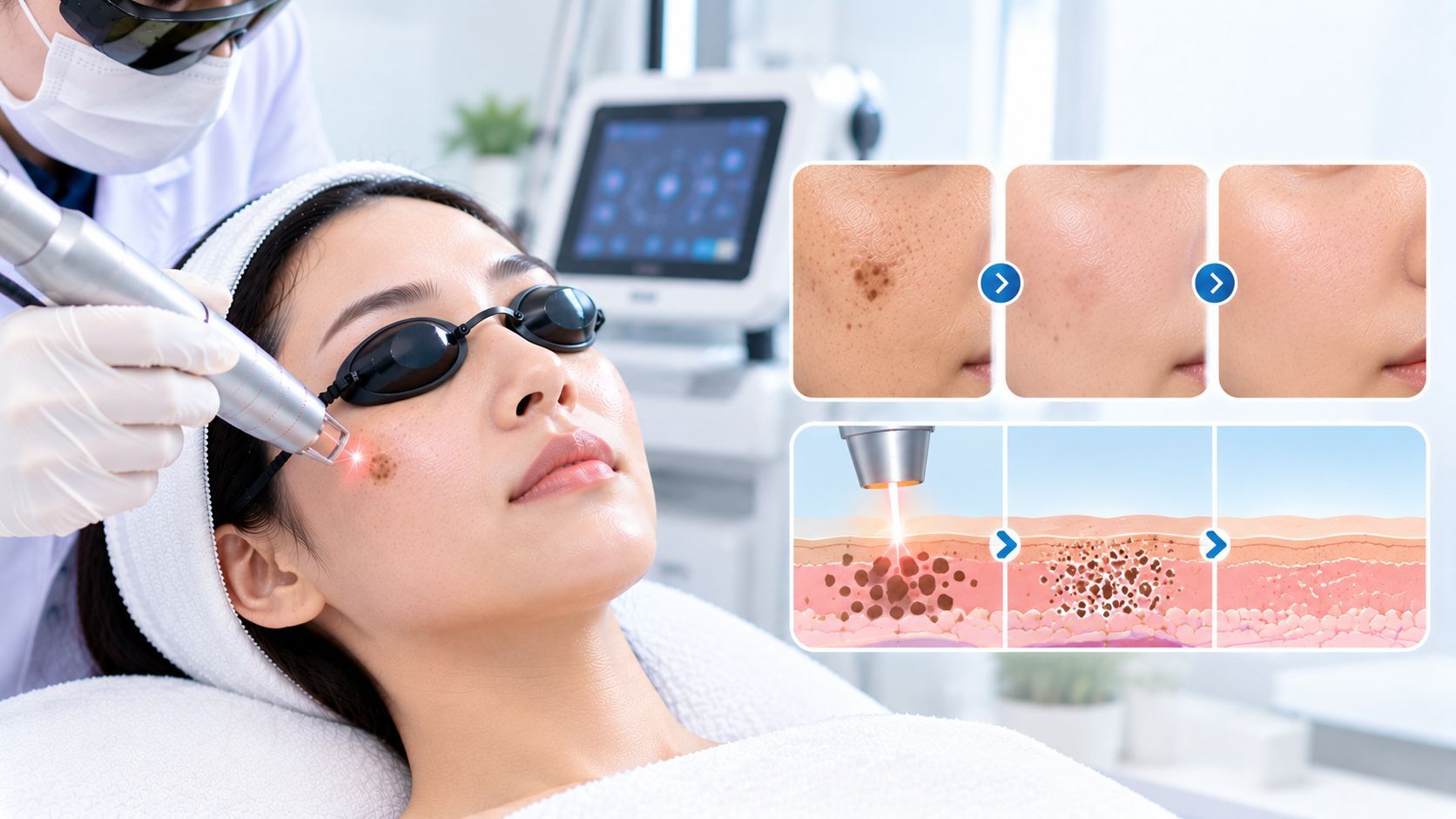
Certain laser and light-based treatments can be used for specific forms of unwanted pigmentation.
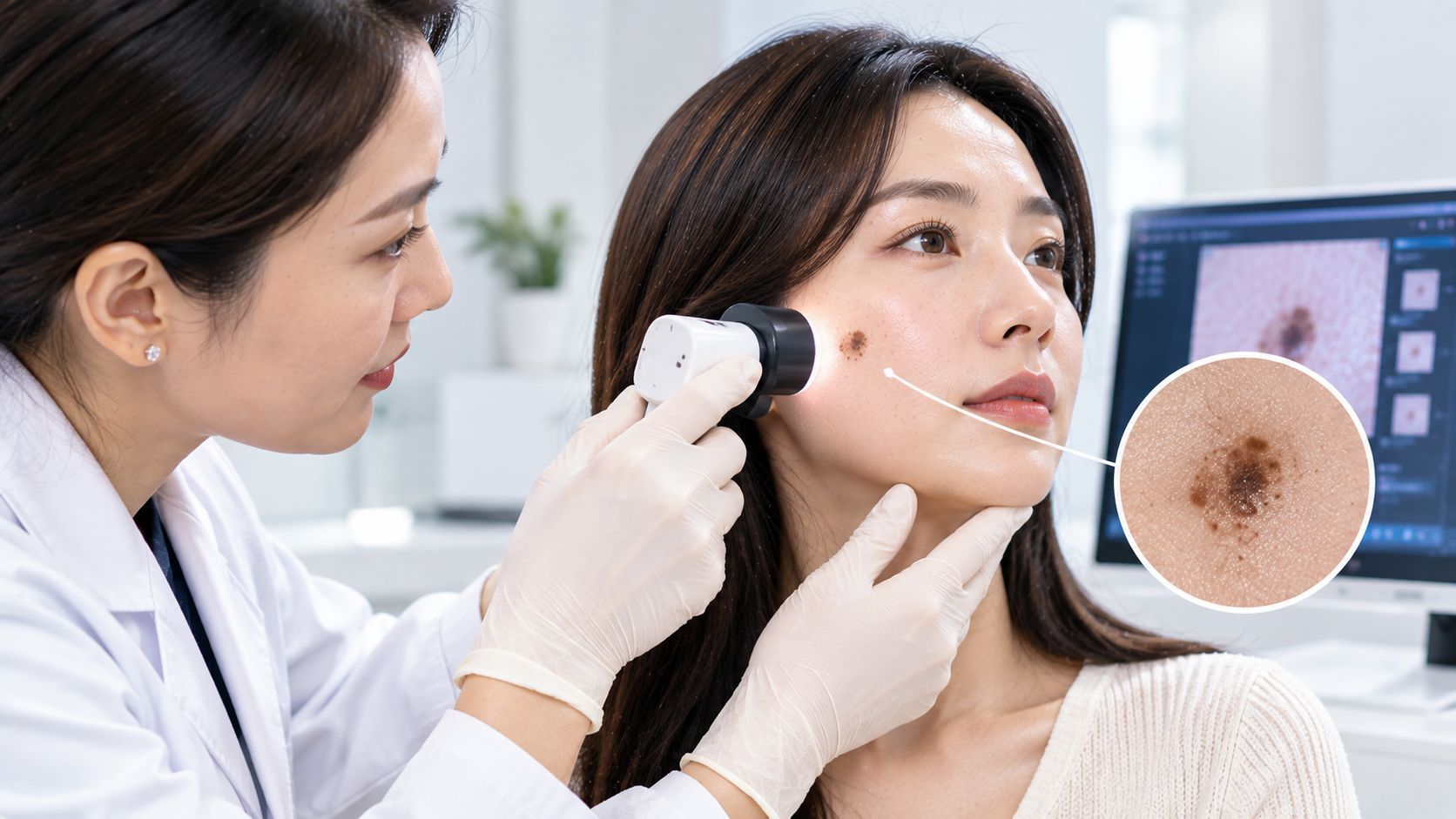
However, brown or darker areas on the skin can have different causes. Freckles, sun spots, post-inflammatory hyperpigmentation, and melasma are not interchangeable conditions.
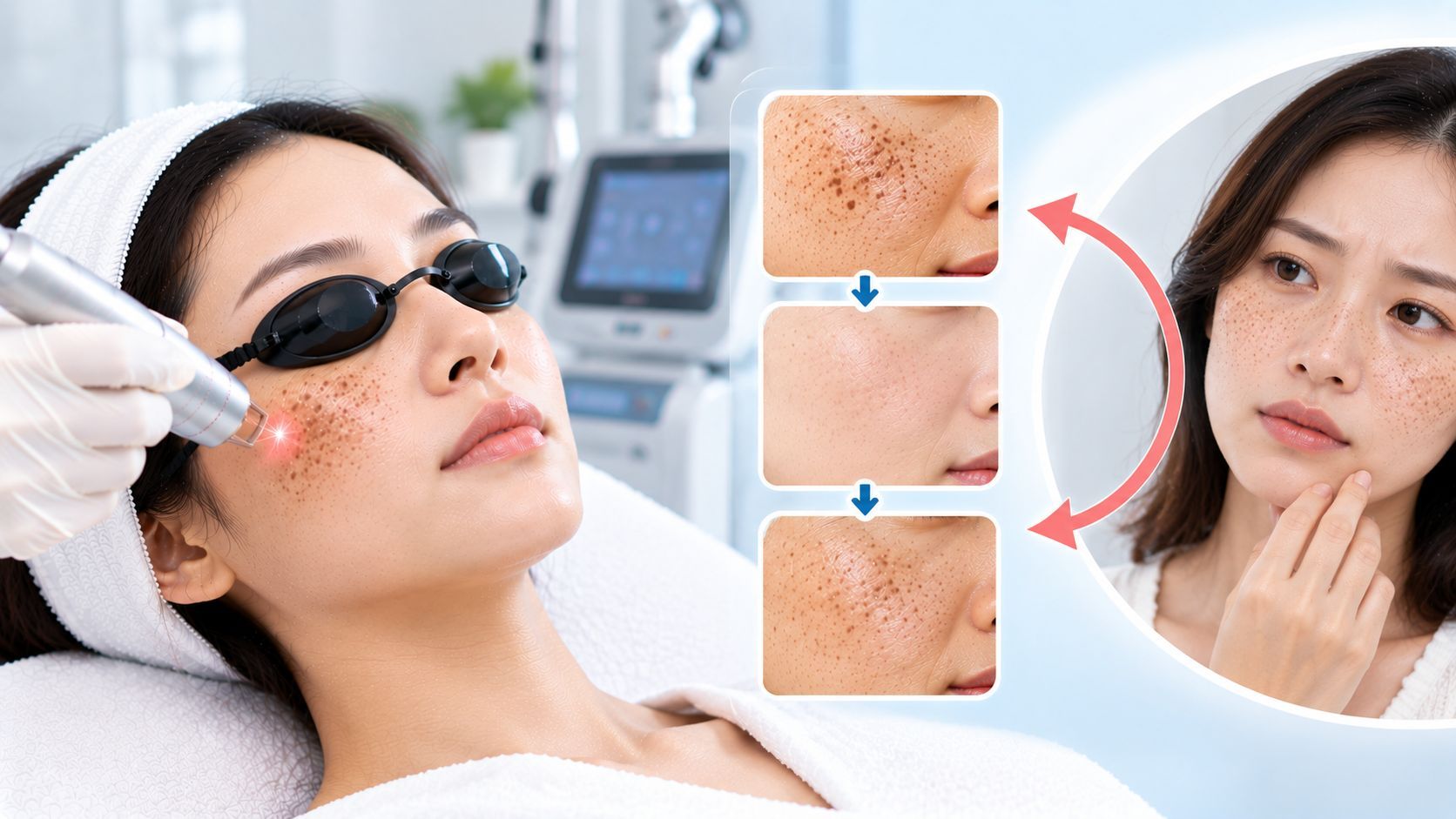
This matters because some pigmentation disorders can become more noticeable after irritation or inflammation.
If you have previously developed dark marks after acne, burns, or cosmetic procedures, mention this during your consultation.
Acne Scars
Certain fractional laser treatments can be considered for acne scars and uneven skin texture.
However, acne scars have different shapes and depths. Rolling scars, boxcar scars, ice-pick scars, and superficial textural changes may respond differently to treatment.
For this reason, a dermatologist may recommend a combination of treatments rather than relying on one laser for every type of acne scar.
Enlarged Pores
Some resurfacing treatments can improve the appearance of enlarged pores by improving surrounding skin texture.
However, lasers cannot permanently remove pores. Pore visibility is affected by genetics, sebum production, skin structure, and elasticity.
The realistic goal is usually to make pores appear less prominent rather than eliminate them.
Redness and Visible Blood Vessels
Vascular-targeting lasers may be considered for certain types of facial redness and visible blood vessels.
However, facial redness can have many causes, including irritation, sun exposure, flushing, and conditions such as rosacea.
A dermatologist should determine what is causing the redness before deciding whether laser treatment is appropriate.
Uneven Texture and Sun Damage
Some resurfacing treatments can improve uneven texture, certain fine lines, and signs of photodamage.
More intensive resurfacing generally requires more recovery. If you are visiting Seoul for only a few days, the expected downtime should therefore be considered before treatment.
How Should You Choose a Laser in Seoul?
Rather than asking, "What is the best Korean laser?", give the dermatologist information about your actual goals.
Explain Your Main Concern
Be specific about what bothers you most.
For example:
- "I want to reduce brown pigmentation."
- "I want to improve acne scars."
- "My pores look larger than before."
- "My skin texture looks uneven."
- "I have persistent facial redness."
- "I want general rejuvenation with minimal downtime."
This makes the consultation more focused.
Consider Your Skin Tone
Your natural skin tone and history of post-inflammatory hyperpigmentation can affect laser selection.
People with darker or more pigment-prone skin may need particular care when selecting treatment settings because some procedures can trigger unwanted pigmentation.
Do not assume that a treatment that worked well for someone else will have the same risk or result for you.
Consider Previous Treatments
Tell your provider about recent:
- Laser treatments
- Chemical peels
- Microneedling
- RF treatments
- Botox or filler
- Skin boosters
- Other cosmetic procedures
Your recent treatment history can affect whether another procedure should be performed immediately.
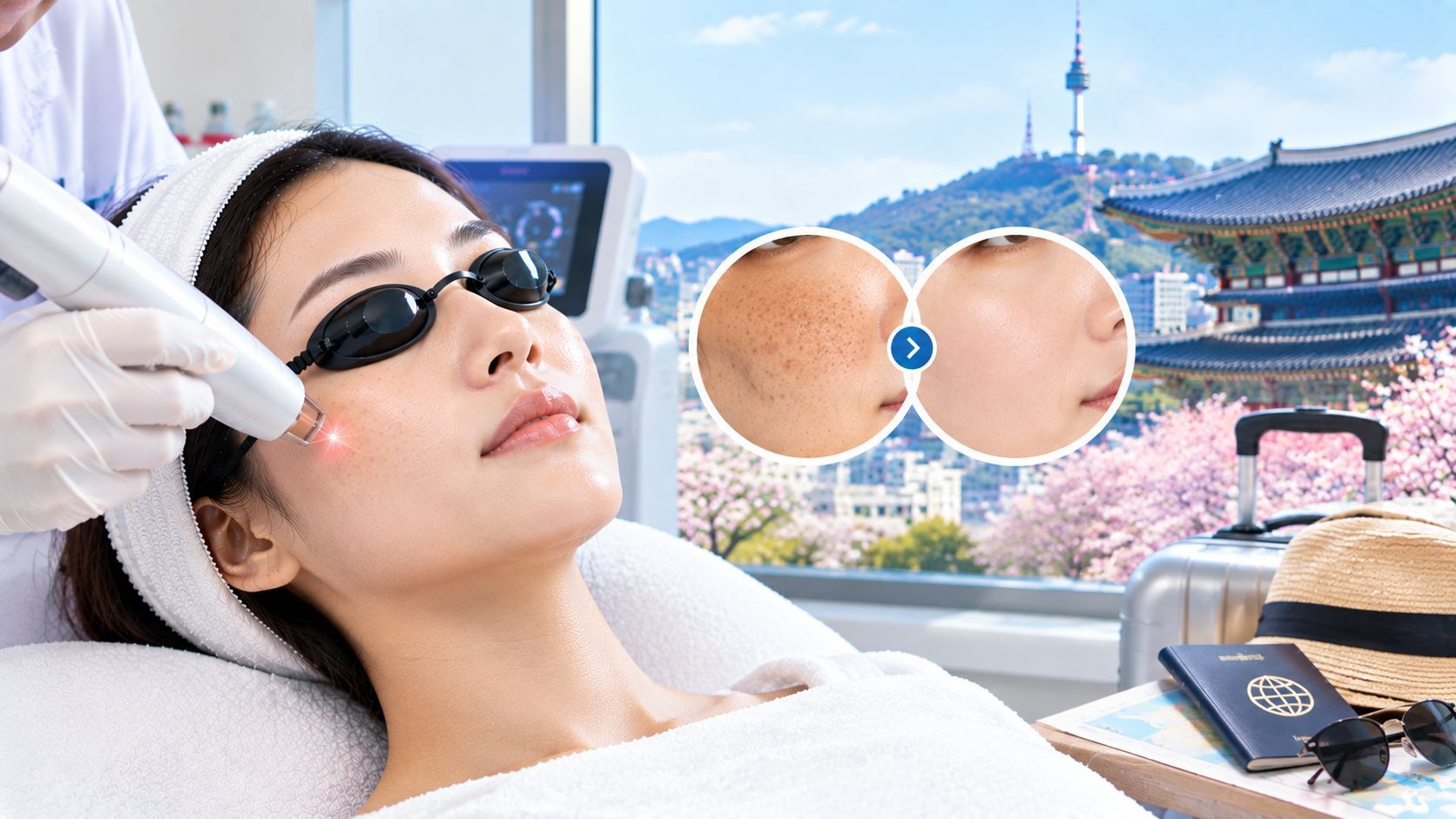
What If You Only Have Three Days in Seoul?
A short trip requires careful treatment planning.
If you have only three days, you may not have enough time for significant redness, peeling, swelling, or other recovery effects to settle before you return home.
Prioritize Recovery Time
Before choosing a treatment, ask exactly what your skin may look and feel like during the following several days.
A treatment that requires substantial recovery may not fit a short medical-tourism trip if you also want to shop, sightsee, attend meetings, or take photographs.
"Low downtime" also does not mean "no recovery" or "risk-free."
What If You Have One Week in Korea?
A seven-day trip provides more flexibility, but you still need to account for the expected recovery period.
Some treatments can produce redness, dryness, peeling, or temporary sensitivity for several days.
Plan the Treatment Around Your Itinerary
If you have important activities scheduled during the trip, tell your provider.
For example, if you plan to spend several days outdoors after treatment, your dermatologist may discuss whether the timing is appropriate and what precautions are necessary.
If you are flying home shortly after treatment, ask what symptoms should prompt you to contact the clinic and what follow-up arrangements are available after you leave Korea.
Should You Combine Several Laser Treatments?
Not automatically.
Some clinics may offer combination treatments for multiple concerns, but combining procedures can increase irritation and recovery requirements.
If you have several concerns, ask whether they should all be treated during one visit or addressed separately.
For international patients, this is particularly important because follow-up may be more difficult after returning home.
What Are the Risks and Limitations?
Laser treatments can cause temporary redness, swelling, warmth, tenderness, dryness, peeling, crusting, or changes in pigmentation.
Depending on the procedure, less common complications can include burns, infection, scarring, prolonged redness, or persistent pigment changes.
The risk depends on factors including the technology, treatment settings, skin type, treatment area, and individual response.
Laser treatment also has limitations. It may improve the appearance of a concern without completely eliminating it, and some conditions require multiple sessions.
Questions to Ask a Seoul Dermatologist Before Treatment
Before agreeing to a laser procedure, consider asking:
- What specific problem is this treatment targeting?
- Why is this laser suitable for my skin?
- Are there alternative treatments?
- How much downtime should I expect?
- Could this treatment increase pigmentation?
- How many sessions might be necessary?
- When should I expect improvement?
- What side effects are considered normal?
- What symptoms require medical attention?
- What follow-up will be available if I return home soon?
These questions are more useful than choosing a laser based solely on its popularity or brand name.
Preparing for Laser Treatment in Seoul as an International Patient
Bring information about previous treatments and relevant medical history to your consultation.
It can be useful to know:
- Which lasers you have previously received
- Whether you developed pigmentation afterward
- Whether you have sensitive or reactive skin
- What cosmetic procedures you recently had
- What skincare products or medications you currently use
- How long you will remain in Korea
- When you plan to fly home
If you already know your main concern, you can also research relevant laser skin treatments in Seoul before your trip, while keeping the final treatment choice open until after your consultation.
The Bottom Line
If you are going to Seoul for laser skin treatments, do not choose a laser simply because it is popular or advertised as the latest technology.
Start with your actual concern: pigmentation, acne scars, redness, enlarged pores, uneven texture, sun damage, or general skin quality. Then consider your skin tone, previous treatments, desired level of improvement, downtime, travel schedule, and willingness to return for additional sessions.
A qualified dermatologist can help determine whether laser treatment is appropriate and which technology, treatment intensity, and schedule make sense for your particular situation.
The goal should not be to get the most treatments possible during a Seoul trip. It should be to choose an approach that matches your skin, expectations, and available recovery time.
FAQs About Laser Skin Treatments in Seoul
What is the best laser treatment to get in Seoul?
There is no universally best laser. The appropriate treatment depends on the skin concern being treated, your skin characteristics, previous treatments, desired results, and tolerance for downtime.
Can I choose my laser before traveling to Seoul?
You can research treatment options before your trip, but it is better to treat your choice as provisional. A dermatologist may recommend a different technology after examining your skin.
Can one laser treat several skin problems?
Some laser technologies have multiple applications, but different concerns may require different technologies or treatment settings. A consultation can determine whether one treatment can reasonably address your goals.
Is laser treatment suitable for darker skin?
Some laser treatments can be used for darker skin, but careful treatment selection and settings are important because certain procedures can increase the risk of unwanted pigmentation.
Can I get laser treatment during a short Seoul trip?
Possibly, but your available recovery time should be considered before treatment. A procedure requiring significant downtime may not be suitable for a tightly scheduled trip.
Will one laser session give me the result I want?
Not necessarily. Some treatments produce noticeable changes after one session, while others are normally performed as a series. Results also depend on the condition being treated and individual response.