Can Vascular Laser Permanently Remove Broken Capillaries?
Mijan Mijan • September 29, 2026
Introduction
Broken capillaries, often called telangiectasia, are small visible blood vessels that can appear as fine red lines on the nose, cheeks, chin, or other areas of the face. Vascular lasers can make many of these vessels significantly less visible, but “permanently remove” needs some qualification.
A successfully treated individual vessel may remain much less visible after treatment, but vascular laser cannot guarantee that you will never develop new capillaries. Conditions such as rosacea, repeated sun exposure, and other triggers can contribute to new visible vessels over time. The American Academy of Dermatology notes that laser and light treatments can reduce visible blood vessels associated with rosacea, while new vessels may develop later.
Can Vascular Laser Permanently Remove Broken Capillaries?
Vascular laser can permanently reduce or clear some individual visible blood vessels, but it cannot guarantee permanent freedom from broken capillaries.
The distinction is between:
- The treated vessel: may become permanently less visible or disappear clinically.
- Future vessels: can develop later.
- The underlying condition: may continue causing redness or vascular changes.
This is why vascular laser is better understood as a treatment for existing visible vessels, rather than a permanent cure for the tendency to develop them.
What Are Broken Capillaries?
Telangiectasia
The term “broken capillaries” is commonly used for small visible blood vessels, although the vessels have not literally broken.
They may appear as:
- Fine red lines
- Branching vessels
- Small spider-like patterns
- Red lines around the nostrils
- Clusters of vessels on the cheeks
Telangiectasia can occur for different reasons, including rosacea, sun exposure, genetics, and other forms of vascular change.
Not All Facial Redness Is a Broken Capillary
A red face does not automatically mean that visible vessels are responsible.
Similar redness can occur with:
- Rosacea
- Post-acne erythema
- Irritation or dermatitis
- Inflammation
- Pigmentation
- Flushing
- Skin-barrier problems
Correctly identifying the cause is important because a vascular laser is specifically intended to target vascular structures.
How Does Vascular Laser Treat Visible Blood Vessels?
Selective Heating of Blood Vessels
Vascular lasers use wavelengths that are absorbed by blood-related chromophores. The objective is to deliver enough energy to the targeted vessel to cause controlled thermal injury while limiting unnecessary damage to surrounding skin.
The treated vessel may then become less visible as the body clears or remodels the damaged vascular structure.
Different vascular lasers use different wavelengths and pulse characteristics, so treatment is not simply a matter of using the highest available energy.
Common Vascular Laser Options
Depending on the vessel and patient, a dermatologist may consider:
- Pulsed-dye laser such as VBeam
- 532-nm KTP-type vascular lasers
- 1064-nm Nd:YAG lasers
- Other vascular laser systems
- IPL in selected situations
Research has demonstrated improvement in facial telangiectasia with several vascular laser technologies, but the appropriate device depends on vessel characteristics and the patient's skin.
Does VBeam Permanently Remove Broken Capillaries?
VBeam and Visible Vessels
VBeam is a pulsed-dye laser commonly used for vascular lesions and facial redness.
It can make appropriately selected superficial vessels substantially less visible. The response depends on factors such as vessel diameter, depth, color, skin type, and treatment settings.
However, VBeam does not prevent new vessels from developing.
This is particularly relevant for people with rosacea. The AAD explains that laser and light treatment can reduce visible blood vessels, but rosacea itself remains a chronic condition and new visible vessels can appear.
Can Excel V Treat Broken Capillaries?
532 nm for Superficial Vessels
Certain Excel V configurations use a 532-nm wavelength that can be used for superficial vascular targets.
Clinical research involving 532-nm KTP lasers has demonstrated improvement in facial telangiectasia.
The 532-nm wavelength may be considered for fine, superficial red vessels, although the exact settings must be selected according to the vessel and patient's skin characteristics.
When Deeper Vessels Need a Different Approach
Deeper or larger vessels may require a different wavelength or treatment strategy.
Some vascular laser platforms offer longer wavelengths, such as 1064 nm, which can reach deeper vascular structures. Whether this is appropriate depends on the specific vessel rather than simply choosing the deeper wavelength.
How Many Sessions Are Needed?
Some individual vessels may respond noticeably after one treatment, but multiple sessions are often needed when there are numerous, persistent, or differently sized vessels.
Research on 532-nm vascular treatment has used multiple treatment sessions for facial telangiectasia.
Your treatment plan may depend on:
- Number of vessels
- Vessel size
- Vessel depth
- Location
- Skin tone
- Underlying rosacea
- Previous treatment
- Laser settings
A clinic should avoid guaranteeing that every vessel will disappear after one session.
Why Do Broken Capillaries Come Back?
New Vessels Can Develop
What looks like a recurrence is not always the original vessel returning.
New vessels can develop in the same area or nearby areas. This can make it appear as though the original treatment “stopped working,” even when the previously treated vessel has remained less visible.
Underlying Rosacea
Rosacea is an important example.
People with rosacea may experience persistent redness, flushing, and visible blood vessels. Laser treatment can address some vascular manifestations, but it does not eliminate the underlying tendency toward rosacea.
Managing triggers and using appropriate medical treatment may therefore be important alongside vascular laser.
What Can Make Facial Capillaries More Noticeable?
Several factors can contribute to facial redness or vascular visibility, including:
- Sun exposure
- Heat
- Flushing
- Rosacea
- Skin irritation
- Certain inflammatory skin conditions
- Individual genetic tendency
Avoiding known triggers and protecting the skin from excessive sun exposure may help reduce ongoing irritation, although it cannot guarantee that new vessels will not form.
Is Vascular Laser Safe for Asian Skin?
Vascular laser can be performed on Asian skin, but treatment parameters need to be individualized.
Higher melanin levels can increase concern about unwanted pigmentary changes following laser-induced inflammation. This does not mean vascular laser cannot be used; it means that wavelength selection, energy, cooling, and treatment technique matter.
Potential complications can include:
- Temporary redness
- Swelling
- Purpura
- Tenderness
- Crusting
- Temporary or persistent pigment changes
- Burns
- Rare scarring
The AAD warns that improperly performed laser treatment can cause burns, permanent skin-color changes, and scarring.
What Is Recovery Like After Vascular Laser?
Recovery depends on the device, settings, and vascular target.
You may experience:
- Redness immediately afterward
- Mild swelling
- Warmth or tenderness
- Temporary darkening
- Small purple spots after some vascular treatments
Some people have little visible downtime, while stronger vascular treatment can produce more noticeable temporary changes.
If you are traveling to Seoul specifically for vascular laser, do not schedule treatment immediately before an important event without discussing expected recovery with the clinic.
Vascular Laser vs IPL for Broken Capillaries
TreatmentTypical potential roleKey considerationVBeam / PDLSelected facial telangiectasia and vascular rednessFocused vascular treatment532 nm vascular laserSuperficial red vesselsParticularly relevant to superficial vascular targets1064 nm Nd:YAGSelected deeper or larger vascular targetsRequires careful parameter selectionIPLDiffuse redness and selected vascular concernsBroad-spectrum light rather than a single laser wavelength
These options are not interchangeable for every patient. The appropriate choice depends on what the clinician sees during examination.
How Do I Know If I Need Vascular Laser?
A consultation is especially useful when you are unsure whether the problem is actually a visible blood vessel.
Ask:
- Are these true telangiectasia?
- Are the vessels superficial or deep?
- Is rosacea contributing?
- Why are you recommending this wavelength?
- What result is realistic after one treatment?
- Could I need multiple sessions?
- What is my risk of pigmentation?
- What will the recovery look like?
For international patients visiting Seoul, also ask whether the expected recovery fits your travel schedule.
Can Vascular Laser Treat All Facial Redness?
No.
Vascular laser is most relevant when blood vessels contribute substantially to the visible redness.
It may not be the appropriate first treatment for:
- Brown pigmentation
- Active dermatitis
- Significant skin-barrier irritation
- Acne-related inflammation
- Some forms of diffuse flushing
- Redness caused primarily by another skin condition
A correct diagnosis is therefore more important than simply choosing a vascular laser.
Conclusion
Vascular laser can provide long-lasting and sometimes permanent reduction of individual visible blood vessels, but it cannot guarantee that you will never develop new broken capillaries.
Treatments such as VBeam, 532-nm vascular lasers, and selected Nd:YAG systems can be useful for appropriately diagnosed telangiectasia. The choice depends on the vessel's size, depth, location, skin characteristics, and underlying condition.
If rosacea or another condition is contributing to the vascular changes, managing that underlying problem is also important. The realistic goal is therefore long-term reduction of existing visible vessels, rather than a guarantee that facial capillaries will never appear again.
FAQs
Can vascular laser permanently remove broken capillaries?
A treated individual vessel may remain permanently less visible, but new vessels can develop later. Vascular laser should not be considered a guaranteed permanent cure for the tendency to develop visible capillaries.
How many vascular laser sessions do I need?
Some vessels improve after one session, while multiple treatments may be needed for extensive or persistent telangiectasia. The number depends on vessel characteristics and your response to treatment.
Can broken capillaries come back after laser?
New visible vessels can develop after successful treatment, particularly when an underlying condition such as rosacea continues to cause vascular changes.
Is VBeam or Excel V better for broken capillaries?
Both can be used for selected vascular conditions. VBeam uses pulsed-dye laser technology, while certain Excel V configurations use vascular wavelengths such as 532 nm. The appropriate option depends on the vessels and individual skin characteristics rather than one device being universally suitable.
Can laser remove capillaries around the nose?
Yes, appropriately selected vascular laser treatment can reduce visible nasal telangiectasia. Fine superficial vessels may respond differently from deeper or larger vessels, so examination is important.
Can vascular laser make broken capillaries worse?
Temporary redness and swelling are possible, while excessive or inappropriate treatment can cause burns or pigment changes. Proper diagnosis, settings, cooling, and medical supervision are important.
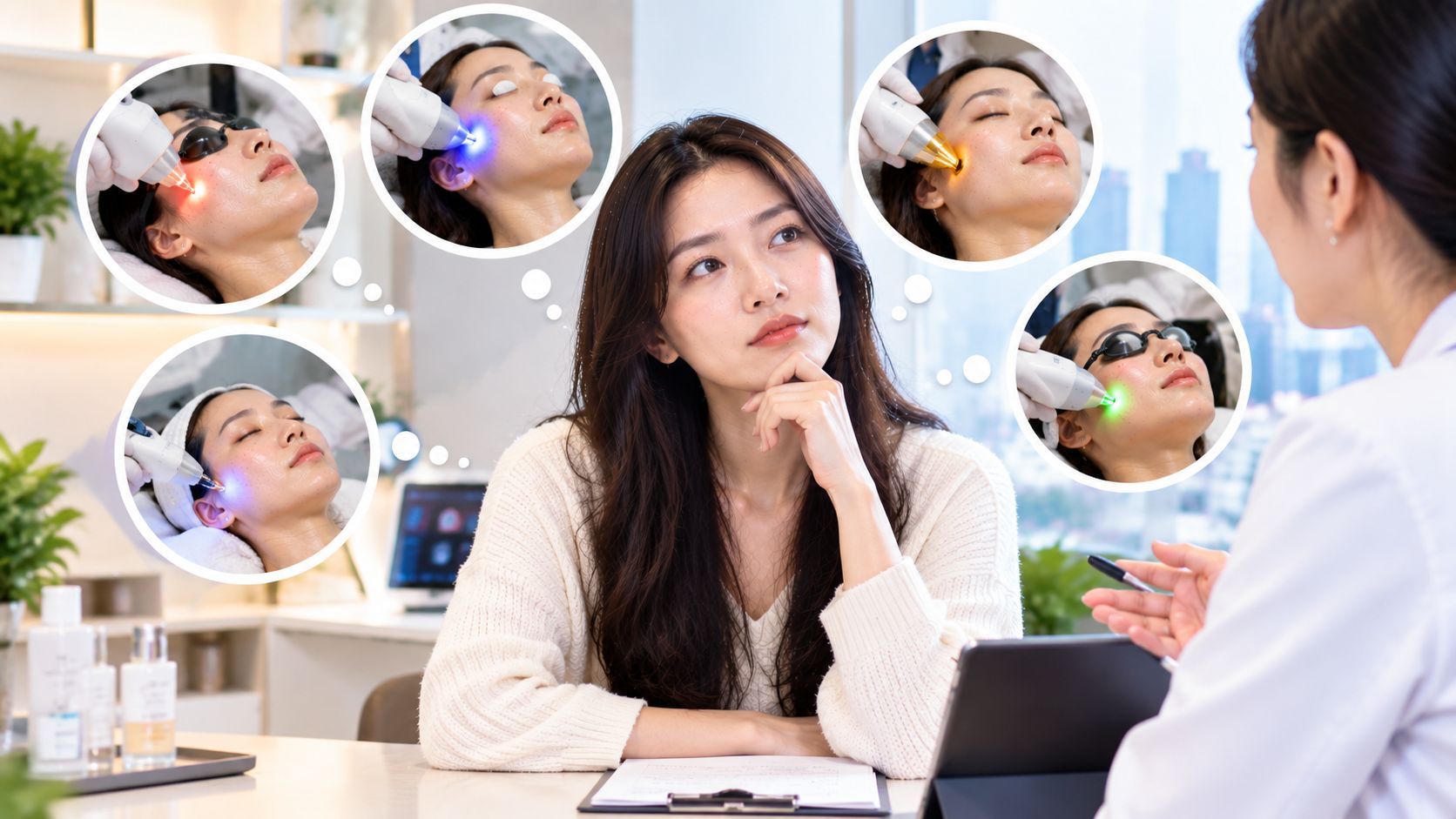
Only have time for one laser treatment in Seoul? Learn how to prioritize your main concern, compare devices, assess downtime, and plan safely.

Should you choose a laser device before your Seoul treatment? Learn why skin examination, treatment goals, settings, downtime, and risks matter.

Does the newest laser machine mean better results in Seoul? Learn how to compare new and established devices by treatment goals, settings, risks, and downtime.

Choosing a Seoul laser clinic? Learn how to compare clinics when they use different machines, based on treatment goals, doctors, settings, recovery, and follow-up.

Should you do your strongest laser at the beginning or end of a Seoul trip? Learn how downtime, recovery, follow-up, and flights affect timing.
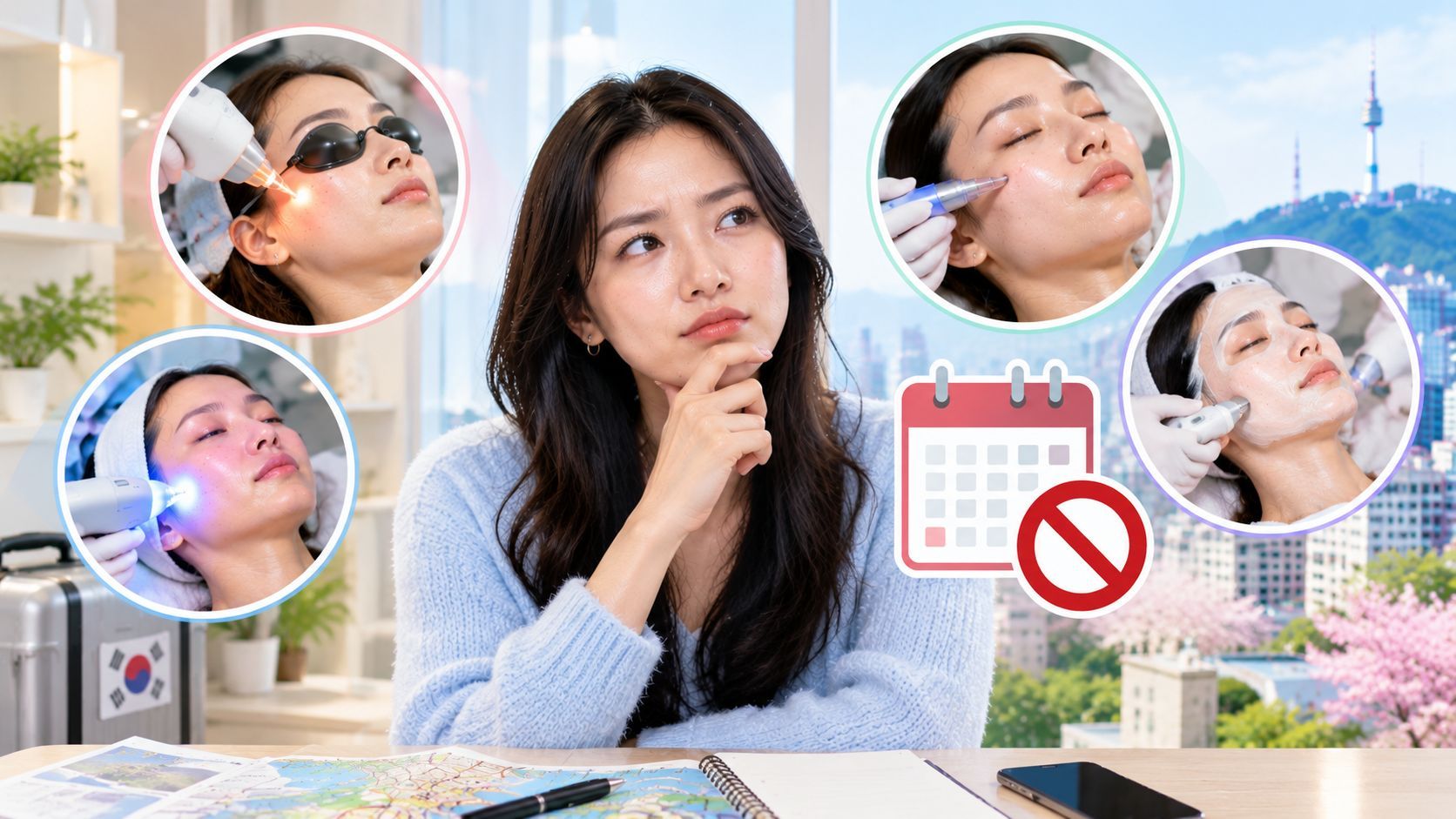
Learn which laser, RF, lifting, resurfacing, and injectable treatments may need careful spacing during a Seoul skin treatment trip.

Can you combine Pico, Potenza and a lifting treatment in Korea? Learn how to plan treatments, recovery, timing, and your Seoul trip.

Should you choose one expensive device or several cheaper lasers in Seoul? Compare cost, treatment goals, downtime, recovery, and overall value.

Have $1,000 and five days in Korea? Learn which laser and device treatments may fit your skin goals, budget, downtime, and travel schedule.

Have $500 for laser treatments in Seoul? Learn how to prioritize treatments by skin concern, downtime, value, and realistic treatment goals.