Can I Treat Redness and Pigmentation With Different Lasers on the Same Day?
Introduction
Redness and pigmentation can appear together, but they are not necessarily caused by the same skin process. Redness may come from visible blood vessels, post-inflammatory erythema, rosacea, or irritation, while brown pigmentation may result from melanin changes after acne, sun exposure, melasma, or other causes.
Because different laser and light technologies target different structures, it may be possible to treat redness and pigmentation during the same treatment session. However, combining treatments is not automatically appropriate. The dermatologist needs to determine the cause of each problem, the patient's skin type, the devices being used, and whether the combined inflammatory burden is reasonable.
Can I Treat Redness and Pigmentation With Different Lasers on the Same Day?
Yes, selected patients can receive treatments for vascular redness and pigmentation during the same visit, but the combination should be planned by a qualified dermatologist.
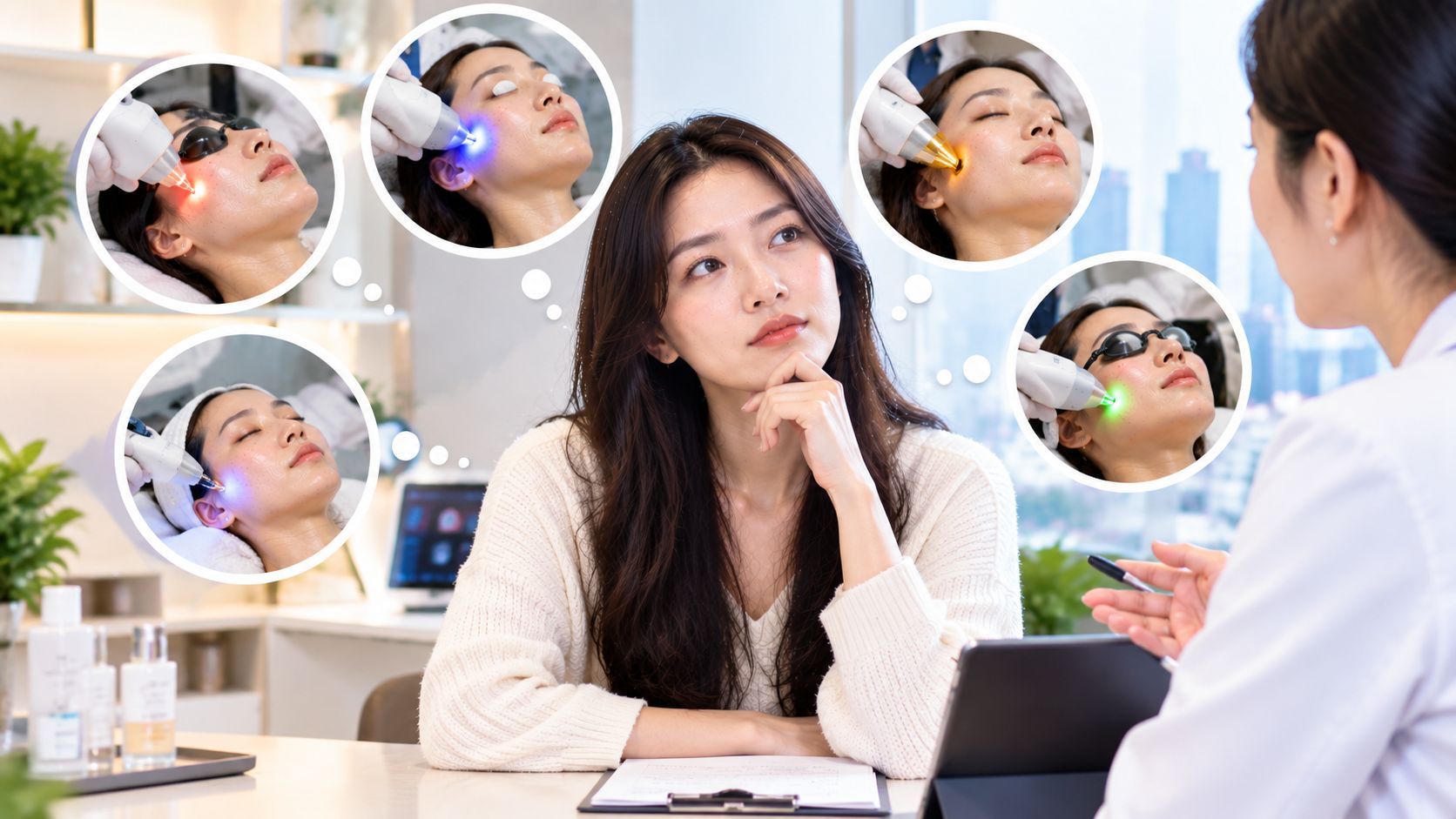
For example, a clinician might use a vascular laser for visible red vessels and a separate pigment-targeting laser for selected brown spots. However, whether both should be performed on the same day depends on:
- The exact cause of the redness
- The type of pigmentation
- Skin tone
- Previous reactions to laser
- Risk of post-inflammatory hyperpigmentation
- Treatment intensity
- Whether the skin is currently irritated
- Recovery time available
More treatment in one appointment is not automatically better treatment.
Why Do Redness and Pigmentation Need Different Treatments?
Redness Is Often Vascular
Persistent red marks can be associated with superficial blood vessels. Examples include:
- Telangiectasia
- Rosacea-related vessels
- Post-inflammatory erythema after acne
- Some forms of diffuse facial redness
Vascular lasers such as pulsed-dye laser and selected 532-nm vascular lasers may be considered for appropriate vascular targets. Research has demonstrated improvement in facial telangiectasia with several vascular laser technologies.
Pigmentation Is Usually Melanin-Related
Brown or gray marks are generally related to melanin rather than blood vessels.
Possible causes include:
- Post-inflammatory hyperpigmentation
- Sun spots
- Freckles
- Melasma
- Other pigmentary disorders
Depending on the diagnosis, clinicians may consider pigment-targeting lasers, picosecond devices, certain Q-switched lasers, or other approaches.
The important point is that “brown” does not automatically mean one particular laser is appropriate.
What Might a Same-Day Combination Look Like?
Vascular Laser for Redness
A dermatologist may first target visible blood vessels with a vascular laser such as VBeam or a suitable 532-nm device.
The goal is to selectively treat vascular structures while minimizing injury to surrounding skin.
Pigment Treatment for Brown Areas
A separate wavelength or device may then be used for an appropriate pigment target.
The exact treatment depends on whether the pigmentation is:
- Superficial
- Deeper
- Sun-related
- Post-inflammatory
- Melasma-related
The treatment sequence can vary. There is no universal rule that vascular treatment must always be performed before or after pigment treatment.
Can VBeam and Pico Laser Be Done on the Same Day?
In selected cases, a dermatologist may combine vascular and pigment-oriented treatments, but the decision should be individualized.
VBeam targets vascular structures, while a picosecond laser may be used for selected pigmentary conditions. These treatments address different targets, so they are not inherently interchangeable.
However, performing two procedures means the skin is exposed to more treatment-related inflammation in one visit. This can matter particularly for patients who develop post-inflammatory hyperpigmentation easily.
A clinician may therefore decide to:
- Treat both problems in one appointment
- Treat different areas separately
- Reduce the intensity of one treatment
- Stage the procedures on different days
- Treat the more important problem first
What About Pigmentation-Prone Asian Skin?
Post-Inflammatory Hyperpigmentation Matters
People with darker or more melanin-rich skin can develop post-inflammatory hyperpigmentation after skin injury or inflammation.
This does not mean laser treatment is unsuitable. It means the treatment plan needs to account for pigmentary risk.
Important factors include:
- Skin tone
- Previous PIH
- Recent sun exposure
- Laser wavelength
- Fluence
- Pulse duration
- Treatment density
- Cooling
- Current skin inflammation
The American Academy of Dermatology notes that laser treatment can produce temporary or permanent skin-color changes when performed improperly, reinforcing the importance of appropriate treatment selection and technique.
When Same-Day Treatment May Make Sense
A combined session may be considered when:
- The redness and pigmentation have been clearly diagnosed.
- Both treatment targets are appropriate for laser therapy.
- Your skin is relatively calm.
- You have no significant active dermatitis or irritation.
- The clinician can use conservative, appropriate parameters.
- Your skin has previously tolerated similar treatments.
For example, someone with a few superficial red vessels and separate sun-related pigmented spots may potentially be treated with different technologies during one visit.
This is very different from aggressively treating the entire face with several devices simply because multiple concerns exist.
When Should the Treatments Be Separated?
If You Have Sensitive or Inflamed Skin
If your skin is already irritated, combining procedures may increase discomfort and inflammation.
A dermatologist may recommend allowing the skin to settle before performing another treatment.
If You Have a High PIH Risk
If you have previously developed significant hyperpigmentation after acne, injury, or laser treatment, staging procedures may provide more control over the inflammatory response.
If You Have Melasma
Melasma deserves special consideration.
Aggressive or inappropriate laser treatment can sometimes worsen melasma or trigger additional pigmentation. Treatment therefore needs to be based on the diagnosis rather than simply targeting every brown area with a pigment laser.
Can Treating Redness and Pigmentation Together Make Results Better?
It can potentially address multiple visible concerns within one treatment plan, but that does not mean simultaneous treatment produces better results in every patient.
The priority should be:
Correct diagnosis → appropriate device → appropriate settings → controlled recovery.
Treating two problems at once may be convenient, especially for international patients visiting Seoul for a short trip, but convenience should not override treatment safety.
What Is the Downtime After Combined Treatment?
Downtime depends heavily on the devices and settings used.
After vascular treatment, you may experience:
- Redness
- Swelling
- Tenderness
- Purpura
After pigment-targeting treatment, you may experience:
- Temporary darkening
- Redness
- Mild swelling
- Crusting or flaking in some treatments
Combining procedures can make the recovery experience more noticeable because different types of skin reactions may occur simultaneously.
If you are traveling to Seoul, ask the clinic how long your skin is expected to look visibly treated before booking sightseeing, photography, events, or your return flight.
Can I Use Skincare After Both Treatments?
Your post-treatment routine should follow the clinic's instructions.
In general, recently treated skin may be more sensitive to:
- Strong exfoliating acids
- Retinoids
- Scrubs
- Fragrance
- Heat
- Sun exposure
Sun protection is especially important after procedures that can temporarily increase skin sensitivity or inflammation.
How Should I Choose a Seoul Clinic for Both Redness and Pigmentation?
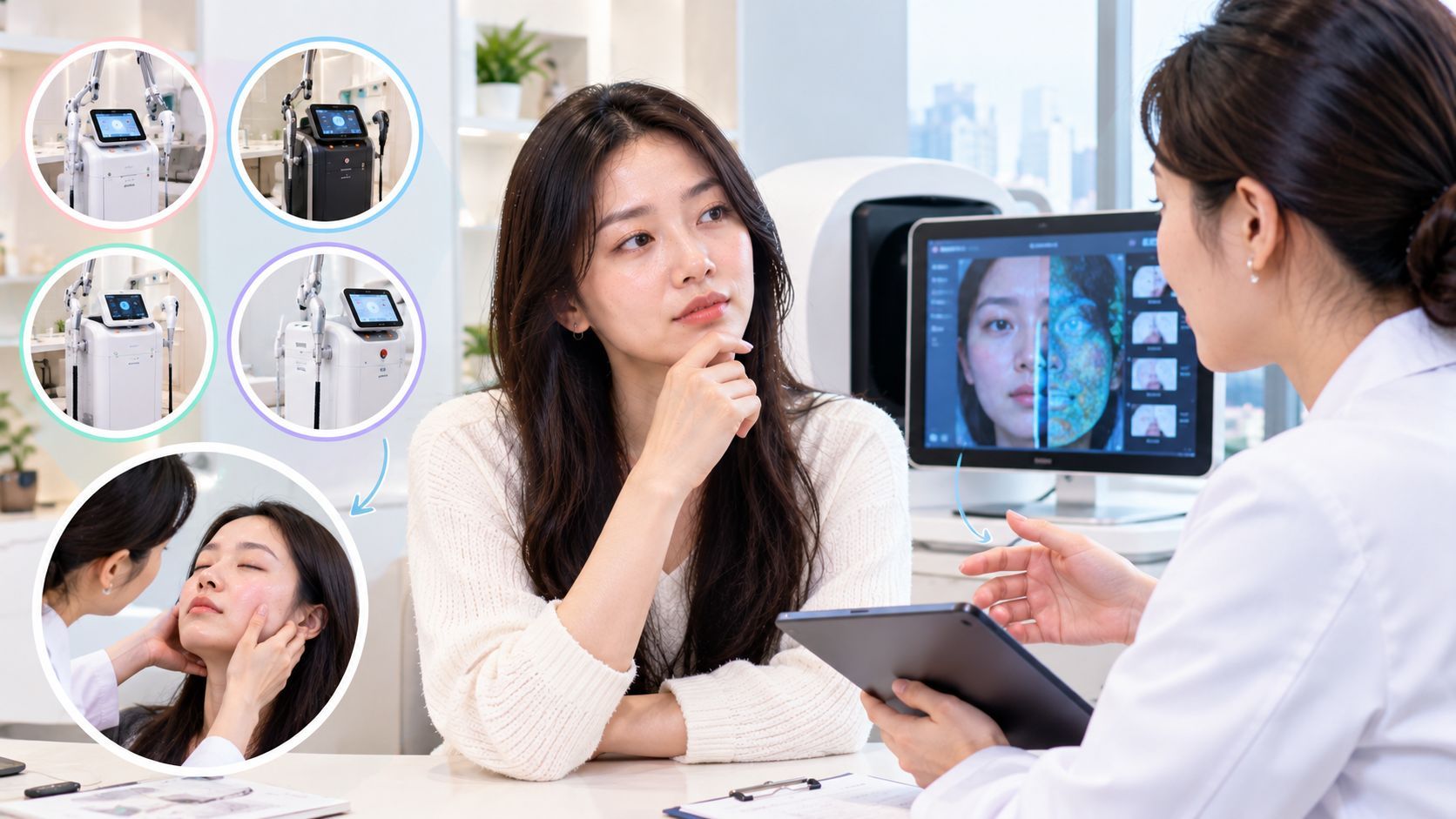
Instead of asking only, “Which laser do you have?”, ask:
- What is causing my redness?
- Is the redness vascular?
- What type of pigmentation do I have?
- Could this be melasma?
- Why do you recommend treating both on the same day?
- Which laser is being used for each target?
- What is my PIH risk?
- Would you recommend separating the treatments?
- How much downtime should I expect?
- What should I avoid before and after treatment?
A good treatment plan should explain why each device is being used, rather than simply offering several lasers as a package.
Redness Laser vs Pigmentation Laser
ConcernPotential treatment categoryMain targetVisible red vesselsVascular laserBlood vesselsPost-acne erythemaSelected vascular/light treatmentsVascular rednessBrown post-acne marksPigment-focused treatmentMelaninSun spotsSelected pigment lasers/light treatmentsPigmentMelasmaCarefully selected medical/laser strategiesExcess pigmentationDiffuse rednessVascular laser/light treatment in selected casesVascular redness
These categories overlap, and the correct treatment depends on the diagnosis rather than the color alone.
Conclusion
Redness and pigmentation can sometimes be treated with different lasers during the same appointment, but this should not be treated as a routine combination for everyone.
Vascular lasers address blood-vessel-related redness, while pigment-focused devices target selected melanin-related problems. Combining them can be reasonable when both problems are clearly diagnosed and the patient's skin can tolerate the overall treatment.
For patients with sensitive, darker, or pigmentation-prone skin, or conditions such as melasma, a dermatologist may prefer to stage treatments rather than perform multiple procedures at once.
If you are considering treatment in Seoul, ask the clinic to explain what is causing each type of discoloration and why each laser is being recommended before agreeing to a same-day combination.
FAQs
Can VBeam and a pigmentation laser be used on the same day?
They may be combined in selected patients, but the decision depends on the treatment areas, skin type, diagnosis, settings, and risk of inflammation or pigmentation.
Should redness or pigmentation be treated first?
There is no universal sequence. The dermatologist may choose the order based on the devices, treatment areas, skin sensitivity, and overall treatment plan.
Can same-day laser treatment increase PIH risk?
Combining procedures can increase the overall inflammatory burden, which may matter for people prone to post-inflammatory hyperpigmentation. Your dermatologist may therefore choose conservative settings or separate the procedures.
Can I treat melasma and redness with lasers on the same day?
It depends on the diagnosis and treatment plan. Melasma requires particular caution because inappropriate or aggressive treatment can worsen pigmentation.
How long should I wait between different laser treatments?
There is no universal interval. The appropriate timing depends on the devices used, treatment intensity, skin response, and whether the skin has fully recovered.
Is it better to combine lasers during a short Seoul trip?
Combining treatments can save appointments, but it is not automatically preferable. The priority should be appropriate treatment and recovery rather than fitting as many procedures as possible into a short trip.