Why Does My Face Stay Red Even Though My Acne Is Gone?
Introduction
It can be frustrating when active acne has cleared but your face still looks red, pink, or flushed. In many cases, this does not mean that the acne is still present. The remaining color may be post-acne erythema, often called post-inflammatory erythema (PIE).
PIE can occur because acne inflammation causes changes in the superficial blood vessels and surrounding skin. It often fades gradually, but some redness can persist for months. Research describes post-acne erythema as a common consequence of acne inflammation and notes that there is currently no single gold-standard treatment.
Why Does My Face Stay Red After Acne Is Gone?
Post-Inflammatory Erythema Can Remain After the Pimple Disappears
Acne causes inflammation inside and around the skin. Even after the pimple has flattened, the inflammatory process can leave behind persistent erythema.
Post-acne erythema is associated with dilation of small blood vessels in the superficial dermis, along with inflammatory changes.
This can make previously acne-prone areas look:
- Pink
- Red
- Reddish-purple
- Uneven in color
- More noticeable after heat or exercise
The important point is that redness does not necessarily mean active acne remains.
Your Skin May Need Time to Recover
Some post-acne redness gradually becomes less noticeable without laser treatment. How quickly it fades varies from person to person.
Persistent erythema can remain for months, particularly after more intense inflammatory acne.
Factors that may influence how noticeable it remains include the severity of the original inflammation, skin tone, sun exposure, ongoing irritation, and individual vascular response.
Is It PIE or Something Else?
Red Marks vs Brown Acne Marks
One of the most important distinctions is between red acne marks and brown acne marks.
Red or pink marks may represent post-inflammatory erythema, whereas brown or gray marks are more consistent with post-inflammatory hyperpigmentation.
These problems can occur together, so a person may have both red and brown marks after acne.
The treatment approach can therefore be very different.
Could It Actually Be Rosacea?
Not every face that remains red after acne has PIE.
Rosacea can cause persistent facial redness, flushing, visible blood vessels, and acne-like breakouts. The American Academy of Dermatology specifically notes that rosacea can sometimes resemble acne, making diagnosis important.
Consider getting a professional assessment if you also experience:
- Frequent flushing
- Burning or stinging
- Persistent redness across the cheeks or nose
- Visible small blood vessels
- Redness triggered by heat, alcohol, spicy foods, or exercise
- Repeated acne-like breakouts without typical comedones
Can Laser Treatment Help Persistent Redness After Acne?
Vascular Lasers
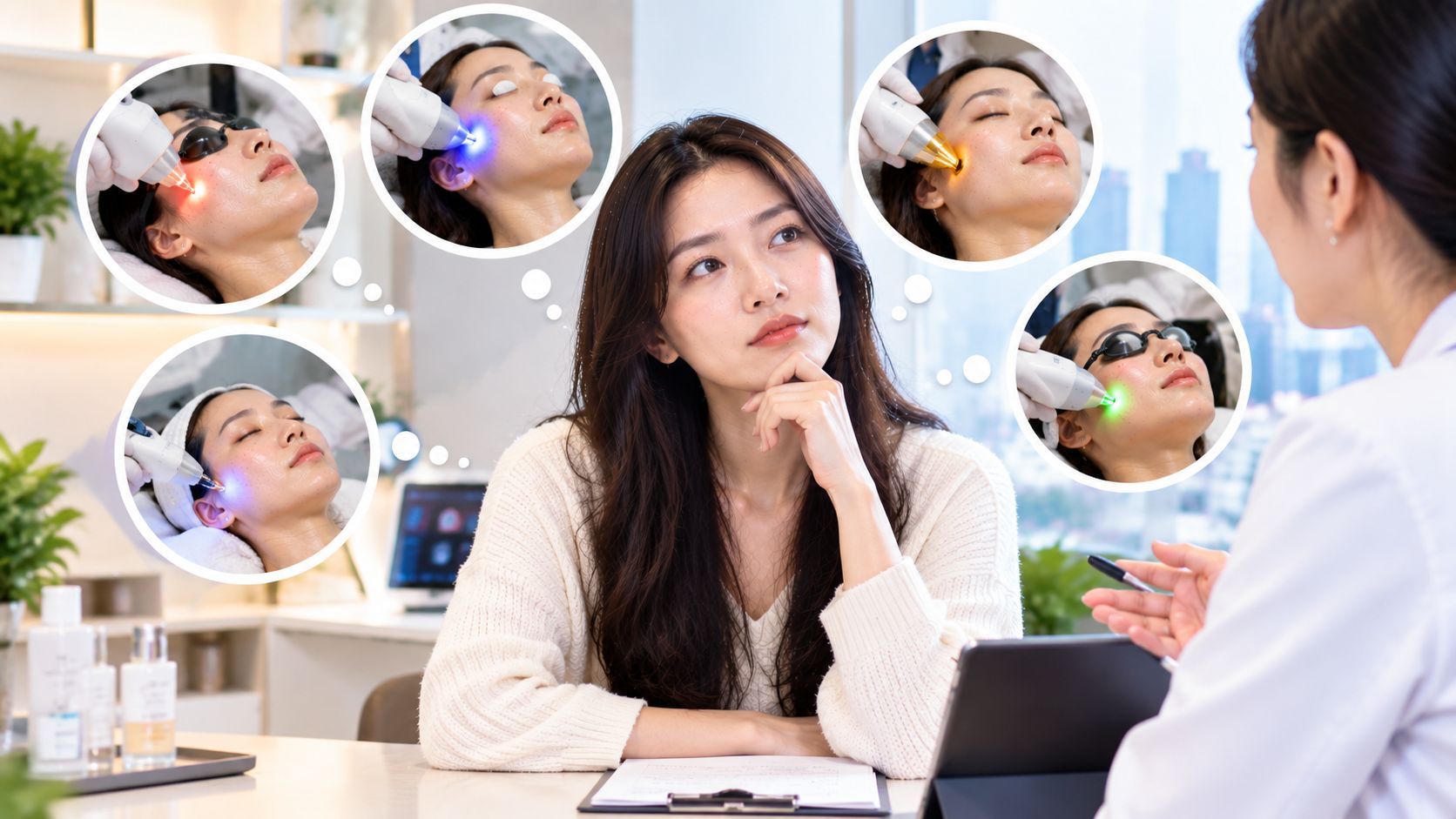
Yes, selected vascular lasers can reduce persistent post-acne erythema.
A systematic review found that pulsed-dye lasers were the most commonly studied laser devices for post-acne erythema, followed by Nd:YAG lasers. Overall, laser and light-based treatments showed potential benefits, although more high-quality comparative research is needed.
The reason vascular lasers can make sense is that some post-acne redness is associated with superficial vascular changes.
VBeam / Pulsed-Dye Laser
VBeam is a pulsed-dye laser commonly used for vascular redness.
Research has specifically investigated 595-nm pulsed-dye laser treatment for acne-related erythema.
It may be considered when the remaining marks are:
- Flat
- Pink or red
- Persistent after acne has healed
- Associated with superficial vascular changes
It is not primarily designed to correct deep depressed acne scars.
Other Vascular Lasers
Other vascular wavelengths and technologies have also been studied for post-acne erythema, including Nd:YAG and yellow-light laser systems. A 2025 study, for example, reported improvement in post-acne erythema using a 577-nm pro-yellow laser.
This does not mean that every vascular laser will work equally well for every patient. The target, wavelength, pulse characteristics, settings, and skin type all matter.
What If My Entire Face Is Red, Not Just Individual Acne Marks?
This distinction matters.
Individual Red Marks
If you have isolated red or pink marks exactly where previous pimples were located, post-acne erythema is one possibility.
A dermatologist may consider a vascular-directed treatment if the marks appear to have a vascular component.
Diffuse Facial Redness
If most of your cheeks, nose, or central face remain red, the cause may be broader than individual PIE spots.
Possible explanations include:
- Rosacea
- Persistent vascular dilation
- Skin-barrier irritation
- Excessive exfoliation
- Dermatitis
- Environmental triggers
- Ongoing inflammation
The AAD notes that laser or light treatment can reduce persistent rosacea-related redness and visible vessels, but treatment plans often also involve skincare, trigger management, or medication.
Can Skincare Help Redness After Acne?
Reduce Ongoing Irritation
If your skin is still inflamed or easily irritated, aggressive skincare may make the redness more noticeable.
A simple routine may be preferable while the skin barrier recovers:
- Gentle cleanser
- Non-irritating moisturizer
- Broad-spectrum sunscreen
- Carefully selected acne treatment if active acne remains
Avoid assuming that stronger exfoliation will make red marks disappear faster.
Sun Protection Matters
Sun exposure can make post-inflammatory discoloration more difficult to manage and can contribute to ongoing skin irritation.
If you are undergoing laser treatment, sun protection is particularly important. The AAD recommends protecting treated skin from sunlight to reduce the risk of complications.
Does RF Microneedling Help Red Acne Marks?
RF microneedling has also been studied for acne-related post-inflammatory erythema. The systematic literature review includes fractional microneedling radiofrequency among investigated treatment approaches.
However, RF microneedling is often considered in a broader acne-scar treatment strategy rather than simply assuming that every red mark requires RF.
If you have redness plus depressed scars, a dermatologist may need to address both problems separately.
What If I Have Redness and Acne Scars at the Same Time?
Redness and Texture Are Different Problems
A depressed acne scar is a structural change in the skin. PIE is primarily a color problem.
For example:
- Vascular laser may target persistent redness.
- Fractional resurfacing may be considered for selected textural scars.
- RF microneedling may be considered for certain acne-scar patterns.
- Subcision may be considered for appropriately selected tethered rolling scars.
Trying to use one aggressive procedure to solve every aspect of post-acne skin may not be necessary.
Can Laser Make Redness Worse?
Temporary Redness Is Common
Laser treatment itself can temporarily make the skin red.
Depending on the device and settings, possible effects include:
- Temporary erythema
- Swelling
- Tenderness
- Purpura
- Temporary pigment changes
- Rarely, burns or scarring
The AAD notes that temporary redness and red or purple spots can occur after vascular laser or light treatment and generally improve during recovery.
Aggressive Treatment Is Not Automatically Better
More energy does not necessarily mean better treatment of PIE.
The goal is to target the relevant vascular component while minimizing unnecessary inflammation and pigmentary complications.
This is particularly important for people who are prone to post-inflammatory hyperpigmentation.
How Long Does Post-Acne Redness Take to Fade?
There is no universal timeline.
Some marks gradually become lighter without treatment, while persistent erythema can remain for months.
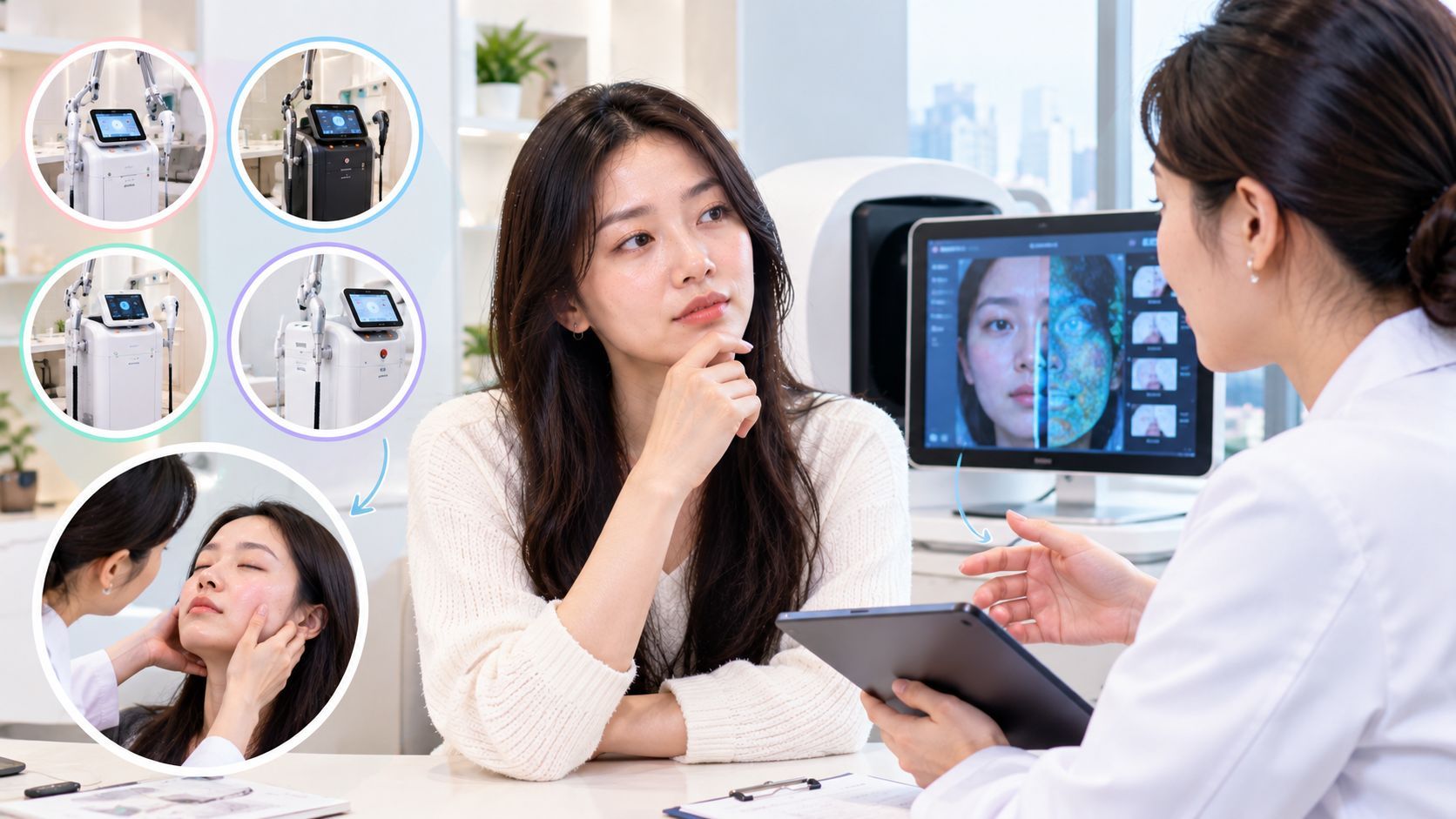
If the redness is not improving, is spreading, or is accompanied by flushing and sensitivity, a dermatologist can help determine whether you are dealing with PIE, rosacea, irritation, or another condition.
Should I Get a Laser in Seoul for Persistent Acne Redness?
If you are considering treatment in Seoul, focus on diagnosis and treatment planning rather than simply choosing a popular laser.
Ask the clinic:
- Are these marks actually post-inflammatory erythema?
- Do you see a vascular component?
- Could this be rosacea?
- Which wavelength are you recommending and why?
- Would VBeam, another vascular laser, or a different treatment be appropriate?
- Do I have pigmentation as well as redness?
- What is my risk of post-inflammatory hyperpigmentation?
- How much downtime should I expect?
- How many treatments might be necessary?
- Should I treat active acne before treating the redness?
If you are visiting Korea for only a few days, also ask about expected recovery before scheduling treatment close to your flight.
Conclusion
A face that remains red after acne has disappeared is often experiencing post-acne erythema, rather than ongoing acne. The condition can persist because acne inflammation may leave changes in the superficial blood vessels and surrounding skin.
Vascular lasers such as VBeam and other light- or laser-based approaches may help selected cases, but there is no single treatment that is appropriate for everyone. If redness is diffuse, recurrent, or accompanied by flushing and visible vessels, rosacea or another condition should also be considered.
The most useful first step is therefore to determine why your face is still red before choosing a laser.
FAQs
Why is my face still red months after acne?
Persistent post-inflammatory erythema can remain after acne because inflammation may cause changes in superficial blood vessels. It can gradually fade, but some cases persist for months.
Is red acne scarring the same as brown acne marks?
No. Red or pink marks may represent post-inflammatory erythema, while brown or gray discoloration is more consistent with post-inflammatory hyperpigmentation. Both can occur together.
Can VBeam help redness left by acne?
VBeam/PDL has been studied for post-acne erythema and may reduce vascular redness in appropriately selected patients.
Could my acne actually have been rosacea?
It is possible, particularly if you also have persistent facial redness, flushing, visible vessels, or acne-like breakouts. A dermatologist can distinguish rosacea from acne and other causes of facial redness.
Will laser permanently remove post-acne redness?
Permanent clearance cannot be guaranteed. Some redness improves substantially, while other cases require repeated treatment or gradually improve over time. The underlying condition also matters.
Should I wait before treating red acne marks?
If the marks are gradually fading and your skin is otherwise calm, observation may be reasonable. If the redness persists, worsens, or is accompanied by flushing or other symptoms, professional assessment can help determine whether treatment is appropriate.