Does Having the Newest Laser Machine Actually Mean Better Results?
Introduction
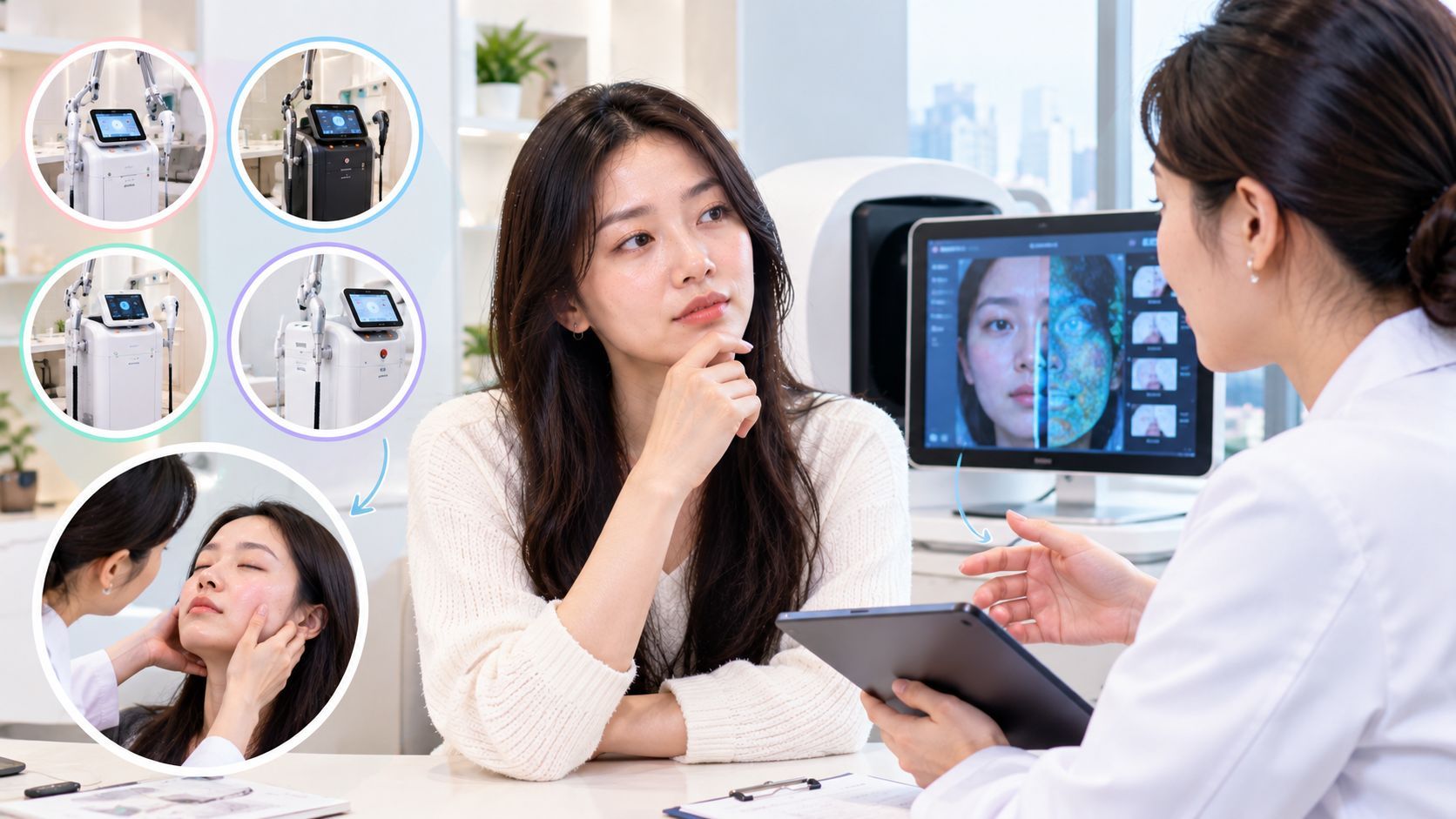
When researching laser and device treatments in Seoul, it is easy to assume that the newest machine must produce the best results. Clinics may highlight newly launched devices, advanced technology, upgraded handpieces, or the latest generation of popular laser platforms.
But newer does not automatically mean better for every patient.
The most appropriate treatment depends on what you are trying to improve, your skin characteristics, the technology's intended use, treatment settings, the clinician's assessment, and how much recovery you can accept.
A newer device may offer meaningful advantages for certain indications, but an established technology may still be appropriate for another concern.
Does the Newest Laser Machine Mean Better Results?
Not necessarily.
A newer laser or energy-based device may have technological improvements, but that does not mean it will produce better results for every skin concern.
The important questions are:
- What problem is the device designed to treat?
- Is that problem actually your main concern?
- What does the newer technology do differently?
- Is there a meaningful advantage for your particular skin?
- What treatment settings are appropriate?
- What downtime and risks are involved?
- Is the treatment supported by appropriate clinical evidence?
The device should be evaluated as part of the complete treatment plan, not as an isolated piece of technology.
Why Newer Devices Can Be Different
Newer devices may introduce changes such as:
- Different energy-delivery systems
- Improved treatment control
- New wavelengths
- Updated applicators
- Different pulse characteristics
- More precise energy distribution
- Different treatment depths
- Improved comfort features
- Different treatment protocols
These differences can matter.
However, a technological improvement is only useful if it provides an advantage for the specific problem being treated.
New Technology Does Not Automatically Mean Better for Every Concern
Pigmentation
If your main concern is pigmentation, the relevant question is not whether a laser is the newest model.
You first need to know what type of pigmentation is present.
Freckles, sun-related pigmentation, post-inflammatory pigmentation, and melasma can behave differently.
A newer device may be useful for one indication but inappropriate or unnecessarily aggressive for another.
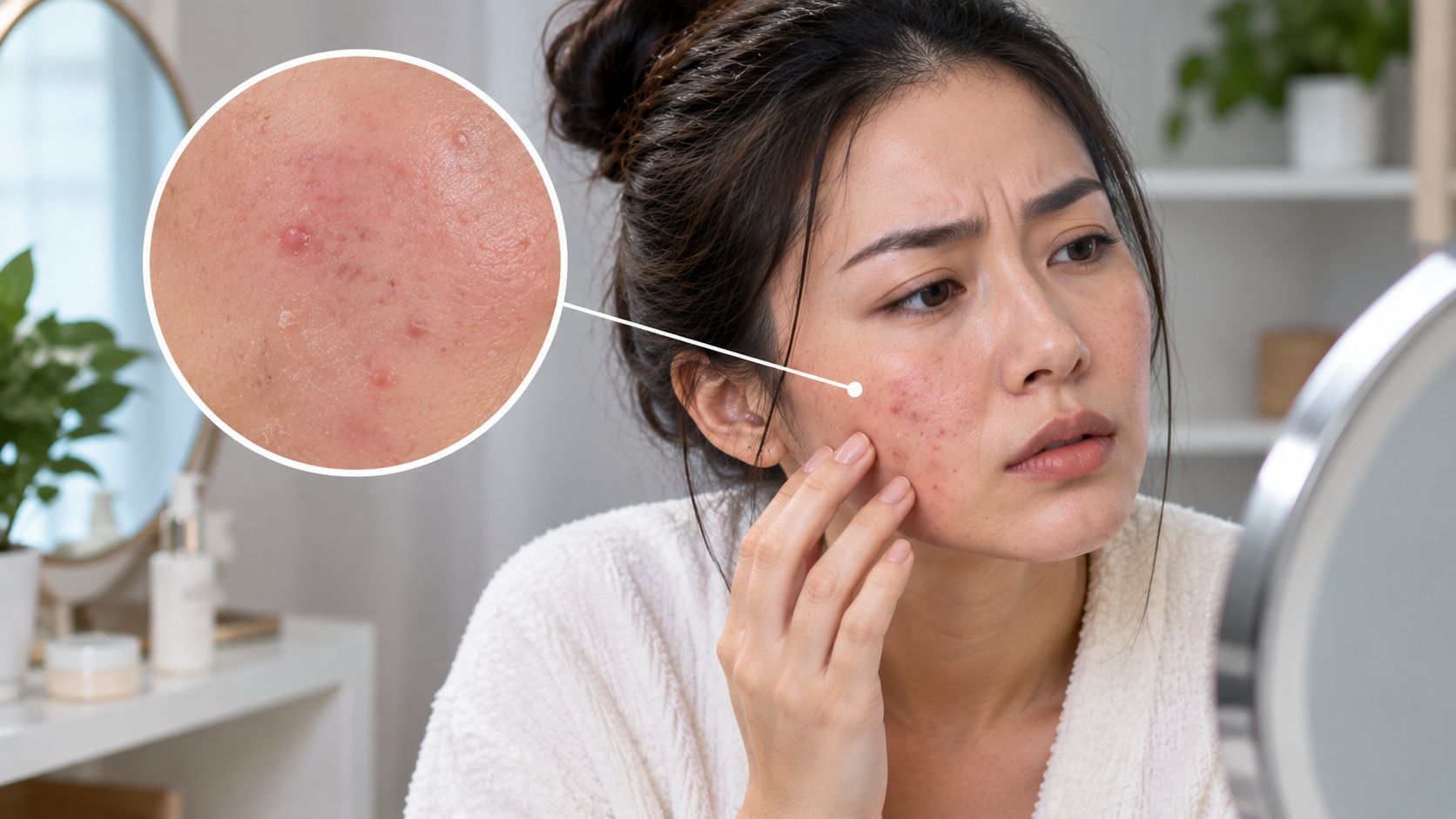
Acne Scars
Acne scars require assessment of their morphology.
Rolling scars, boxcar scars, and ice-pick scars may require different approaches.
A newly released laser does not automatically replace techniques that address the physical structure of a scar.
Depending on the individual case, treatment may involve resurfacing, RF microneedling, subcision, or other approaches.
Pores and Texture
Pores and uneven texture can have multiple causes.
A newer device may offer a different mechanism or treatment experience, but the dermatologist still needs to determine whether the technology actually addresses the underlying concern.
Skin Laxity
For laxity, the most appropriate technology may not even be a laser.
Depending on the location and type of laxity, a dermatologist may consider RF, focused ultrasound, or another energy-based treatment.
Therefore, choosing the newest laser simply because it is new may not make sense when your primary concern is facial laxity.
Treatment Settings Can Matter as Much as the Device
A device name alone does not describe the entire treatment.
The clinician may adjust:
- Energy level
- Pulse duration
- Treatment density
- Treatment depth
- Number of passes
- Spot size
- Treatment area
- Number of shots
- Cooling or other treatment parameters
Two patients can receive the same device but have substantially different treatment experiences because the treatment parameters differ.
This is particularly important when considering resurfacing or other procedures where treatment intensity affects recovery.
A New Device May Have Less Long-Term Experience
A recently introduced technology may have less accumulated clinical experience than a device that has been used for many years.
That does not mean a newer device is ineffective.
It simply means that patients should distinguish between:
- New technology
- Established technology
- Marketing claims
- Clinical evidence
- Individual treatment suitability
If a clinic describes a device as “the latest” or “most advanced,” ask what specific advantage that provides for your concern.
What Does “Better Results” Actually Mean?
Patients can mean different things when they say they want better results.
They may want:
- Greater improvement
- Faster improvement
- Less downtime
- Less discomfort
- Lower risk of pigmentation
- More predictable recovery
- Fewer sessions
- Longer-lasting improvement
A device that produces stronger treatment effects may not necessarily be preferable if it also produces substantially more downtime or is less appropriate for your skin.
Similarly, a lower-intensity treatment may be more practical if your priority is minimal disruption to your schedule.
Compare Treatment Plans, Not Just Devices
Suppose one Seoul clinic offers an established laser while another promotes a newer machine.
Instead of asking which machine is better, compare:
FactorWhat to CompareTreatment goalWhat specific problem is being treated?TechnologyHow does each device work?EvidenceWhat is known about its intended use?SettingsHow will the treatment be customized?DowntimeHow much recovery is expected?RisksWhat complications are relevant to your skin?SessionsIs one session realistic or is a series commonly used?CostWhat is included in the price?Follow-upWhat happens if recovery is unexpected?
This provides a more meaningful comparison than simply choosing the newest machine.
Why the Doctor's Assessment Matters
The dermatologist's role is not simply to select a machine from a menu.
A proper assessment may consider:
- Skin type
- Pigmentation tendency
- Current skin condition
- Acne or inflammation
- Scar morphology
- Degree of laxity
- Previous treatments
- Treatment history
- Recovery requirements
- Your expectations
For example, a patient may arrive in Seoul requesting a specific laser after seeing it online, but the dermatologist may determine that another treatment is more appropriate.
That does not necessarily mean the newer device is inferior. It means the treatment indication is different.
Should You Ask for the Newest Technology?
You can certainly ask about it.
A useful consultation question is:
“What advantage does this newer device offer for my specific skin concern compared with the established alternatives?”
Then ask:
- Is the difference clinically meaningful?
- Does it change expected downtime?
- Does it change the number of sessions?
- Is it more suitable for my skin type?
- Does it reduce a particular risk?
- Is the additional cost justified by a specific treatment advantage?
This helps turn a marketing claim into a treatment discussion.
When an Established Device May Still Be Appropriate
An established device may remain a reasonable option when:
- It is well suited to the treatment indication.
- The dermatologist has substantial experience using it.
- The treatment can be customized appropriately.
- Its recovery profile fits your schedule.
- The expected benefits match your goals.
- The cost is more practical for you.
A device does not become clinically irrelevant simply because a newer model has entered the market.
When a Newer Device May Be Worth Considering
A newer device may be worth discussing if it offers a meaningful difference for your particular concern.
For example, it may provide:
- A different treatment mechanism
- More precise energy delivery
- A different depth
- A potentially more suitable treatment profile
- A different recovery experience
- A capability that the older technology does not provide
But the specific advantage should be explained by the treating dermatologist rather than assumed from the word “new.”
Be Careful With “Latest Technology” Marketing
Marketing terms can be attractive:
- Latest-generation
- Next-generation
- Advanced
- Revolutionary
- Cutting-edge
- Premium
- High-performance
These terms do not by themselves tell you whether the treatment is appropriate.
Instead, ask for concrete information about the procedure.
A useful clinic should be able to explain what the technology is intended to treat and why it has been selected for you.
For International Patients, Consider the Entire Treatment Plan
If you are traveling to Seoul for treatment, choosing the newest machine may not be your most important decision.
You also need to consider:
- Consultation quality
- Treatment timing
- Recovery before your flight
- Follow-up availability
- Communication
- Treatment records
- Total cost
- Whether you need additional sessions after returning home
A technically advanced treatment may be difficult to manage if your flight is scheduled immediately afterward and the expected recovery is longer than anticipated.
How to Decide Between a New and Established Device
Step 1: Identify Your Main Concern
Start with the problem, not the machine.
Step 2: Ask What Technologies Can Treat It
Find out whether there are multiple appropriate options.
Step 3: Compare the Specific Advantages
Ask what the newer device actually does differently.
Step 4: Compare Recovery and Risks
A treatment that requires substantially more downtime may not fit your Korea itinerary.
Step 5: Compare the Complete Cost
Consider the full treatment plan rather than only the advertised session price.
Step 6: Let the Dermatologist Explain the Recommendation
Your final treatment plan should be based on your skin assessment and treatment goals.
Questions to Ask at a Seoul Clinic
Before choosing a newer device, ask:
- What exactly is this device designed to treat?
- Why is it appropriate for my skin?
- What advantage does it have over the established alternatives?
- Is the newer technology likely to change my expected results?
- Will it change my downtime?
- Could it increase or reduce any particular risks?
- How many sessions might I need?
- What settings will be appropriate for my treatment?
- What would you recommend if this device were unavailable?
- Why do you recommend this treatment instead of another option?
These questions help you evaluate technology based on clinical relevance rather than novelty.
Conclusion
Having the newest laser machine does not automatically mean a patient will achieve better results.
Newer technologies can offer genuine improvements in certain areas, but the value depends on the treatment indication and the individual patient. Established technologies may still be appropriate when they match the concern, treatment goals, skin characteristics, and recovery requirements.
When comparing Seoul clinics, focus less on which clinic has the newest machine and more on why the dermatologist recommends a particular technology for your skin.
The most useful device is the one that is appropriate for the problem being treated—not simply the one that was released most recently.
FAQs
Is the newest laser technology always better?
No. Newer devices may offer technological improvements, but their usefulness depends on the treatment indication, patient characteristics, treatment settings, and clinical goals.
Should I choose a Seoul clinic because it has the newest machine?
Not by itself. Consider the dermatologist's assessment, treatment plan, device suitability, expected recovery, risks, follow-up, and total cost.
Can an older laser still produce good results?
An established device may still be appropriate when it is suitable for the specific condition and is used with appropriate treatment parameters.
How can I tell whether a new laser is actually better for me?
Ask the dermatologist what specific advantage the newer device offers for your concern compared with established alternatives. Consider whether the difference affects expected improvement, downtime, risks, or number of sessions.
Does the machine matter more than the doctor?
The device and clinician both matter, but a device cannot be evaluated separately from how and why it is used. Proper assessment, treatment selection, and parameter customization are important parts of the treatment.
Should I pay more for the newest laser in Seoul?
Not automatically. Compare the additional cost with the specific clinical advantage being offered and whether that advantage is relevant to your treatment goal.