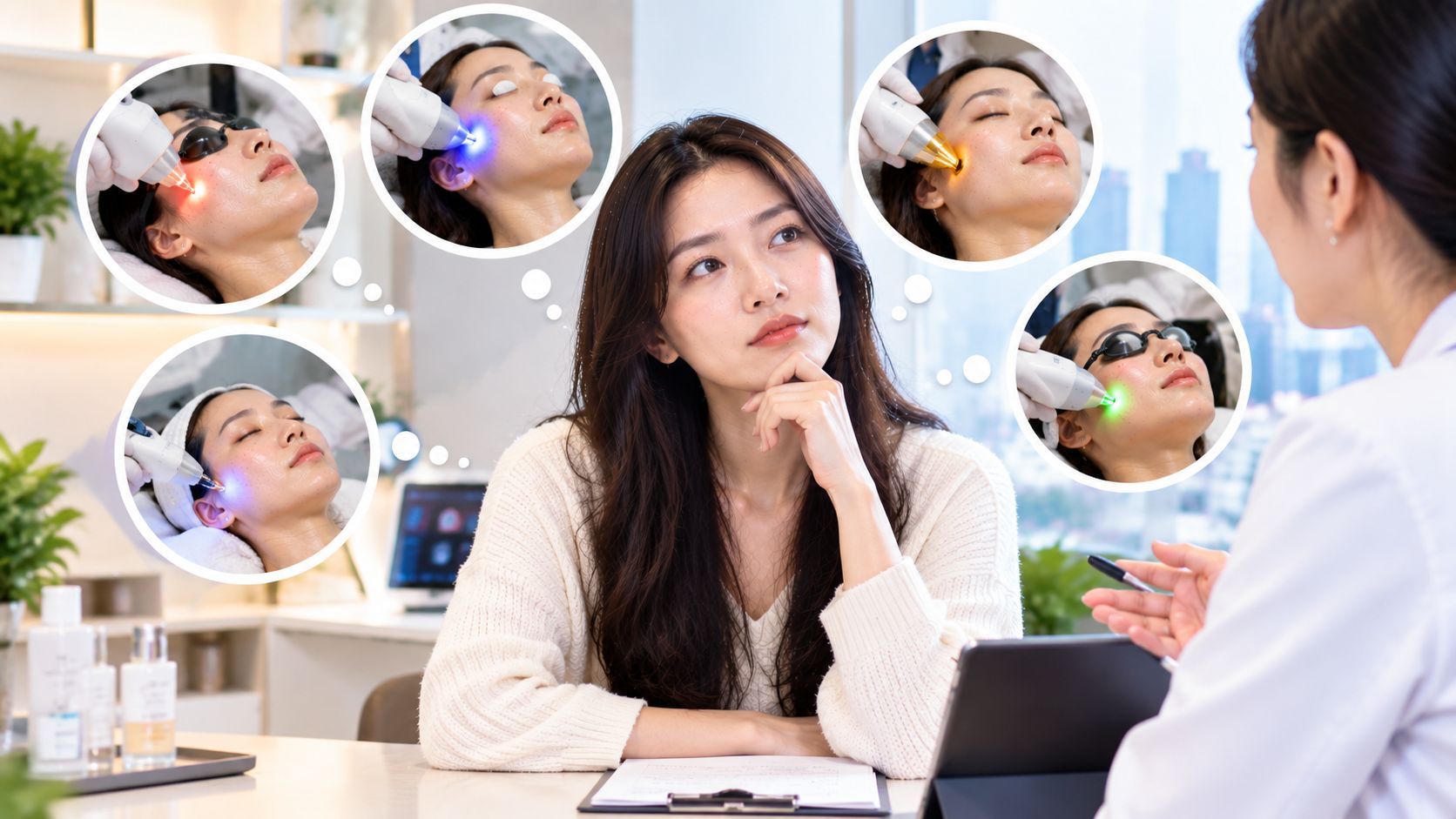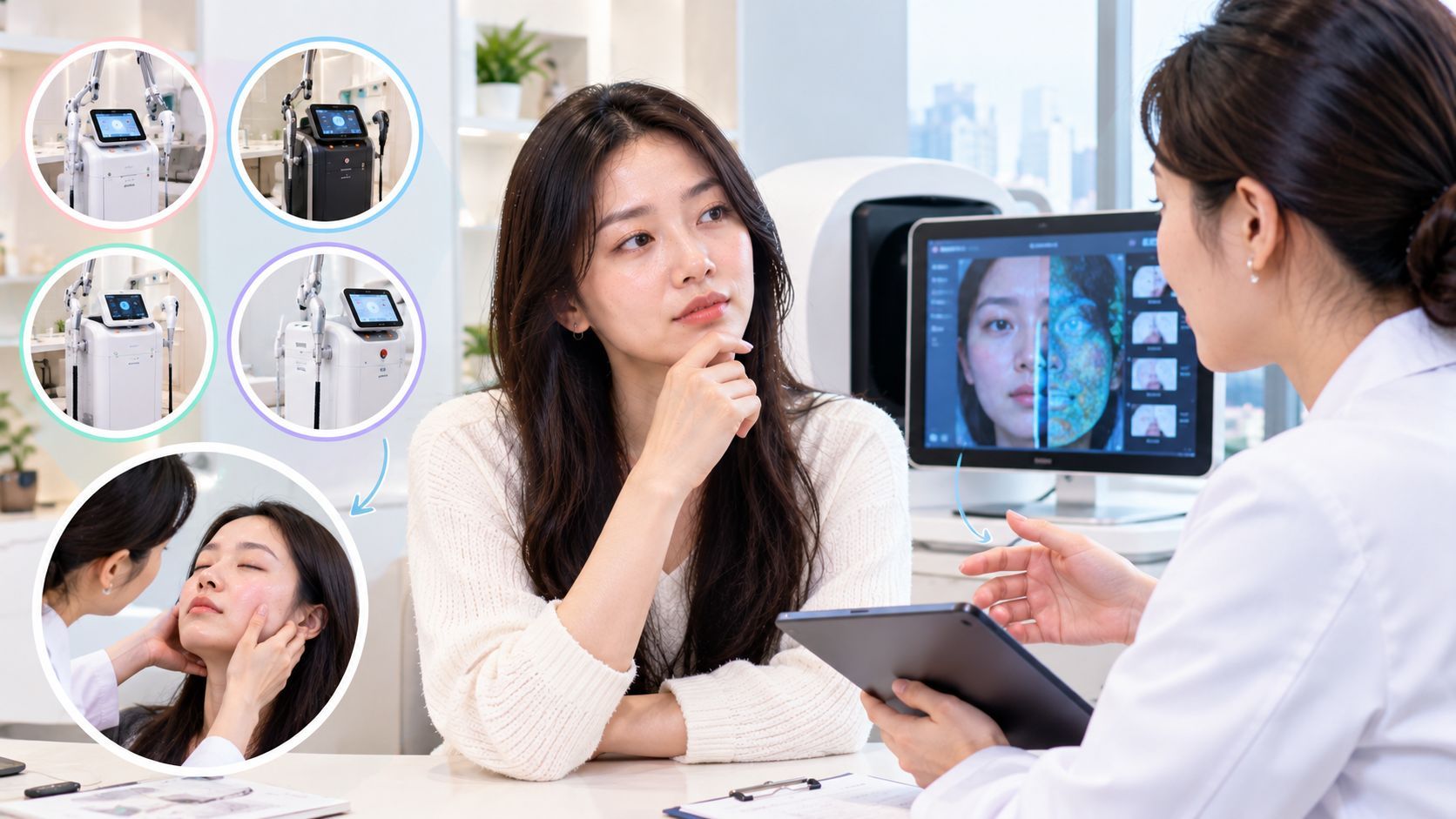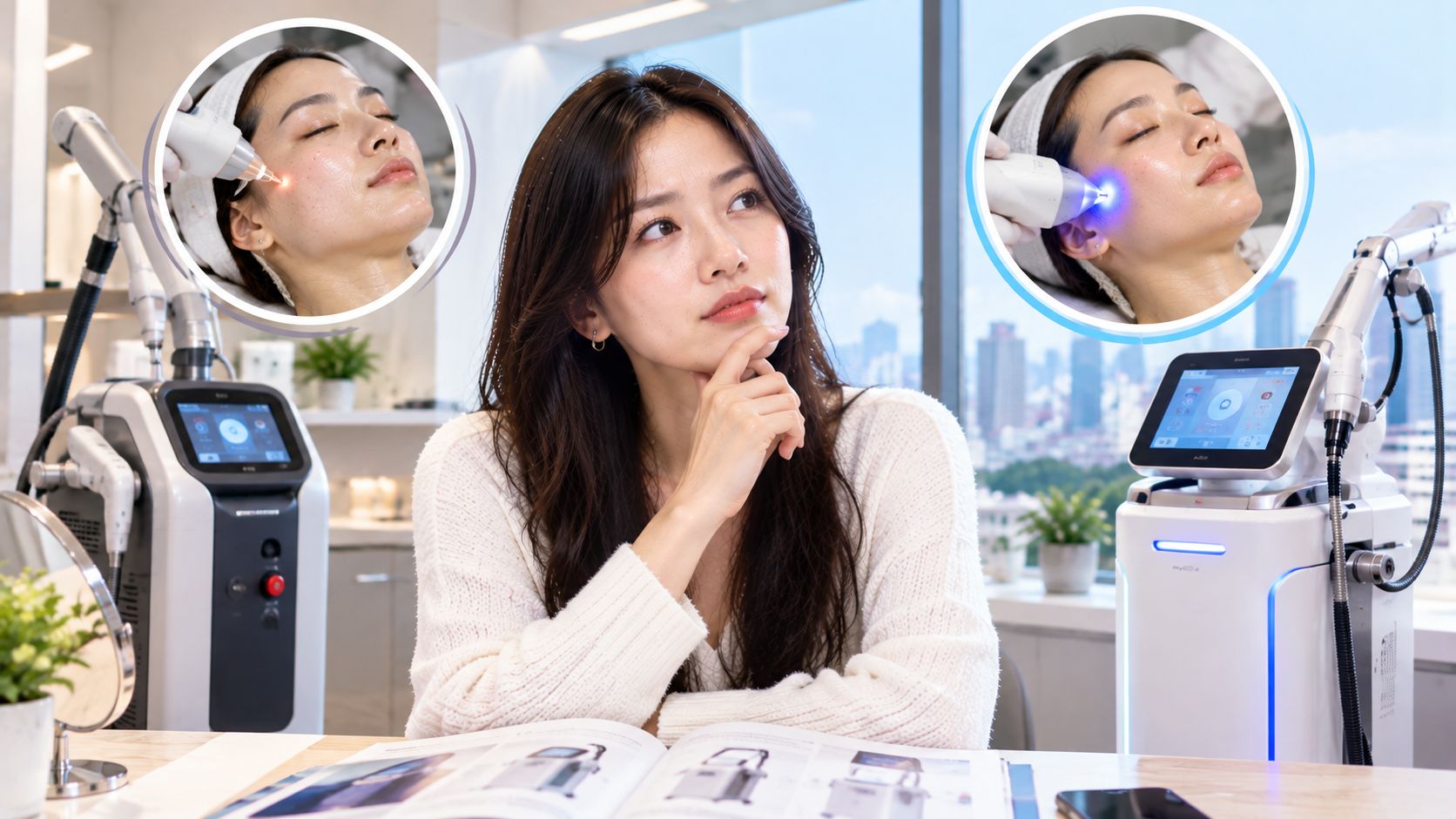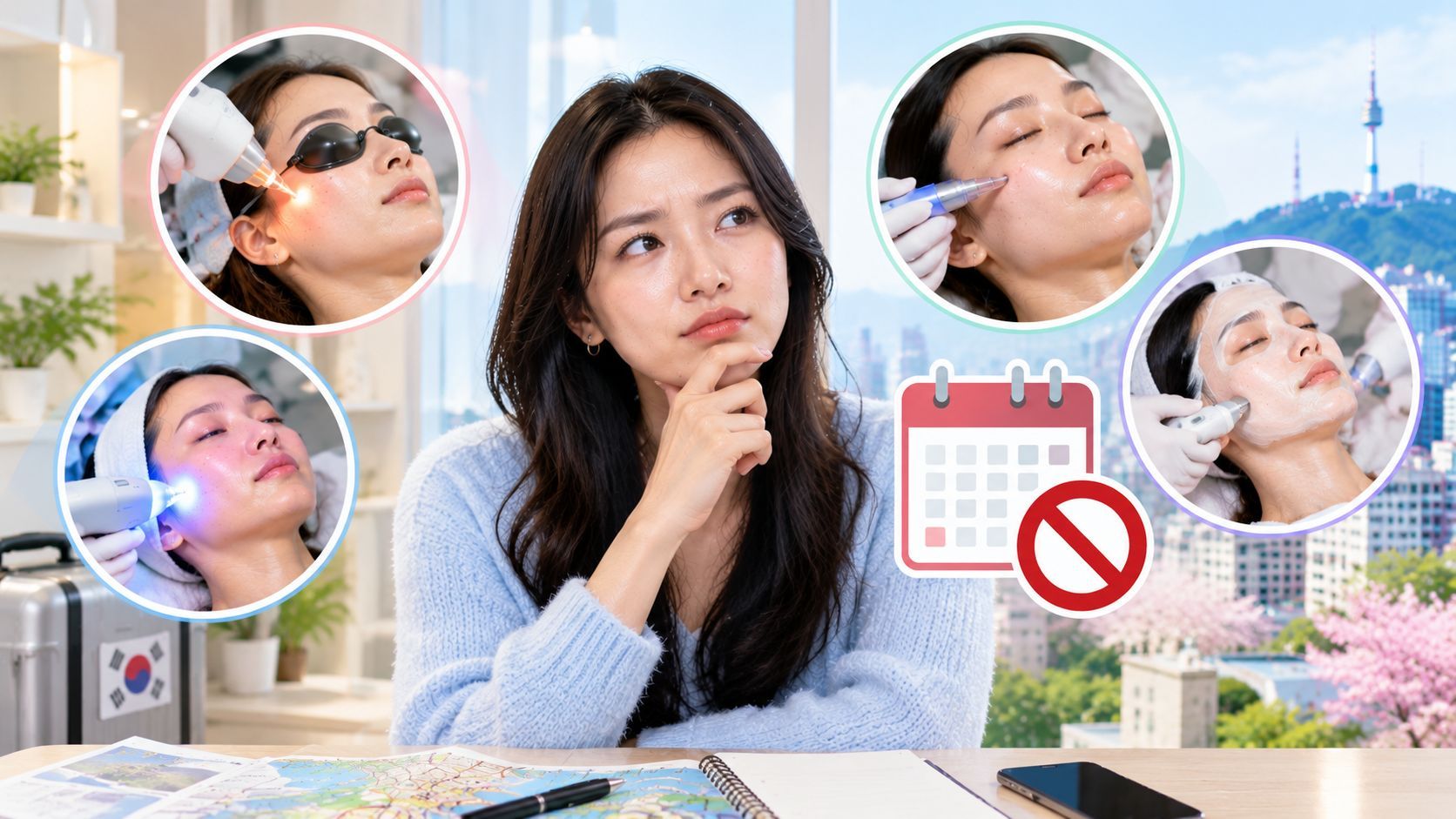
Which Seoul Laser Is Best if I Have Both Redness and Brown Spots?
Introduction
Having both facial redness and brown spots can make laser selection confusing because these two concerns may have different causes. Redness may come from visible blood vessels, rosacea, or post-inflammatory erythema, while brown spots can result from sun damage, post-inflammatory hyperpigmentation, freckles, or melasma.
There is no single Seoul laser that is best for everyone with both redness and brown spots. The appropriate treatment depends on identifying what is causing each type of discoloration and choosing a device that targets the relevant structure while considering your skin tone and risk of pigmentation.
Which Seoul Laser Is Best for Redness and Brown Spots?
The most appropriate approach may involve different laser or light technologies for the two problems rather than one device trying to treat everything.
For example:
- VBeam/PDL may be considered for selected vascular redness.
- Excel V or another 532-nm vascular laser may be considered for appropriate superficial vessels.
- Pico laser may be considered for selected pigmentary concerns.
- IPL may be considered in some patients with a combination of vascular and pigmentary changes.
However, these are treatment categories rather than universal recommendations. A dermatologist should determine whether your brown spots are actually suitable for laser treatment and whether your redness is vascular before selecting a device.
Why Redness and Brown Spots Need Different Approaches
Redness Can Be Vascular
Persistent facial redness can be caused by superficial blood vessels or vascular dilation.
Examples include:
- Telangiectasia
- Rosacea-related redness
- Post-inflammatory erythema after acne
- Certain forms of diffuse facial redness
Vascular lasers work by delivering energy to blood-related chromophores. Research has demonstrated improvement in facial telangiectasia with vascular laser technologies such as 532-nm KTP systems.
Brown Spots Are Usually Pigment-Related
Brown discoloration is usually related to melanin.
Possible causes include:
- Sun spots
- Freckles
- Post-inflammatory hyperpigmentation
- Melasma
- Other pigmentary disorders
The diagnosis matters because treating melasma as though it were an isolated sun spot can produce a very different outcome.
VBeam for Redness
When VBeam May Be Considered
VBeam is a pulsed-dye laser commonly used for vascular conditions.
It may be considered when the red component consists primarily of:
- Visible facial vessels
- Persistent vascular redness
- Selected rosacea-related vessels
- Some forms of post-inflammatory erythema
A systematic review of post-acne erythema treatments found pulsed-dye laser among the most frequently studied laser approaches for persistent redness following acne.
VBeam does not primarily target brown pigmentation, so another treatment may be necessary when both problems are present.
Excel V for Redness and Vascular Spots
532 nm for Superficial Vessels
Certain Excel V configurations use a 532-nm wavelength that can target superficial vascular structures.
This can be relevant when brown spots are accompanied by clearly visible fine red vessels around the nose, cheeks, or other areas.
Research involving 532-nm KTP lasers has shown improvement in facial telangiectasia, although treatment results vary according to vessel characteristics and patient factors.
The Brown Spots Still Need a Diagnosis
Excel V should not be selected simply because the face has both red and brown areas.
If the brown discoloration is melasma, for example, the treatment strategy may be considerably more cautious than for isolated sun spots.
Pico Laser for Brown Spots
When Pico May Be Considered
Picosecond lasers are used in various pigmentary treatments, with the appropriate wavelength depending on the target.
They may be considered for selected:
- Sun spots
- Freckles
- Post-inflammatory pigmentation
- Other localized pigmentary concerns
But “Pico” describes pulse technology rather than one single treatment. Different picosecond wavelengths and devices are used for different targets.
Therefore, asking a clinic simply for “Pico” does not provide enough information to determine whether the treatment is appropriate.
What About IPL for Both Redness and Brown Spots?
IPL is different from a conventional laser because it delivers a broader range of wavelengths rather than one specific laser wavelength.
It can be used in selected patients for combinations of:
- Diffuse facial redness
- Superficial vascular changes
- Certain types of sun-related pigmentation
This can make IPL attractive when multiple superficial concerns coexist.
However, IPL is not appropriate for every skin type or every pigmentary condition. People with darker or pigmentation-prone skin may require particularly careful assessment because unwanted pigmentation can occur after light-based treatment.
What If I Have Melasma and Redness?
Melasma Changes the Treatment Strategy
Melasma is one of the most important reasons not to choose a laser simply because brown spots are visible.
Melasma can be persistent and can worsen after certain forms of irritation or aggressive treatment.
If your brown areas are:
- Symmetrical
- Mostly on both cheeks
- Around the forehead
- Above the upper lip
- Worse after sun exposure
your dermatologist may consider melasma as part of the differential diagnosis.
In that situation, the treatment plan may emphasize sun protection, topical therapy, trigger management, and carefully selected procedures rather than aggressive pigment removal.
What If the Brown Spots Are From Acne?
Post-Inflammatory Hyperpigmentation
Brown marks remaining after acne are often post-inflammatory hyperpigmentation.
In this situation, the clinician needs to determine whether the pigmentation is superficial or deeper and whether active acne is still producing new inflammation.
Treating the pigment while uncontrolled acne continues can lead to new marks even if the existing pigmentation improves.
Can One Laser Treat Both Redness and Brown Spots?
Sometimes, but Not Always
Certain light-based technologies can affect both vascular and pigmentary targets.
However, having one device capable of addressing multiple chromophores does not mean it is automatically the most appropriate option for your skin.
A dermatologist may instead choose:
- One device for vascular redness
- Another device for localized pigmentation
- Separate treatment days
- Conservative treatment of both concerns
- Medical treatment first, followed by laser
The choice depends on the diagnosis and risk profile.
Should I Treat Redness or Brown Spots First?
There is no universal sequence.
The order may depend on:
- Which condition is more active
- Whether the skin is irritated
- Whether the pigmentation is melasma
- Which devices are being used
- Your risk of PIH
- Whether both treatments will be performed on the same day
In some cases, a clinician may treat vascular redness and pigmentation during one session. In others, separating treatments may make more sense.
Is Combined Laser Treatment Safe for Asian Skin?
Laser treatment can be performed in Asian skin, but pigmentation risk deserves careful consideration.
Post-inflammatory hyperpigmentation can occur when inflammation stimulates additional melanin production. This means that excessive treatment intensity can potentially create a new pigment problem while attempting to correct an existing one.
The AAD notes that improperly performed laser treatment can cause burns and permanent skin-color changes.
Before treatment, tell your dermatologist if you:
- Develop PIH easily
- Have previously reacted to lasers
- Recently had significant sun exposure
- Have active dermatitis
- Have melasma
- Are using potentially irritating skincare
What Is the Downtime?
Downtime depends on the treatment selected.
Vascular treatment may cause:
- Temporary redness
- Swelling
- Tenderness
- Purpura
Pigment-focused treatment may cause:
- Temporary darkening
- Flaking
- Crusting
- Redness
- Mild swelling
IPL can also produce temporary redness and pigment darkening in treated areas.
If you are visiting Seoul for a short medical-tourism trip, ask how long these effects are expected to last before planning photography, sightseeing, events, or your return flight.
How Should I Choose a Seoul Laser Clinic?
Focus on Diagnosis, Not Just Device Names
When comparing clinics, ask:
- What is causing my redness?
- What type of brown pigmentation do I have?
- Is the redness vascular?
- Could the brown spots be melasma?
- Which wavelength are you recommending?
- Why is that wavelength appropriate for my skin?
- Would you combine treatments or stage them?
- What is my PIH risk?
- What downtime should I expect?
- How many sessions might be needed?
A clinic should be able to explain why the selected treatment fits your specific pigmentation and vascular findings.
Comparison of Common Options
TreatmentMain potential targetMay be considered whenVBeam / PDLBlood vesselsVisible vascular rednessExcel V 532 nmSuperficial vascular targetsFine red vessels or telangiectasiaPico laserSelected pigmentary targetsCertain brown spots or pigment conditionsIPLVascular and pigmentary targetsSelected patients with mixed superficial concernsNd:YAGSelected deeper vascular targetsCertain deeper vascular lesions
This table describes potential treatment roles, not a ranking. The appropriate option depends on the diagnosis, skin type, and treatment goal.
Conclusion
If you have both redness and brown spots, there is no single Seoul laser that is universally best. Vascular lasers such as VBeam or selected 532-nm systems may be appropriate for vascular redness, while Pico or other pigment-focused technologies may be considered for certain brown spots.
IPL can address selected vascular and pigmentary concerns in some patients, but it is not appropriate for every skin type or pigment condition.
The most important step is identifying what is causing the redness and what is causing the pigmentation. This is particularly important if you have melasma, darker skin, a history of PIH, or sensitive skin.
FAQs
What is the best laser for both redness and brown spots?
There is no universal best laser. The appropriate treatment depends on whether the redness is vascular and what type of pigmentation is present.
Can Excel V treat brown spots and redness?
Certain Excel V configurations can target vascular redness, particularly superficial vascular structures. Whether it is appropriate for the brown component depends on the diagnosis and device configuration.
Can Pico laser treat redness and pigmentation?
Certain picosecond wavelengths have been studied for redness as well as pigmentation, but the specific device and wavelength matter. A Pico laser should not be selected solely because the face has both colors.
Is IPL good for redness and brown spots?
IPL can be considered for selected patients with superficial vascular and pigmentary concerns. Suitability depends heavily on skin type, pigmentation diagnosis, and treatment settings.
Should I treat melasma with the same laser used for sun spots?
Not necessarily. Melasma requires a more cautious and individualized approach because inappropriate or aggressive treatment can worsen pigmentation.
Can I treat redness and brown spots during one Seoul trip?
Often, both concerns can be incorporated into a treatment plan, but they may not need to be treated during the same appointment. The clinic should consider your skin's ability to recover and your available time before returning home.