I’m Overwhelmed by All the Lifting Machines in Seoul. How Do I Choose?
Mijan Mijan • October 1, 2026
Introduction
Seoul clinics offer a large number of non-surgical lifting treatments, including HIFU, Ultherapy, Shurink, Thermage, Oligio, Sofwave, and other Korean lifting devices. With so many names, it can be difficult to understand whether you are choosing between genuinely different technologies or simply different machines designed to address similar concerns.
The most useful way to choose is not to start with the machine. Start with the problem you want to change.
Do you have loose skin, early jowls, a heavy lower face, a double chin, poor jawline definition, fine lines, or a thin face that you want to tighten without losing volume? Once the underlying concern is identified, the list of suitable technologies becomes much smaller.
Why Are There So Many Lifting Machines in Seoul?
Non-surgical lifting is not one single treatment category.
Different devices use different forms of energy, treatment depths, delivery methods, and protocols.
Some commonly encountered categories include:
- Microfocused ultrasound (MFU): used for selected tissue tightening and lifting
- HIFU: focused ultrasound platforms used for tightening and, in some protocols, contouring
- Monopolar RF: radiofrequency treatments designed to heat tissue and stimulate remodeling
- Dermal-focused ultrasound: treatments such as Sofwave
- RF microneedling: combines needle penetration with radiofrequency energy
Even devices within the same broad category may differ in how energy is delivered and which tissue layers are targeted.
The First Question: What Do You Actually Want to Improve?
Before comparing machines, identify your primary concern.
If your main problem is mild skin laxity
You may be looking for a treatment that improves skin firmness and gives the jawline a more defined appearance.
RF and ultrasound-based treatments can both be considered for facial laxity. Clinical reviews support improvement in facial skin laxity with RF and focused ultrasound, although outcomes vary between devices, protocols, and patients. (pubmed.ncbi.nlm.nih.gov)
If your main problem is jowling
Jowls can result from several factors, including skin laxity, soft-tissue redistribution, facial structure, and age-related changes.
If laxity is the main factor, a lifting treatment may be appropriate. If fat or muscle is contributing substantially, another treatment category may be more relevant.
If your main problem is a heavy lower face
Do not automatically assume you need stronger lifting.
A heavy lower face can be related to:
- localized fat
- skin laxity
- masseter muscle prominence
- facial structure
- loss of volume in surrounding areas
- a combination of these factors
Treatment should address the actual cause rather than simply making the lower face tighter or smaller.
If your face is already thin
Your priorities may be different.
You may want tightening while preserving facial volume. Some ultrasound and RF protocols have been investigated for facial contouring or volume reduction, so treatment settings and areas should be individualized when volume preservation is important. (pubmed.ncbi.nlm.nih.gov)
How the Main Lifting Technologies Differ
TechnologyMain energyCommon treatment goalImportant considerationHIFUFocused ultrasoundTightening and selected contouringDepth and treatment pattern matterUltherapyMicrofocused ultrasoundLifting and tighteningUses visualization and selected depthsShurinkHIFUTightening/contouringDevice and cartridge selection matterThermageMonopolar RFTightening and skin remodelingRF-based treatment, not ultrasoundOligioRFTightening and remodelingKorean RF platformSofwaveUltrasoundDermal tighteningDifferent ultrasound delivery approachRF microneedlingRF + needlesTexture, scars, tighteningMore surface recovery than non-invasive devices
These categories overlap in their goals, but they are not identical technologies.
HIFU vs RF: Where Should You Start?
HIFU and RF are among the most common categories patients encounter in Seoul.
HIFU delivers focused ultrasound energy at selected depths. A 2025 systematic review found evidence of improvement in facial and neck laxity, particularly in the lower face, although treatment protocols varied considerably. (pubmed.ncbi.nlm.nih.gov)
RF uses radiofrequency energy to heat tissue and stimulate remodeling. A systematic review found evidence of improvement in skin laxity and elasticity following RF treatments, with generally acceptable safety findings in the reviewed studies. (pubmed.ncbi.nlm.nih.gov)
The choice therefore should not be based simply on which technology sounds stronger.
When Might Ultrasound Make More Sense?
Ultrasound-based treatment may be discussed when the primary goal involves:
- lower-face laxity
- jawline definition
- mild-to-moderate jowling
- submental laxity
- deeper tissue tightening
Microfocused ultrasound has been studied specifically for facial laxity, with improvements generally developing gradually rather than producing a surgical-style immediate lift. (pubmed.ncbi.nlm.nih.gov)
Ultherapy
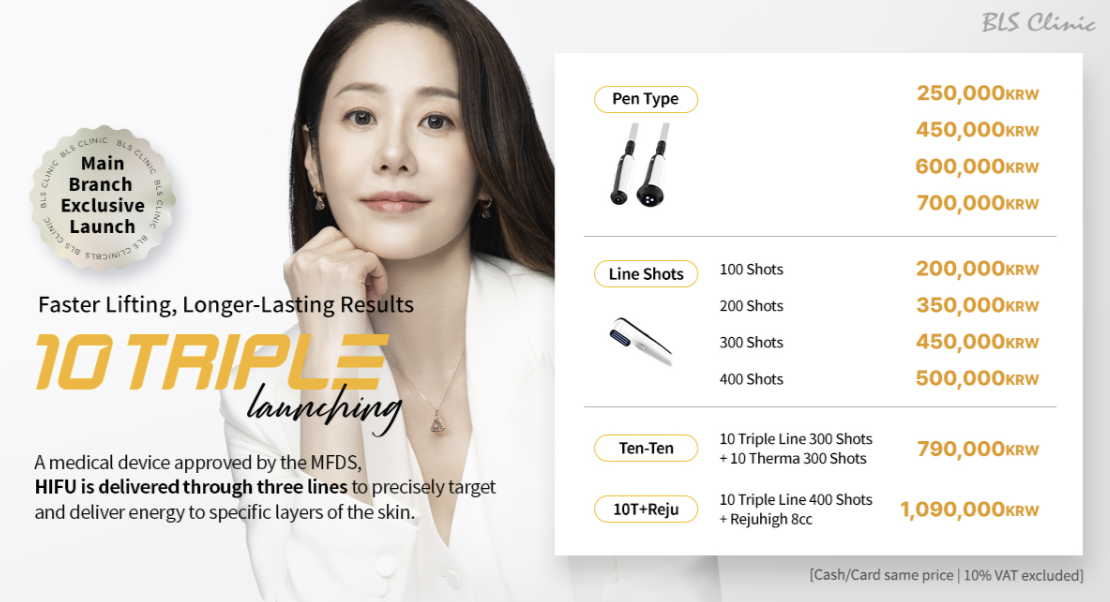
Ultherapy is a microfocused ultrasound system that uses visualization to help identify tissue planes before energy delivery.
It may be discussed for selected patients with laxity who want non-surgical tightening.
Shurink
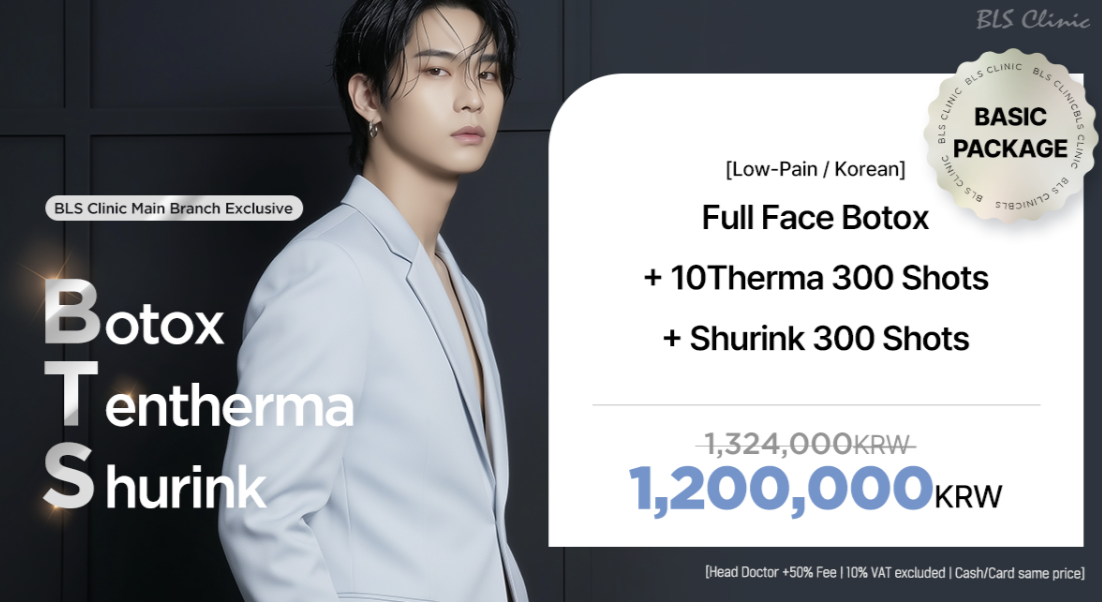
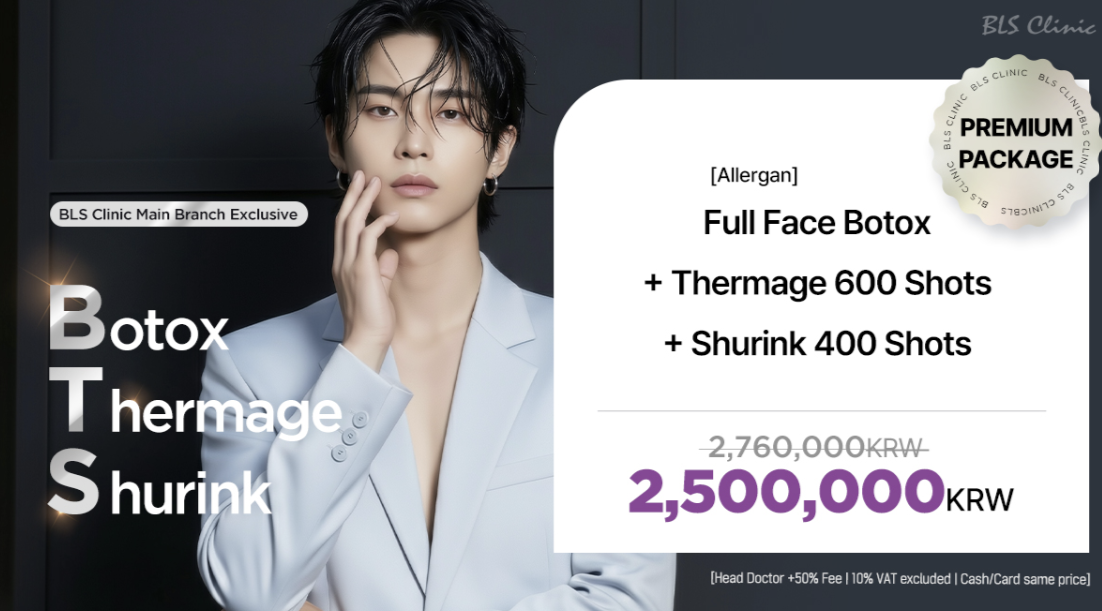
Shurink refers to Korean HIFU treatment platforms encountered frequently in Seoul clinics.
Different cartridges and treatment depths can be used depending on the device and treatment area. Therefore, asking only “How many shots?” does not provide enough information to judge the treatment plan.
When Might RF Make More Sense?
RF may be considered when the goal is primarily skin tightening and remodeling rather than aggressive contour reduction.
Examples include:
- mild skin laxity
- early lower-face aging
- reduced skin firmness
- jawline definition
- skin-quality concerns accompanying laxity
Thermage and Oligio fall into the RF category, although they are not identical devices.
Thermage
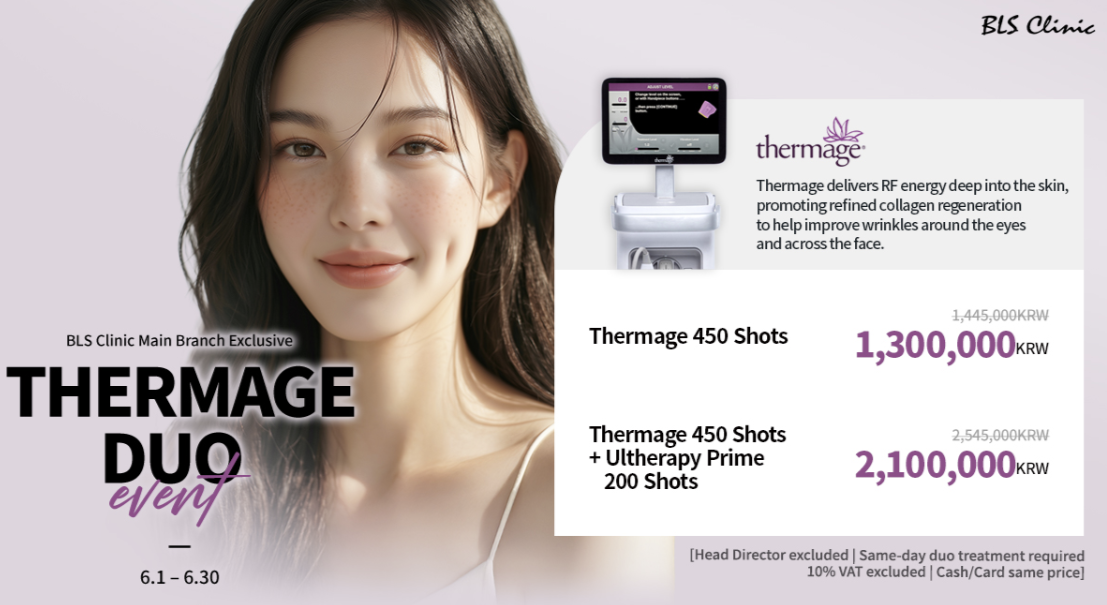
Thermage is a monopolar RF treatment designed to heat tissue and stimulate remodeling.
It has a longer clinical history than many newer RF platforms, but that does not mean it is automatically the appropriate treatment for every face.
Oligio
Oligio is another monopolar RF platform available in Korea.
When comparing Oligio with Thermage, consider the specific device, treatment protocol, treatment area, practitioner, and intended outcome rather than assuming that price alone determines effectiveness.
Where Does Sofwave Fit?
Sofwave is another non-invasive ultrasound-based technology, but its treatment approach differs from deeper-focused HIFU/MFU systems.
It is designed around dermal remodeling and tightening and may be considered when the primary concern is skin laxity.
If your main goal is facial slimming, however, you should make that clear because tightening and deliberate volume reduction are different objectives.
What If You Have a Thin Face?
This is one of the most important questions to answer before choosing a lifting device.
If your face is naturally thin, the objective may be:
“Tighten the skin without making my face look thinner.”
Some ultrasound and RF treatments have been investigated for changes in facial fat or contour, although the evidence varies considerably by technology and protocol. (pubmed.ncbi.nlm.nih.gov)
Tell the clinician explicitly if preserving facial volume is a priority.
What If You Have a Heavy Lower Face?
A heavy lower face requires a different diagnostic approach.
The clinician should determine whether the main contributor is:
- skin laxity
- subcutaneous fat
- masseter muscle
- skeletal structure
- volume redistribution
- or a combination
For example, HIFU may be relevant for laxity, while masseter botulinum toxin may be considered when muscle prominence is the major contributor. Fat-reduction treatment may be discussed when localized fat is genuinely present.
These treatments should not be substituted for one another simply because they are all marketed as “face slimming” or “lifting.”
What If I Only Have Three Days in Seoul?
Your travel schedule should influence the treatment choice.
Non-invasive lifting procedures generally have less recovery than surgical procedures, but temporary redness, swelling, tenderness, or sensitivity can still occur.
If you have only a short trip:
- Schedule the consultation early enough to allow proper assessment.
- Tell the clinic when you are flying home.
- Ask exactly what your face may look like the next day.
- Avoid scheduling treatment immediately before an important event.
- Do not automatically combine several procedures just because they are available during the same visit.
What If I Want a Noticeable Result but No Downtime?
This is where expectations need to be realistic.
There is no universal treatment that provides a dramatic surgical-level lift with zero recovery and no risk.
Non-surgical lifting generally aims for more gradual and moderate improvement. Clinical studies of focused ultrasound and RF support improvements in laxity, but results vary and are not equivalent to surgical lifting. (pubmed.ncbi.nlm.nih.gov)
If a clinic promises a dramatic transformation with no meaningful limitations, ask exactly what result is being promised and what evidence supports that claim.
Should You Choose Based on the Machine Brand?
The machine matters, but it should not be the only factor.
A sensible consultation should consider:
- your anatomy
- degree of laxity
- facial volume
- treatment area
- treatment depth
- energy settings
- treatment density
- expected downtime
- practitioner experience
- your desired outcome
Two clinics can advertise the same machine while providing substantially different treatment plans.
Should You Choose Based on the Number of Shots?
Not by itself.
A larger shot or line count does not automatically mean a better treatment.
The appropriate number depends on the treatment area, device, depth, energy, and treatment objective.
Instead of asking only:
“How many shots do I get?”
ask:
“Why are you using this number of shots and these treatment depths for my anatomy?”
Should Price Decide Which Lifting Device You Choose?
Price can be one practical consideration, but it does not directly tell you which treatment is appropriate.
Seoul clinics may price treatments differently according to:
- device
- treatment area
- number of shots
- cartridge type
- treatment intensity
- practitioner
- clinic location
- package structure
- additional consultation or aftercare
Compare like with like before interpreting a price difference.
A Simple Decision Framework
If you feel overwhelmed, start with this sequence.
Step 1: Identify the main problem
Is it:
- loose skin?
- jowls?
- heavy lower face?
- double chin?
- poor jawline definition?
- thin facial volume?
- fine lines and skin quality?
Step 2: Identify what you do not want
For example:
- no facial slimming
- no added volume
- minimal downtime
- no needles
- no surgery
- subtle results
These preferences can eliminate unsuitable options.
Step 3: Ask which tissue needs treatment
Is the target primarily:
- skin?
- deeper connective tissue?
- fat?
- muscle?
- or several structures?
Step 4: Compare technologies only after that
At this stage, you can meaningfully compare HIFU, RF, Sofwave, RF microneedling, or other options.
Questions to Ask at a Seoul Clinic
Before booking a lifting treatment, ask:
- What is causing my facial laxity or heaviness?
- Which tissue are you treating?
- Why did you choose this device for my anatomy?
- Which treatment depth will you use?
- Are you trying to tighten or reduce volume?
- Could this treatment make my face look thinner?
- How much improvement is realistic after one session?
- What downtime should I expect?
- Would another device be more appropriate for my specific concern?
- Do I need treatment immediately, or would observation or another approach make more sense?
The Bottom Line
You do not need to understand every lifting machine in Seoul before choosing a treatment.
Start with your facial concern, determine what is causing it, decide what you want to preserve, and then compare the technologies that actually address that problem.
HIFU, Ultherapy, Shurink, Thermage, Oligio, and Sofwave are not interchangeable machines, even though their marketing may overlap around words such as “lifting,” “tightening,” and “contouring.”
For international patients, the most useful consultation is one that explains why a particular device, depth, treatment area, and intensity have been selected for your face rather than simply recommending the newest or most heavily marketed machine.
FAQs About Choosing a Lifting Device in Seoul
Which lifting machine should I choose in Seoul?
There is no single device that is appropriate for every patient. The choice depends on the cause of laxity, facial volume, treatment area, desired outcome, and tolerance for downtime.
Is HIFU better than Thermage?
They use different energy technologies and have different treatment approaches. HIFU uses focused ultrasound, while Thermage uses monopolar RF. Neither is universally appropriate for every facial concern.
Which lifting device is safest for a thin face?
A thin face does not automatically make one device universally safe or unsafe. Treatment depth, energy, area, and whether the protocol is intended to reduce volume are important considerations.
Which lifting treatment is best for jowls?
Jowls can have several causes. If laxity is the main issue, ultrasound or RF tightening may be considered. If fat, muscle, or structural factors contribute, a different treatment strategy may be needed.
Do Korean lifting machines work differently from Western devices?
Some Korean platforms use similar underlying energy categories to devices available internationally, while individual devices differ in technology, delivery method, cartridges, settings, and evidence base. The device name alone does not determine the result.
Should I combine two lifting devices in one Seoul trip?
Sometimes combination treatment is appropriate, but more treatment is not automatically better. Combining procedures should be based on complementary goals, anatomy, safety, and recovery time.
Only have time for one laser treatment in Seoul? Learn how to prioritize your main concern, compare devices, assess downtime, and plan safely.
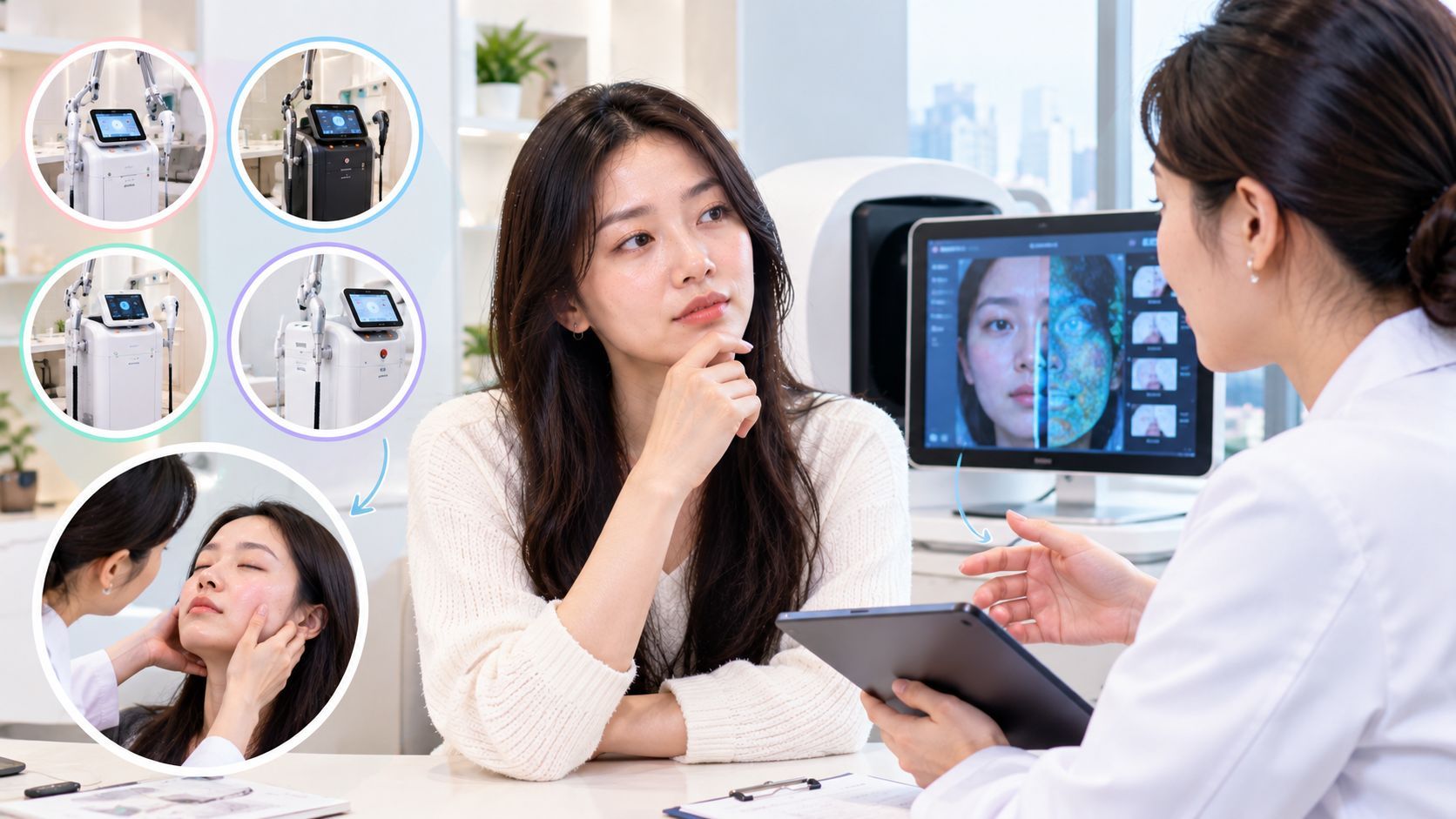
Should you choose a laser device before your Seoul treatment? Learn why skin examination, treatment goals, settings, downtime, and risks matter.
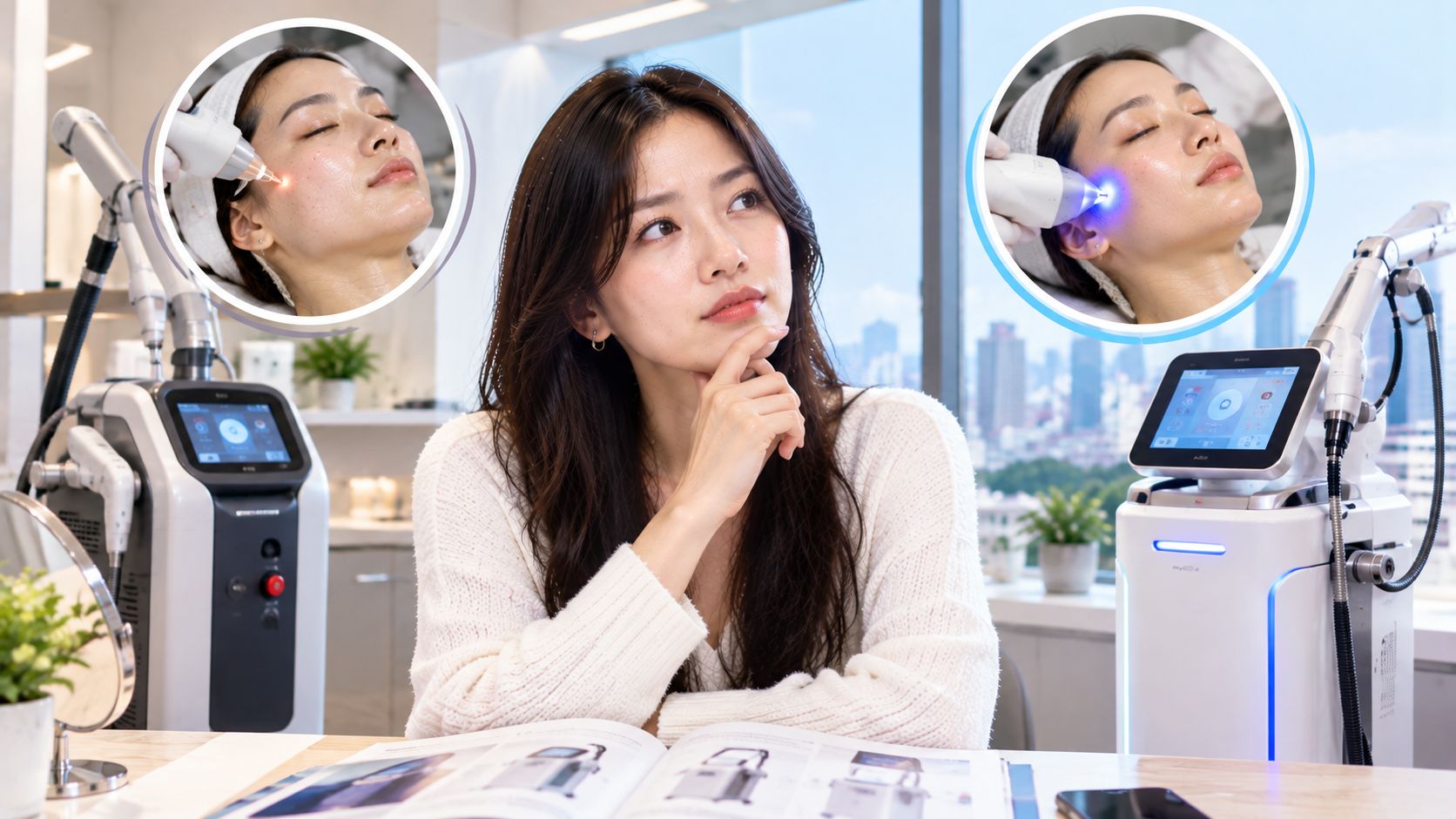
Does the newest laser machine mean better results in Seoul? Learn how to compare new and established devices by treatment goals, settings, risks, and downtime.
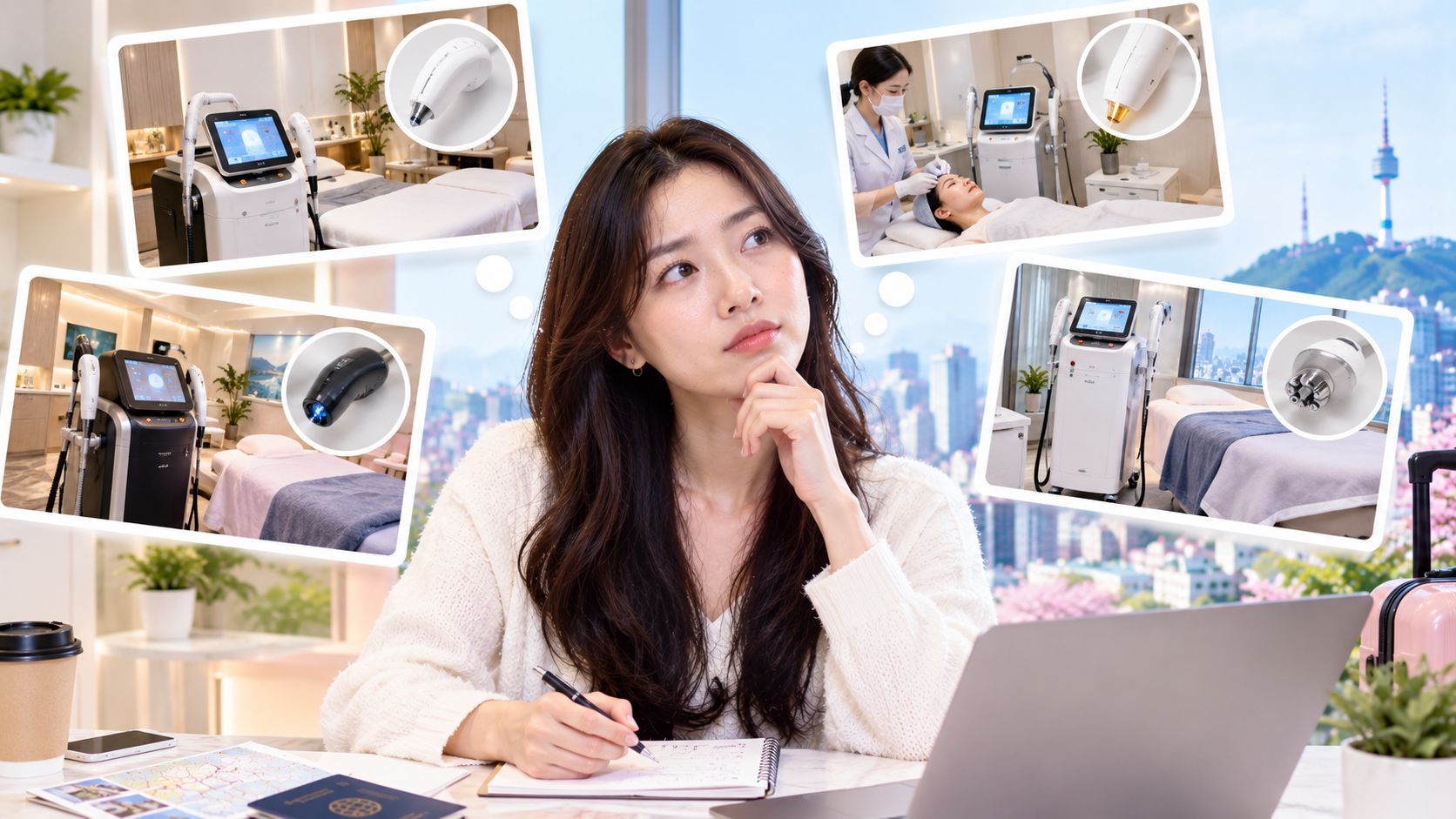
Choosing a Seoul laser clinic? Learn how to compare clinics when they use different machines, based on treatment goals, doctors, settings, recovery, and follow-up.
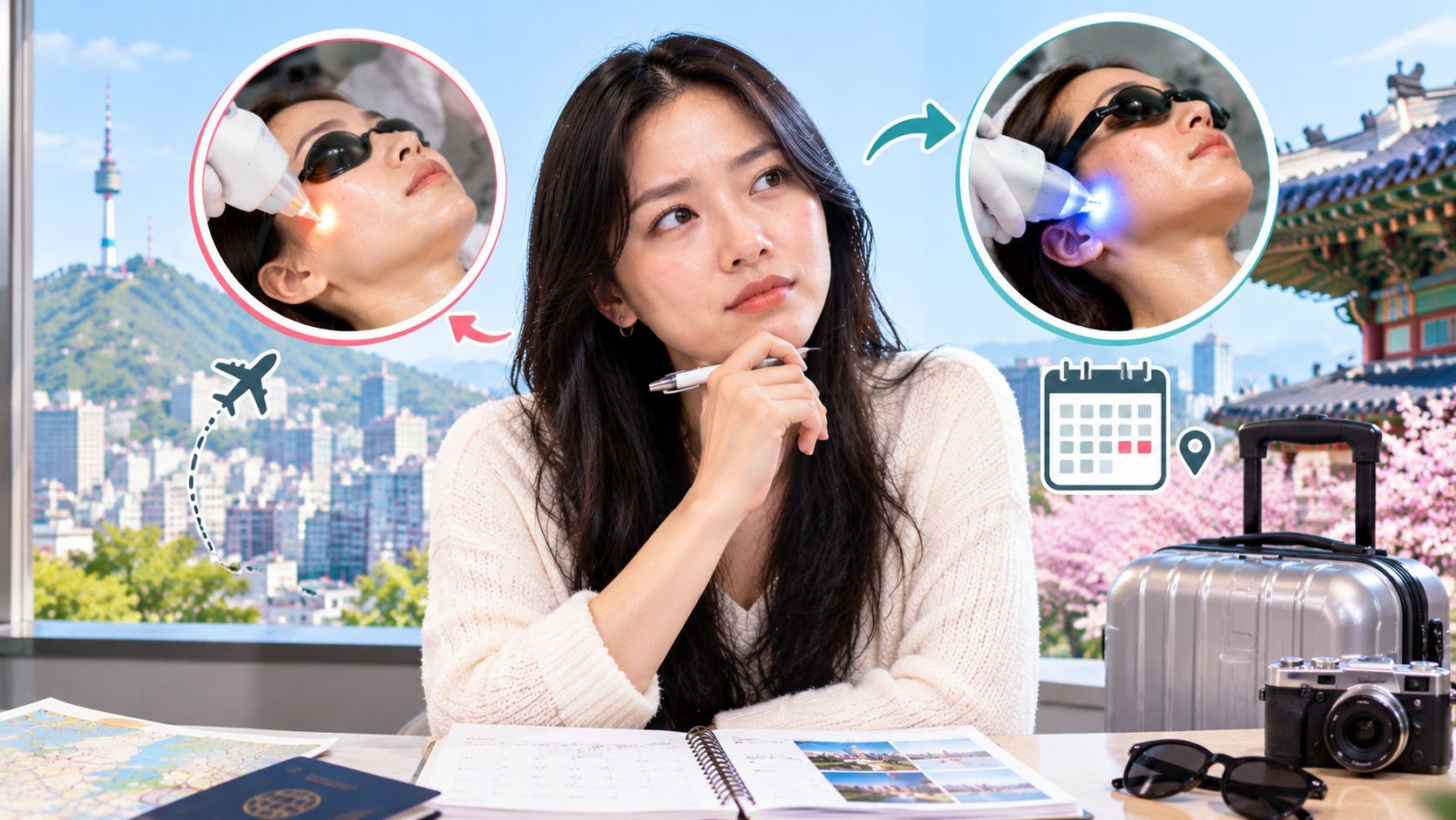
Should you do your strongest laser at the beginning or end of a Seoul trip? Learn how downtime, recovery, follow-up, and flights affect timing.
Learn which laser, RF, lifting, resurfacing, and injectable treatments may need careful spacing during a Seoul skin treatment trip.
Can you combine Pico, Potenza and a lifting treatment in Korea? Learn how to plan treatments, recovery, timing, and your Seoul trip.
Should you choose one expensive device or several cheaper lasers in Seoul? Compare cost, treatment goals, downtime, recovery, and overall value.
Have $1,000 and five days in Korea? Learn which laser and device treatments may fit your skin goals, budget, downtime, and travel schedule.
Have $500 for laser treatments in Seoul? Learn how to prioritize treatments by skin concern, downtime, value, and realistic treatment goals.