Why Didn’t My Pico Laser Treatment Work?
October 1, 2026
Introduction
Pico laser is widely used for pigmentation, sun spots, freckles, acne marks, uneven skin tone, and some types of texture concerns. Yet some patients finish a session—or even several sessions—and feel that nothing changed.
A disappointing result does not automatically mean that Pico laser “doesn't work.” Pico laser treatment is highly dependent on the type of skin problem being treated, the specific device and wavelength, treatment settings, number of sessions, diagnosis, and the patient's response.
The first step is to determine whether the problem was misdiagnosed, undertreated, expected to need multiple sessions, temporarily improved, or actually worsened by inflammation or pigmentation.
Why Pico Laser May Not Produce the Expected Result
Pico laser delivers very short pulses of laser energy and can be used with different wavelengths and treatment approaches. Different Pico platforms are designed for different targets, so “Pico laser” is not one identical treatment.
If the underlying pigment or skin problem was not correctly identified, the treatment may not produce the expected improvement.
The Problem May Not Be the Type of Pigment Pico Treats Best
Brown discoloration can come from several causes, including freckles, solar lentigines, post-inflammatory hyperpigmentation, melasma, and other pigmentary disorders.
These conditions do not behave in the same way.
For example, melasma can be particularly challenging because it is influenced by multiple factors and can recur even after visible pigmentation improves. Treating it as though it were simply a collection of sun spots may produce disappointing results.
The Pigment May Be Too Deep or Complex
The location of pigment within the skin matters.
Some pigmentation responds relatively well to laser treatment, while deeper or mixed pigmentation can be considerably more difficult to address.
A clinician may need to determine whether pigment is predominantly epidermal, dermal, or mixed before deciding on treatment.
You May Need More Than One Session
One Pico treatment does not necessarily remove all pigmentation.
Many pigment conditions require a series of treatments, with time between sessions to allow the skin to recover and the clinician to evaluate the response.
The appropriate number of sessions depends on the diagnosis, pigment depth, skin type, laser parameters, and treatment goal.
Was the Pico Laser Treatment Too Gentle?
Sometimes the treatment may simply have been conservative.
A lower-energy approach can be intentionally selected to reduce the risk of irritation or post-inflammatory hyperpigmentation, particularly in patients whose skin is more prone to pigmentation after inflammation.
A conservative treatment is not necessarily a failed treatment.
However, if there is consistently little or no improvement after an appropriate treatment course, the diagnosis and treatment strategy should be reassessed rather than repeatedly increasing the laser intensity.
Could the Settings Have Been Too Strong?
Increasing laser energy is not automatically the solution to poor results.
Excessive thermal or mechanical stress can trigger inflammation, which may lead to prolonged redness or post-inflammatory hyperpigmentation in susceptible patients.
This is particularly important when treating pigmentation in darker or more pigment-prone skin.
The objective is to find a treatment level that provides an appropriate therapeutic effect without creating unnecessary inflammation.
Pico Laser vs Pico Toning
The phrase “Pico laser” can describe very different treatment approaches.
A clinic may use a pigment-targeting spot treatment for discrete lesions or a lower-energy toning approach over a larger area.
These approaches should not be treated as interchangeable.
If you expected a dramatic change from a gentle toning treatment, the issue may partly be a mismatch between your expectations and the treatment objective.
Why Did My Pigmentation Barely Change?
Several possibilities should be considered:
- the pigmentation was not primarily the type being targeted
- the pigment was deeper than expected
- the treatment was intentionally conservative
- insufficient sessions have been completed
- the underlying trigger remains active
- new pigmentation developed while existing pigment improved
- the condition is recurrent, such as melasma
- the skin has developed post-inflammatory pigmentation
This is why comparing before-and-after photographs under the same lighting can be more useful than relying only on memory.
What If You Have Melasma?
Melasma deserves particular caution.
It is a chronic, recurrent pigmentary disorder rather than simply isolated brown spots. Laser treatment can sometimes be used as part of a broader management strategy, but recurrence and worsening pigmentation are possible.
If melasma is suspected, treatment should generally be planned around controlling the condition rather than trying to aggressively remove every visible pigment area in a single session.
A 2022 systematic review and meta-analysis found that laser and light-based treatments can improve melasma in some patients, but recurrence and adverse effects remain important considerations.
Could the Problem Be Post-Inflammatory Hyperpigmentation?
Sometimes a patient thinks the Pico laser failed because the skin remains dark after treatment.
The actual problem may be new pigmentation caused by the treatment itself.
Laser-induced inflammation can stimulate additional melanin production, particularly in people who are predisposed to post-inflammatory hyperpigmentation.
In that situation, immediately increasing the laser intensity could make the problem worse.
The clinician should first determine whether the remaining darkness represents untreated original pigment or treatment-related pigmentation.
What If My Skin Looked Darker Before It Improved?
Some laser treatments can temporarily change the appearance of pigmented lesions as the skin responds and recovers.
However, persistent or progressively worsening pigmentation should not simply be assumed to be a normal response.
If darkness continues beyond the expected recovery period, contact the treating clinic for an assessment.
Could Sun Exposure Be Affecting the Result?
Yes.
Ultraviolet exposure can stimulate pigmentation and work against the goal of pigment treatment.
Sun protection is particularly important after laser treatment because recently treated skin can be more vulnerable to inflammation and pigment changes.
For patients traveling in Seoul, this means considering outdoor sightseeing, strong sunlight, and the amount of time spent outside during the recovery period.
Could Skincare Be Interfering With Recovery?
Irritating skincare products can increase inflammation after laser treatment.
Depending on the procedure, your clinician may temporarily recommend simplifying your routine and avoiding irritating active ingredients.
Examples can include:
- strong exfoliating acids
- retinoids
- aggressive scrubs
- irritating acne products
- fragranced products that cause sensitivity
The exact restrictions depend on the laser and your skin condition, so follow the aftercare instructions provided by your treating clinician.
What If Pico Laser Worked at First but the Pigment Returned?
This does not necessarily mean that the original treatment failed.
Pigment can recur when the underlying cause remains active.
This is particularly relevant to melasma, sun-related pigmentation, and post-inflammatory pigmentation.
A treatment can temporarily reduce visible pigment while the biological tendency to produce pigment remains.
Long-term management may therefore require more than laser treatment alone.
How Can I Tell Whether Pico Laser Actually Worked?
Use objective comparisons rather than judging your skin from memory.
Take photographs:
- before treatment
- at the same distance
- under similar lighting
- without makeup
- from similar angles
Then compare photographs after an appropriate recovery period.
Immediate post-treatment photographs can be misleading because swelling, redness, hydration, and lighting can temporarily change how the skin appears.
When Should I Reassess the Treatment?
If you have completed the expected recovery period and see little or no improvement, the next step should generally be reassessment rather than automatically increasing the energy.
Ask the clinic:
- What type of pigmentation was diagnosed?
- Which wavelength was used?
- What treatment mode was used?
- What was the intended endpoint?
- How many sessions were expected?
- Was the treatment intentionally conservative?
- Could I have developed post-inflammatory hyperpigmentation?
- Could this actually be melasma?
- Should the treatment plan change?
- Would another treatment approach be more appropriate?
Should I Increase the Pico Laser Energy?
Not without a medical assessment.
If the first treatment did not work, there are several possible explanations. Increasing energy without confirming the diagnosis can increase inflammation and potentially increase pigmentation risk.
The appropriate response to an inadequate result may instead be:
- changing the treatment strategy
- changing the wavelength or mode
- treating an underlying condition
- allowing more recovery time
- using topical management
- changing the treatment interval
- or deciding that another procedure is more appropriate
When Should You Seek Medical Assessment?
Contact your treating clinic if you develop symptoms that are more severe or persistent than you were told to expect.
Examples include:
- worsening pain
- significant swelling
- blistering
- extensive crusting
- signs of infection
- persistent severe redness
- rapidly worsening pigmentation
- unusual skin texture changes
These symptoms should be assessed rather than managed by simply scheduling another laser session.
What If I Had Pico Laser in Seoul and Then Flew Home?
If you had treatment as a medical tourist, keep your treatment records if possible.
Ask the clinic for:
- device name
- wavelength
- treatment area
- treatment date
- treatment settings when available
- aftercare instructions
- prescribed or recommended products
This information can help another dermatologist understand what was performed if you develop a problem after returning home.
The Bottom Line
Pico laser may appear not to work for several different reasons, and simply using a stronger setting is not necessarily the answer.
The most important questions are whether the correct pigment condition was diagnosed, whether the treatment matched that condition, whether enough time and sessions were allowed, and whether post-inflammatory pigmentation or recurrence is contributing to the result.
If you have had little improvement after an appropriate recovery period, ask for a reassessment of the diagnosis and treatment strategy before undergoing another aggressive session.
For international patients considering Pico laser in Seoul, the goal should be a treatment plan based on your pigmentation type, skin characteristics, treatment history, and desired outcome—not simply the machine name or advertised treatment package.
FAQs About Pico Laser Not Working
Why didn't my Pico laser remove my pigmentation?
The pigmentation may not be the type most responsive to the selected treatment, it may be deeper than expected, you may need additional sessions, or new pigmentation may have developed after treatment.
How many Pico laser sessions do I need?
There is no universal number. The appropriate number depends on the pigmentation diagnosis, depth, skin type, treatment settings, and response to previous sessions.
Can Pico laser make pigmentation worse?
Yes. Laser-induced inflammation can contribute to post-inflammatory hyperpigmentation, particularly in susceptible individuals. This is one reason treatment intensity should be individualized.
Why did my melasma not improve with Pico laser?
Melasma is a recurrent and complex pigmentary condition. Laser may help some patients, but recurrence and worsening are possible, and treatment often requires a broader management strategy.
Should I get a stronger Pico laser treatment if the first one failed?
Not automatically. A clinician should first determine why the previous treatment produced an inadequate result and whether the diagnosis, wavelength, treatment mode, or overall strategy should be changed.
Is Pico laser good for acne marks?
Pico laser can be used for certain types of post-acne pigmentation, but the appropriate treatment depends on whether the marks are brown, red, or associated with depressed acne scars. Different problems may require different treatments.
Only have time for one laser treatment in Seoul? Learn how to prioritize your main concern, compare devices, assess downtime, and plan safely.
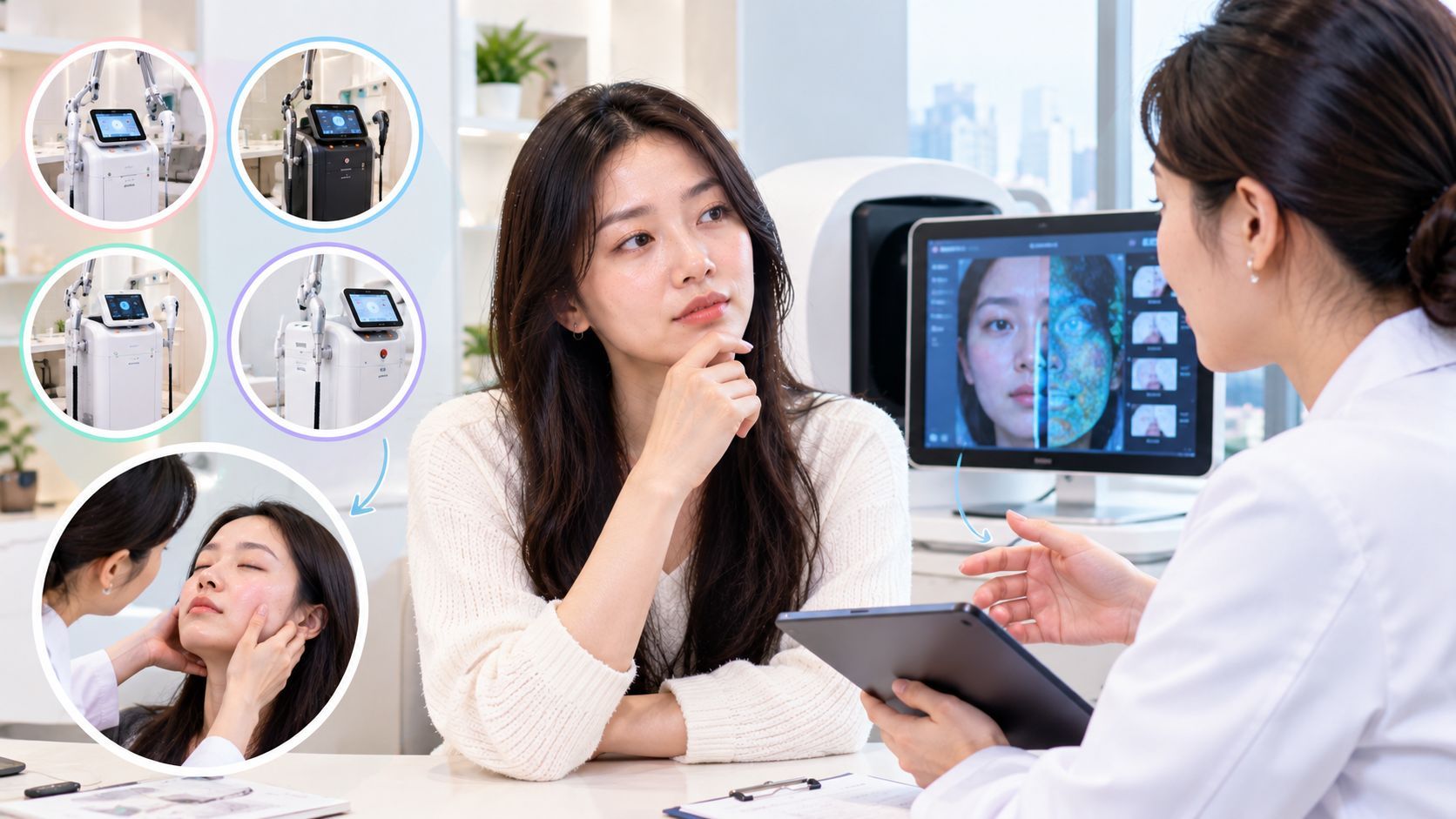
Should you choose a laser device before your Seoul treatment? Learn why skin examination, treatment goals, settings, downtime, and risks matter.
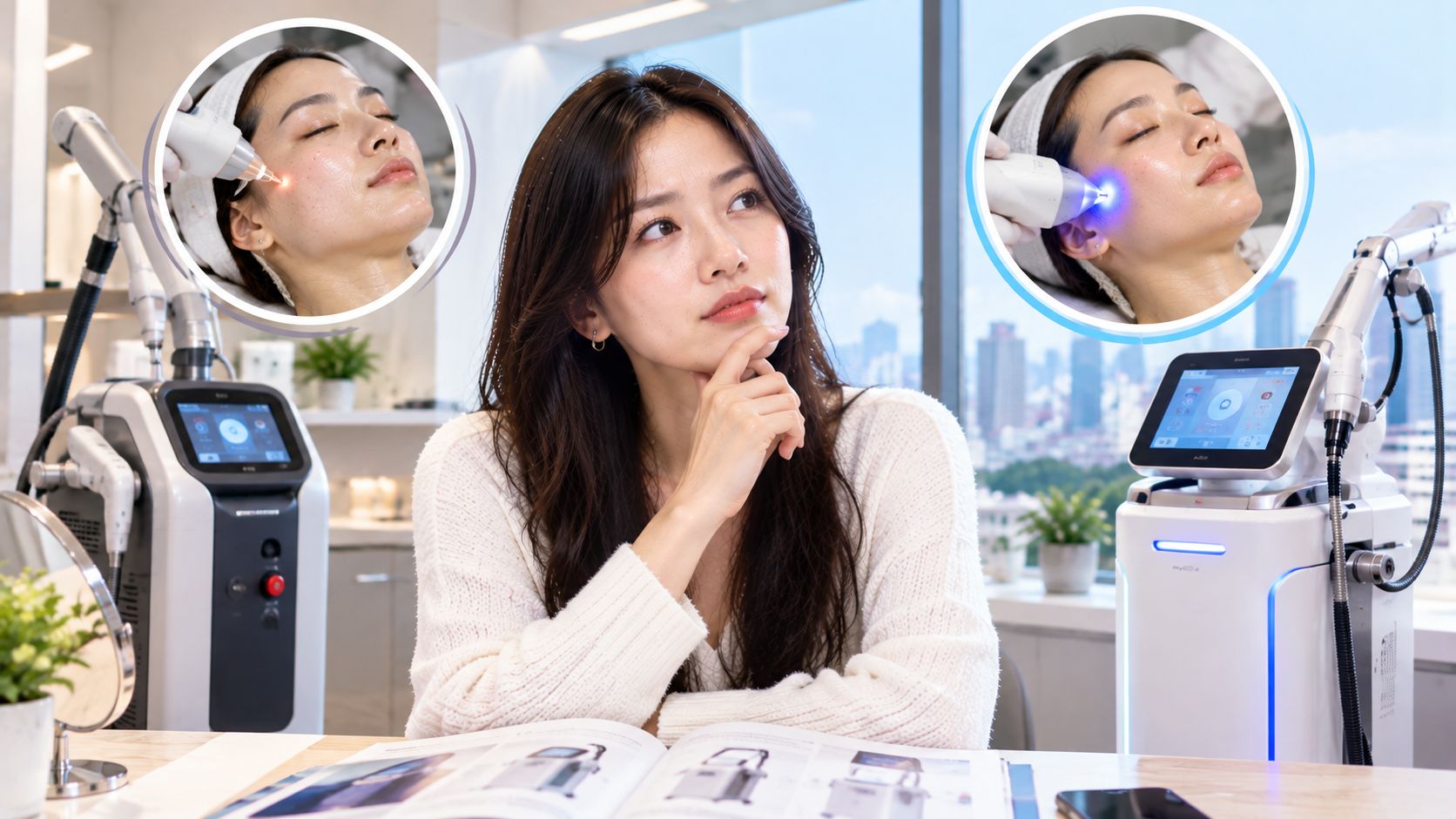
Does the newest laser machine mean better results in Seoul? Learn how to compare new and established devices by treatment goals, settings, risks, and downtime.

Choosing a Seoul laser clinic? Learn how to compare clinics when they use different machines, based on treatment goals, doctors, settings, recovery, and follow-up.

Should you do your strongest laser at the beginning or end of a Seoul trip? Learn how downtime, recovery, follow-up, and flights affect timing.
Learn which laser, RF, lifting, resurfacing, and injectable treatments may need careful spacing during a Seoul skin treatment trip.

Can you combine Pico, Potenza and a lifting treatment in Korea? Learn how to plan treatments, recovery, timing, and your Seoul trip.
Should you choose one expensive device or several cheaper lasers in Seoul? Compare cost, treatment goals, downtime, recovery, and overall value.

Have $1,000 and five days in Korea? Learn which laser and device treatments may fit your skin goals, budget, downtime, and travel schedule.
Have $500 for laser treatments in Seoul? Learn how to prioritize treatments by skin concern, downtime, value, and realistic treatment goals.