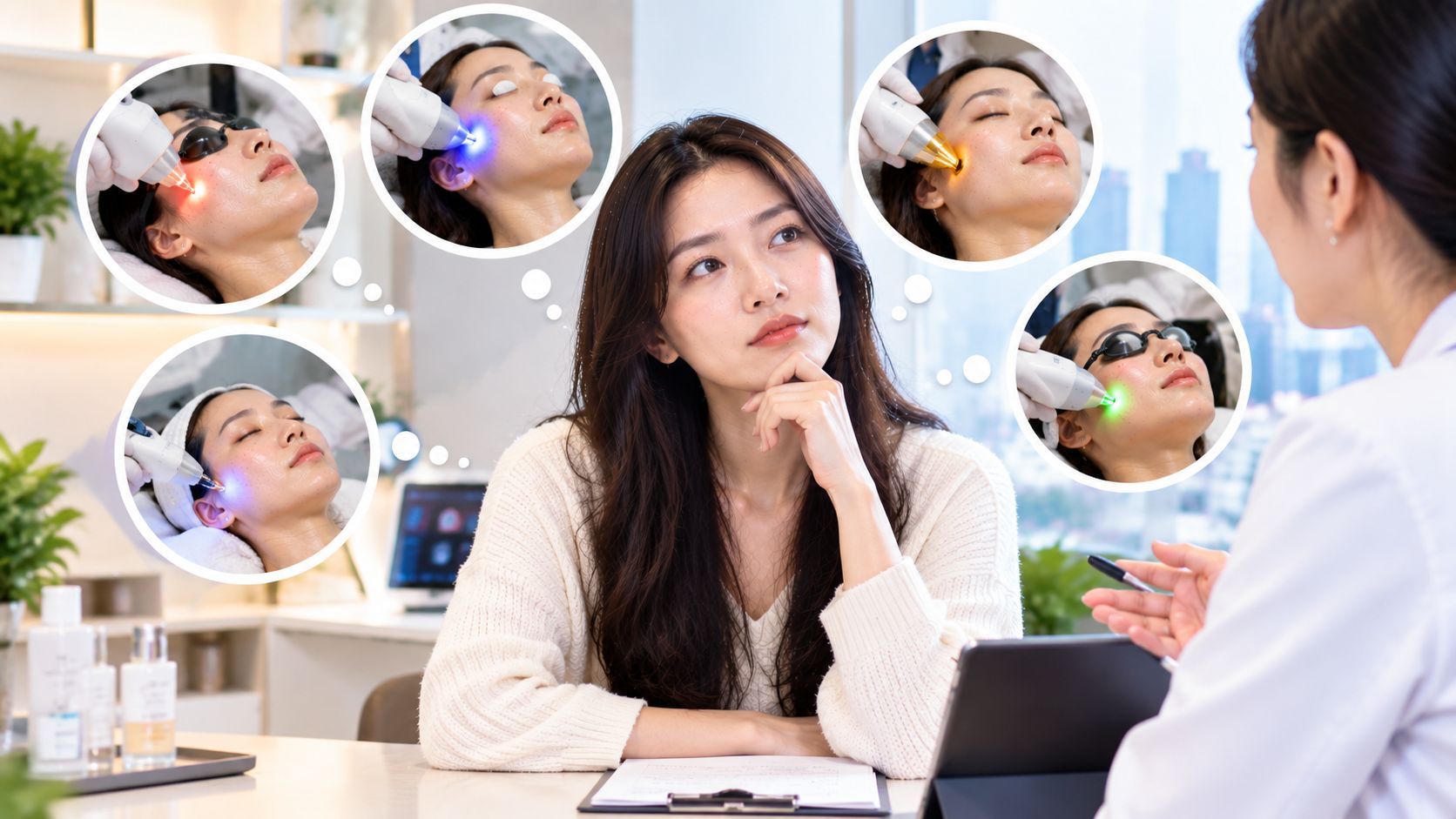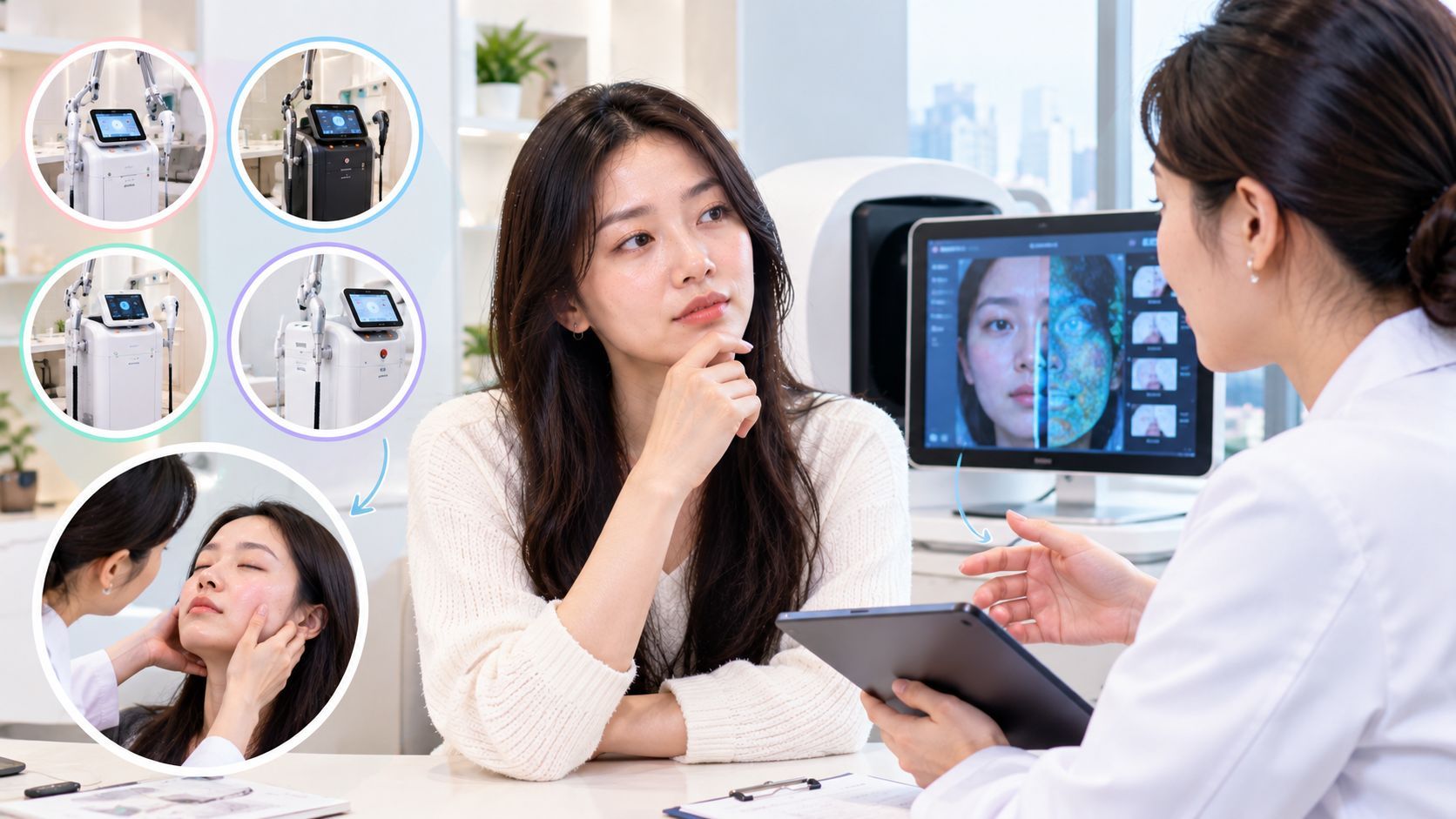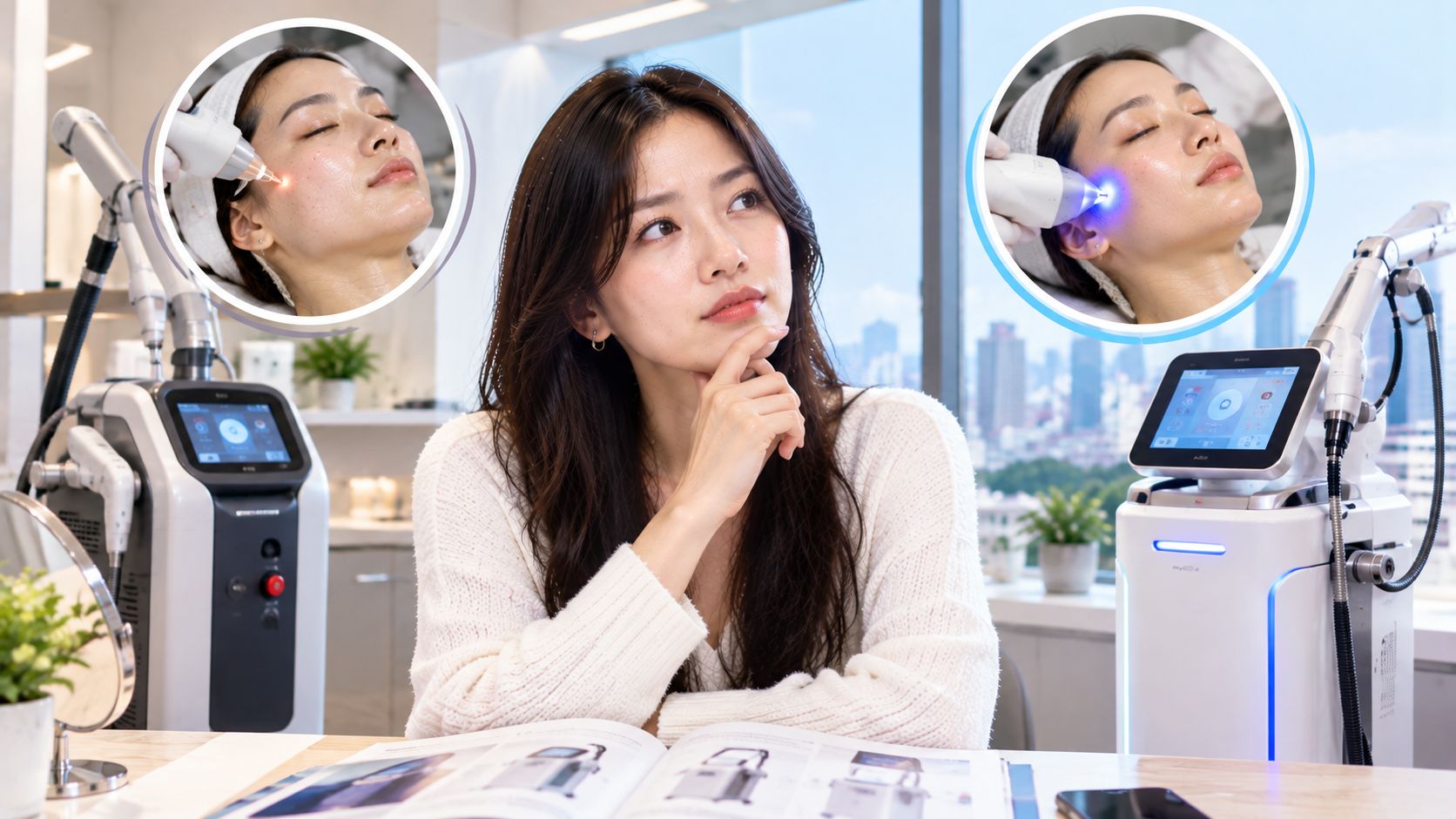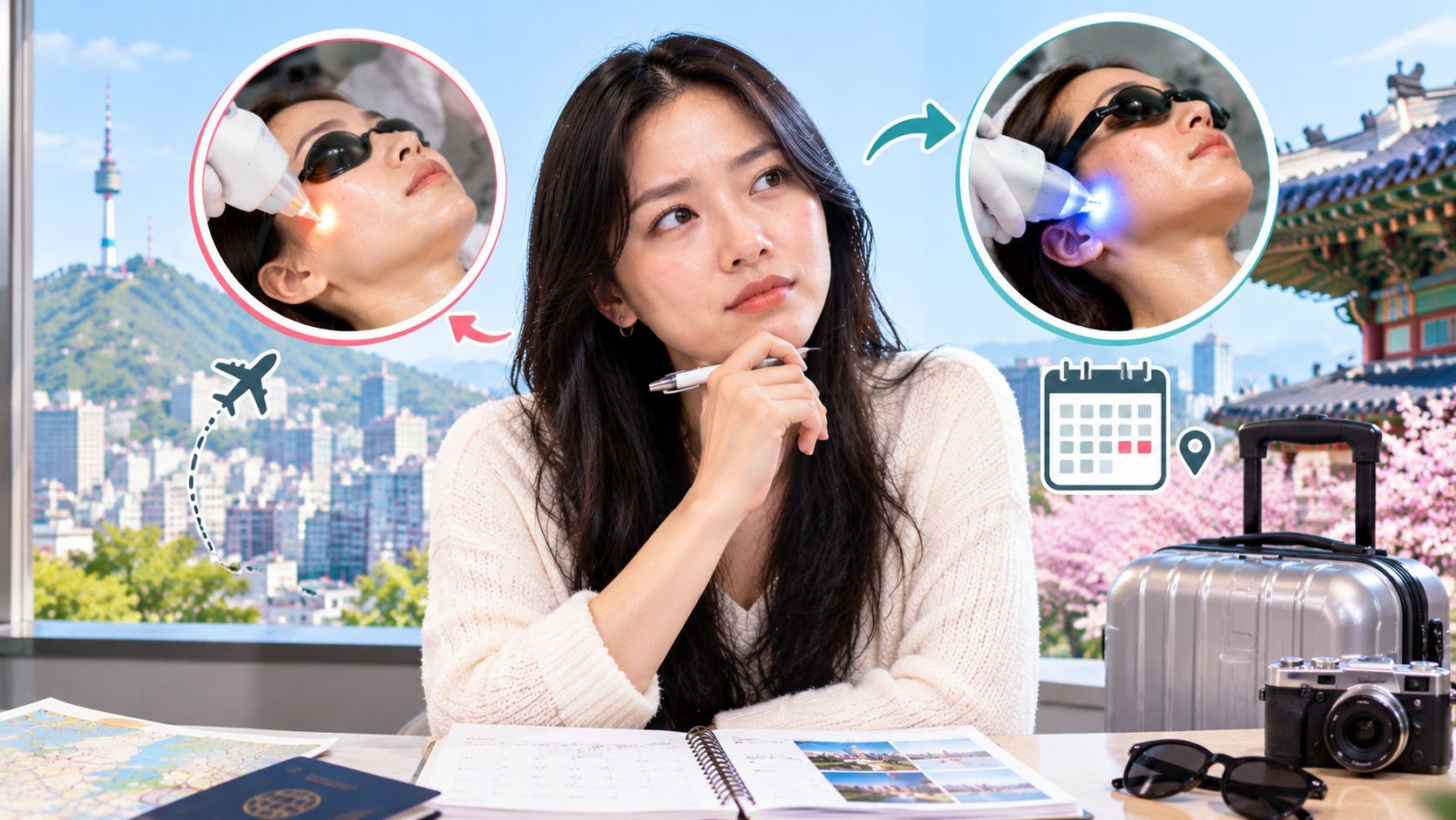
What Laser Works Best for Red Acne Marks?
Introduction
Red marks that remain after acne are often called post-inflammatory erythema (PIE). Unlike brown acne marks, which are mainly related to excess pigment, red marks are associated with persistent inflammation and superficial vascular changes. A systematic review found that laser and light-based treatments are among the most frequently studied approaches for post-acne erythema, although there is no single established gold-standard device.
For people considering laser treatment in Seoul, the most relevant options may include vascular-focused lasers such as VBeam/PDL, certain 532 nm vascular lasers, and selected other devices depending on the type of redness, skin tone, and whether acne scars or pigmentation are present at the same time.
What Laser Works Best for Red Acne Marks?
There is no single laser that is best for every red acne mark. When the marks are true post-inflammatory erythema caused by superficial vascular changes, vascular lasers are often considered because they specifically target blood vessels contributing to the redness.
VBeam (pulsed dye laser) is one of the commonly studied laser approaches for post-acne erythema. Other vascular lasers, including certain 532 nm and Nd:YAG-based systems, have also been investigated.
The appropriate choice depends on whether your marks are:
- Flat red or pink marks
- Brown or gray pigmentation
- Raised acne scars
- Depressed acne scars
- A combination of redness and pigmentation
A laser designed for blood vessels should not automatically be used for every mark left by acne.
Why Do Acne Marks Stay Red?
Post-Inflammatory Erythema
Acne inflammation can leave persistent red or pink discoloration after the active pimple has disappeared. The redness can remain because of changes involving superficial blood vessels and inflammation.
Research reviewing treatments for post-acne erythema describes PIE as involving telangiectasia and erythematous lesions that remain after acne inflammation.
PIE Is Different From Brown Acne Marks
This distinction is essential when choosing a laser.
Red or pink marks: more likely to involve vascular changes.
Brown marks: more likely to represent post-inflammatory hyperpigmentation.
A vascular laser may be useful for the first problem but is not necessarily the appropriate treatment for the second.
Some patients have both, which may require a treatment strategy addressing vascular redness and pigmentation separately.
VBeam for Red Acne Marks
How VBeam Works
VBeam is a pulsed dye laser that uses a wavelength commonly used to target blood vessels. Because post-acne erythema can have a vascular component, PDL has been one of the most frequently studied laser categories for this problem.
The objective is to heat the targeted vascular structures while limiting injury to surrounding tissue.
When VBeam May Be Considered
VBeam may be discussed when you have:
- Flat persistent red acne marks
- Pink-red post-acne discoloration
- Superficial visible vascular changes
- Redness remaining after inflammatory acne
It is not primarily a treatment for deep depressed acne scars.
Can 532 nm Lasers Treat Red Acne Marks?
Vascular 532 nm Treatment
Certain 532 nm lasers are designed to target superficial vascular structures. Research on 532 nm laser treatment has demonstrated improvement in facial telangiectasia and other superficial vascular conditions.
A 532 nm laser has also been studied for erythematous facial conditions, including acne-related rosacea, with reported improvements in overall redness and visible telangiectasia.
However, results from vascular studies should not be interpreted as proof that every 532 nm device or every acne mark will respond in the same way.
What About Pico Laser for Red Acne Marks?
Pico lasers are often associated with pigmentation and acne-scar treatment, but some picosecond wavelengths have also been studied for post-inflammatory erythema.
For example, a randomized split-face study of a 755 nm picosecond laser reported improvement in post-inflammatory erythema as well as acne scars, with mostly mild and temporary redness and swelling reported in that study.
This does not mean every pico laser should be selected for PIE. The wavelength, handpiece, pulse characteristics, treatment settings, and patient's skin characteristics all matter.
What If I Have Red Acne Marks and Acne Scars?
Treating Redness Is Not the Same as Treating Depressed Scars
If you have both PIE and depressed acne scars, one laser may not address every component effectively.
For example:
- Vascular laser may target persistent red discoloration.
- Fractional laser may be considered for selected textural irregularities.
- RF microneedling may be considered for certain depressed scars.
- Subcision may be considered for appropriately selected tethered rolling scars.
- Other treatments may be considered for pigmentation.
The treatment plan should therefore be based on what is actually causing the visible problem, rather than simply choosing the strongest laser.
How Many Treatments Are Usually Needed?
Multiple treatments are commonly used for laser treatment of acne-related redness rather than assuming that one session will completely remove it.
The AAD notes that laser and light treatments for acne generally produce variable results and that a series of treatments is often needed.
For vascular redness, the number of sessions depends on:
- Severity of the redness
- Vessel characteristics
- Skin tone
- Laser type
- Treatment settings
- Presence of active acne
- Whether rosacea is contributing
- Whether pigmentation or scarring is also present
Your dermatologist should determine the schedule after examining your skin.
How Long Does Redness Last After Treatment?
Temporary redness and swelling are common after many laser and light treatments.
Depending on the device and settings, you may experience:
- Temporary redness
- Mild swelling
- Warmth
- Tenderness
- Small areas of purpura
- Temporary darkening or crusting
Recovery can vary substantially between vascular lasers and treatment settings. This is particularly important if you are traveling to Seoul for treatment and have only a few days before returning home.
Is Laser Safe for Asian Skin With Red Acne Marks?
Laser treatment can be performed in people with darker or more pigment-prone skin, but the risk profile needs to be considered individually.
A treatment that targets vascular redness can still produce inflammation, and inflammation can sometimes contribute to unwanted pigmentation.
This is especially relevant if you have previously experienced post-inflammatory hyperpigmentation.
Your dermatologist should consider:
- Fitzpatrick skin type
- Previous PIH
- Recent sun exposure
- Current acne activity
- Previous laser treatments
- Current medications and skincare
- Appropriate energy and pulse settings
A study involving Asian patients with acne-related pigmentation found improvement with several treatment approaches but also documented a case of PIH after laser treatment, illustrating why treatment parameters and patient selection matter.
VBeam vs 532 nm vs Pico for Red Acne Marks
TreatmentPotential roleImportant considerationVBeam / PDLVascular redness and PIECommonly studied for post-acne erythema532 nm vascular laserSuperficial vascular rednessParticularly relevant to superficial vascular targetsPico laserSelected PIE and acne-scar presentationsWavelength and device configuration matterFractional laserAcne-scar textureNot primarily a vascular-redness treatmentRF microneedlingSelected acne scars and textureTreats a different component from vascular laser
Current evidence does not establish one universal laser as the best treatment for every patient with red acne marks. The systematic literature review specifically concluded that further randomized trials are needed.
What If the Red Marks Are Actually Rosacea?
Sometimes what appears to be acne-related redness is actually part of rosacea or another vascular condition.
If you experience:
- Frequent facial flushing
- Persistent central facial redness
- Visible capillaries
- Burning or stinging
- Redness around the nose and cheeks
the diagnosis may need to be reconsidered before treating the marks as ordinary PIE.
Laser and light treatments can reduce visible blood vessels in rosacea, but they do not necessarily eliminate the underlying tendency toward flushing or new vascular changes.
How to Choose a Seoul Laser Clinic for Red Acne Marks
If you are considering treatment in Korea, focus on the diagnosis and treatment plan, not simply the name of the laser.
Ask:
- Are these marks PIE or pigmentation?
- Do you see superficial vascular changes?
- Why are you recommending this particular wavelength?
- Would VBeam, a 532 nm laser, or another device be appropriate?
- Do I have active acne that should be treated first?
- What is my risk of PIH?
- How much downtime should I expect?
- How many sessions are likely to be needed?
- Can the treatment be safely performed shortly before my flight?
A clinic should be able to explain what it is treating and why the selected device fits that target.
Conclusion
The most appropriate laser for red acne marks depends on what is causing the redness. For genuine post-inflammatory erythema with a vascular component, vascular lasers such as VBeam/PDL and selected 532 nm systems are important treatment options. Other lasers, including certain picosecond devices, may have a role in selected cases.
The key is not simply choosing the strongest or newest laser. Correctly distinguishing red PIE from brown pigmentation and acne scarring is the first step toward choosing an appropriate treatment.
FAQs
What is the best laser for red acne marks?
There is no universal best laser. VBeam/PDL and selected vascular lasers are commonly considered when the redness represents post-inflammatory erythema, while other devices may be appropriate for pigmentation or acne-scar texture.
Does VBeam remove red acne marks permanently?
VBeam can reduce vascular redness, but permanent elimination cannot be guaranteed. New redness can develop depending on the underlying condition and individual skin response.
Can Pico laser treat red acne marks?
Some picosecond lasers and wavelengths have been studied for post-inflammatory erythema, but the appropriate device depends on the type of redness and the specific laser configuration.
How many laser sessions are needed for PIE?
Multiple sessions are often used, but the number varies according to the severity of redness, device, settings, skin type, and underlying cause.
Can red acne marks turn brown after laser?
Pigmentary changes can occur after laser treatment, particularly in people prone to hyperpigmentation. Appropriate settings and sun protection are important.
Should I treat acne before red acne marks?
Often, controlling active acne is important because ongoing inflammation can continue producing new red marks. A dermatologist can determine whether acne treatment, vascular treatment, or both should be addressed first.