Which Device Actually Works Best for Enlarged Pores?
Introduction
Enlarged pores are one of the most common reasons people seek skin treatments in Seoul. But there is no single device that works best for every type of enlarged pore. Pore appearance can be influenced by excess sebum, clogged pores, reduced skin firmness, collagen changes, acne scarring, and aging. The right treatment therefore depends on why the pores look enlarged in the first place.
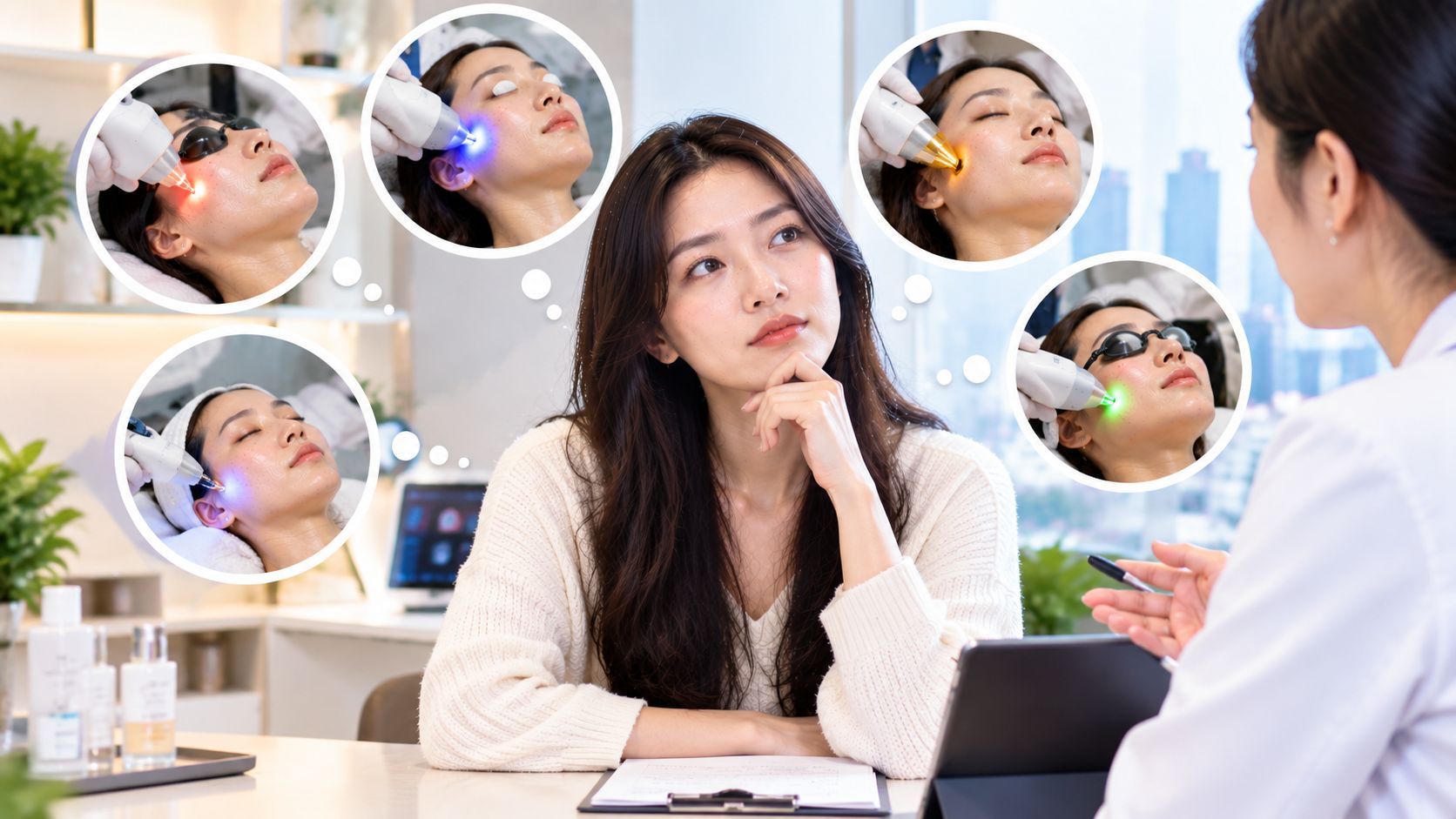
For patients looking for an in-clinic treatment, options may include radiofrequency microneedling, fractional lasers, conventional microneedling, picosecond laser treatments, and other skin-resurfacing approaches. Microneedling and radiofrequency microneedling are specifically used for large pores and uneven skin texture, while fractional laser treatments can remodel the skin and improve texture.
Which Device Actually Works Best for Enlarged Pores?
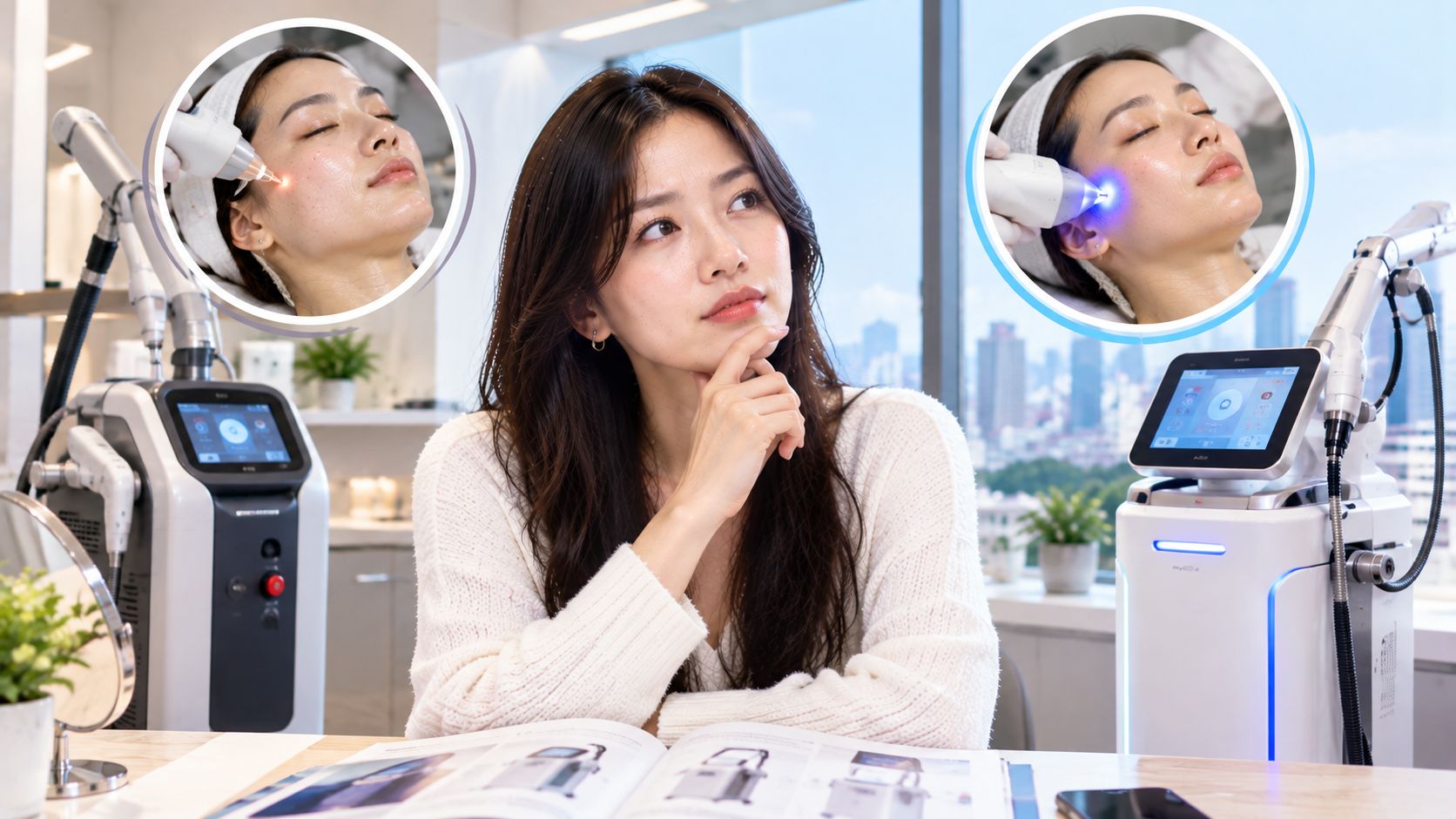
There is no universal best device for enlarged pores. If the main problem is enlarged pores with uneven texture or mild acne scarring, RF microneedling may be a particularly relevant option because it combines controlled needle injury with radiofrequency energy delivered into the skin. A 2024 study of fractional microneedling radiofrequency in patients with enlarged cheek pores found significant improvement after three treatment sessions.
However, a fractional laser may be more appropriate when enlarged pores are accompanied by substantial surface texture irregularity or certain types of acne scarring. Conventional microneedling can also be useful when a less energy-intensive collagen-induction approach is appropriate.
The key is matching the device to the cause and pattern of your pores, rather than choosing a machine simply because it is popular.
Why Do Enlarged Pores Need Different Treatments?
Sebum and Oily Skin
Excess oil can make pores appear larger because the openings become more visible. Clogged pores can also become more noticeable.
In this situation, a procedure that only stimulates collagen may not address the entire problem. Daily skincare, acne management, and oil control can be important parts of the treatment plan. The American Academy of Dermatology notes that oily skin, clogged pores, and acne can all make pores appear more noticeable.
Loss of Skin Firmness
Pores can also become more noticeable as skin loses firmness with age. When surrounding tissue becomes less firm, pore openings may appear larger.
The AAD specifically identifies reduced skin firmness and sagging as factors that can make pores look more noticeable.
Acne Scarring and Uneven Texture
Some people describe acne scars, shallow depressions, and enlarged pores as one problem even though they are different structural concerns.
In these cases, a treatment designed to stimulate collagen remodeling may address more than the visible pore opening itself.
RF Microneedling for Enlarged Pores
How It Works
RF microneedling uses tiny needles to deliver radiofrequency energy into the skin. The combination produces controlled injury and heat at selected depths, stimulating remodeling and collagen production.
The AAD describes RF microneedling as a form of microneedling that adds heat through the needles and notes that it can improve skin texture and other concerns.
Why It Can Be Useful for Pores
RF microneedling can address the skin surrounding enlarged pores rather than simply trying to “close” the pore opening.
In a study of 22 patients with enlarged cheek pores, three fractional microneedling RF sessions produced a statistically significant reduction in pore scores.
This makes RF microneedling particularly relevant when pores are accompanied by:
- uneven texture
- mild acne scarring
- reduced skin firmness
- enlarged pores on the cheeks
- early photoaging
However, results vary, and one small retrospective study should not be interpreted as proof that RF microneedling is superior to every other pore treatment.
Fractional Laser for Enlarged Pores
When Resurfacing May Help
Fractional lasers create microscopic treatment zones in the skin while leaving surrounding tissue intact. The resulting healing response can stimulate collagen remodeling and improve texture.
They may be considered when enlarged pores occur together with:
- rough skin texture
- shallow acne scars
- fine lines
- photodamage
- uneven surface texture
Fractional laser treatment is also used for acne scars because collagen remodeling can make depressed scars less noticeable.
The Trade-Off
More intensive resurfacing can involve more visible redness, peeling, or downtime depending on the laser and treatment settings.
Therefore, a fractional laser is not automatically the right choice simply because it can produce stronger resurfacing.
Your acceptable recovery time matters too.
Conventional Microneedling
A Less Energy-Intensive Option
Conventional microneedling uses tiny needles to create controlled micro-injuries that stimulate collagen production.
The AAD lists large pores, uneven skin texture, acne scars, and wrinkles among conditions for which dermatologists may use microneedling.
It can therefore be considered when the primary objective is improving overall texture and making pores less noticeable rather than performing aggressive resurfacing.
What About Pico Laser for Pores?
Picosecond laser treatments are frequently marketed for pores and overall skin quality, but their usefulness depends heavily on the particular device, wavelength, lens or delivery method, and treatment objective.
A pico treatment aimed primarily at pigmentation should not automatically be assumed to provide the same type of pore remodeling as RF microneedling or fractional resurfacing.
If your main concern is enlarged pores, ask the clinic exactly how the selected pico technology is expected to improve pore appearance rather than choosing it simply because it is called a pico laser.
Which Treatment Fits Different Types of Enlarged Pores?
Main concernTreatment category that may be consideredMain considerationOily skin and visible poresSkincare/acne-oil management ± procedureOil control remains importantPores + rough textureRF microneedling or fractional resurfacingMatch intensity to downtime tolerancePores + acne scarsRF microneedling or fractional laserScar type should be assessedPores + mild laxityRF microneedling or other collagen-remodeling treatmentSkin firmness may contributePores + pigmentationPigment-focused treatment ± texture treatmentAvoid treating every concern with one deviceMild texture concerns with little downtime desiredMicroneedling or selected non-ablative approachesResults may require multiple sessions
Can One Treatment Completely Remove Enlarged Pores?
Usually, the Goal Is Reduced Visibility
Pores are normal anatomical structures. Treatments generally aim to make them less noticeable, not permanently erase them.
Even when collagen remodeling improves the surrounding skin, pores can become more visible again because of oil production, aging, sun exposure, or changes in skin firmness.
The AAD similarly describes strategies for making pores less noticeable rather than permanently eliminating them.
Maintenance Still Matters
Daily sun protection, appropriate skincare, acne control, and avoiding excessive irritation can help maintain improvements.
For oily or acne-prone skin, keeping pores from repeatedly becoming clogged may be particularly important.
What About Asian Skin and Pigmentation Risk?
Device selection should consider skin tone as well as the treatment target.
Energy-based procedures can produce inflammation, and pigmentary changes are possible after some treatments. RF microneedling is often considered useful across different skin tones, but it is still a medical procedure that requires appropriate settings. The AAD notes that microneedling can be used safely across skin tones and that RF microneedling may offer results comparable to some lasers with potentially less downtime in some studies, although more research is needed.
More aggressive treatment is therefore not automatically better for pores.
How Many Sessions Might You Need?
There is no fixed number that applies to everyone.
Collagen-remodeling treatments commonly involve a series of sessions rather than one treatment. In the enlarged-pore RF microneedling study, patients received three sessions separated by one to three months.
Your dermatologist may recommend a different schedule depending on pore severity, skin condition, previous treatments, and recovery tolerance.
How Should You Choose a Pore Treatment in Seoul?
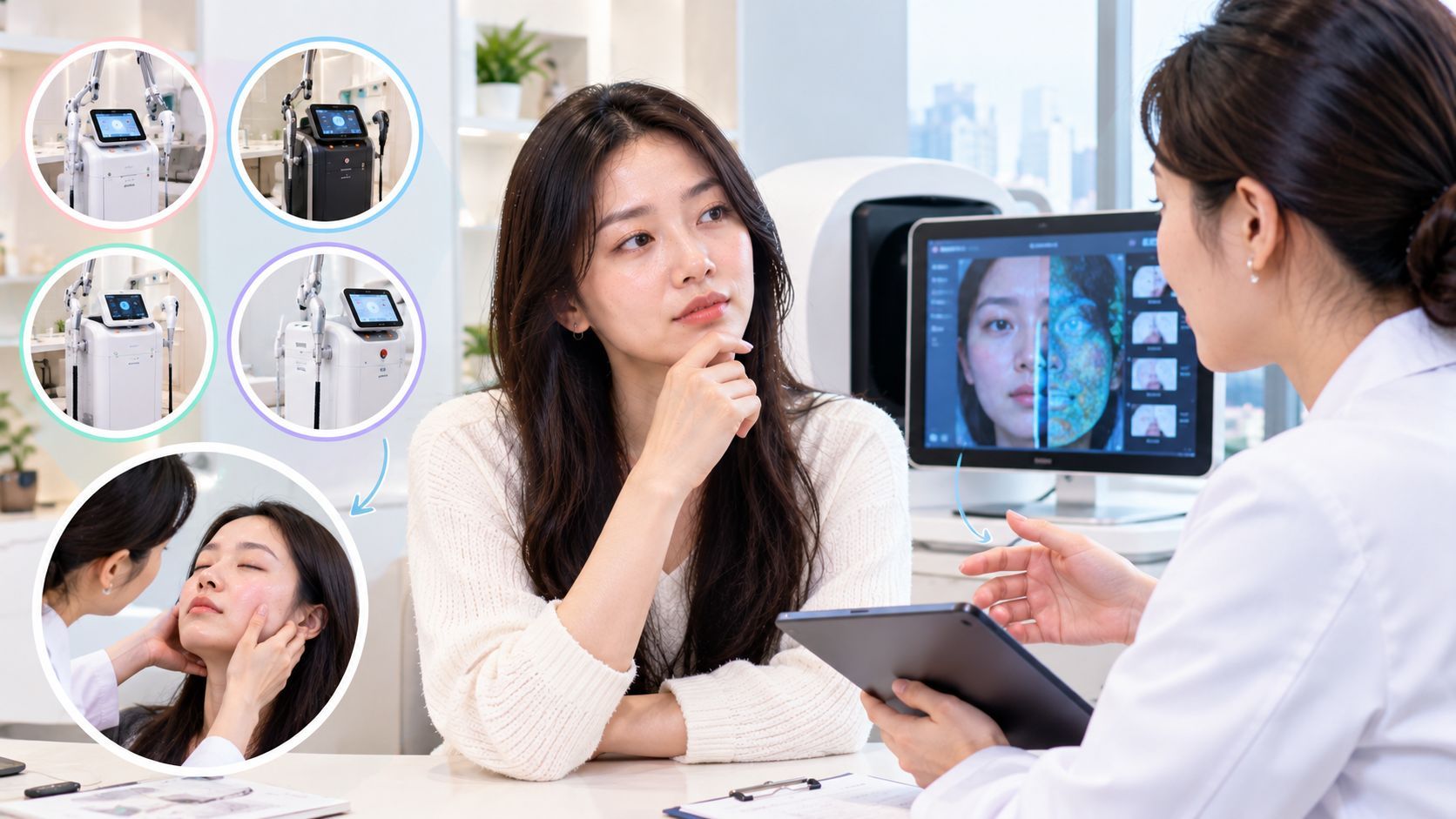
If you are visiting Seoul specifically for enlarged pores, do not choose a clinic solely by the number of devices advertised.
During consultation, ask:
- What is making my pores look enlarged?
- Are my pores mainly related to oil, aging, laxity, or texture?
- Do I also have acne scars?
- Why are you recommending this particular device?
- How deep will the treatment be?
- What downtime should I expect?
- How many sessions are typically considered?
- What is the risk of post-inflammatory pigmentation for my skin?
- Would treating my pores and another concern in the same session be appropriate?
A good treatment plan may use one device, several treatments over time, or a combination of procedure and skincare.
What If You Have Pores Plus Another Skin Problem?
Enlarged pores rarely exist in isolation.
If you have pores plus acne scars, collagen-remodeling treatments such as RF microneedling or fractional resurfacing may be discussed. If you have pores plus pigmentation, the pigmentation may require a different approach rather than simply increasing the intensity of the pore treatment.
Treating every concern with one aggressive procedure can increase unnecessary inflammation without necessarily producing the desired result.
Conclusion
There is no single device that works best for every enlarged-pore problem. RF microneedling is a particularly relevant option when enlarged pores are accompanied by uneven texture, mild acne scarring, or reduced firmness, and clinical evidence supports its use for enlarged facial pores.
Fractional lasers may be considered when significant texture irregularity or acne scarring is also present, while conventional microneedling may suit people seeking collagen stimulation with a different recovery profile.
The most useful question is therefore not “Which machine is the strongest?” but “What is making my pores look enlarged, and which treatment addresses that cause?”
FAQs
What device is commonly used for enlarged pores?
RF microneedling, fractional laser treatments, and conventional microneedling can all be considered depending on the cause of enlarged pores and the patient's treatment goals. RF microneedling has specific clinical evidence for improving enlarged cheek pores.
Is RF microneedling good for large pores?
It can be. RF microneedling targets the deeper skin with controlled needle placement and radiofrequency energy, and a clinical study found significant pore-score improvement after three treatments.
Is laser better than RF microneedling for pores?
Not universally. The appropriate choice depends on whether the main problem is pore visibility, rough texture, acne scarring, pigmentation, or loss of firmness. Different technologies also have different downtime and risk profiles.
Can microneedling make large pores smaller?
Microneedling can make pores less noticeable by improving surrounding skin texture and collagen remodeling. The AAD lists large pores among conditions for which dermatologists may use microneedling.
Can enlarged pores be permanently removed?
No treatment should be expected to permanently erase normal pores. The practical goal is to make them less noticeable and improve the factors that make them appear larger.
Should I choose a stronger laser for larger pores?
Not necessarily. Treatment intensity should be matched to the cause of the pore enlargement, skin type, associated conditions, and acceptable downtime. More aggressive treatment can also increase recovery and potential adverse effects.