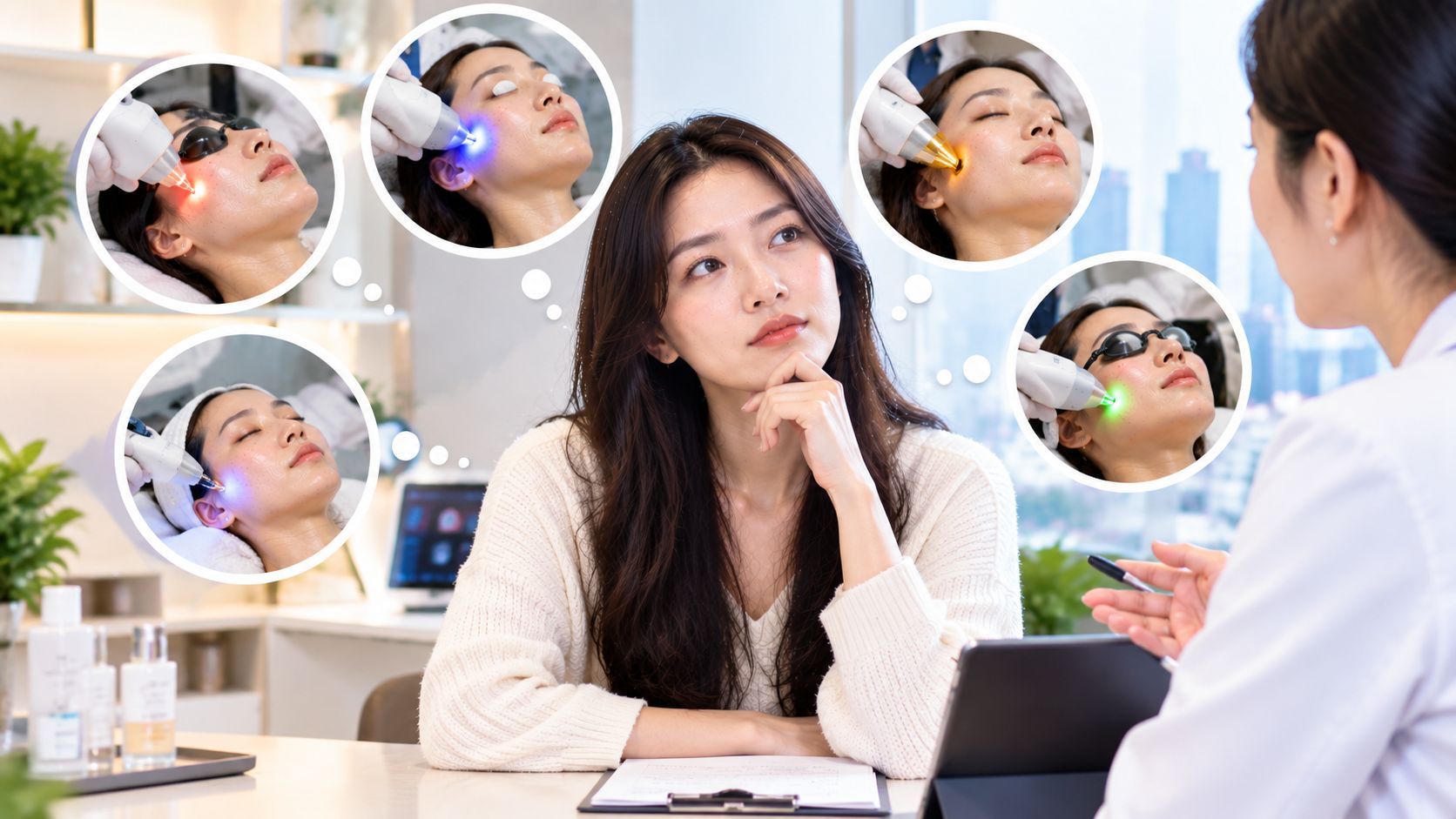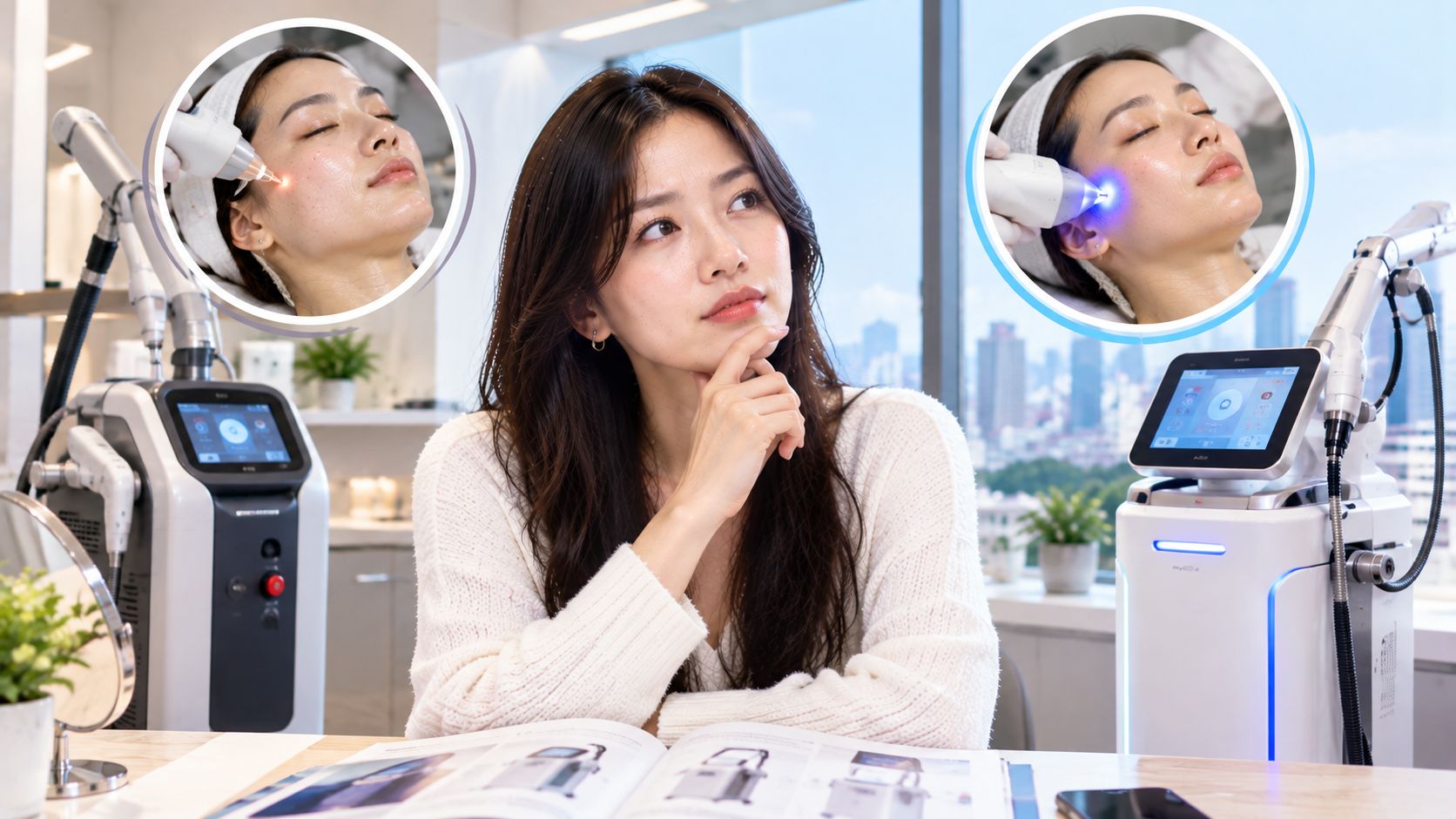
Why Are My Nose Pores So Much Harder to Treat Than My Cheek Pores?
Introduction
It is common to notice that the pores on your nose remain much more visible even after your cheeks have improved. The reason is that nose pores and cheek pores can have different anatomical and biological characteristics, so they do not always respond to the same treatment in the same way.
The nose and central facial area tend to have substantial sebaceous activity, while cheek pore visibility can be influenced more strongly by skin texture, collagen support, elasticity, and aging. Research has found that enlarged pores are affected by factors including sebum production, skin elasticity, follicular structure, age, hormones, and previous acne.
This is why a treatment that noticeably improves cheek pores may produce a more modest change on the nose.
Why Are Nose Pores Often More Difficult to Treat?
The Nose Has High Sebaceous Activity
One of the main reasons is oil production.
The nose contains many sebaceous follicles, and research examining different facial regions has found particularly high sebum content and sebaceous activity around the nose.
Sebum can make pore openings appear darker, wider, and more noticeable.
A study examining factors associated with facial pore size found that increased sebum output was significantly associated with larger pores.
This means that even when a treatment improves the surrounding skin, continued oil production can make the pores look prominent again.
Many Nose “Pores” Are Actually Sebaceous Filaments
Another important distinction is that what looks like a large pore on the nose may partly be a sebaceous filament.
Sebaceous filaments are normal structures within sebaceous follicles and are particularly common in the central face and around the nose. They can become more visible in people with oily skin and prominent pores.
They are not simply dirt that can be permanently removed.
Even after extraction or cleansing, the follicle can refill because sebaceous filaments are part of the normal follicular structure.
Why Can Cheek Pores Respond Differently?
Cheek Pores Can Be More Related to Skin Structure
Cheek pore visibility may be influenced by the condition of the surrounding skin.
Reduced elasticity, collagen changes, uneven texture, and previous acne can all contribute to the appearance of enlarged pores. Reviews of facial pores identify increased sebum, decreased elasticity, and increased follicular volume among the major contributing factors.
This creates an important distinction:
Nose pores may be strongly influenced by follicular and sebaceous activity, while cheek pores may have a larger structural and collagen-related component.
The distinction is not absolute, but it can influence treatment planning.
Cheek Pores May Also Be Connected to Acne Scarring
On the cheeks, what appears to be a pore problem may sometimes include shallow acne scars or irregular skin texture.
In that situation, collagen-remodeling procedures may improve the overall surface even though they cannot literally eliminate the follicular openings.
Why Does the Nose Sometimes Look Worse After Treatment?
Oil Can Make Improvements Harder to See
Suppose a treatment improves the skin around the pore but does not significantly change sebaceous activity.
If the nose becomes oily again, the pore openings may become visually prominent. This can create the impression that the treatment “didn't work,” even though there may have been some improvement in the surrounding skin.
Temporary Swelling Can Also Change Texture
After procedures such as microneedling, RF microneedling, or fractional laser treatment, temporary inflammation and swelling can affect how the skin surface looks.
This does not necessarily represent the final result.
Recovery should be judged after the skin has had enough time to settle rather than immediately after treatment.
Which Treatments Can Be Considered for Nose Pores?
RF Microneedling
RF microneedling can be considered when pore visibility is accompanied by uneven texture or reduced firmness.
It delivers radiofrequency energy through microneedles into the skin and is intended to stimulate controlled remodeling.
Clinical research has reported improvement in enlarged pores following fractional microneedling radiofrequency treatment.
However, treating the nose may require a different approach from treating the cheeks because the underlying concern can be different.
Fractional Laser
Fractional laser treatment can be considered when pores are associated with rough texture, acne scarring, or photoaging.
It works primarily through controlled microscopic injury and subsequent skin remodeling rather than simply removing oil from the follicles.
For someone whose main problem is sebaceous activity on the nose, however, resurfacing alone may not address the entire issue.
Microneedling
Conventional microneedling can improve skin texture and stimulate collagen remodeling.
It may be more relevant when the surrounding cheek skin needs texture improvement rather than when the primary issue is excessive oil production on the nose.
Sebum and Pore Management
For an oily nose, skincare can be an important part of the treatment plan.
The American Academy of Dermatology recommends non-comedogenic products, gentle cleansing, appropriate acne treatment, and retinoid-based skincare when suitable for the individual. It also warns that aggressive scrubbing and squeezing can irritate the skin and make pores appear more noticeable.
Why One Treatment for the Whole Face May Not Be Ideal
Different Areas Can Have Different Problems
Imagine a patient with:
- oily, visible pores on the nose
- enlarged pores and mild laxity on the cheeks
- shallow acne scars near the cheekbones
- pigmentation around the nose
Treating the entire face with exactly the same settings may not be the most individualized approach.
The nose may need more emphasis on oil and follicular management, while the cheeks may benefit from collagen remodeling or texture-focused treatment.
Reviews of facial-pore treatments similarly emphasize that pore enlargement has multiple causes and that treatment should be individualized.
Can You Actually Shrink Nose Pores Permanently?
Pores Are Normal Structures
The realistic goal is usually to make pores less noticeable, rather than permanently eliminate them.
Pores are openings of pilosebaceous follicles, and their visibility is affected by biological factors such as sebum production, follicular structure, elasticity, age, and genetics.
Even after successful treatment, oil production and normal skin aging continue.
Maintenance Can Matter More for the Nose
Because the nose can remain oily, maintenance may be particularly important.
Gentle cleansing, non-comedogenic skincare, appropriate acne or oil-control treatment, and daily sun protection can help prevent factors that make pores more noticeable.
What If Your Nose Pores Are Extremely Visible?
Before choosing a procedure, determine what you are actually seeing.
Large Follicular Openings
These are genuine visible pores and may be influenced by sebum, follicular size, and surrounding skin structure.
Sebaceous Filaments
These commonly appear as small dots or lines on the nose and central face. They are normal follicular structures and tend to refill after being expressed.
Blackheads
A blackhead is different from a normal sebaceous filament and may require acne-focused management.
Acne Scars
Depressed acne scars can sometimes make the cheek surface look porous even though the problem is actually scar-related.
Correctly identifying the problem is important because a pore treatment cannot necessarily correct every type of surface irregularity.
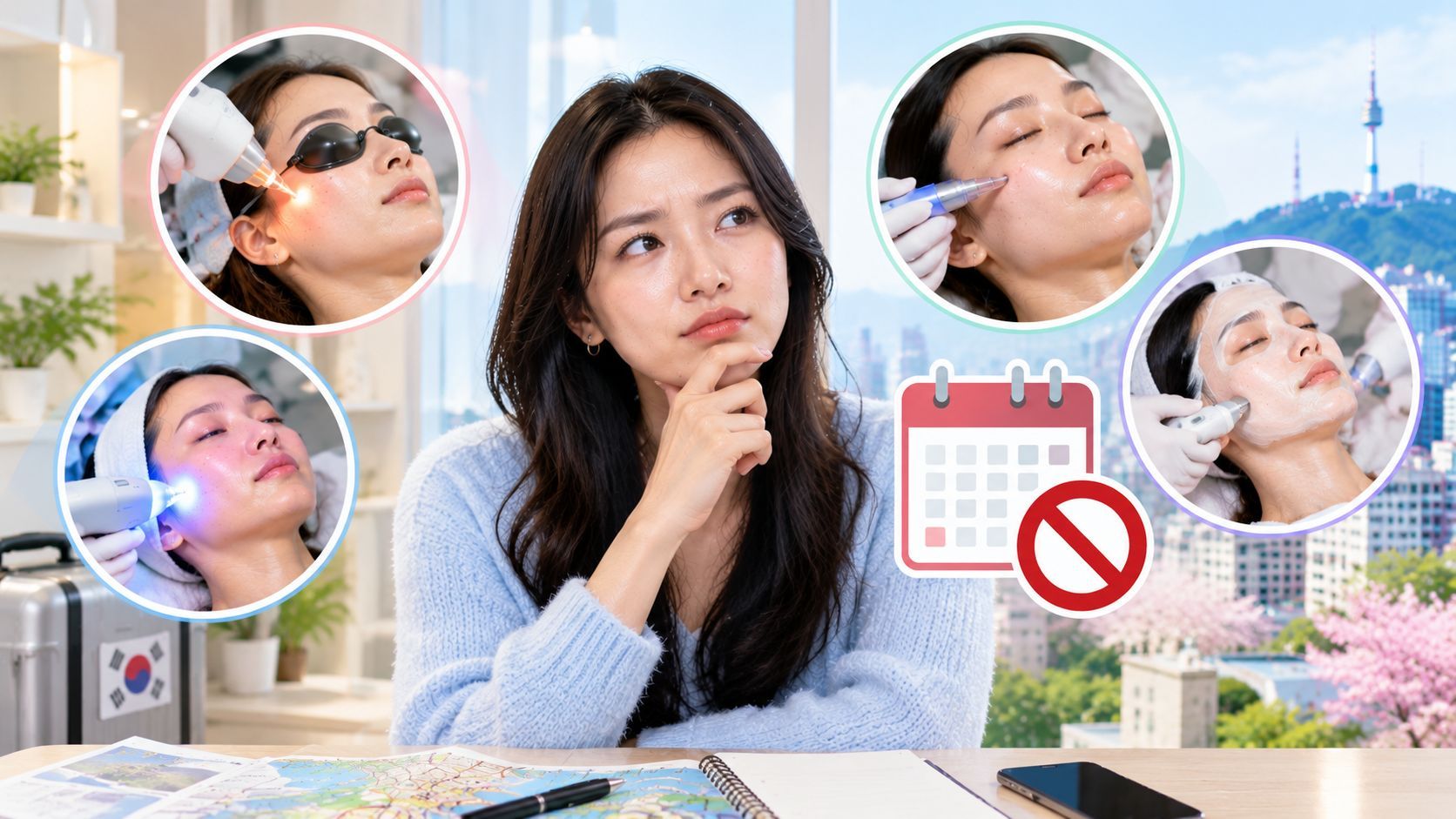
What Should You Ask a Seoul Dermatology Clinic?
If you are visiting Seoul specifically for pore treatment, ask the dermatologist:
- Are the pores on my nose mainly related to sebum?
- Do I have sebaceous filaments or blackheads?
- Are my cheek pores related to collagen loss or acne scarring?
- Would you treat my nose and cheeks differently?
- Which device are you recommending and why?
- Is RF microneedling appropriate for my skin?
- Would fractional laser provide additional benefit?
- How much downtime should I expect?
- Will the treatment address oil production, or only skin texture?
- How many sessions would normally be considered?
These questions are often more useful than simply asking which machine is the “best” for pores.
Can Nose and Cheek Pores Be Treated During the Same Visit?
Potentially, yes, but the treatment plan should be individualized.
A dermatologist may use the same general treatment category across the face while adjusting treatment areas or parameters. In other cases, different concerns may be better treated separately.
Combination approaches can be useful for multifactorial pore concerns, and a review of clinical studies found that combining modalities sometimes improved pore size or number more than individual approaches.
However, combining procedures also increases treatment complexity and may increase inflammation or recovery requirements.
What Is the Main Difference Between Nose and Cheek Pore Treatment?
ConcernNoseCheeksSebumOften a major factorCan contributeSebaceous filamentsVery commonLess visually dominantSkin laxityMay contributeOften more relevant with ageAcne scarsLess commonly the main issueCan be a major factorRough texturePossibleCommon treatment targetCollagen remodelingMay help selected casesOften more relevantOil-control skincareParticularly importantStill useful when oily
This is why treating the entire face identically may not always produce uniform results.
Conclusion
Nose pores can be harder to treat than cheek pores because the nose often has strong sebaceous activity and prominent sebaceous follicles, while cheek pore visibility may be more strongly influenced by elasticity, collagen, texture, and acne scarring.
The difference is important when choosing treatment. RF microneedling, fractional laser, microneedling, skincare, and other approaches may all have a role, but they address different contributing factors.
If you are considering pore treatment in Seoul, the most useful consultation is one that evaluates the nose and cheeks separately rather than assuming that one device or one treatment intensity should be used everywhere.
FAQs
Why are the pores on my nose bigger than my cheek pores?
The nose has high sebaceous activity and many sebaceous follicles, which can make pores and sebaceous filaments particularly visible. Sebum production is associated with pore size.
Are nose pores actually harder to treat?
They can be more persistent because ongoing sebum production and sebaceous filaments continue to make the follicular openings visible. Treatment can reduce their appearance but does not eliminate normal follicles.
Can RF microneedling improve nose pores?
It may help selected patients, particularly when texture and collagen-related factors contribute to pore visibility. However, the treatment plan should account for the nose's sebaceous activity rather than relying on collagen remodeling alone.
Why do my cheek pores improve but my nose pores do not?
Your cheeks and nose may have different causes of pore visibility. Cheek improvement may reflect better skin texture or collagen remodeling, while persistent oil production can continue to make nose pores noticeable.
Can squeezing nose pores make them larger?
Repeated squeezing and picking can irritate the skin and make pores appear more noticeable. The AAD recommends avoiding squeezing or digging into visible pores.
Should I use the same pore treatment on my nose and cheeks?
Not necessarily. A dermatologist may recommend different approaches or settings depending on whether each area's main problem is sebum, follicular structure, acne scarring, laxity, or surface texture.