What Is the Difference Between Ablative and Non-Ablative Fractional Laser?
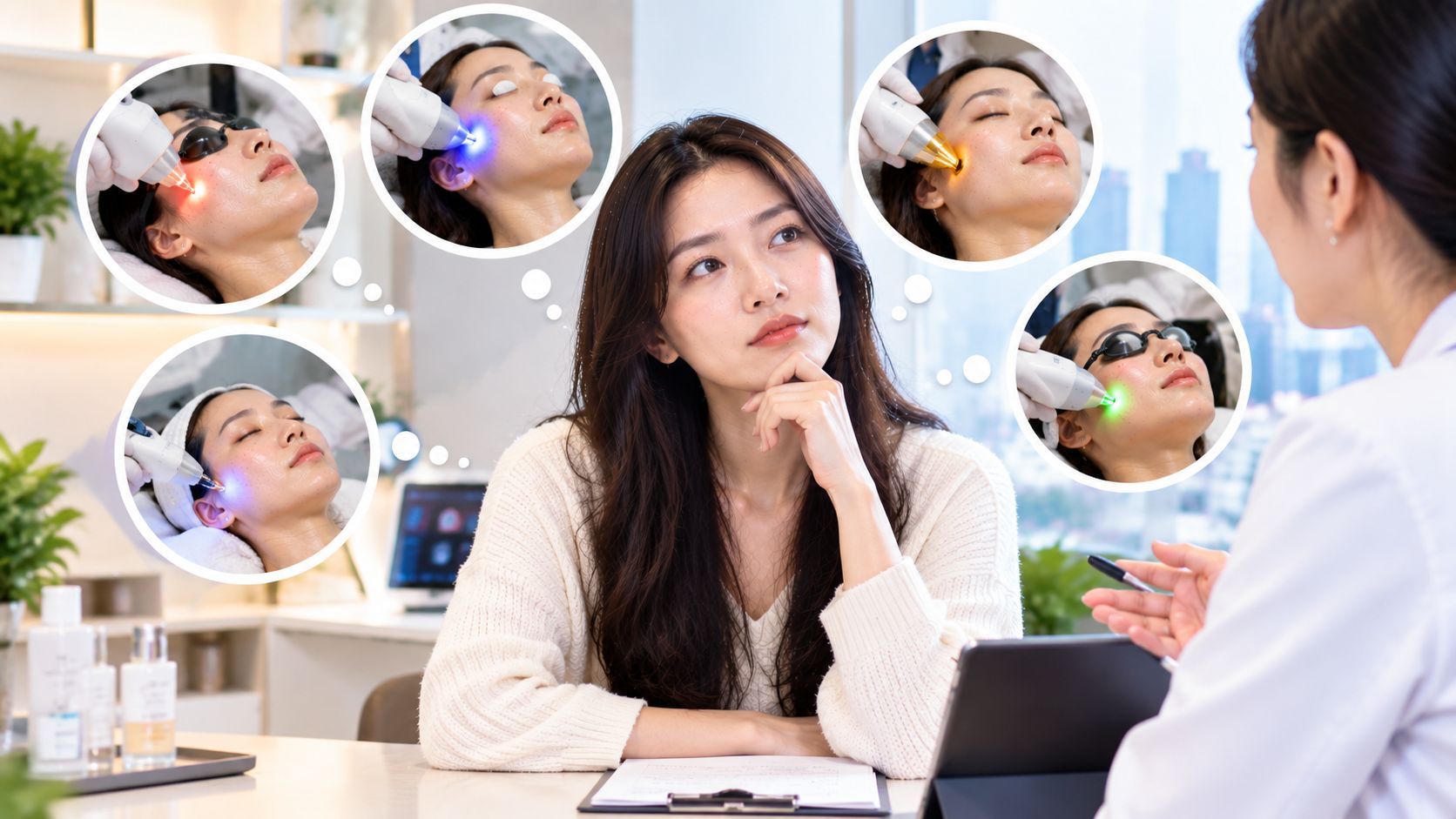
Fractional laser treatments are often described as either ablative or non-ablative, but the difference can be confusing when comparing laser treatments in Seoul.
Both approaches use fractional treatment patterns, meaning they treat microscopic areas of skin while leaving surrounding tissue untreated. The major difference is how much tissue the laser removes or vaporizes and how deeply it affects the skin.
In general, ablative fractional lasers create more substantial resurfacing by removing microscopic columns of skin, while non-ablative fractional lasers heat the skin without removing the surface in the same way.
Neither approach is automatically better. The appropriate option depends on the skin concern, desired intensity, skin type, downtime tolerance, and treatment goals.
What Does “Fractional” Mean?
A fractional laser does not treat the entire skin surface continuously.
Instead, the laser creates microscopic treatment zones separated by untreated skin. This allows the skin to heal between treated areas rather than requiring the entire surface to recover simultaneously.
Fractional technology can be used with different types of lasers and different levels of intensity.
That is why simply hearing “fractional laser” is not enough to understand how aggressive a treatment will be.
What Is an Ablative Fractional Laser?
An ablative fractional laser removes or vaporizes microscopic columns of tissue.
Common examples include fractional CO2 laser and some fractional erbium laser treatments.
The treatment creates controlled microscopic injuries that extend into the skin. The body then begins a healing and remodeling process.
Ablative fractional laser may be considered for selected concerns such as:
- More pronounced skin texture irregularities
- Certain acne scars
- Fine lines
- Photodamage
- Skin resurfacing
- Some types of uneven skin surface
Because tissue is actually removed, ablative treatment can be more intensive than many non-ablative approaches.
What Is a Non-Ablative Fractional Laser?
Non-ablative fractional lasers heat targeted areas of the skin without removing the surface tissue in the same way as an ablative laser.
The controlled thermal effect can stimulate remodeling while generally causing less surface disruption.
Non-ablative fractional treatment may be considered for:
- Mild to moderate texture changes
- Fine lines
- Photodamage
- Selected acne scars
- Skin rejuvenation
- Certain pigmentation-related concerns, depending on the laser
The exact result and recovery depend on the specific laser and settings.
Ablative vs Non-Ablative Fractional Laser
FeatureAblative Fractional LaserNon-Ablative Fractional LaserRemoves microscopic tissueYesGenerally noSurface disruptionGreaterGenerally lessTreatment intensityCan be higherOften more moderateResurfacing effectMore substantialMore gradualDowntimeUsually greaterUsually lessPeeling/crustingMore likelyUsually less pronouncedSuitable forSelected deeper texture/scarring and resurfacingSelected milder texture, fine lines and photodamageRisk considerationsRequires careful treatment planningStill carries risks, including pigment changes
These are general distinctions. The actual experience depends on the device, settings, treatment density, and individual skin response.
When Might Ablative Fractional Laser Make Sense?
Ablative fractional laser may be considered when a patient needs more substantial resurfacing.
For example, selected patients with noticeable acne-scar texture or more pronounced photodamage may be evaluated for an ablative fractional approach.
However, “more aggressive” does not automatically mean “better.”
A higher-intensity treatment can also mean:
- More redness
- More swelling
- More sensitivity
- More peeling or crusting
- Longer recovery
- Greater risk of complications
The goal should be an appropriate level of treatment rather than maximum intensity.
When Might Non-Ablative Fractional Laser Make Sense?
A non-ablative fractional approach may be considered when the goal is more gradual improvement with less surface disruption.
It can be relevant for selected patients concerned about:
- Fine lines
- Mild texture irregularities
- Photodamage
- Certain acne scars
- Overall skin quality
The improvement may be more gradual, and multiple treatment sessions may sometimes be recommended.
Again, the exact treatment depends on the laser being used.
Which Is Better for Acne Scars?
The answer depends heavily on the type of acne scar.
Rolling Scars
Rolling scars can be caused by fibrous tethering beneath the skin. If significant tethering is present, resurfacing alone may not address the underlying problem.
Subcision may therefore be considered before or alongside another treatment.
Boxcar Scars
Shallow boxcar scars may respond to selected resurfacing approaches. Deeper boxcar scars may require a more targeted or combination strategy.
Ice-Pick Scars
Deep, narrow ice-pick scars often require specialized treatment. Options may include TCA CROSS, punch techniques, or other targeted procedures depending on the individual scar.
This is why an acne-scar consultation should assess scar type rather than simply recommending the strongest available fractional laser.
What About Skin Aging?
Both ablative and non-ablative fractional lasers can have a role in selected signs of skin aging.
A fractional laser may address some combination of:
- Fine lines
- Uneven texture
- Photodamage
- Surface irregularity
However, aging is not only a surface problem.
Loss of volume, significant laxity, fat redistribution, and changes in facial structure may require different treatment approaches.
A fractional laser should therefore not be viewed as a universal treatment for every sign of facial aging.
What About Pigmentation?
Fractional lasers can sometimes be used for pigmentation-related concerns, but the type of pigmentation matters.
Melasma, post-inflammatory hyperpigmentation, freckles, and sun-related pigmentation can behave differently.
Aggressive laser treatment can sometimes worsen pigmentation, particularly when inflammation triggers post-inflammatory hyperpigmentation.
This is particularly important for people with darker or more melanin-rich skin.
A dermatologist should assess the pigmentation before deciding whether fractional laser treatment is appropriate.
Which Has More Downtime?
Ablative fractional laser generally causes more surface disruption and therefore tends to require more recovery than non-ablative fractional treatment.
After ablative treatment, patients may experience:
- Redness
- Swelling
- Heat or burning sensation
- Peeling
- Crusting
- Sensitivity
- Temporary pigment changes
Non-ablative fractional laser may cause:
- Redness
- Warmth
- Swelling
- Sensitivity
- Dryness
- Mild peeling
The actual recovery can vary significantly according to treatment intensity and individual healing.
Therefore, do not plan your Seoul itinerary around a generic statement such as “fractional laser has three days of downtime.”
Is Non-Ablative Always Safer?
Not necessarily.
Non-ablative does not mean risk-free.
Potential complications can still include:
- Post-inflammatory hyperpigmentation
- Hypopigmentation
- Prolonged redness
- Burns or excessive thermal injury
- Infection
- Unwanted textural changes
- Rare scarring
The risk depends on the device, settings, treatment technique, skin type, aftercare, and individual response.
What About Darker Skin?
People with darker skin can sometimes undergo fractional laser treatments, but pigment risk should be discussed carefully.
Ablative treatment may require particularly careful planning because of the greater degree of tissue disruption.
Non-ablative treatment may be considered in some situations, but it is not automatically risk-free for skin of color.
If you have previously developed dark marks after acne, irritation, burns, or cosmetic procedures, tell your dermatologist before treatment.
Can You Combine Fractional Laser With Other Treatments?
Sometimes.
A treatment plan may combine fractional laser with other procedures when several different concerns are present.
For example, acne-scar treatment may involve a combination of:
- Subcision
- Fractional laser
- RF microneedling
- TCA CROSS
- Injectable skin treatments
However, combining multiple procedures increases treatment complexity and may increase inflammation and recovery.
The combination should have a specific clinical purpose rather than simply adding as many procedures as possible.
How Should You Choose in Seoul?
When a clinic recommends ablative or non-ablative fractional laser, ask:
What specific skin problem are we treating?
Is my main concern texture, acne scars, pigmentation, fine lines, or something else?
What exact laser and wavelength will be used?
How aggressive will the treatment be?
How long should I expect redness and peeling?
What is my risk of post-inflammatory hyperpigmentation?
Would a non-ablative approach be sufficient?
Would another treatment such as Potenza or a targeted acne-scar procedure make more sense?
These questions can help you understand the reasoning behind the treatment rather than choosing solely based on the word “fractional.”
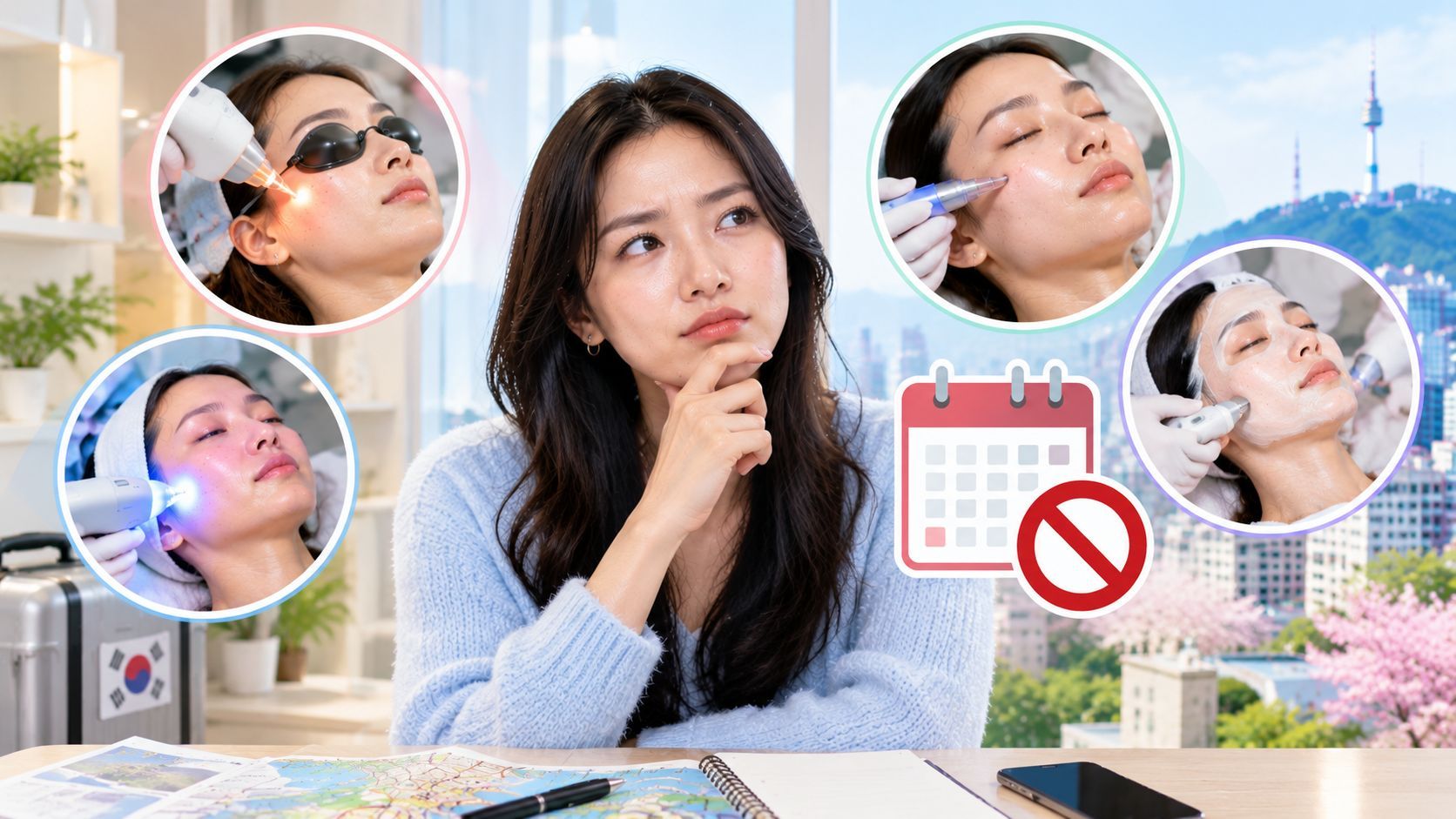
What If You Are Visiting Seoul for Only One Week?
Your travel schedule matters.
Ablative fractional treatment may require more visible recovery, which can make it difficult to combine with sightseeing, social events, photography, or an early flight.
If you have only a few days in Seoul, discuss the timing before treatment.
A practical schedule should allow for:
- Consultation
- Treatment
- Initial recovery
- Follow-up if recommended
- Flight home
Do not assume that your skin will look normal immediately after treatment simply because the procedure is fractional.
Conclusion
The main difference between ablative and non-ablative fractional laser is how the laser affects the skin.
Ablative fractional lasers remove microscopic columns of tissue and can provide more substantial resurfacing, but they generally involve greater surface disruption and recovery.
Non-ablative fractional lasers heat targeted areas without removing the skin surface in the same way, often allowing a more gradual treatment approach with less surface disruption.
Neither is universally better.
The appropriate choice depends on your skin concern, scar type, pigmentation risk, skin type, desired treatment intensity, recovery time, and overall treatment goals.
For international patients considering fractional laser treatment in Seoul, understanding the exact laser and treatment settings is more useful than choosing simply between “ablative” and “non-ablative.”
Frequently Asked Questions
Is ablative fractional laser stronger than non-ablative fractional laser?
Ablative fractional laser generally creates greater tissue disruption and resurfacing. However, stronger does not automatically mean more appropriate or more effective for every skin concern.
Is non-ablative fractional laser safer?
It may involve less surface disruption, but it is not risk-free. Pigment changes, prolonged inflammation, burns, infection, and other complications can still occur.
Which fractional laser is better for acne scars?
It depends on the scar type and depth. Fractional laser can help selected scars, but rolling, boxcar, and ice-pick scars may require different or combination treatments.
How much downtime does ablative fractional laser require?
There is no universal recovery period. Downtime depends on the exact laser, energy, treatment density, treatment area, and individual healing.
Can darker skin have fractional laser treatment?
Yes, selected patients with darker skin may be treated, but pigment risk requires careful assessment and treatment planning. Post-inflammatory hyperpigmentation is an important consideration.
Can I get fractional laser before flying home from Seoul?
It depends on the treatment intensity and your recovery period. If you are traveling shortly after treatment, discuss flight timing and aftercare with the treating clinic beforehand.