Can Pico Laser Actually Improve Depressed Acne Scars?
Depressed acne scars can be difficult to treat because the problem is not simply pigmentation on the skin’s surface. The skin has actually lost or changed some of its underlying structure, creating indentations such as ice-pick, rolling, or boxcar scars. This is why a laser that works very well for dark spots may not produce the same level of improvement in deep acne scars.
Pico laser can sometimes improve the appearance and texture of depressed acne scars, but it is not usually the main treatment for deeper atrophic scars. Its usefulness depends on the specific Pico device, wavelength, treatment mode, scar type, skin condition, and whether pigmentation is also present. For deeper or tethered scars, treatments such as fractional resurfacing, RF microneedling, subcision, TCA CROSS, or punch techniques may be considered instead or in combination.
What Is Pico Laser?
Pico laser uses extremely short pulses of laser energy, measured in picoseconds. Different Pico platforms and handpieces can be used for different purposes, including pigmentation and certain forms of skin textural treatment.
One important point is that “Pico laser” does not describe one single treatment protocol. Different devices, wavelengths, spot sizes, and pulse modes can produce different effects.
This matters when researching acne-scar treatment in Seoul. Two clinics may both advertise “Pico laser for acne scars” while using different devices or treatment approaches.
Can Pico Laser Improve Depressed Acne Scars?
Sometimes, yes—but expectations should be realistic.
Certain Pico laser treatments may stimulate remodeling in the skin and improve mild textural irregularities. They may be particularly interesting when a person has both acne-scar texture and residual pigmentation.
However, a depressed scar is a structural indentation. If the scar is deep, sharply defined, or attached to deeper tissue, simply treating the surface does not necessarily correct the underlying problem.
Pico laser may therefore be more relevant for:
- Mild textural irregularity
- Some superficial acne-scar changes
- Acne scars accompanied by pigmentation
- Patients seeking a treatment with potentially less downtime than aggressive ablative resurfacing
- Selected patients where a dermatologist believes collagen remodeling may be useful
It may be less suitable as a stand-alone approach for deep ice-pick, strongly tethered rolling, or pronounced boxcar scars.
Why Pigmentation and Depressed Scars Are Different
This distinction is one of the most important things to understand before choosing laser treatment.
Post-acne pigmentation is primarily a color problem. Depressed acne scars are primarily a structural problem.
A Pico laser may be used extensively for pigmentation because certain Pico wavelengths and settings target pigment effectively. But reducing brown discoloration does not automatically lift an indentation.
For example, imagine a cheek with shallow rolling scars and brown marks left after acne. A Pico treatment might help make the overall skin look more even by addressing some discoloration and potentially improving texture. The actual depressions may still remain visible under side lighting.
This is why a consultation should identify whether the main concern is:
- Color
- Texture
- Depression
- Tethering
- A combination of these problems
Pico Laser for Different Types of Depressed Acne Scars
Ice-Pick Scars
Ice-pick scars are narrow but extend relatively deeply into the skin. Because they are small and deep, broad surface treatment may not directly correct the entire scar.
Depending on their characteristics, a dermatologist may consider targeted techniques such as TCA CROSS or punch procedures. Fractional resurfacing may sometimes be used for surrounding texture.
Pico laser may have a supporting role in selected cases, but it should not automatically be considered the primary treatment for deep ice-pick scars.
Rolling Acne Scars
Rolling scars are broader depressions that can be associated with fibrous attachments pulling the skin downward.
If tethering is present, subcision may be considered because it addresses the attachment beneath the scar. A device treatment may then be used to address remaining surface irregularity or stimulate remodeling.
Using Pico laser alone without identifying tethering can therefore leave an important part of the problem untreated.
Boxcar Scars
Boxcar scars have relatively defined edges and can range from shallow to deep.
Shallow boxcar scars may respond to resurfacing or remodeling treatments in selected patients. Deeper scars may require a more targeted strategy.
Depending on the scar and skin type, options can include fractional laser, RF microneedling, punch techniques, or combinations.
Pico laser may be considered in some treatment plans, but the decision should be based on the individual scar rather than the popularity of the device.
How Does Pico Compare With Fractional Laser?
Pico laser and fractional laser should not simply be classified as “weak” versus “strong.”
Their effects depend on the specific technology and settings.
TreatmentPotential role in acne scarsDowntime considerationsCommon considerationPico laserSelected textural improvement and pigmentationOften limited, depending on protocolDevice and treatment mode matterFractional CO₂Resurfacing and collagen remodelingUsually more noticeableGreater recovery and pigment risk in some skin typesNon-ablative fractional laserTexture and collagen remodelingGenerally less than ablative resurfacingMay require multiple sessionsRF microneedlingTexture and collagen remodelingUsually moderateUseful for selected atrophic scarsSubcisionReleases selected tethered scarsBruising/swelling can occurParticularly relevant to some rolling scars
This is not a ranking. Each treatment addresses different aspects of acne-scar formation.
Could Pico Be Useful if You Have Dark Acne Marks and Scars?
This is one situation where the treatment discussion can become more complicated.
Someone may have:
- Depressed scars
- Brown post-acne marks
- Red marks
- Uneven skin texture
A treatment selected primarily for scars may not address pigmentation, while a pigmentation-focused laser may not substantially correct deep depressions.
A dermatologist may therefore separate the goals rather than trying to make one device do everything.
For patients with darker or melanin-rich skin, post-inflammatory hyperpigmentation is an additional consideration. Laser parameters, recent tanning, baseline pigmentation, and the individual's history of pigment changes can all affect treatment planning.
Is Pico Laser Less Aggressive Than CO₂ Laser?
Some Pico protocols can involve less visible downtime than fractional ablative resurfacing, but this should not be treated as a universal rule.
Pico devices can be used in different ways, and treatment intensity varies. Redness, swelling, sensitivity, temporary pigmentation changes, and other reactions can occur.
A lower-downtime treatment can also mean that the expected change in a deeper scar is more limited. Less recovery does not automatically mean less value—but it does mean the treatment goal needs to be realistic.
How Many Pico Treatments Are Needed for Acne Scars?
There is no universal number.
Acne scars develop at different depths, and the response depends on scar type, skin characteristics, treatment settings, and whether other procedures are included.
One session may produce some visible improvement in selected patients, but one Pico treatment should not be expected to erase established depressed scars.
A staged treatment plan may be more appropriate when scars have different characteristics. The dermatologist may also reassess the skin between sessions before deciding whether another treatment is appropriate.
What Are the Risks of Pico Laser for Acne Scars?
Potential effects can include:
- Temporary redness
- Swelling
- Warmth or sensitivity
- Temporary darkening or lightening of treated areas
- Post-inflammatory hyperpigmentation
- Hypopigmentation in some circumstances
- Blistering or burns with inappropriate settings, although uncommon
- Incomplete or disappointing improvement
People with a history of pigmentation problems should discuss this before treatment.
It is also important not to treat an unidentified skin lesion as though it were simply an acne scar or pigmentation. If a spot is new, changing, irregular, bleeding, crusting, or otherwise unusual, medical assessment should come before cosmetic laser treatment.
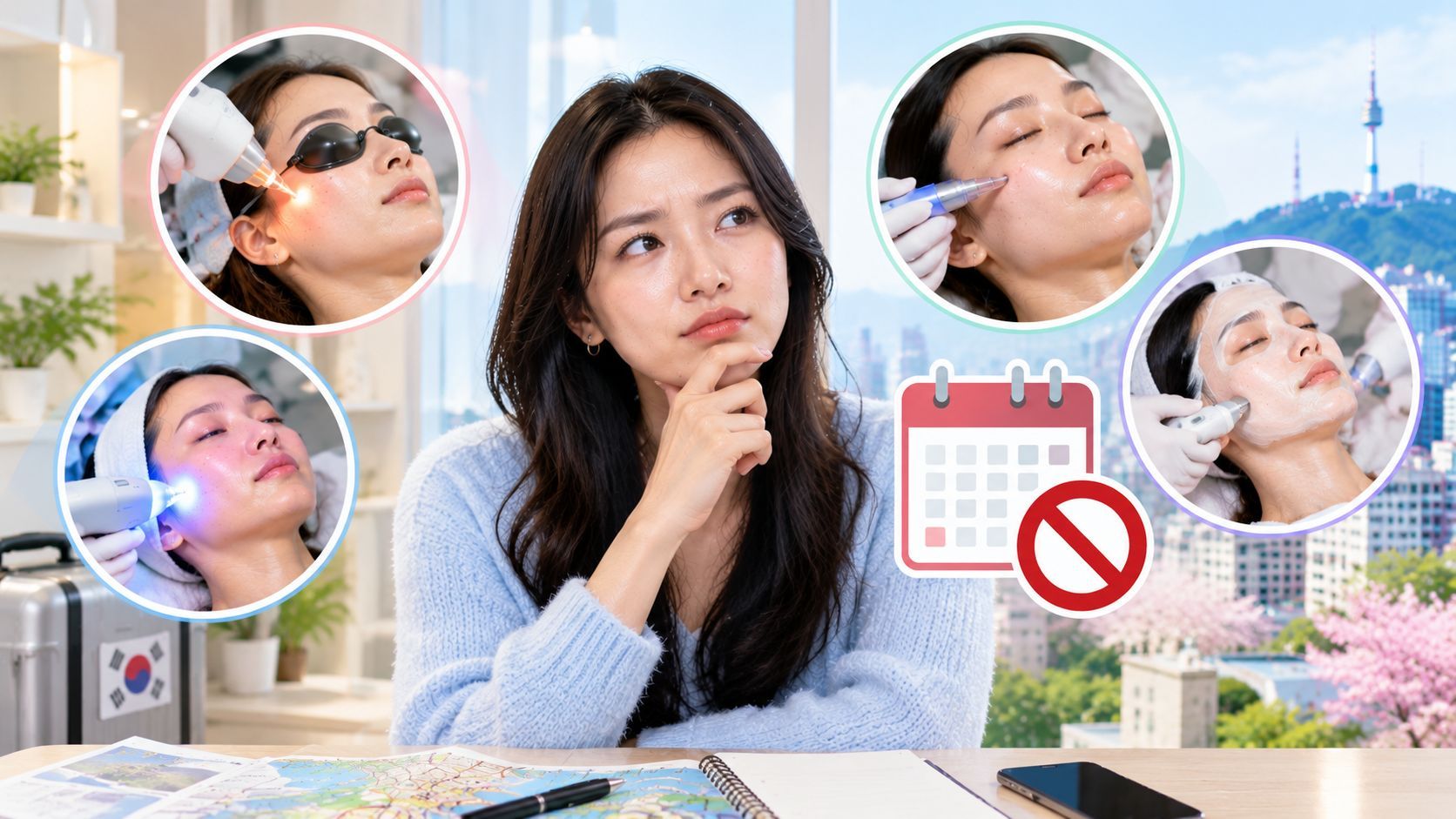
Should You Choose Pico Laser During a Seoul Trip?
If you are traveling to Seoul specifically for acne-scar treatment, avoid choosing a procedure based only on the device name.
Before treatment, ask:
- Which Pico device will be used?
- What wavelength and treatment mode are being considered?
- Is the goal pigmentation, texture, or depressed-scar correction?
- What type of acne scars do I have?
- Are any scars tethered?
- Would subcision or another scar-specific technique be more appropriate?
- How much downtime should I expect?
- What is the risk of pigmentation changes for my skin type?
- How many sessions might reasonably be considered?
- What happens if I return home before the skin has fully recovered?
A consultation before the procedure is particularly important for international patients because travel schedules can make follow-up more difficult.
When Pico Laser May Make Sense
Pico laser may be worth discussing when the treatment goal includes mild textural improvement, pigmentation, or a combination of post-acne discoloration and superficial irregularity.
It becomes less straightforward when the main problem is a deep structural depression. In that situation, a dermatologist may recommend a scar-specific procedure or a combination approach.
The key question is therefore not simply, “Is Pico laser good for acne scars?” It is “What part of my scar problem is Pico being used to treat?”
Conclusion
Pico laser can improve the appearance of selected acne scars, but it should not be viewed as a universal solution for depressed acne scars. Its potential role is different from that of fractional resurfacing, RF microneedling, subcision, TCA CROSS, and punch techniques.
If your main concern is deep ice-pick, rolling, or boxcar scarring, the scar's structure should be assessed before choosing a device. If pigmentation is also present, Pico may have a different and potentially useful role in the overall treatment plan.
For anyone considering Pico laser for depressed acne scars in Seoul, the most useful first step is a detailed consultation that separates pigmentation, texture, depression, and tethering before deciding which treatment—or combination of treatments—fits the skin.
FAQs
Can Pico laser remove depressed acne scars?
No laser can reliably guarantee complete removal of established depressed acne scars. Pico laser may improve selected scars, particularly superficial textural irregularities, but deeper scars often require other or additional approaches.
Is Pico laser better than CO₂ laser for acne scars?
Neither is universally better. Fractional CO₂ can provide more intensive resurfacing, while certain Pico protocols may offer a different recovery profile. The appropriate option depends on scar depth, skin type, treatment goals, and tolerance for downtime.
Can Pico laser treat rolling acne scars?
It may improve some surface texture, but rolling scars can involve tethering beneath the skin. When tethering is significant, subcision may be considered as part of treatment.
Can Pico laser treat ice-pick scars?
Pico may contribute to overall texture improvement, but deep ice-pick scars often need more targeted treatment. TCA CROSS or punch techniques may be discussed depending on the individual scar.
Is Pico laser safe for darker skin?
It can be used in many skin types, but pigment-related side effects require careful consideration. Treatment settings, device choice, recent sun exposure, and personal history of post-inflammatory hyperpigmentation all matter.
How long should I stay in Seoul for Pico acne-scar treatment?
The appropriate schedule depends on the procedure and whether additional treatments are performed. Ask the treating dermatologist about expected redness, swelling, peeling, sun restrictions, and follow-up before finalizing your travel itinerary.