Fraxel vs CO₂ Laser for Acne Scars: Which Is Stronger?
Acne scars can vary significantly in depth, shape, and cause, so choosing between Fraxel and CO₂ laser is not simply about selecting the strongest treatment. Both are fractional laser approaches that can improve acne-scar texture, but they differ in how they affect the skin, how much recovery they usually require, and which patients may be appropriate candidates.
Fractional CO₂ laser is generally considered the more aggressive resurfacing option than non-ablative Fraxel treatments. However, stronger does not automatically mean better for every acne scar. The most appropriate choice depends on scar type, depth, skin tone, pigmentation risk, downtime, previous treatments, and the specific laser device and settings being used.
What Is Fraxel Laser?
Fraxel is a fractional laser technology rather than one single treatment protocol. Different Fraxel systems can use different wavelengths and may be designed for different skin concerns.
Fractional laser treatment creates microscopic treatment zones while leaving surrounding areas untreated. This approach can stimulate skin remodeling while allowing the untreated skin to support healing.
Depending on the specific system and settings, fractional laser treatment may be used for:
- Acne-scar texture
- Uneven skin texture
- Fine lines
- Sun damage
- Selected pigmentation concerns
- Overall skin resurfacing
Because Fraxel can refer to different technologies, it is useful to ask a clinic in Seoul exactly which device and wavelength will be used.
What Is Fractional CO₂ Laser?
Fractional CO₂ laser is an ablative laser treatment that uses carbon dioxide laser energy to create controlled microscopic columns of injury in the skin.
Unlike non-ablative fractional treatments, ablative CO₂ treatment removes portions of the treated tissue. The healing process can stimulate collagen remodeling and improve some forms of uneven skin texture.
Fractional CO₂ may be considered for:
- Depressed acne scars
- Uneven skin texture
- Certain deeper textural irregularities
- Fine lines and wrinkles
- Resurfacing concerns
Because it produces more significant tissue injury, recovery is generally more noticeable than with less aggressive fractional approaches.
Fraxel vs CO₂ Laser: What Is the Main Difference?
The most important difference is the degree and type of tissue injury.
FeatureFraxel / non-ablative fractional laserFractional CO₂ laserTreatment typeOften non-ablative, depending on deviceAblativeTissue removalUsually little or noneMicroscopic areas of tissue are removedResurfacing intensityGenerally moderate, depending on protocolGenerally more aggressiveDowntimeUsually shorterUsually longerRednessCommonCommon and can last longerPeeling/crustingVariable and often limitedMore likelyAcne-scar improvementCan improve selected scarsCan provide more substantial resurfacing in appropriate casesPigment concernsPossibleRequires careful considerationExact outcomeDepends on device and settingsDepends on settings and scar characteristics
This comparison should not be interpreted as one treatment being universally superior.
Is CO₂ Laser Stronger Than Fraxel?
In terms of ablative resurfacing, fractional CO₂ is generally stronger than non-ablative Fraxel treatment.
CO₂ creates controlled areas of tissue removal, producing a more intensive remodeling response. This can make it useful when more substantial resurfacing is appropriate.
However, “stronger” has several meanings in cosmetic dermatology.
A stronger treatment may also involve:
- More redness
- More swelling
- Longer recovery
- Greater sensitivity
- Greater risk of post-inflammatory hyperpigmentation in susceptible patients
- More restrictions during healing
Therefore, the strongest available treatment is not automatically the most appropriate treatment for an individual patient.
Which Is Better for Different Acne Scars?
Ice-Pick Scars
Ice-pick scars are narrow and extend relatively deeply into the skin.
Because they are deep and concentrated, broad resurfacing alone may not completely correct them.
Depending on the individual scar, a dermatologist may consider:
- TCA CROSS
- Punch excision
- Punch elevation
- Fractional laser
- RF microneedling
- Combination treatment
Fractional CO₂ may improve surrounding texture, but a deep ice-pick scar may require a more targeted technique.
Fraxel can also contribute to texture improvement in selected cases, but it should not be expected to erase deep ice-pick scars.
Rolling Acne Scars
Rolling scars are broader depressions and may be associated with fibrous bands underneath the skin.
If tethering is present, laser resurfacing may not address the entire cause of the depression.
Subcision may be considered when fibrous attachments are contributing to the rolling appearance. A fractional laser or RF microneedling treatment may then be used for remaining texture when appropriate.
This is why evaluating the scar structure is important before deciding between Fraxel and CO₂.
Boxcar Scars
Boxcar scars have more defined edges and can be shallow or deep.
For relatively shallow boxcar scars, fractional laser resurfacing may improve the surrounding texture and make the depressions less noticeable.
Deeper boxcar scars may require a more individualized approach, potentially involving fractional CO₂, RF microneedling, punch techniques, or combinations.
The depth and characteristics of the scar matter more than simply choosing the more aggressive laser.
Does More Aggressive Treatment Mean Better Results?
Not necessarily.
Acne scars are structural changes, and different scars respond differently to treatment.
For example, increasing laser intensity cannot necessarily release a tethered rolling scar or completely fill a narrow ice-pick scar.
A more aggressive treatment may be useful when appropriate, but excessive treatment can increase inflammation and recovery without necessarily producing a proportional improvement.
The objective is usually controlled improvement, not maximum injury to the skin.
Which Has More Downtime?
Fractional CO₂ generally has more visible downtime than non-ablative fractional Fraxel treatments.
After CO₂ treatment, patients may experience:
- Redness
- Swelling
- Warmth
- Peeling
- Crusting
- Sensitivity
- Temporary changes in skin color
The recovery period varies according to the treatment intensity, area treated, individual healing, and aftercare.
Non-ablative fractional treatments generally involve less recovery, although redness, swelling, sensitivity, and temporary pigmentation changes can still occur.
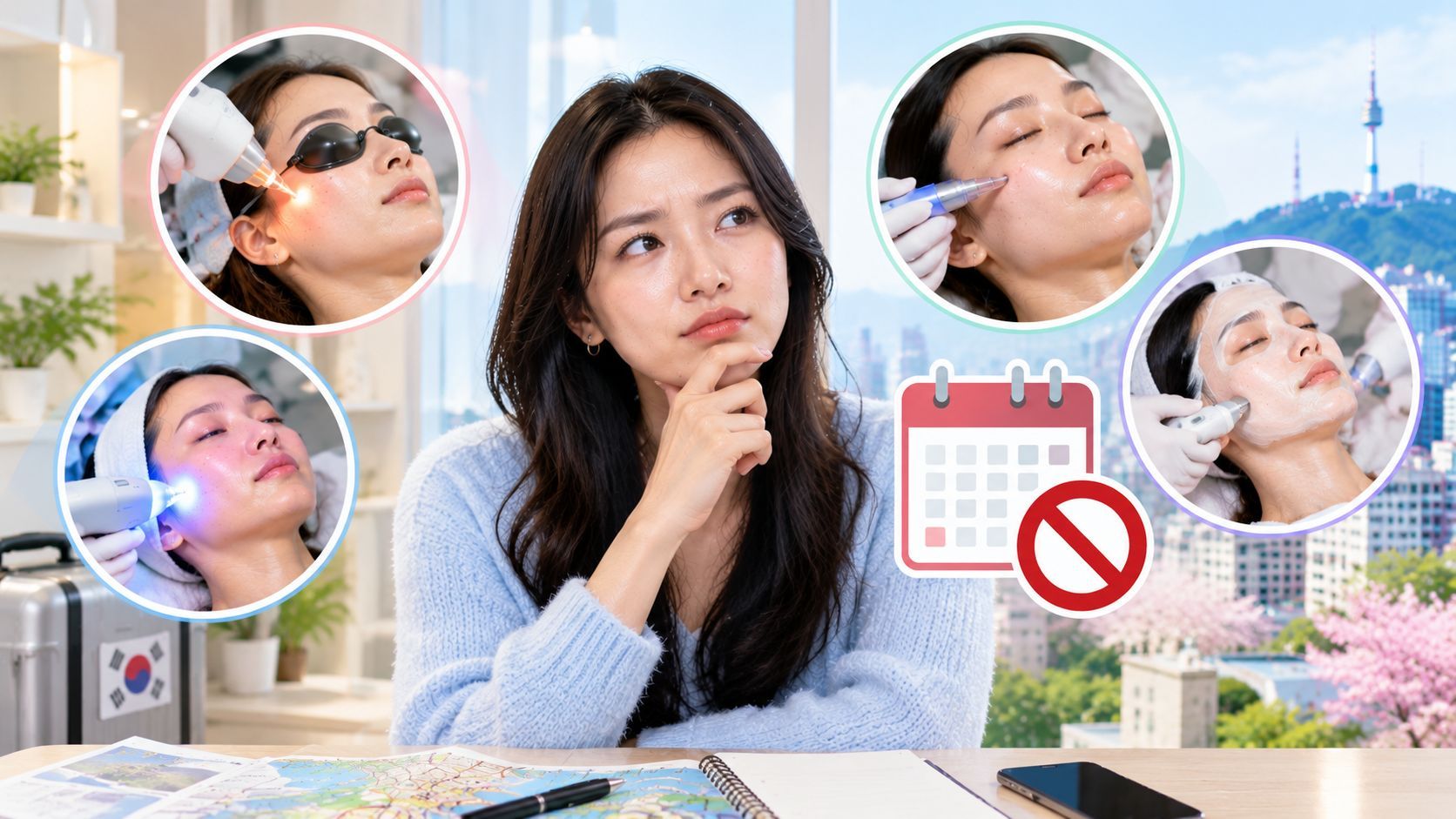
If you are traveling to Seoul for treatment, recovery time should be considered before booking flights and activities.
What About Pigmentation and Darker Skin?
Post-inflammatory hyperpigmentation is an important consideration with acne-scar laser treatment.
People with darker or melanin-rich skin can sometimes develop temporary or prolonged pigmentation changes after inflammatory skin procedures. This does not automatically mean that laser treatment is unsuitable, but treatment selection and settings need to be individualized.
Tell your dermatologist if you have previously experienced:
- Dark marks after acne
- Hyperpigmentation after laser
- Darkening after skin injuries
- Prolonged pigmentation after cosmetic procedures
Recent tanning or significant sun exposure should also be discussed.
Fractional CO₂ requires particular attention because of its more intensive ablative nature.
Can Fraxel or CO₂ Completely Remove Acne Scars?
Neither treatment should be presented as a guaranteed method for completely removing acne scars.
The realistic goal is usually to make scars less noticeable, rather than return the skin perfectly to its pre-acne condition.
Results can vary according to:
- Scar type
- Scar depth
- Skin characteristics
- Age of the scars
- Treatment settings
- Previous treatments
- Healing response
- Whether other procedures are needed
Multiple treatment sessions may be recommended, particularly when scars are widespread or involve different structural patterns.
Can Laser Be Combined With Other Acne-Scar Treatments?
Yes. Combination treatment may be considered when different components of scarring need to be addressed.
For example, a treatment plan could potentially involve:
Rolling scars: Subcision for selected tethered scars, followed by a device-based treatment for residual texture.
Ice-pick scars: TCA CROSS or punch treatment for selected deep scars, with resurfacing for surrounding texture.
Boxcar scars: Fractional resurfacing or RF microneedling depending on depth and skin characteristics.
However, combining treatments does not automatically produce better results. Performing several aggressive procedures too close together may increase inflammation, downtime, and complications.
Treatment sequencing and spacing should be determined by a qualified dermatologist.
How Should International Patients Choose in Seoul?
If you are traveling to Seoul specifically for acne-scar treatment, ask the clinic about the exact treatment rather than relying only on the words “Fraxel” or “CO₂.”
Useful questions include:
- What type of acne scars do I have?
- Are my scars shallow or deep?
- Are any rolling scars tethered?
- Which exact Fraxel or fractional laser device will be used?
- Is the treatment ablative or non-ablative?
- Why is this laser appropriate for my scars?
- How much downtime should I expect?
- What is my risk of post-inflammatory hyperpigmentation?
- Would subcision or another scar-specific procedure be useful?
- How long should I wait before evaluating the final result?
These questions can help you understand whether the proposed treatment matches your actual scar characteristics.
How Many Treatments Might Be Needed?
There is no fixed number of laser sessions that works for everyone.
Some patients may see improvement after one treatment, while others require a series of treatments. Deeper or mixed scar patterns may require several treatment stages or different techniques.
The skin should generally be allowed to heal before deciding whether another session is necessary.
A treatment plan should therefore focus on progressive improvement rather than promising complete correction after a single aggressive procedure.
Fraxel vs CO₂ Laser for a Short Seoul Trip
Your available recovery time can influence the discussion.
If you only have several days in Seoul, a treatment involving substantial redness, peeling, or crusting may not fit comfortably into your itinerary.
A less aggressive fractional treatment may involve less visible recovery, but that does not mean it will produce the same degree of resurfacing as fractional CO₂.
Before treatment, ask how your skin is expected to look on:
- Day 1
- Day 3
- Day 5
- Day 7
- The day of your return flight
Also ask about sun exposure, skincare, exercise, sauna use, makeup, and follow-up requirements.
Conclusion
Fractional CO₂ laser is generally stronger than non-ablative Fraxel treatment in terms of resurfacing intensity, but stronger does not automatically mean better for acne scars.
Fraxel may offer a less aggressive approach with a shorter recovery period, depending on the specific device and protocol. Fractional CO₂ may provide more intensive resurfacing but usually requires more recovery and careful consideration of side effects.
Most importantly, acne scars should be treated according to their structure. Ice-pick, rolling, and boxcar scars can require different approaches, and some may benefit from procedures such as subcision, TCA CROSS, punch techniques, RF microneedling, or combination treatment.
For patients considering acne-scar treatment in Seoul, the most useful comparison is not simply “Which laser is stronger?” but “Which treatment is appropriate for my specific scars, skin type, goals, and recovery time?”
FAQs
Is CO₂ laser stronger than Fraxel for acne scars?
Fractional CO₂ is generally more aggressive than non-ablative fractional Fraxel treatment because it removes microscopic areas of tissue. However, the exact Fraxel device and treatment settings matter.
Does stronger CO₂ laser mean better acne-scar results?
Not necessarily. A more aggressive treatment may provide greater resurfacing but also involves more downtime and potential side effects. It may not address structural problems such as tethering or very deep narrow scars.
Which is better for rolling acne scars, Fraxel or CO₂?
Either may have a role depending on the scar. If rolling scars are tethered, subcision may need to be considered because laser resurfacing alone does not necessarily release the underlying attachments.
Which laser is better for boxcar scars?
Both fractional laser approaches can be considered for selected boxcar scars. The appropriate choice depends on whether the scars are shallow or deep, the patient's skin type, and the desired recovery period.
Can darker skin have CO₂ laser for acne scars?
CO₂ laser may be considered for selected patients, but pigment-related complications require careful planning. A dermatologist should assess skin tone, previous pigmentation reactions, recent sun exposure, and treatment settings.
Can I get Fraxel or CO₂ laser during a short trip to Seoul?
It depends on the treatment intensity and your planned activities. Fractional CO₂ generally requires more visible recovery than non-ablative fractional treatment, so your return flight and post-treatment schedule should be discussed before treatment.