Which Device Is Best for a Heavy Lower Face and Jowls?
Mijan Mijan • October 1, 2026
Introduction
A heavy lower face and visible jowls can make the face look wider, heavier, or less defined around the jawline. But the appearance does not necessarily mean that you simply have too much fat.
Jowls can develop from a combination of skin laxity, fat redistribution, localized fat, changes in facial support, and muscle or skeletal anatomy. Because these causes are different, the most appropriate treatment can also be very different from one person to another.
If you are considering a lifting treatment in Seoul, the important question is therefore not simply, “Which machine is strongest?” It is what is actually making your lower face look heavy?
What Does a “Heavy Lower Face” Actually Mean?
A heavy lower face can describe several different anatomical situations.
Skin laxity and early jowling
When the main problem is loose skin and reduced jawline definition, energy-based tightening treatments may be appropriate.
Microfocused or high-intensity focused ultrasound can target deeper tissue layers and has been studied for lower-face and submental laxity. A 2025 systematic review found evidence of improvement in skin tightening, particularly in the lower face and neck, although treatment protocols and patient selection varied between studies.
Localized fat or fullness
Some people genuinely have excess subcutaneous or submental fat. In that situation, a skin-tightening device alone may not address the primary cause.
Fat-reduction approaches can be considered when an examination confirms that localized fat is contributing to the appearance. Injectable deoxycholic acid, for example, has evidence for reducing submental fat, although swelling, pain, numbness, redness, and other local reactions can occur.
Masseter muscle prominence
If the lower face looks broad because the masseter muscles are prominent, tightening the skin will not directly reduce that muscle.
Botulinum toxin has been studied for masseter hypertrophy and can reduce masseter thickness and prominence over time. A 2026 systematic review and meta-analysis found short-term improvements compared with placebo, although the studies showed substantial variation and did not establish one universally optimal treatment protocol.
Loss of support or volume redistribution
Sometimes a face appears heavier because surrounding areas have lost volume or structural support. Simply removing more volume from the lower face may make the overall face look hollow or unbalanced.
This is one reason an assessment should consider the entire face rather than treating the jowl in isolation.
Which Device Is Best for Jowls?
There is no single best device for every heavy lower face or jowl.
The choice depends on whether the dominant problem is skin laxity, deeper tissue laxity, fat, muscle prominence, or a combination.
HIFU and Microfocused Ultrasound
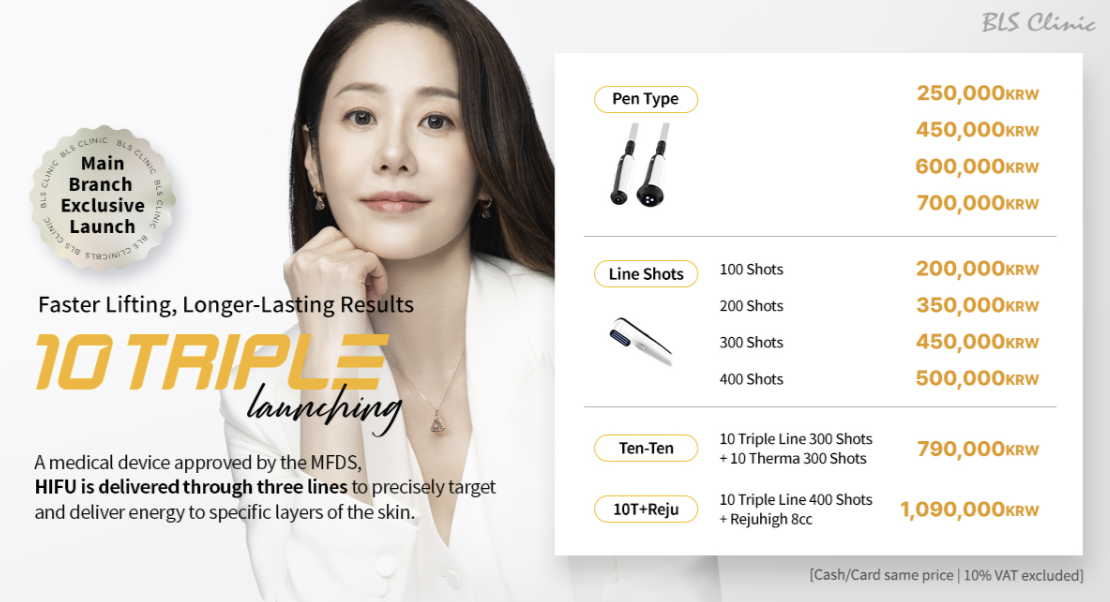
HIFU or microfocused ultrasound may be considered when the main issue is lower-face laxity and loss of jawline definition.
These technologies deliver focused ultrasound energy at selected tissue depths. Clinical research has demonstrated improvement in lower-face and submental laxity, although results vary according to device, treatment parameters, anatomy, and patient selection.
In Asian skin, one clinical study found the jawline and cheek among the facial areas showing notable improvement after HIFU, with mostly mild and temporary adverse effects.
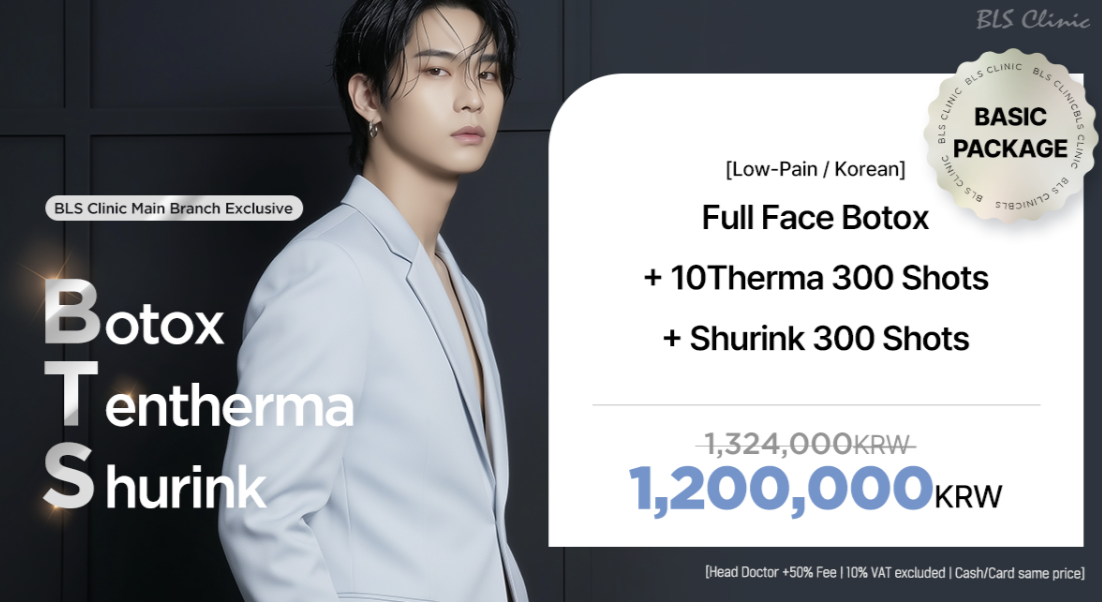
Examples you may encounter in Seoul include Ultherapy and various Korean HIFU platforms such as Shurink.
RF Tightening
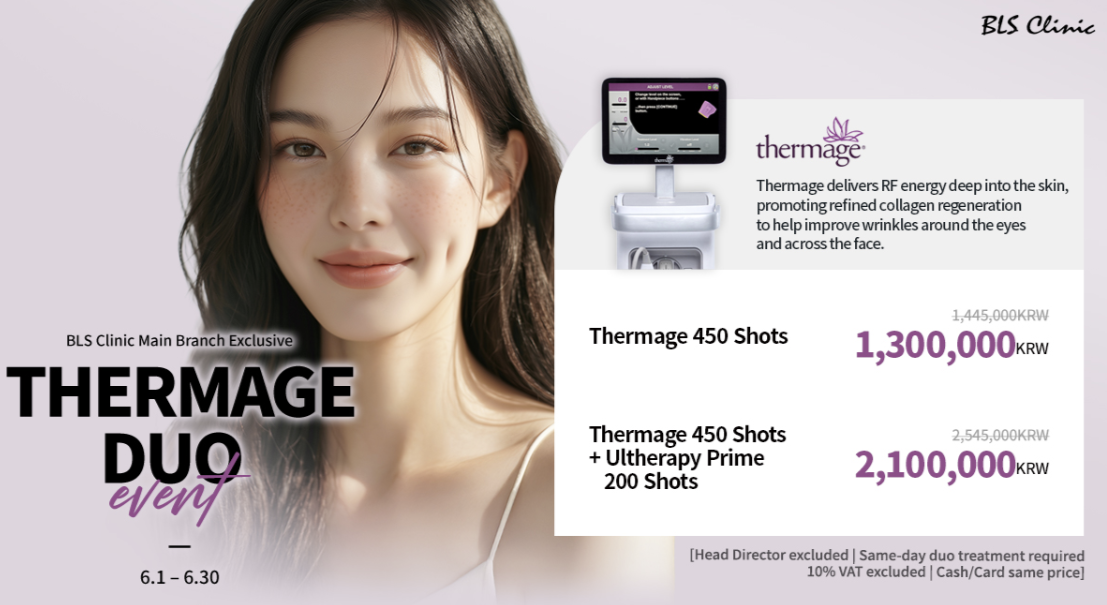
Radiofrequency treatments such as Thermage and Oligio use RF energy to heat tissue and stimulate changes associated with skin tightening.
A systematic review found clinical evidence that monopolar and bipolar RF devices can produce measurable improvement in facial and body skin laxity, with an overall acceptable complication profile in the reviewed studies.
RF can therefore be relevant when the lower face looks heavy partly because of loose skin rather than because of substantial excess fat.
Sofwave
Sofwave is another non-invasive ultrasound-based approach, designed primarily around dermal remodeling and tightening.
It may be considered when the goal is improving skin laxity without specifically trying to reduce lower-face volume. However, the treatment plan still needs to account for the patient's existing facial volume and anatomy.
HIFU vs RF for a Heavy Lower Face
HIFU and RF should not be viewed as interchangeable machines.
FactorHIFU / MFURFMain targetSelected deeper tissue layers and skinPrimarily heated soft tissue/skinTypical goalLifting and tighteningTightening and skin qualityJowlsCan be useful when laxity is significantCan be useful for skin laxitySubmental areaFrequently treatedCan also be treated depending on deviceExcess fatNot automatically a fat-reduction treatmentNot automatically a fat-reduction treatmentMuscle-related widthDoes not directly treat masseter muscleDoes not directly treat masseter muscleDowntimeUsually limited, but variesUsually limited, but varies
The specific device and treatment settings matter more than simply choosing “HIFU” or “RF” as a category.
What If My Lower Face Is Heavy Because of Fat?
This is an important distinction.
A lifting device should not automatically be used to “burn fat” simply because the lower face looks heavy.
If localized fat is genuinely contributing to fullness, the clinician may discuss a separate fat-reduction strategy. For submental fat, deoxycholic acid has demonstrated efficacy in randomized trials and systematic reviews, but treatment can cause significant temporary swelling and other injection-site effects.
Treatment of fat elsewhere on the face is more complicated. Injectable deoxycholic acid has been studied in non-submental areas, but these uses can be off-label and have a less established evidence base than its submental indication.
Removing volume from the wrong area can also make a face look older or hollow.
What If My Jowls Are Caused by Masseter Muscle?
A broad lower face does not always come from the skin or fat.
The masseter muscle sits near the angle of the jaw and can become prominent in some individuals. If the muscle is a major contributor, masseter botulinum toxin may be considered instead of a lifting device.
Reviews of masseter treatment report reductions in muscle volume or thickness and improvements in lower-face contour, although dosing and treatment protocols vary.
This distinction matters because tightening an already muscular lower face does not directly address the source of the width.
What About a Combination Treatment?
Some patients have more than one cause of lower-face heaviness.
For example, someone may have:
- mild skin laxity
- some submental fat
- prominent masseter muscles
- early jowling
- reduced volume in the midface
In such cases, treating only one component may produce a limited or uneven result.
A clinician may therefore recommend staged treatments rather than performing several procedures during one visit.
Combination treatment should be based on anatomy rather than a package that automatically includes multiple devices.
Can Stronger Treatment Make the Face Look Too Thin?
Potentially, depending on the treatment, anatomy, settings, and what is being targeted.
This is particularly relevant if you already have a thin face or limited soft-tissue volume.
The medical literature includes reports and discussion of adverse effects following energy-based treatments, although significant complications are uncommon in published clinical studies. A 2025 systematic review of MFU-V found transient edema, erythema, and pain among the more commonly reported effects, while significant treatment-related events were uncommon in the scientific literature.
Therefore, “maximum tightening” should not automatically be the goal.
For some patients, preserving facial volume and improving the transition around the jawline may be more appropriate than aggressively trying to make the lower face smaller.
How a Seoul Clinic Should Assess Heavy Lower Face and Jowls
Before choosing a machine, a proper consultation should examine your face from several angles.
Look at the jawline at rest
The clinician should determine whether the loss of definition comes from loose skin, soft-tissue fullness, or the underlying jaw structure.
Assess the submental area
Fat under the chin can contribute to a visually heavier lower face, but not every double chin is caused primarily by fat.
Check the masseter
Clenching the teeth can help reveal whether enlarged masseter muscles contribute to lower-face width.
Consider facial volume
The clinician should also look at the cheeks, temples, midface, and lower face together.
This can help prevent treating a perceived “heavy” area by unnecessarily removing volume.
Discuss the desired outcome
Tell the clinician whether you want:
- a sharper jawline
- less visible jowling
- less submental fullness
- tighter skin
- a slimmer-looking lower face
- or simply a more balanced facial contour
These goals are not identical.
Which Device Should You Ask About in Seoul?
Instead of asking a clinic, “Which machine is the best?”, ask:
“What is causing my lower face to look heavy, and which tissue are you planning to treat?”
Depending on the assessment, the discussion may involve:
- Ultherapy or another HIFU/MFU treatment for appropriate laxity
- Shurink or another Korean HIFU platform for selected tightening plans
- Thermage or Oligio for RF-based tightening
- Sofwave for selected dermal tightening goals
- fat-reduction treatment when localized fat is actually present
- masseter botulinum toxin when muscle prominence is the main contributor
- or a combination/staged approach when several causes are present
What Should International Patients Ask Before Treatment?
If you are traveling to Seoul specifically for lower-face treatment, ask these questions during the consultation:
- What is causing my jowls—skin, fat, muscle, or a combination?
- Which tissue will this device target?
- Will the treatment reduce volume, or is it primarily tightening?
- Do I actually have enough laxity to benefit from this treatment?
- Could treatment make my face look hollow or thinner?
- How much downtime should I expect?
- When should I expect the visible result?
- Do I need one treatment or a series?
- What happens if the result is less than expected?
- How long should I remain in Korea after treatment before flying home?
How Long Does It Take to See a Result?
Energy-based tightening is generally not an instant facelift.
Some patients notice an early change, but collagen remodeling and tissue tightening develop gradually. Studies of HIFU and MFU have assessed outcomes over several months, with improvement often evaluated around the three-month period.
The timeline depends on the technology, treatment parameters, baseline laxity, age, tissue characteristics, and individual healing response.
The Bottom Line
The best device for a heavy lower face and jowls depends on what is making the lower face look heavy.
If the dominant problem is skin laxity, HIFU/MFU, RF, or another appropriate tightening technology may be discussed. If localized fat is the main issue, a fat-reduction approach may be more relevant. If masseter hypertrophy is responsible for facial width, masseter treatment may make more sense than a lifting device.
The key is not choosing the strongest machine. It is identifying which tissue needs to change—and which tissue should be preserved.
For international patients visiting Seoul, a consultation that evaluates skin, fat, muscle, facial volume, and underlying structure before selecting a device is particularly important.
FAQs About Heavy Lower Face and Jowls
Is HIFU good for jowls?
HIFU or microfocused ultrasound can be useful for selected patients whose jowls are primarily related to skin or deeper tissue laxity. It is not automatically appropriate when the main issue is fat, muscle, or loss of facial volume.
Is Thermage good for a heavy lower face?
Thermage may be considered when skin laxity contributes to a less defined lower face. It does not directly treat every cause of facial heaviness, so the underlying anatomy should be assessed first.
Should I remove fat if I have jowls?
Not necessarily. Jowls can result from laxity, fat redistribution, structural changes, or combinations of these factors. Removing volume without confirming that excess fat is the main problem can produce an unbalanced result.
Can masseter Botox make the lower face slimmer?
It can reduce masseter muscle prominence in appropriately selected patients. Clinical reviews and recent meta-analysis support reductions in masseter thickness and lower-face prominence, although individual results and treatment protocols vary.
Which is better for jowls: HIFU or RF?
Neither is universally better. HIFU/MFU and RF use different energy-delivery approaches, and the appropriate choice depends on the depth and type of laxity, facial volume, treatment area, and desired result.
Can I combine lifting and fat-reduction treatments?
Sometimes, but only when both problems are actually present. Combining procedures should be individualized because reducing too much volume or treating too aggressively can create an undesirable contour.
Recommended internal topics: HIFU vs RF for facial tightening, Thermage vs Ultherapy, Which Korean lifting device is best for a thin face?
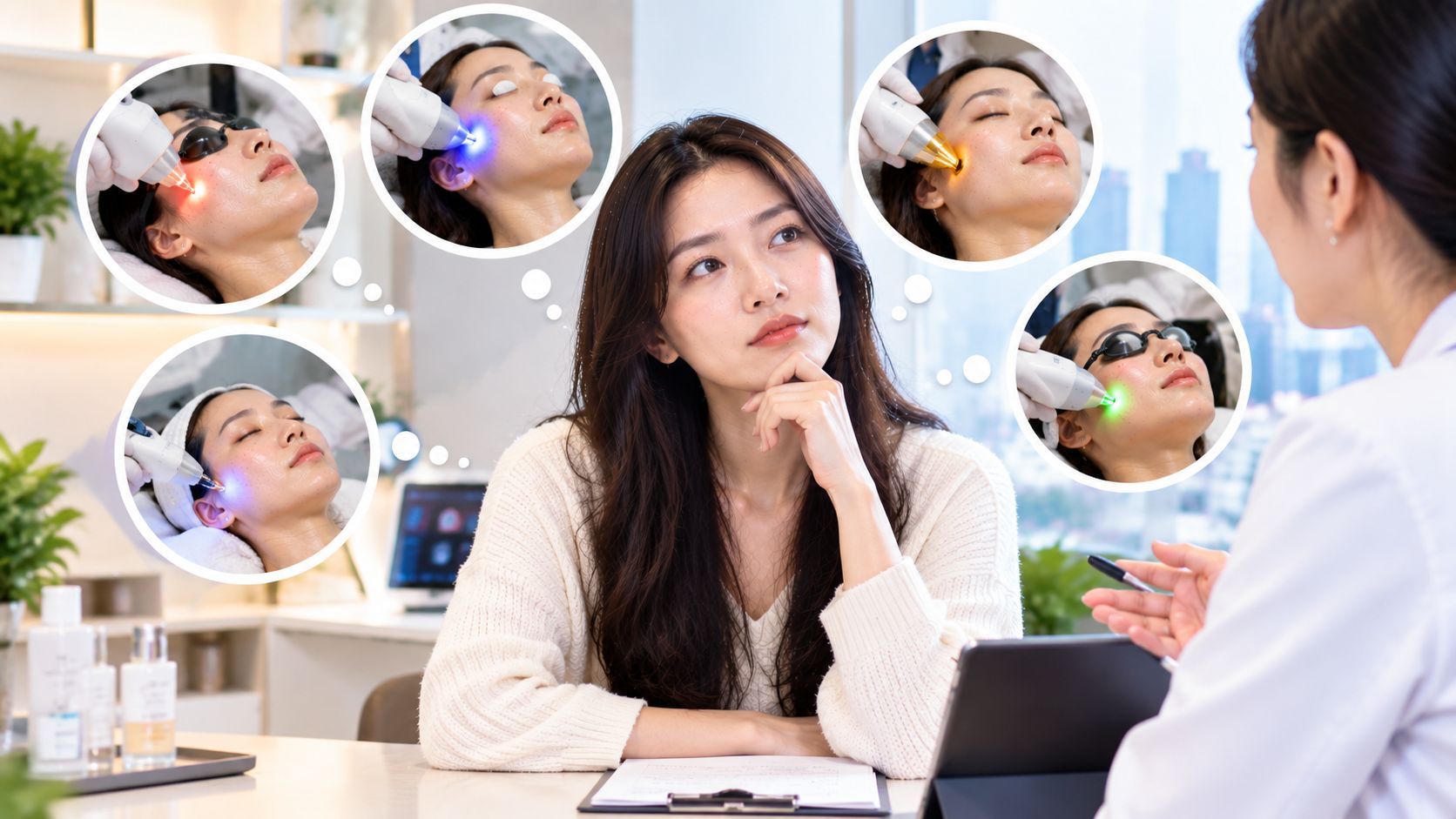
Only have time for one laser treatment in Seoul? Learn how to prioritize your main concern, compare devices, assess downtime, and plan safely.
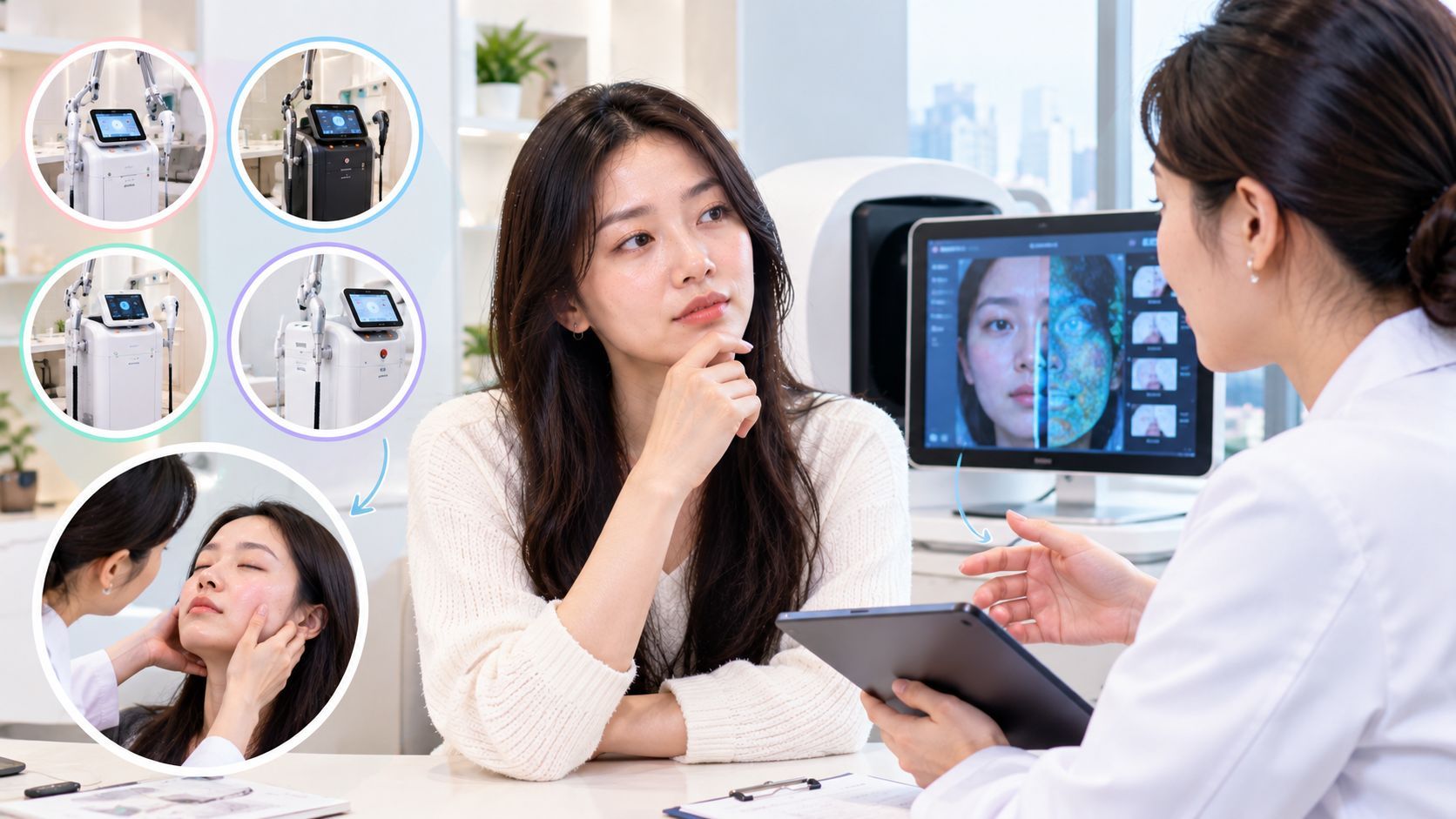
Should you choose a laser device before your Seoul treatment? Learn why skin examination, treatment goals, settings, downtime, and risks matter.
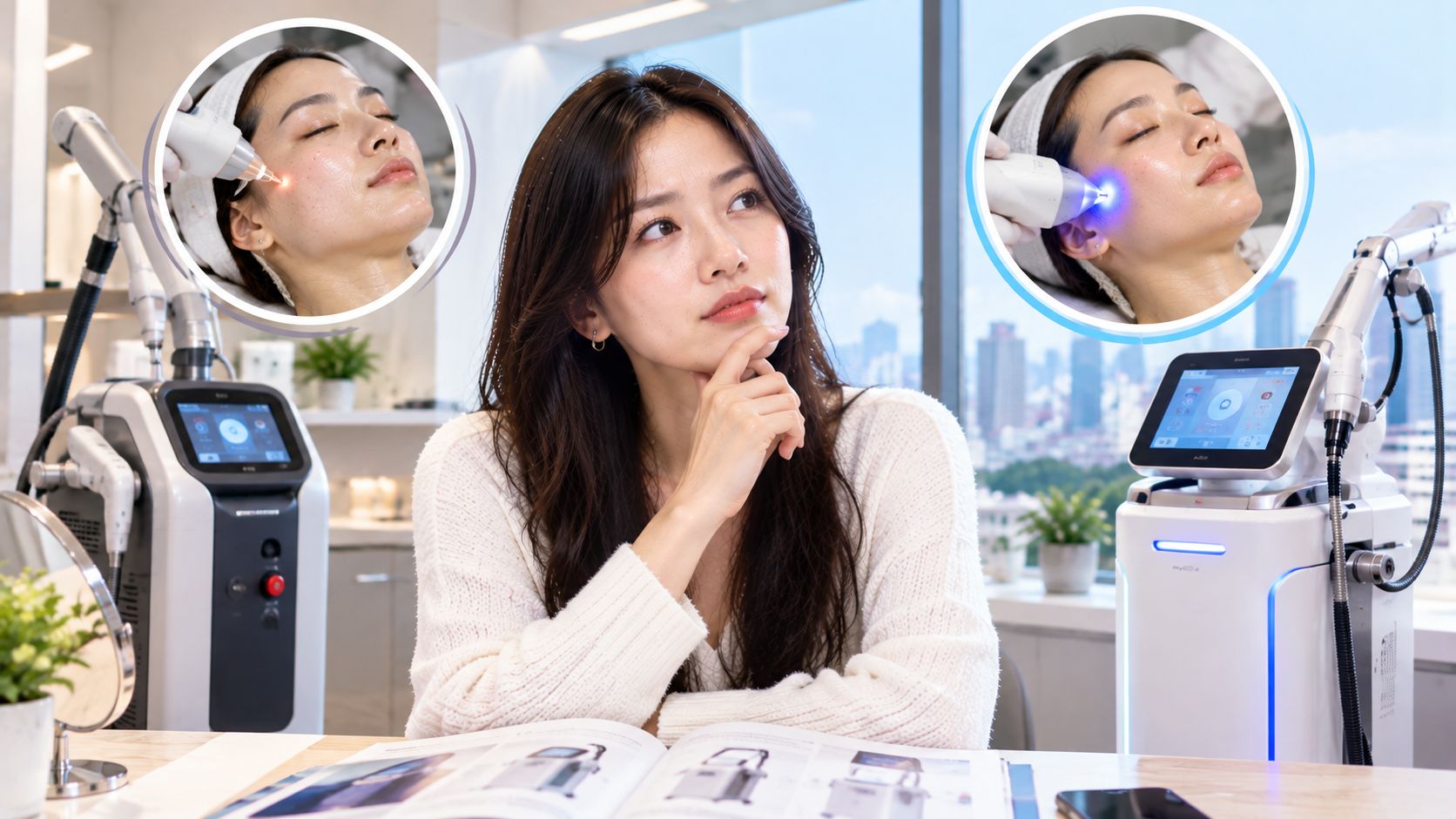
Does the newest laser machine mean better results in Seoul? Learn how to compare new and established devices by treatment goals, settings, risks, and downtime.

Choosing a Seoul laser clinic? Learn how to compare clinics when they use different machines, based on treatment goals, doctors, settings, recovery, and follow-up.

Should you do your strongest laser at the beginning or end of a Seoul trip? Learn how downtime, recovery, follow-up, and flights affect timing.
Learn which laser, RF, lifting, resurfacing, and injectable treatments may need careful spacing during a Seoul skin treatment trip.
Can you combine Pico, Potenza and a lifting treatment in Korea? Learn how to plan treatments, recovery, timing, and your Seoul trip.
Should you choose one expensive device or several cheaper lasers in Seoul? Compare cost, treatment goals, downtime, recovery, and overall value.

Have $1,000 and five days in Korea? Learn which laser and device treatments may fit your skin goals, budget, downtime, and travel schedule.
Have $500 for laser treatments in Seoul? Learn how to prioritize treatments by skin concern, downtime, value, and realistic treatment goals.