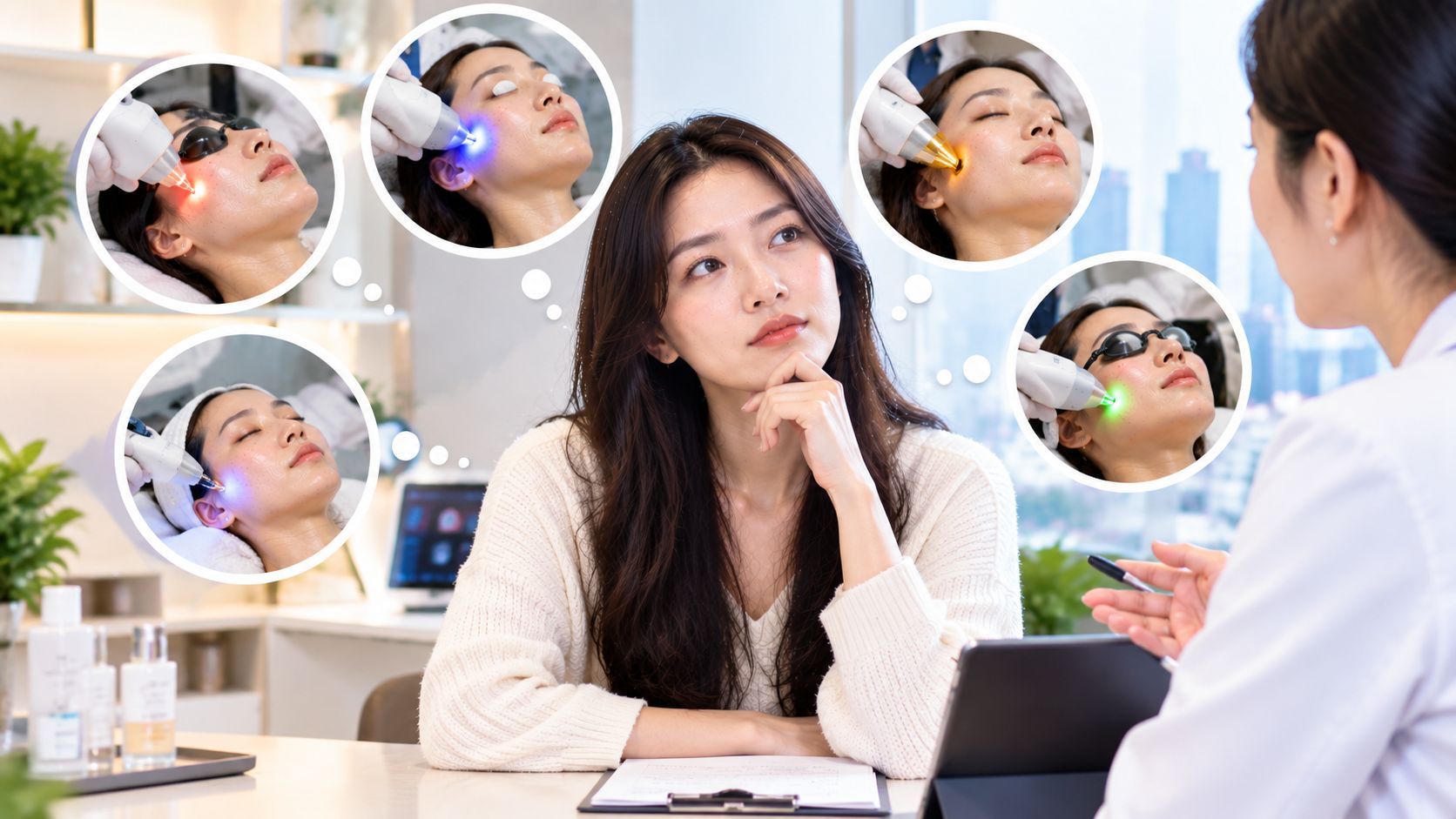
Fraxel vs Pico Laser: Which Should I Choose?
Fraxel and Pico laser are both widely discussed when people research laser treatments in Seoul, but they are not interchangeable. They use different technologies and may be selected for different skin concerns.
Fraxel may be more relevant when the main concern involves skin resurfacing, texture, fine lines, or selected acne-scar changes. Pico laser is often considered when pigmentation, uneven tone, and certain superficial skin concerns are the priority. However, the exact device, wavelength, settings, and your skin condition all matter.
The best choice depends less on which machine sounds newer and more on what is actually causing your skin concern.
What Is the Difference Between Fraxel and Pico Laser?
Fraxel is associated with fractional laser resurfacing, while Pico laser uses extremely short laser pulses.
The two approaches interact with the skin differently.
Fraxel
Fractional laser treatment creates microscopic treatment zones within the skin while leaving surrounding areas untreated. Depending on the specific Fraxel technology and wavelength, treatment can be used for:
- Uneven skin texture
- Fine lines
- Sun-related skin changes
- Selected pigmentation concerns
- Certain acne scars
- Skin resurfacing
Pico Laser
Pico laser delivers laser energy in extremely short pulses. Different Pico devices and wavelengths can be used for different indications.
Pico treatments are commonly associated with:
- Pigmentation
- Uneven skin tone
- Freckles
- Sun-related spots
- Some acne marks
- Selected textural concerns
“Pico laser” does not describe one identical treatment, so the specific wavelength and device should be confirmed with the clinic.
Which Is Better for Skin Texture?
It depends on what is causing the texture.
If your skin looks uneven because of shallow acne scars, roughness, fine lines, or certain photodamage-related changes, fractional laser treatment may be considered.
If the skin appears uneven largely because of pigmentation or uneven tone, Pico laser may be more relevant.
This distinction is important because pigmentation can sometimes create the visual impression of poor texture. Treating the color irregularity may make the skin appear more even without requiring aggressive resurfacing.
Fraxel vs Pico for Acne Scars
Acne scars require particularly careful assessment.
Fractional laser treatment may be considered for selected atrophic acne scars because it can remodel the skin and improve the appearance of some depressed or uneven areas.
Pico laser may have a role in certain acne-related concerns, but it should not automatically be considered a replacement for fractional resurfacing when the main problem is significant depressed scarring.
Rolling Scars
Rolling scars can involve fibrous bands that pull the skin downward. If tethering is present, a laser alone may not address the underlying structural problem.
Subcision may therefore be considered in appropriate cases.
Boxcar Scars
Shallow boxcar scars may sometimes be treated with fractional resurfacing or RF microneedling. Deeper scars may require a more targeted approach.
Ice-Pick Scars
Deep ice-pick scars often need specialized treatment. Depending on the scar, options may include TCA CROSS, punch techniques, or other targeted approaches.
Therefore, choosing between Fraxel and Pico without identifying the scar type can lead to the wrong treatment strategy.
Which Is More Relevant for Pigmentation?
Pico laser is commonly used for pigmentation-related concerns.
It may be considered for conditions such as certain freckles, sun-related pigmentation, and post-inflammatory marks. However, different pigmentation conditions behave differently.
Melasma is an important example.
Melasma can be persistent and can sometimes worsen with irritation or inappropriate treatment. A dermatologist should determine whether the pigmentation is actually melasma before selecting a laser protocol.
Fraxel can also have applications involving pigmentation and photodamage, but it is not automatically the right option for every brown spot.
What About Pores?
Both technologies may be discussed for enlarged-looking pores, but the cause of the pores matters.
Pores can appear more prominent because of:
- Sebum production
- Congestion
- Reduced skin elasticity
- Acne history
- Shallow scarring
- Uneven surface texture
If pores are associated with shallow acne scars or mild loss of firmness, a dermatologist may consider fractional laser or RF microneedling depending on the patient.
If pigmentation and uneven tone make the skin surface look irregular, Pico may be more relevant.
Neither treatment permanently removes normal pores.
What About Fine Lines and Aging Skin?
Fraxel may be considered when fine lines and photodamage are part of the overall skin-aging picture.
Fractional resurfacing can stimulate remodeling while improving selected surface irregularities.
Pico laser may also be used in some rejuvenation protocols, but its role depends heavily on the particular device and treatment settings.
If the primary issue is significant skin laxity rather than surface texture, neither treatment should automatically be assumed to be the most appropriate option. Other technologies may be considered depending on the degree and cause of laxity.
What About Downtime?
Downtime can be an important difference when choosing between these treatments.
Fraxel recovery depends on the specific laser and intensity. Patients may experience:
- Redness
- Swelling
- Warmth
- Sensitivity
- Dryness
- Peeling
- Temporary darkening
Pico treatment can also cause temporary redness, swelling, sensitivity, or other skin changes, depending on the device and settings. Some Pico protocols may have relatively limited recovery, but this should not be assumed for every treatment.
The exact protocol matters more than the treatment name alone.
Which Is Safer for Darker Skin?
Neither treatment should be selected solely based on the machine name when treating darker or more melanin-rich skin.
Laser procedures can cause post-inflammatory hyperpigmentation, and risk varies according to:
- Skin type
- Wavelength
- Energy
- Treatment density
- Previous inflammation
- Recent tanning
- Individual tendency toward pigmentation
Pico laser is not automatically risk-free for darker skin, and fractional laser does not automatically mean that treatment is inappropriate.
A dermatologist should assess your skin and adjust the treatment approach accordingly.
Can Fraxel and Pico Be Combined?
Sometimes different laser technologies may be included in a broader treatment plan when a patient has more than one concern.
For example, one approach may target pigmentation while another addresses textural irregularities.
However, combining treatments does not automatically produce better results.
Additional procedures can increase inflammation, sensitivity, and recovery requirements. If you are visiting Seoul for only a few days, your treatment schedule should leave enough time for recovery and follow-up.
How Do I Decide Between Fraxel and Pico in Seoul?
Before choosing, identify your main treatment goal.
Ask the dermatologist:
- Is my primary problem pigmentation or texture?
- Do I have acne scars, and what type are they?
- Are my pores caused by scarring, oil, or reduced elasticity?
- Which exact Fraxel or Pico device would you use?
- What wavelength is being used?
- What treatment intensity is appropriate for my skin?
- What downtime should I expect?
- What is my risk of post-inflammatory hyperpigmentation?
- Would RF microneedling or another treatment be more appropriate?
- Do I need one treatment or a staged approach?
These questions are particularly useful for international patients because the treatment may be planned around a limited stay in Korea.
If You Only Have a Few Days in Seoul
Do not choose a treatment solely because it is advertised as having little downtime.
Your itinerary should account for:
Consultation → treatment → recovery → follow-up → flight home
If you need to look completely normal for an event shortly after treatment, tell the clinic before treatment rather than after it.
Also ask about sun exposure, makeup, exercise, sauna, swimming, and skincare during recovery.
Conclusion
Fraxel and Pico laser serve different purposes.
Fraxel may make more sense when fractional resurfacing is the main goal, particularly for selected texture, fine lines, photodamage, and acne-scar concerns. Pico laser may make more sense when pigmentation and uneven tone are major contributors to the problem.
Neither is automatically better, newer, or more suitable for everyone.
The most useful choice is the one that matches your specific skin concern, skin type, desired intensity, downtime tolerance, and treatment goals.
Frequently Asked Questions
Is Fraxel stronger than Pico laser?
They are different technologies, so “stronger” is not a useful way to compare them. Treatment intensity depends on the specific device and settings.
Is Pico laser better for pigmentation than Fraxel?
Pico laser is commonly used for pigmentation, but the appropriate treatment depends on the type of pigmentation. Melasma, freckles, sun spots, and post-inflammatory pigmentation should not automatically be treated the same way.
Is Fraxel better for acne scars?
Fractional laser may be useful for selected acne scars, but the scar type matters. Rolling, boxcar, and ice-pick scars can require different approaches.
Which has less downtime, Fraxel or Pico?
There is no universal answer. Recovery depends on the specific device, wavelength, settings, treatment intensity, and individual skin response.
Can I get Fraxel and Pico during the same Seoul trip?
Possibly, but combining treatments should be based on a clinical reason rather than simply trying to fit in as many procedures as possible. Recovery time and treatment sequencing should be considered.
Should I choose Fraxel or Pico based on which clinic has newer equipment?
Not necessarily. The age of the equipment does not determine whether it is appropriate for your particular concern. Ask what problem the treatment is intended to address and why that technology was selected.