Finding English-speaking dermatologists in Gangnam and Hongdae

April 5, 2026

Finding English-Speaking Dermatologists in Gangnam and Hongdae

In 2026, the search for an English-speaking dermatologist in Seoul has moved beyond simple translation apps. The city’s two major aesthetic hubs—Gangnam and Hongdae—now cater specifically to international patients, but they offer very different "vibes" and levels of care. While Gangnam is the global epicenter for high-end "Boutique" and "Premium Factory" clinics, Hongdae has emerged as the go-to spot for younger travelers seeking a "Private-Hybrid" experience. Finding the right doctor in 2026 isn't just about language; it’s about matching the clinic's specialty to your specific skin goals.


Gangnam: The Premium Standard

Gangnam remains the undisputed leader of medical tourism, home to board-certified experts who handle everything from routine Botox to complex anti-aging procedures.

  • The Style: Mostly high-end boutiques or large-scale centers with dedicated "International VIP" floors.
  • English Support: Native or near-native English coordinators are standard. Top clinics provide 1:1 English support from the moment you arrive until your final post-care check.
  • Best For: High-stakes procedures like Thermage FLX, Ultherapy, and custom Design Fillers where precision and a doctor-led approach are non-negotiable.


Hongdae: The Trend-Setters' Choice

Hongdae has transitioned into a hub for high-quality, efficient aesthetic care with a much more relaxed and youthful atmosphere.

  • The Style: "Hybrid" clinics—efficient like a factory but private like a boutique. Many are located in modern towers near Hongik Univ. Station.
  • English Support: Clinics in this area are famous for their transparent English pricing and honest, "no-upsell" consultations.
  • Best For: Skin texture refinement, Potenza (RF Microneedling), Pico Toning, and "Lunchtime" treatments that allow you to jump straight back into shopping or cafe-hopping.


The "Red Plaque" Rule (Board-Certified vs. General)

A major 2026 tip for finding a true expert is looking for the Red Plaque (The specialist mark).

  • What it means: In Korea, any doctor can perform Botox, but only a Board-Certified Dermatologist has completed a 4-year specialized residency in skin health.
  • How to spot it: Look for a red metal sign near the entrance or the specific professional designation on the clinic’s website.
  • Why it matters: For complex pigment issues or regenerative boosters like Exosomes, you want the specialist, not a general practitioner.


Consultation Style: What to Expect

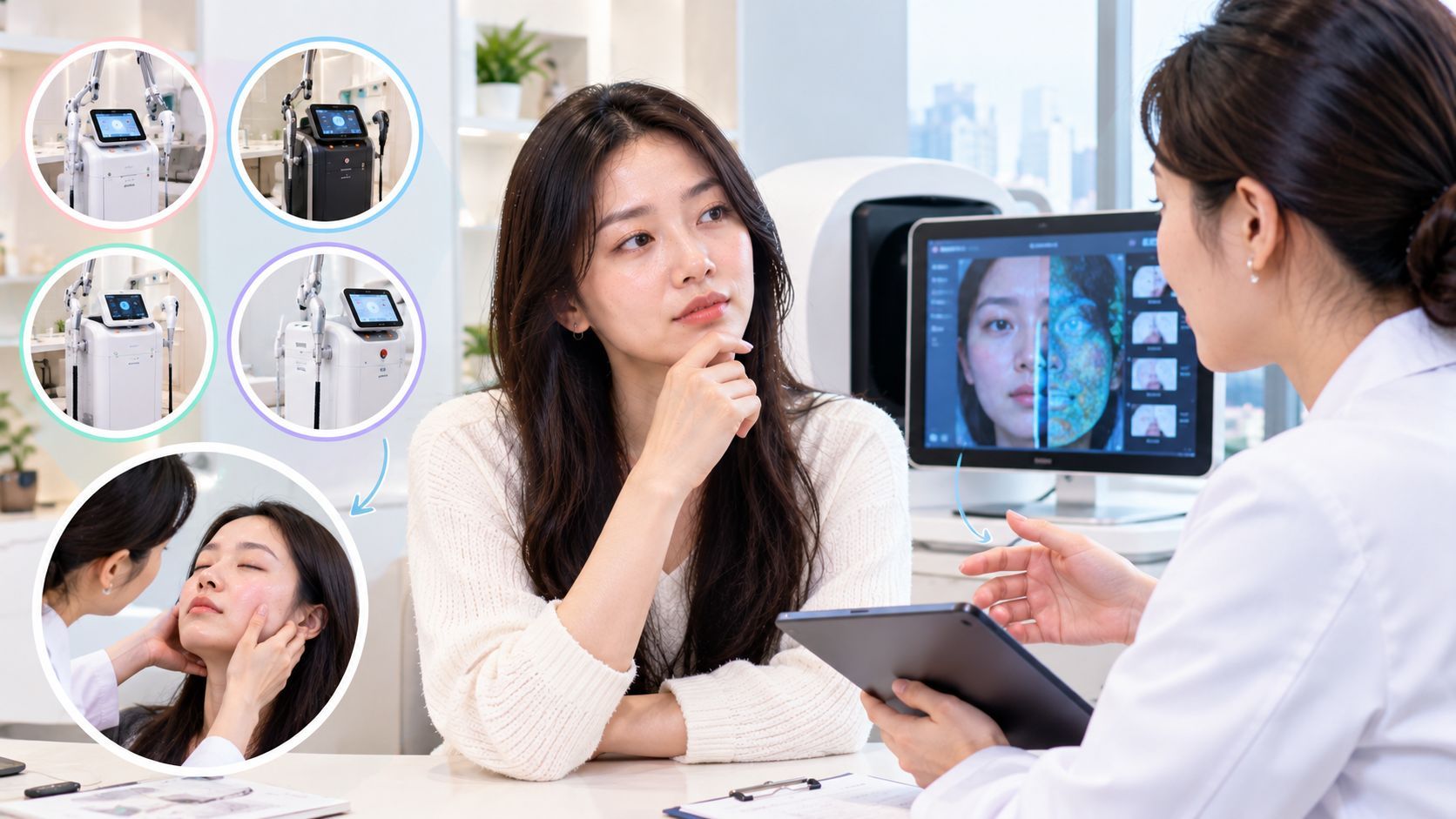
In 2026, the best English-speaking clinics have replaced vague visual exams with Digital Skin Analysis:

  • The Imaging: Most top clinics in both Gangnam and Hongdae now use 3D skin scanners to show your "Inner Skin" age and hidden pigmentation before you start.
  • The Coordinator vs. The Doctor: In "Factory" settings, you may spend more time with a coordinator. In "Boutique" settings, you will have a detailed 1:1 consultation directly with the doctor in English.

πŸ‘‰ Strategy: If your skin is sensitive or complex, always ask: "Can I speak directly with the doctor before paying?"


Pricing Transparency for Foreigners

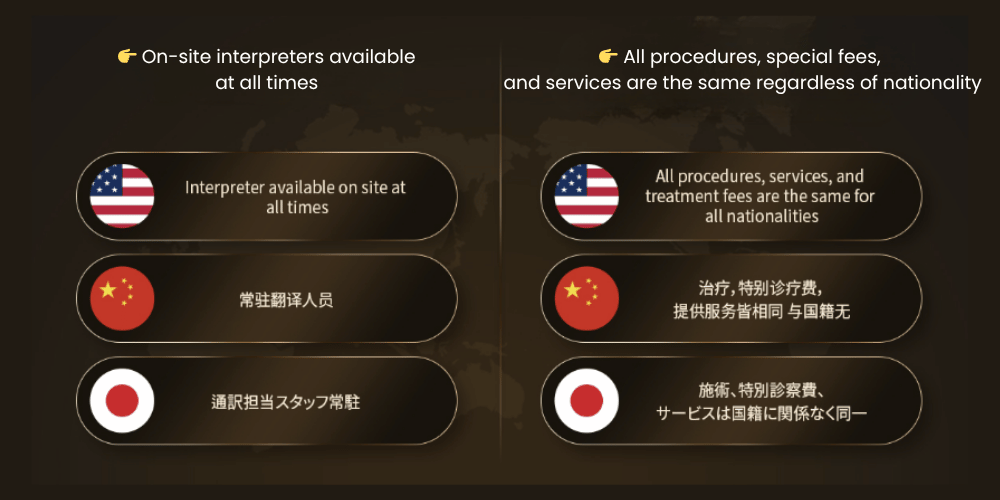
The "Tourist Tax" is a thing of the past in 2026, thanks to increased market transparency.

  • Uniform Pricing: Reputable clinics now list their prices in English on their websites or official messaging catalogs.
  • VAT Included: Most quotes now include the 10% VAT. Since the tax refund policies changed in early 2026, the price on the screen is usually the final net price.
  • No Pressure: A good English-speaking clinic will provide a written quote and give you time to consider it rather than pushing same-day sales.


Where to Find Real Reviews in 2026

Don't rely solely on paid social media ads. For authentic English feedback, check these sources:

  • Google Maps: Still the most reliable for honest, long-form reviews from international expats and travelers.
  • Global K-Beauty Platforms: These apps vet clinics for "Foreigner-Friendliness" and often feature verified user photos and price comparisons.
  • Community Forums: Reddit and specialized beauty communities often have 2026 discussion threads regarding specific doctors' techniques and results.


How to Search for the Best Experts

If you want to find the best spots, use these professional English keywords in your search or when messaging a clinic:

  • "Skin Booster Specialists": For Rejuran, Juvelook, or Exosomes.
  • "Lifting Lab": For clinics that focus exclusively on devices like Ulthera or Shurink.
  • "One-Day Glass Skin": For combination packages of toning, peeling, and hydration.
  • "Honest Clinic": A popular term for clinics known for not over-prescribing unnecessary treatments.


Final Thoughts

Whether you choose the high-tech luxury of Gangnam or the efficient, trendy vibe of Hongdae, finding an English-speaking dermatologist in 2026 is easier than ever. The key is to verify the board-certified status for medical procedures and stick to clinics that offer transparent, written English quotes. Gangnam for the specialized design, Hongdae for the modern glow—either way, you’re in the best hands in the world for skincare!
April 6, 2026
Should You Use a Medical Tourism Agency or Book Direct? In 2026, the South Korean aesthetic market is more accessible than ever, but the sheer volume of choices—with over 1,200 clinics in Seoul alone—has made the decision between using an agency or booking directly a central part of trip planning. The right choice depends on your budget, your medical needs, and how much "mental heavy lifting" you want to do. While younger, tech-savvy travelers are increasingly booking directly through apps, those undergoing complex procedures or seeking a luxury experience often find that a government-certified agency is an essential safeguard. The Case for Booking Direct (The Independent Path) If you are visiting for routine maintenance like Botox, simple lasers, or skin boosters, booking direct is often the most efficient route. Cost Efficiency: Booking directly via a clinic’s official messaging app or a specialized K-beauty platform can be 10–20% cheaper by avoiding any potential service premiums. Total Control: You choose your own flight, hotel, and recovery activities without being tied to an agency’s pre-approved list. Modern Transparency: Most top clinics in Gangnam and Hongdae now have dedicated English-speaking coordinators. If a clinic has a robust social media presence and clear English pricing, a middleman is often unnecessary. πŸ‘‰ Best For: Travelers on a budget, those getting non-invasive treatments, and repeat visitors who already know their way around Seoul. The Case for Using an Agency (The VIP Path) For major transformations or first-time visitors, a government-licensed medical tourism agency acts as your professional advocate. Safety and Vetting: Agencies monitor clinic safety records and surgeon certifications. They are a primary defense against "Shadow Doctors" by ensuring the head surgeon you requested is the one performing the procedure. End-to-End Logistics: They handle airport transfers, hotel bookings near the clinic, and even pharmacy runs for your post-care medications. The Concierge Model: Many top agencies operate on a commission basis from the clinics, meaning their support services are often provided at no extra cost to the patient while maintaining official clinic pricing. πŸ‘‰ Best For: First-timers, those undergoing major surgery (Rhinoplasty, Facelifts), or anyone who wants a hands-off experience where all logistics are handled. The 2026 Trend: Hybrid Booking Apps A middle ground has emerged through specialized digital platforms that aggregate hundreds of clinics. What they are: Apps that allow you to compare live prices, read verified reviews from international patients, and book directly with a few taps. The Benefit: You get the curated feel of an agency with the direct pricing of a solo traveler. Reward Programs: Many of these platforms now offer cashback points that can be used for other Seoul activities like hair salons or specialized cafe tours. Red Flags to Watch For Regardless of which path you choose, the 2026 market has a few warning signs to keep in mind: Unlicensed Brokers: In Korea, it is illegal to act as a medical broker without a government license. Always verify a provider's registration with the Ministry of Health and Welfare. Large Upfront Fees: If an agency asks for a significant consultation fee before even suggesting a clinic, proceed with caution. Most reputable agencies offer free initial consultations. Extreme Discounting: If a direct price or agency package is 50% lower than the average in Gangnam, the provider may be cutting corners on equipment or using unlicensed staff. How to Decide: The 3-Question Test Ask yourself these three questions to determine your path: Is the procedure invasive? Surgery and thread lifts often benefit from an agency, while lasers and Botox are easy to book direct. How is your comfort with local logistics? If you prefer having a dedicated driver and translator, an agency is the better choice. Do you have time for research? If you enjoy hunting for the best deal and reading reviews, booking direct is highly rewarding. Final Thoughts There is no wrong way to book, only the way that fits your comfort level. If you feel confident navigating Seoul’s digital landscape, booking direct is incredibly empowering. However, if you are investing in a major procedure and want the peace of mind that comes with a professional guide for your beauty journey, a medical tourism agency is worth the consideration. Choose the path that lets you focus on your results and your recovery!
April 6, 2026
How to Communicate Your Skin Goals If You Don’t Speak Korean In 2026, "The Language Barrier" is no longer a valid reason to skip a world-class skin treatment in Seoul. While most top clinics in Gangnam and Hongdae now employ dedicated English-speaking coordinators, the most successful consultations happen when you use a combination of digital tools and "Universal Aesthetic Terms." Communicating your goals effectively is about being precise—moving beyond "I want better skin" to "I want to improve my deep-layer hydration and target sunspots." The 2026 "Power Tool": Papago Forget general translation apps; in 2026, Papago is the undisputed king for medical tourism in Korea. The Image Feature: Use the "Image" button to take a photo of the clinic’s brochure or your post-care instructions. It translates medical terminology far more accurately than its competitors. The "Conversation" Mode: If a doctor is explaining a complex laser setting, use the split-screen conversation mode. It’s tuned for the nuances of the Korean language, ensuring "stinging" isn't translated as "painful." πŸ‘‰ Pro Tip: Type out your main concerns in Papago before you arrive so you can show the screen to the receptionist immediately. Use the "Global Aesthetic Vocabulary" Many modern treatments in Seoul use English-based names. Using these specific terms will get you faster, more accurate results than describing them: "Glass Skin": For a high-shine, hydrated look (usually achieved via LDM or Skin Boosters). "V-Line": For jawline contouring (InMode, Shurink, or Botox). "Embossing": To describe the tiny bumps after a Rejuran Healer treatment (ask: "How long will the embossing last?"). "Downtime": The universal word for recovery time. Ask: "What is the downtime for this laser?" The "Visual Board" Method Visuals are the most reliable way to bypass a language gap. Point to the Scan: When you do your 3D skin analysis (like Janus or Mark-Vu), don't just look at the numbers. Point to the specific "redness" or "pore" zones on the screen and say "This part is my concern." Reference Photos: Bring 2–3 photos of your skin at its best. If you have a specific celebrity "glow" you admire, show it, but be realistic—doctors prefer you point to a specific texture rather than a different face shape. Draw It Out: If you are getting Botox or Fillers, don't be afraid to ask the doctor to draw the "Injection Map" on your face with a white pencil so you can see the placement before they start. Keywords for Your Consultation If you want to sound like a local pro, keep these core goals ready: "Hydration & Glow": For dry, dull skin (Ask for Muri-gwang). "Lifting & Firming": For sagging or fine lines (Ask for Lifting). "Pigmentation & Tone": For sunspots or acne scars (Ask for Toning). "Pore & Texture": For large pores or uneven skin (Ask for Mo-gong). πŸ‘‰ Note: Most 2026 clinics have English menus, so you can literally point to the service name and the price. The "Two-Way" Confirmation To avoid any "Lost in Translation" moments, always use the Echo Method : The coordinator explains the plan. You repeat it back simply: "So, Day 1 is Pico Laser, no downtime, and β‚©200,000. Correct?" Wait for their "Yes" before signing the consent form. πŸ‘‰ Strategy: If a coordinator is pushing a "Package," ask them to write down the individual steps in English. If they can't explain it simply, it might not be the right treatment for you. Using the "English-Speaking Coordinator" In 2026, most Gangnam clinics have "International Departments." Ask for Support: When you book via WhatsApp or KakaoTalk, specifically ask: "Will an English speaker be available during my talk with the doctor?" The Bridge: The coordinator isn't just a translator; they are your advocate. If you are nervous about pain, tell the coordinator, and they will ensure the doctor applies extra numbing cream. Checking "Post-Care" via QR Codes Most high-end clinics now provide a QR code on your exit paperwork. What's inside: These often lead to an English-language PDF or video explaining how to wash your face and which creams to avoid. The "Emergency" Chat: Most clinics keep their WhatsApp or KakaoTalk lines open for 24 hours. If you have a question after you leave, just send a photo of your skin and ask "Is this normal?" in English. Final Thoughts Communication in a 2026 Seoul clinic is a partnership between technology and preparation. By using Papago for the details, Visual Boards for the goals, and English Keywords for the treatments, you can get exactly the results you want without knowing a word of Korean. The best doctors in Seoul are used to international patients; they speak the universal language of "Good Results." Just be clear, be visual, and don't be afraid to ask for a second explanation!
April 6, 2026
What to Bring to Your Appointment: The 2026 Checklist In 2026, the preparation for a Seoul skin clinic visit has become more data-driven and digital. While the "Medical Aesthetic Tax Refund" program officially expired on January 1, 2026, your passport remains the most critical item in your bag for legal medical registration. Beyond just identification, bringing the right "Skin History" can significantly improve your results by helping the doctor avoid ingredient conflicts and over-treating areas that have recently been touched by other lasers or fillers. 1. The Physical Passport (Non-Negotiable) Even though the government tax refund for cosmetic procedures has ended, a physical passport is still a legal requirement for international patients in 2026. Why You Need It: Clinics are required by the Ministry of Health and Welfare to verify the identity of every foreign patient for medical records and safety protocols. Digital Copies: While some clinics may accept a high-quality photo of your passport for the initial check-in, the physical document is usually required for the final payment and to verify your entry date into Korea. πŸ‘‰ Note: Keep your passport handy even if you aren't expecting a tax refund; it’s your key to being treated as a registered international patient. 2. Your "Active" Skincare List The doctors in 2026 are increasingly cautious about "Skin Barrier Sensitivity." Bringing a list of your current products is essential. The "Stop List": Be ready to tell the doctor if you have used Retinol, Tretinoin (Retin-A), Accutane, or Vitamin C in the last 7 days. These make your skin hypersensitive to lasers. The Photo Method: Don’t bother writing everything down. Simply take a photo of the "Ingredients" label on the back of your primary serum and moisturizer. Post-Care Compatibility: The clinic needs to know if your at-home products will conflict with the medical-grade ointments they prescribe after your session. 3. Previous Procedure History (The "Treatment Map") In 2026, "Skin Stacking" (layering different treatments) is common, but it requires precise timing. The "Filler Log": If you have had fillers in the last 6 months, you must disclose the brand (e.g., Juvederm, Restylane) and the exact location . Lasers like Thermage or Ultherapy generate heat that can affect how quickly certain fillers dissolve. Laser History: If you had a laser treatment in your home country (or another Seoul clinic) in the last 4 weeks, tell the doctor. Over-treating can lead to "PIH" (Post-Inflammatory Hyperpigmentation). 4. Payment Methods: 2026 Standards While Seoul is almost entirely cashless in 2026, international travelers should have a backup plan. Credit Cards: Visa and Mastercard are accepted everywhere. American Express is widely accepted in Gangnam but can be hit-or-miss in smaller Hongdae clinics. Apple Pay: Now widely available in major Seoul clinics. Cash (KRW): Some clinics offer a small "Cash Discount" (usually 3–5%), but remember that you won't be able to get a tax refund on this at the airport anymore. πŸ‘‰ Pro Tip: Inform your bank that you are in Korea! High-value aesthetic treatments often trigger "Fraud Alerts," which can be embarrassing at the checkout counter. 5. Reference Photos (The "Vibe" Board) Don't just say "I want a glow." Show them exactly what you mean. The "Before" Photo: Bring a photo of your skin at its best (and worst) so the doctor understands your baseline. The Goal Photo: If you are seeking "Glass Skin" or a specific "V-Line" contour, bring 2–3 photos of the look you are aiming for. Filtered vs. Unfiltered: Doctors in 2026 prefer unfiltered photos. Showing a highly filtered AI image can lead to unrealistic expectations and incorrect treatment plans. 6. Post-Treatment "Exit Gear" You will likely leave the clinic with some redness or "embossing" bumps. The "Shield" Hat: Bring a wide-brimmed bucket hat or a baseball cap that doesn't press against your forehead. A Clean Silk Mask: If your skin is sensitive, the friction from a standard paper mask can be irritating after a laser session. Sunglasses: Especially if you are getting treatments around the eyes or Botox near the brow, which can leave you light-sensitive for an hour or two. 7. Digital Navigation Tools Naver Map / KakaoMap: Ensure these are downloaded and set to English. Papago: This is the best translation app for 2026. You can use its "Camera" feature to instantly translate the complicated Korean instructions on your post-care cream or prescription. Power Bank: Between the navigation and the "After" selfies, your phone battery will drain quickly. Final Thoughts Being prepared for your 2026 Seoul clinic visit isn't just about your passport—it's about providing the doctor with the data they need to treat you safely. By bringing your product list, treatment history, and a physical passport, you ensure that your consultation is efficient and your results are optimized. Pack light, but pack smart!
April 6, 2026
Combining Skincare with Shopping in Myeongdong: A Day Itinerary In 2026, Myeongdong has reclaimed its title as the ultimate "One-Stop Shop" for international travelers. While Gangnam is for surgical precision, Myeongdong is the capital of high-efficiency, "Skin-and-Shop" tourism. The district has evolved into a high-tech beauty playground where you can get a professional laser treatment in the morning and spend the afternoon testing the latest viral products from Olive Young. To maximize your day, you must time your clinic visit perfectly to avoid the evening crowds while leaving enough energy for a multi-floor shopping haul. 10:00 AM – The "Morning Glow" Appointment Start your day early at one of Myeongdong’s specialized "Global-Hybrid" clinics. The Strategy: Book your appointment for the opening slot. Myeongdong clinics are famous for their speed; a "Full Skin Reset" (Pico Toning + Aqua Peel + Cryo-Soothing) typically takes just 90 minutes. Why Morning? You’ll avoid the heavy afternoon tourist rush and get your treatment done while your skin is freshest. Treatments to Choose: Focus on "No-Downtime" procedures. In 2026, LDM Water Toning and Yellow Toning are the top choices for shoppers who want an instant glow without redness. 12:00 PM – The Post-Clinic "Skin-Friendly" Lunch After your treatment, your skin needs hydration and antioxidants. The Menu: Skip the salty street food for now. Head to a traditional Samgyetang (Ginseng Chicken Soup) or Bibimbap spot. These dishes are packed with collagen-boosting nutrients and won't cause the facial flushing that spicy food might trigger post-laser. Location: Look for the quiet, second-floor restaurants tucked away from the main walking street to give your face a break from the wind and dust. 1:30 PM – The "Mega-Store" Strategy (Olive Young) In 2026, the Olive Young Myeongdong Flagship is a multi-story experience that requires a plan. The Mission: Use this time to buy your "Post-Care" essentials. Look for products with Cica (Centella Asiatica) , Panthenol , or PDRN to support your morning treatment. The 2026 Tech: Use the in-store digital kiosks to scan your skin and get product recommendations that match your clinic results. πŸ‘‰ Pro Tip: Bring your passport! Myeongdong’s Olive Young offers Immediate Tax Refunds at the dedicated "Global Counter" on the upper floor. 3:30 PM – Brand-Specific Boutique Hopping Myeongdong is home to unique "Experience Centers" for major K-Beauty brands that you won't find anywhere else. Laneige / Hera / Sulwhasoo: Many of these flagship stores now offer 15-minute "Mini-Consultations" or "Custom Foundation Mapping" using AI. The "Rest" Stop: These boutiques often have quiet, aesthetic lounge areas where you can sit and rest your feet (and your skin) in a temperature-controlled environment. 5:30 PM – The Street Food & Accessory Loop As the sun goes down and the Myeongdong night market carts appear, it’s time for the "Fun" shopping. Accessory Shop: Visit a massive "Wall-to-Wall" earring and hair accessory shop (like Nyunyu ) to find trendy pieces that complement your new glow. Street Food: Now that several hours have passed since your laser, you can enjoy the famous Myeongdong Egg Bread (Gyeran-ppang) or Grilled Cheese Lobster. πŸ‘‰ Warning: If you had Botox or Filler in the morning, avoid the "Spicy Rice Cake" (Tteokbokki)—excessive heat and spice can increase swelling. 7:00 PM – The "Final Shield" & Department Stores End your shopping spree at the nearby Lotte Department Store or Shinsegae . High-End Beauty: This is where you find the luxury K-Beauty brands like The History of Whoo . The Media Facade: In 2026, the Shinsegae Myeongdong facade is a world-famous digital art display. It’s the perfect backdrop for a "Post-Skincare" selfie once your morning numbing cream has fully worn off and your glow has settled. What to Pack in Your Myeongdong Bag To survive a full day of "Skin-and-Shop," keep these 2026 essentials in your tote: UV-Shielding Hat: Essential for the walk between the clinic and the shopping malls. Face Mist: A calming, mineral-water mist to keep your skin hydrated in the dry department store air. Portable Charger: You’ll be using Naver Map and Papago constantly to navigate and translate ingredient lists. Shopping Bag: Many Myeongdong stores now charge for bags; bring a foldable eco-bag for your hauls. Final Thoughts The perfect Myeongdong day is all about The Sequence. By getting your clinical work done in the morning and your heavy shopping done in the afternoon, you allow your skin to begin its healing process while you enjoy the city. In 2026, the smartest travelers don't choose between beauty and fun—they do both. Just remember to stay hydrated, keep out of the direct sun, and keep your passport ready for those sweet tax refunds!
April 6, 2026
How to Use Korean Apps (Kakao, Naver) to Find Clinic Locations In 2026, navigating Seoul’s aesthetic landscape requires moving beyond Google Maps, which remains limited in South Korea due to local data security laws. To find the exact building entrance for a clinic in Gangnam or Hongdae, you must use Naver Map or KakaoMap . These apps provide real-time updates on clinic hours, detailed subway exit numbers, and even the specific floor a clinic is located on. While both apps now offer robust English interfaces, they function best when you know the specific search "hacks" that locals use to verify a clinic’s legitimacy. Naver Map: The Foreigner’s Best Friend Naver Map is the most popular choice for international travelers in 2026 because of its superior English integration. The Setup: Download the app and immediately go to Settings > Language to select English. This translates the entire interface, navigation voice, and many major business categories. Searching in English: You can type "Dermatologist" or "Skin Clinic" directly into the search bar. However, for 100% accuracy, it is still recommended to copy and paste the Korean name or the 10-digit phone number of the clinic. The "Smart Around" Feature: Use the "Smart Around" (μ£Όλ³€) button while standing in Gangnam to see the highest-rated clinics in your immediate vicinity, complete with user photos and English-translated blogs. KakaoMap: The Precision Specialist Many frequent visitors prefer KakaoMap for its clean 3D interface and integration with the Kakao ecosystem. The "Vector" Advantage: KakaoMap’s 3D view is incredibly helpful for finding clinic entrances in "Medical Towers," which often have multiple doors. Integrated Services: If you find a clinic on KakaoMap, you can book a Kakao T (Taxi) directly to that location with one tap, ensuring the driver has the exact GPS coordinates. KakaoTalk Links: Most clinics will send you their location via a KakaoTalk link. Opening this link in KakaoMap is the most seamless way to ensure you are headed to the correct branch. Finding the "Red Plaque" Specialist Digitally You can verify if a clinic is run by a board-certified dermatologist directly within these apps before you even book. The Search Term: Search for the specific term "ν”ΌλΆ€κ³Ό μ „λ¬Έμ˜" (Dermatology Specialist). The Verification: In the clinic's "About" or "Information" (상세정보) section on Naver Map, look for the list of doctors. Licensed specialists will have the title "Specialist" (μ „λ¬Έμ˜) clearly marked next to their name. Photo Proof: Check the "User Photos" section. Locals often upload photos of the clinic’s "Red Plaque" (the official metal certification) to confirm the clinic is not just a general beauty center. Navigating the "Medical Tower" Maze Clinics in Seoul are rarely on the ground floor; they are usually in multi-story "Medical Towers." Floor Maps: When you click on a building in Naver Map, it often lists a "Floor Guide." Use this to confirm if the clinic is on the 4th or 10th floor before you enter the elevator. Exit Numbers: Both apps provide a "Subway Exit" guide. If a clinic says "Exit 10, 1 minute walk," the app will show you exactly which stairway to take to emerge right in front of the building. πŸ‘‰ Pro Tip: In Gangnam, many buildings have "East" and "West" wings. Check the app’s detailed address to see if a wing is specified. Checking Real-Time "Busy-ness" To avoid long wait times at "Factory Clinics," use the live data features available in 2026: Naver "Live" Data: Some larger clinics now show a "Busy" or "Normal" status on their Naver profile based on real-time traffic. Break Times: Most Korean clinics have a strict lunch break (usually 1:00 PM – 2:00 PM). Both apps will display a "Break Time" (브레이크 νƒ€μž„) warning so you don't arrive when the doors are locked. Using Papago for "Review Mining" While the app interfaces are in English, 90% of the user reviews remain in Korean. The Screenshot Hack: Take a screenshot of the Naver Map reviews and open it in the Papago app. What to Look For: Use Papago to search for keywords like "Kindness" (친절), "No Upselling" (κ³Όμž‰μ§„λ£Œ μ—†μŒ), and "Result" (κ²°κ³Ό). This gives you the "unfiltered" local opinion that marketing brochures won't show. Digital Tax-Free Verification Some 2026 clinics allow you to check their "Tax-Free" status directly through the app. Keywords: Look for the "Tax Refund" (νƒμŠ€λ¦¬νŽ€) tag in the amenities section of the clinic’s Naver profile. Required Info: The app will often list if you need your physical passport or if a digital copy is accepted at their specific self-service kiosks. Final Thoughts In 2026, Naver Map is your primary tool for discovery and English navigation, while KakaoMap is your tool for precise entry and taxi integration. By mastering these two apps, you remove the stress of getting lost in Seoul’s vertical medical world. Don’t rely on your intuition—rely on the data. Download both, set them to English, and you’ll navigate Gangnam’s "Aesthetic Row" like a local!
April 6, 2026
K-ETA and Medical Visas for Aesthetic Tourism in Korea Entering South Korea for aesthetic treatments in 2026 is generally straightforward, but your entry method depends entirely on your nationality and the length of your stay. For most "Glass Skin" travelers coming from visa-waiver countries for a week or two, the entry process is almost invisible. However, if you are planning a major surgical overhaul that requires a stay longer than 90 days, or if you are from a non-visa-exempt country, you will need to navigate the official Medical Visa (C-3-3) process. The 2026 K-ETA Exemption Update The most important update for 2026 is the extension of the K-ETA Exemption . The Exemption: The South Korean government has extended the temporary K-ETA waiver for 22 major countries (including the U.S., UK, Canada, Japan, Australia, and many EU nations) until December 31, 2026 . What this means: If you are from an exempt country, you do not need to apply for any electronic authorization before your flight. You simply show up with your passport. The e-Arrival Card: While K-ETA is waived, as of January 1, 2026, a mandatory e-Arrival Card has been implemented for all visitors. You should complete this digital entry declaration online before you land to speed up your immigration process. πŸ‘‰ Pro Tip: Even if exempt, you can still choose to pay for a K-ETA (approx. β‚©10,000) to bypass the e-Arrival Card requirement entirely. When Do You Need a Medical Visa (C-3-3)? For the vast majority of dermatological treatments (Botox, Lasers, Fillers), a standard tourist entry is perfectly legal. You only need to apply for a specialized Medical Visa if: Duration: Your recovery or treatment plan requires you to stay in Korea for more than 90 days . Nationality: You are from a country that does not have a visa-waiver agreement with South Korea. Accompanying Care: You need to bring a non-family caregiver who requires their own legal status to stay and assist you during a long recovery. πŸ‘‰ Note: The C-3-3 is a short-term medical visa (up to 90 days), while the G-1-10 is for long-term treatment (up to 1 year). How to Get a Medical Invitation Letter If you require a Medical Visa, you cannot apply alone; you need an official "invitation" from a registered Korean medical institution. Registered Clinics: Only clinics registered with the Ministry of Health and Welfare are authorized to issue these letters. Most top-tier Gangnam clinics hold this certification. The Process: After your digital consultation and deposit payment, the clinic will issue a formal Invitation Letter for Medical Tourism . Financial Proof: You will likely need to submit this letter along with a bank statement proving you have the funds to cover both your treatment and your stay in Seoul. πŸ‘‰ Warning: A simple "appointment confirmation" email is not a legal substitute for an official invitation letter when applying at an embassy. Entering for "Simple" Procedures If you are visiting for common procedures like Juvelook, Potenza, or minor Mole Removal: Purpose of Entry: On your e-Arrival Card or when speaking to immigration, it is perfectly acceptable to state your purpose as "Tourism" or "Medical Tourism." Documentation: Keep a digital copy of your clinic appointment on your phone. While immigration rarely asks for it for minor treatments, it’s good to have as proof of your itinerary. No "Special" Visa Needed: For stays under 90 days for non-surgical treatments, your standard visa-free entry (or K-ETA) is the only legal requirement. Common 2026 Entry Myths "I need a medical visa for Botox": False. Standard tourist entry covers all non-surgical aesthetic treatments. "K-ETA is mandatory for everyone": False. Check the 2026 exemption list; many countries are currently exempt to encourage "Visit Korea Year" tourism. "I can't get a refund on VAT without a medical visa": False. VAT refunds are based on your passport and tourist status, not your visa type. Preparing Your "Entry Folder" To ensure a 5-minute breeze through Incheon Airport, have these three things ready (digital or printed): Passport: Must be valid for at least 6 months beyond your departure date. e-Arrival Card QR Code: Generated after you submit your online arrival declaration. Clinic Confirmation: A simple PDF showing your name and the date of your first appointment in Gangnam or Hongdae. Final Thoughts In 2026, Korea has made "Beauty Entry" easier than ever.If you are from one of the 22 exempt countries, the paperwork is almost non-existent. For everyone else, the key is to coordinate closely with your chosen clinic’s international department. They are experts at navigating the C-3-3 requirements and will ensure your "Medical Journey" starts smoothly the moment you land at Incheon. Just remember to fill out that e-Arrival Card before you board your flight!
April 6, 2026
Can I Do Sightseeing in Seoul Right After Laser Treatments? The short answer is yes , but with one major caveat: you must become a "Shadow Seeker." In 2026, the advanced lasers used in Gangnam and Hongdae are designed for minimal downtime, but your skin remains medically vulnerable for the first 48 to 72 hours. While you don't need to stay locked in your hotel room, your sightseeing strategy must shift from outdoor palaces to Seoul’s world-class indoor attractions. Direct UV exposure immediately after a laser session is the fastest way to turn a "glow-up" into long-term hyperpigmentation. The 24-Hour "Cooling" Rule For the first 24 hours after any heat-based laser (like CO2, Fraxel, or even strong Pico Toning), your skin's internal temperature is elevated. Avoid Excessive Walking: Vigorous walking or hiking (like Namsan Mountain) increases your core body temperature and blood flow to the face, which can worsen swelling and redness. The Sweat Factor: Sweat contains salts and bacteria that can irritate freshly "perforated" skin. Stick to air-conditioned environments to keep your skin calm and stable. πŸ‘‰ Pro Tip: If your face feels "hot" while out, pop into a convenience store (CU or GS25) and buy a cold bottled drink to hold against your cheeks. Outdoor Sightseeing: The UV Shield Strategy If you absolutely must visit an outdoor spot like Gyeongbokgung Palace or Bukchon Hanok Village , you need a multi-layered defense: The "Physical" Barrier: Sunscreen alone is not enough. You must wear a wide-brimmed hat or use a UV-shielding umbrella (very common in Seoul). The 2026 Mask Culture: Many travelers use "UV Cooling Masks" (the fabric ones that cover the cheeks and neck) while walking outdoors. They are a common sight in Seoul and provide 100% shade for treated areas. Timing: Limit outdoor visits to before 10:00 AM or after 4:00 PM when the UV index is at its lowest. Best Indoor Sightseeing for Day 1–2 Seoul is arguably the best city in the world for "Indoor Tourism." Use your recovery days to explore these UV-safe spots: The "Mall-Crawl": The Hyundai Seoul (Yeouido) or Starfield COEX Mall are massive, climate-controlled cities under one roof. You can shop, eat, and see art without a single ray of direct sun. Museum Hopping: The National Museum of Korea and the Leeum Museum of Art offer dim, temperature-controlled environments that are perfect for sensitive skin. Media Art Halls: Visit Arte Museum or Gwanghwa Won for immersive digital art experiences in total darkness—the ultimate recovery environment! The "Hospitality" Alternative: Tea Houses If you want a "Traditional Korea" experience without the sun exposure: Ikseon-dong or Insadong: These neighborhoods have many traditional Hanok tea houses. You can sit in a shaded, wooden courtyard, enjoy medicinal tea, and soak in the culture while your skin heals. Cave Cafes: Seoul has several trendy "cave-style" or basement cafes (especially in Hongdae) that provide a dark, cool atmosphere. What to Avoid at All Costs Even if you feel fine, avoid these "Sightseeing-Adjacent" activities for the first 3 days: Jjimjilbangs (Korean Saunas): The intense heat of a sauna or hot bath is strictly forbidden. It can cause "rebound" swelling and even lead to burns on laser-treated skin. Spicy Food Tours: Extremely spicy "K-food" can cause facial flushing and sweating. If you just had a vascular or pigment laser, stick to milder options like Seolleongtang (Ox bone soup) for the first 48 hours. Alcohol at Night Markets: Alcohol dilates blood vessels. If you want to avoid a "tomato face" that lasts for days, skip the Soju at Gwangjang Market until Day 4. The "Flight Prep" Sightseeing If your sightseeing is on your final day before flying out: Prioritize Hydration: Visit a "Cafe with a View" rather than walking the streets. Sheet Mask Hack: Don't be shy—many international travelers wear a soothing sheet mask during their taxi or bus rides between sights to keep the skin barrier moist. Final Thoughts Sightseeing in Seoul after a laser treatment is a game of indoor exploration. In 2026, the trend is "The Indoor Glow-Up Trip." Spend your first two days enjoying the incredible underground malls, museums, and themed cafes of Seoul. By Day 3, your skin barrier will be strong enough for those outdoor Hanbok photos. Treat your recovery as a specialized part of your vacation, and you’ll return home with both great memories and perfect skin!
April 6, 2026
How Many Days Do I Need in Seoul for a Full Skincare Overhaul? In 2026, a "Full Skincare Overhaul" in Seoul is no longer just a single appointment; it is a strategically timed medical itinerary. To achieve the best results without compromising your safety or your vacation, the ideal duration is 5 to 7 days . While you can technically get multiple treatments in a single afternoon, a week-long stay allows for the critical "Observation Window" and a "Layered Treatment" approach that delivers far superior results than a rushed one-day visit. The Ideal 7-Day "Glass Skin" Itinerary Day 1: Arrival & Consultation. Settle into your hotel and have your initial 3D skin scan. Day 2: The "Heavy" Lifting. Schedule your primary lasers (Ultherapy, Thermage) or deep-acting skin boosters (Rejuran, Juvelook). Day 3–5: Sightseeing & Recovery. Focus on indoor activities. This is the peak period for minor swelling or "embossing" bumps to subside. Day 6: The "Glow" Finish. Return to the clinic for a soothing LDM water toning or a cryo-facial to lock in moisture and calm any residual redness. Day 7: Final Check & Departure. A quick 10-minute check with the coordinator before heading to the airport. The "Short Stay" Minimum: 3 Days If you are on a tight schedule, 3 days is the absolute minimum required for a professional overhaul. Why 3 Days? Most "Skin Stacking" packages (combining Botox, filler, and a laser) require at least 48 hours for the initial inflammatory response to peak. The Risk: Flying less than 24 hours after intensive injections can lead to increased swelling due to cabin pressure. πŸ‘‰ Pro Tip: If you only have 3 days, prioritize "No-Downtime" lasers like Pico Toning and avoid deep microneedling. Why a Longer Stay Leads to Better Results In 2026, the trend in Gangnam clinics is "Layered Procedures" rather than "One-Shot" treatments. Reduced Inflammation: Spacing out a lifting laser and a skin booster by 48 hours allows the skin to recover between thermal shocks, leading to less overall redness. Customized Post-Care: Staying longer allows you to visit the clinic for "Post-Laser Management" (often included in premium packages), which significantly speeds up the healing of laser crusts. Emergency Access: Though rare, if you have an allergic reaction to a numbing cream or an injection, being in Seoul for 5+ days ensures you can get immediate medical resolution from your original doctor. Factoring in "The Observation Window" For certain high-impact treatments, the timing of your departure is a medical safety factor. Fillers & Botox: You need at least 2 days to ensure the product has settled and there are no signs of vascular compromise. Thread Lifts: These require a 5 to 7-day stay. You will likely need a follow-up to check the entry points and ensure there is no puckering before you fly home. Surgical Add-ons: If your "overhaul" includes minor procedures like mole removal or blepharoplasty, you must stay until the stitches are removed (usually Day 5 or 7). The "Two-Visit" Strategy for 2026 Many international patients now treat their overhaul as a two-part journey. Visit 1 (The Reset): Focus on pigment removal, acne scarring, and foundational lifting. Visit 2 (3–6 Months Later): Focus on maintenance, volume (fillers), and the "ultimate glow." πŸ‘‰ Insight: Since many Korean skin boosters like Juvelook require 3 sessions for maximum collagen production, a 7-day trip followed by a shorter 3-day follow-up a few months later is the "Gold Standard" for 2026. Planning Around the "Red Days" When calculating your days, you must account for the Korean calendar. Sunday Closures: Most "Boutique" clinics are closed on Sundays. "Factory" clinics in Gangnam may stay open, but with limited senior staff. Public Holidays: In 2026, avoid booking during Seollal (Feb 16–18) or Chuseok (Sept 24–26) , as almost all clinics will be closed for 3+ days. πŸ‘‰ Check: Always verify if your "7-day stay" includes a public holiday, as this could turn your treatment window into only 4 usable days. Final Thoughts While you can "get things done" in 48 hours, a 5 to 7-day stay is the only way to experience a true, high-quality skincare overhaul. It gives your skin the time to breathe, your doctor the time to monitor your progress, and you the peace of mind to fly home looking refreshed rather than "recently treated." In the world of K-beauty, patience during the first week is what creates the glow that lasts for the next six months!
April 6, 2026
Best Areas to Stay in Seoul for Daily Clinic Visits In 2026, the strategy for choosing accommodation in Seoul has shifted from "tourist convenience" to "recovery proximity." If your trip is focused on dermatological treatments, staying in the right neighborhood can be the difference between a stressful commute while red and swollen versus a 5-minute walk to the privacy of your own room. While Gangnam remains the undisputed "Medical Mecca," areas like Hongdae and Myeongdong have evolved into specialized hubs that offer unique advantages depending on your treatment plan and recovery needs. Gangnam Station & Sinsa: The "Clinic-to-Bed" Zone This is the highest concentration of dermatology and plastic surgery clinics in the world. The Vibe: High-energy, professional, and ultra-modern. You will see many people walking around with bandages or recovery patches, so you’ll never feel out of place. Why Stay Here: Most major "Premium Factory" and "Boutique" clinics are located between Gangnam Station (Line 2) and Sinsa Station (Line 3). Staying here eliminates the need for public transport after a procedure. Top Accommodation: Oakwood Premier Coex or Episode Gangnam . These serviced apartments offer full kitchens and laundry, which are essential if you are staying for a week of daily recovery treatments. Apgujeong & Cheongdam: The Luxury Recovery Hub If you are visiting high-end, 1:1 private clinics for treatments like Thermage, Ultherapy, or Stem Cell therapy, this is your zone. The Vibe: Quiet, exclusive, and discreet. It is much less crowded than Gangnam Station, making it ideal for those who want to avoid the "medical tourism" bustle. Why Stay Here: Cheongdam clinics often prioritize privacy. Staying at a nearby luxury hotel allows you to slip in and out of your appointments without being seen by large crowds. Top Accommodation: Andaz Seoul Gangnam or Ananti at Busan (Seoul branch) . These spots provide the high-level service and comfort needed for more intensive recovery. Hongdae: The "Hybrid" Traveler's Choice Hongdae has become a major hub for younger international patients who want to combine aesthetic "glow-ups" with Seoul’s trendiest nightlife and cafe culture. The Vibe: Creative, youthful, and vibrant. It is home to many "Private-Hybrid" clinics that offer high transparency and English-speaking staff. Why Stay Here: If your "daily visits" are mostly for minor skin boosters, aqua peels, or laser toning, Hongdae offers a much more affordable stay than Gangnam without sacrificing clinic quality. Top Accommodation: L7 Hongdae or Ryse Hotel . Both are situated literally steps away from the most popular clinics in the district. Myeongdong: The Central Multilingual Base For first-time visitors who are doing a mix of general health checkups and dermatology, Myeongdong is the most strategically central location. The Vibe: Tourist-centric and incredibly convenient. Almost every business here is prepared for English and Chinese speakers. Why Stay Here: Myeongdong acts as a "bridge." You are minutes away from specialized clinics in the City Hall area and a direct subway ride to either Hongdae or Gangnam. It’s the best place if you are visiting different clinics across the city. Top Accommodation: Le Méridien Seoul Myeongdong or Stanford Hotel Seoul . Yongsan: The Strategic Transit Point In 2026, Yongsan has emerged as a favorite for "Medical Nomads" who may be visiting clinics in both Seoul and nearby Gyeonggi-do. The Vibe: Upscale, residential, and centrally located near major KTX transit lines. Why Stay Here: It is the geographic center of Seoul. From Yongsan, you can reach Gangnam in 20 minutes and Myeongdong in 10 minutes. It offers a "local" feel with five-star amenities. Top Accommodation: Grand Mercure Ambassador Yongsan . This is a top-rated serviced residence for medical tourists who need a spacious, "home-like" environment for extended stays. Key Factors When Choosing Your Stay When booking your 2026 medical base, look for these three specific features: In-Unit Laundry: Many post-laser treatments require you to wash your face frequently or change pillowcases daily to prevent infection. Having a washer in your room is a game-changer. Blackout Curtains: Post-treatment skin is extremely sensitive to UV. You’ll want a room that stays dark so you can rest during the day without sun damage. Pharmacy Proximity: Most prescriptions for post-care ointments or antibiotics are filled at small local pharmacies. Staying in a "Medical Tower" area means a pharmacy is usually on the first floor. Transport Tip: The "Post-Clinic" Taxi Even if you stay near a subway station, the "Post-Treatment Glow" often comes with redness or visible patches. The 2026 Standard: Use KakaoT or Uber (UT) to call a taxi directly to the clinic’s basement parking or side entrance. Avoid the Subway: After an intensive laser or filler session, the heat and crowds of the Seoul Metro can increase swelling and discomfort. A 5-minute taxi ride to your hotel is always worth the small extra cost. Final Thoughts The best area for you depends on your "Main Clinic." If you are doing a 3-day intensive skin overhaul, Gangnam is unbeatable. If you are here for a week of shopping with a side of skincare, Myeongdong or Hongdae will serve you better. In 2026, the trend is clear: stay where you get treated. Reducing your "commute-to-recovery" time is the ultimate secret to getting the best K-beauty results!
April 5, 2026
What to Expect at Your First Korean Skin Clinic Consultation In 2026, the first consultation at a Korean skin clinic is a blend of high-tech diagnostics and highly efficient medical counseling. Unlike the casual atmosphere of a Western spa, a visit to a Gangnam or Hongdae clinic is a clinical experience designed to identify your skin’s "true age" before any treatment begins. Most international patients are surprised by the speed of the process; however, this efficiency is backed by advanced imaging technology that provides a data-driven roadmap for your "Glass Skin" journey. The Check-In and Digital Intake Upon entering a modern 2026 clinic, the process begins with a digital registration. The Registration: You will provide your passport for medical record-keeping and fill out a digital form regarding your current skincare routine, past procedures (especially fillers), and allergies. The "Tax-Free" Check: Even though aesthetic tax policies have shifted in early 2026, clinics still verify your tourist status during this stage to apply any eligible international specialized pricing. πŸ‘‰ Pro Tip: Arrive 15 minutes early. In the fast-paced world of Seoul clinics, being late can lead to your "Doctor Consultation" slot being shortened. Digital Skin Analysis: The 3D Scan Before you speak to a human, you will likely meet a machine. Most top-tier clinics now use 3D skin scanners (such as Janus or Mark-Vu). The Scan: You place your face in a darkened booth while the machine takes photos using different light spectrums (UV, polarized, and normal). The Data: The scan reveals "hidden" issues you cannot see in the mirror: deep-layer pigmentation, future wrinkle patterns, pore size, and skin sensitivity levels. πŸ‘‰ The Benefit: This data ensures the doctor doesn't just guess what you need but prescribes a laser intensity specifically calibrated for your skin's thickness and hydration levels. Meeting the Coordinator (The "Planning" Phase) In most "Factory" and "Hybrid" clinics, you will first meet with a specialized Skin Coordinator. The Role: They act as the bridge between your budget and the doctor’s expertise. They will review your 3D scan results and suggest various "packages." Language Support: In 2026, these coordinators are often fluent in English, Chinese, or Japanese. They handle the initial explanation of costs and downtime for each procedure. Transparency: This is the time to ask about "hidden costs" like numbing cream fees or post-care masks. The Doctor’s Consultation (The "Medical" Phase) After the coordinator narrows down the options, you will have a 1:1 session with the dermatologist. The Focus: The doctor performs a physical exam of your skin texture and muscle structure. If you are getting Botox or Lifting (Ultherapy), they will mark the "Design" areas on your face. Expert Advice: A board-certified dermatologist may override a coordinator’s suggestion if they feel a treatment is too aggressive for your skin type. πŸ‘‰ Strategy: Always prepare 2–3 specific questions for the doctor, such as "Is this laser safe for my specific Fitzpatrick skin type?" or "How many sessions do I truly need for this result?" Finalizing the Quote and Consent Once the plan is set, you return to a private or semi-private booth to finalize the details. The Informed Consent: You will sign digital documents explaining the risks (bruising, swelling, redness) and the expected recovery timeline. The Final Price: You will receive a final, written quote in KRW. In 2026, most clinics require payment upfront before you head to the numbing room. Payment Options: Clinics accept all major international credit cards and mobile payments (like Apple Pay or Samsung Pay). Prep: The Cleansing Station Korean clinics prioritize hygiene and "Self-Care" during the prep stage. Self-Cleansing: Many clinics feature a luxury "Cleansing Zone" stocked with premium medical-grade cleansers, headbands, and towels. You will be asked to remove all makeup and sunscreen yourself. Numbing Cream: If your procedure requires it, a thick layer of topical lidocaine is applied. You will then wait in a comfortable lounge area for 20–30 minutes until your skin is sufficiently desensitized. The Treatment Room Experience When it’s time for the procedure, you will be moved to a specialized laser or injection room. Standardized Setup: Rooms are ultra-clean and equipped with the latest 2026 devices. The "Pain Management" Doll: It is a quirky but helpful Seoul tradition—many clinics provide a plush doll for you to squeeze during more intense treatments like Rejuran or Ultherapy. Efficiency: The doctor moves quickly but precisely. For lasers, your eyes will be protected with specialized goggles. Final Thoughts Your first Korean skin clinic consultation is a masterclass in medical efficiency. It is a highly organized journey from 3D data analysis to expert medical design. By knowing what to expect—from the self-cleansing stations to the detailed skin scans—you can navigate your appointment with confidence. Remember, the consultation is the most important part of the visit; it is where the "art" of your K-beauty transformation is planned!