What's the Best Laser Treatment in Seoul for Acne Scars?
Acne scars are not all the same, so there is no single laser that is automatically the best choice for everyone. The most appropriate laser treatment in Seoul depends on the type of acne scar, its depth, your skin tone, active acne status, previous treatments, and how much downtime you can accept.
For some atrophic acne scars, fractional CO₂ or other fractional resurfacing lasers may be considered. For others, RF microneedling, subcision, or a combination approach may make more sense. Recent comparative research suggests that fractional CO₂ laser and RF microneedling can both improve atrophic acne scars, while their trade-offs differ in areas such as post-inflammatory hyperpigmentation and recovery.
The important question is therefore not simply “Which laser is strongest?” but “What type of scar do I have, and which treatment mechanism matches it?”
What Is the Best Laser for Acne Scars in Seoul?
There is no universal best laser for acne scars.
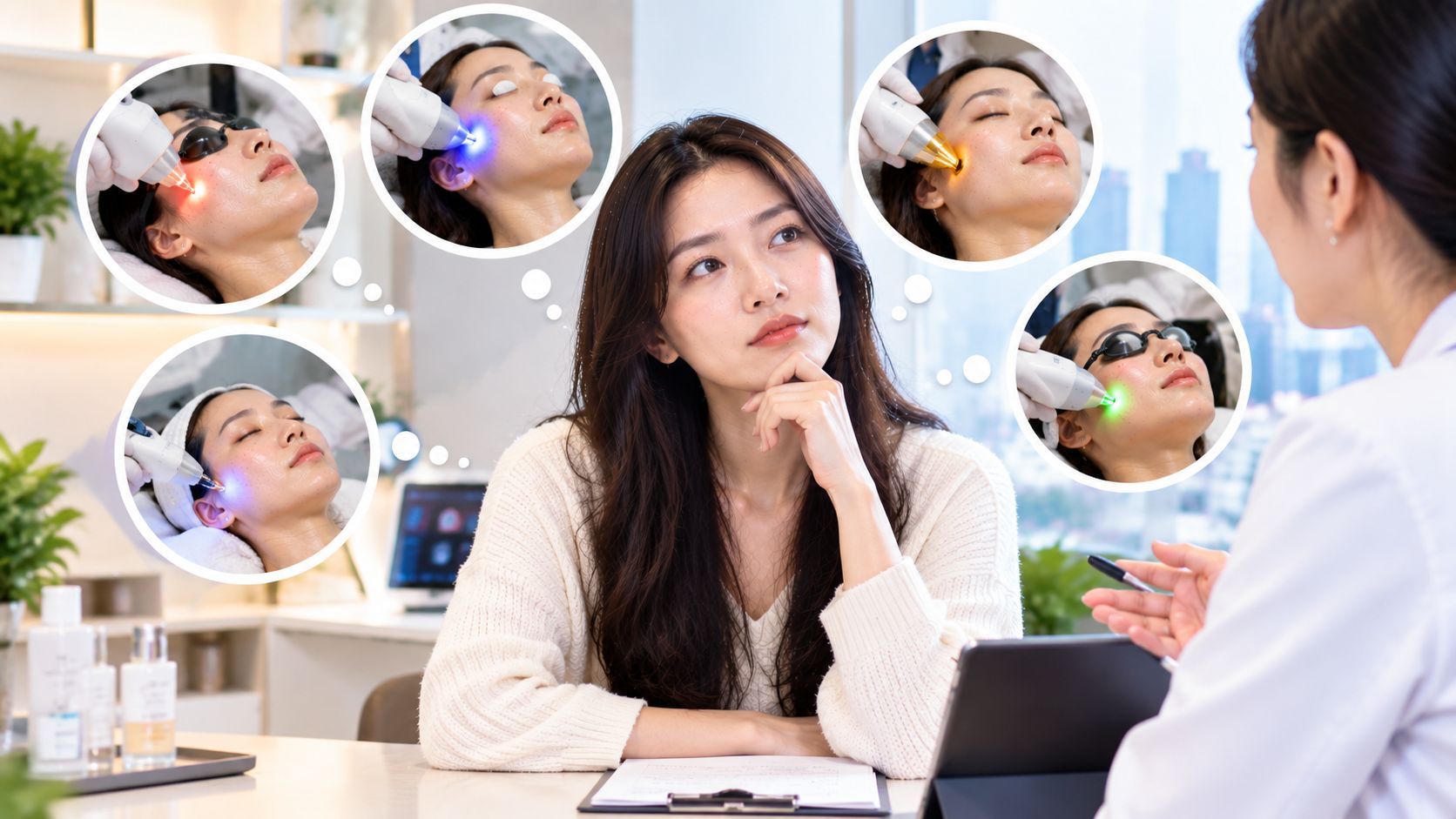
Depending on the scar pattern, a dermatologist may consider:
- Fractional CO₂ laser
- Fractional Er:YAG laser
- Non-ablative fractional laser
- Fractional RF or RF microneedling
- Pico laser for selected superficial textural or pigment concerns
- Combination treatments involving subcision or other procedures
Fractional lasers create controlled treatment zones in the skin to stimulate remodeling and collagen production. The American Academy of Dermatology notes that laser resurfacing can reduce the appearance of acne scars and that different lasers may require different numbers of sessions.
However, a laser cannot correct every type of acne scar equally well.
Why Acne Scar Type Matters More Than the Device Name
Atrophic acne scars are commonly described as:
- Ice-pick scars
- Rolling scars
- Boxcar scars
These scars differ in shape and depth, which means the same treatment may not produce the same result across all three.
Ice-Pick Scars
Ice-pick scars are narrow, deep depressions that extend into the skin.
They can be particularly difficult to improve with surface-only treatments. A dermatologist may consider treatments such as targeted chemical reconstruction techniques or other procedures rather than relying exclusively on a fractional laser.
Laser resurfacing may still have a role in an overall treatment plan, but simply increasing laser intensity does not necessarily solve a deep, narrow scar.
Rolling Scars
Rolling scars tend to create broad depressions with softer, sloping edges.
Some are influenced by fibrous attachments beneath the skin. In these cases, subcision may be considered because it addresses tethering underneath the scar rather than only remodeling the surface.
RF microneedling or fractional laser treatment may then be used to address texture and collagen remodeling.
Boxcar Scars
Boxcar scars are broader depressions with relatively defined edges.
Depending on their depth and characteristics, fractional laser, RF microneedling, or combination treatment may be considered.
The key point is that boxcar, rolling, and ice-pick scars should not automatically be treated as if they were identical.
Fractional CO₂ Laser for Acne Scars
Fractional CO₂ is an ablative fractional laser that creates microscopic columns of controlled injury in the skin.
It can be useful for certain atrophic acne scars because it combines resurfacing with collagen remodeling.
Potential advantages include:
- Significant textural resurfacing
- Collagen remodeling
- Treatment of multiple scars across an area
- Potentially noticeable improvement after a treatment series
However, stronger resurfacing also comes with trade-offs.
Possible effects include:
- Redness
- Swelling
- Crusting or peeling
- Temporary sensitivity
- Downtime
- Post-inflammatory hyperpigmentation
- Infection or other complications in some circumstances
Recent meta-analyses comparing fractional CO₂ with needling-based treatments have found broadly comparable overall scar improvement in some analyses, while CO₂ may have a higher risk of post-inflammatory hyperpigmentation. The evidence also varies considerably between studies and patients.
This is particularly relevant for patients with more pigment-prone skin.
RF Microneedling for Acne Scars
RF microneedling combines controlled needle penetration with radiofrequency energy delivered into the skin.
Unlike an ablative laser, it can stimulate deeper tissue remodeling while largely preserving the surface layer.
Potential advantages include:
- Shorter visible recovery for some patients
- Collagen remodeling
- Use across a range of skin tones
- Potential usefulness for rolling and boxcar-type scars
- Less surface ablation than fractional CO₂
The American Academy of Dermatology notes that RF microneedling combines radiofrequency with microneedling and may produce greater scar improvement than either technique alone.
It is not automatically superior to fractional laser. Instead, the choice depends on scar morphology, skin characteristics, treatment goals, and recovery expectations.
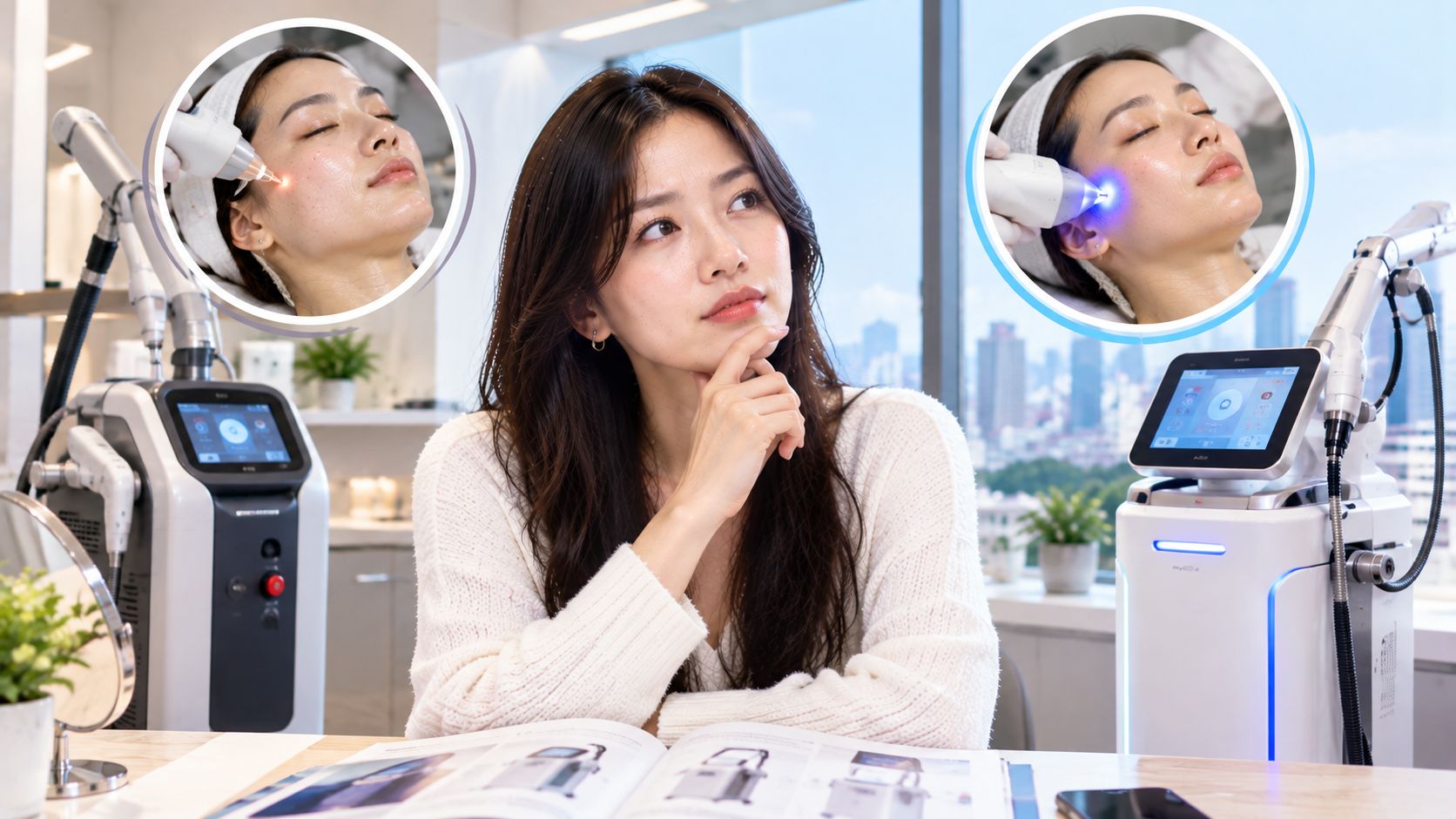
Fractional CO₂ vs RF Microneedling for Acne Scars
FactorFractional CO₂RF MicroneedlingMain mechanismFractional laser resurfacing and collagen remodelingMicroneedling plus radiofrequency remodelingSurface injuryGreaterGenerally lessDowntimeUsually more noticeableOften shorter, but variesPIH considerationImportant, especially in pigment-prone skinMay have a more favorable pigment safety profileTexture remodelingStrong resurfacing capabilityStrong dermal remodeling capabilitySuitable scar patternSelected boxcar and other atrophic scarsOften considered for rolling and boxcar scarsSkin-tone considerationsRequires careful parameter selectionOften useful when minimizing epidermal injury is importantNumber of sessionsVariesVaries
A 2026 meta-analysis of randomized trials found greater average scar improvement with fractional CO₂ than microneedling RF in the included studies, but also more pain, longer erythema, and substantially higher PIH risk with fractional CO₂.
Another 2026 systematic review found that overall scar-score differences between fractional CO₂ and needling treatments were not statistically significant, highlighting the variability between studies and the importance of individual treatment selection.
So the evidence does not support choosing a device based only on the idea that one is “stronger.”
What About Pico Laser for Acne Scars?
Pico laser is often associated with pigmentation and skin rejuvenation, but some Pico technologies may also be used for selected textural concerns.
However, Pico laser should not automatically be considered a replacement for fractional resurfacing or scar-release procedures.
If your main problem is deep rolling, ice-pick, or boxcar scarring, a dermatologist may determine that another treatment mechanism is more appropriate.
Pico may have a role when acne scars are accompanied by:
- Brown post-acne marks
- Uneven pigmentation
- Certain superficial textural concerns
- Overall skin-tone irregularity
The distinction between acne scars and post-acne pigmentation is important. A treatment that improves brown marks may not significantly lift a depressed scar.
Could You Need Subcision Instead of Laser?
Sometimes.
Subcision targets fibrous bands beneath certain depressed scars. This is particularly relevant when rolling scars appear tethered to deeper tissue.
A device treatment can then potentially be combined with subcision to address different components of the scar.
For example, a treatment plan might involve:
- Releasing tethered scars
- Allowing appropriate healing
- Using RF microneedling or fractional resurfacing for additional collagen remodeling
- Treating residual pigmentation separately if necessary
Combination treatment is not automatically better for everyone. It can also increase treatment intensity, downtime, cost, and recovery requirements.
What If I Have Darker or Pigment-Prone Skin?
Skin tone is an important part of acne-scar treatment planning.
Ablative fractional laser can be effective, but post-inflammatory hyperpigmentation is an important consideration, particularly in patients who are more prone to pigmentation.
This does not mean that people with darker skin cannot receive laser treatment.
Instead, a dermatologist may consider:
- Your baseline skin tone
- Previous PIH after acne or procedures
- Recent tanning
- Laser wavelength
- Energy settings
- Treatment density
- Whether a non-ablative or RF approach is more appropriate
- Your recovery schedule
A recent meta-analysis found a higher PIH risk with fractional CO₂ than standard microneedling, reinforcing why skin type and treatment parameters matter.
Can One Laser Session Remove Acne Scars?
Usually, acne scar treatment should be approached as a process rather than a one-session solution.
Some patients may notice visible textural improvement after one treatment, particularly when the scars are relatively superficial. However, deeper or widespread atrophic scars commonly require multiple sessions or combination treatment.
The goal is generally improvement rather than complete erasure.
Results also develop gradually because collagen remodeling continues after the procedure.
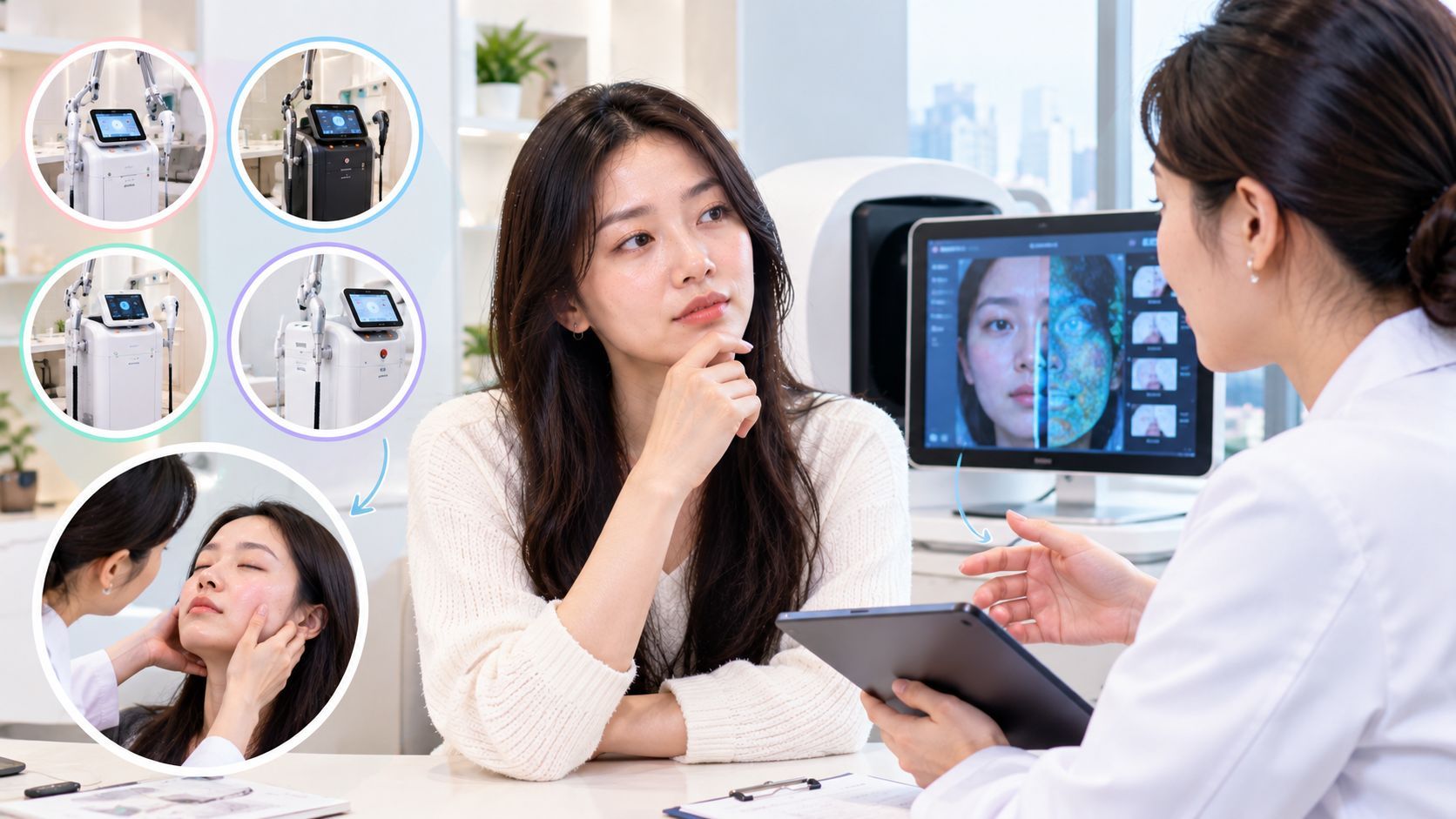
What Should You Ask a Seoul Dermatologist?
If you are visiting Seoul specifically for acne-scar treatment, ask the clinic to evaluate your scars before selecting a device.
Useful questions include:
- Which scar types do I have?
- Are my scars rolling, boxcar, ice-pick, or mixed?
- Are any scars tethered beneath the skin?
- Would laser alone be sufficient?
- Would RF microneedling be more appropriate for my skin?
- Would subcision be useful?
- What is the expected downtime?
- What is my risk of post-inflammatory hyperpigmentation?
- How many treatment sessions might be needed?
- Should active acne be treated before scar procedures?
A good consultation should focus on your scar structure rather than simply recommending the clinic's most powerful device.
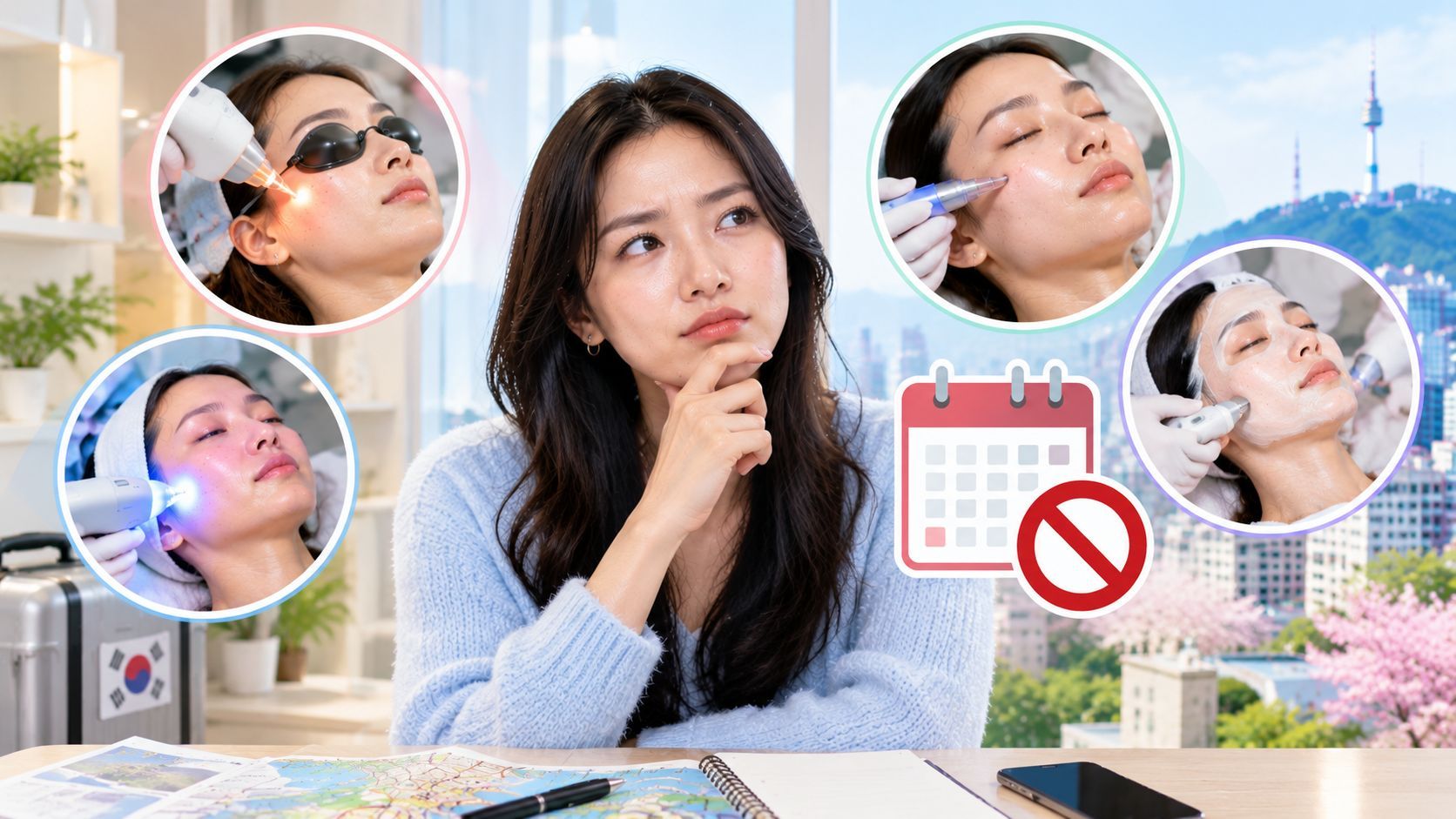
How Should International Patients Plan Acne Scar Treatment in Seoul?
If you have only a short Korea trip, do not assume that the most aggressive treatment is the most practical.
Fractional CO₂ can involve visible redness and recovery, while RF microneedling may offer a different recovery profile. The appropriate choice depends on the procedure and your individual response.
Before booking, consider:
- How many days you will be in Seoul
- Whether you need to attend meetings or events
- Your flight schedule
- Your tolerance for redness and peeling
- Your history of PIH
- Whether follow-up will be possible
- Whether active acne is still present
If you are traveling specifically for scar treatment, leaving some flexibility in your itinerary can be more useful than scheduling multiple aggressive procedures back-to-back.
Conclusion
The best laser treatment in Seoul for acne scars is not necessarily the strongest laser or the newest device.
Fractional CO₂ can be useful for selected atrophic scars, while RF microneedling may offer an alternative with a different recovery and pigment-risk profile. Some patients may need subcision or another scar-specific procedure rather than laser alone.
The most important first step is identifying the scar type and determining whether the problem is primarily surface texture, collagen loss, tethering, pigmentation, or a combination.
Once that is clear, a dermatologist can match the treatment approach to your skin, scar structure, downtime tolerance, and expectations.
Frequently Asked Questions
What is the best laser for acne scars in Seoul?
There is no single best laser for every acne scar. Fractional CO₂, fractional non-ablative lasers, and other technologies may be appropriate depending on scar type and skin characteristics.
Is fractional CO₂ better than RF microneedling for acne scars?
Research has found differences between the treatments, but there is no universal winner for every patient. Fractional CO₂ may provide stronger resurfacing, while RF microneedling may offer a different balance of remodeling and recovery. PIH risk is also an important consideration.
Can laser remove deep ice-pick scars?
Deep ice-pick scars can be difficult to treat with resurfacing alone. A dermatologist may consider a scar-specific procedure in addition to or instead of laser.
Is RF microneedling good for rolling acne scars?
It can be useful for some rolling scars, particularly when collagen remodeling is needed. If the scar is tethered underneath the skin, subcision may also need to be considered.
How many acne-scar laser sessions will I need?
The number varies according to scar depth, number of scars, treatment intensity, skin type, and whether other procedures are included. A single session may produce improvement, but complete correction should not be expected.
Can I get acne-scar laser treatment if I still have active acne?
Active acne should generally be addressed as part of the treatment plan before focusing heavily on permanent scarring. Continuing inflammation can contribute to new scars, so your dermatologist may prioritize acne control first.