Potenza vs CO2 Laser for Acne Scars: Which Treatment Should You Consider?
If you have acne scars and are comparing Potenza vs CO2 laser, the most important difference is that these treatments work in very different ways. Potenza is RF microneedling, while fractional CO2 is an ablative laser resurfacing treatment.
Neither is universally appropriate for every acne scar. The right choice depends on your scar type, depth, skin tone, previous treatments, tolerance for downtime, and whether your scars are associated with tethering or other structural changes.
For someone considering acne-scar treatment in Seoul, understanding these differences before choosing a device can help prevent the common mistake of assuming that the most aggressive treatment is automatically the most effective.
What Is the Difference Between Potenza and CO2 Laser?
Potenza combines microneedling with radiofrequency energy. Fine needles enter the skin and deliver controlled RF energy at selected depths.
Fractional CO2 uses a carbon dioxide laser to create microscopic columns of thermal injury in the skin. Because CO2 is an ablative laser, it removes or vaporizes portions of the treated tissue while leaving surrounding areas untreated.
FeaturePotenzaFractional CO2 LaserTechnologyRF microneedlingAblative fractional laserEnergyRadiofrequencyCO2 laser lightNeedlesYesNoSurface ablationNo, as with conventional fractional CO2YesMain actionMechanical + thermal stimulationFractional resurfacing and thermal remodelingAcne scarsSelected scarsSelected scarsDowntimeUsually moderate and variableOften more noticeablePigmentation riskPossiblePossible, particularly in susceptible skinSkin resurfacingLimited compared with ablative laserMore substantial
These differences mean the treatments should not be viewed as identical alternatives.
Which Acne Scars Can Potenza Treat?
Potenza may be useful for selected atrophic acne scars, particularly when there is a combination of shallow depressions, uneven texture, enlarged-looking pores, and mild loss of firmness.
It may be considered for:
- Mild rolling scars
- Some shallow boxcar scars
- General acne-scar texture
- Enlarged-looking pores associated with scarring
- Mixed mild textural irregularities
However, the type of acne scar matters considerably.
Rolling scars
Rolling scars can result from fibrous bands pulling the skin downward. RF microneedling may improve the surrounding texture, but it may not fully address deeper tethering.
In selected patients, subcision may be needed to release those attachments.
Boxcar scars
Shallow boxcar scars may respond to resurfacing or RF microneedling. Deeper, sharply defined boxcar scars can require a more targeted approach.
Ice-pick scars
Potenza is not automatically the ideal standalone treatment for ice-pick scars. TCA CROSS or punch techniques may be considered depending on the individual scar.
This is why a treatment plan based only on the device name can be misleading.
When Might Fractional CO2 Be Considered?
Fractional CO2 is often considered when the goal includes more substantial surface resurfacing and textural remodeling.
It may be discussed for:
- Acne-scar texture
- Selected boxcar scars
- Uneven skin surface
- Certain shallow to moderate depressed scars
- Fine lines and photodamage
Because fractional CO2 is ablative, it can create a more significant controlled resurfacing effect than many non-ablative procedures.
However, stronger resurfacing also generally means more recovery and a greater need for careful aftercare.
It is therefore not simply a question of whether CO2 is “stronger.”
The more useful question is whether the additional resurfacing effect is appropriate for your particular skin and scar pattern.
Is CO2 Laser Better for Deep Acne Scars?
Not necessarily.
A deep acne scar may have a structural problem that cannot be corrected simply by resurfacing the surface.
For example, a deeply tethered rolling scar may need subcision. A narrow ice-pick scar may need a targeted procedure such as TCA CROSS. A deep boxcar scar may require a combination of techniques.
Fractional CO2 can be valuable for selected scars, but it is not a universal solution for every deep depression.
A dermatologist should examine the scars individually rather than treating the entire face according to a generic acne-scar protocol.
Is Potenza Safer Than CO2 for Darker Skin?
It is better to avoid describing either treatment as universally “safe” or “unsafe” based only on skin tone.
Potenza does not use laser light, so it interacts with melanin differently from a CO2 laser. However, RF microneedling can still produce inflammation and thermal injury, and post-inflammatory hyperpigmentation can occur.
Fractional CO2 can also be used selectively in people with darker skin, but pigmentation risk may require particularly careful treatment planning.
Factors that can matter include:
- Natural skin tone
- Recent tanning
- Previous post-inflammatory hyperpigmentation
- Current skin inflammation
- Treatment intensity
- Treatment area
- Aftercare and sun exposure
If you have previously developed dark marks after procedures, tell the dermatologist before treatment.
Which Has More Downtime: Potenza or CO2?
In general, fractional CO2 tends to involve more noticeable surface recovery than many Potenza protocols, but the exact downtime depends heavily on treatment intensity.
After Potenza, temporary effects may include:
- Redness
- Swelling
- Warmth
- Tenderness
- Pinpoint marks
- Rough or sensitive skin
After fractional CO2, patients may experience:
- Redness
- Swelling
- Heat or burning sensations
- Peeling
- Crusting
- Surface sensitivity
- Temporary changes in skin color
The recovery period can vary substantially between individuals.
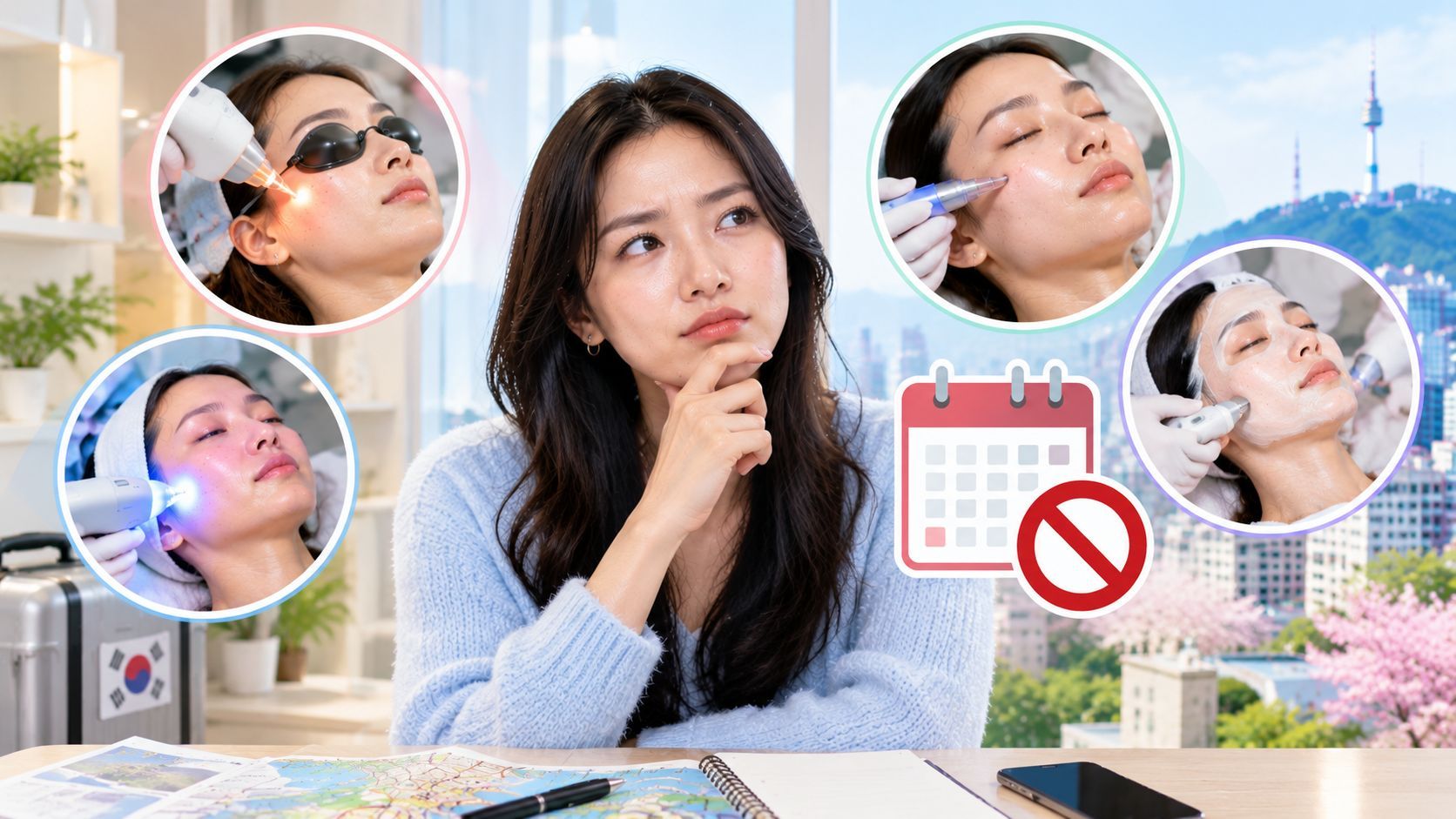
If you are traveling to Seoul specifically for acne-scar treatment, do not book an intensive CO2 procedure immediately before several days of sightseeing or an important event.
Can One Potenza Treatment Replace CO2 Laser?
Not necessarily.
One Potenza session can produce visible improvement in some patients, but acne scars usually do not disappear after a single treatment.
The same principle applies to fractional CO2.
Acne scars develop because of structural changes in the skin, and treatment often involves gradual remodeling rather than instant correction.
The number of sessions depends on:
- Scar type
- Scar depth
- Skin response
- Treatment intensity
- Previous procedures
- Whether combination treatment is needed
A clinic should explain what level of improvement is realistically expected rather than promising complete scar removal.
Can Potenza and CO2 Be Combined?
Combination treatment may sometimes be considered, but more procedures do not automatically mean better results.
For a patient with mixed acne scars, a dermatologist might use different techniques for different problems.
For example:
- Subcision for tethered rolling scars
- TCA CROSS for selected ice-pick scars
- Fractional resurfacing for surface texture
- RF microneedling for selected textural and firmness concerns
The treatments may need to be separated to allow the skin to recover.
If you are visiting Korea for a limited period, ask whether combining procedures during the same trip is medically appropriate and whether you will have enough time for recovery.
What If I Have Active Acne Too?
Active inflammatory acne should be considered before starting intensive scar resurfacing.
If new acne lesions continue to appear, treating the scars aggressively while new inflammation is developing may not address the larger problem.
A dermatologist may recommend controlling active acne first or modifying the treatment plan depending on its severity and location.
This is particularly important if you have inflamed, infected, or irritated skin in the planned treatment area.
What Should You Choose for Acne Scars in Seoul?
There is no universal Potenza-versus-CO2 answer.
Potenza may be discussed when:
- You have mild-to-moderate textural irregularity
- You have selected shallow acne scars
- You also have enlarged-looking pores
- Mild firmness improvement is part of the goal
- You want an RF microneedling approach rather than ablative resurfacing
Fractional CO2 may be discussed when:
- Surface resurfacing is an important goal
- You have selected atrophic scars appropriate for fractional laser
- You are prepared for more noticeable recovery
- Your dermatologist considers the pigmentation risk manageable
A different or combined treatment may be more appropriate when:
- Rolling scars are significantly tethered
- Ice-pick scars are prominent
- Deep boxcar scars are present
- Active acne remains uncontrolled
- Pigmentation is a major concern alongside scarring
The correct plan may involve more than one technique.
Questions to Ask Before Acne-Scar Treatment in Korea
Before booking Potenza or fractional CO2, ask:
- What type of acne scars do I have?
- Are any scars tethered beneath the skin?
- Why are you recommending Potenza or CO2 for my specific scars?
- What treatment settings will be used?
- How much downtime should I expect?
- What is my risk of post-inflammatory pigmentation?
- Would subcision, TCA CROSS, or another scar-specific treatment be more appropriate for some scars?
- How many sessions might be considered?
- How long should I wait before flying home?
- What follow-up is available after I return home?
For international patients, these questions are especially important because your treatment schedule needs to account for recovery, sun exposure, flights, and follow-up care.
Frequently Asked Questions
Is Potenza or CO2 better for acne scars?
Neither is universally better. Potenza and fractional CO2 use different mechanisms, and the appropriate option depends on scar type, depth, skin characteristics, treatment goals, and tolerance for downtime.
Is CO2 laser more powerful than Potenza?
They should not be compared simply by “power.” Fractional CO2 is an ablative laser that creates controlled surface and deeper thermal injury, while Potenza combines microneedling with RF energy. They produce different treatment effects.
Can Potenza remove acne scars?
Potenza may improve the appearance of selected acne scars, but it cannot guarantee complete removal. Deep or tethered scars may require other procedures.
Can CO2 laser completely remove acne scars?
No treatment can guarantee complete removal of acne scars. Fractional CO2 can improve selected scars and texture, but results vary according to scar characteristics and individual healing.
Which treatment has more downtime?
Fractional CO2 generally produces more noticeable surface recovery than many Potenza protocols, although the exact downtime depends on treatment intensity and individual response.
Can darker skin have CO2 laser for acne scars?
It may be possible in selected cases, but pigmentation risk needs careful consideration. A dermatologist should assess skin tone, previous pigmentation reactions, tanning, treatment intensity, and aftercare requirements.
Conclusion
Potenza and fractional CO2 can both play a role in acne-scar treatment, but they are not interchangeable. Potenza is RF microneedling, while fractional CO2 is an ablative laser resurfacing treatment.
Potenza may be considered for selected textural scars and mild-to-moderate irregularities, while fractional CO2 may be considered when more substantial resurfacing is appropriate. However, scar-specific treatments such as subcision or TCA CROSS may be more relevant for certain rolling or ice-pick scars.
If you are considering treatment in Seoul, have the scars assessed individually before choosing a device. The most useful treatment plan is one that matches the type, depth, and structure of your acne scars, rather than simply selecting the most aggressive procedure.