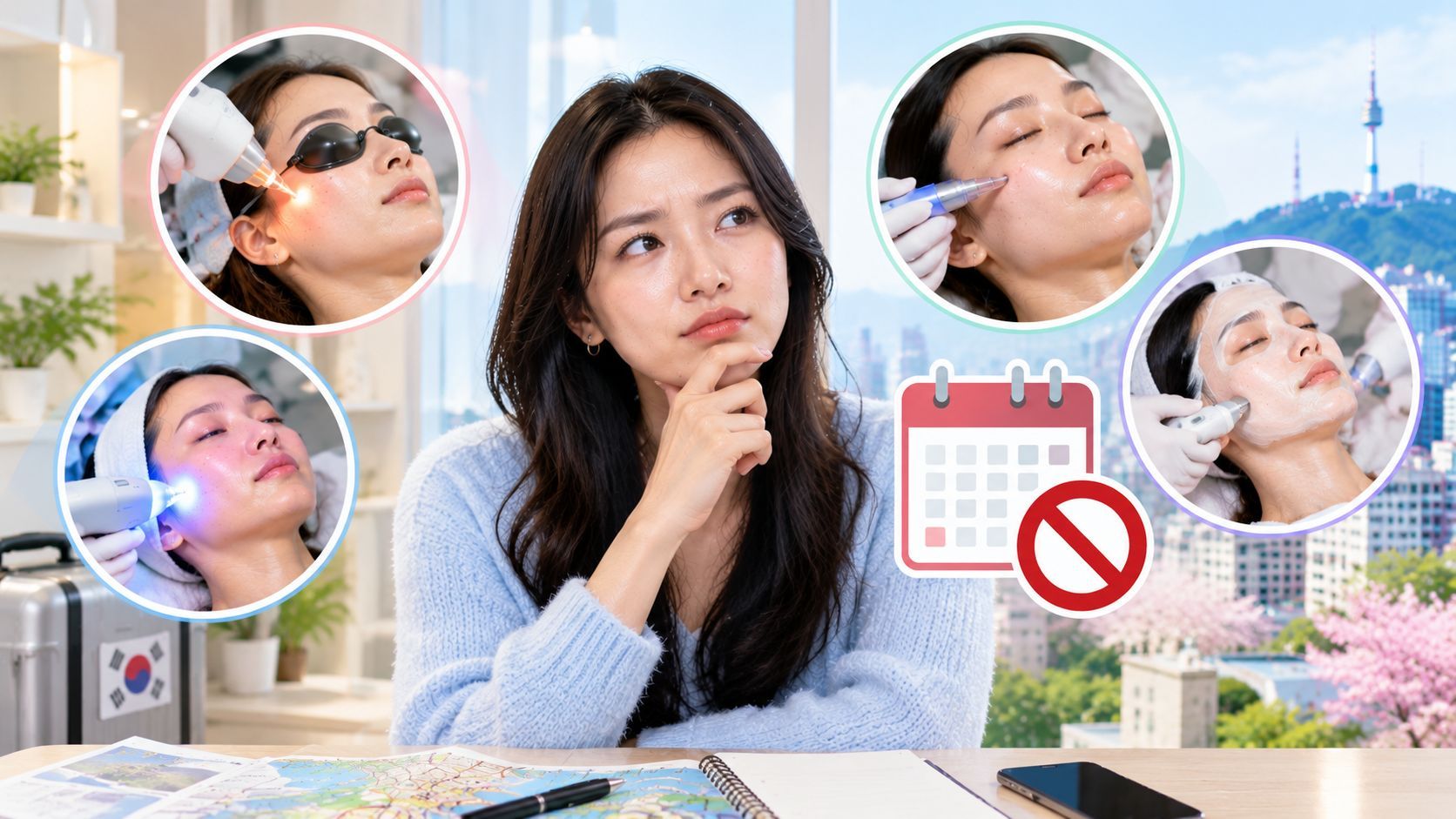
Can I Fly After Fractional CO2 Treatment?
Introduction
If you are traveling to Seoul specifically for fractional CO2 laser, one of the most important questions is when you can safely fly home.
Fractional CO2 is an ablative resurfacing treatment, so the skin needs time to repair its protective barrier. Flying itself is not automatically prohibited after every fractional CO2 procedure, but the timing of your flight should depend on treatment intensity, the condition of your skin, your healing progress, and your doctor's assessment.
There is no universal rule such as “you can always fly after 24 hours” or “you must wait one week.” A light fractional treatment and aggressive resurfacing procedure can have very different recovery profiles.
Can You Fly After Fractional CO2 Laser?
You may be able to fly after fractional CO2 treatment, but you should not schedule the flight based on a fixed number of hours alone.
The more important question is whether your treated skin has recovered sufficiently and whether your treating clinician considers you medically ready to travel.
Fractional CO2 creates controlled microscopic injuries and initiates re-epithelialization and tissue remodeling. Recovery therefore continues after you leave the clinic.
For international patients, the clinic should ideally assess your skin before you leave Seoul, particularly if the treatment was relatively aggressive.
Why Flight Timing Matters After CO2
Your Skin Barrier Is Recovering
Immediately after ablative resurfacing, the skin barrier is compromised. During the healing period, treated skin can be more sensitive to irritation and environmental exposure.
This does not mean that an airplane cabin will automatically cause a complication, but it does mean that travel should be planned around the healing process.
Redness and Swelling May Still Be Present
You may still have visible redness, swelling, peeling, crusting, or sensitivity when it is time to travel.
These effects can vary substantially depending on treatment settings. A 2026 study of fractional CO2 treatment found that longer-lasting erythema was associated with factors including higher laser energy and greater scar severity, illustrating why recovery cannot be predicted from the device name alone.
You May Need Follow-Up
One of the strongest reasons not to rush home immediately is the possibility that your dermatologist may want to inspect your skin during the early healing period.
If you develop unexpected swelling, worsening pain, infection, blistering, or another complication, being close to the treating clinic can make evaluation easier.
What Happens During the First Few Days?
First 24 Hours
Your face may be red, swollen, warm, tight, or uncomfortable. Depending on the treatment settings, you may also have pinpoint crusting or other visible treatment marks.
This is generally not the ideal time to combine an intensive resurfacing procedure with a demanding travel schedule unless your treating clinician specifically considers it appropriate.
Days 2–4
Peeling, dryness, crusting, redness, and sensitivity can remain prominent.
Your skin may also feel tight or uncomfortable, making long travel less pleasant.
Later in the First Week
The surface may become progressively calmer, but residual redness and sensitivity can remain.
The exact recovery period depends on how aggressively the skin was treated. Fractional CO2 is not one standardized procedure with one standardized recovery time.
Is Flying Immediately After CO2 Dangerous?
It would be inaccurate to say that flying immediately after every fractional CO2 treatment is automatically dangerous.
However, traveling while the skin is still significantly injured or when you have not received appropriate post-treatment assessment can add practical and medical concerns.
Laser resurfacing has recognized risks including infection, prolonged redness, pigment changes, and delayed healing.
Therefore, the decision should be individualized rather than based on an internet rule about airplane cabins.
What About Cabin Air?
Airplane cabins have relatively dry air, and travel can make already-sensitive skin feel drier or tighter.
The American Academy of Dermatology recommends maintaining an appropriate skincare routine while traveling and protecting treated or exposed skin from environmental factors.
After CO2 resurfacing, however, you should follow the specific wound-care and moisturizing instructions from your treating clinic rather than introducing new products simply because the cabin feels dry.
What Should You Consider Before Booking Your Flight?
Treatment Intensity
Ask exactly how aggressive your fractional CO2 treatment will be.
Higher energy, greater treatment density, or deeper resurfacing can increase recovery requirements. A 2026 clinical study found an association between higher laser energy and longer postoperative erythema.
Your Skin's Condition on Departure Day
Do not rely only on the number of days since treatment.
Your dermatologist should assess whether the treated area is healing as expected and whether any concerning symptoms are present.
Your Flight Length
A short domestic flight and a long international journey are very different practical situations.
A long flight means more time in a dry cabin environment, limited access to your usual skincare supplies, and potentially greater difficulty obtaining medical care if a problem develops after departure.
Your Destination
If you are returning home internationally, consider what medical support will be available if an unexpected complication occurs.
This is particularly relevant when traveling far from the clinic that performed the procedure.
What Should You Pack for the Flight?
If your dermatologist has cleared you to travel, keep your post-treatment supplies accessible rather than placing everything in checked luggage.
Depending on your clinic's instructions, this may include:
- Recommended cleanser
- Recommended moisturizer or barrier-care product
- Any prescribed or specifically recommended medication
- Sun-protection products when your doctor says they are appropriate
- Clean tissues or gauze if advised
- Written aftercare instructions
- Clinic contact information
Do not add acids, retinoids, exfoliants, or other irritating products simply because your skin feels dry. Your treating clinician should determine when these products can be restarted.
What About Sun Exposure During Travel?
Sun protection becomes particularly important after laser treatment because recently treated skin can be vulnerable to pigmentation changes.
The American Academy of Dermatology recommends protecting treated skin from the sun after laser procedures until healing has occurred.
Remember that travel involves more than the flight itself. Walking through airports, waiting for transportation, sightseeing, and exposure through vehicle or airplane windows can all contribute to UV exposure.
When Should You Not Fly Yet?
You should contact your treating clinic rather than proceeding with travel if you have concerning symptoms such as:
- Increasing rather than improving pain
- Rapidly worsening swelling
- Pus or unusual drainage
- Fever or feeling systemically unwell
- Significant blistering
- Spreading redness
- Unexpected bleeding
- Other symptoms your clinician has identified as abnormal
These symptoms can require medical assessment rather than simply being treated as normal post-laser recovery.
Flying After CO2 During a Seoul Medical Trip
If you are traveling to Seoul for fractional CO2, it is usually better to plan the procedure early enough in the trip that you have time for appropriate follow-up rather than scheduling aggressive resurfacing immediately before your return flight.
Before treatment, ask the clinic:
- When can I realistically fly after this exact treatment?
- Will you examine my skin before I leave Korea?
- What level of redness, swelling, and peeling should I expect?
- What symptoms would make flying inappropriate?
- What should I bring on the flight?
- When can I restart my normal skincare products?
- Who should I contact if a problem develops after I return home?
This is particularly important if you have only a few days in Seoul.
Should You Schedule CO2 Right Before Your Flight?
Scheduling aggressive fractional CO2 immediately before an international flight can make your trip more complicated.
You may still be visibly red or swollen, your skin may require specialized aftercare, and you may not have completed the clinic's recommended follow-up.
If your schedule is flexible, discuss the treatment date with the clinic so that the procedure and recovery period fit comfortably within your trip.
The goal should not be to minimize the number of days between treatment and departure. The goal should be to allow enough time for safe recovery and appropriate medical review.
Conclusion
Flying after fractional CO2 laser is not automatically forbidden, but the appropriate timing is individualized. Treatment intensity, skin healing, symptoms, flight duration, destination, and access to follow-up care all matter.
Fractional CO2 creates controlled skin injury followed by re-epithelialization and collagen remodeling, so recovery continues after the procedure.
If you are visiting Seoul for CO2 resurfacing, ask your treating dermatologist for a specific travel recommendation based on the treatment settings they plan to use. Ideally, leave enough time for the clinic to assess your recovery before you fly home.
FAQs
How soon can I fly after fractional CO2 laser?
There is no universal safe interval. Your treating dermatologist should determine when you are ready to fly based on the treatment intensity and how your skin is healing.
Can I fly internationally after CO2 laser?
International travel may be possible after appropriate healing, but the longer distance from the treating clinic makes follow-up planning particularly important.
Does airplane cabin air affect CO2 laser recovery?
Dry cabin air can make recently treated skin feel more dry or tight. Follow your clinic's specific post-treatment skincare instructions rather than adding new products.
Should I have CO2 laser at the end of my Seoul trip?
If you need to fly home shortly afterward, discuss the timing carefully with your clinic. Scheduling treatment early enough to allow recovery and follow-up may be more practical than having an aggressive treatment immediately before departure.
Can I wear makeup on the flight after CO2 laser?
Do not assume that makeup is appropriate simply because you need to travel. Your dermatologist should tell you when the treated skin has healed sufficiently for makeup use. The AAD also advises following your dermatologist's instructions about when makeup can be resumed after laser treatment.
What if my skin gets worse after I return home?
Contact the treating clinic promptly and seek local medical assessment when appropriate, particularly if you develop worsening pain, significant swelling, drainage, fever, spreading redness, or other concerning symptoms.