Can Fractional CO2 Laser Remove Acne Scars Completely?
Introduction
Fractional CO2 laser can significantly improve some acne scars, but it usually cannot remove every scar completely. The realistic goal is generally partial improvement in depth, texture, edges, and overall skin smoothness, rather than returning scarred skin to its exact pre-acne appearance.
How much improvement is possible depends on the type and depth of the scars, skin characteristics, previous treatments, treatment intensity, and whether additional procedures are needed. Clinical studies have demonstrated meaningful improvement in atrophic acne scars after fractional CO2 treatment, but complete elimination is not a predictable outcome.
Can Fractional CO2 Laser Remove Acne Scars Completely?
Usually, no. Fractional CO2 laser can make acne scars substantially less visible, but complete removal is uncommon and should not be promised.
Fractional CO2 creates microscopic columns of controlled thermal injury in the skin. The healing response stimulates collagen remodeling and can improve irregular texture and depressed scars over time.
However, established acne scars can involve changes in collagen, tissue loss, fibrosis, and altered skin structure. Laser resurfacing can remodel these areas, but it does not simply erase the scar.
What Fractional CO2 Can Actually Improve
Depressed Acne Scars
Fractional CO2 is primarily used for atrophic or depressed acne scars. These include rolling and boxcar scars, as well as some mixed scar patterns.
The treatment can soften the transition between the scar and surrounding skin, making depressions less noticeable.
Uneven Skin Texture
Even when a scar does not disappear, resurfacing may make the overall surface feel and look smoother.
This can be particularly useful when acne scars are accompanied by enlarged pores, rough texture, and superficial irregularities.
Scar Edges
Some boxcar scars have relatively defined borders. Collagen remodeling and resurfacing can soften these transitions.
The result may be a less sharply defined depression rather than complete disappearance.
Which Acne Scars Respond Differently?
Rolling Scars
Rolling scars are broad, shallow depressions that create an uneven or wavy appearance.
Some rolling scars can respond well to fractional resurfacing. However, if the scar is tethered to deeper tissue, laser treatment alone may not fully release the depression.
In such cases, a dermatologist may consider subcision or another scar-release procedure.
Boxcar Scars
Boxcar scars have more clearly defined edges and can range from relatively shallow to deeper depressions.
Fractional CO2 can improve some boxcar scars, particularly their surface irregularity and edges. Deeper scars may require a combination approach.
Ice-Pick Scars
Ice-pick scars are narrow and extend deeply into the skin.
They can be more challenging to treat with broad fractional resurfacing alone. Depending on their anatomy, a dermatologist may discuss focal treatments such as TCA CROSS or other approaches.
This is why asking for “the strongest CO2 treatment” is not necessarily the right strategy for every scar.
Why One CO2 Session Usually Does Not Erase Scars
Collagen Remodeling Takes Time
Fractional CO2 does not produce its full effect immediately.
The initial treatment creates controlled injury, followed by wound healing and collagen remodeling. Changes can continue developing after the visible redness and peeling have subsided.
Clinical studies have documented continued acne-scar improvement during follow-up after fractional CO2 treatment rather than an immediate final result.
Deep Scars Have Structural Components
A deep scar may contain more than a superficial texture problem.
It can involve:
- loss of dermal tissue
- fibrous tethering
- sharply defined edges
- deep narrow channels
- changes extending into deeper skin
Resurfacing can improve the skin around these structures, but it cannot necessarily correct every component.
Does Stronger CO2 Produce Complete Scar Removal?
No.
Increasing energy or density does not guarantee complete scar removal.
More aggressive resurfacing can increase the amount of tissue injury and may increase downtime, redness, pain, and pigmentation risk. Research in Asian patients has found that higher CO2 fluence or density can increase adverse effects without necessarily producing significantly better efficacy.
This is particularly relevant for patients who are considering treatment in Seoul and have limited recovery time.
More downtime does not mean the scar will disappear.
Can Fractional CO2 Make Acne Scars Less Noticeable?
Yes. This is a more realistic way to think about the treatment.
Instead of asking whether the scar will disappear, consider whether treatment can:
- reduce the apparent depth of depressions
- soften sharp scar edges
- improve uneven texture
- make shadows less noticeable
- improve overall skin smoothness
- reduce the visual contrast between scars and surrounding skin
Even partial improvement can make scars substantially less noticeable, particularly under normal lighting and at conversational distance.
How Many CO2 Treatments Might Be Needed?
There is no universal number of sessions.
Some patients may see meaningful improvement after one treatment, while others require a series. Treatment planning depends on scar severity, skin type, treatment intensity, and whether other procedures are included.
Studies of fractional CO2 for acne scars have evaluated multiple treatment sessions, with improvement continuing during subsequent follow-up.
A clinician should therefore avoid promising that one session will completely remove established scars.
What If CO2 Alone Is Not Enough?
Subcision
Subcision can be considered when rolling scars are tethered beneath the skin.
Releasing the underlying fibrous attachment addresses a different part of the scar structure from surface resurfacing.
TCA CROSS
TCA CROSS is a focal chemical technique that may be considered for selected ice-pick scars.
It is not a replacement for every laser treatment, but it illustrates why scar-specific treatment can sometimes be more useful than applying one technology to the entire face.
RF Microneedling
RF microneedling combines microneedling with radiofrequency energy and can provide dermal remodeling with a different recovery profile from ablative CO2.
Comparative research suggests that both fractional CO2 and RF microneedling can improve acne scars, while their adverse effects and recovery characteristics differ.
Combination Treatment
Mixed acne scars often contain several different structures.
A treatment plan might therefore involve different procedures for different scar types rather than trying to make one laser strong enough to address everything.
What About Pigmentation After CO2?
Pigmentation is an important consideration, particularly for patients who are prone to post-inflammatory hyperpigmentation.
Fractional CO2 can cause inflammation as part of the resurfacing process. In susceptible skin, that inflammation can lead to temporary or, less commonly, longer-lasting pigmentation changes.
Reviews of laser treatment in skin of color emphasize careful parameter selection because PIH, hypopigmentation, and other adverse effects can occur.
Your doctor should therefore consider:
- natural skin pigmentation
- previous PIH
- recent tanning or sun exposure
- melasma
- previous reaction to lasers
- treatment density
- treatment intensity
- aftercare and sun protection
How to Set Realistic Expectations Before Treatment
Before undergoing fractional CO2, ask the doctor to explain what degree of improvement is realistic for your particular scars.
A useful consultation should identify:
Which scars can CO2 improve?
Which scars may need another treatment?
What level of improvement is realistic after one session?
Would several moderate treatments be preferable to one aggressive treatment?
What is the risk of pigmentation for my skin?
How long should I expect redness and recovery to last?
These questions are more useful than asking whether the doctor can “remove” your scars completely.
Fractional CO2: Improvement vs Complete Removal
GoalWhat fractional CO2 may doImprove depressed scarsOften possible, depending on scar type and depthSmooth uneven textureCommon treatment objectiveSoften scar edgesPossible for suitable scarsReduce visible shadowsMay occur as depressions become shallowerCompletely erase deep scarsNot reliably achievableCorrect tethered rolling scars aloneMay be insufficientEliminate every scar in one sessionNot a realistic expectation
What Should International Patients Expect in Seoul?
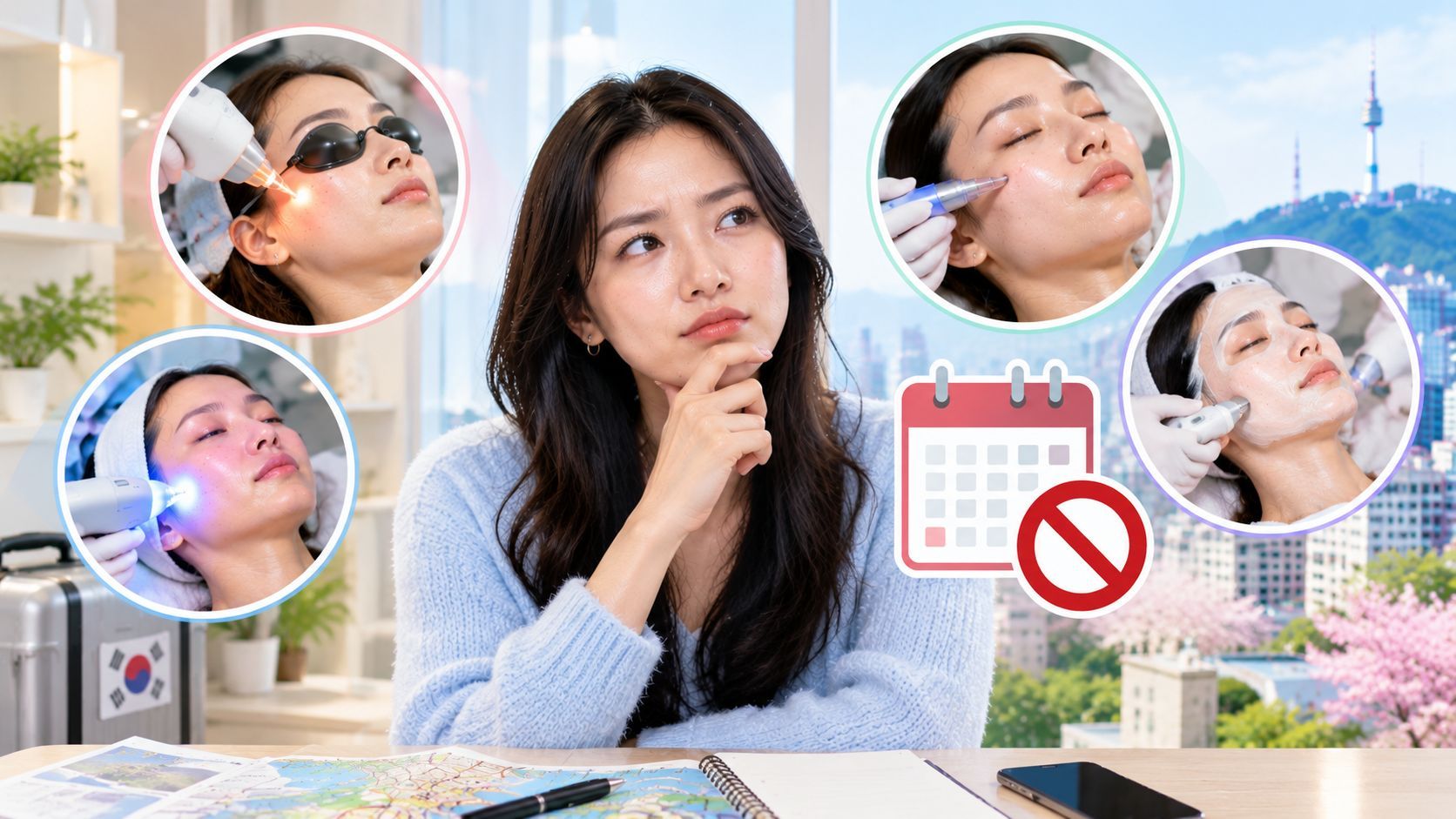
If you are traveling to Seoul specifically for acne-scar treatment, plan around recovery rather than scheduling the procedure immediately before your flight home.
Fractional CO2 can produce redness, swelling, peeling, crusting, and temporary pigmentation changes. Recovery varies according to treatment intensity and individual healing.
If your trip is short, ask the clinic before arrival whether the proposed treatment is compatible with your available recovery period.
Also ask whether an in-person follow-up is recommended before returning home.
Conclusion
Fractional CO2 laser can significantly improve many acne scars, but complete removal should not be expected.
The most realistic objective is gradual improvement in scar depth, texture, edges, and overall skin smoothness. Deep, tethered, or highly specific scar types may require additional procedures such as subcision or TCA CROSS.
Treatment intensity should also be individualized. Stronger CO2 is not automatically better, and more aggressive resurfacing can increase downtime and pigmentation risk without guaranteeing complete scar removal.
If you are considering fractional CO2 in Seoul, the most useful consultation is one that explains which scars the treatment can improve, what level of improvement is realistic, and whether another treatment or combination approach is needed.
FAQs
Can fractional CO2 completely remove acne scars?
Usually not. It can substantially improve the appearance of many atrophic scars, but established scars generally cannot be guaranteed to disappear completely.
How much can acne scars improve with fractional CO2?
Improvement varies significantly between patients. Scar type, depth, skin characteristics, treatment parameters, and previous treatments all influence the result.
Can one CO2 treatment remove deep acne scars?
One treatment may produce noticeable improvement, but deep scars often require multiple sessions or combination treatment. A dermatologist should assess the scars individually.
Is stronger CO2 better for deep acne scars?
Not necessarily. Increasing treatment intensity can increase tissue injury and complications without guaranteeing proportionally greater improvement.
What acne scars respond best to fractional CO2?
Fractional CO2 can be useful for selected atrophic scars, including some rolling and boxcar scars. Ice-pick and tethered scars may require more targeted or combination treatment.
Can fractional CO2 remove acne-scar redness or pigmentation too?
CO2 primarily targets resurfacing and texture. Residual redness or pigmentation may require a different treatment approach, and aggressive resurfacing can itself temporarily alter pigmentation.