AI Skin Analysis in Seoul: How clinics map your pores and sebum
AI Skin Analysis in Seoul: How clinics map your pores and sebum
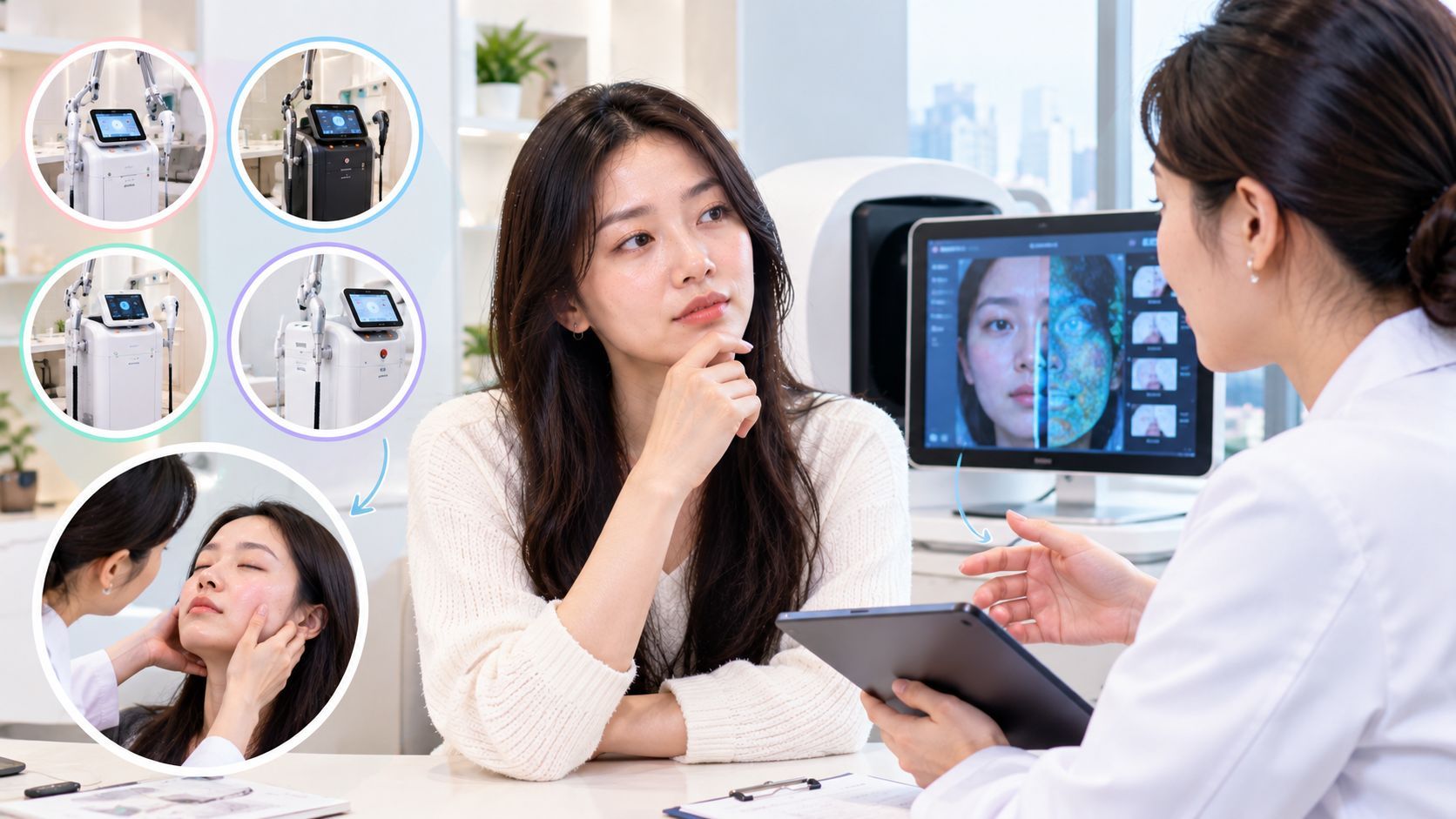
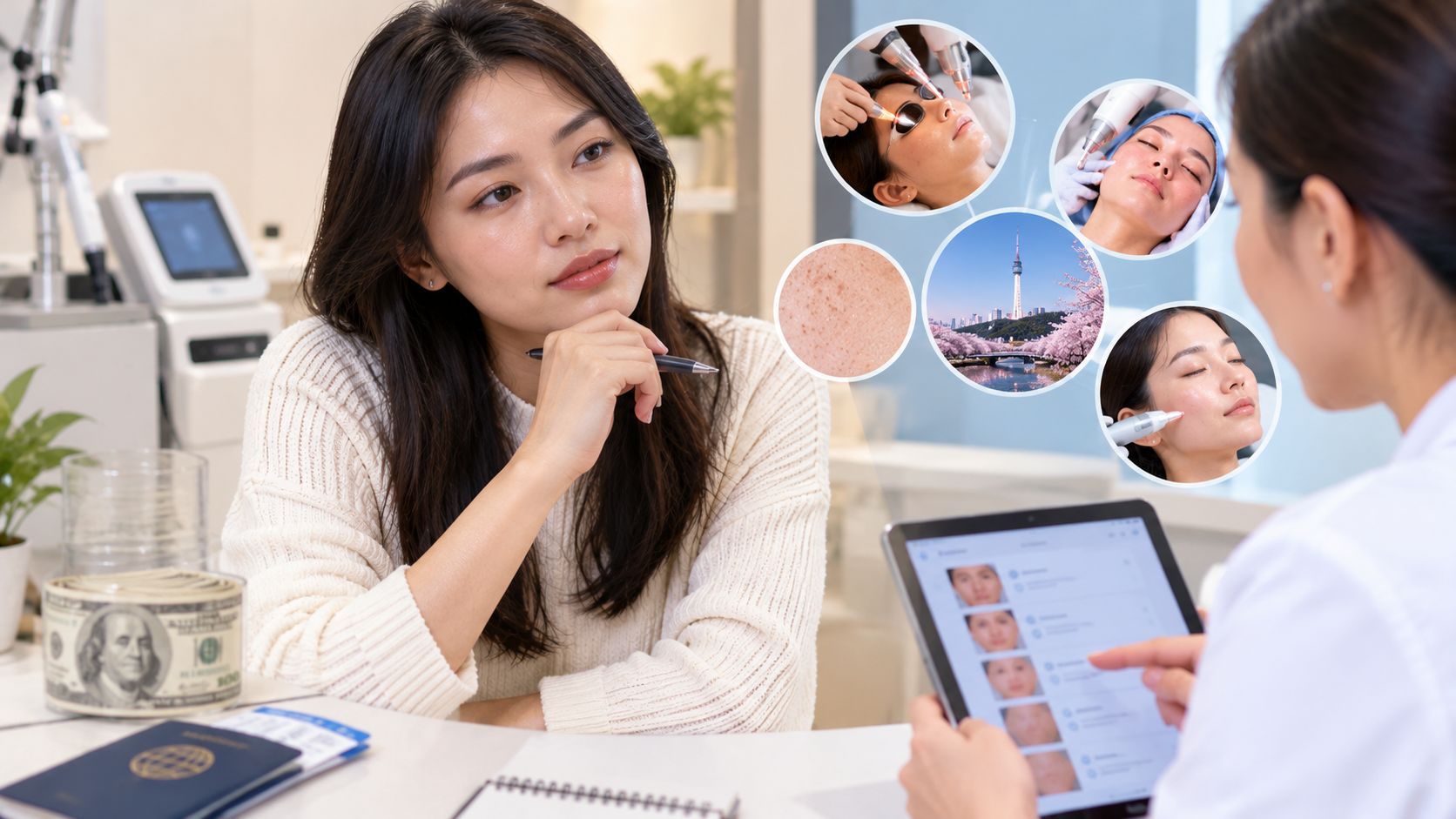
In 2026, the first step of any reputable Seoul "Care-cation" is no longer a human eye exam, but a deep-dive into the AI Skin Chamber. Clinics in Gangnam and Hongdae have moved beyond basic photography to multi-spectral 3D mapping. Using devices like the Mark-Vu or Janus Pro, AI algorithms now analyze your face across 5 to 8 different light spectrums to reveal what is happening beneath the surface.This data-driven approach removes the guesswork, allowing doctors to prescribe the exact laser wavelength or skin booster density your specific "skin architecture" requires.
The 3D Mapping Chamber: Beyond the Surface
When you enter a dermatology clinic, you'll be asked to place your face into a dark "Chamber" or "Dark Room."
- Multi-Angle Imaging: High-resolution DSLR cameras take photos from the front and both profiles simultaneously.
- The 3D Structure: Unlike free retail scans, clinical AI creates a 3D structural map of your face. It assesses contours, symmetry, and depth—critical data for planning "lifting" treatments like Ultherapy or determining exactly where to place filler for a natural look.
- The "Gloss" Factor: Specialized light sources measure the "Gloss" or "Luster" of your skin, providing a baseline score for your current hydration levels versus the 2026 "Glass Skin" standard.
Mapping the "Pore Profile"
AI doesn't just see "pores"; it categorizes them into three distinct types to determine the treatment:
- Y-Shaped Pores: These are caused by aging and loss of elasticity. If the AI maps a high density of these, the doctor will likely suggest Juvelook or firming lasers.
- O-Shaped Pores: These are typically caused by excess oil. The AI tracks the diameter of these pores across your T-zone.
- U-Shaped Pores: Usually a sign of dehydration.
👉 The Data: You will receive a numerical score (e.g., "Pores: Top 15%") that compares your pore size to a database of over 500,000 global cases.
Sebum and Porphyrin Detection
One of the most fascinating features of 2026 AI analysis is the UV Fluorescence mode used to map oil and bacteria.
- Sebum Mapping: The AI highlights active sebum in orange or red. This allows the doctor to see exactly where your sebaceous glands are overactive, even if you’ve just washed your face.
- Porphyrin Tracking: Porphyrins are metabolic byproducts of acne-causing bacteria. The AI maps these as glowing spots, predicting where a breakout is likely to occur before it actually reaches the surface.
- The Treatment Link: If the AI shows high porphyrin levels, your "overhaul" will likely start with an Aqua Peel or Gold PTT to clear the bacteria before moving to more intensive lasers.
The "Hidden Pigment" Reveal
This is often the most shocking part of the analysis for international travelers.
- The UV Layer: Using polarized and UV light, the AI reveals melanin deep in the dermis that hasn't surfaced yet.
- Future Prevention: These are "hidden spots" caused by past sun damage. By mapping these, the AI helps the doctor choose a preventive laser setting (like Pico Toning) to shatter the pigment before it ever becomes a visible dark spot.
- Redness & Sensitivity: The AI also maps your vascular system, identifying "hot zones" of inflammation or broken capillaries that aren't visible to the naked eye.
Clinic Analysis vs. Free "Retail" Scans
In 2026, you might see free AI "Skin Scans" at stores like Olive Young. Here is how the clinic version differs:
- Retail Scans: Use 2–3 light sources and focus on product recommendations (Surface-level).
- Clinical AI: Uses 5–8 light sources (including specific wavelengths for gloss and deep pigment) and focus on medical treatment decisions (Structural-level).
- Physician Integration: At a clinic, the AI report is just the "lab results." A trained physician then interprets that data to adjust the joules (energy) of your laser or the depth of your injections.
How to Prepare for Your AI Scan
To get the most accurate mapping in 2026:
- The "Clean Slate": You must remove all makeup and sunscreen. Most Seoul clinics have a dedicated cleansing station with medical-grade products.
- The "Rest Period": After washing, you should wait 5 to 10 minutes before the scan to allow your skin’s natural oil and moisture levels to stabilize.
- Ask for the Report: Most 2026 clinics can send the PDF report directly to your email or WhatsApp. Save this as your "Skin Blueprint" to compare results when you visit again in 6 months.
Final Thoughts
AI Skin Analysis has turned Korean dermatology into a "High-Precision Sport." In 2026, you don't have to wonder if a treatment worked—the AI will show you the exact percentage decrease in your pore volume and the reduction in hidden melanin. It is the ultimate tool for transparency, ensuring that your "Care-cation" investment is backed by cold, hard data!